MODALITIES OF MANAGMENT
OSTEOARTHRITIS
KNEES
1
MODALITIES OF MANAGMENT
OSTEOARTHRITIS
KNEES
2
3
Osteoarthritis is a degenerative disorder
that results from the biochemical
breakdown of articular (hyaline) cartilage
in the synovial joints.
 However, the current concept holds
that osteoarthritis involves not just the
articular cartilage but the entire joint
organ, including the subchondral bone
and synovium.
4
Osteoarthritis predominantly involves
the weight-bearing joints, including the
knees, hips, cervical and lumbosacral
spine, and feet. Other commonly
affected joints include the distal
interphalangeal (DIP) and proximal
interphalangeal (PIP) joints of the hands.
5
Clinical Presentation
 Joint soreness after inactivity or periods of overuse of a
joint.
 Stiffness after rest and disappears quickly as activity
begins again.
 Morning stiffness lasting no longer than 30 minutes.
 Joint pain which is less in the morning and stronger at the
end of the day following activity.
 Muscle atrophy around joints caused by inactivity can
increase pain.
 Pain and stiffness can affect posture, coordination and
ability to walk. 6
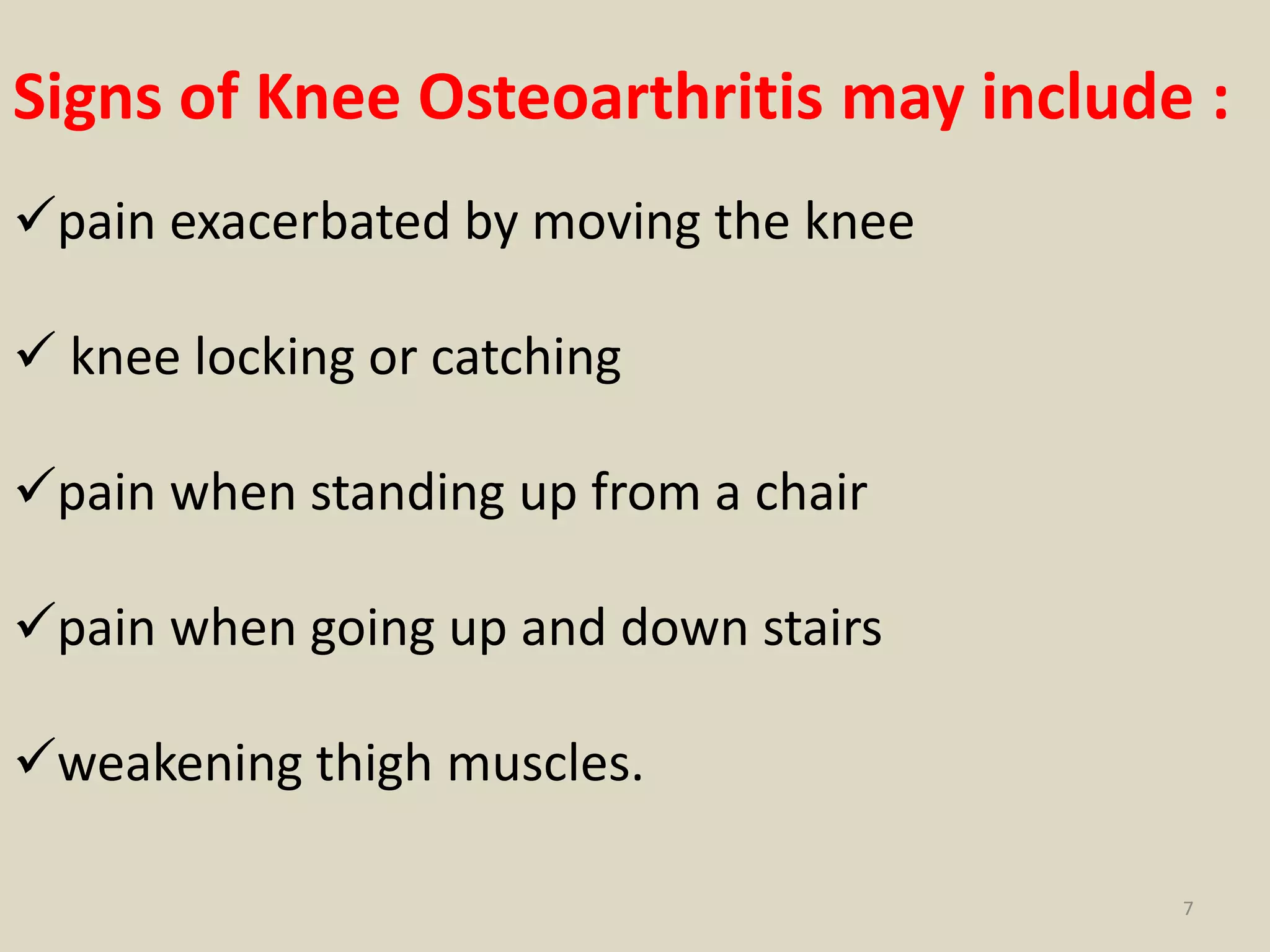
Signs of Knee Osteoarthritis may include :
pain exacerbated by moving the knee
 knee locking or catching
pain when standing up from a chair
pain when going up and down stairs
weakening thigh muscles.
7
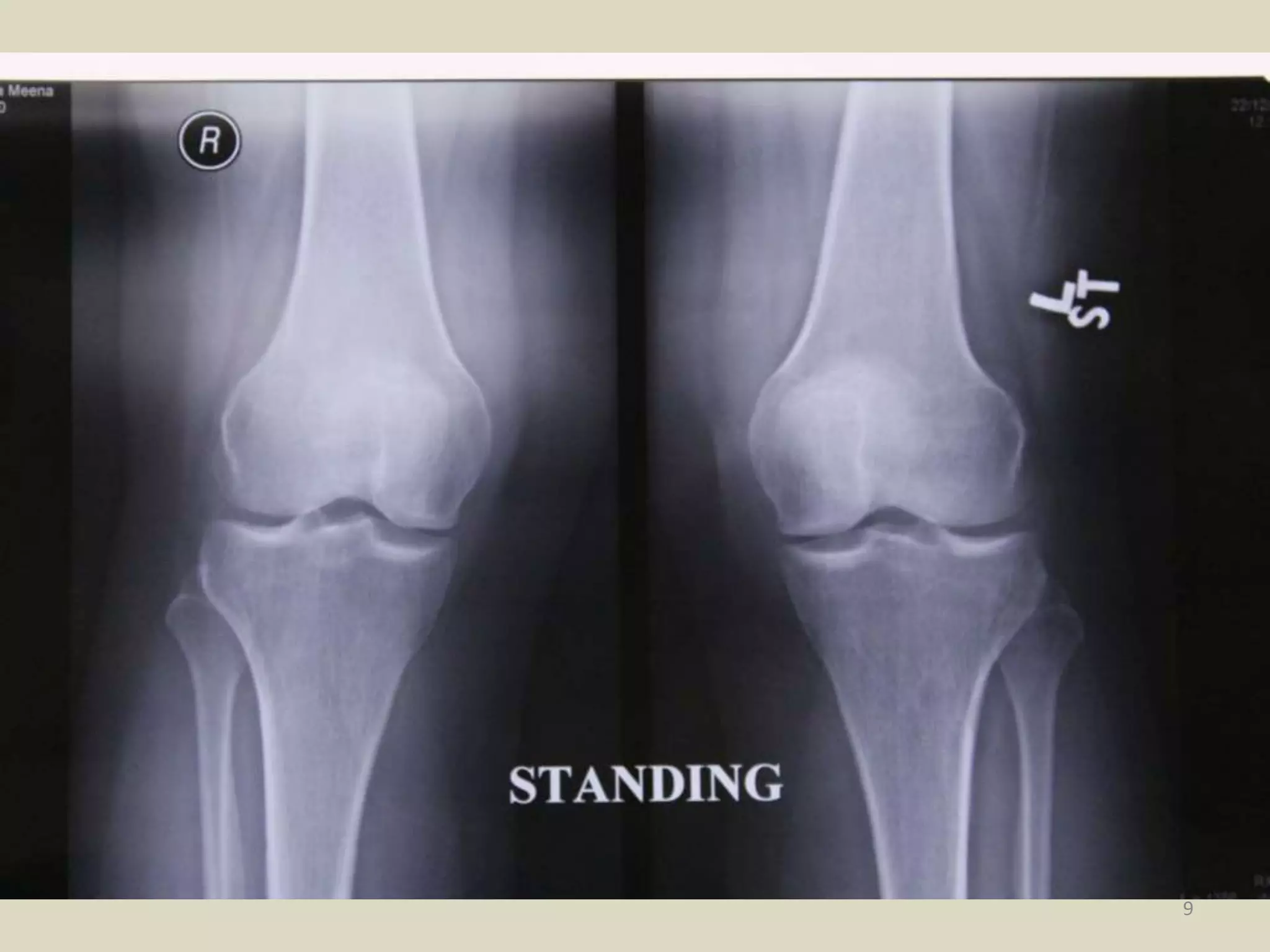
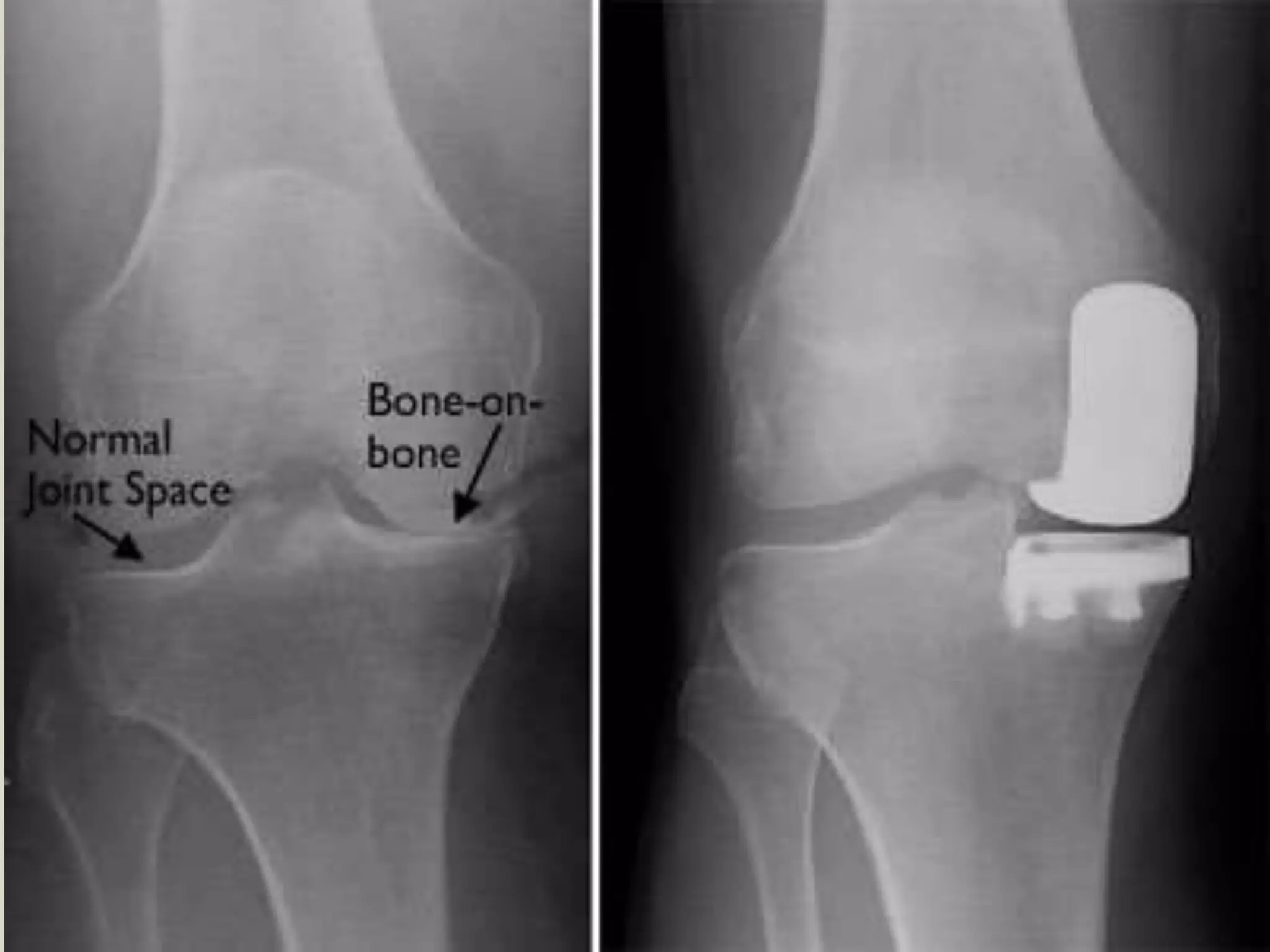
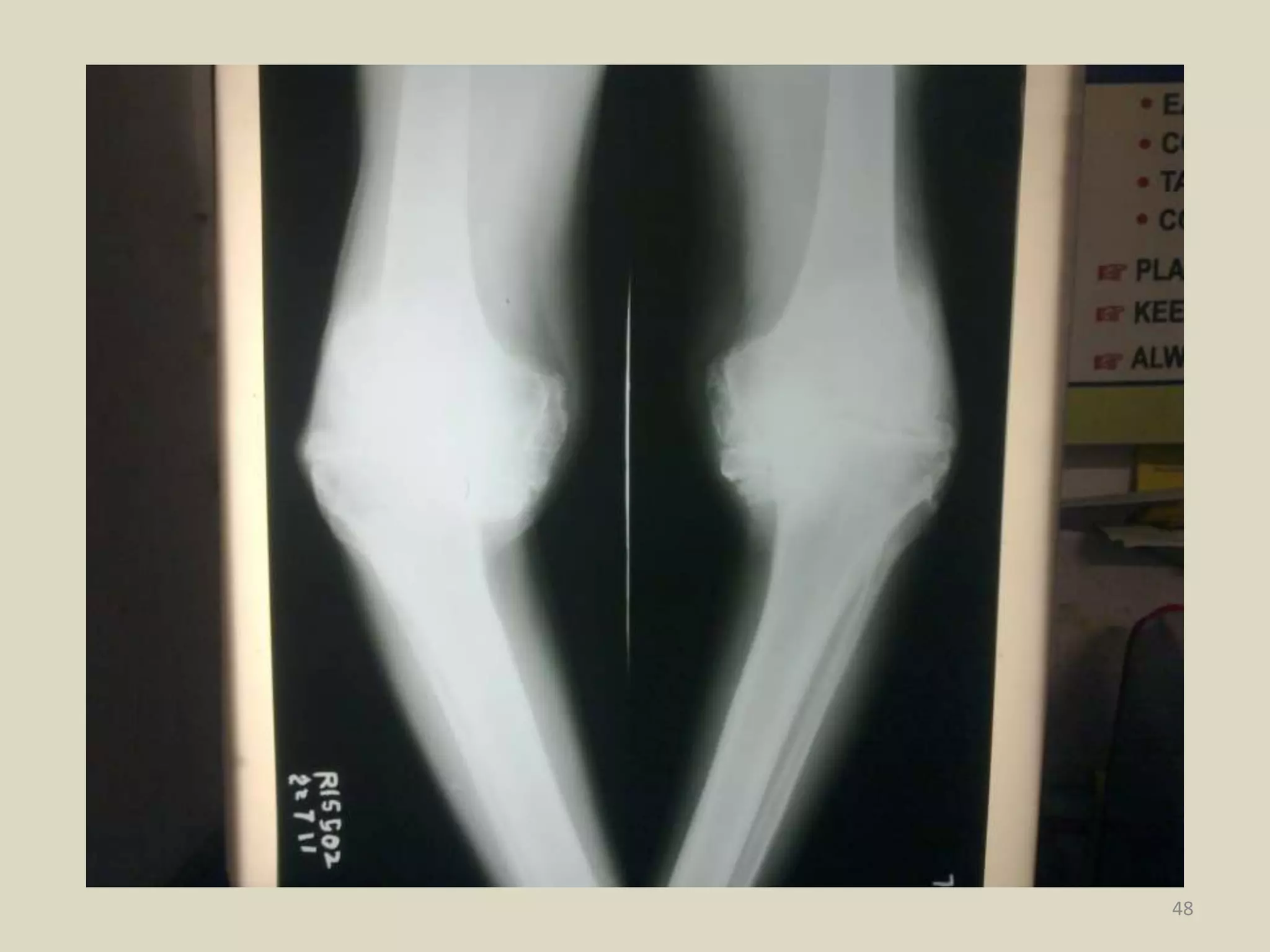
Radiographic appearance
Radiographic Criteria
 Loss of joint space
 Sub-chondral sclerosis or cyst formation
 Presence of new bone formation or
osteophytes
8
9
10
11
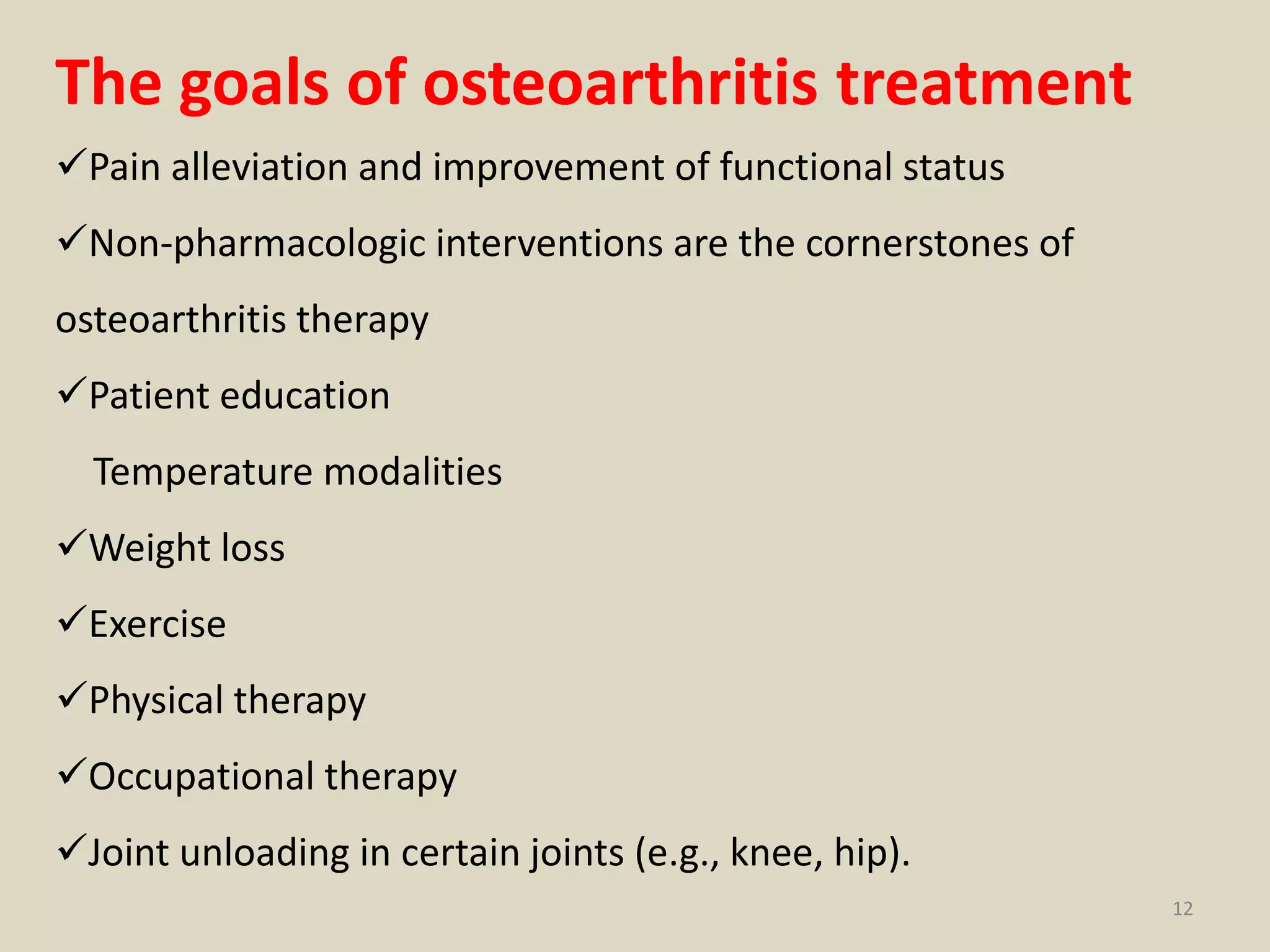
The goals of osteoarthritis treatment
Pain alleviation and improvement of functional status
Non-pharmacologic interventions are the cornerstones of
osteoarthritis therapy
Patient education
Temperature modalities
Weight loss
Exercise
Physical therapy
Occupational therapy
Joint unloading in certain joints (e.g., knee, hip).
12
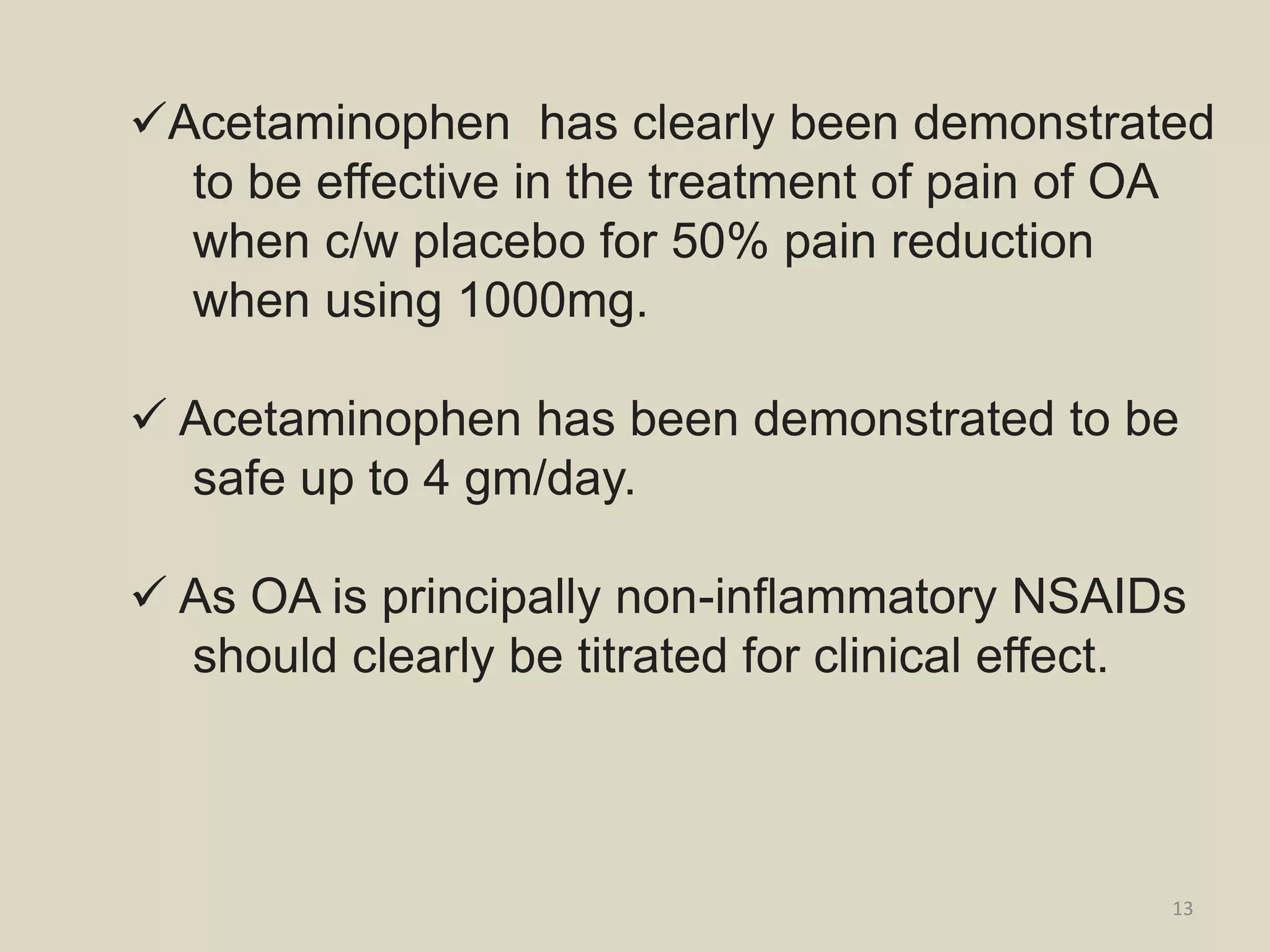
Acetaminophen has clearly been demonstrated
to be effective in the treatment of pain of OA
when c/w placebo for 50% pain reduction
when using 1000mg.
 Acetaminophen has been demonstrated to be
safe up to 4 gm/day.
 As OA is principally non-inflammatory NSAIDs
should clearly be titrated for clinical effect.
13
Opioids
Tramadol is specifically identified as the
initial agent of choice in patients with OA
14
15
Do Oral Medications
(Acetaminophen, NSAIDs) help or hurt ?
Glucosamine Sulfate
 Glucosamine sulfate has measured its
effectiveness on Osteoarthritis of the knee.
However, there is some evidence that it might
also help Osteoarthritis of the hip or spine.
 In addition to relieving pain, glucosamine
sulfate might also slow the breakdown of
joints in people with osteoarthritis who take it
long-term.
16
Side Effects of Glucosamine Sulfate
Glucosamine appears to be safe for most people
with diabetes, but blood sugar should be
monitored closely.
 People with asthma should be cautious about
taking products that contain glucosamine.
17
 There is not enough reliable scientific
information available to know if glucosamine
sulfate is safe to take during pregnancy or while
breast-feeding.
 Until more is known, do not take
glucosamine sulfate while pregnant or breast-
feeding.
18
What about the role of Steroid Injections ?
Steroid injections can be used as an adjunct therapy
along with systemic therapy.
This is an effective way to knock down inflammation.
Mechanism of Action
 Inhibit accumulation of inflammatory cell lines
 Reduction of prostaglandin synthesis
 Inhibit leukocyte secretion from synovial cells
 Decrease interleukin secretion by the synovium
 Increase viscosity of synovial fluid
19
HYLURINIDASE
Hyalgan® is indicated for the treatment of
pain in osteoarthritis (OA) of the knee in
patients who have failed to respond
adequately to conservative non-
pharmacologic therapy, and to simple
analgesics, e.g., acetaminophen.
20
21
22
NEW DRUGS
Protelosa, contain the chemical Strontium
Ranelate which is thought to encourage the
body to produce cartilage and is already used
to treat osteoporosis.
Celecoxib : 100 to 200 mg once or twice a day.
23
PHYSIOTHERAPY
AND
REHABILITATION
24
25
26
27
OPERATIVE
PROCEDURES
28
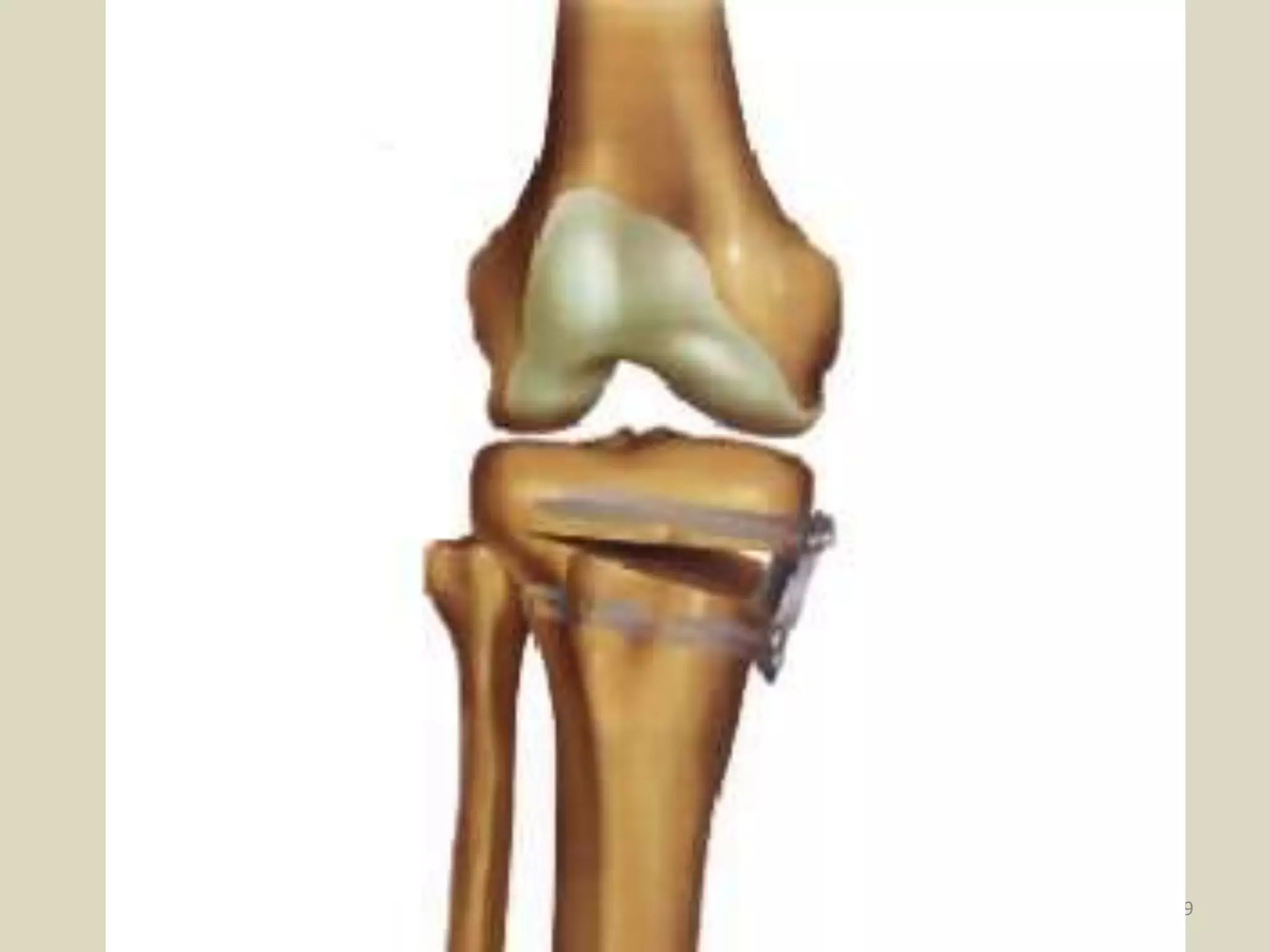
HIGH TIBIAL
CORRECTIVE OSTEOTOMY
29
30
31
Uni-
Condylar/Compartmental
Arthroplasty
32
33
Minimal
Incision
Arthroplasty
34
35
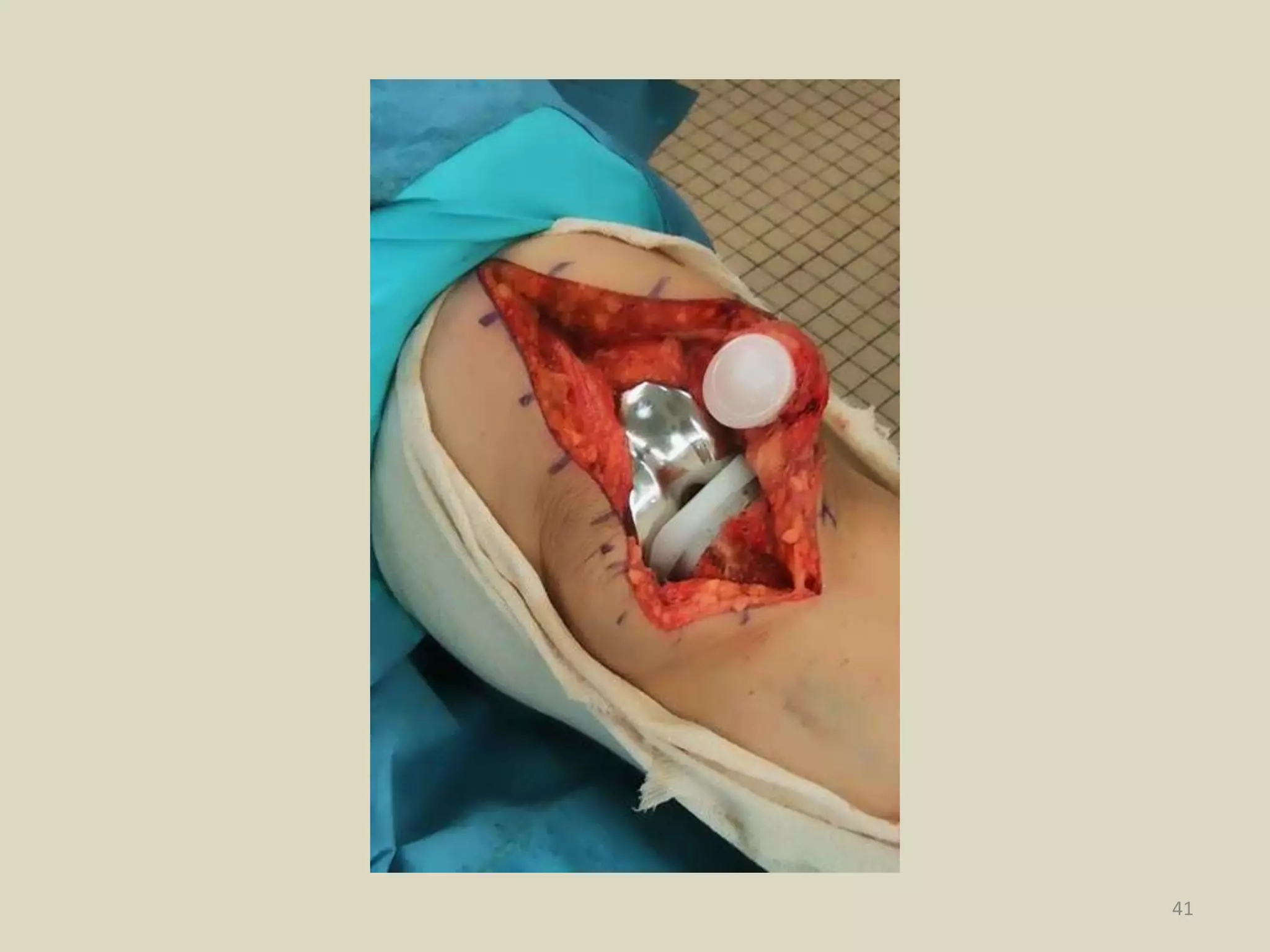
Total Knee
Arthroplasty
36
37
Indications for Total Knee
Joint Replacement
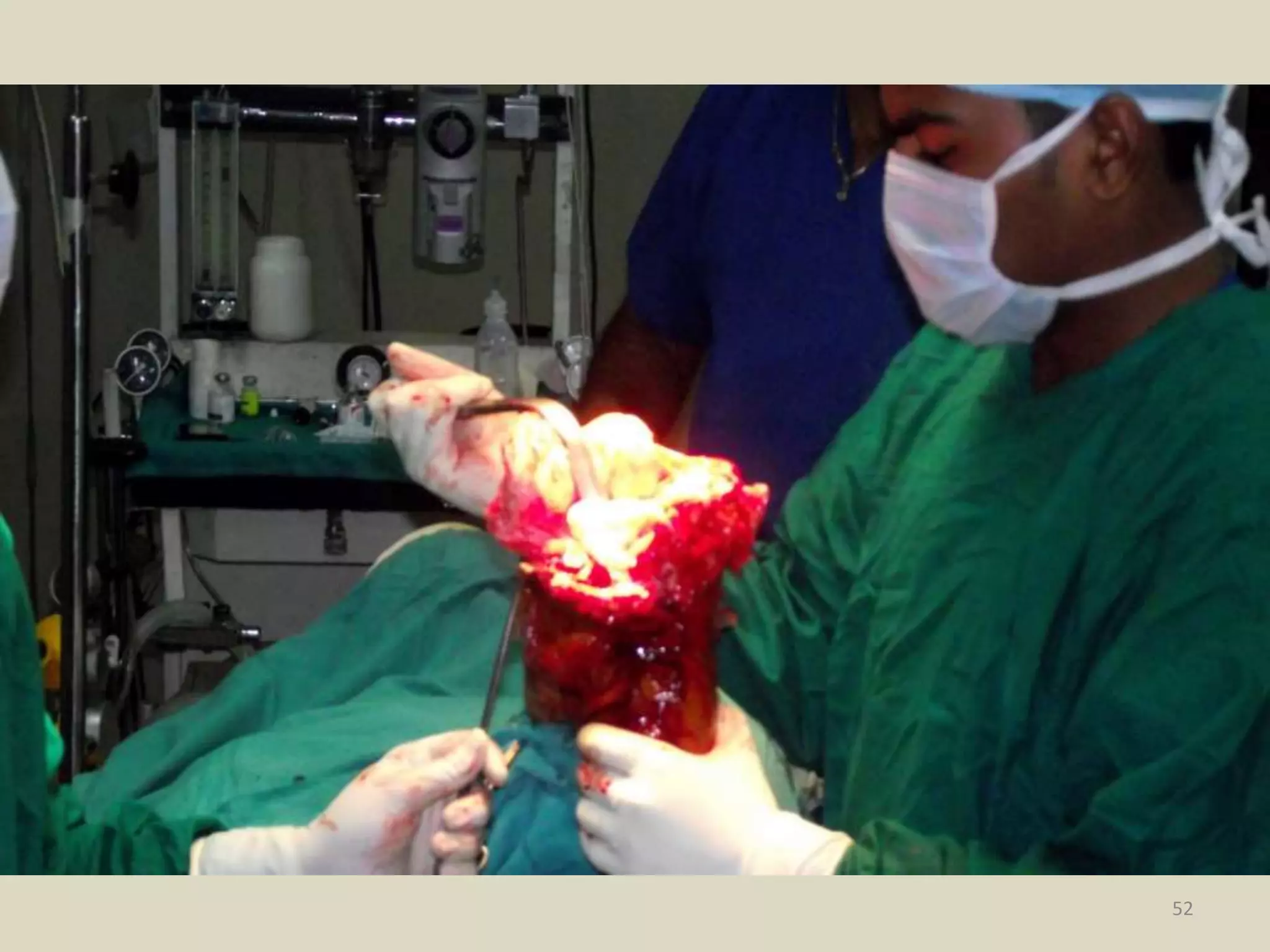
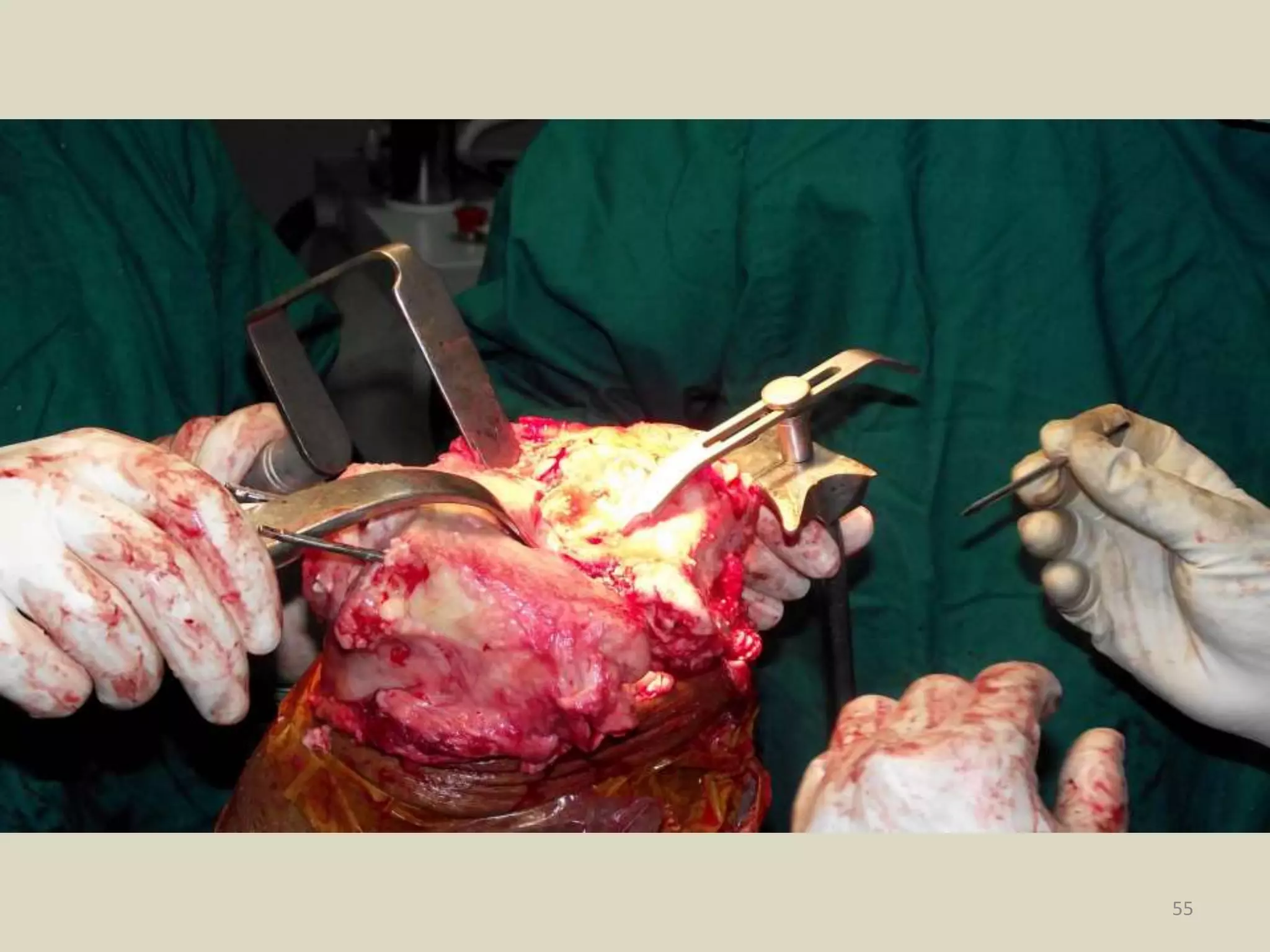
The main indication for Total Knee
Arthroplasty is for relief of pain associated
with arthritis of the knee in patients who
have failed non operative treatments.
(American Academy of Orthopedics)
38
39
40
41
42
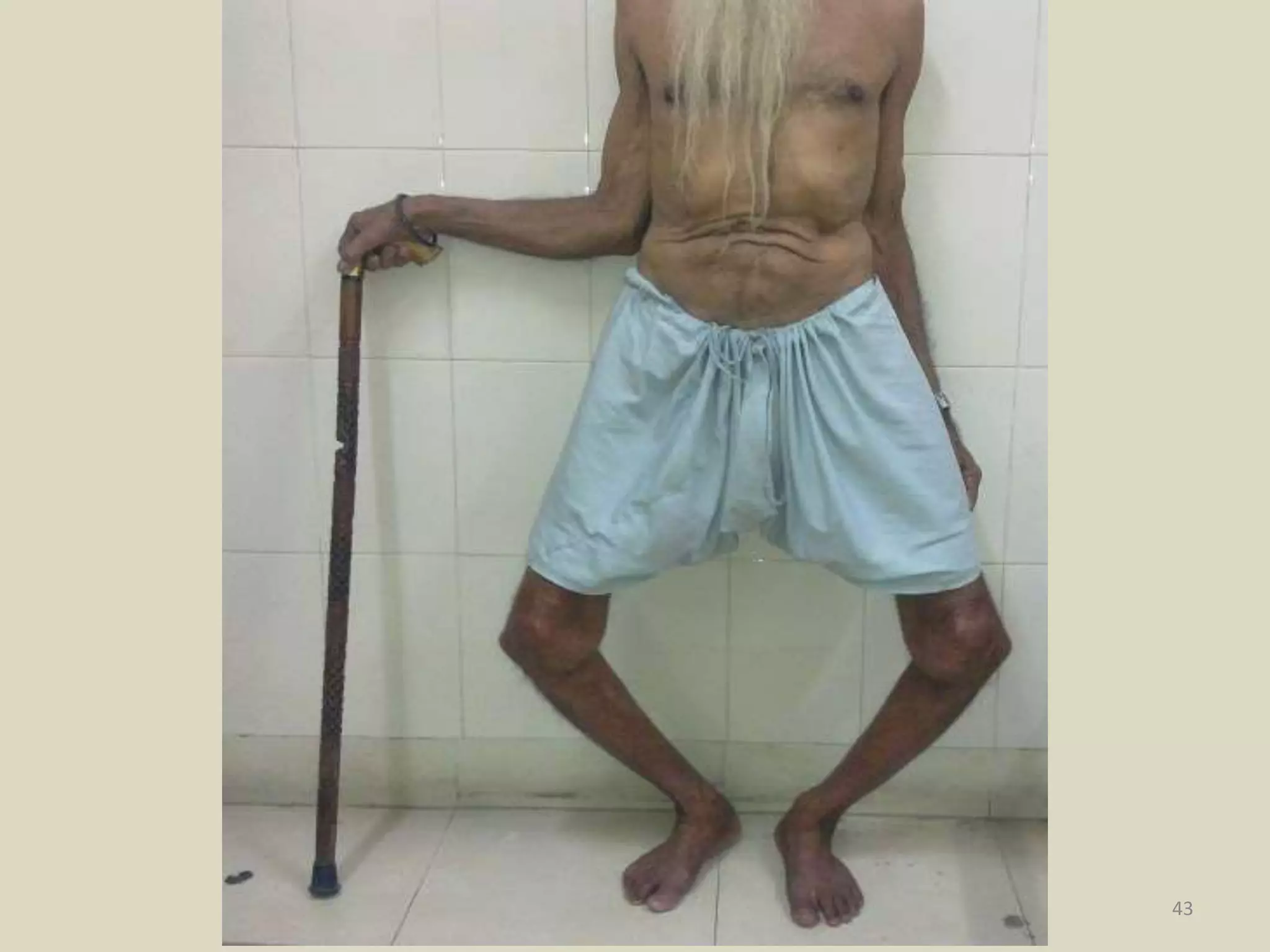
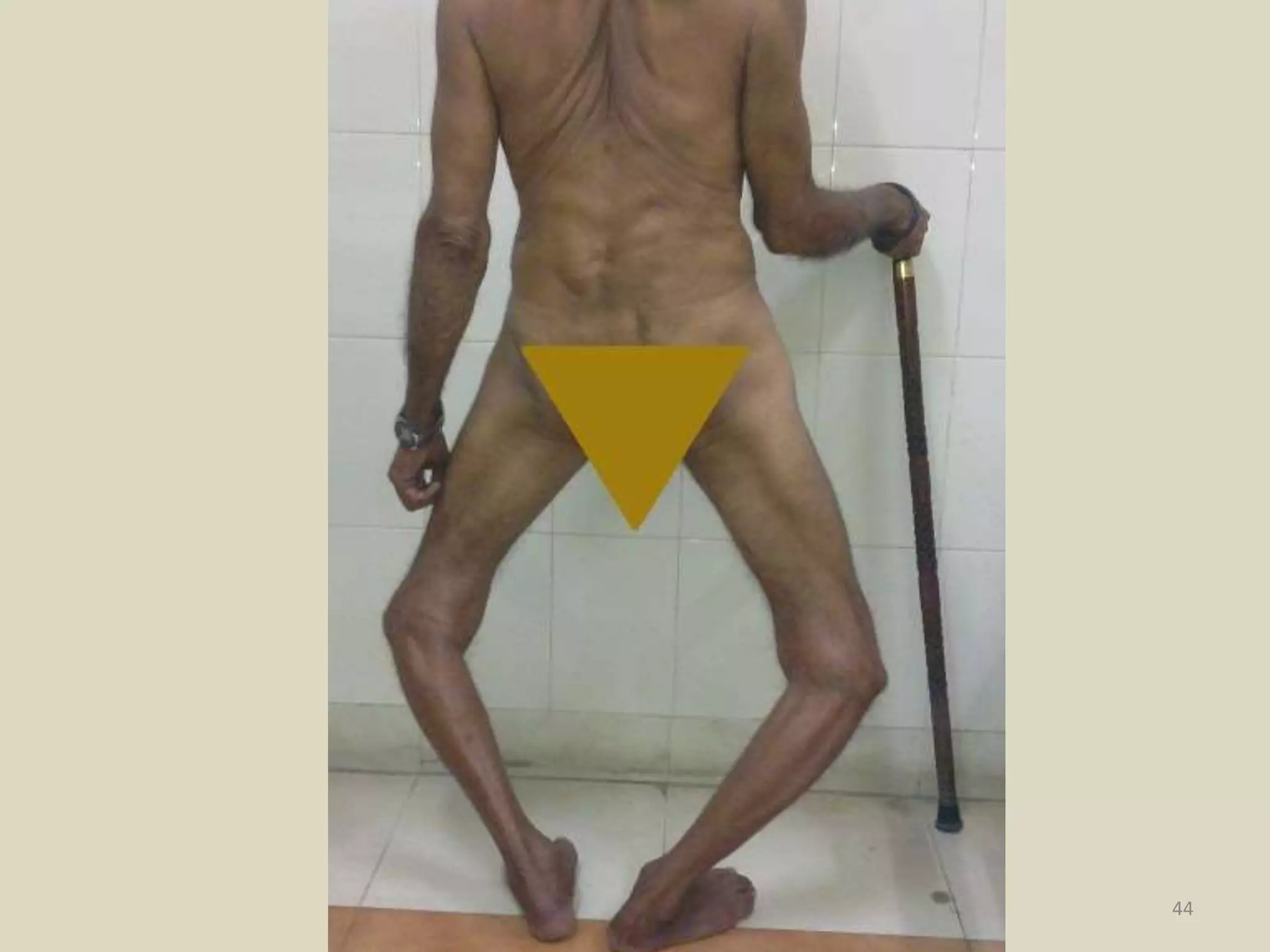
22 Jul 2011
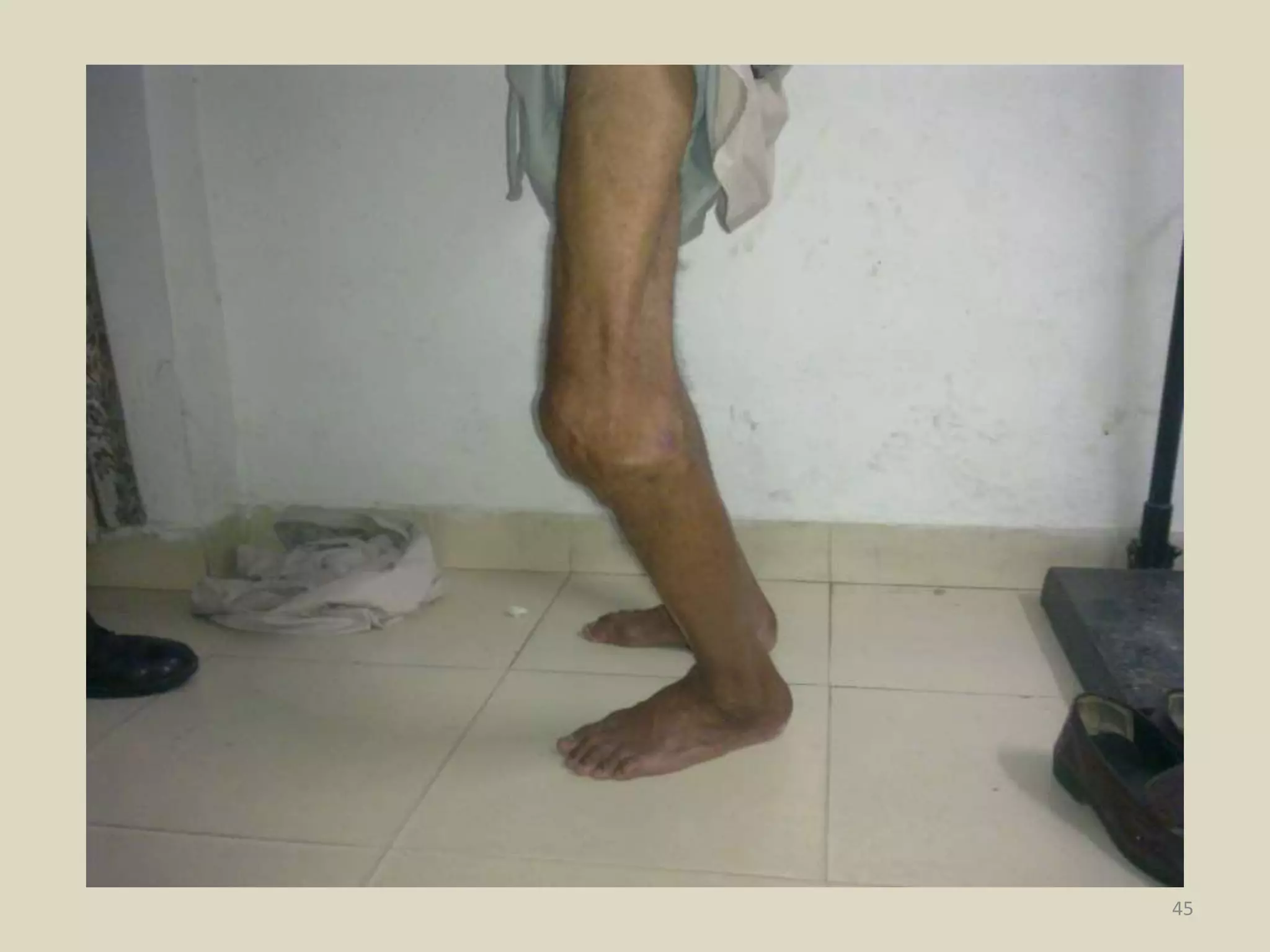
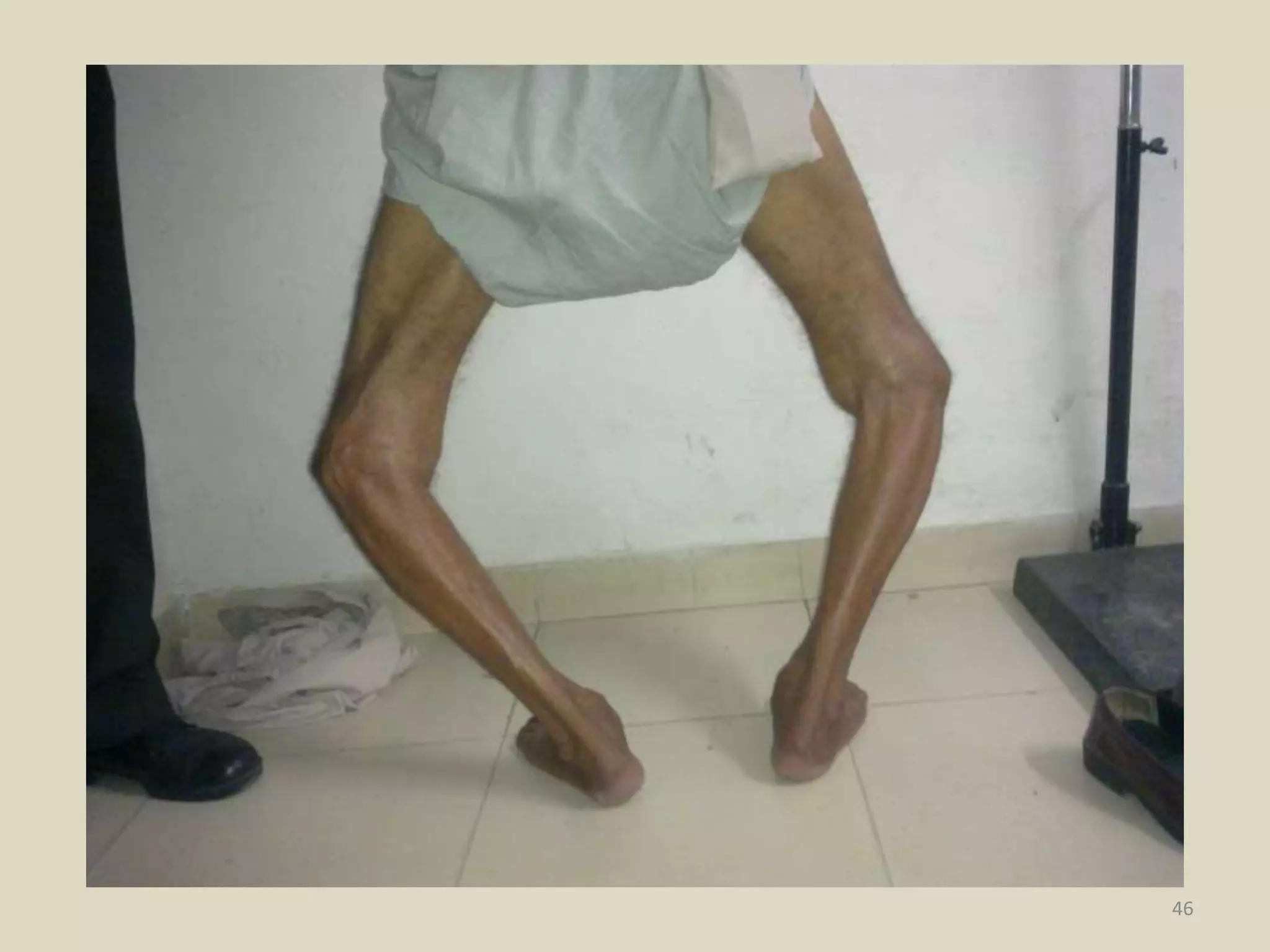
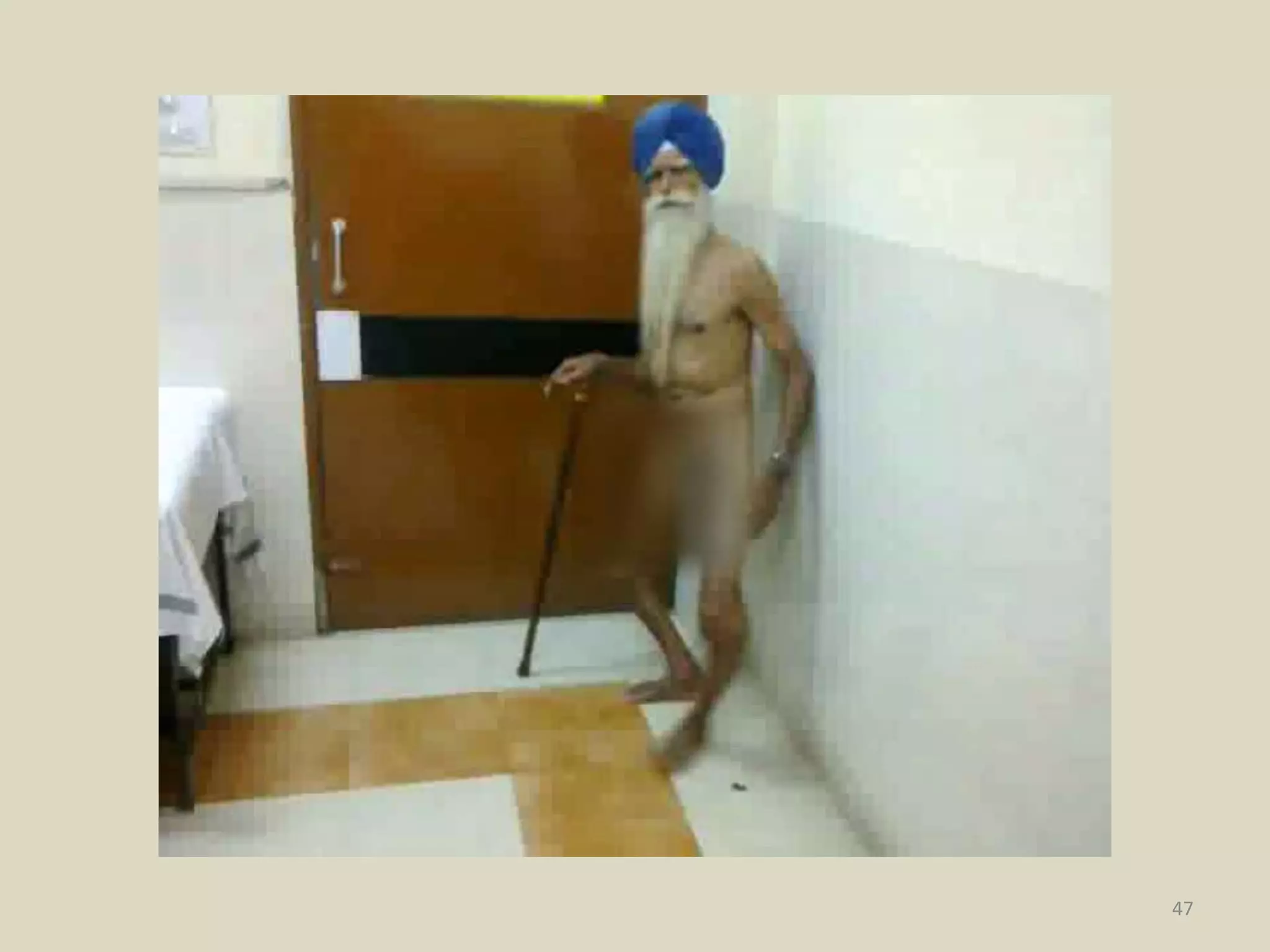
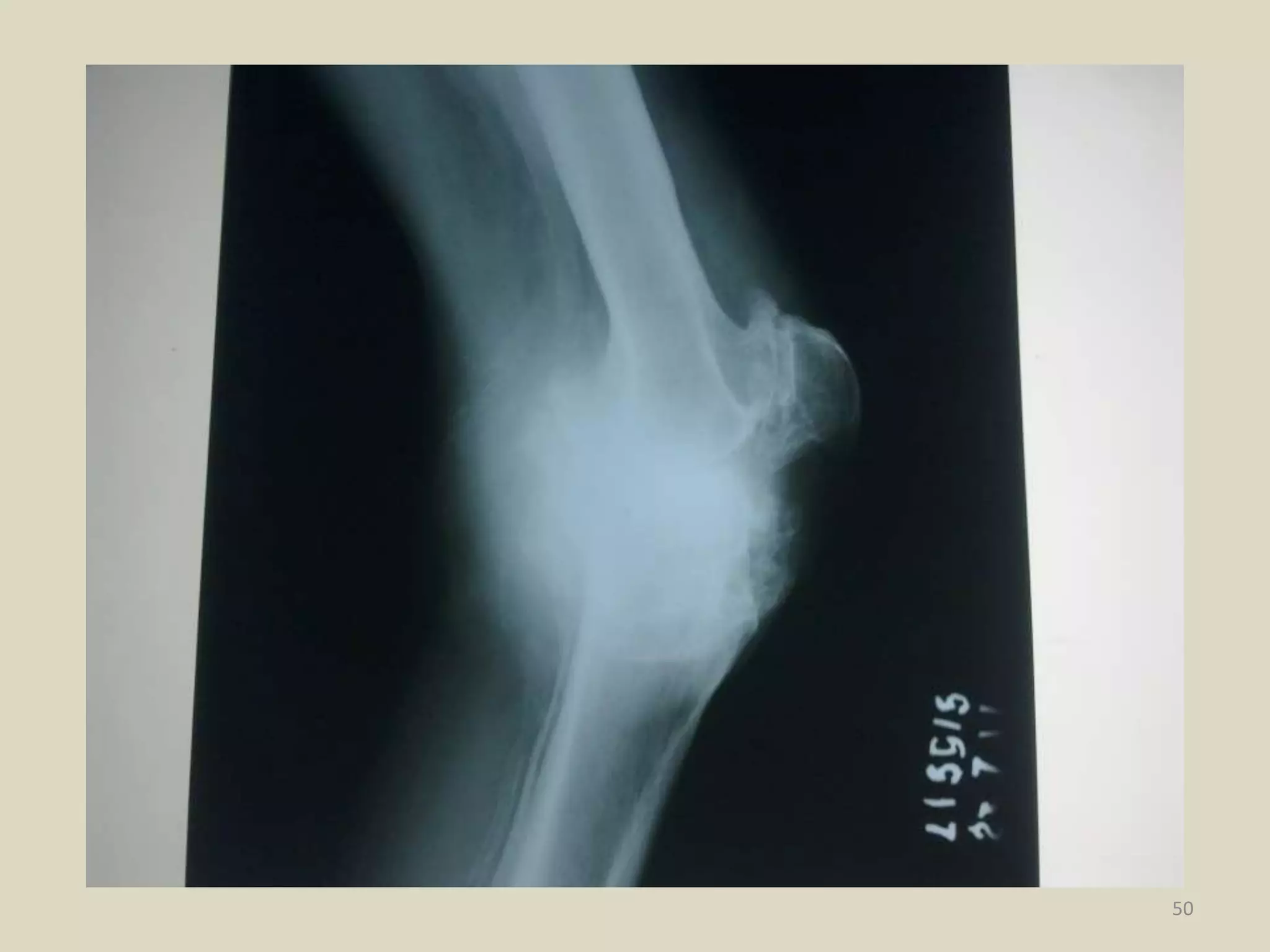
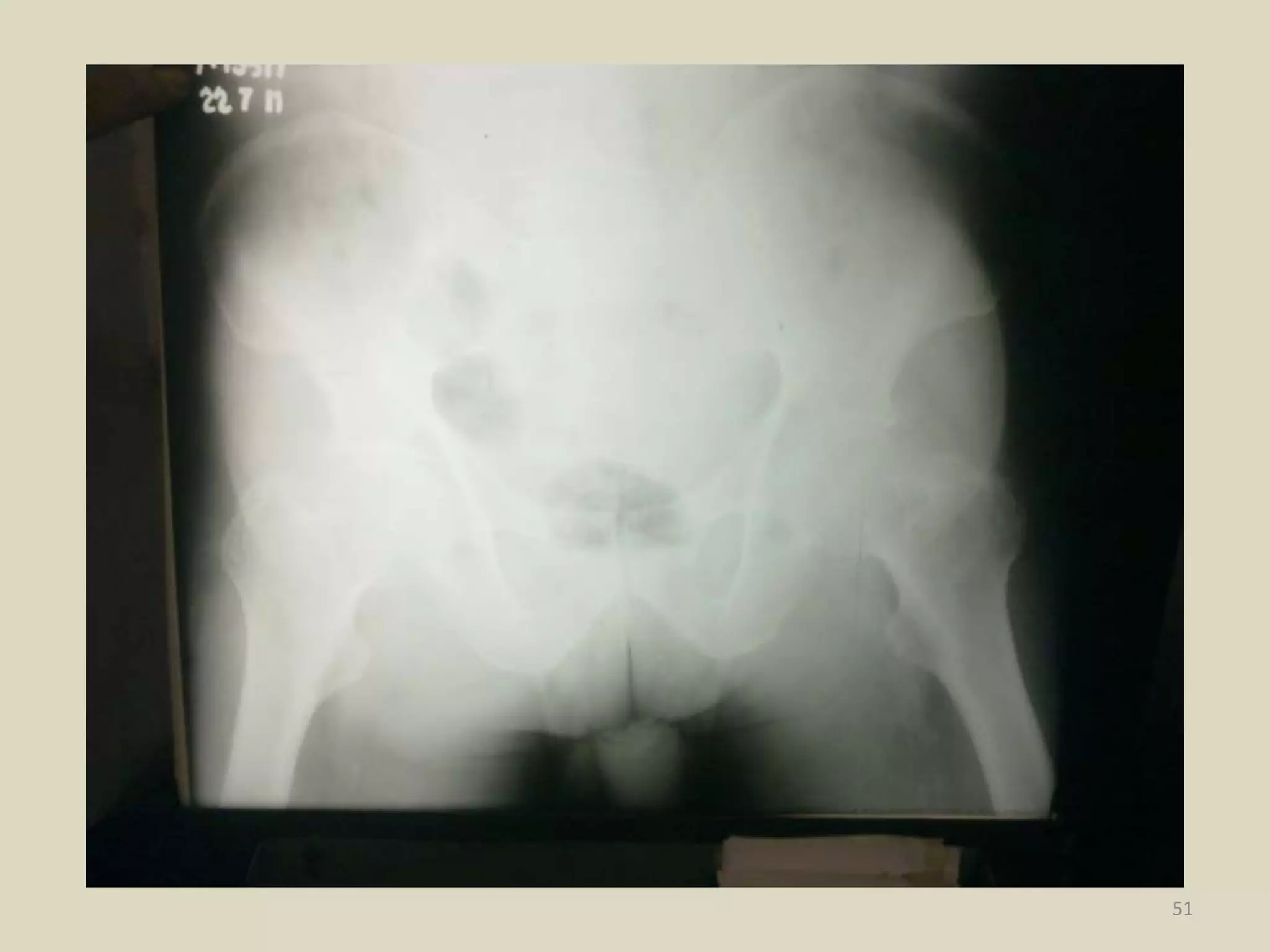
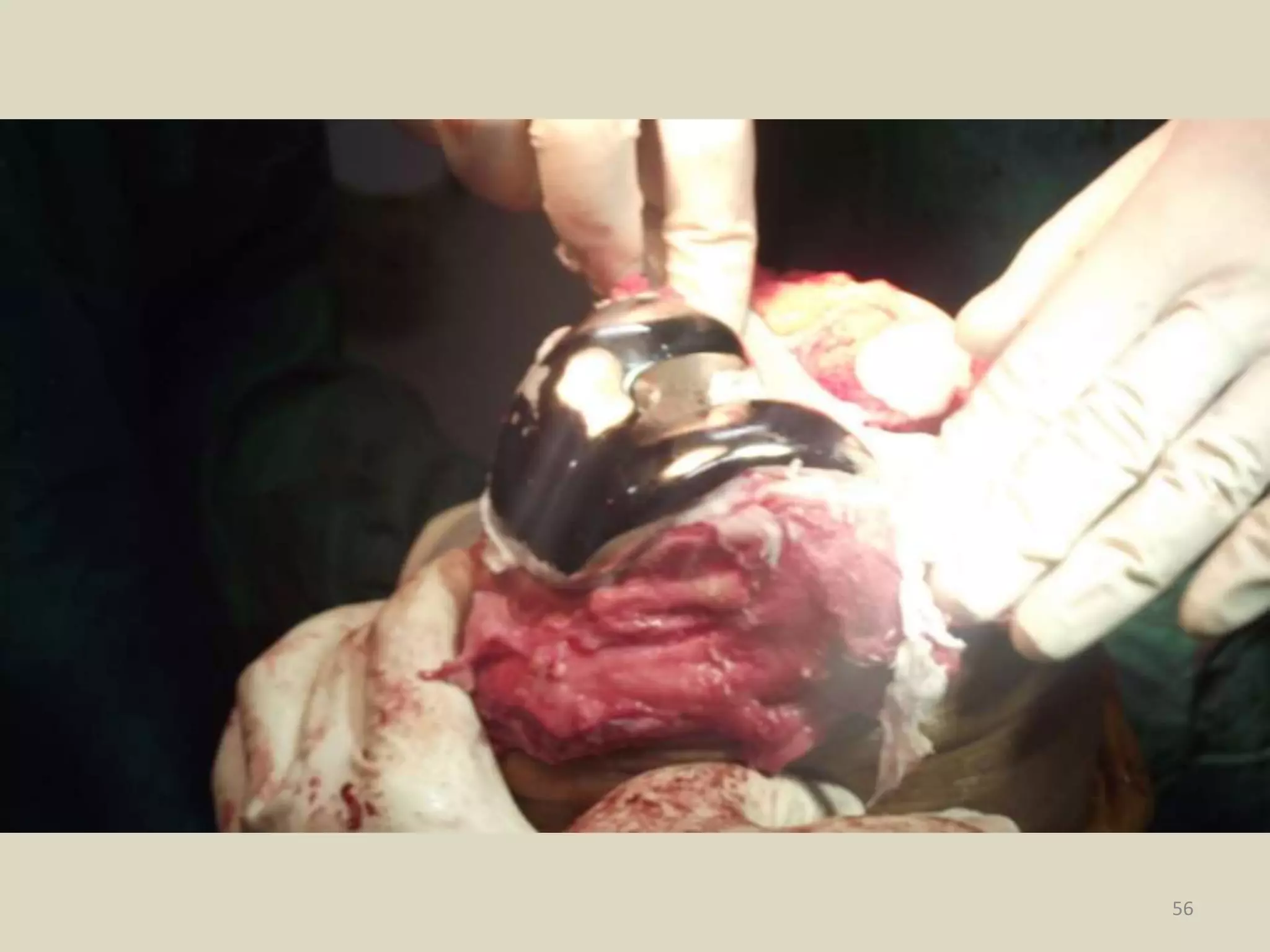
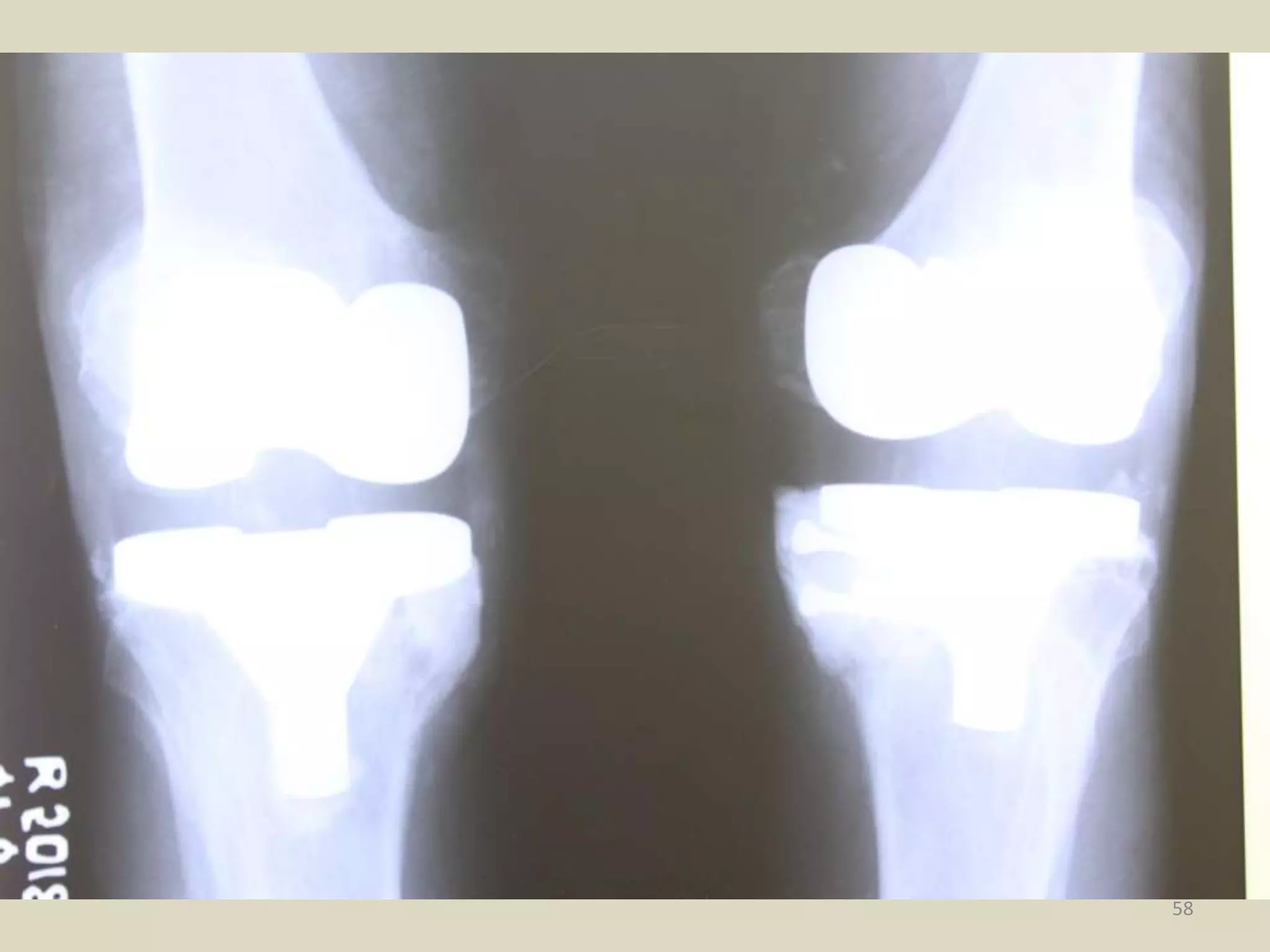
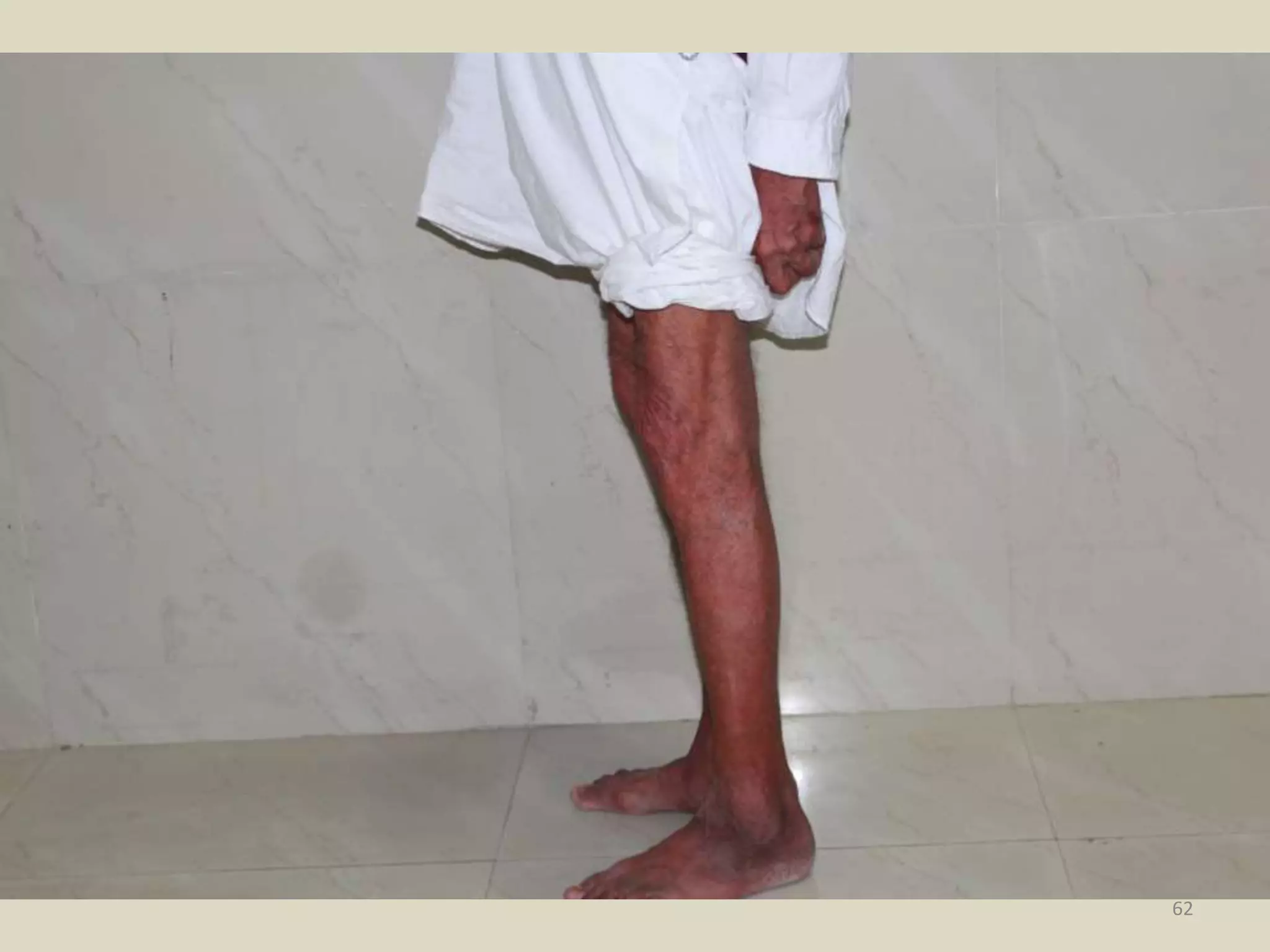
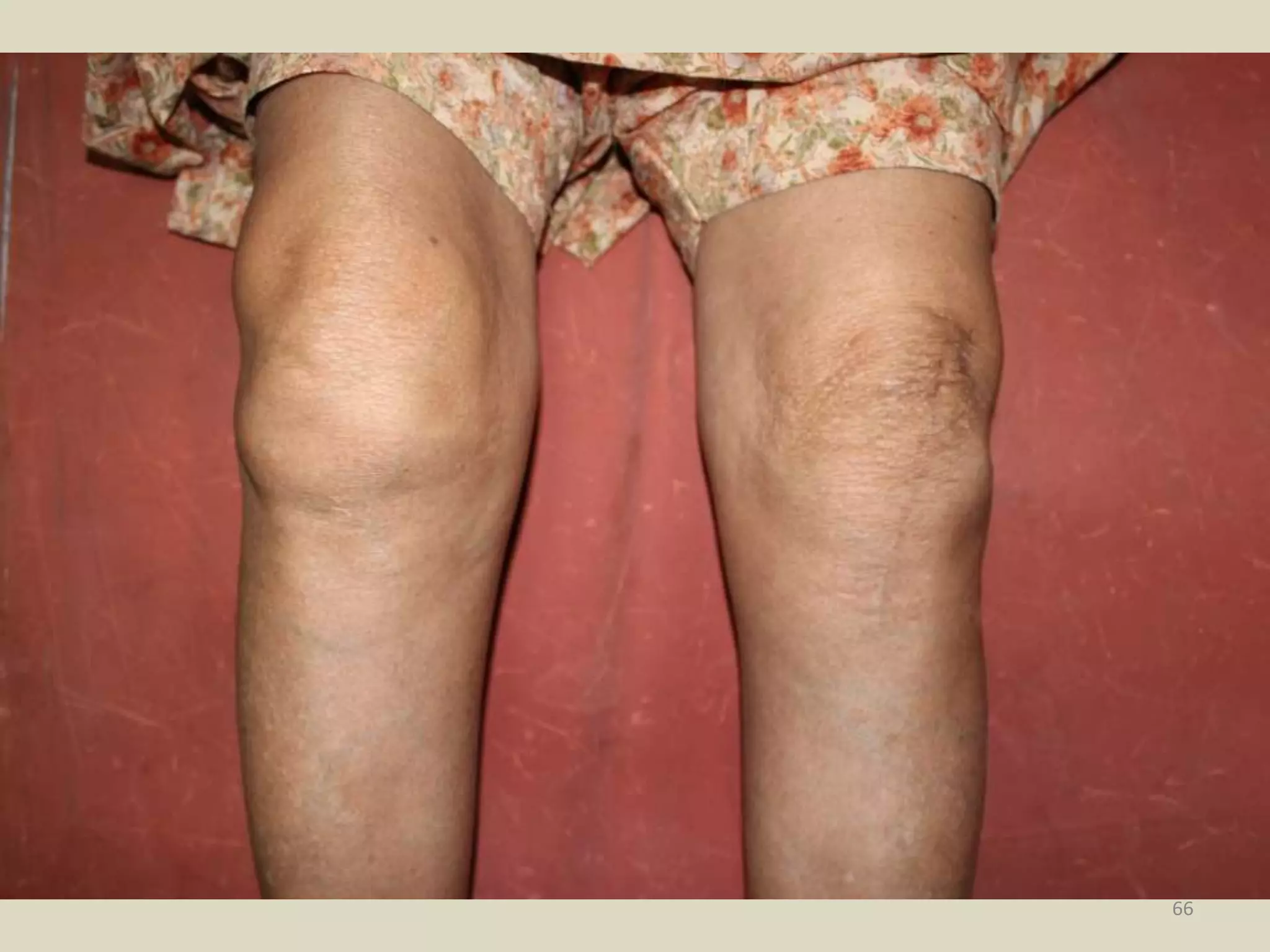
(Ex- Sub) Gurmukh Singh, 65 Yrs
Old case of Hypertension with Type
2 DM on medication for past 15 Yrs
Diagnosed with Osteoarthritis Both
Knees with Varus Deformity.
43
44
45
46
47
48
49
50
51
52
53
54
55
56
58
59
60
61
62
63
64
Medication Strength/dose Amount
First injection
Bupivacaine 0.5% (200-400 mg) 24 cc
Morphine sulphate 8 mg 0.8 cc
Epinephrine (1:1000) 300 μg 0.3 cc
Methylprednisolone
acetate
40 mg 1 cc
Cefuroxime 750 mg 10cc (reconstituted in
normal saline)
Sodium chloride 0.9% 22 cc
Second injection
Bupivacaine 0.5% 20 cc
Sodium chloride 0.9% 20 cc
Ranawat Orthopedic Center (ROC) cocktail
65
66
67
68
69
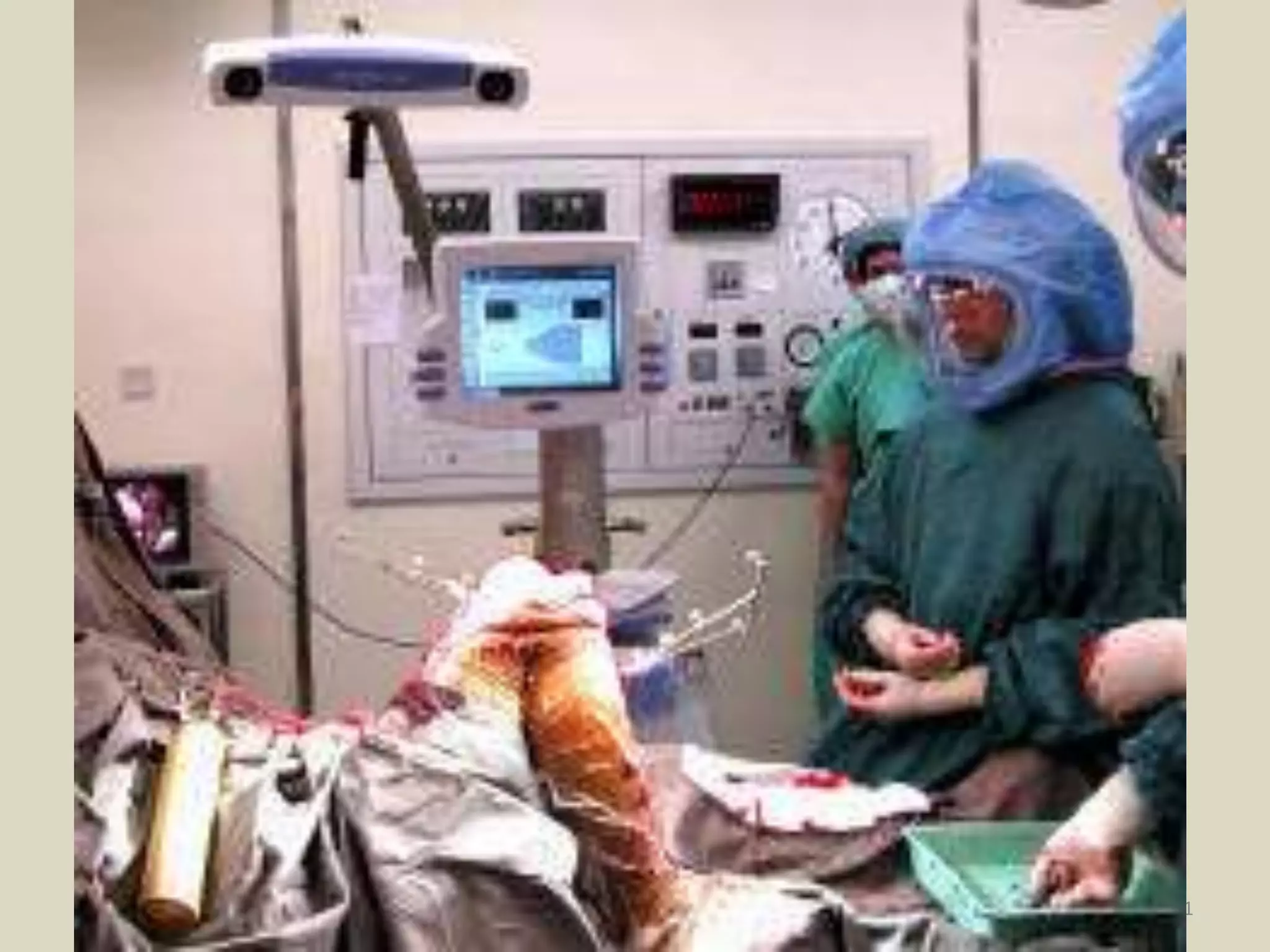
Navigation Assisted Knee
Arthroplasty
70
71
72
73
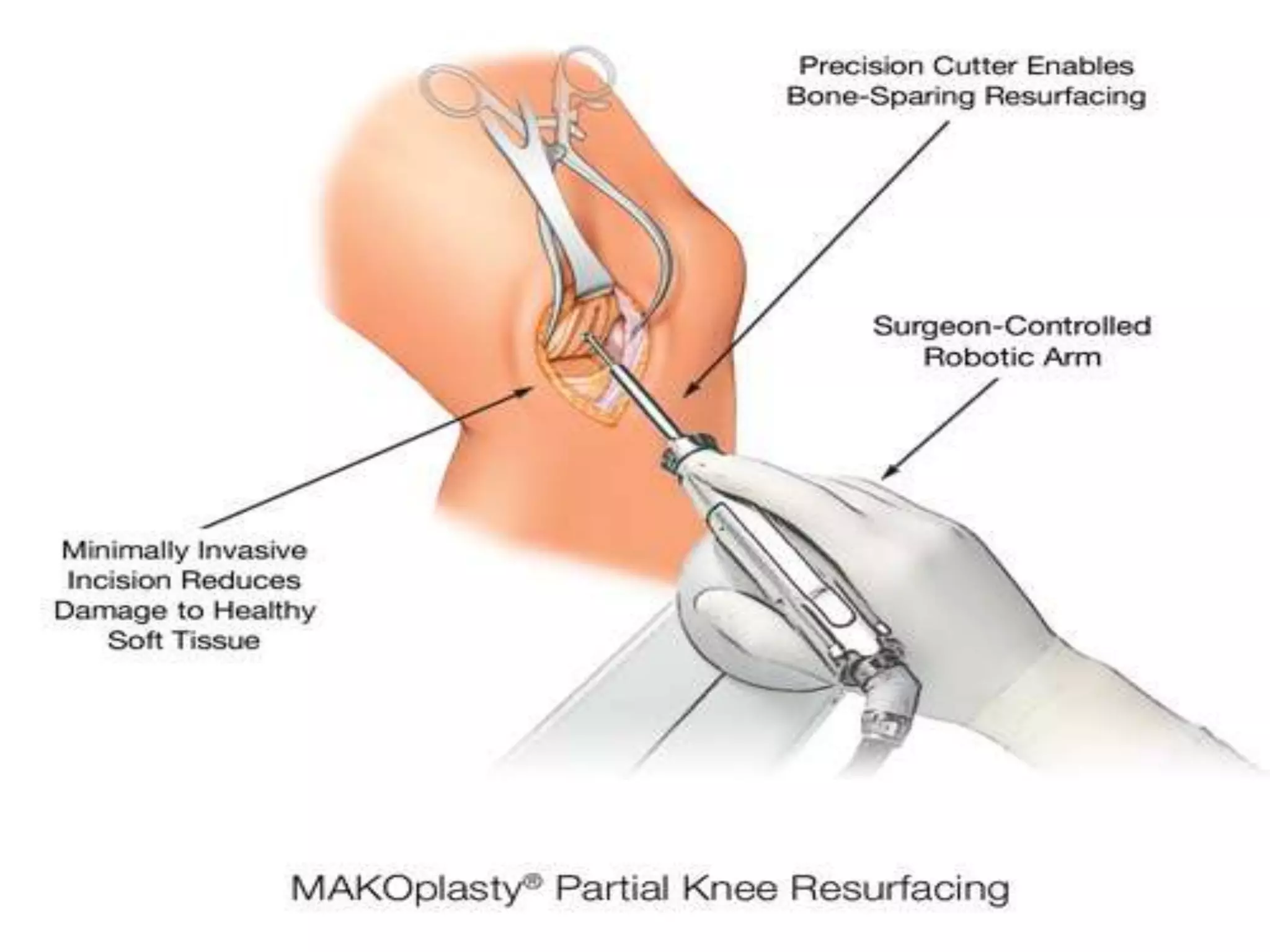
MAKOPLASTY
Navigation assisted resurfacing of
joints using minimal incision
74
75
MESSAGE
THANKS
Question
Hour
77

PPT OA Knee

  • 1.
  • 2.
  • 3.
  • 4.
    Osteoarthritis is adegenerative disorder that results from the biochemical breakdown of articular (hyaline) cartilage in the synovial joints.  However, the current concept holds that osteoarthritis involves not just the articular cartilage but the entire joint organ, including the subchondral bone and synovium. 4
  • 5.
    Osteoarthritis predominantly involves theweight-bearing joints, including the knees, hips, cervical and lumbosacral spine, and feet. Other commonly affected joints include the distal interphalangeal (DIP) and proximal interphalangeal (PIP) joints of the hands. 5
  • 6.
    Clinical Presentation  Jointsoreness after inactivity or periods of overuse of a joint.  Stiffness after rest and disappears quickly as activity begins again.  Morning stiffness lasting no longer than 30 minutes.  Joint pain which is less in the morning and stronger at the end of the day following activity.  Muscle atrophy around joints caused by inactivity can increase pain.  Pain and stiffness can affect posture, coordination and ability to walk. 6
  • 7.
    Signs of KneeOsteoarthritis may include : pain exacerbated by moving the knee  knee locking or catching pain when standing up from a chair pain when going up and down stairs weakening thigh muscles. 7
  • 8.
    Radiographic appearance Radiographic Criteria Loss of joint space  Sub-chondral sclerosis or cyst formation  Presence of new bone formation or osteophytes 8
  • 9.
  • 10.
  • 11.
  • 12.
    The goals ofosteoarthritis treatment Pain alleviation and improvement of functional status Non-pharmacologic interventions are the cornerstones of osteoarthritis therapy Patient education Temperature modalities Weight loss Exercise Physical therapy Occupational therapy Joint unloading in certain joints (e.g., knee, hip). 12
  • 13.
    Acetaminophen has clearlybeen demonstrated to be effective in the treatment of pain of OA when c/w placebo for 50% pain reduction when using 1000mg.  Acetaminophen has been demonstrated to be safe up to 4 gm/day.  As OA is principally non-inflammatory NSAIDs should clearly be titrated for clinical effect. 13
  • 14.
    Opioids Tramadol is specificallyidentified as the initial agent of choice in patients with OA 14
  • 15.
  • 16.
    Glucosamine Sulfate  Glucosaminesulfate has measured its effectiveness on Osteoarthritis of the knee. However, there is some evidence that it might also help Osteoarthritis of the hip or spine.  In addition to relieving pain, glucosamine sulfate might also slow the breakdown of joints in people with osteoarthritis who take it long-term. 16
  • 17.
    Side Effects ofGlucosamine Sulfate Glucosamine appears to be safe for most people with diabetes, but blood sugar should be monitored closely.  People with asthma should be cautious about taking products that contain glucosamine. 17
  • 18.
     There isnot enough reliable scientific information available to know if glucosamine sulfate is safe to take during pregnancy or while breast-feeding.  Until more is known, do not take glucosamine sulfate while pregnant or breast- feeding. 18
  • 19.
    What about therole of Steroid Injections ? Steroid injections can be used as an adjunct therapy along with systemic therapy. This is an effective way to knock down inflammation. Mechanism of Action  Inhibit accumulation of inflammatory cell lines  Reduction of prostaglandin synthesis  Inhibit leukocyte secretion from synovial cells  Decrease interleukin secretion by the synovium  Increase viscosity of synovial fluid 19
  • 20.
    HYLURINIDASE Hyalgan® is indicatedfor the treatment of pain in osteoarthritis (OA) of the knee in patients who have failed to respond adequately to conservative non- pharmacologic therapy, and to simple analgesics, e.g., acetaminophen. 20
  • 21.
  • 22.
    22 NEW DRUGS Protelosa, containthe chemical Strontium Ranelate which is thought to encourage the body to produce cartilage and is already used to treat osteoporosis. Celecoxib : 100 to 200 mg once or twice a day.
  • 23.
  • 24.
  • 25.
  • 26.
  • 27.
  • 28.
  • 29.
  • 30.
  • 31.
  • 32.
  • 33.
  • 34.
  • 35.
  • 36.
  • 37.
  • 38.
    Indications for TotalKnee Joint Replacement The main indication for Total Knee Arthroplasty is for relief of pain associated with arthritis of the knee in patients who have failed non operative treatments. (American Academy of Orthopedics) 38
  • 39.
  • 40.
  • 41.
  • 42.
    42 22 Jul 2011 (Ex-Sub) Gurmukh Singh, 65 Yrs Old case of Hypertension with Type 2 DM on medication for past 15 Yrs Diagnosed with Osteoarthritis Both Knees with Varus Deformity.
  • 43.
  • 44.
  • 45.
  • 46.
  • 47.
  • 48.
  • 49.
  • 50.
  • 51.
  • 52.
  • 53.
  • 54.
  • 55.
  • 56.
  • 58.
  • 59.
  • 60.
  • 61.
  • 62.
  • 63.
  • 64.
  • 65.
    Medication Strength/dose Amount Firstinjection Bupivacaine 0.5% (200-400 mg) 24 cc Morphine sulphate 8 mg 0.8 cc Epinephrine (1:1000) 300 μg 0.3 cc Methylprednisolone acetate 40 mg 1 cc Cefuroxime 750 mg 10cc (reconstituted in normal saline) Sodium chloride 0.9% 22 cc Second injection Bupivacaine 0.5% 20 cc Sodium chloride 0.9% 20 cc Ranawat Orthopedic Center (ROC) cocktail 65
  • 66.
  • 67.
  • 68.
  • 69.
  • 70.
  • 71.
  • 72.
  • 73.
    73 MAKOPLASTY Navigation assisted resurfacingof joints using minimal incision
  • 74.
  • 75.
  • 76.
  • 77.

Editor's Notes

  • #59 Post TKR Both Knees Status.