SREENARAYANA TRAINING 
COLLEGE 
POOCHAKKAL
Submitted by:- Priyanka.T 
Option:-Natural science 
Reg no:-13383011
Submitted to:-Soya.p
ANIMAL TISSUE
A tissue is an ensemble of similar cells from the same 
origin that together carry out a specific function. 
There are animal tissues and plant tissues. 
Animal tissues can be grouped into 4 type. 
Connective tissue. 
 Muscle tissue. 
 Nervous tissue. 
 Epithelial tissue.
CONNECTIVE TISSUE 
Connective tissues are fibrous tissues. 
They are made up of cells separated by non-living 
material, which is called an extracellular matrix. 
Connective tissue gives shape to organs and holds 
them in place. They support and bind other tissues. 
connective tissue typically has cells scattered 
throughout an extracellular matrix. 
Eg:-Blood ,Bone.
Connective tissue
Muscle tissue 
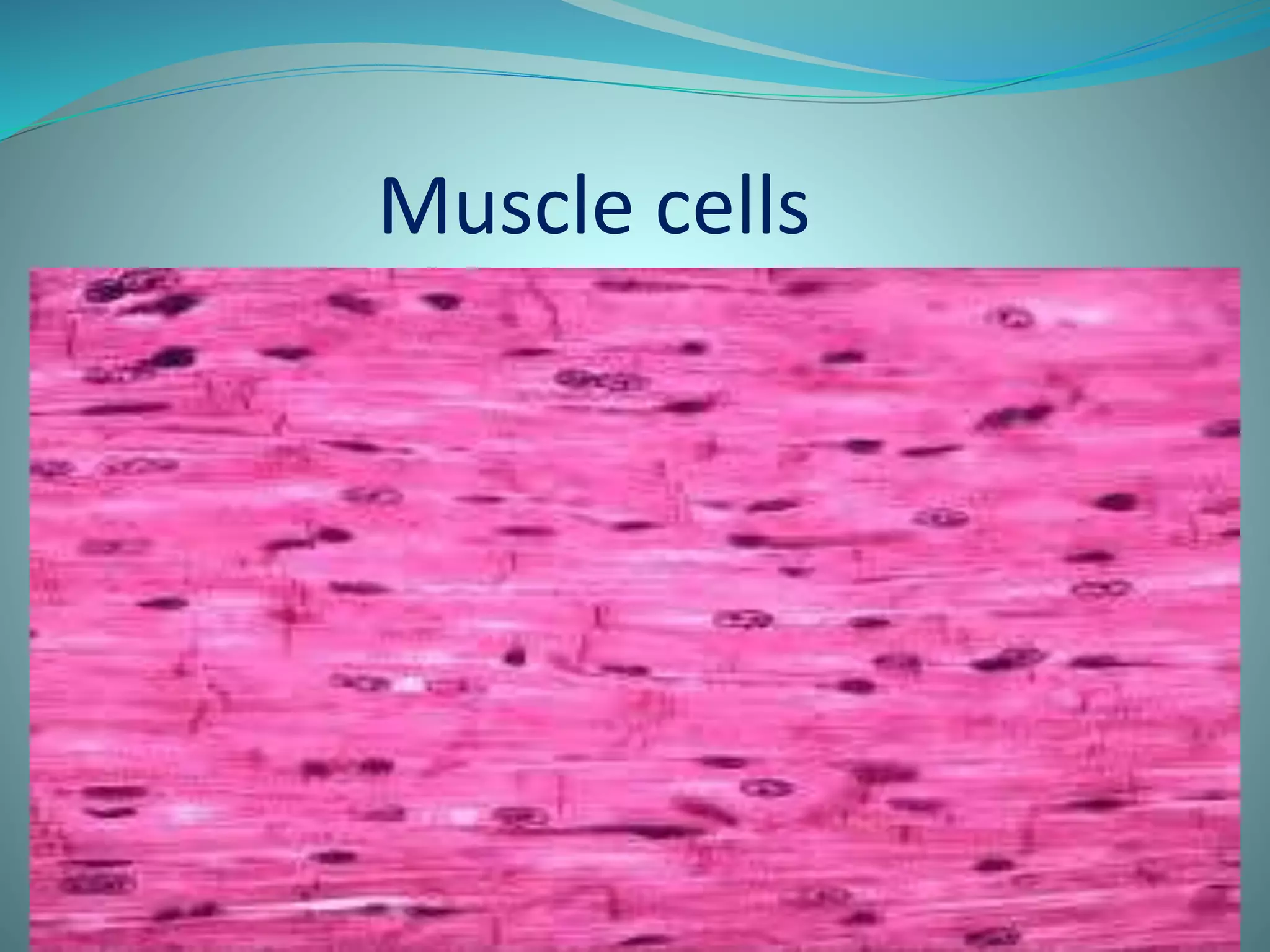
Muscle cells form the active contractile tissue of the 
body known as muscle tissue or muscular tissue. 
Muscle tissue functions to produce force and cause motion, 
either locomotion or movement within internal organs. 
Muscle tissue is separated into three distinct categories: 
 viseral or smooth muscle, which is found in the inner 
linings of organ. 
 Skeltal muscle , which is found attached to bone providing 
for gross movement. 
 Cardiac muscle which is found in the heart, allowing it to 
contract and pump blood throughout an organism. 
 They are the longest group of cells in the human body.
Muscle cells
Nervous tissue 
Cells comprising the central nervous system 
and peripheral nervous system are classified as neural 
tissue. 
In the central nervous system, neural tissue forms the 
brain and spinal cord. 
In the peripheral nervous system forms the cranial 
nerves and spinal nerves, inclusive of the motor 
neurons.
Nervous tissue
Epithelial tissue 
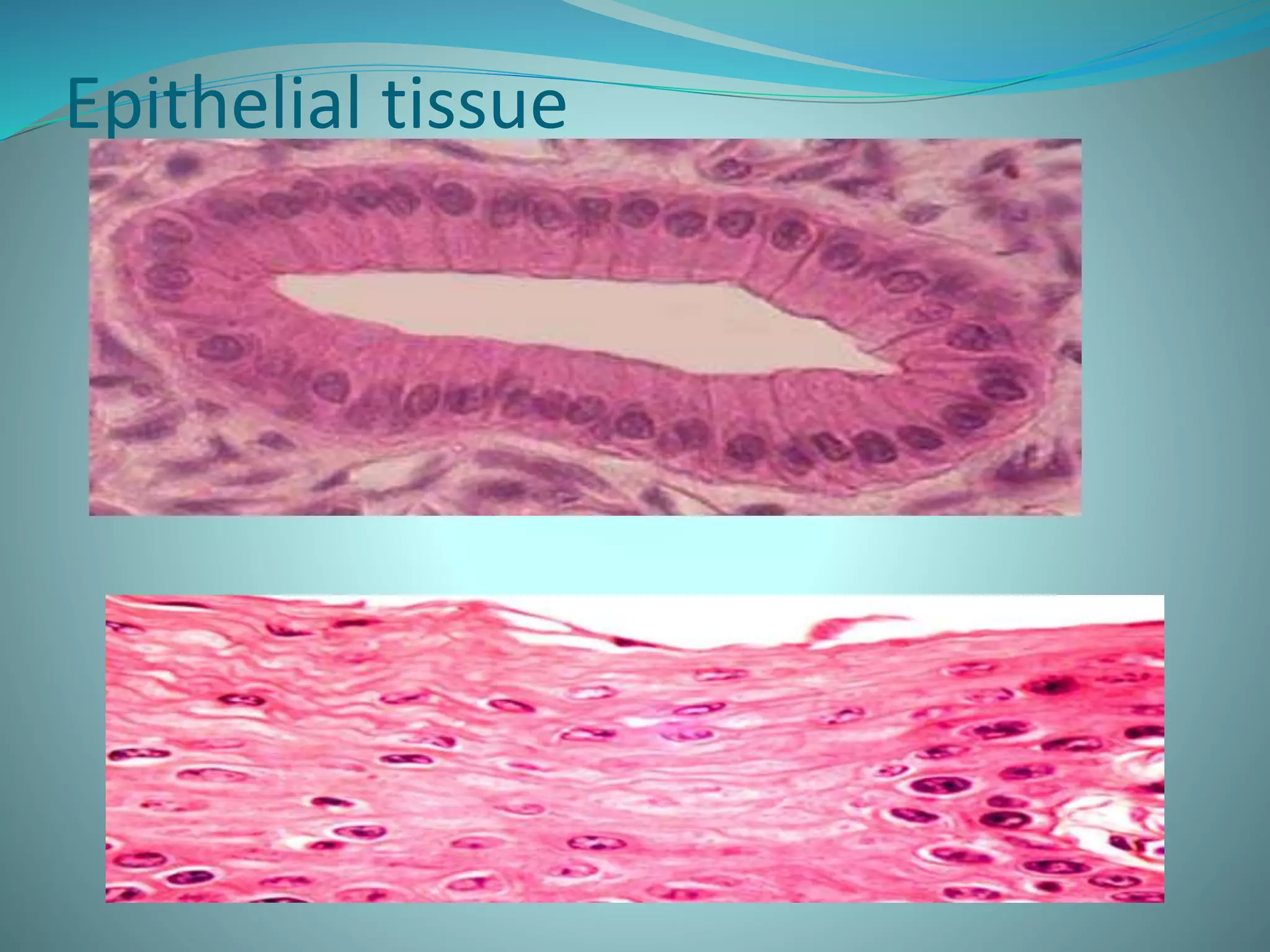
The epithelial tissues are formed by cells that cover the 
organ surfaces such as the surface of the skin, 
the reproductive tract, and the inner lining of the 
digestive tract. 
The cells comprising an epithelial layer are linked via 
semi-permeable, tight junctions; hence, this tissue 
provides a barrier between the external environment 
and the organ it covers. 
Functions 
Protection,secretion and absorption.
Epithelial tissue
Thank you…….

power point-animal tissue

  • 2.
  • 3.
    Submitted by:- Priyanka.T Option:-Natural science Reg no:-13383011
  • 4.
  • 5.
  • 6.
    A tissue isan ensemble of similar cells from the same origin that together carry out a specific function. There are animal tissues and plant tissues. Animal tissues can be grouped into 4 type. Connective tissue.  Muscle tissue.  Nervous tissue.  Epithelial tissue.
  • 7.
    CONNECTIVE TISSUE Connectivetissues are fibrous tissues. They are made up of cells separated by non-living material, which is called an extracellular matrix. Connective tissue gives shape to organs and holds them in place. They support and bind other tissues. connective tissue typically has cells scattered throughout an extracellular matrix. Eg:-Blood ,Bone.
  • 8.
  • 9.
    Muscle tissue Musclecells form the active contractile tissue of the body known as muscle tissue or muscular tissue. Muscle tissue functions to produce force and cause motion, either locomotion or movement within internal organs. Muscle tissue is separated into three distinct categories:  viseral or smooth muscle, which is found in the inner linings of organ.  Skeltal muscle , which is found attached to bone providing for gross movement.  Cardiac muscle which is found in the heart, allowing it to contract and pump blood throughout an organism.  They are the longest group of cells in the human body.
  • 10.
  • 11.
    Nervous tissue Cellscomprising the central nervous system and peripheral nervous system are classified as neural tissue. In the central nervous system, neural tissue forms the brain and spinal cord. In the peripheral nervous system forms the cranial nerves and spinal nerves, inclusive of the motor neurons.
  • 12.
  • 13.
    Epithelial tissue Theepithelial tissues are formed by cells that cover the organ surfaces such as the surface of the skin, the reproductive tract, and the inner lining of the digestive tract. The cells comprising an epithelial layer are linked via semi-permeable, tight junctions; hence, this tissue provides a barrier between the external environment and the organ it covers. Functions Protection,secretion and absorption.
  • 14.
  • 15.