Presented :Poonam
(Immunology M.Sc. I)
Phytohormones or plant hormones
are chemical messengers that coordinate
cellular activities.
Major Classes of Plant Hormones
Auxins (IAA)
Cytokinins
Gibberellins (GA)
Abscisic acid (ABA)
Ethylene
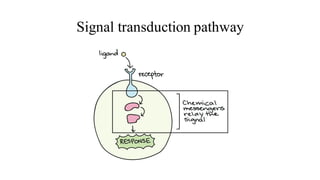
Signal transduction pathway
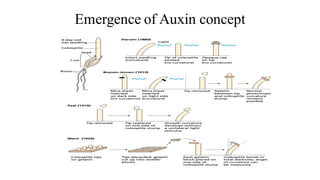
Emergence of Auxin concept
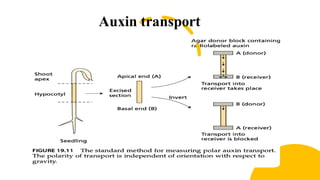
Auxin transport
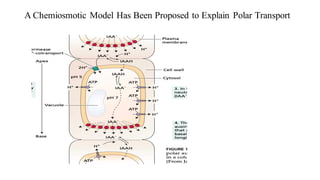
A Chemiosmotic Model Has Been Proposed to Explain Polar Transport
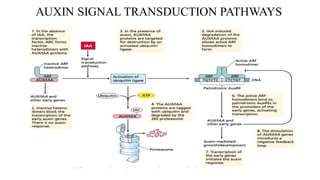
AUXIN SIGNAL TRANSDUCTION PATHWAYS
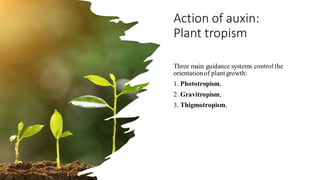
Action of auxin:
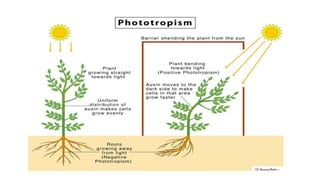
Plant tropism
Three main guidance systems control the
orientationof plant growth:
1. Phototropism,
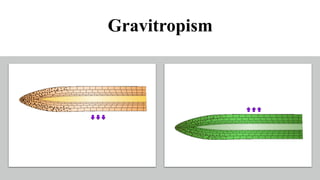
2. Gravitropism,
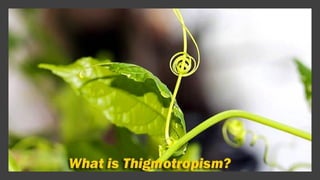
3. Thigmotropism,
Gravitropism
DEVELOPMENTAL EFFECTS OF AUXIN
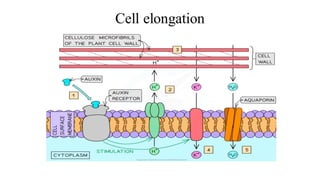
Auxin enhances cell elongation
Apical bud dominance
Auxin transport regulates floral bud and phyllotaxy
Auxin Promotes the Formation of Lateral and Adventitious Roots
Auxin Induces Vascular Differentiation
Auxin Delays the Onset of Leaf Abscission
Auxin Promotes Fruit Development
Cell elongation
Synthetic auxins have a variety of
commercial uses
Prevention of fruit & leaf drop, induction of parthenocarpic fruit
development, thinnning of fruit & rooting of cutting for plant
propagation
If excised leaf is dipped in auxins, then rooting enhanced
Parthenocarpic fruit can be induced by treatment of unpollinated flowers
with auxins
2,4-D and dicamba are synthetic auxins which used in herbicides
2,4-D also used as weed control while monocots can inactivate synthetic
auxins rapidly than dicots.
Gibberellins: Regulators of Plant Height
Gibberellins are any group of plant hormones that stimulate elongation of the
stem, flowering and germination.”
Gibberellic acid was discovered by Kurosawa, a Japanese Botanist while
investigating the rice foolish seedling disease.
Gibberellins are formed in the plastids by the terpenoid pathway
and then transformed in the endoplasmic reticulum and cytosol until they reach
their biologically active form.
There are more than 70 gibberellins isolated. They are GA1, GA2, GA3 and so on.
GA3 Gibberellic acid is the most widely studied plant growth regulators.
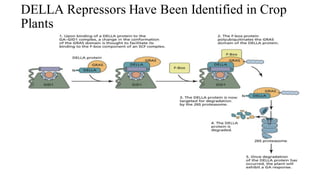
DELLA Repressors Have Been Identified in Crop
Plants
Gibberellin
function
Gibberellins stimulate cell elongation and cell
division
Gibberellins enhance cell wall extensibility
without acidification
Elongation of the internodes
Gibberellins regulate the transcription of cell
cycle kinases in intercalary meristems
Accelerate seed germination
Break seed dormancy
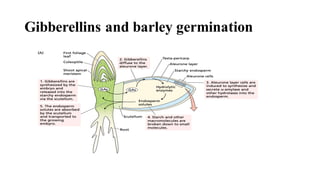
Gibberellins and barley germination
Cytokinin: Regulators of Cell Division
Miller, Skoog and Strong discovered the first cytokinin in 1955.
Lentham discovered first natural cytokinin in unripe Maize grain in 1964. He called
it Zeatin .
Zeatin Is the Most abundant natural Cytokinin. Due to presence of double bond ,
zeatin has cis and trans forms. Trans forms are biologically active.
Synthesized in meristematic tissues in roots and transported to aboveground organs
A Cytokinin Receptor Related to Bacterial Two- Component Receptors Has Been
Identified . They are referred as Hybrid histidine kinase receptor protein. And their
signalling is called phosphorelay two component signalling.
Cytokinin receptors are plasma membrane bound receptors.
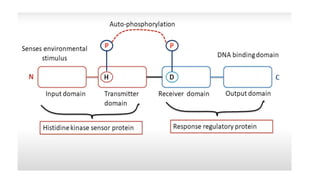
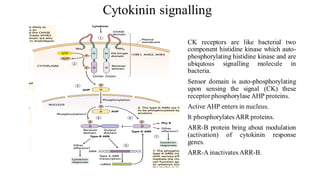
Cytokinin signalling
CK receptors are like bacterial two
component histidine kinase which auto-
phosphorylating histidine kinase and are
ubiqutous signalling molecule in
bacteria.
Sensor domain is auto-phosphorylating
upon sensing the signal (CK) these
receptorphosphorylase AHP proteins.
Active AHP enters in nucleus.
It phosphorylatesARR proteins.
ARR-B protein bring about modulation
(activation) of cytokinin response
genes.
ARR-A inactivates ARR-B.
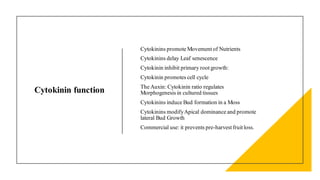
Cytokinin function
Cytokinins promote Movement of Nutrients
Cytokinins delay Leaf senescence
Cytokinin inhibit primary root growth:
Cytokinin promotes cell cycle
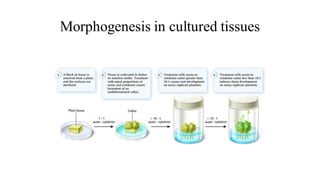
The Auxin: Cytokinin ratio regulates
Morphogenesis in cultured tissues
Cytokinins induce Bud formation in a Moss
Cytokinins modifyApical dominance and promote
lateral Bud Growth
Commercial use: it prevents pre-harvest fruit loss.
Morphogenesis in cultured tissues
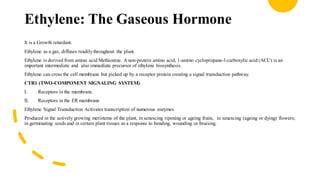
Ethylene: The Gaseous Hormone
It is a Growth retardant.
Ethylene as a gas, diffuses readilythroughout the plant.
Ethylene is derived from amino acid Methionine. A non-protein amino acid, 1-amino cyclopropane-l-carboxylic acid (ACC) is an
important intermediate and also immediate precursor of ethylene biosynthesis.
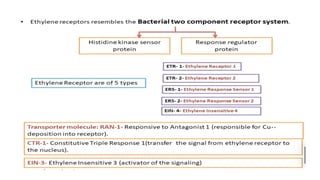
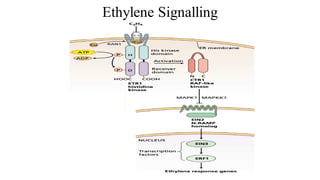
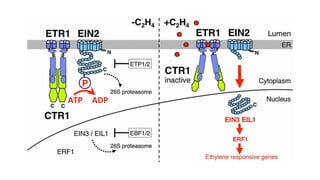
Ethylene can cross the cell membrane but picked up by a receptor protein creating a signal transduction pathway.
CTR1 (TWO-COMPONENT SIGNALING SYSTEM)
I. Receptors in the membrane.
II. Receptors in the ER membrane
Ethylene Signal Transduction Activates transcription of numerous enzymes.
Produced in the actively growing meristems of the plant, in senescing ripening or ageing fruits, in senescing (ageing or dying) flowers,
in germinating seeds and in certain plant tissues as a response to bending, wounding or bruising.
Ethylene Signalling
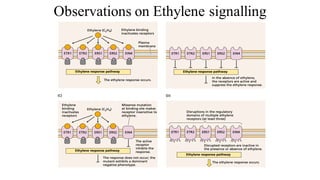
Observations on Ethylene signalling
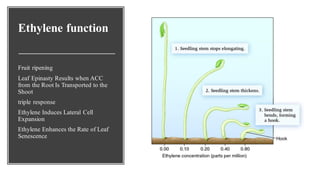
Ethylene function
Fruit ripening
Leaf Epinasty Results when ACC
from the Root Is Transported to the
Shoot
triple response
Ethylene Induces Lateral Cell
Expansion
Ethylene Enhances the Rate of Leaf
Senescence
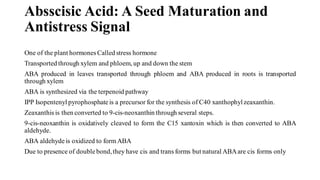
Absscisic Acid: A Seed Maturation and
Antistress Signal
One of the plant hormones Called stress hormone
Transported through xylem and phloem, up and down the stem
ABA produced in leaves transported through phloem and ABA produced in roots is transported
through xylem
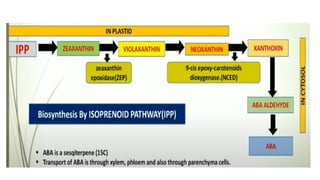
ABA is synthesized via the terpenoid pathway
IPP Isopentenyl pyrophosphateis a precursor for the synthesis of C40 xanthophylzeaxanthin.
Zeaxanthis is then converted to 9-cis-neoxanthin through several steps.
9-cis-neoxanthin is oxidatively cleaved to form the C15 xantoxin which is then converted to ABA
aldehyde.
ABA aldehyde is oxidized to formABA
Due to presence of doublebond,they have cis and trans forms but natural ABAare cis forms only
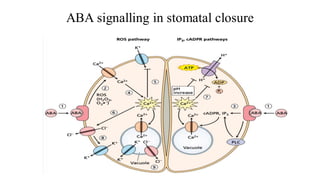
ABA signalling in stomatal closure
ABA Functions
ABA causes stomatal closure
ABA promotes root growth and inhibits
shoot growth at low water potentials
ABA accumulates in Dormant buds
ABA inhibits seed germination and Vivipary
ABA Promotes Leaf Senescence
List of phytohormones expanded to
include new chemicals
• Brassinosteroids
• Jasmonic acid
• Salicyclic acid
• Polyamines, strigolactones
• Nitric oxide
• Peptide hormones (Santner et al.2009)
Brassinosteroids (BRs)
Brassinosteroids are class of plant polyhydroxysteroids that recognised as new kind
of phytohormones.
The occurrenceof brassinosteroidshas been demonstrated in almost every part of plants.
About 70 BRs have been isolated from plants. (Bajguz andTretyn,2003)
At cellular level BR's can regulate
• cell elongation
• cell division
• cell differentiation.
At whole plant levels, BRs can regulate hypocotyl elongation, root and shoot development,
leaf development, male fertility, senescence, responses to biotic and abiotic stresses.
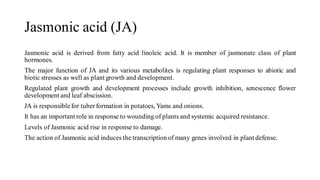
Jasmonic acid (JA)
Jasmonic acid is derived from fatty acid linoleic acid. It is member of jasmonate class of plant
hormones.
The major function of JA and its various metabolites is regulating plant responses to abiotic and
biotic stresses as well as plant growth and development.
Regulated plant growth and development processes include growth inhibition, senescence flower
development and leaf abscission.
JA is responsible for tuber formation in potatoes, Yams and onions.
It has an important role in response to wounding of plants and systemic acquired resistance.
Levels of Jasmonic acid rise in response to damage.
The action of Jasmonic acid induces the transcription of many genes involved in plant defense.
Salicyclic acid
Salicyclic acid is a monohydroxy benzoic acid, a type of phenolic acid and a betahydroxy
acid.
It is colourless crystalline organic acid.
It is widely used in organic synthesis and function as a plant hormone.
It is derived from the metabolism of salicin.
Role:
Phenolic compounds exert their influence on physiological and biochemical processes
including photosynthesis, ion uptake, membrane permeability, enzyme activities, flowering
and growth & development of plants
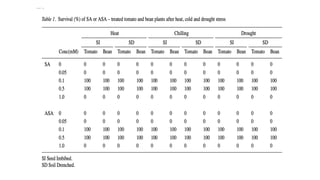
Case study
Material and method
Bean (Phaseolus vulgaris L.) and tomato (Lycopersicon esculentum L.)
Fourteen day-old plants were soil-drenched with 20 ml of distilled water or 0.05,
0.1, 0.5, 1.0 and 5.0 mM ASA or SA (dissolved in distilled water). Alternatively,
seeds were imbibed in the solutions or in distilled water for 24 h and sown in pots.
One week after soil-drenching or three weeks after the seed treatment, seedlings
were subjected to heat, cold and drought stresses.
For heat treatment, seedlings were exposed to 54 ± 0.5◦C for 3 h with an average
light intensity of 40 μMol m−2sec−1 and then returned to room temperature.
For chilling stress, plants were exposed to 0 ± 0.5 ◦ C in an incubator with an
average light intensity of 35 μMol m−2sec−1 and 16/8 h light/dark photoperiod for
two days.
Drought stress was imposed by withholding water for 7 days, then on the 8th day all
pots were watered until saturation
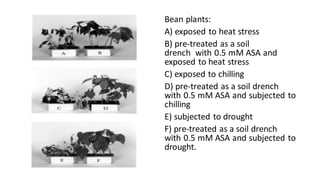
Bean plants:
A) exposed to heat stress
B) pre-treated as a soil
drench with 0.5 mM ASA and
exposed to heat stress
C) exposed to chilling
D) pre-treated as a soil drench
with 0.5 mM ASA and subjected to
chilling
E) subjected to drought
F) pre-treated as a soil drench
with 0.5 mM ASA and subjected to
drought.
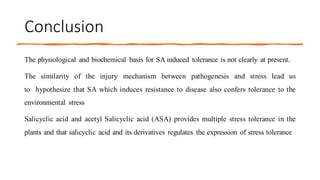
Conclusion
The physiological and biochemical basis for SA induced tolerance is not clearly at present.
The similarity of the injury mechanism between pathogenesis and stress lead us
to hypothesize that SA which induces resistance to disease also confers tolerance to the
environmental stress
Salicyclic acid and acetyl Salicyclic acid (ASA) provides multiple stress tolerance in the
plants and that salicyclic acid and its derivatives regulates the expression of stress tolerance
Thank you

plant hormone

  • 1.
  • 2.
    Phytohormones or planthormones are chemical messengers that coordinate cellular activities. Major Classes of Plant Hormones Auxins (IAA) Cytokinins Gibberellins (GA) Abscisic acid (ABA) Ethylene
  • 3.
  • 4.
  • 5.
  • 6.
    A Chemiosmotic ModelHas Been Proposed to Explain Polar Transport
  • 7.
  • 8.
    Action of auxin: Planttropism Three main guidance systems control the orientationof plant growth: 1. Phototropism, 2. Gravitropism, 3. Thigmotropism,
  • 10.
  • 12.
    DEVELOPMENTAL EFFECTS OFAUXIN Auxin enhances cell elongation Apical bud dominance Auxin transport regulates floral bud and phyllotaxy Auxin Promotes the Formation of Lateral and Adventitious Roots Auxin Induces Vascular Differentiation Auxin Delays the Onset of Leaf Abscission Auxin Promotes Fruit Development
  • 13.
  • 14.
    Synthetic auxins havea variety of commercial uses Prevention of fruit & leaf drop, induction of parthenocarpic fruit development, thinnning of fruit & rooting of cutting for plant propagation If excised leaf is dipped in auxins, then rooting enhanced Parthenocarpic fruit can be induced by treatment of unpollinated flowers with auxins 2,4-D and dicamba are synthetic auxins which used in herbicides 2,4-D also used as weed control while monocots can inactivate synthetic auxins rapidly than dicots.
  • 15.
    Gibberellins: Regulators ofPlant Height Gibberellins are any group of plant hormones that stimulate elongation of the stem, flowering and germination.” Gibberellic acid was discovered by Kurosawa, a Japanese Botanist while investigating the rice foolish seedling disease. Gibberellins are formed in the plastids by the terpenoid pathway and then transformed in the endoplasmic reticulum and cytosol until they reach their biologically active form. There are more than 70 gibberellins isolated. They are GA1, GA2, GA3 and so on. GA3 Gibberellic acid is the most widely studied plant growth regulators.
  • 16.
    DELLA Repressors HaveBeen Identified in Crop Plants
  • 17.
    Gibberellin function Gibberellins stimulate cellelongation and cell division Gibberellins enhance cell wall extensibility without acidification Elongation of the internodes Gibberellins regulate the transcription of cell cycle kinases in intercalary meristems Accelerate seed germination Break seed dormancy
  • 18.
  • 19.
    Cytokinin: Regulators ofCell Division Miller, Skoog and Strong discovered the first cytokinin in 1955. Lentham discovered first natural cytokinin in unripe Maize grain in 1964. He called it Zeatin . Zeatin Is the Most abundant natural Cytokinin. Due to presence of double bond , zeatin has cis and trans forms. Trans forms are biologically active. Synthesized in meristematic tissues in roots and transported to aboveground organs A Cytokinin Receptor Related to Bacterial Two- Component Receptors Has Been Identified . They are referred as Hybrid histidine kinase receptor protein. And their signalling is called phosphorelay two component signalling. Cytokinin receptors are plasma membrane bound receptors.
  • 21.
    Cytokinin signalling CK receptorsare like bacterial two component histidine kinase which auto- phosphorylating histidine kinase and are ubiqutous signalling molecule in bacteria. Sensor domain is auto-phosphorylating upon sensing the signal (CK) these receptorphosphorylase AHP proteins. Active AHP enters in nucleus. It phosphorylatesARR proteins. ARR-B protein bring about modulation (activation) of cytokinin response genes. ARR-A inactivates ARR-B.
  • 22.
    Cytokinin function Cytokinins promoteMovement of Nutrients Cytokinins delay Leaf senescence Cytokinin inhibit primary root growth: Cytokinin promotes cell cycle The Auxin: Cytokinin ratio regulates Morphogenesis in cultured tissues Cytokinins induce Bud formation in a Moss Cytokinins modifyApical dominance and promote lateral Bud Growth Commercial use: it prevents pre-harvest fruit loss.
  • 23.
  • 24.
    Ethylene: The GaseousHormone It is a Growth retardant. Ethylene as a gas, diffuses readilythroughout the plant. Ethylene is derived from amino acid Methionine. A non-protein amino acid, 1-amino cyclopropane-l-carboxylic acid (ACC) is an important intermediate and also immediate precursor of ethylene biosynthesis. Ethylene can cross the cell membrane but picked up by a receptor protein creating a signal transduction pathway. CTR1 (TWO-COMPONENT SIGNALING SYSTEM) I. Receptors in the membrane. II. Receptors in the ER membrane Ethylene Signal Transduction Activates transcription of numerous enzymes. Produced in the actively growing meristems of the plant, in senescing ripening or ageing fruits, in senescing (ageing or dying) flowers, in germinating seeds and in certain plant tissues as a response to bending, wounding or bruising.
  • 26.
  • 28.
  • 29.
    Ethylene function Fruit ripening LeafEpinasty Results when ACC from the Root Is Transported to the Shoot triple response Ethylene Induces Lateral Cell Expansion Ethylene Enhances the Rate of Leaf Senescence
  • 30.
    Absscisic Acid: ASeed Maturation and Antistress Signal One of the plant hormones Called stress hormone Transported through xylem and phloem, up and down the stem ABA produced in leaves transported through phloem and ABA produced in roots is transported through xylem ABA is synthesized via the terpenoid pathway IPP Isopentenyl pyrophosphateis a precursor for the synthesis of C40 xanthophylzeaxanthin. Zeaxanthis is then converted to 9-cis-neoxanthin through several steps. 9-cis-neoxanthin is oxidatively cleaved to form the C15 xantoxin which is then converted to ABA aldehyde. ABA aldehyde is oxidized to formABA Due to presence of doublebond,they have cis and trans forms but natural ABAare cis forms only
  • 32.
    ABA signalling instomatal closure
  • 33.
    ABA Functions ABA causesstomatal closure ABA promotes root growth and inhibits shoot growth at low water potentials ABA accumulates in Dormant buds ABA inhibits seed germination and Vivipary ABA Promotes Leaf Senescence
  • 34.
    List of phytohormonesexpanded to include new chemicals • Brassinosteroids • Jasmonic acid • Salicyclic acid • Polyamines, strigolactones • Nitric oxide • Peptide hormones (Santner et al.2009)
  • 35.
    Brassinosteroids (BRs) Brassinosteroids areclass of plant polyhydroxysteroids that recognised as new kind of phytohormones. The occurrenceof brassinosteroidshas been demonstrated in almost every part of plants. About 70 BRs have been isolated from plants. (Bajguz andTretyn,2003) At cellular level BR's can regulate • cell elongation • cell division • cell differentiation. At whole plant levels, BRs can regulate hypocotyl elongation, root and shoot development, leaf development, male fertility, senescence, responses to biotic and abiotic stresses.
  • 36.
    Jasmonic acid (JA) Jasmonicacid is derived from fatty acid linoleic acid. It is member of jasmonate class of plant hormones. The major function of JA and its various metabolites is regulating plant responses to abiotic and biotic stresses as well as plant growth and development. Regulated plant growth and development processes include growth inhibition, senescence flower development and leaf abscission. JA is responsible for tuber formation in potatoes, Yams and onions. It has an important role in response to wounding of plants and systemic acquired resistance. Levels of Jasmonic acid rise in response to damage. The action of Jasmonic acid induces the transcription of many genes involved in plant defense.
  • 37.
    Salicyclic acid Salicyclic acidis a monohydroxy benzoic acid, a type of phenolic acid and a betahydroxy acid. It is colourless crystalline organic acid. It is widely used in organic synthesis and function as a plant hormone. It is derived from the metabolism of salicin. Role: Phenolic compounds exert their influence on physiological and biochemical processes including photosynthesis, ion uptake, membrane permeability, enzyme activities, flowering and growth & development of plants
  • 38.
  • 39.
    Material and method Bean(Phaseolus vulgaris L.) and tomato (Lycopersicon esculentum L.) Fourteen day-old plants were soil-drenched with 20 ml of distilled water or 0.05, 0.1, 0.5, 1.0 and 5.0 mM ASA or SA (dissolved in distilled water). Alternatively, seeds were imbibed in the solutions or in distilled water for 24 h and sown in pots. One week after soil-drenching or three weeks after the seed treatment, seedlings were subjected to heat, cold and drought stresses. For heat treatment, seedlings were exposed to 54 ± 0.5◦C for 3 h with an average light intensity of 40 μMol m−2sec−1 and then returned to room temperature. For chilling stress, plants were exposed to 0 ± 0.5 ◦ C in an incubator with an average light intensity of 35 μMol m−2sec−1 and 16/8 h light/dark photoperiod for two days. Drought stress was imposed by withholding water for 7 days, then on the 8th day all pots were watered until saturation
  • 41.
    Bean plants: A) exposedto heat stress B) pre-treated as a soil drench with 0.5 mM ASA and exposed to heat stress C) exposed to chilling D) pre-treated as a soil drench with 0.5 mM ASA and subjected to chilling E) subjected to drought F) pre-treated as a soil drench with 0.5 mM ASA and subjected to drought.
  • 42.
    Conclusion The physiological andbiochemical basis for SA induced tolerance is not clearly at present. The similarity of the injury mechanism between pathogenesis and stress lead us to hypothesize that SA which induces resistance to disease also confers tolerance to the environmental stress Salicyclic acid and acetyl Salicyclic acid (ASA) provides multiple stress tolerance in the plants and that salicyclic acid and its derivatives regulates the expression of stress tolerance
  • 43.