The Story of Participatory Plant
  Breeding and Evolutionary Plant
 Breeding in Iran with the approach
of Participatory agricultural research
 Farmers in Iran
 are bringing
 biodiversity back
 to their fields and
 helping
 researchers to
 breed better
 varieties in
 relation with
 climate change
 and adaptation to           www.cenesta.org
It all started with meetings with farmers to
know their needs and concerns regarding
    SEEDS          SOVEREIGNTY
Farmers discussed and listed the characteristics
       they should select for in barley
This resulted in breeders at ICARDA and DARI
providing 70 different lines of wheat and barley
 to be cultivated in farmers' fields according to
               their own methods
The different lines were noticeably very
                 diverse
The extremely harsh winter of 2011/2012
brings into focus the need for having locally
adapted varieties and bringing back diversity
                to the fields
The following spring a drought means that in
this field which borders the desert, only the most
    resilient and adapted varieties will survive
Farmers gave scores to the best
   lines of wheat and barley
Based on their scores and performance
 data from the field, they selected the
      lines they wanted to keep
A researcher, a farmer and a
facilitator examine and discuss
       data from the field
All this talk of biodiversity brings the
older farmers to ask: where have our
           landraces gone ?
The discussion on the need to
revive landraces is continued with
 a breeder for the National Gene
               Bank
Some Iranian farmers have the
opportunity to see landraces from Iran
being multiplied at ICARDA's research
                station
They join other farmers to exchange
    experiences about PPB and the
importance of reviving landraces at the
    Farmers' Conference at ICARDA
An old farmer shows a landrace which
 he has not seen in 40 years in a field
 where landraces from gene banks are
being re-introduced into farmers’ fields
    - and their breeding programs
Photographs by an Iranian farmer
    to show that agricultural
 biodiversity brings bounty and
             peace....
...and monocultures bring hunger.
Farmers’ sketch of his PPB field,
including 70 lines of barley, a mix of 10
  lines of barley and an evolutionary
        population of 1600 F2s
PPB is starting to be discussed in
 universities: here at a seminar of the
Iranian Association of Agroecology at
 Shahid Beheshti University in Tehran
The first thesis on PPB is
successfully defended at
 Kermanshah University
Giving a lecture on PPB to the
    Agricultural Extension
Department of Razi University
200 participants attend the “First
     National Workshop on
 Participatory Plant Breeding of
          Cereal Crops”
Breeders engaged in lively
discussions in the working
    group on research
A training seminar is organised
    to build capacity in the
 Agricultural Organisation of
          Kermanshah
Farmers present their evaluation of the
 strengths and weaknesses of the PPB
   project to a group of farmers and
              Ministry staff
Discussions on seed laws underline the
   importance of farmers’ rights to
 participate in research and law and
            policy-making
Seed laws were discussed in a special
 working group at the national PPB
 workshop; the focus was on variety
 release procedures and legal issues
related to intellectual property rights
Attending the meeting “Let’s Liberate
Diversity” in Ascoli, Italy to learn about
the impact European seed legislation is
     having on farmer seed systems
Discussing seed laws in a
mosque in Garmsar, March
          2011
Second conference of the
Farmers’ House of Garmsar,
       March 2012
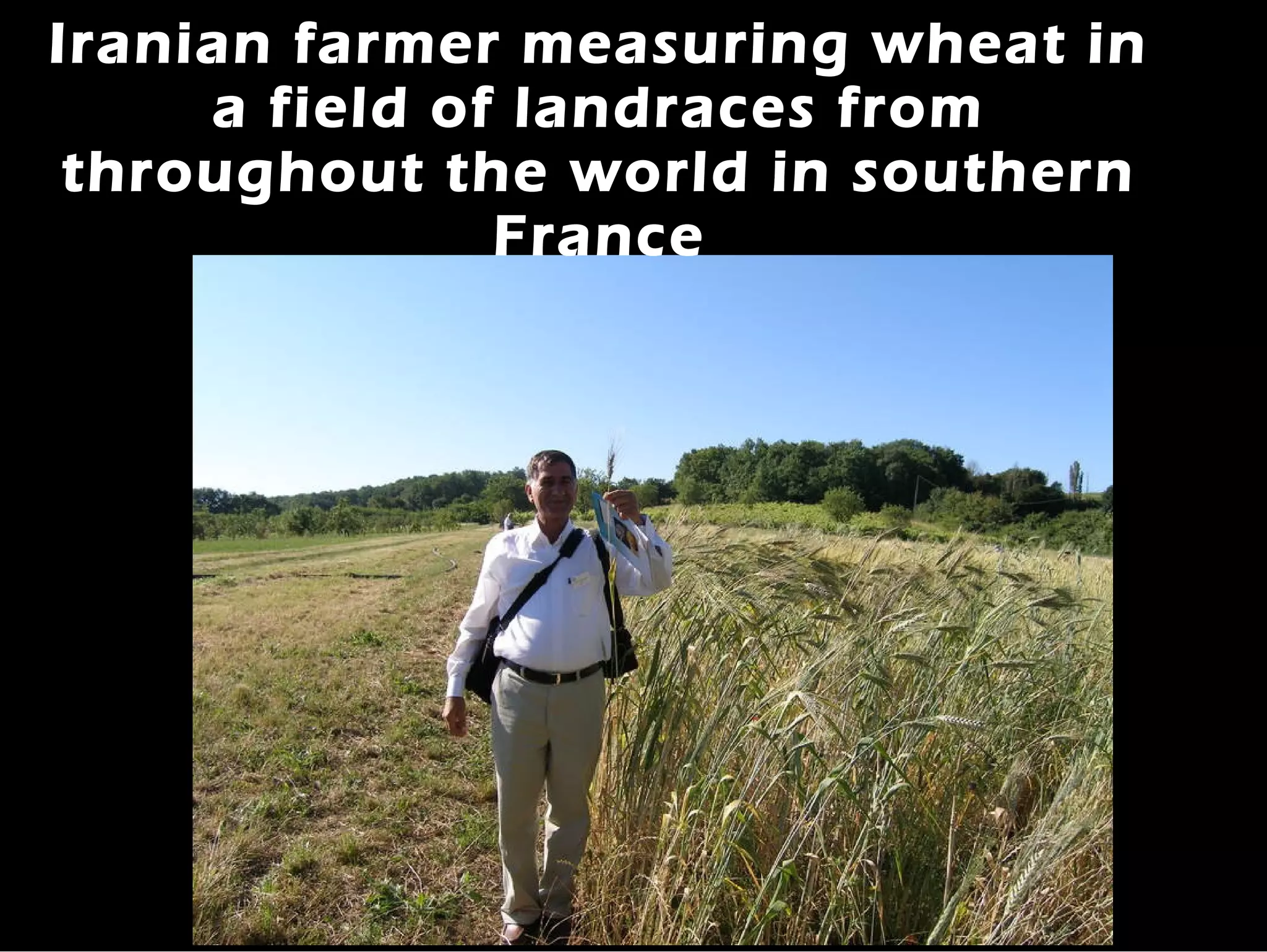
Iranian farmer measuring wheat in
     a field of landraces from
 throughout the world in southern
               France
Making bread with peasant-
bakers from throughout the
           world
Taller varieties
block out the
shorter ones in a
field of
“evolutionary
barley” where
1600 F2s are
cultivated over a
long period of
time to allow
nature to play a
role in selection
Comparing root growth
between several of the 1600
F2s planted as a mixture in a
 field of evolutionary barley
And this is just
     the
www.cenesta.org
khadija@cenesta.org
Khadija.razavi@gmail.co
Khadija Catherine RAZAVI "Reviving Indigenous Community Conserved Areas (ICCAs) in customary territories of Abolhassani mobile pastoralists, Iran"

Khadija Catherine RAZAVI "Reviving Indigenous Community Conserved Areas (ICCAs) in customary territories of Abolhassani mobile pastoralists, Iran"

  • 1.
    The Story ofParticipatory Plant Breeding and Evolutionary Plant Breeding in Iran with the approach of Participatory agricultural research Farmers in Iran are bringing biodiversity back to their fields and helping researchers to breed better varieties in relation with climate change and adaptation to www.cenesta.org
  • 2.
    It all startedwith meetings with farmers to know their needs and concerns regarding SEEDS SOVEREIGNTY
  • 3.
    Farmers discussed andlisted the characteristics they should select for in barley
  • 4.
    This resulted inbreeders at ICARDA and DARI providing 70 different lines of wheat and barley to be cultivated in farmers' fields according to their own methods
  • 5.
    The different lineswere noticeably very diverse
  • 6.
    The extremely harshwinter of 2011/2012 brings into focus the need for having locally adapted varieties and bringing back diversity to the fields
  • 7.
    The following springa drought means that in this field which borders the desert, only the most resilient and adapted varieties will survive
  • 8.
    Farmers gave scoresto the best lines of wheat and barley
  • 9.
    Based on theirscores and performance data from the field, they selected the lines they wanted to keep
  • 10.
    A researcher, afarmer and a facilitator examine and discuss data from the field
  • 11.
    All this talkof biodiversity brings the older farmers to ask: where have our landraces gone ?
  • 12.
    The discussion onthe need to revive landraces is continued with a breeder for the National Gene Bank
  • 13.
    Some Iranian farmershave the opportunity to see landraces from Iran being multiplied at ICARDA's research station
  • 14.
    They join otherfarmers to exchange experiences about PPB and the importance of reviving landraces at the Farmers' Conference at ICARDA
  • 15.
    An old farmershows a landrace which he has not seen in 40 years in a field where landraces from gene banks are being re-introduced into farmers’ fields - and their breeding programs
  • 16.
    Photographs by anIranian farmer to show that agricultural biodiversity brings bounty and peace....
  • 17.
  • 18.
    Farmers’ sketch ofhis PPB field, including 70 lines of barley, a mix of 10 lines of barley and an evolutionary population of 1600 F2s
  • 19.
    PPB is startingto be discussed in universities: here at a seminar of the Iranian Association of Agroecology at Shahid Beheshti University in Tehran
  • 20.
    The first thesison PPB is successfully defended at Kermanshah University
  • 21.
    Giving a lectureon PPB to the Agricultural Extension Department of Razi University
  • 22.
    200 participants attendthe “First National Workshop on Participatory Plant Breeding of Cereal Crops”
  • 23.
    Breeders engaged inlively discussions in the working group on research
  • 24.
    A training seminaris organised to build capacity in the Agricultural Organisation of Kermanshah
  • 25.
    Farmers present theirevaluation of the strengths and weaknesses of the PPB project to a group of farmers and Ministry staff
  • 26.
    Discussions on seedlaws underline the importance of farmers’ rights to participate in research and law and policy-making
  • 27.
    Seed laws werediscussed in a special working group at the national PPB workshop; the focus was on variety release procedures and legal issues related to intellectual property rights
  • 28.
    Attending the meeting“Let’s Liberate Diversity” in Ascoli, Italy to learn about the impact European seed legislation is having on farmer seed systems
  • 29.
    Discussing seed lawsin a mosque in Garmsar, March 2011
  • 30.
    Second conference ofthe Farmers’ House of Garmsar, March 2012
  • 31.
    Iranian farmer measuringwheat in a field of landraces from throughout the world in southern France
  • 32.
    Making bread withpeasant- bakers from throughout the world
  • 33.
    Taller varieties block outthe shorter ones in a field of “evolutionary barley” where 1600 F2s are cultivated over a long period of time to allow nature to play a role in selection
  • 34.
    Comparing root growth betweenseveral of the 1600 F2s planted as a mixture in a field of evolutionary barley
  • 35.
    And this isjust the
  • 36.