7-1
Chapter Seven
                    Weaving Marketing into
                     the Fabric of the Firm


McGraw-Hill/Irwin             Copyright © 2006 The McGraw-Hill Companies, Inc. All rights reserved.
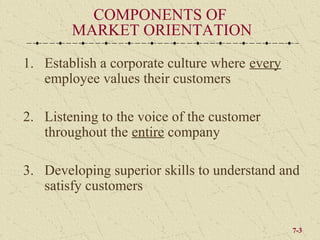
COMPONENTS OF
        MARKET ORIENTATION

1. Establish a corporate culture where every
   employee values their customers

2. Listening to the voice of the customer
   throughout the entire company

3. Developing superior skills to understand and
   satisfy customers

                                               7-3
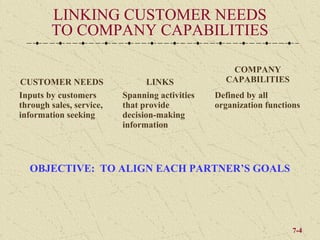
LINKING CUSTOMER NEEDS
        TO COMPANY CAPABILITIES

                                                   COMPANY
CUSTOMER NEEDS                   LINKS            CAPABILITIES
Inputs by customers       Spanning activities   Defined by all
through sales, service,   that provide          organization functions
information seeking       decision-making
                          information


  OBJECTIVE: TO ALIGN EACH PARTNER’S GOALS


                                                                    7-4
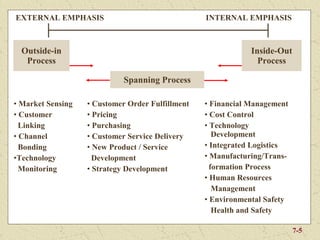
EXTERNAL EMPHASIS                                 INTERNAL EMPHASIS


  Outside-in                                                  Inside-Out
   Process                                                      Process

                             Spanning Process

• Market Sensing   • Customer Order Fulfillment   • Financial Management
• Customer         • Pricing                      • Cost Control
  Linking          • Purchasing                   • Technology
• Channel          • Customer Service Delivery       Development
  Bonding          • New Product / Service        • Integrated Logistics
•Technology          Development                  • Manufacturing/Trans-
  Monitoring       • Strategy Development           formation Process
                                                  • Human Resources
                                                     Management
                                                  • Environmental Safety
                                                     Health and Safety

                                                                           7-5
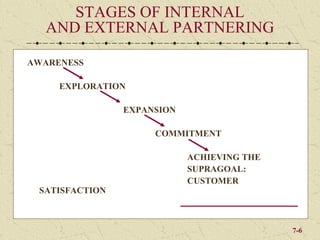
STAGES OF INTERNAL
  AND EXTERNAL PARTNERING

AWARENESS

     EXPLORATION

                EXPANSION

                     COMMITMENT

                            ACHIEVING THE
                            SUPRAGOAL:
                            CUSTOMER
 SATISFACTION


                                            7-6
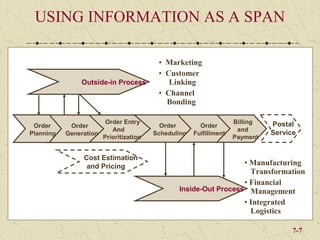
USING INFORMATION AS A SPAN

                                           • Marketing
                                           • Customer
           OUTSIDE-IN PROCESS
               Outside-in Process             Linking
                                           • Channel
                                             Bonding

                          Order Entry                                Billing   Postal
 Order       Order                          Order        Order
                            And                                       and
Planning    Generation                    Scheduling   Fulfillment             Service
                         Prioritization                              Payment


                 Cost Estimation
                  and Pricing                                      • Manufacturing
                                                                     Transformation
                                                                   • Financial
                                                 Inside-Out Process Management
                                                                   • Integrated
                                                                     Logistics

                                                                                     7-7
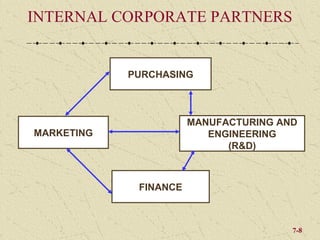
INTERNAL CORPORATE PARTNERS


            PURCHASING


                       MANUFACTURING AND
MARKETING                 ENGINEERING
                             (R&D)


             FINANCE


                                       7-8
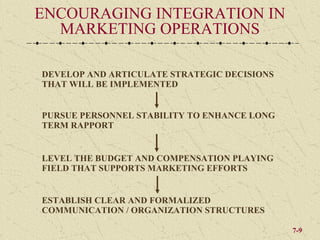
ENCOURAGING INTEGRATION IN
  MARKETING OPERATIONS

DEVELOP AND ARTICULATE STRATEGIC DECISIONS
THAT WILL BE IMPLEMENTED


PURSUE PERSONNEL STABILITY TO ENHANCE LONG
TERM RAPPORT


LEVEL THE BUDGET AND COMPENSATION PLAYING
FIELD THAT SUPPORTS MARKETING EFFORTS


ESTABLISH CLEAR AND FORMALIZED
COMMUNICATION / ORGANIZATION STRUCTURES

                                             7-9
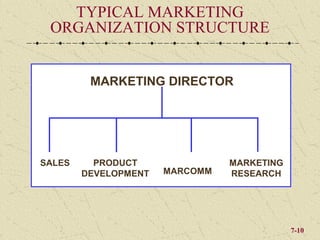
TYPICAL MARKETING
 ORGANIZATION STRUCTURE


         MARKETING DIRECTOR


SALES     PRODUCT               MARKETING
        DEVELOPMENT   MARCOMM   RESEARCH


                                            7-10
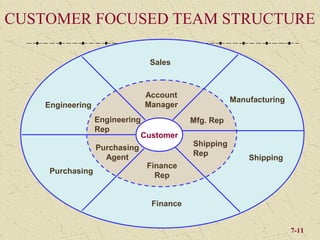
CUSTOMER FOCUSED TEAM STRUCTURE

                                Sales


                               Account
                                                     Manufacturing
    Engineering                Manager
                  Engineering             Mfg. Rep
                  Rep
                             Customer
                  Purchasing              Shipping
                    Agent                 Rep
                                                         Shipping
                               Finance
     Purchasing
                                 Rep


                                Finance


                                                                     7-11
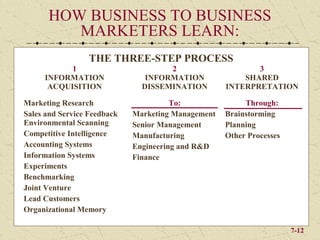
HOW BUSINESS TO BUSINESS
         MARKETERS LEARN:
                  THE THREE-STEP PROCESS
           1                         2                     3
     INFORMATION                INFORMATION             SHARED
      ACQUISITION              DISSEMINATION        INTERPRETATION

Marketing Research                     To:               Through:
Sales and Service Feedback   Marketing Management   Brainstorming
Environmental Scanning       Senior Management      Planning
Competitive Intelligence     Manufacturing          Other Processes
Accounting Systems           Engineering and R&D
Information Systems          Finance
Experiments
Benchmarking
Joint Venture
Lead Customers
Organizational Memory

                                                                      7-12
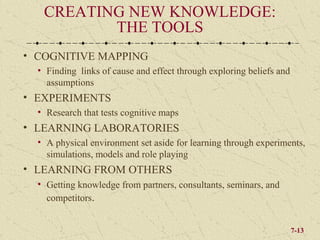
CREATING NEW KNOWLEDGE:
          THE TOOLS
• COGNITIVE MAPPING
  • Finding links of cause and effect through exploring beliefs and
    assumptions
• EXPERIMENTS
  • Research that tests cognitive maps
• LEARNING LABORATORIES
  • A physical environment set aside for learning through experiments,
    simulations, models and role playing
• LEARNING FROM OTHERS
  • Getting knowledge from partners, consultants, seminars, and
    competitors.


                                                                      7-13
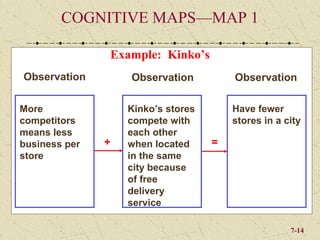
COGNITIVE MAPS—MAP 1

               Example: Kinko’s
Observation        Observation          Observation

More               Kinko’s stores       Have fewer
competitors        compete with         stores in a city
means less         each other
business per   +   when located     =
store              in the same
                   city because
                   of free
                   delivery
                   service

                                                     7-14
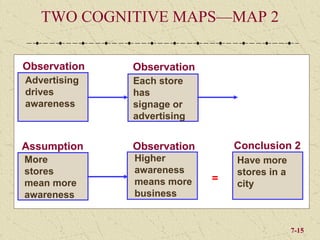
TWO COGNITIVE MAPS—MAP 2

Observation   Observation
Advertising   Each store
drives        has
awareness     signage or
              advertising


Assumption    Observation       Conclusion 2
More          Higher            Have more
stores        awareness         stores in a
mean more     means more    =   city
awareness     business


                                              7-15

Pp chap007

  • 1.
  • 2.
    Chapter Seven Weaving Marketing into the Fabric of the Firm McGraw-Hill/Irwin Copyright © 2006 The McGraw-Hill Companies, Inc. All rights reserved.
  • 3.
    COMPONENTS OF MARKET ORIENTATION 1. Establish a corporate culture where every employee values their customers 2. Listening to the voice of the customer throughout the entire company 3. Developing superior skills to understand and satisfy customers 7-3
  • 4.
    LINKING CUSTOMER NEEDS TO COMPANY CAPABILITIES COMPANY CUSTOMER NEEDS LINKS CAPABILITIES Inputs by customers Spanning activities Defined by all through sales, service, that provide organization functions information seeking decision-making information OBJECTIVE: TO ALIGN EACH PARTNER’S GOALS 7-4
  • 5.
    EXTERNAL EMPHASIS INTERNAL EMPHASIS Outside-in Inside-Out Process Process Spanning Process • Market Sensing • Customer Order Fulfillment • Financial Management • Customer • Pricing • Cost Control Linking • Purchasing • Technology • Channel • Customer Service Delivery Development Bonding • New Product / Service • Integrated Logistics •Technology Development • Manufacturing/Trans- Monitoring • Strategy Development formation Process • Human Resources Management • Environmental Safety Health and Safety 7-5
  • 6.
    STAGES OF INTERNAL AND EXTERNAL PARTNERING AWARENESS EXPLORATION EXPANSION COMMITMENT ACHIEVING THE SUPRAGOAL: CUSTOMER SATISFACTION 7-6
  • 7.
    USING INFORMATION ASA SPAN • Marketing • Customer OUTSIDE-IN PROCESS Outside-in Process Linking • Channel Bonding Order Entry Billing Postal Order Order Order Order And and Planning Generation Scheduling Fulfillment Service Prioritization Payment Cost Estimation and Pricing • Manufacturing Transformation • Financial Inside-Out Process Management • Integrated Logistics 7-7
  • 8.
    INTERNAL CORPORATE PARTNERS PURCHASING MANUFACTURING AND MARKETING ENGINEERING (R&D) FINANCE 7-8
  • 9.
    ENCOURAGING INTEGRATION IN MARKETING OPERATIONS DEVELOP AND ARTICULATE STRATEGIC DECISIONS THAT WILL BE IMPLEMENTED PURSUE PERSONNEL STABILITY TO ENHANCE LONG TERM RAPPORT LEVEL THE BUDGET AND COMPENSATION PLAYING FIELD THAT SUPPORTS MARKETING EFFORTS ESTABLISH CLEAR AND FORMALIZED COMMUNICATION / ORGANIZATION STRUCTURES 7-9
  • 10.
    TYPICAL MARKETING ORGANIZATIONSTRUCTURE MARKETING DIRECTOR SALES PRODUCT MARKETING DEVELOPMENT MARCOMM RESEARCH 7-10
  • 11.
    CUSTOMER FOCUSED TEAMSTRUCTURE Sales Account Manufacturing Engineering Manager Engineering Mfg. Rep Rep Customer Purchasing Shipping Agent Rep Shipping Finance Purchasing Rep Finance 7-11
  • 12.
    HOW BUSINESS TOBUSINESS MARKETERS LEARN: THE THREE-STEP PROCESS 1 2 3 INFORMATION INFORMATION SHARED ACQUISITION DISSEMINATION INTERPRETATION Marketing Research To: Through: Sales and Service Feedback Marketing Management Brainstorming Environmental Scanning Senior Management Planning Competitive Intelligence Manufacturing Other Processes Accounting Systems Engineering and R&D Information Systems Finance Experiments Benchmarking Joint Venture Lead Customers Organizational Memory 7-12
  • 13.
    CREATING NEW KNOWLEDGE: THE TOOLS • COGNITIVE MAPPING • Finding links of cause and effect through exploring beliefs and assumptions • EXPERIMENTS • Research that tests cognitive maps • LEARNING LABORATORIES • A physical environment set aside for learning through experiments, simulations, models and role playing • LEARNING FROM OTHERS • Getting knowledge from partners, consultants, seminars, and competitors. 7-13
  • 14.
    COGNITIVE MAPS—MAP 1 Example: Kinko’s Observation Observation Observation More Kinko’s stores Have fewer competitors compete with stores in a city means less each other business per + when located = store in the same city because of free delivery service 7-14
  • 15.
    TWO COGNITIVE MAPS—MAP2 Observation Observation Advertising Each store drives has awareness signage or advertising Assumption Observation Conclusion 2 More Higher Have more stores awareness stores in a mean more means more = city awareness business 7-15