CLASS - VII
VOICE
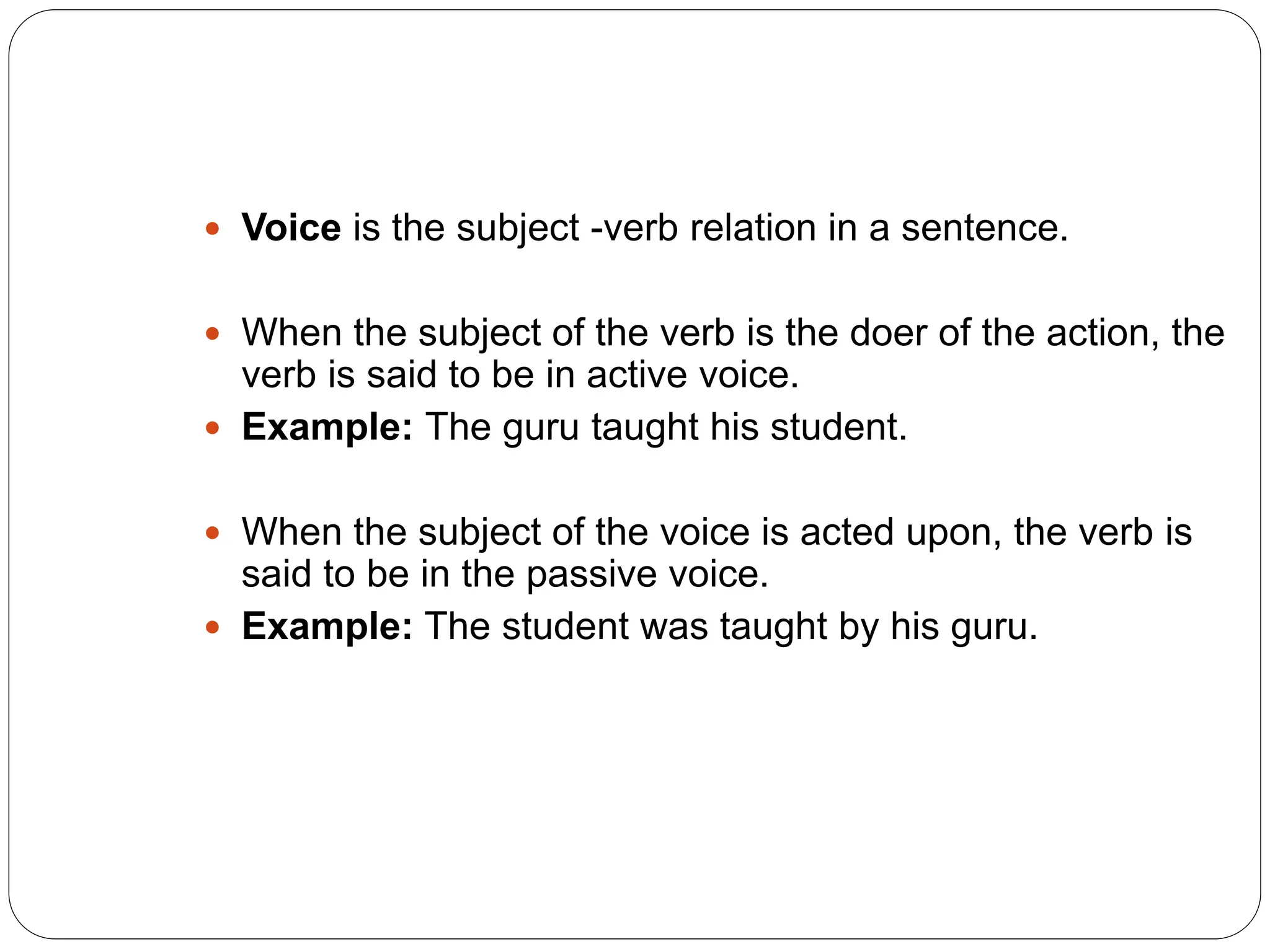
 Voice is the subject -verb relation in a sentence.
 When the subject of the verb is the doer of the action, the
verb is said to be in active voice.
 Example: The guru taught his student.
 When the subject of the voice is acted upon, the verb is
said to be in the passive voice.
 Example: The student was taught by his guru.
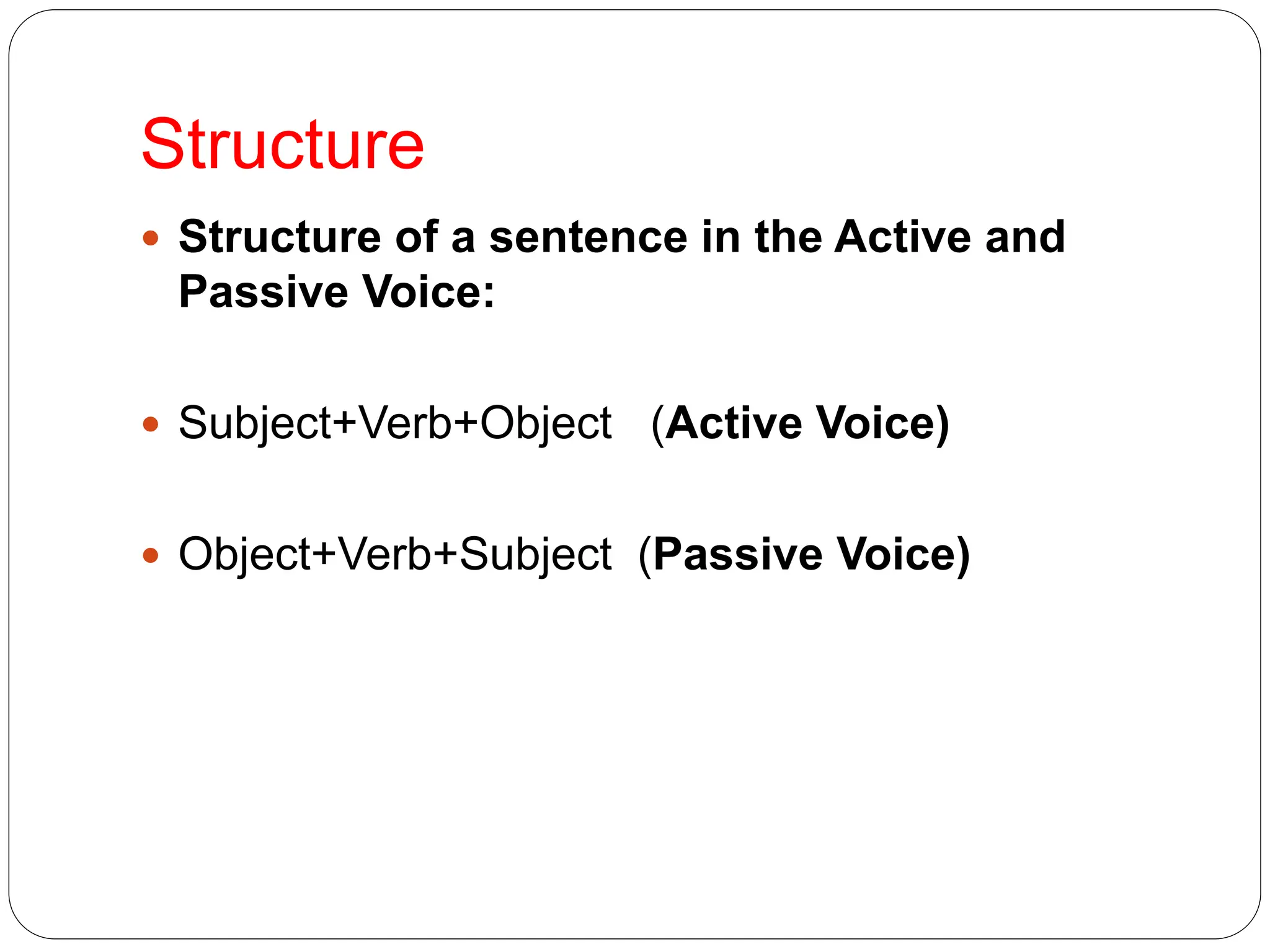
Structure
 Structure of a sentence in the Active and
Passive Voice:
 Subject+Verb+Object (Active Voice)
 Object+Verb+Subject (Passive Voice)
 In the Active Voice, the subject is the doer of the
action.
 In the Passive Voice, the object takes the place of
the subject and receives the action. Passive
Voice can only be formed when the verb takes an
object
Rules of transformation from active voice to
passive voice
 The object in the active voice becomes the
subject in passive voice.
 The verb form changes as per the tense, normally
auxiliary verb+ IIIrd form.
 The subject in the active voice becomes the
object (by +doer) in the passive voice.
TABLE OF TENSES
INTERROGATIVE SENTENCES
 Interrogative passive sentence, we ask question
about a person or a thing. We use question words
such as who, whom, what, when, where, how,
and why.-
Example-
Who took the pen? (Active Voice)
By whom was the pen taken? ( Passive Voice)
 If the active question start with words such as
what, when, where, why, whose, and how the
form does not change in the passive.
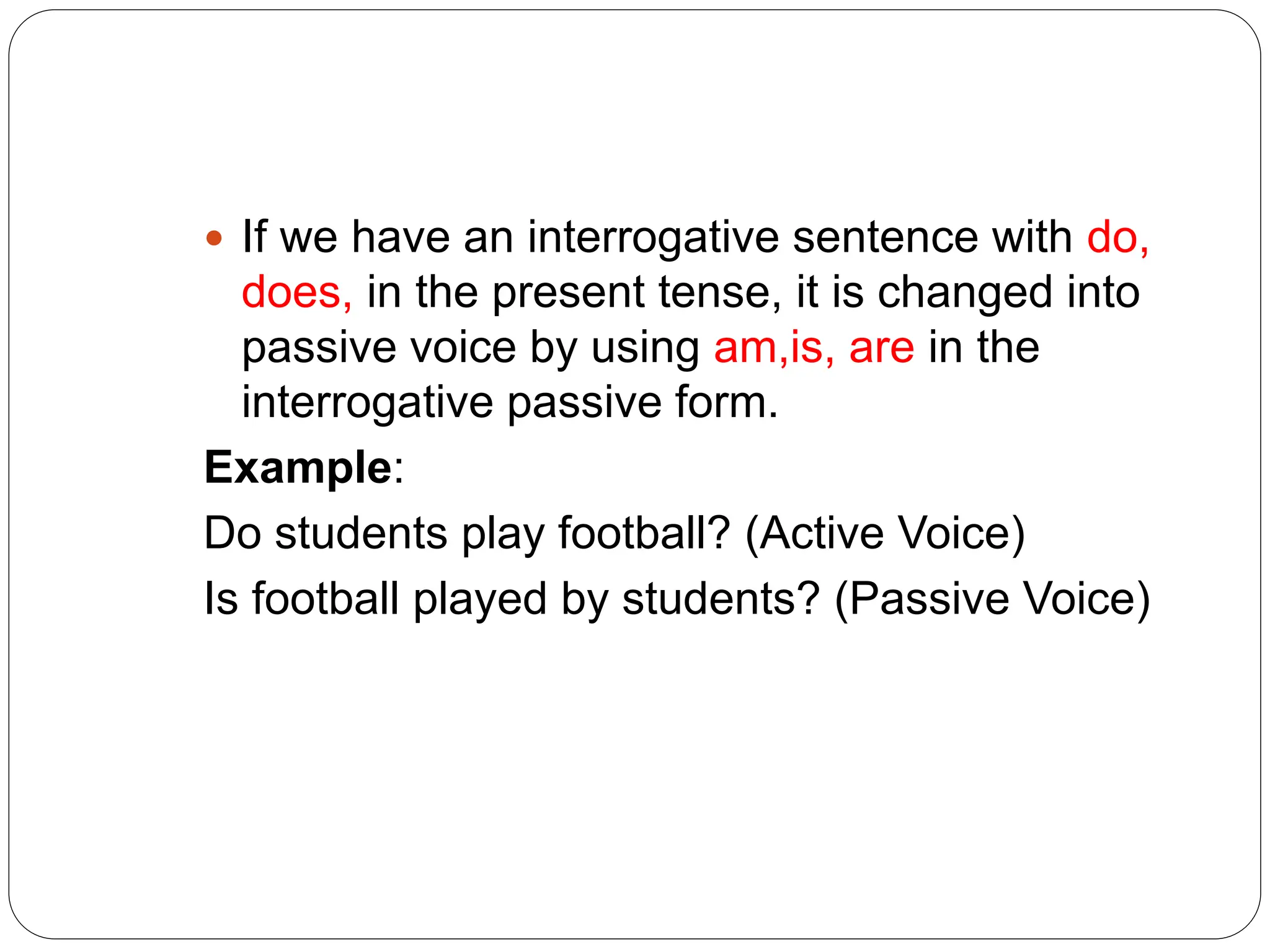
 If we have an interrogative sentence with do,
does, in the present tense, it is changed into
passive voice by using am,is, are in the
interrogative passive form.
Example:
Do students play football? (Active Voice)
Is football played by students? (Passive Voice)
 If we have an interrogative sentence with did, we
should change it into was /were.
Example:
Did the children play football? (Active Voice)
Was football played by the children? (Passive
Voice)
ASSESSMENT
Following exercises from Grammar Plus are
omitted
B(11,12),D,E ,G

POWERPOINT PRESENTATION ON ENGLISH GRAMMAR TOPIC - VOICE

  • 1.
  • 2.
     Voice isthe subject -verb relation in a sentence.  When the subject of the verb is the doer of the action, the verb is said to be in active voice.  Example: The guru taught his student.  When the subject of the voice is acted upon, the verb is said to be in the passive voice.  Example: The student was taught by his guru.
  • 3.
    Structure  Structure ofa sentence in the Active and Passive Voice:  Subject+Verb+Object (Active Voice)  Object+Verb+Subject (Passive Voice)
  • 4.
     In theActive Voice, the subject is the doer of the action.  In the Passive Voice, the object takes the place of the subject and receives the action. Passive Voice can only be formed when the verb takes an object
  • 5.
    Rules of transformationfrom active voice to passive voice  The object in the active voice becomes the subject in passive voice.  The verb form changes as per the tense, normally auxiliary verb+ IIIrd form.  The subject in the active voice becomes the object (by +doer) in the passive voice.
  • 6.
  • 8.
    INTERROGATIVE SENTENCES  Interrogativepassive sentence, we ask question about a person or a thing. We use question words such as who, whom, what, when, where, how, and why.- Example- Who took the pen? (Active Voice) By whom was the pen taken? ( Passive Voice)  If the active question start with words such as what, when, where, why, whose, and how the form does not change in the passive.
  • 9.
     If wehave an interrogative sentence with do, does, in the present tense, it is changed into passive voice by using am,is, are in the interrogative passive form. Example: Do students play football? (Active Voice) Is football played by students? (Passive Voice)
  • 10.
     If wehave an interrogative sentence with did, we should change it into was /were. Example: Did the children play football? (Active Voice) Was football played by the children? (Passive Voice)
  • 11.
    ASSESSMENT Following exercises fromGrammar Plus are omitted B(11,12),D,E ,G