Reduce, Reuse,
Recycle

Marcos Basante Moreno
Natalia del Pozo Bayón
All about taking care of Earth


Help save our natural resources!






“Our natural resources are the things that we take from
the Earth to make all of the things that we need. When
those things get worn out we throw them out, and they
become garbage.
Did you know that we make 250 million tons of garbage
each year! That's a lot of garbage!
People are helping to save our resources by practicing
the 3 R's: reduce, reuse and recycle. You can help, too.”

This information can be found at: http://www.greenpeace.org/usa/en/news-and-blogs/campaignblog/victory-for-coal-free-education/blog/34793/
The 3 R’s


REDUCE







REUSE








You can help by PRECYCLING. 1/3 of all garbage is packaging.
Buy things that are in packages that can be recycled or are made of recycled
materials.
When you buy something small, say no thanks to a bag.
Many things can be reused before you throw them out.
Use backs of paper or backs of used envelopes for jotting notes
Put leftovers in resealable containers instead of using wraps and foil
Use old clothes as rags for cleaning instead of paper towels
Have a garage sale or donate clothes, books or toys that you don't use anymore

RECYCLE


Each year we use:





25 billion plastic containers
30 billion bottles & jars
65 billion aluminum cans
100 billion kilograms of paper
Landfill


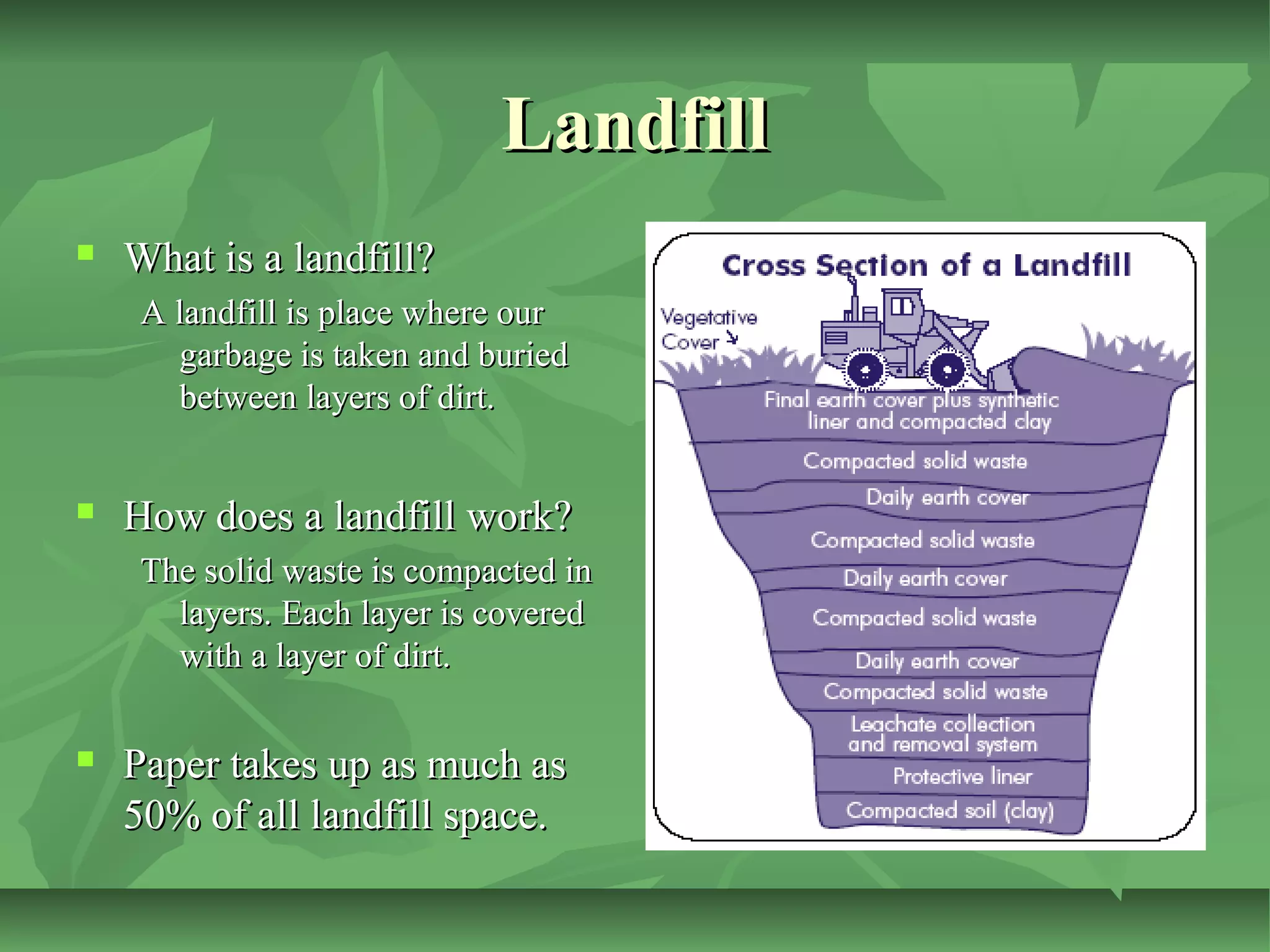
What is a landfill?
A landfill is place where our
garbage is taken and buried
between layers of dirt.



How does a landfill work?
The solid waste is compacted in
layers. Each layer is covered
with a layer of dirt.



Paper takes up as much as
50% of all landfill space.
Reduce Waste








Buy remanufactured or used
items
Buy items in bulk rather
than multiple, smaller
packages to decrease the
amount of packaging waste
created
Maintain and repair durable
items
Reuse bags, containers, and
other similar items









Borrow, rent, or share items
that are used infrequently
Donate items instead of
throwing them out
Leave grass clippings on the
lawn or use them for
backyard composting
Rake fallen leaves for
composting rather than
bagging them and throwing
them away
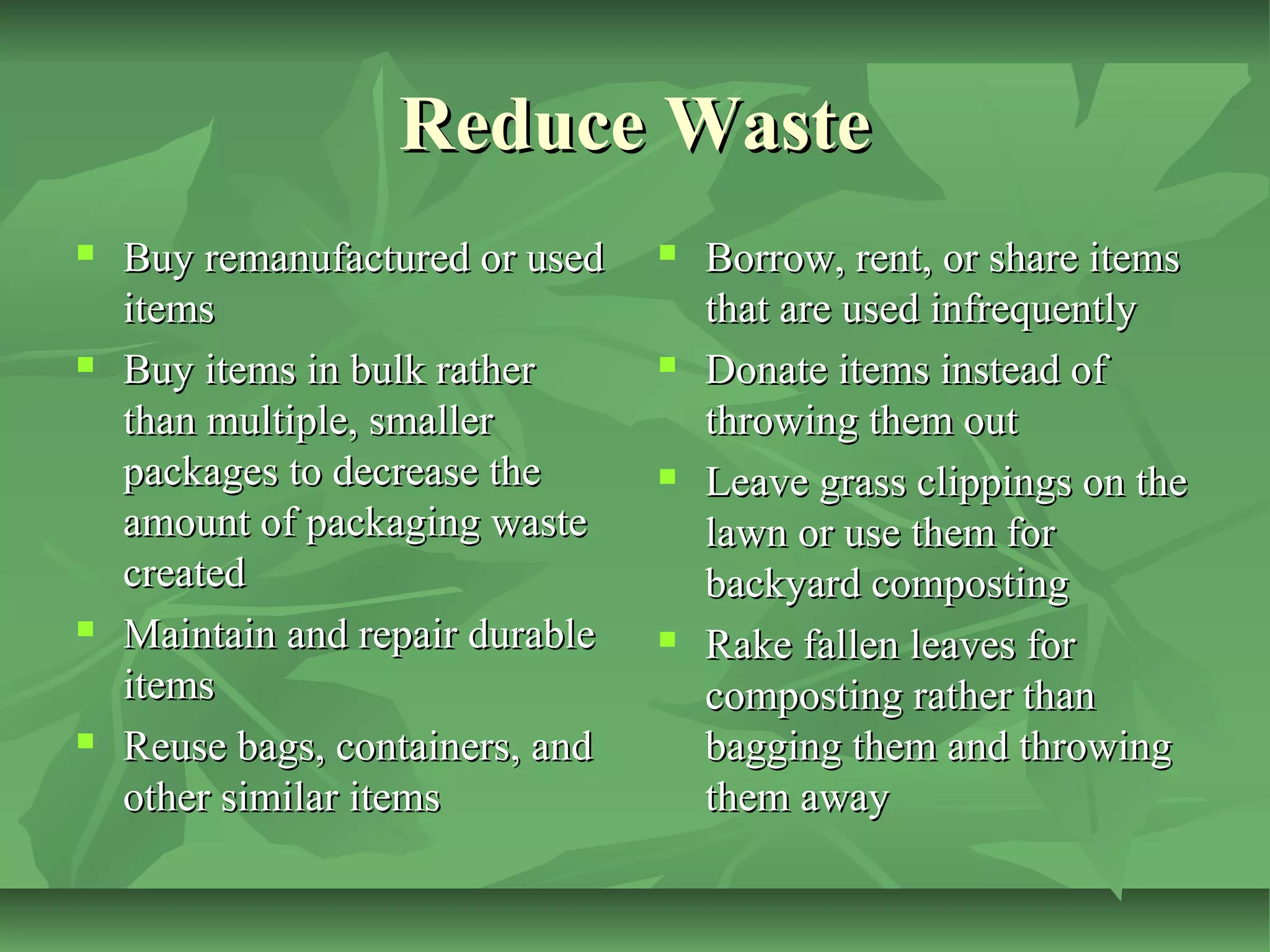
Composting


What is composting?
Composting is when you
combine all organic matter to
decay. When this mixture
decays, it has nutrients that
can be used to fertilize.
Reuse
•
•









Store leftovers in reusable
containers instead of wrap or bags
Shop carrying cloth bags instead
of paper or plastic
Make your own Paper!
Use old rags to clean your room
or paint with
Use Styrofoam, cans, boxes and
other containers to make things,
like crafts.
The next time something is
broken try to repair it instead of
replacing it
The next time something is
broken try to repair it instead of
replacing it







Have a yard sale with your family
or friends.
Use cloth napkins instead of
paper napkins
Make a cloth lunchbox, or use a
store bought one to replace paper
bags.
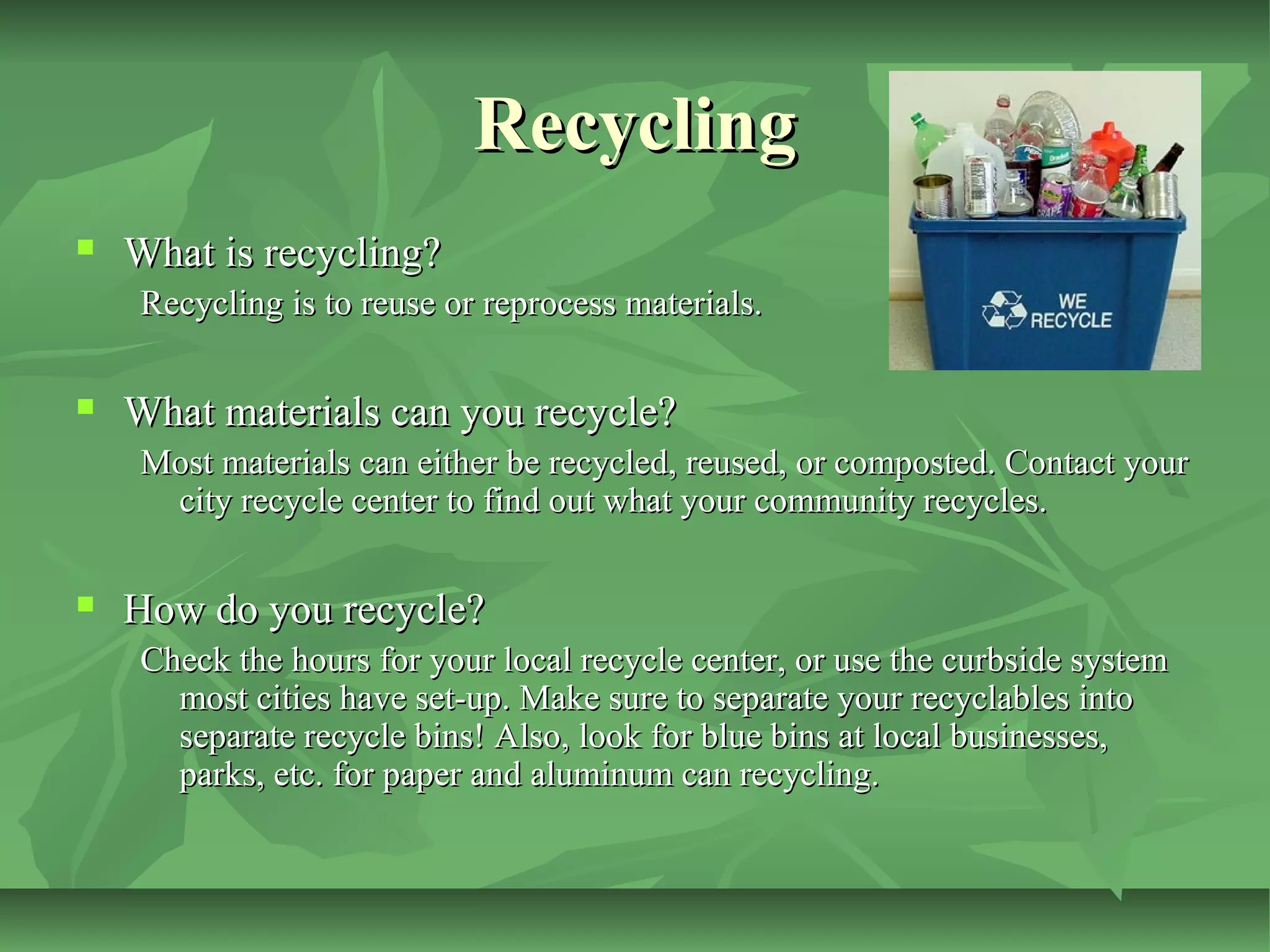
Recycling


What is recycling?
Recycling is to reuse or reprocess materials.



What materials can you recycle?
Most materials can either be recycled, reused, or composted. Contact your
city recycle center to find out what your community recycles.



How do you recycle?
Check the hours for your local recycle center, or use the curbside system
most cities have set-up. Make sure to separate your recyclables into
separate recycle bins! Also, look for blue bins at local businesses,
parks, etc. for paper and aluminum can recycling.
Recycle Paper!


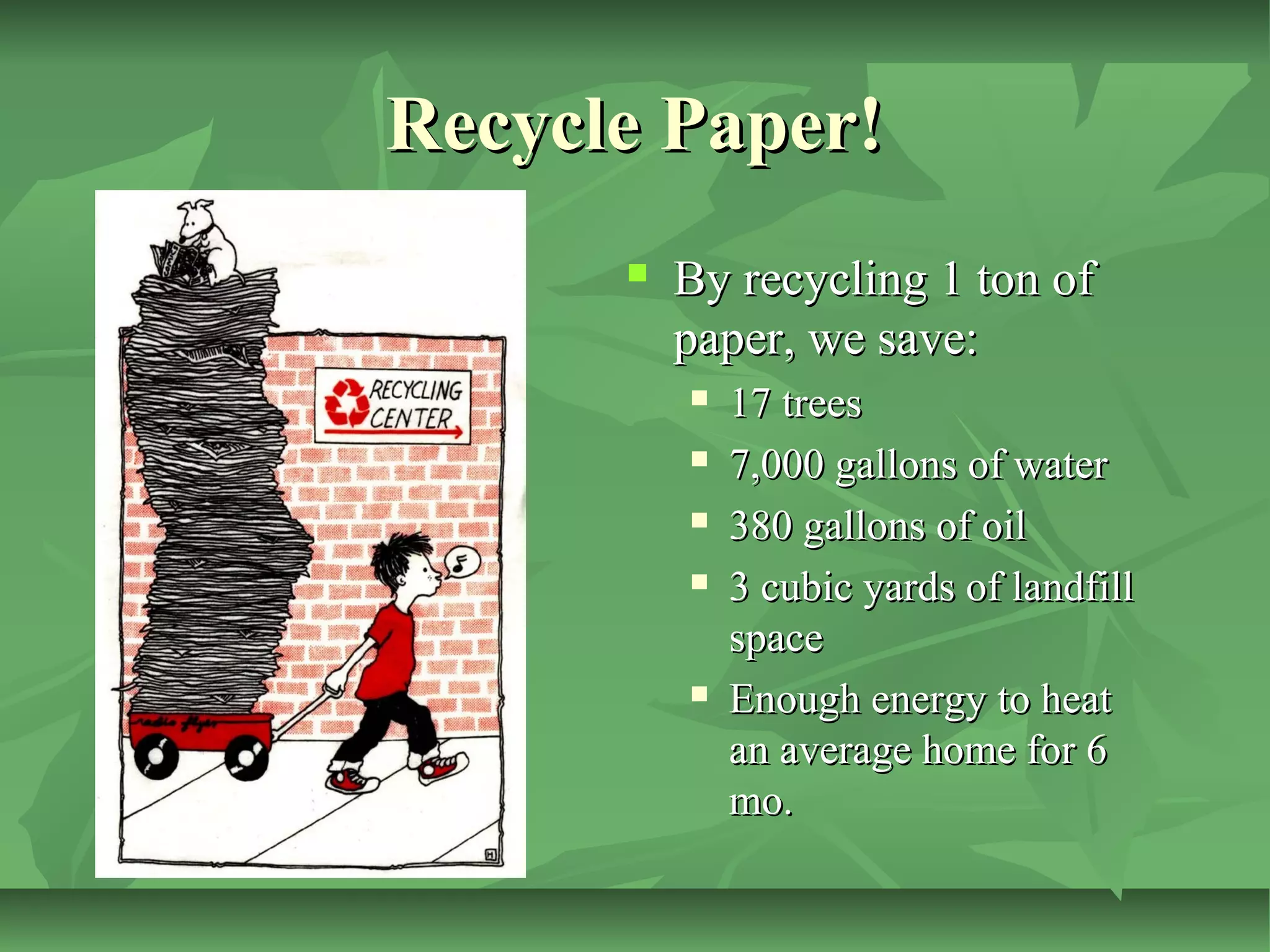
By recycling 1 ton of
paper, we save:







17 trees
7,000 gallons of water
380 gallons of oil
3 cubic yards of landfill
space
Enough energy to heat
an average home for 6
mo.
Recycle Bottles and Cans!






Manufacturers can make one extra-large Tshirt our of only five recycled plastic soda
bottles
Recycling aluminum cans saves 95% of the
energy required to make aluminum cans from
scratch
The amount of aluminum recycled in 1995
could have built 14 aircraft carriers
Recycling in Action




Learn about and participate
in a community recycling
program. Know the
collection schedule or dropoff location as well as which
items are acceptable.
Empty all fluids and remove
all lids from bottles and cans
when recycling and do not
contaminate recycling
containers with trash.







Participate and encourage
your classmates to recycle
in the containers provided in
your school.
Make an effort to find
recycling opportunities.
Use recyclable products and
encourage others to do the
same.
Most of the information and resources for this presentation was acquired
from the United States Environmental Protection Agency at:
http://www.epa.gov/epaoswer/osw/kids/quest/index.htm

Powerpoint de las 3 rs

  • 1.
    Reduce, Reuse, Recycle Marcos BasanteMoreno Natalia del Pozo Bayón
  • 2.
    All about takingcare of Earth  Help save our natural resources!    “Our natural resources are the things that we take from the Earth to make all of the things that we need. When those things get worn out we throw them out, and they become garbage. Did you know that we make 250 million tons of garbage each year! That's a lot of garbage! People are helping to save our resources by practicing the 3 R's: reduce, reuse and recycle. You can help, too.” This information can be found at: http://www.greenpeace.org/usa/en/news-and-blogs/campaignblog/victory-for-coal-free-education/blog/34793/
  • 3.
    The 3 R’s  REDUCE     REUSE       Youcan help by PRECYCLING. 1/3 of all garbage is packaging. Buy things that are in packages that can be recycled or are made of recycled materials. When you buy something small, say no thanks to a bag. Many things can be reused before you throw them out. Use backs of paper or backs of used envelopes for jotting notes Put leftovers in resealable containers instead of using wraps and foil Use old clothes as rags for cleaning instead of paper towels Have a garage sale or donate clothes, books or toys that you don't use anymore RECYCLE  Each year we use:     25 billion plastic containers 30 billion bottles & jars 65 billion aluminum cans 100 billion kilograms of paper
  • 4.
    Landfill  What is alandfill? A landfill is place where our garbage is taken and buried between layers of dirt.  How does a landfill work? The solid waste is compacted in layers. Each layer is covered with a layer of dirt.  Paper takes up as much as 50% of all landfill space.
  • 5.
    Reduce Waste     Buy remanufacturedor used items Buy items in bulk rather than multiple, smaller packages to decrease the amount of packaging waste created Maintain and repair durable items Reuse bags, containers, and other similar items     Borrow, rent, or share items that are used infrequently Donate items instead of throwing them out Leave grass clippings on the lawn or use them for backyard composting Rake fallen leaves for composting rather than bagging them and throwing them away
  • 6.
    Composting  What is composting? Compostingis when you combine all organic matter to decay. When this mixture decays, it has nutrients that can be used to fertilize.
  • 7.
    Reuse • •      Store leftovers inreusable containers instead of wrap or bags Shop carrying cloth bags instead of paper or plastic Make your own Paper! Use old rags to clean your room or paint with Use Styrofoam, cans, boxes and other containers to make things, like crafts. The next time something is broken try to repair it instead of replacing it The next time something is broken try to repair it instead of replacing it    Have a yard sale with your family or friends. Use cloth napkins instead of paper napkins Make a cloth lunchbox, or use a store bought one to replace paper bags.
  • 8.
    Recycling  What is recycling? Recyclingis to reuse or reprocess materials.  What materials can you recycle? Most materials can either be recycled, reused, or composted. Contact your city recycle center to find out what your community recycles.  How do you recycle? Check the hours for your local recycle center, or use the curbside system most cities have set-up. Make sure to separate your recyclables into separate recycle bins! Also, look for blue bins at local businesses, parks, etc. for paper and aluminum can recycling.
  • 9.
    Recycle Paper!  By recycling1 ton of paper, we save:      17 trees 7,000 gallons of water 380 gallons of oil 3 cubic yards of landfill space Enough energy to heat an average home for 6 mo.
  • 10.
    Recycle Bottles andCans!    Manufacturers can make one extra-large Tshirt our of only five recycled plastic soda bottles Recycling aluminum cans saves 95% of the energy required to make aluminum cans from scratch The amount of aluminum recycled in 1995 could have built 14 aircraft carriers
  • 11.
    Recycling in Action   Learnabout and participate in a community recycling program. Know the collection schedule or dropoff location as well as which items are acceptable. Empty all fluids and remove all lids from bottles and cans when recycling and do not contaminate recycling containers with trash.    Participate and encourage your classmates to recycle in the containers provided in your school. Make an effort to find recycling opportunities. Use recyclable products and encourage others to do the same.
  • 12.
    Most of theinformation and resources for this presentation was acquired from the United States Environmental Protection Agency at: http://www.epa.gov/epaoswer/osw/kids/quest/index.htm