
ENERGY POLICY PROGRAM 
POWER PLANT 
TARIFF STRATEGIES 
MARCH 2014
TOPIC 1: POWER PLANT 
TARIFF STRATEGIES 
USAID Energy Policy Program
USAID Energy Policy Program 
INTRODUCTION 
One of the most important questions that a power company must ask and 
answer is what should they charge for providing electricity to the customer? 
Average retail electricity prices are calculated by dividing utility revenue by 
retail sales. It is the measured cost, or average revenue per kilowatt-hour, of 
power sold. Electric utilities usually offer three primary classes of service: 
residential, commercial, and industrial. The average price per kilowatt-hour 
for residential consumers is generally higher than for any other sector due in 
part to higher costs associated with serving many consumers who use 
relatively small amounts of power. The industrial sector has the lowest 
electricity prices due to the economies of serving a few consumers who use 
relatively large amounts of electricity.
USAID Energy Policy Program 
OBJECTIVES 
At the conclusion of this topic, participants will be able to: 
1. List the functions of the regulating bodies for setting tariffs. 
2. Give the definition of a tariff as explain in this training. 
3. Explain the difference between a fixed charge and variable charge. 
4. Explain what a tariff should accomplish. 
5. List the steps for designing wholesale tariffs. 
6. Describe the two part tariff system. 
7. Discuss the steps for setting up a two part tariff system.
FUNCTION OF TARIFF REGULATING BODY 
National Electric Power Regulatory Authority Pakistan (NEPRA) is responsible 
for the regulation of power plant tariffs in Pakistan. 
USAID Energy Policy Program 
The functions of the regulating bodies include: 
• Issue and revoke electricity distribution licenses 
• Regulate the electrification drive 
• Determine electricity distribution competency 
• Regulate electricity tariffs and structures 
• Regulate electricity service standards 
• Settle disputes between suppliers and customers 
• Approve expropriation of network assets
USAID Energy Policy Program 
TARIFFS EXPLAINED 
A tariff is the amount charged for providing energy under a contract. It includes 
both fixed and variable charges. 
Fixed charges are not based on how much energy you use. It is normally 
separately identified on your bill, and is often called the ‘daily supply charge’ or 
‘service to property’ charge. It can be displayed as a daily rate on your bill (e.g. 
in ‘rupees per day’), but may appear as a single figure for a billing period. 
Variable charges or ‘consumption charge’ is normally the amount you pay for 
each unit of electricity and/or gas you use. It is listed on your bill as rupees per 
kilowatt hour (PKR/kWh).
USAID Energy Policy Program 
COST OF ENERGY SUPPLY 
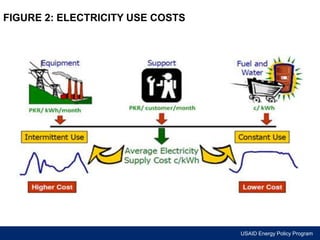
As an example, consider the cost of owning and running a car. The various 
costs can be converted to an average cost per km per month.
USAID Energy Policy Program 
FIGURE 2: ELECTRICITY USE COSTS
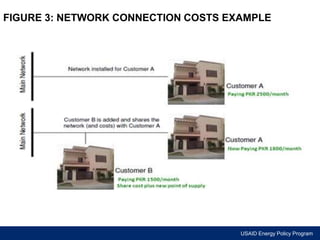
FIGURE 3: NETWORK CONNECTION COSTS EXAMPLE 
USAID Energy Policy Program
USAID Energy Policy Program 
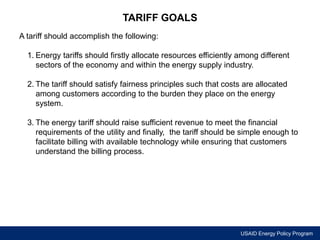
TARIFF GOALS 
A tariff should accomplish the following: 
1. Energy tariffs should firstly allocate resources efficiently among different 
sectors of the economy and within the energy supply industry. 
2. The tariff should satisfy fairness principles such that costs are allocated 
among customers according to the burden they place on the energy 
system. 
3. The energy tariff should raise sufficient revenue to meet the financial 
requirements of the utility and finally, the tariff should be simple enough to 
facilitate billing with available technology while ensuring that customers 
understand the billing process.
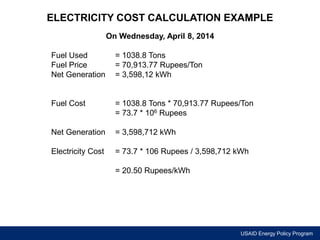
ELECTRICITY COST CALCULATION EXAMPLE 
USAID Energy Policy Program 
On Wednesday, April 8, 2014 
Fuel Used = 1038.8 Tons 
Fuel Price = 70,913.77 Rupees/Ton 
Net Generation = 3,598,12 kWh 
Fuel Cost = 1038.8 Tons * 70,913.77 Rupees/Ton 
= 73.7 * 106 Rupees 
Net Generation = 3,598,712 kWh 
Electricity Cost = 73.7 * 106 Rupees / 3,598,712 kWh 
= 20.50 Rupees/kWh
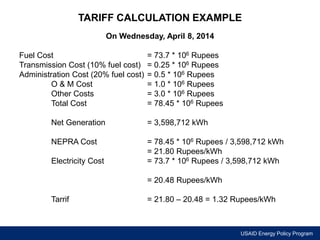
TARIFF CALCULATION EXAMPLE 
USAID Energy Policy Program 
On Wednesday, April 8, 2014 
Fuel Cost = 73.7 * 106 Rupees 
Transmission Cost (10% fuel cost) = 0.25 * 106 Rupees 
Administration Cost (20% fuel cost) = 0.5 * 106 Rupees 
O & M Cost = 1.0 * 106 Rupees 
Other Costs = 3.0 * 106 Rupees 
Total Cost = 78.45 * 106 Rupees 
Net Generation = 3,598,712 kWh 
NEPRA Cost = 78.45 * 106 Rupees / 3,598,712 kWh 
= 21.80 Rupees/kWh 
Electricity Cost = 73.7 * 106 Rupees / 3,598,712 kWh 
= 20.48 Rupees/kWh 
Tarrif = 21.80 – 20.48 = 1.32 Rupees/kWh
USAID Energy Policy Program 
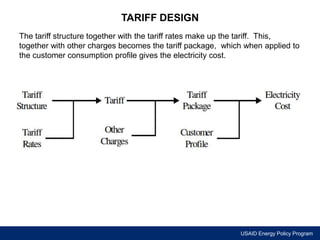
TARIFF DESIGN 
The tariff structure together with the tariff rates make up the tariff. This, 
together with other charges becomes the tariff package, which when applied to 
the customer consumption profile gives the electricity cost.
USAID Energy Policy Program 
WHOLESALE TARIFFS 
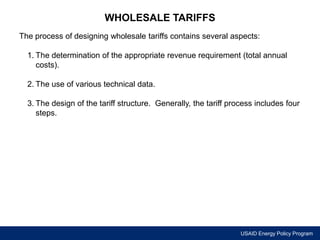
The process of designing wholesale tariffs contains several aspects: 
1. The determination of the appropriate revenue requirement (total annual 
costs). 
2. The use of various technical data. 
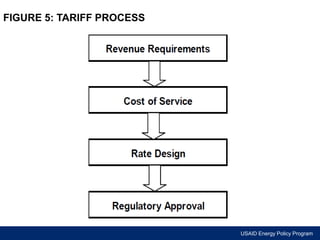
3. The design of the tariff structure. Generally, the tariff process includes four 
steps.
USAID Energy Policy Program 
FIGURE 5: TARIFF PROCESS
USAID Energy Policy Program 
TWO PART TARIFF SYSTEM 
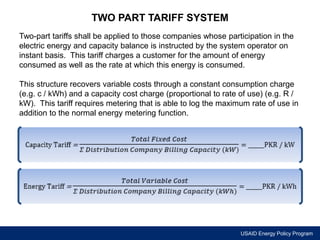
Two-part tariffs shall be applied to those companies whose participation in the 
electric energy and capacity balance is instructed by the system operator on 
instant basis. This tariff charges a customer for the amount of energy 
consumed as well as the rate at which this energy is consumed. 
This structure recovers variable costs through a constant consumption charge 
(e.g. c / kWh) and a capacity cost charge (proportional to rate of use) (e.g. R / 
kW). This tariff requires metering that is able to log the maximum rate of use in 
addition to the normal energy metering function.
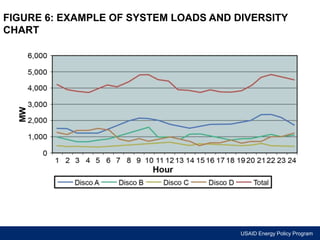
FIGURE 6: EXAMPLE OF SYSTEM LOADS AND DIVERSITY 
CHART 
USAID Energy Policy Program
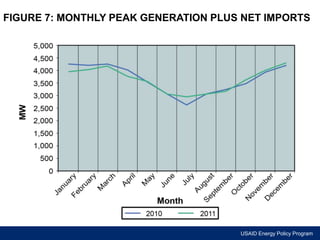
FIGURE 7: MONTHLY PEAK GENERATION PLUS NET IMPORTS 
USAID Energy Policy Program
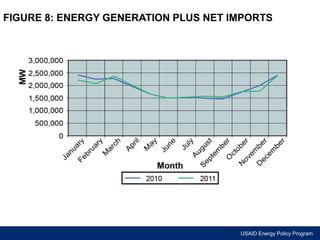
FIGURE 8: ENERGY GENERATION PLUS NET IMPORTS 
USAID Energy Policy Program
SETTING UP A TWO PART TARIFF SYSTEM 
There are several requirements that must be addressed before two-part tariffs 
can be designed and adopted. 
Organization and Infrastructure -XYZ Company is responsible for providing the 
information and data needed to develop and implement two-part wholesale 
tariffs. It is recommended that a review of the organization and the current 
infrastructure be conducted to identify areas where changes will be needed in 
order to develop and implement the two-part tariffs. 
Data Analysis Equipment and Capabilities: 
Metering - The hourly metering installation at all distribution company points of 
delivery (connection points) needs to be in place 
Software and Data Acquisition Systems - Data acquisition systems and 
software must be in place and able to record all metering data from each point 
of connection. 
Billing Changes - Billing systems may need to be modified to allow for the 
billing of both the capacity element and the energy portion of the monthly bills. 
USAID Energy Policy Program
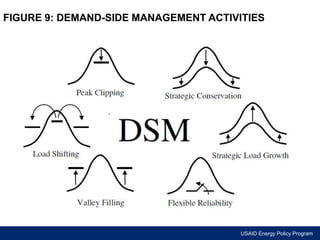
FIGURE 9: DEMAND-SIDE MANAGEMENT ACTIVITIES 
USAID Energy Policy Program

Power plant tarrif Stratagies

  • 1.
    ENERGY POLICY PROGRAM POWER PLANT TARIFF STRATEGIES MARCH 2014
  • 2.
    TOPIC 1: POWERPLANT TARIFF STRATEGIES USAID Energy Policy Program
  • 3.
    USAID Energy PolicyProgram INTRODUCTION One of the most important questions that a power company must ask and answer is what should they charge for providing electricity to the customer? Average retail electricity prices are calculated by dividing utility revenue by retail sales. It is the measured cost, or average revenue per kilowatt-hour, of power sold. Electric utilities usually offer three primary classes of service: residential, commercial, and industrial. The average price per kilowatt-hour for residential consumers is generally higher than for any other sector due in part to higher costs associated with serving many consumers who use relatively small amounts of power. The industrial sector has the lowest electricity prices due to the economies of serving a few consumers who use relatively large amounts of electricity.
  • 4.
    USAID Energy PolicyProgram OBJECTIVES At the conclusion of this topic, participants will be able to: 1. List the functions of the regulating bodies for setting tariffs. 2. Give the definition of a tariff as explain in this training. 3. Explain the difference between a fixed charge and variable charge. 4. Explain what a tariff should accomplish. 5. List the steps for designing wholesale tariffs. 6. Describe the two part tariff system. 7. Discuss the steps for setting up a two part tariff system.
  • 5.
    FUNCTION OF TARIFFREGULATING BODY National Electric Power Regulatory Authority Pakistan (NEPRA) is responsible for the regulation of power plant tariffs in Pakistan. USAID Energy Policy Program The functions of the regulating bodies include: • Issue and revoke electricity distribution licenses • Regulate the electrification drive • Determine electricity distribution competency • Regulate electricity tariffs and structures • Regulate electricity service standards • Settle disputes between suppliers and customers • Approve expropriation of network assets
  • 6.
    USAID Energy PolicyProgram TARIFFS EXPLAINED A tariff is the amount charged for providing energy under a contract. It includes both fixed and variable charges. Fixed charges are not based on how much energy you use. It is normally separately identified on your bill, and is often called the ‘daily supply charge’ or ‘service to property’ charge. It can be displayed as a daily rate on your bill (e.g. in ‘rupees per day’), but may appear as a single figure for a billing period. Variable charges or ‘consumption charge’ is normally the amount you pay for each unit of electricity and/or gas you use. It is listed on your bill as rupees per kilowatt hour (PKR/kWh).
  • 7.
    USAID Energy PolicyProgram COST OF ENERGY SUPPLY As an example, consider the cost of owning and running a car. The various costs can be converted to an average cost per km per month.
  • 8.
    USAID Energy PolicyProgram FIGURE 2: ELECTRICITY USE COSTS
  • 9.
    FIGURE 3: NETWORKCONNECTION COSTS EXAMPLE USAID Energy Policy Program
  • 10.
    USAID Energy PolicyProgram TARIFF GOALS A tariff should accomplish the following: 1. Energy tariffs should firstly allocate resources efficiently among different sectors of the economy and within the energy supply industry. 2. The tariff should satisfy fairness principles such that costs are allocated among customers according to the burden they place on the energy system. 3. The energy tariff should raise sufficient revenue to meet the financial requirements of the utility and finally, the tariff should be simple enough to facilitate billing with available technology while ensuring that customers understand the billing process.
  • 11.
    ELECTRICITY COST CALCULATIONEXAMPLE USAID Energy Policy Program On Wednesday, April 8, 2014 Fuel Used = 1038.8 Tons Fuel Price = 70,913.77 Rupees/Ton Net Generation = 3,598,12 kWh Fuel Cost = 1038.8 Tons * 70,913.77 Rupees/Ton = 73.7 * 106 Rupees Net Generation = 3,598,712 kWh Electricity Cost = 73.7 * 106 Rupees / 3,598,712 kWh = 20.50 Rupees/kWh
  • 12.
    TARIFF CALCULATION EXAMPLE USAID Energy Policy Program On Wednesday, April 8, 2014 Fuel Cost = 73.7 * 106 Rupees Transmission Cost (10% fuel cost) = 0.25 * 106 Rupees Administration Cost (20% fuel cost) = 0.5 * 106 Rupees O & M Cost = 1.0 * 106 Rupees Other Costs = 3.0 * 106 Rupees Total Cost = 78.45 * 106 Rupees Net Generation = 3,598,712 kWh NEPRA Cost = 78.45 * 106 Rupees / 3,598,712 kWh = 21.80 Rupees/kWh Electricity Cost = 73.7 * 106 Rupees / 3,598,712 kWh = 20.48 Rupees/kWh Tarrif = 21.80 – 20.48 = 1.32 Rupees/kWh
  • 13.
    USAID Energy PolicyProgram TARIFF DESIGN The tariff structure together with the tariff rates make up the tariff. This, together with other charges becomes the tariff package, which when applied to the customer consumption profile gives the electricity cost.
  • 14.
    USAID Energy PolicyProgram WHOLESALE TARIFFS The process of designing wholesale tariffs contains several aspects: 1. The determination of the appropriate revenue requirement (total annual costs). 2. The use of various technical data. 3. The design of the tariff structure. Generally, the tariff process includes four steps.
  • 15.
    USAID Energy PolicyProgram FIGURE 5: TARIFF PROCESS
  • 16.
    USAID Energy PolicyProgram TWO PART TARIFF SYSTEM Two-part tariffs shall be applied to those companies whose participation in the electric energy and capacity balance is instructed by the system operator on instant basis. This tariff charges a customer for the amount of energy consumed as well as the rate at which this energy is consumed. This structure recovers variable costs through a constant consumption charge (e.g. c / kWh) and a capacity cost charge (proportional to rate of use) (e.g. R / kW). This tariff requires metering that is able to log the maximum rate of use in addition to the normal energy metering function.
  • 17.
    FIGURE 6: EXAMPLEOF SYSTEM LOADS AND DIVERSITY CHART USAID Energy Policy Program
  • 18.
    FIGURE 7: MONTHLYPEAK GENERATION PLUS NET IMPORTS USAID Energy Policy Program
  • 19.
    FIGURE 8: ENERGYGENERATION PLUS NET IMPORTS USAID Energy Policy Program
  • 20.
    SETTING UP ATWO PART TARIFF SYSTEM There are several requirements that must be addressed before two-part tariffs can be designed and adopted. Organization and Infrastructure -XYZ Company is responsible for providing the information and data needed to develop and implement two-part wholesale tariffs. It is recommended that a review of the organization and the current infrastructure be conducted to identify areas where changes will be needed in order to develop and implement the two-part tariffs. Data Analysis Equipment and Capabilities: Metering - The hourly metering installation at all distribution company points of delivery (connection points) needs to be in place Software and Data Acquisition Systems - Data acquisition systems and software must be in place and able to record all metering data from each point of connection. Billing Changes - Billing systems may need to be modified to allow for the billing of both the capacity element and the energy portion of the monthly bills. USAID Energy Policy Program
  • 21.
    FIGURE 9: DEMAND-SIDEMANAGEMENT ACTIVITIES USAID Energy Policy Program