What is Post-harvest handling operations?
- the operations used to prepare the bananas for marketing.
- These operations can be done in the field, in collection centers or in a
packinghouse. The packing area must provide adequate protection from sun
and rain, and clean at all times.
Postharvest Operations
 Dehanding
 Washing
 Sorting/Grading
 Packaging &
 Transportation
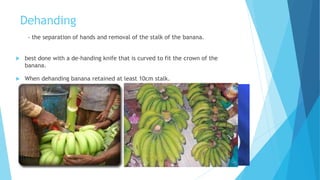
Dehanding
- the separation of hands and removal of the stalk of the banana.
 best done with a de-handing knife that is curved to fit the crown of the
banana.
 When dehanding banana retained at least 10cm stalk.
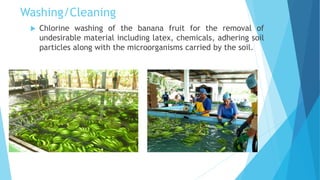
Washing/Cleaning
 Chlorine washing of the banana fruit for the removal of
undesirable material including latex, chemicals, adhering soil
particles along with the microorganisms carried by the soil.
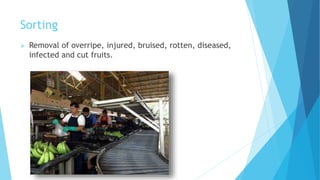
Sorting
 Removal of overripe, injured, bruised, rotten, diseased,
infected and cut fruits.
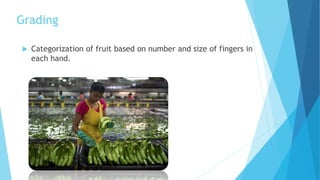
Grading
 Categorization of fruit based on number and size of fingers in
each hand.
Good quality fruits demanded by institutional buyers and
supermarkets
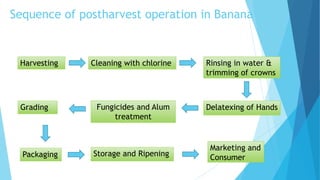
Sequence of postharvest operation in Banana
Harvesting Cleaning with chlorine Rinsing in water &
trimming of crowns
Delatexing of Hands
Fungicides and Alum
treatment
Grading
Storage and Ripening
Marketing and
Consumer
Packaging
Harvesting of Banana
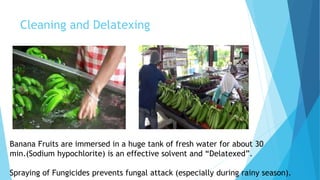
Cleaning and Delatexing
Banana Fruits are immersed in a huge tank of fresh water for about 30
min.(Sodium hypochlorite) is an effective solvent and “Delatexed”.
Spraying of Fungicides prevents fungal attack (especially during rainy season).
Sorting and Grading
 Removal of overripe, injured, bruised, rotten, diseased,
infected and cut fruits.
 Categorization of fruit based on number and size of fingers in
each hand.
Storage of Banana
 Keep them cool (12°C) and protected from the light.
 Don’t wrap completely in plastic
 Tree ripened fruit only lasts 7-10 days. But fruit picked green
cooled and stored last 3-4 weeks.
Ripening agent
Ethylene gas
 Calcium Carbide
Packaging
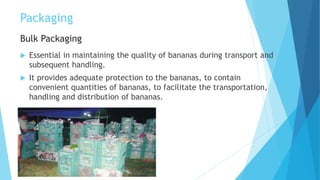
Bulk Packaging
 Essential in maintaining the quality of bananas during transport and
subsequent handling.
 It provides adequate protection to the bananas, to contain
convenient quantities of bananas, to facilitate the transportation,
handling and distribution of bananas.
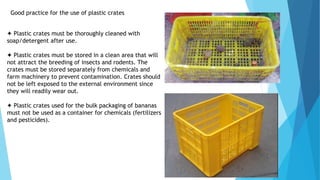
Bulk packaging containers for banana
 Plastic crates- are highly recommended and rigid for the bulk packaging of
bananas since they provide adequate protection against compression damage.
 Plastic crates have a smooth inside finish and can be easily cleaned. They are
also stackable and reusable/returnable.
Good practice for the use of plastic crates
✦ Plastic crates must be thoroughly cleaned with
soap/detergent after use.
✦ Plastic crates must be stored in a clean area that will
not attract the breeding of insects and rodents. The
crates must be stored separately from chemicals and
farm machinery to prevent contamination. Crates should
not be left exposed to the external environment since
they will readily wear out.
✦ Plastic crates used for the bulk packaging of bananas
must not be used as a container for chemicals (fertilizers
and pesticides).
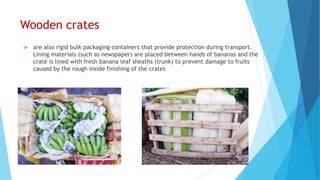
Wooden crates
 are also rigid bulk packaging containers that provide protection during transport.
Lining materials (such as newspaper) are placed between hands of bananas and the
crate is lined with fresh banana leaf sheaths (trunk) to prevent damage to fruits
caused by the rough inside finishing of the crates
 Over-packing should be avoided since it leads to bruising and compression
damage of the bananas
Plastic sacks and round palm baskets
 are also commonly used for the bulk packaging of bananas in some other
areas. Their use is not, however, recommended for bananas since they are
semi-rigid containers and do not provide adequate protection to the bananas.
TRANSPORTATION
 one of the critical stages in the banana supply chain. Poor transport
conditions, rough handling, and delays in transportation contribute
to losses in banana supply chains.
✦ Bananas must be carefully handled. They must not be dropped or thrown
on to each other; The transport vehicle must not be overloaded as
overloading increases the risk of damage to the fruits.
✦ Bananas at the bottom of the transport vehicle should not be used as steps
to allow stacking to a greater height.
✦ Air circulation in the stacks or piles of produce is of critical importance in
preventing heat build-up. This is facilitated by providing space in between
stacks. For bananas transported in bulk or in bunches, heat build-up will
occur leading to premature ripening during transit.
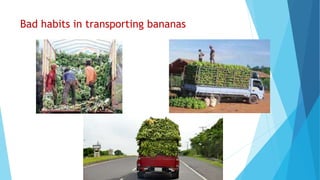
Bad habits in transporting bananas
Postharvest presentation.pptx

Postharvest presentation.pptx

  • 2.
    What is Post-harvesthandling operations? - the operations used to prepare the bananas for marketing. - These operations can be done in the field, in collection centers or in a packinghouse. The packing area must provide adequate protection from sun and rain, and clean at all times. Postharvest Operations  Dehanding  Washing  Sorting/Grading  Packaging &  Transportation
  • 3.
    Dehanding - the separationof hands and removal of the stalk of the banana.  best done with a de-handing knife that is curved to fit the crown of the banana.  When dehanding banana retained at least 10cm stalk.
  • 4.
    Washing/Cleaning  Chlorine washingof the banana fruit for the removal of undesirable material including latex, chemicals, adhering soil particles along with the microorganisms carried by the soil.
  • 5.
    Sorting  Removal ofoverripe, injured, bruised, rotten, diseased, infected and cut fruits.
  • 6.
    Grading  Categorization offruit based on number and size of fingers in each hand.
  • 7.
    Good quality fruitsdemanded by institutional buyers and supermarkets
  • 8.
    Sequence of postharvestoperation in Banana Harvesting Cleaning with chlorine Rinsing in water & trimming of crowns Delatexing of Hands Fungicides and Alum treatment Grading Storage and Ripening Marketing and Consumer Packaging
  • 9.
  • 10.
    Cleaning and Delatexing BananaFruits are immersed in a huge tank of fresh water for about 30 min.(Sodium hypochlorite) is an effective solvent and “Delatexed”. Spraying of Fungicides prevents fungal attack (especially during rainy season).
  • 11.
    Sorting and Grading Removal of overripe, injured, bruised, rotten, diseased, infected and cut fruits.  Categorization of fruit based on number and size of fingers in each hand.
  • 12.
    Storage of Banana Keep them cool (12°C) and protected from the light.  Don’t wrap completely in plastic  Tree ripened fruit only lasts 7-10 days. But fruit picked green cooled and stored last 3-4 weeks. Ripening agent Ethylene gas  Calcium Carbide
  • 13.
    Packaging Bulk Packaging  Essentialin maintaining the quality of bananas during transport and subsequent handling.  It provides adequate protection to the bananas, to contain convenient quantities of bananas, to facilitate the transportation, handling and distribution of bananas.
  • 14.
    Bulk packaging containersfor banana  Plastic crates- are highly recommended and rigid for the bulk packaging of bananas since they provide adequate protection against compression damage.  Plastic crates have a smooth inside finish and can be easily cleaned. They are also stackable and reusable/returnable.
  • 15.
    Good practice forthe use of plastic crates ✦ Plastic crates must be thoroughly cleaned with soap/detergent after use. ✦ Plastic crates must be stored in a clean area that will not attract the breeding of insects and rodents. The crates must be stored separately from chemicals and farm machinery to prevent contamination. Crates should not be left exposed to the external environment since they will readily wear out. ✦ Plastic crates used for the bulk packaging of bananas must not be used as a container for chemicals (fertilizers and pesticides).
  • 16.
    Wooden crates  arealso rigid bulk packaging containers that provide protection during transport. Lining materials (such as newspaper) are placed between hands of bananas and the crate is lined with fresh banana leaf sheaths (trunk) to prevent damage to fruits caused by the rough inside finishing of the crates
  • 17.
     Over-packing shouldbe avoided since it leads to bruising and compression damage of the bananas
  • 18.
    Plastic sacks andround palm baskets  are also commonly used for the bulk packaging of bananas in some other areas. Their use is not, however, recommended for bananas since they are semi-rigid containers and do not provide adequate protection to the bananas.
  • 19.
    TRANSPORTATION  one ofthe critical stages in the banana supply chain. Poor transport conditions, rough handling, and delays in transportation contribute to losses in banana supply chains. ✦ Bananas must be carefully handled. They must not be dropped or thrown on to each other; The transport vehicle must not be overloaded as overloading increases the risk of damage to the fruits. ✦ Bananas at the bottom of the transport vehicle should not be used as steps to allow stacking to a greater height. ✦ Air circulation in the stacks or piles of produce is of critical importance in preventing heat build-up. This is facilitated by providing space in between stacks. For bananas transported in bulk or in bunches, heat build-up will occur leading to premature ripening during transit.
  • 20.
    Bad habits intransporting bananas

Editor's Notes

  • #3 -Dehanding -Washing -Sorting/Grading -Packaging -Transportation
  • #11 Banana Fruits are immersed in a huge tank of fresh water for about 30 min.(Sodium hypochlorite) is an effective solvent and “Delatexed”. Spraying of Fungicides prevents fungal attack (especially during rainy season).
  • #12 Diseased damaged and undesirable fruits are separated from the lot. Generally fruits are categorized based on their size and colour and stage of maturity.
  • #13 Ethylene gas Acethylene gas Calcium Carbide
  • #16 Good practice for the use of plastic crates