Postharvest Chain
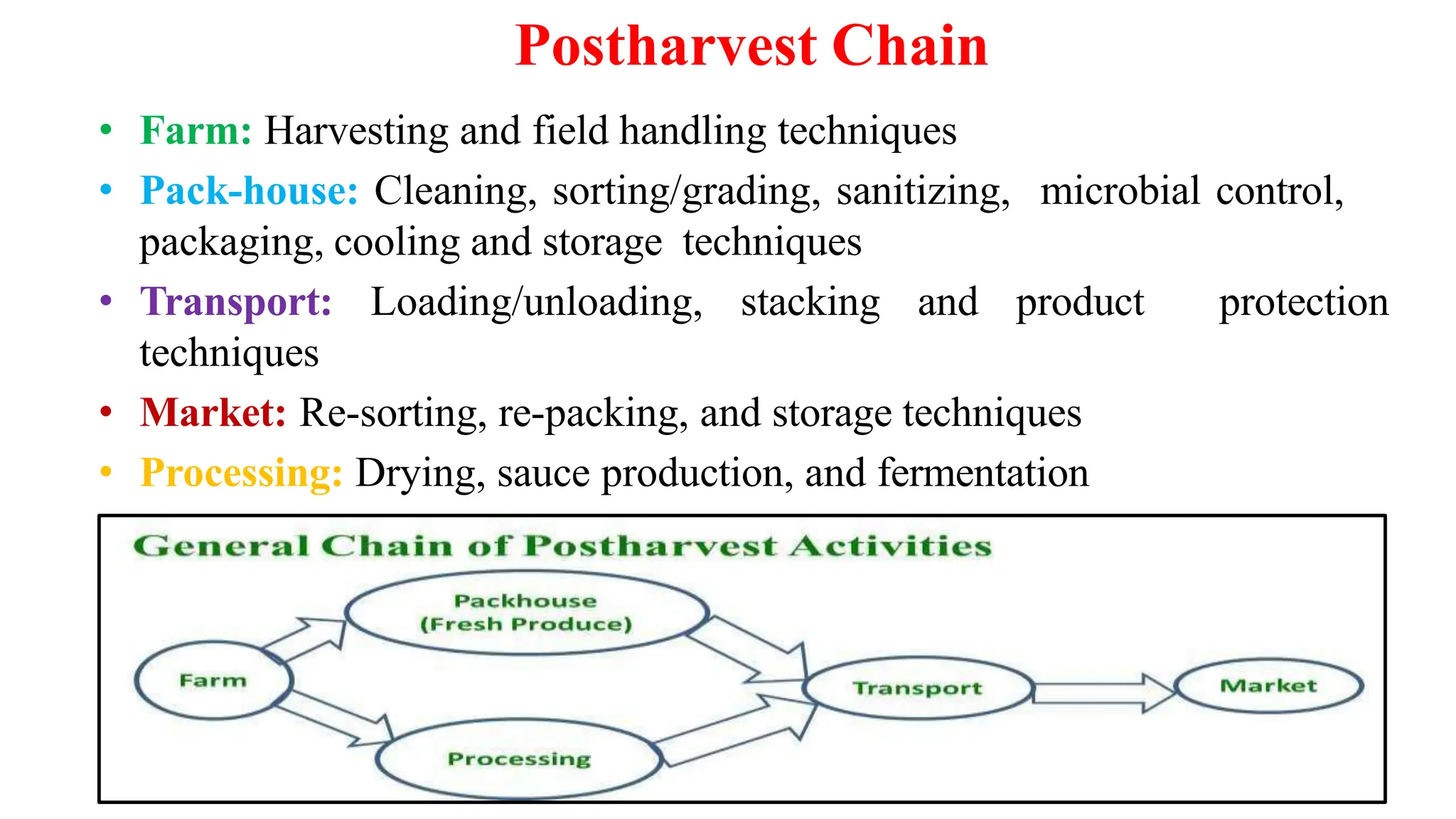
• Farm: Harvesting and field handling techniques
• Pack-house: Cleaning, sorting/grading, sanitizing, microbial control,
packaging, cooling and storage techniques
• Transport: Loading/unloading, stacking and product protection
techniques
• Market: Re-sorting, re-packing, and storage techniques
• Processing: Drying, sauce production, and fermentation
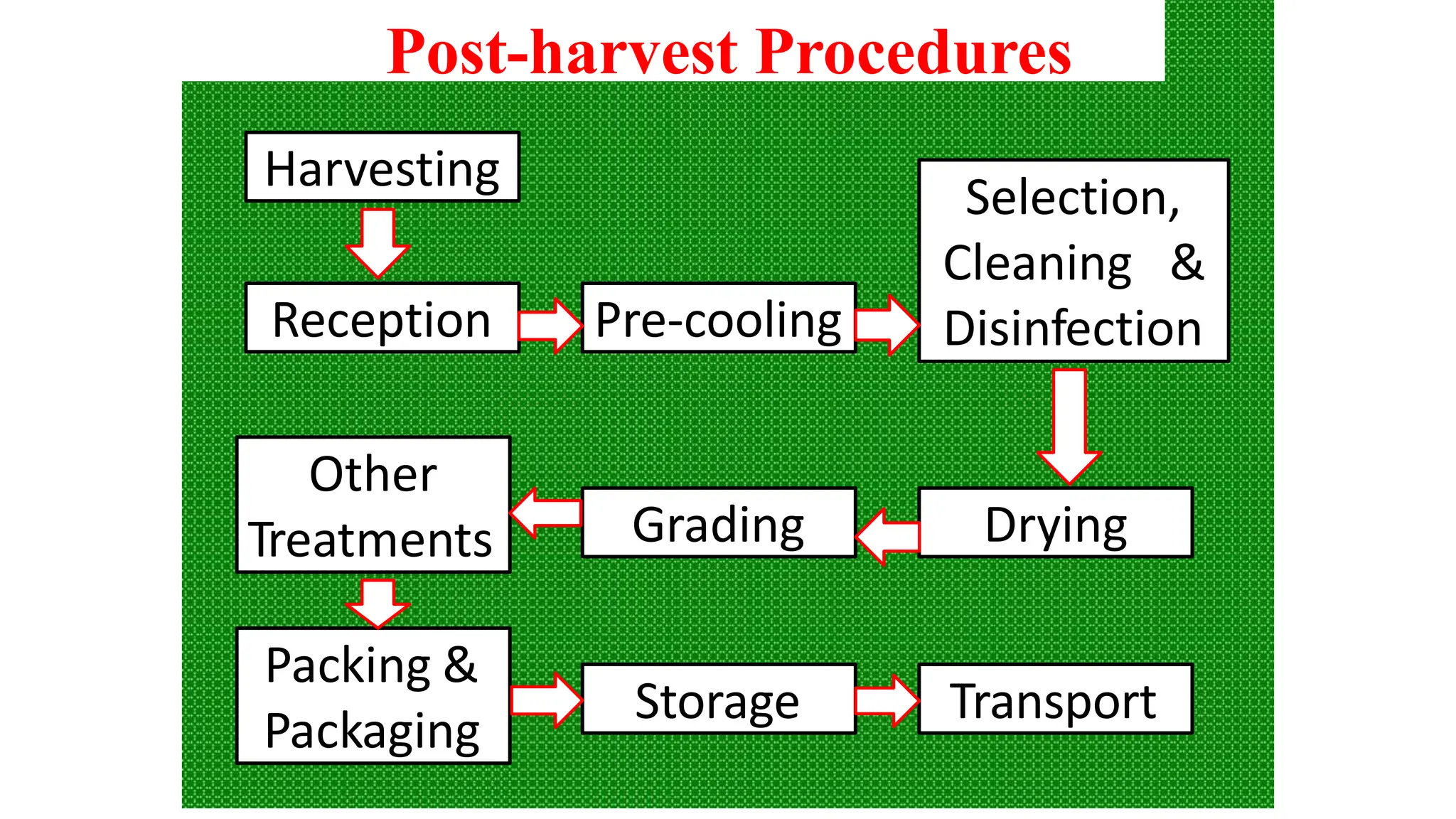
Post-harvest Procedures
Harvesting
Reception Pre-cooling
Selection,
Cleaning &
Disinfection
Drying
Grading
Other
Treatments
Packing &
Packaging
Storage Transport
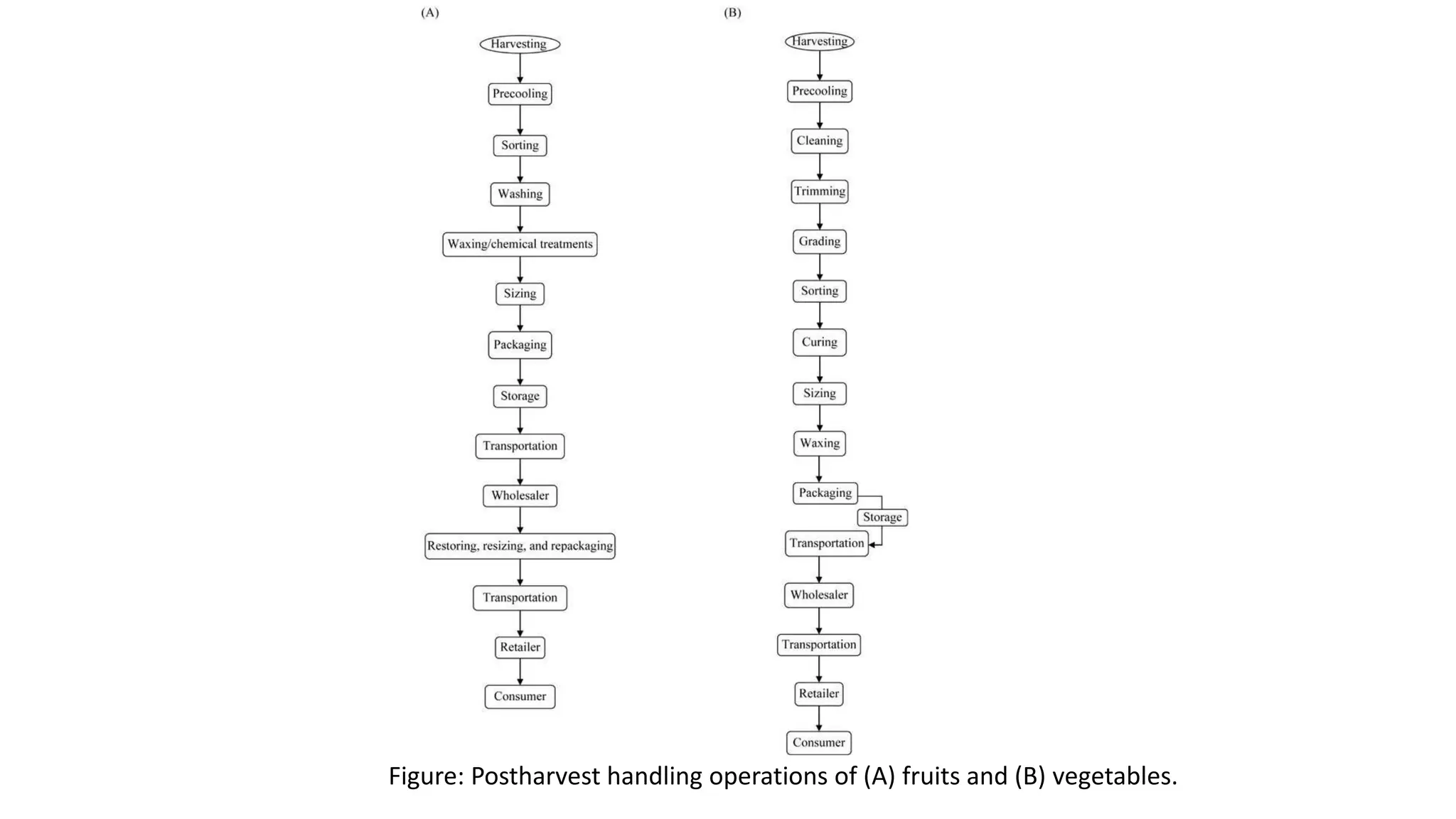
Figure: Postharvest handling operations of (A) fruits and (B) vegetables.
Dumping
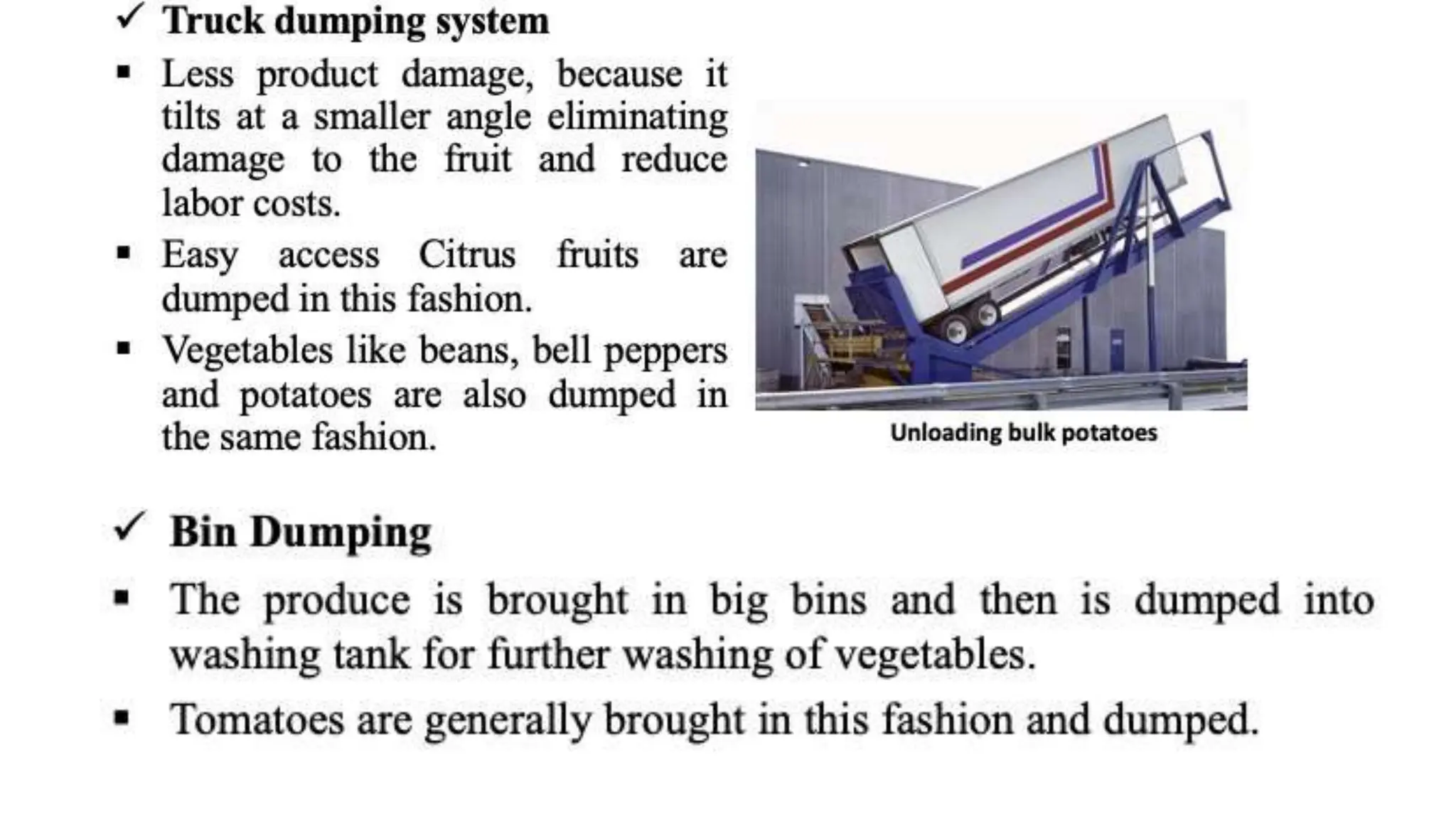
• Horticultural produce must somehow be removed from the field bin or
harvesting container and moved through the packing house.
• This first step of handling is known as ''dumping".
• Dumping must be done gently either by using water or dry dumping.
• Wet dumping can be done by immersing the produce in water.
• Wet dumping can decrease mechanical injury, bruising and abrasions on the
fruits, since water is more gentle on produce.
• It can by immersing the produce on chlorinated water(100-150 ppm).
• The dry dumping can be done by soft brushes fitted on the sloped ramp or
moving conveyor belts.
• It will help in removing dust and dirt on the fruits.
Cleaning
• This is a
adhering dust, dirt, extraneous
treatment given to remove
matter,
pathogenic load etc. from the surface of a
commodity.
• Cleaning basically sanitizes the produce
and avoid entry of undesirable contents to
enter the packaging and storage line.
• Cleaning is a broader term and includes,
dusting (dry method), washing (wet method)
etc.
Washing
• Washing is done at the pack house through automated washing
system fitted with overhead sprayers and smooth rotating brushes
to clean and wash the vegetables.
• Washing with clean water mixed with a neutral detergent at 0.1%
(1ml/liter of water) is effective.
• The process of cleaning and washing will take 3-5 minutes. The
temperature of water should at room temperature (270C)
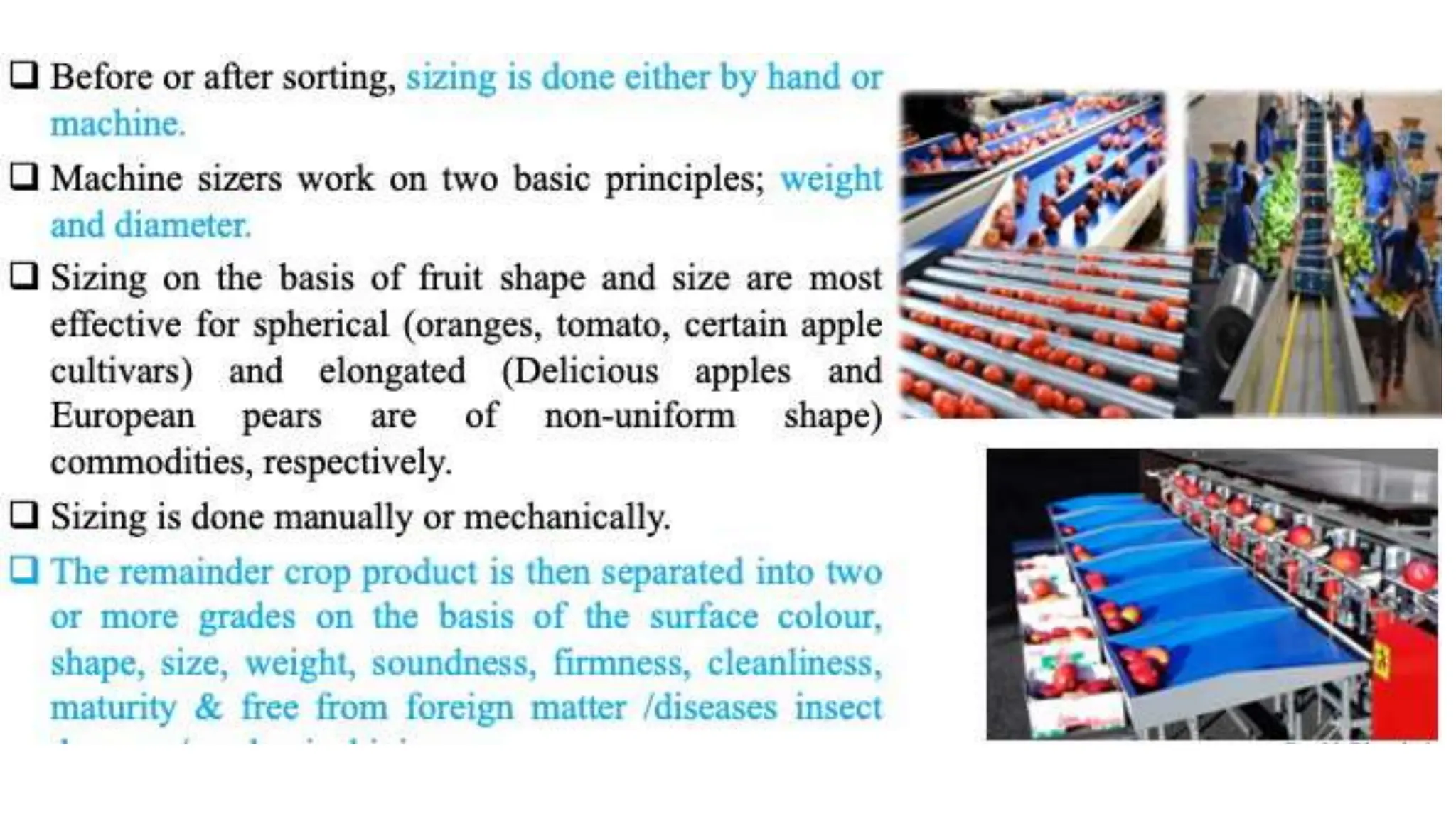
Sorting & Grading
Sorting: Undesirable types of fruits and vegetables i.e. diseased,
damaged, deformed are removed. It can be done primarily to
reduce spread of infection to other vegetables and fruits.
Grading: Vegetables and fruits are categorized according to
difference in their weight, shape, size, color, maturity etc. It can
be done to fetch better price in the market.
Sorting and grading of Apple in Agromanang Pvt. Ltd
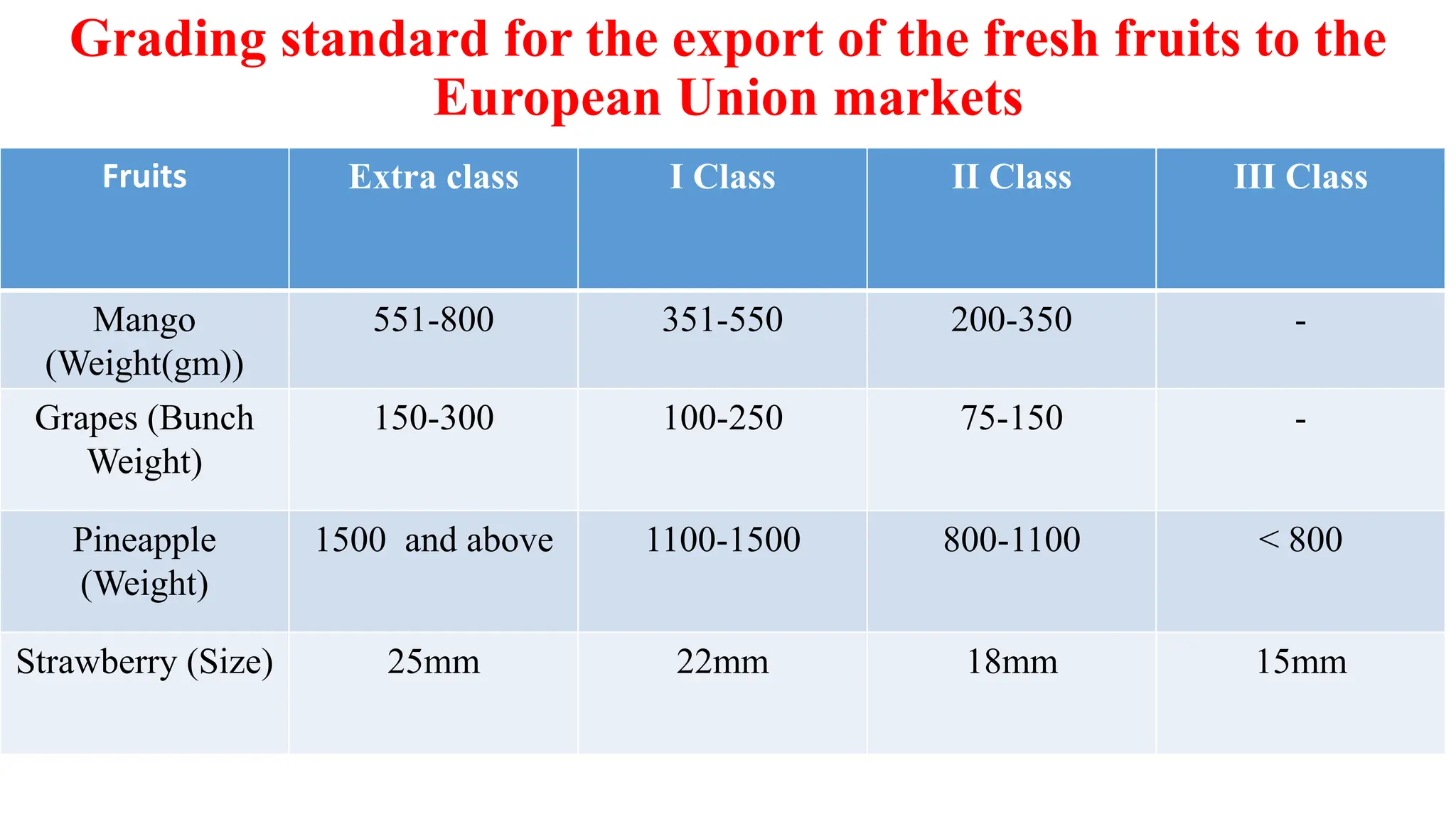
Grading standard for the export of the fresh fruits to the
European Union markets
Fruits Extra class I Class II Class III Class
Mango
(Weight(gm))
551-800 351-550 200-350 -
Grapes (Bunch
Weight)
150-300 100-250 75-150 -
Pineapple
(Weight)
1500 and above 1100-1500 800-1100 < 800
Strawberry (Size) 25mm 22mm 18mm 15mm
Brinjal QualityGrading
T
omato Quality Grading
CauliflowerQuality Sorting
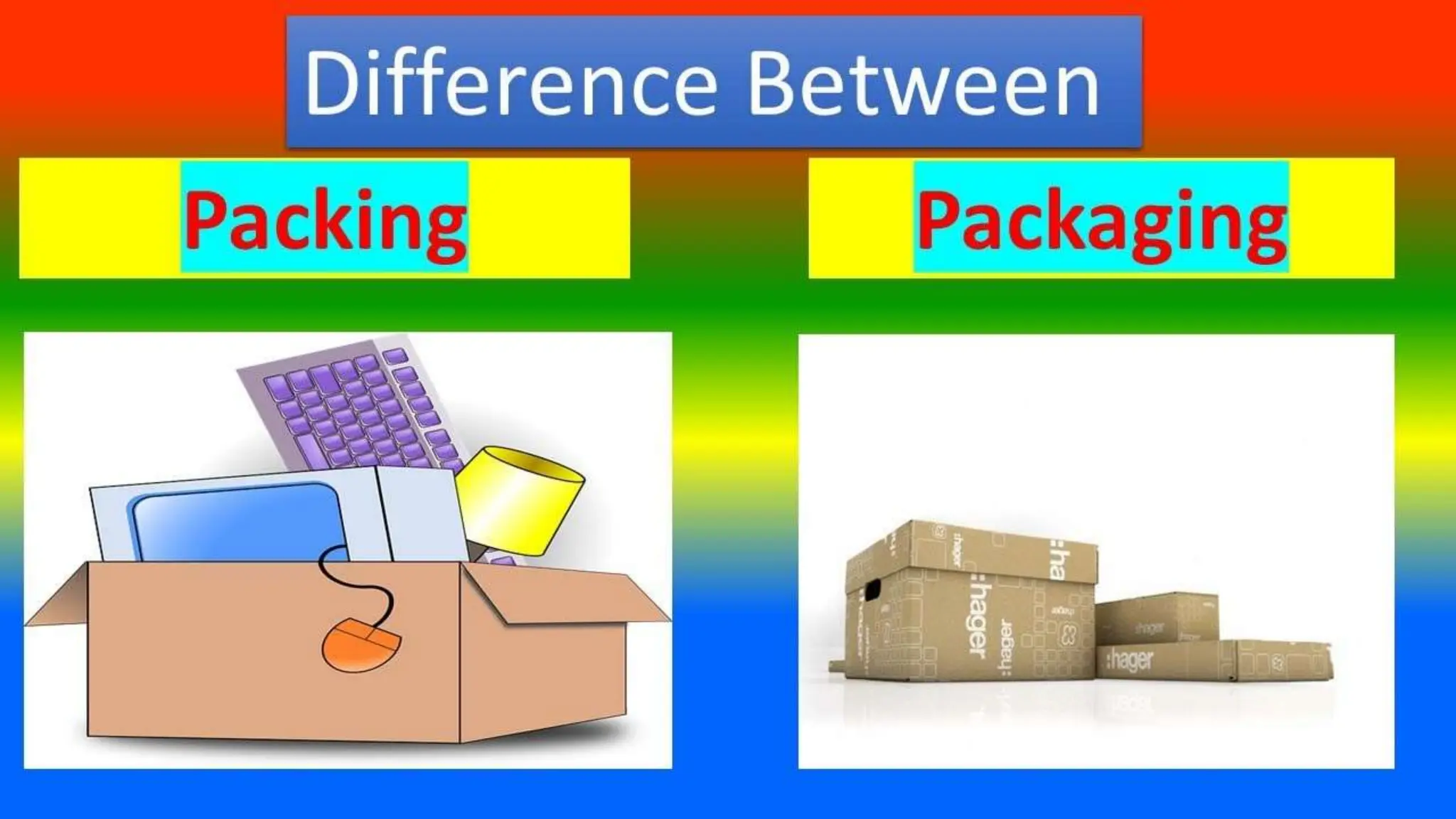
•When it comes to the world of products and logistics, two terms
often come up: packing and packaging.
• Although they might sound similar, they serve different
purposes and play distinct roles in various industries.
Points Packing Packaging
Purpose Protecting and securing Enclosing and containing
Nature Temporary Permanent
Focus Individual items Overall product
Materials Used Bubble wrap, tape, etc. Boxes, containers, etc.
Functionality Single-use Multi-use
Emphasis Internal External
Cost Lower Higher
Importance Pre-shipment Post-production
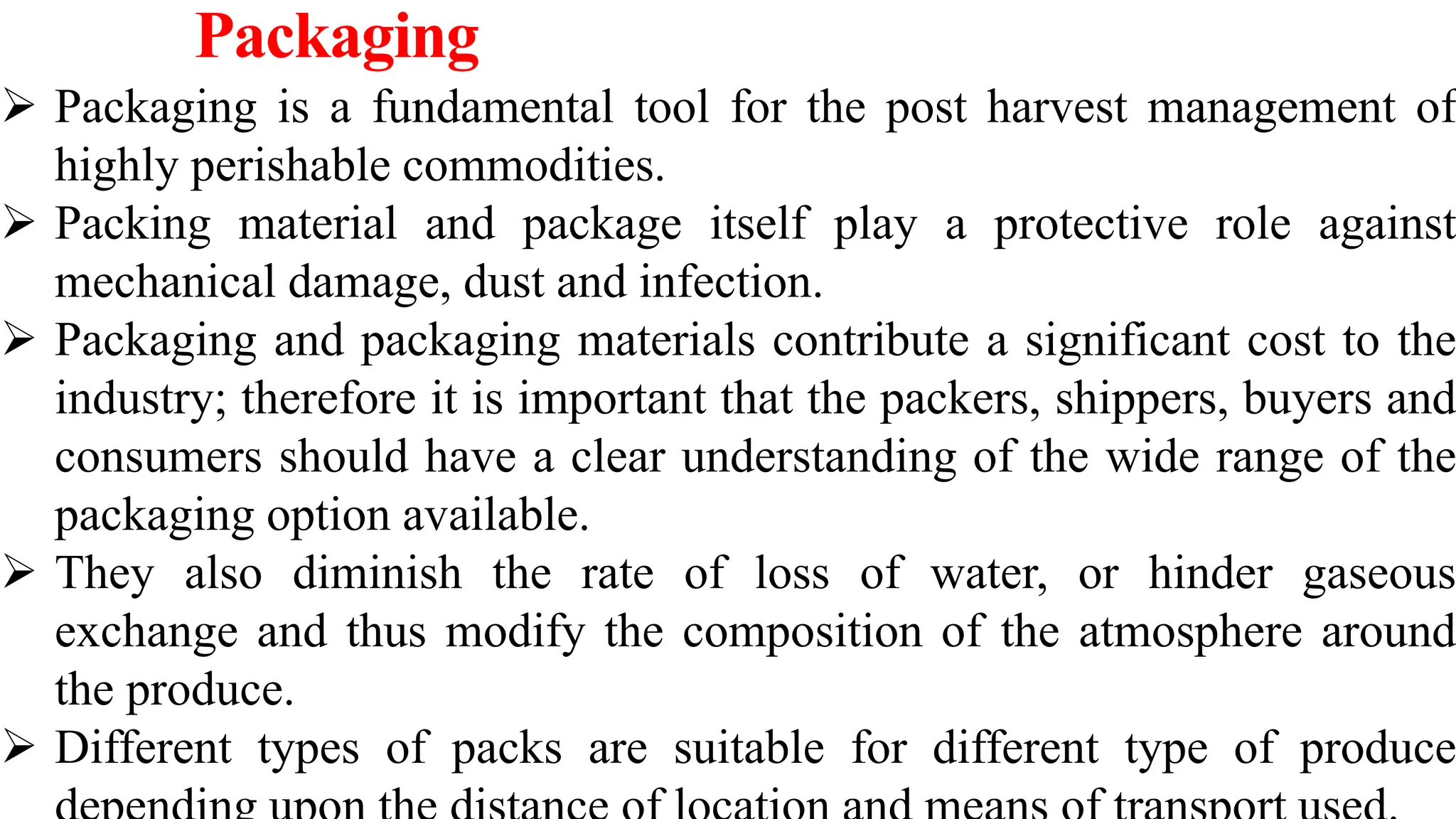
Packaging
 Packaging is a fundamental tool for the post harvest management of
highly perishable commodities.
 Packing material and package itself play a protective role against
mechanical damage, dust and infection.
 Packaging and packaging materials contribute a significant cost to the
industry; therefore it is important that the packers, shippers, buyers and
consumers should have a clear understanding of the wide range of the
packaging option available.
 They also diminish the rate of loss of water, or hinder gaseous
exchange and thus modify the composition of the atmosphere around
the produce.
 Different types of packs are suitable for different type of produce
• Proper cushion in the pack helps the produce to sustain
jerks/vibrations during transportation.
• As far as possible, uniformly graded produce should be packed in
one type of pack.
Purpose of packaging
1. Preparation of the production in condition required by the
purchaser.
2. The grouping of the product in homogenous quantities to meet the
market demand.
3. Holding over of crop before sale.
4. Dispatch of products to markets.
Characteristics/ Requirements of good
package:
Should be environment friendly.
Should have sufficient strength in
compression and against impact and
vibrations
Should be stable during the entire distribution
chain.
Should be compatible with the automatic
packing/filling, handling machines
(mechanical filling systems)
Should facilitate special treatments like pre-
cooling.
Should have consumer appeal.
Should be easily printable.
Should be cost effective.
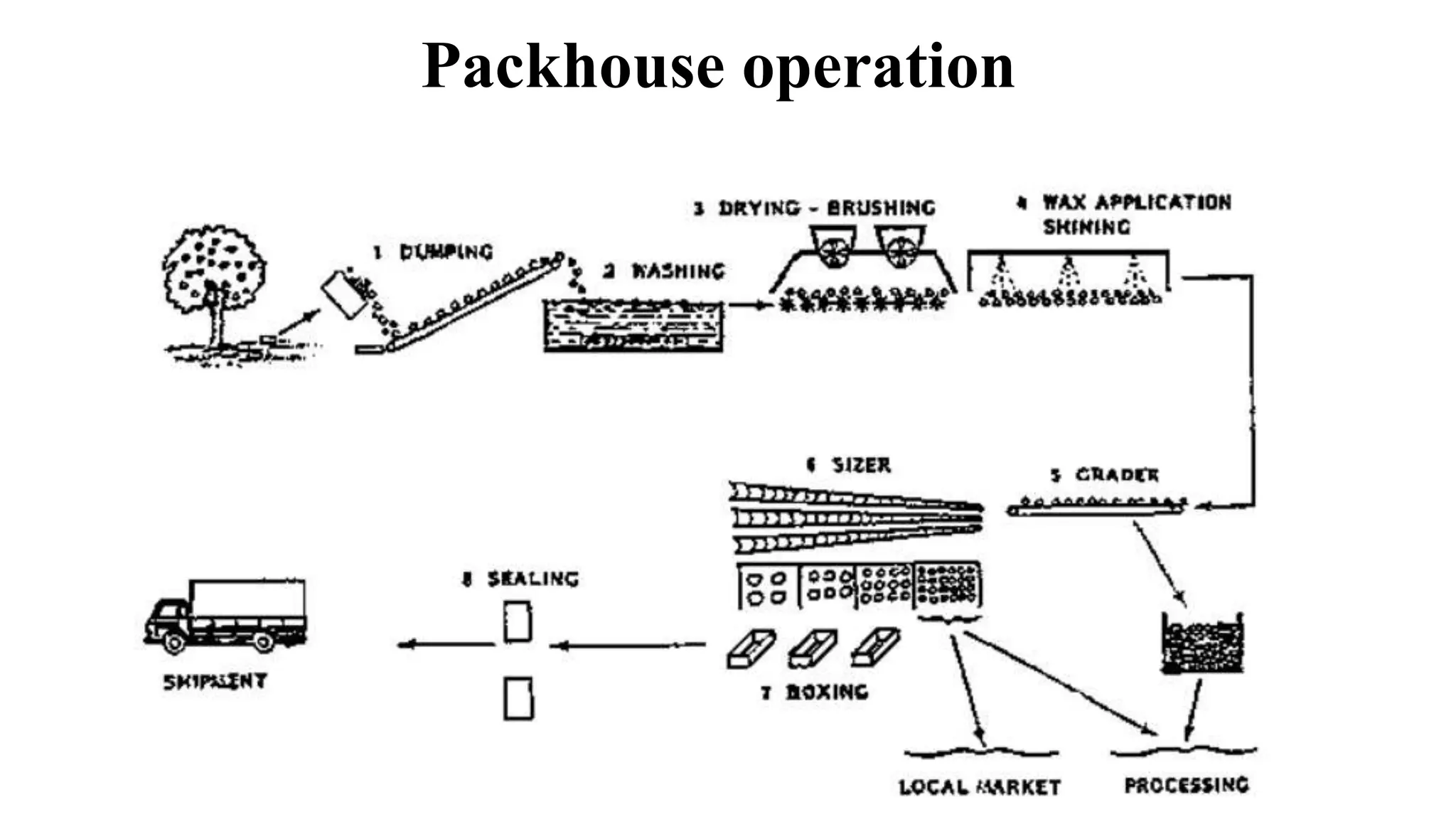
Packhouse operation
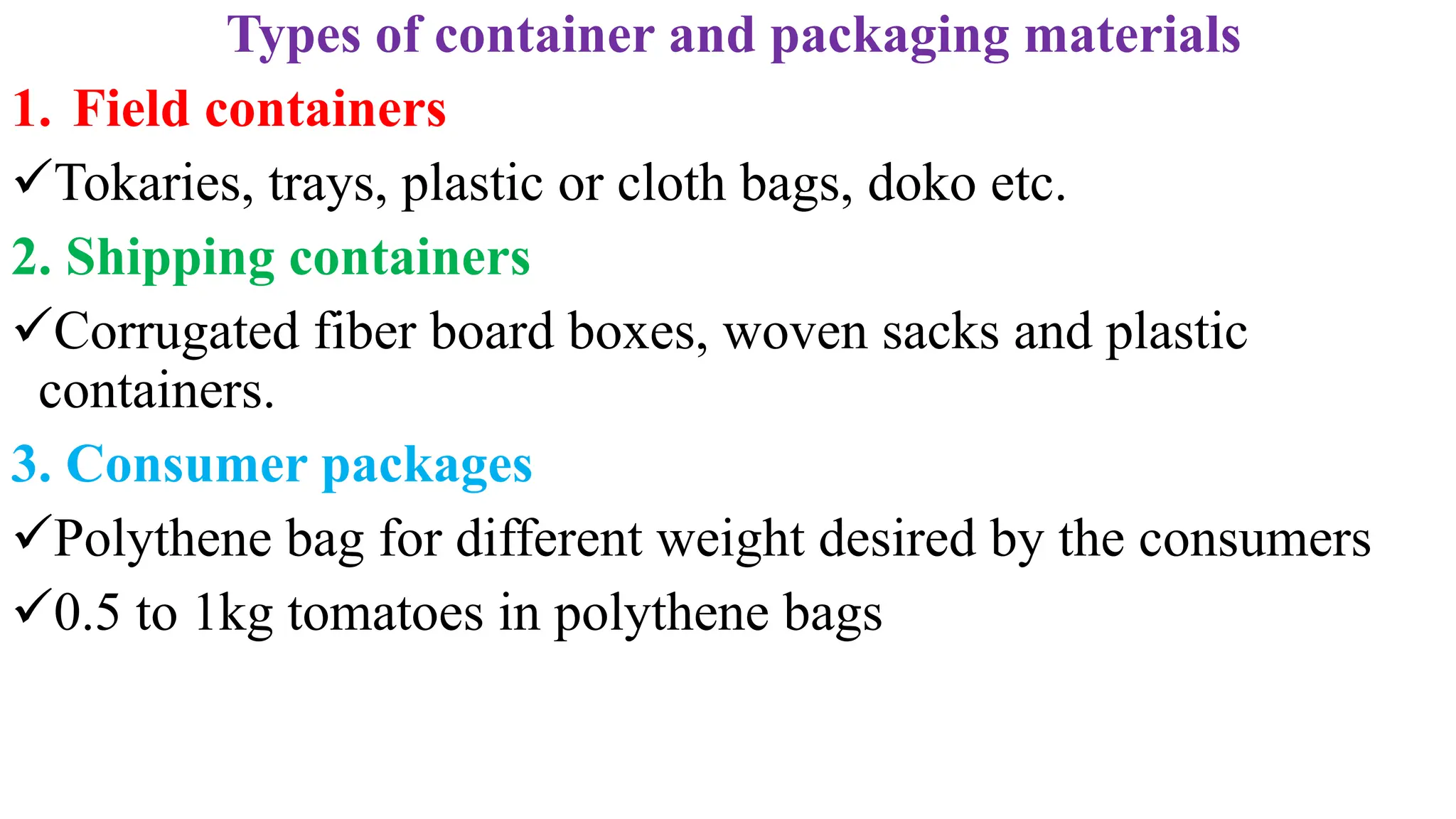
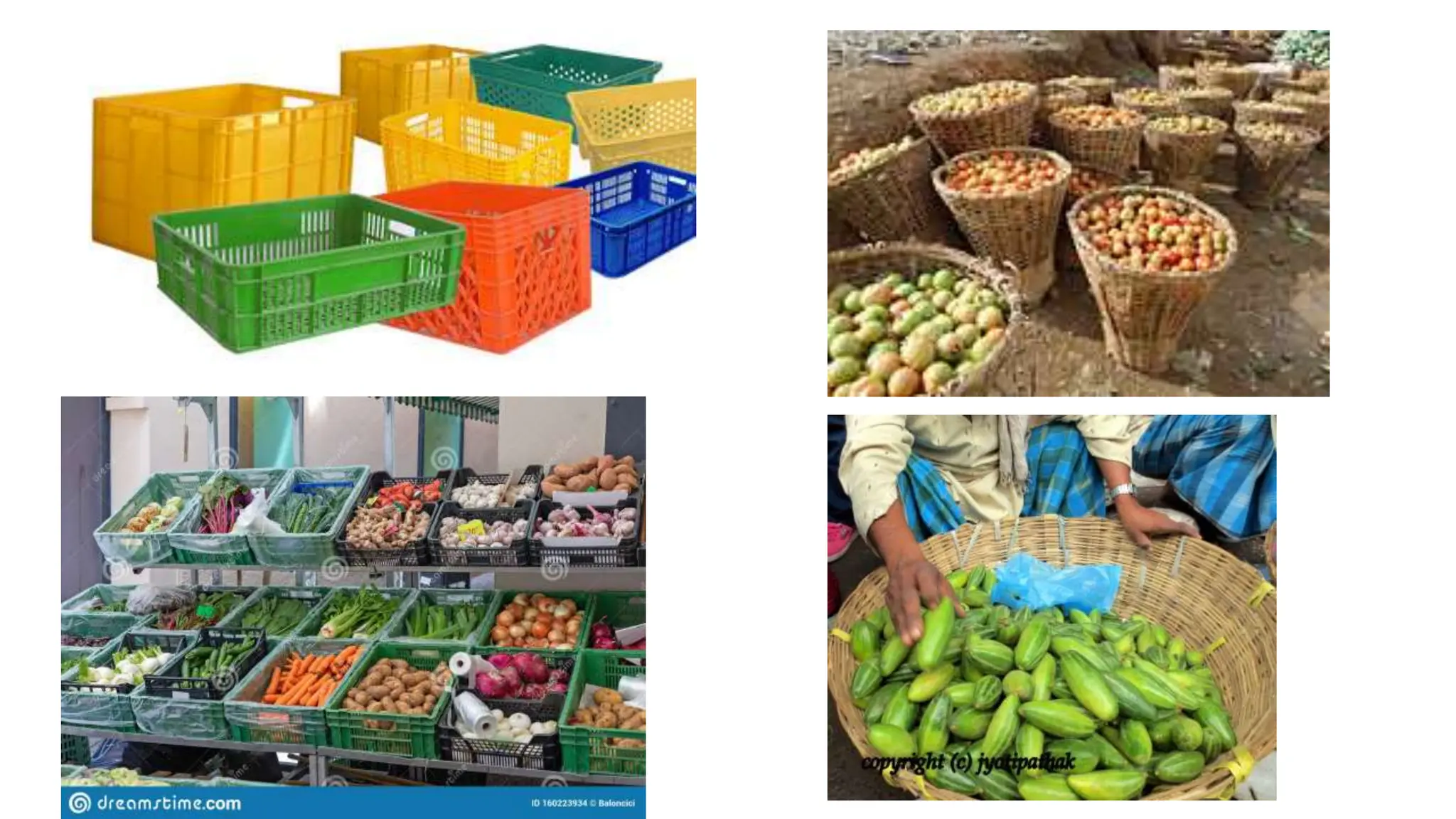
Types of container and packaging materials
1. Field containers
Tokaries, trays, plastic or cloth bags, doko etc.
2. Shipping containers
Corrugated fiber board boxes, woven sacks and plastic
containers.
3. Consumer packages
Polythene bag for different weight desired by the consumers
0.5 to 1kg tomatoes in polythene bags
Wooden Baskets and Hampers
Pulp Containers
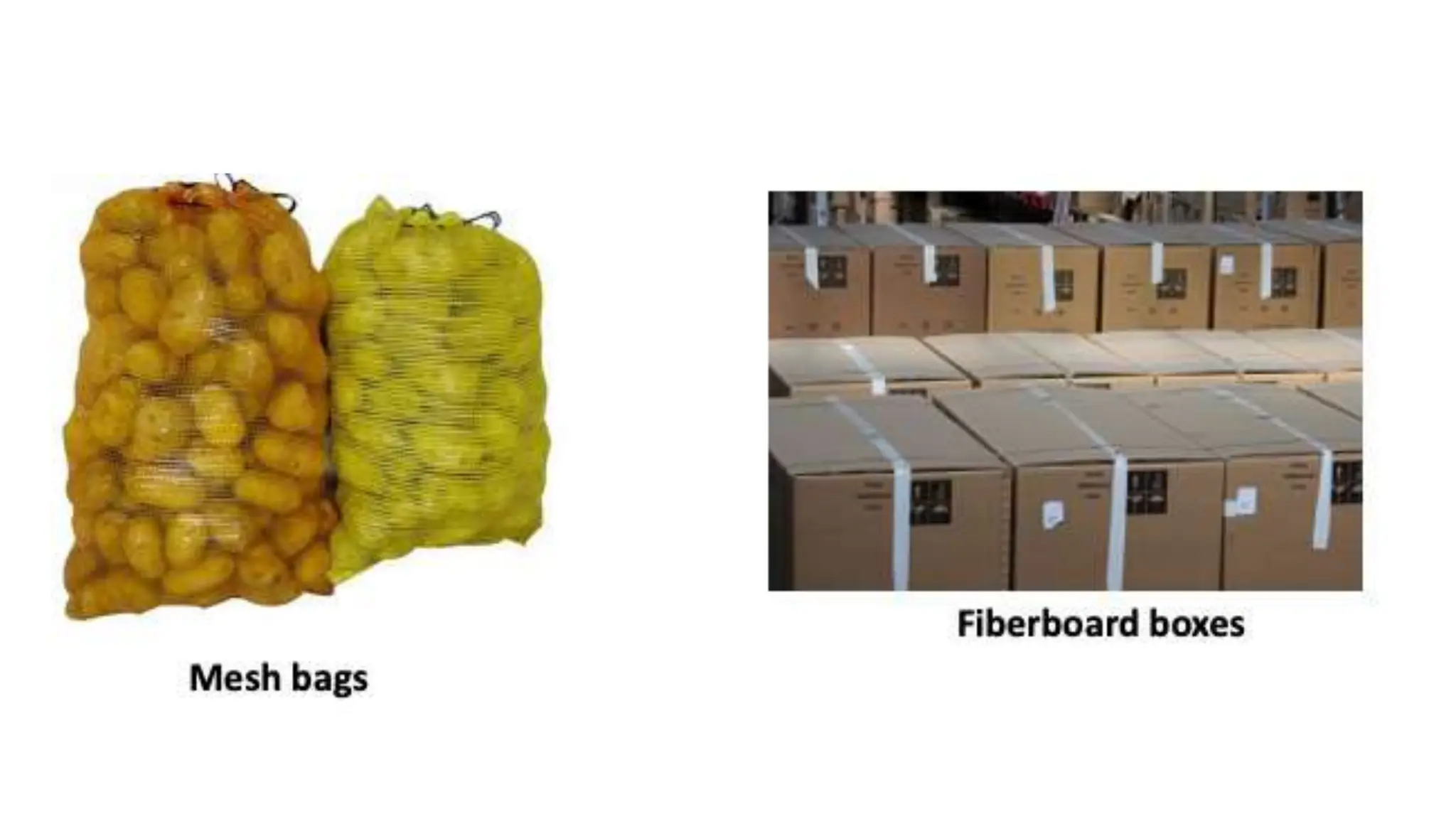
Paper and Mesh Bags.
Reusable plastic bulk bins (left) and wooden bulk bins (right)
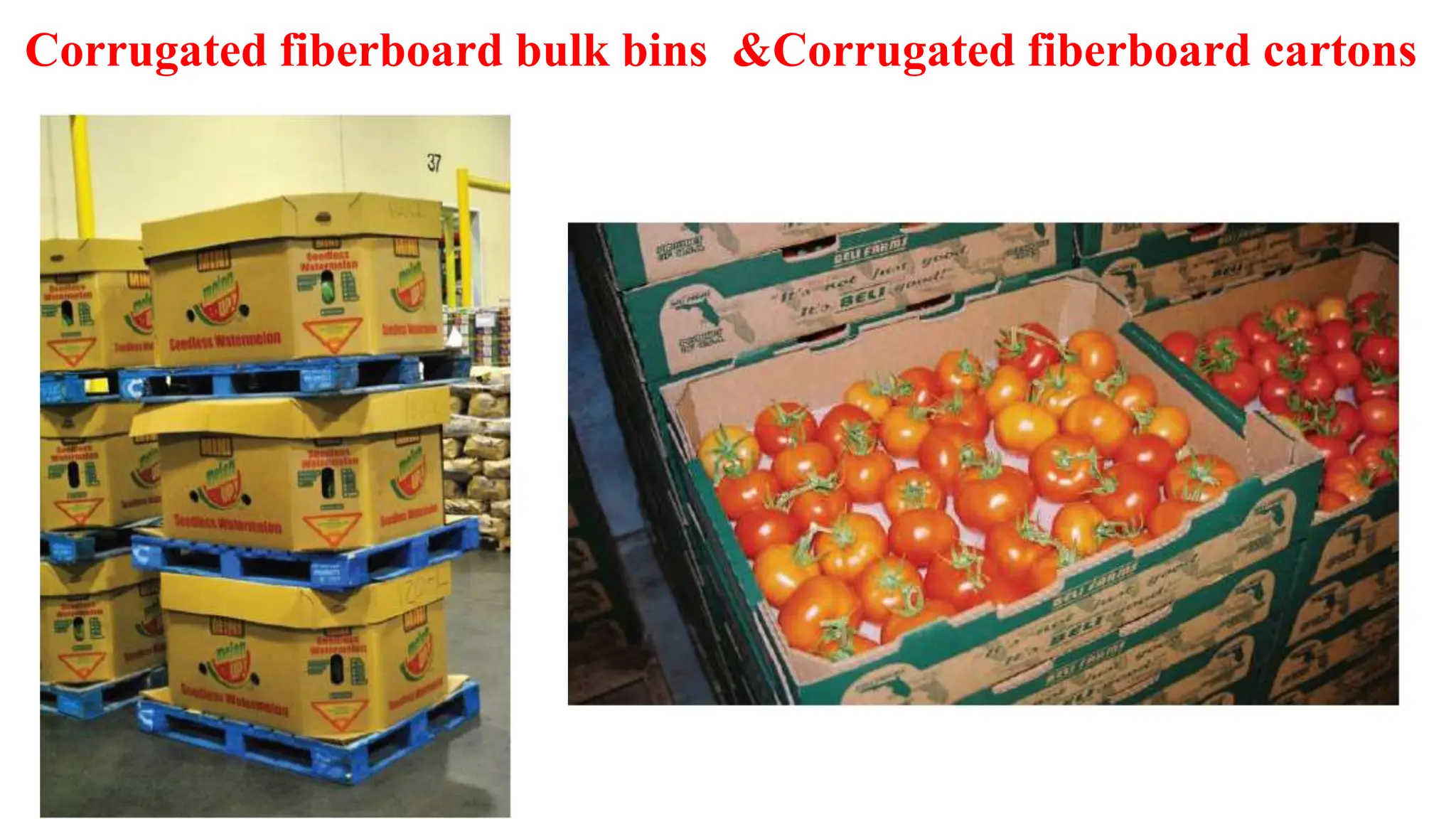
Corrugated fiberboard bulk bins &Corrugated fiberboard cartons
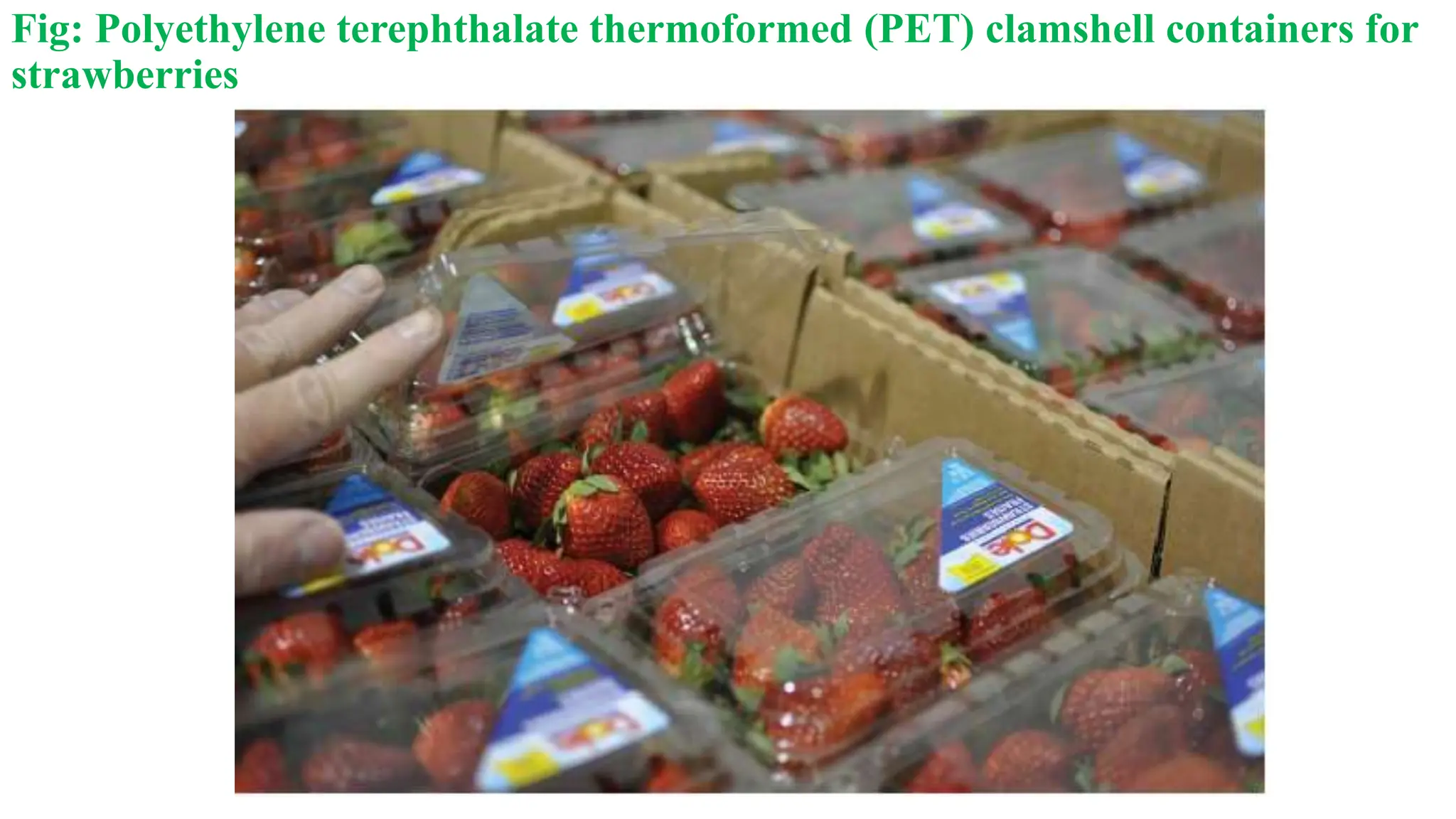
Fig: Polyethylene terephthalate thermoformed (PET) clamshell containers for
strawberries
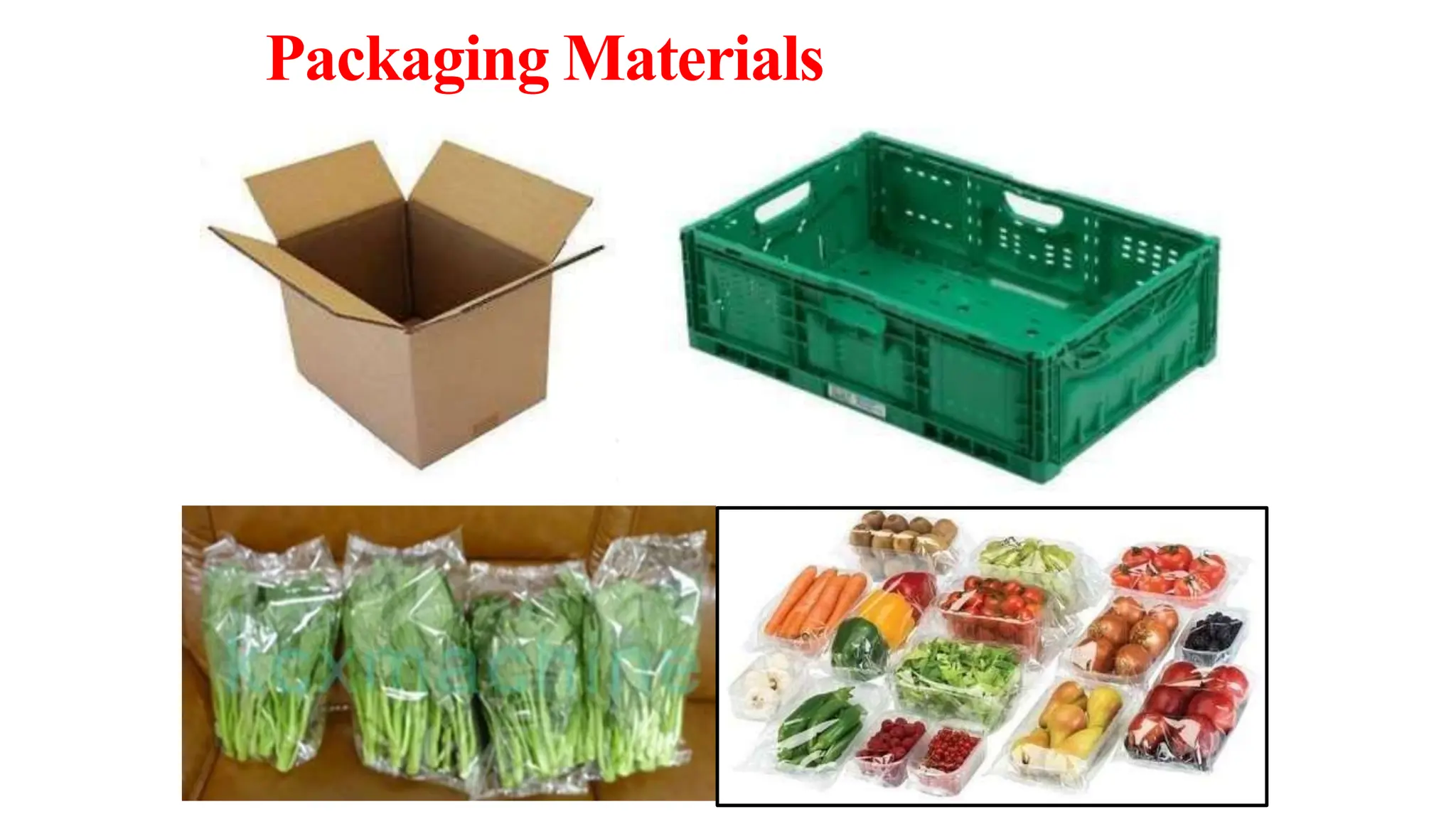
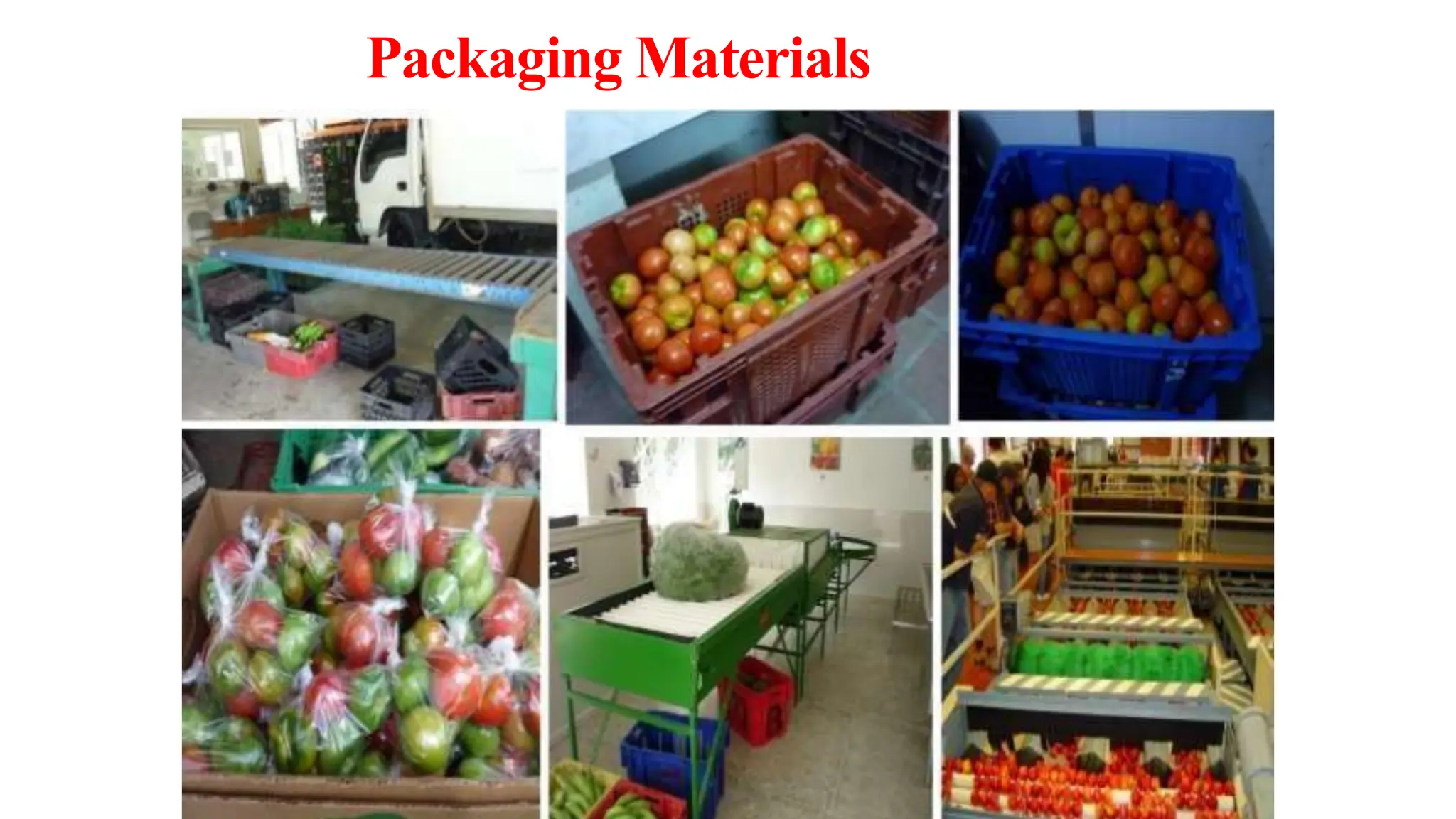
Packaging Materials
Some existing packaging practices in Bangladesh, Nepal and
Cambodia
Vegetable containers: bamboo and plastic baskets; plastic crates; wooden
crates with inner cardboard sides and collapsible type; carton and foam boxes.
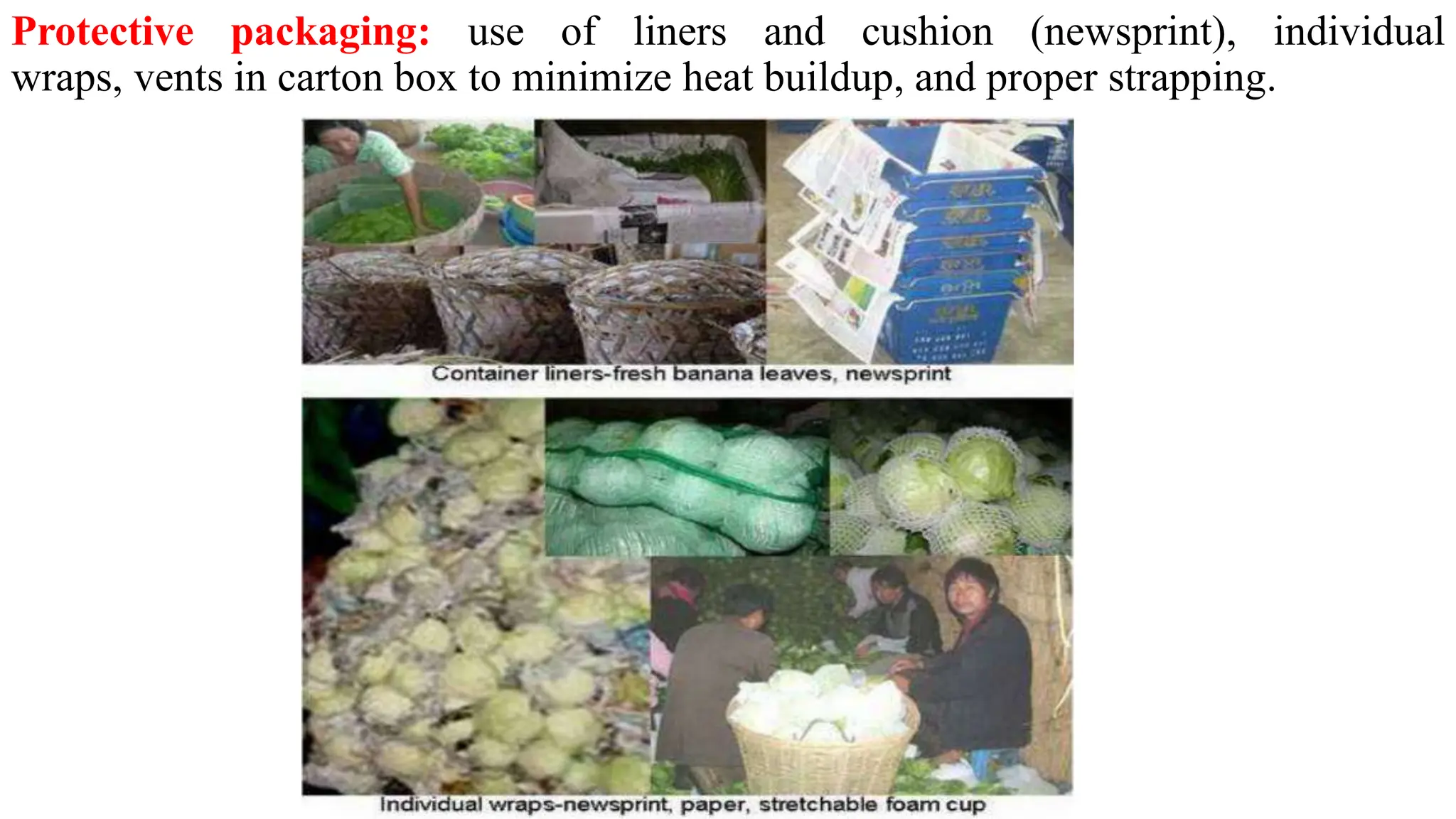
Protective packaging: use of liners and cushion (newsprint), individual
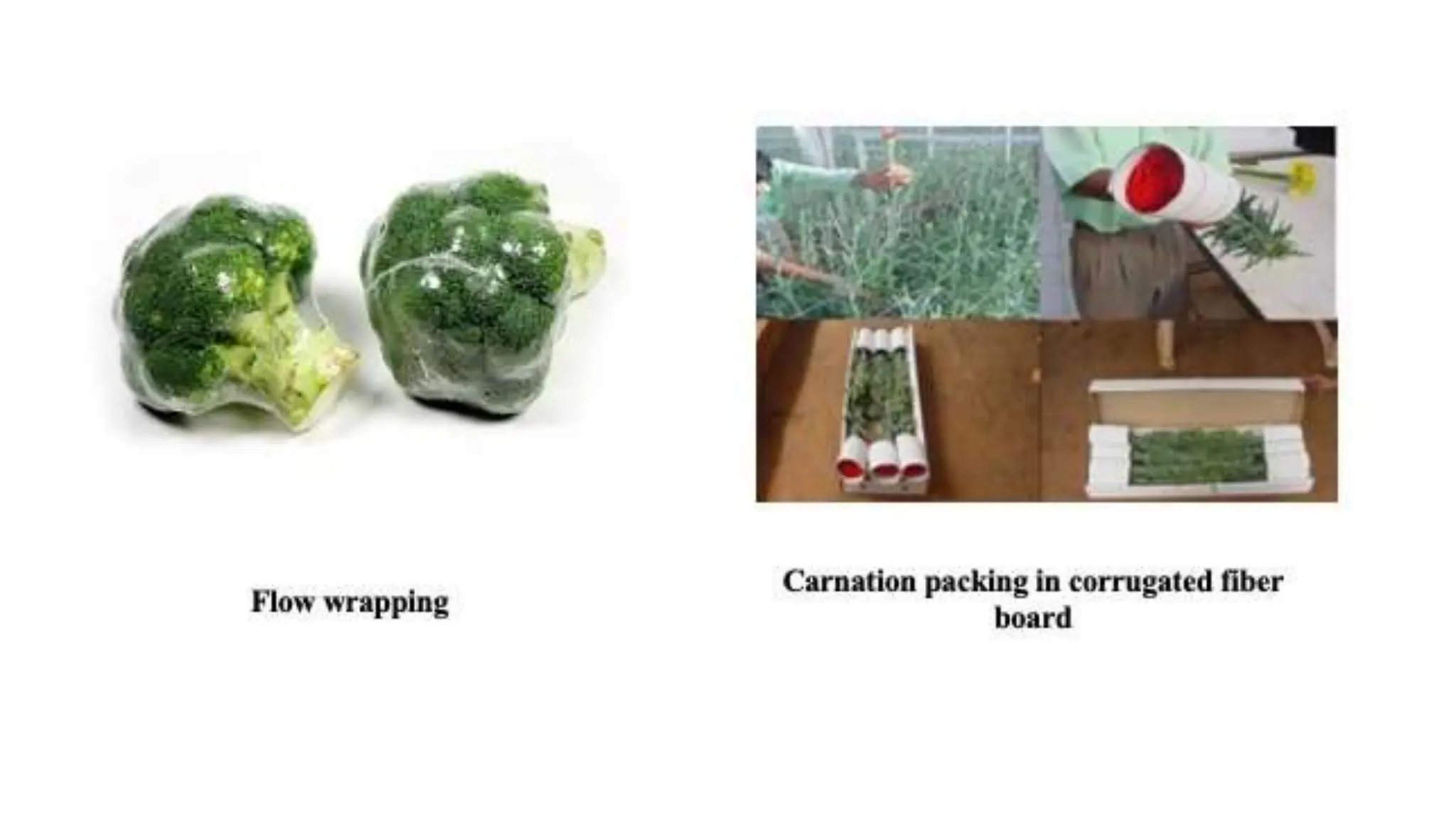
wraps, vents in carton box to minimize heat buildup, and proper strapping.
Packaging Materials
8. Packaging and packing house operations.pptx

8. Packaging and packing house operations.pptx

  • 2.
    Postharvest Chain • Farm:Harvesting and field handling techniques • Pack-house: Cleaning, sorting/grading, sanitizing, microbial control, packaging, cooling and storage techniques • Transport: Loading/unloading, stacking and product protection techniques • Market: Re-sorting, re-packing, and storage techniques • Processing: Drying, sauce production, and fermentation
  • 3.
    Post-harvest Procedures Harvesting Reception Pre-cooling Selection, Cleaning& Disinfection Drying Grading Other Treatments Packing & Packaging Storage Transport
  • 4.
    Figure: Postharvest handlingoperations of (A) fruits and (B) vegetables.
  • 5.
    Dumping • Horticultural producemust somehow be removed from the field bin or harvesting container and moved through the packing house. • This first step of handling is known as ''dumping". • Dumping must be done gently either by using water or dry dumping. • Wet dumping can be done by immersing the produce in water. • Wet dumping can decrease mechanical injury, bruising and abrasions on the fruits, since water is more gentle on produce. • It can by immersing the produce on chlorinated water(100-150 ppm). • The dry dumping can be done by soft brushes fitted on the sloped ramp or moving conveyor belts. • It will help in removing dust and dirt on the fruits.
  • 7.
    Cleaning • This isa adhering dust, dirt, extraneous treatment given to remove matter, pathogenic load etc. from the surface of a commodity. • Cleaning basically sanitizes the produce and avoid entry of undesirable contents to enter the packaging and storage line. • Cleaning is a broader term and includes, dusting (dry method), washing (wet method) etc.
  • 8.
    Washing • Washing isdone at the pack house through automated washing system fitted with overhead sprayers and smooth rotating brushes to clean and wash the vegetables. • Washing with clean water mixed with a neutral detergent at 0.1% (1ml/liter of water) is effective. • The process of cleaning and washing will take 3-5 minutes. The temperature of water should at room temperature (270C)
  • 16.
    Sorting & Grading Sorting:Undesirable types of fruits and vegetables i.e. diseased, damaged, deformed are removed. It can be done primarily to reduce spread of infection to other vegetables and fruits. Grading: Vegetables and fruits are categorized according to difference in their weight, shape, size, color, maturity etc. It can be done to fetch better price in the market.
  • 19.
    Sorting and gradingof Apple in Agromanang Pvt. Ltd
  • 20.
    Grading standard forthe export of the fresh fruits to the European Union markets Fruits Extra class I Class II Class III Class Mango (Weight(gm)) 551-800 351-550 200-350 - Grapes (Bunch Weight) 150-300 100-250 75-150 - Pineapple (Weight) 1500 and above 1100-1500 800-1100 < 800 Strawberry (Size) 25mm 22mm 18mm 15mm
  • 23.
  • 24.
  • 25.
  • 27.
    •When it comesto the world of products and logistics, two terms often come up: packing and packaging. • Although they might sound similar, they serve different purposes and play distinct roles in various industries.
  • 28.
    Points Packing Packaging PurposeProtecting and securing Enclosing and containing Nature Temporary Permanent Focus Individual items Overall product Materials Used Bubble wrap, tape, etc. Boxes, containers, etc. Functionality Single-use Multi-use Emphasis Internal External Cost Lower Higher Importance Pre-shipment Post-production
  • 29.
    Packaging  Packaging isa fundamental tool for the post harvest management of highly perishable commodities.  Packing material and package itself play a protective role against mechanical damage, dust and infection.  Packaging and packaging materials contribute a significant cost to the industry; therefore it is important that the packers, shippers, buyers and consumers should have a clear understanding of the wide range of the packaging option available.  They also diminish the rate of loss of water, or hinder gaseous exchange and thus modify the composition of the atmosphere around the produce.  Different types of packs are suitable for different type of produce
  • 30.
    • Proper cushionin the pack helps the produce to sustain jerks/vibrations during transportation. • As far as possible, uniformly graded produce should be packed in one type of pack. Purpose of packaging 1. Preparation of the production in condition required by the purchaser. 2. The grouping of the product in homogenous quantities to meet the market demand. 3. Holding over of crop before sale. 4. Dispatch of products to markets.
  • 31.
    Characteristics/ Requirements ofgood package: Should be environment friendly. Should have sufficient strength in compression and against impact and vibrations Should be stable during the entire distribution chain. Should be compatible with the automatic packing/filling, handling machines (mechanical filling systems) Should facilitate special treatments like pre- cooling. Should have consumer appeal. Should be easily printable. Should be cost effective.
  • 32.
  • 33.
    Types of containerand packaging materials 1. Field containers Tokaries, trays, plastic or cloth bags, doko etc. 2. Shipping containers Corrugated fiber board boxes, woven sacks and plastic containers. 3. Consumer packages Polythene bag for different weight desired by the consumers 0.5 to 1kg tomatoes in polythene bags
  • 35.
    Wooden Baskets andHampers Pulp Containers Paper and Mesh Bags.
  • 36.
    Reusable plastic bulkbins (left) and wooden bulk bins (right)
  • 38.
    Corrugated fiberboard bulkbins &Corrugated fiberboard cartons
  • 39.
    Fig: Polyethylene terephthalatethermoformed (PET) clamshell containers for strawberries
  • 40.
  • 44.
    Some existing packagingpractices in Bangladesh, Nepal and Cambodia
  • 45.
    Vegetable containers: bambooand plastic baskets; plastic crates; wooden crates with inner cardboard sides and collapsible type; carton and foam boxes.
  • 46.
    Protective packaging: useof liners and cushion (newsprint), individual wraps, vents in carton box to minimize heat buildup, and proper strapping.
  • 47.