 Botanical name :
Solanum melongena
 Family :
Solanaceae
 The flower is white to
purple, with a five-
lobed corolla and
yellow stamens.
 Plant height is usually
40-150cm.
 These have large
coarsely lobed leaves.
 Fruit color is glossy
black.
 The fruit is less than
3cm in diameter but 30
cm in cultivated form.
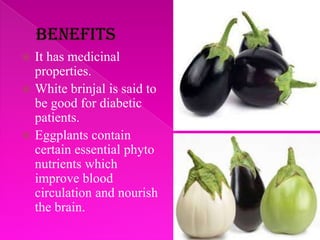
 It has medicinal
properties.
 White brinjal is said to
be good for diabetic
patients.
 Eggplants contain
certain essential phyto
nutrients which
improve blood
circulation and nourish
the brain.
 Brinjal requires long warm growing season for
successful production.
 It is killed by severe frost. Long spell of chilly frost
free weather may also damage the crop
 Temperature of 13˚ - 21˚C is most favourable for
successful production.
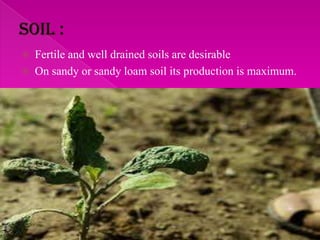
 Fertile and well drained soils are desirable
 On sandy or sandy loam soil its production is maximum.
 FYM at the rate of 20-25 tons per hectare should
be added at the time of soil preparation.
Nitrogen Phosphorus Potassium
1oo kg/ha 50kg/ha 50kg/ha
 Sowing is done in September or early October
and seedlings are transplanted in November
 In hilly areas seeds are sown in April and
seedlings are transplanted in May.
 Main season for sowing
brinjals are
1) Autumn-winter crop: Seed is
sown in June and seedlings
are transplanted in July.
2) Spring-winter crop: Seed is
sown in early November and
seedlings are transplanted
during January and early
February
3) Rainy season crop: Seed is
sown in March and seedlings
are transplanted in April.
 Transplanting is done in
standing water.
 1st irrigation should be
given 4 days after
planting.
 In summer weekly
irrigation is necessary
 In winter fortnight
irrigation is preferable.
 The fruit is harvested before it is fully ripe but it should
be well colored.
 Harvesting is done by cutting with knife or plucking by
hand
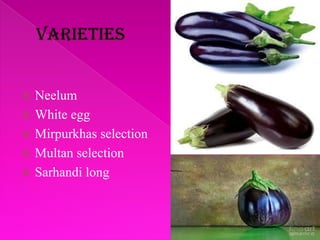
 Neelum
 White egg
 Mirpurkhas selection
 Multan selection
 Sarhandi long
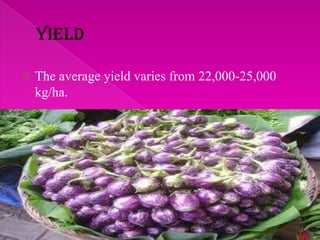
 The average yield varies from 22,000-25,000
kg/ha.
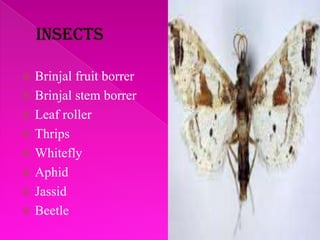
 Brinjal fruit borrer
 Brinjal stem borrer
 Leaf roller
 Thrips
 Whitefly
 Aphid
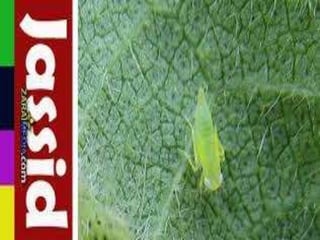
 Jassid
 Beetle
 Little leaf brinjal
 Bacterial wilt
 Phomopsis fruit rot
Brinjal
Brinjal
Brinjal
Brinjal

Brinjal

  • 2.
     Botanical name: Solanum melongena  Family : Solanaceae
  • 3.
     The floweris white to purple, with a five- lobed corolla and yellow stamens.  Plant height is usually 40-150cm.  These have large coarsely lobed leaves.  Fruit color is glossy black.  The fruit is less than 3cm in diameter but 30 cm in cultivated form.
  • 6.
     It hasmedicinal properties.  White brinjal is said to be good for diabetic patients.  Eggplants contain certain essential phyto nutrients which improve blood circulation and nourish the brain.
  • 7.
     Brinjal requireslong warm growing season for successful production.  It is killed by severe frost. Long spell of chilly frost free weather may also damage the crop  Temperature of 13˚ - 21˚C is most favourable for successful production.
  • 8.
     Fertile andwell drained soils are desirable  On sandy or sandy loam soil its production is maximum.
  • 9.
     FYM atthe rate of 20-25 tons per hectare should be added at the time of soil preparation. Nitrogen Phosphorus Potassium 1oo kg/ha 50kg/ha 50kg/ha
  • 11.
     Sowing isdone in September or early October and seedlings are transplanted in November  In hilly areas seeds are sown in April and seedlings are transplanted in May.
  • 12.
     Main seasonfor sowing brinjals are 1) Autumn-winter crop: Seed is sown in June and seedlings are transplanted in July. 2) Spring-winter crop: Seed is sown in early November and seedlings are transplanted during January and early February 3) Rainy season crop: Seed is sown in March and seedlings are transplanted in April.
  • 13.
     Transplanting isdone in standing water.  1st irrigation should be given 4 days after planting.  In summer weekly irrigation is necessary  In winter fortnight irrigation is preferable.
  • 14.
     The fruitis harvested before it is fully ripe but it should be well colored.  Harvesting is done by cutting with knife or plucking by hand
  • 16.
     Neelum  Whiteegg  Mirpurkhas selection  Multan selection  Sarhandi long
  • 18.
     The averageyield varies from 22,000-25,000 kg/ha.
  • 19.
     Brinjal fruitborrer  Brinjal stem borrer  Leaf roller  Thrips  Whitefly  Aphid  Jassid  Beetle
  • 23.
     Little leafbrinjal  Bacterial wilt  Phomopsis fruit rot