POSTCOLONIALIS
M
POSTCOLONIALISM
 is an intellectual direction (sometimes
also called an “era” or the “post-
colonial theory”) that exists since
around the middle of the 20th century.
It developed from and mainly refers to
the time after colonialism.
DESCRIPTIONS
 Particular areas of emphasis include
the Indian subcontinent, northern and
central Africa, and southeast Asia.
These regions were under the control
of colonial powers like England, the
United States, and France.
 also deals with literature written by
citizens of colonial countries that
portrays colonized people as its
subject matter.
DESCRIPTIONS
 deals with the conflicts between ruler
and subject, mainstream and
marginalized, oppressors and
oppressed and, at the same
time, celebrates the suppressed
"other," challenging the dominant
culture and questioning concepts of
established authority.
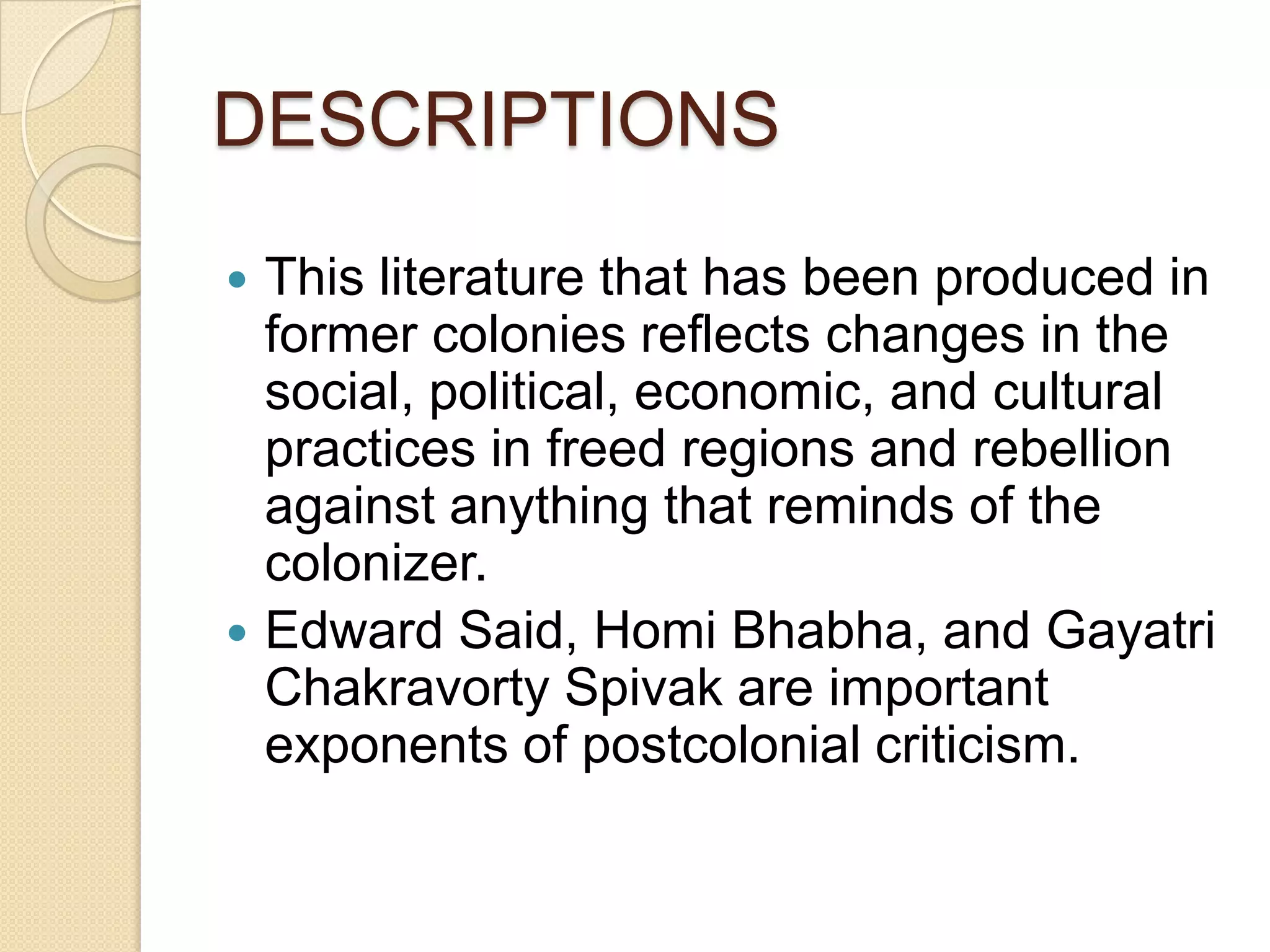
 This literature that has been produced in
former colonies reflects changes in the
social, political, economic, and cultural
practices in freed regions and rebellion
against anything that reminds of the
colonizer.
 Edward Said, Homi Bhabha, and Gayatri
Chakravorty Spivak are important
exponents of postcolonial criticism.
DESCRIPTIONS
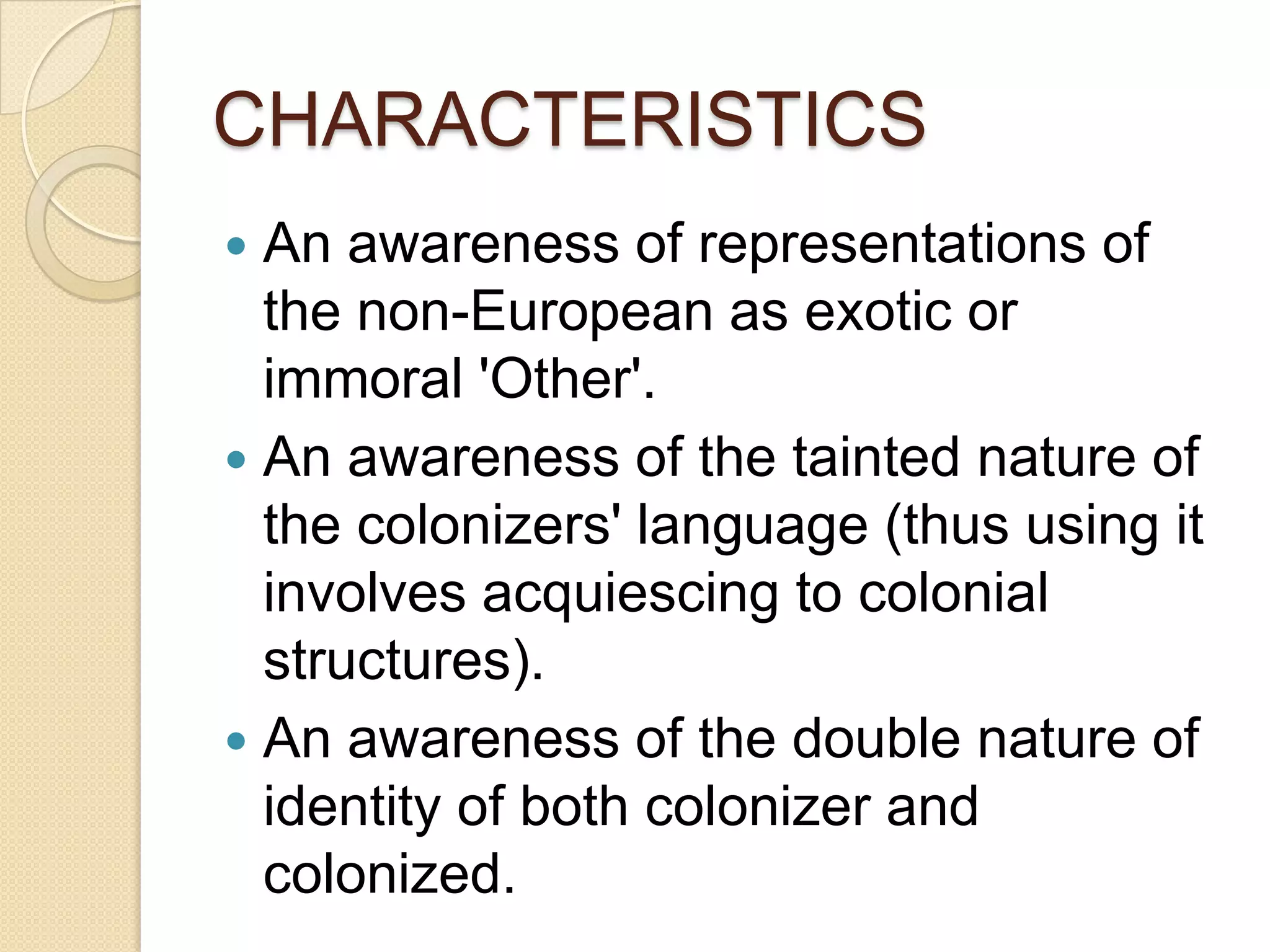
CHARACTERISTICS
 An awareness of representations of
the non-European as exotic or
immoral 'Other'.
 An awareness of the tainted nature of
the colonizers' language (thus using it
involves acquiescing to colonial
structures).
 An awareness of the double nature of
identity of both colonizer and
colonized.
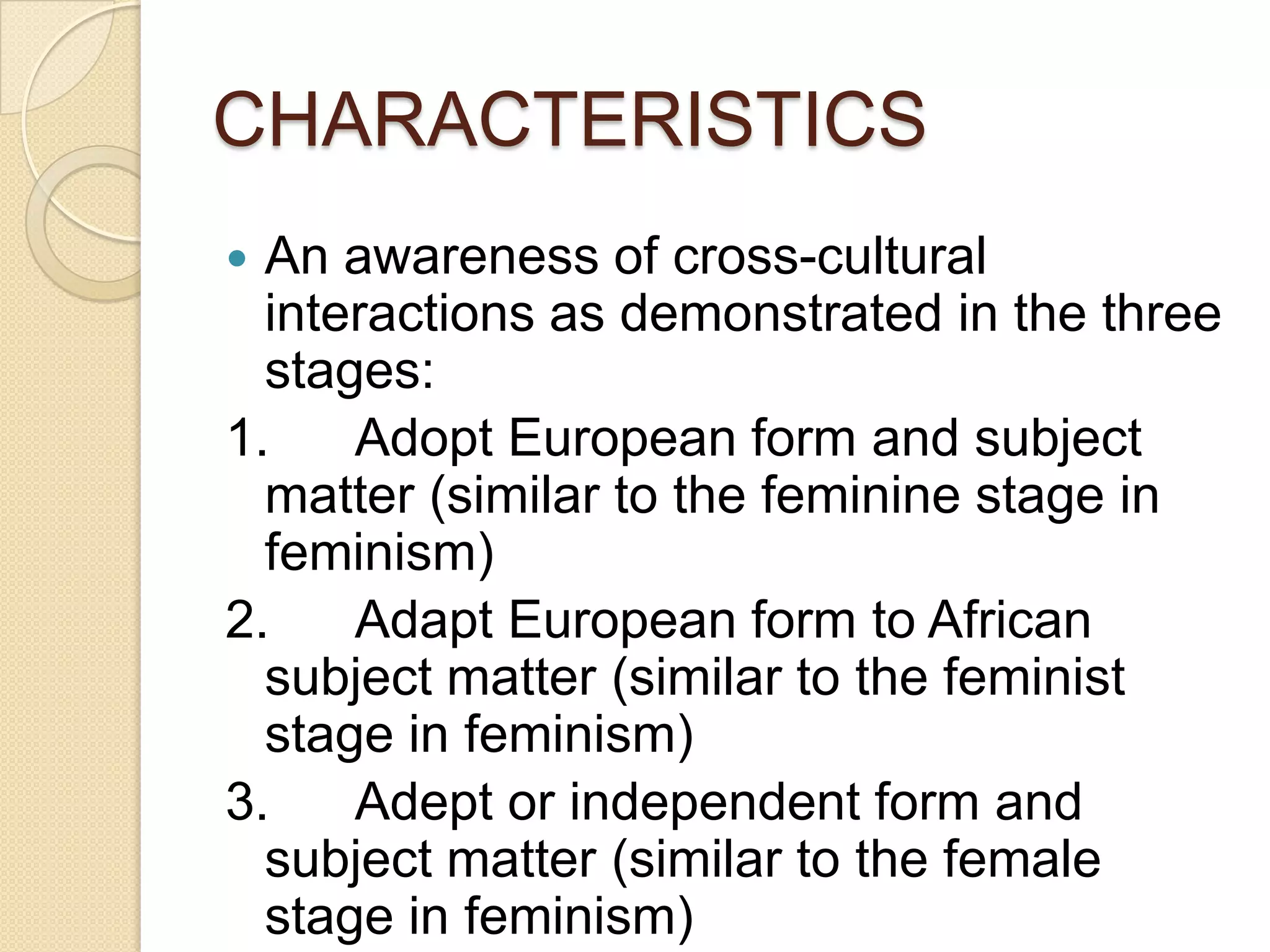
CHARACTERISTICS
 An awareness of cross-cultural
interactions as demonstrated in the three
stages:
1. Adopt European form and subject
matter (similar to the feminine stage in
feminism)
2. Adapt European form to African
subject matter (similar to the feminist
stage in feminism)
3. Adept or independent form and
subject matter (similar to the female
stage in feminism)
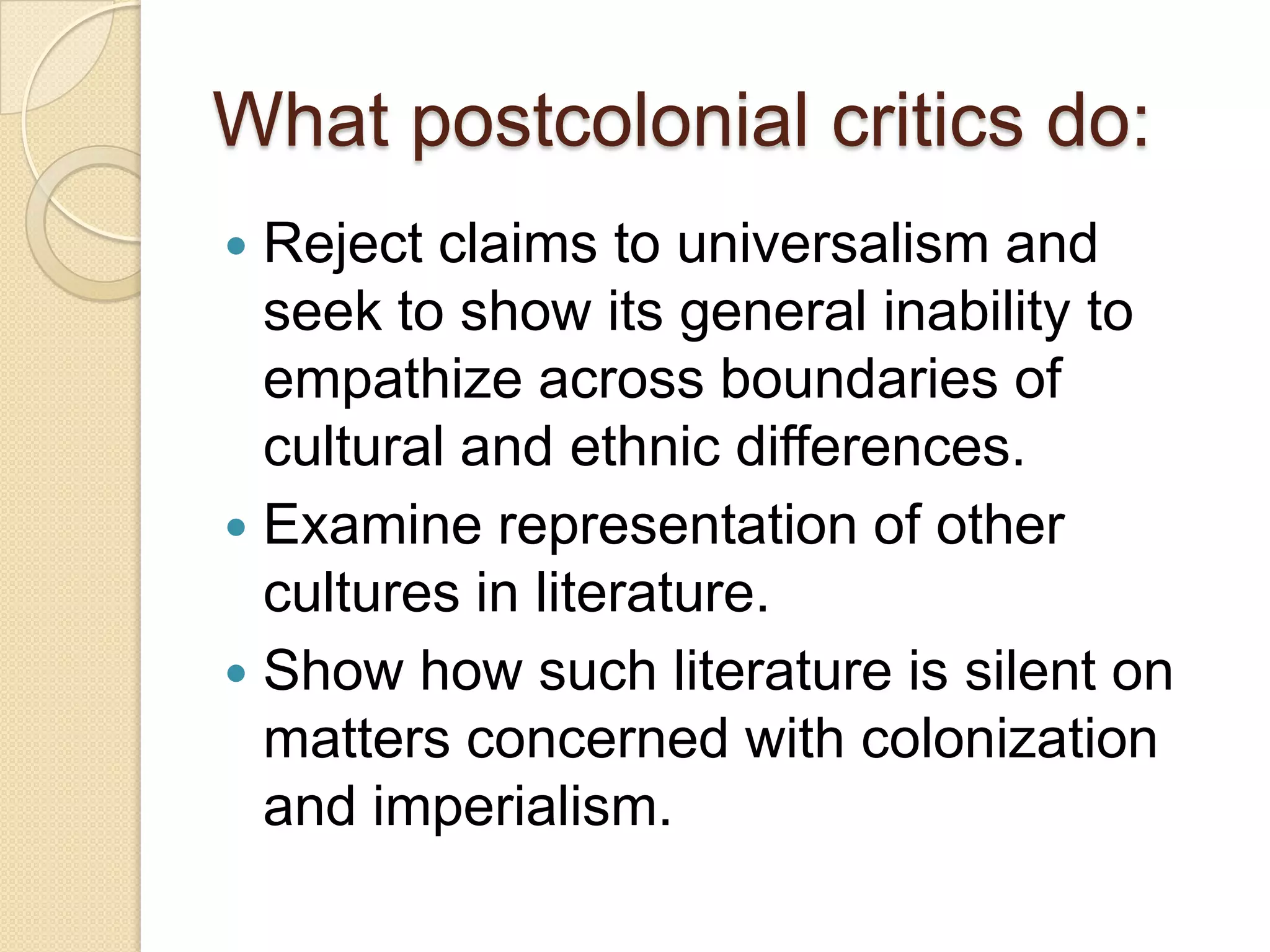
What postcolonial critics do:
 Reject claims to universalism and
seek to show its general inability to
empathize across boundaries of
cultural and ethnic differences.
 Examine representation of other
cultures in literature.
 Show how such literature is silent on
matters concerned with colonization
and imperialism.
 Foreground questions of cultural
difference and diversity.
 Celebrate hybridity whereby
individuals and groups belong
simultaneously to more than one
culture.
 See states of marginality, plurality and
perceived 'Otherness" as sources of
energy and potential change.
What postcolonial critics do:
PURPOSES
 to find and re-establish their lost
national identity, history and
literature, and to define the authors‟
relationship with the land and
language of their former masters.
 to open a space where the residual
effects of colonialism can be resisted.
Books that influenced
postcolonial criticism:
 1961: Frantz Fanon‟s The Wretched of
the Earth argues that the first term for
colonized to find voice is to reclaim
their own past that has long been
devalued by European colonizers.
 1978: Edward Said‟s Orientalism
argues that the West identifies the
East as its „Other‟ and as such it is
exotic, seductive, and feminine.

Postcolonialism 130415104453-phpapp02

  • 1.
  • 2.
    POSTCOLONIALISM  is anintellectual direction (sometimes also called an “era” or the “post- colonial theory”) that exists since around the middle of the 20th century. It developed from and mainly refers to the time after colonialism.
  • 3.
    DESCRIPTIONS  Particular areasof emphasis include the Indian subcontinent, northern and central Africa, and southeast Asia. These regions were under the control of colonial powers like England, the United States, and France.  also deals with literature written by citizens of colonial countries that portrays colonized people as its subject matter.
  • 4.
    DESCRIPTIONS  deals withthe conflicts between ruler and subject, mainstream and marginalized, oppressors and oppressed and, at the same time, celebrates the suppressed "other," challenging the dominant culture and questioning concepts of established authority.
  • 5.
     This literaturethat has been produced in former colonies reflects changes in the social, political, economic, and cultural practices in freed regions and rebellion against anything that reminds of the colonizer.  Edward Said, Homi Bhabha, and Gayatri Chakravorty Spivak are important exponents of postcolonial criticism. DESCRIPTIONS
  • 6.
    CHARACTERISTICS  An awarenessof representations of the non-European as exotic or immoral 'Other'.  An awareness of the tainted nature of the colonizers' language (thus using it involves acquiescing to colonial structures).  An awareness of the double nature of identity of both colonizer and colonized.
  • 7.
    CHARACTERISTICS  An awarenessof cross-cultural interactions as demonstrated in the three stages: 1. Adopt European form and subject matter (similar to the feminine stage in feminism) 2. Adapt European form to African subject matter (similar to the feminist stage in feminism) 3. Adept or independent form and subject matter (similar to the female stage in feminism)
  • 8.
    What postcolonial criticsdo:  Reject claims to universalism and seek to show its general inability to empathize across boundaries of cultural and ethnic differences.  Examine representation of other cultures in literature.  Show how such literature is silent on matters concerned with colonization and imperialism.
  • 9.
     Foreground questionsof cultural difference and diversity.  Celebrate hybridity whereby individuals and groups belong simultaneously to more than one culture.  See states of marginality, plurality and perceived 'Otherness" as sources of energy and potential change. What postcolonial critics do:
  • 10.
    PURPOSES  to findand re-establish their lost national identity, history and literature, and to define the authors‟ relationship with the land and language of their former masters.  to open a space where the residual effects of colonialism can be resisted.
  • 11.
    Books that influenced postcolonialcriticism:  1961: Frantz Fanon‟s The Wretched of the Earth argues that the first term for colonized to find voice is to reclaim their own past that has long been devalued by European colonizers.  1978: Edward Said‟s Orientalism argues that the West identifies the East as its „Other‟ and as such it is exotic, seductive, and feminine.