POST TENSIONED
FLOOR SYSTEM
Prepared by
Aditya Shah (M.Tech CPM)
Building Construction System
INTRODUCTION
Post-tensioning is
simply a method of
producing
prestressed
concrete, masonry,
and other
structural
elements
process of
introducing internal
stress into a concrete
during the
construction process
in order to
counteract the
external loads
applied when the
structure is put into
use
Internal forces are
applied by
tensioning HS
steel
WORKINGOF
PT FLOOR
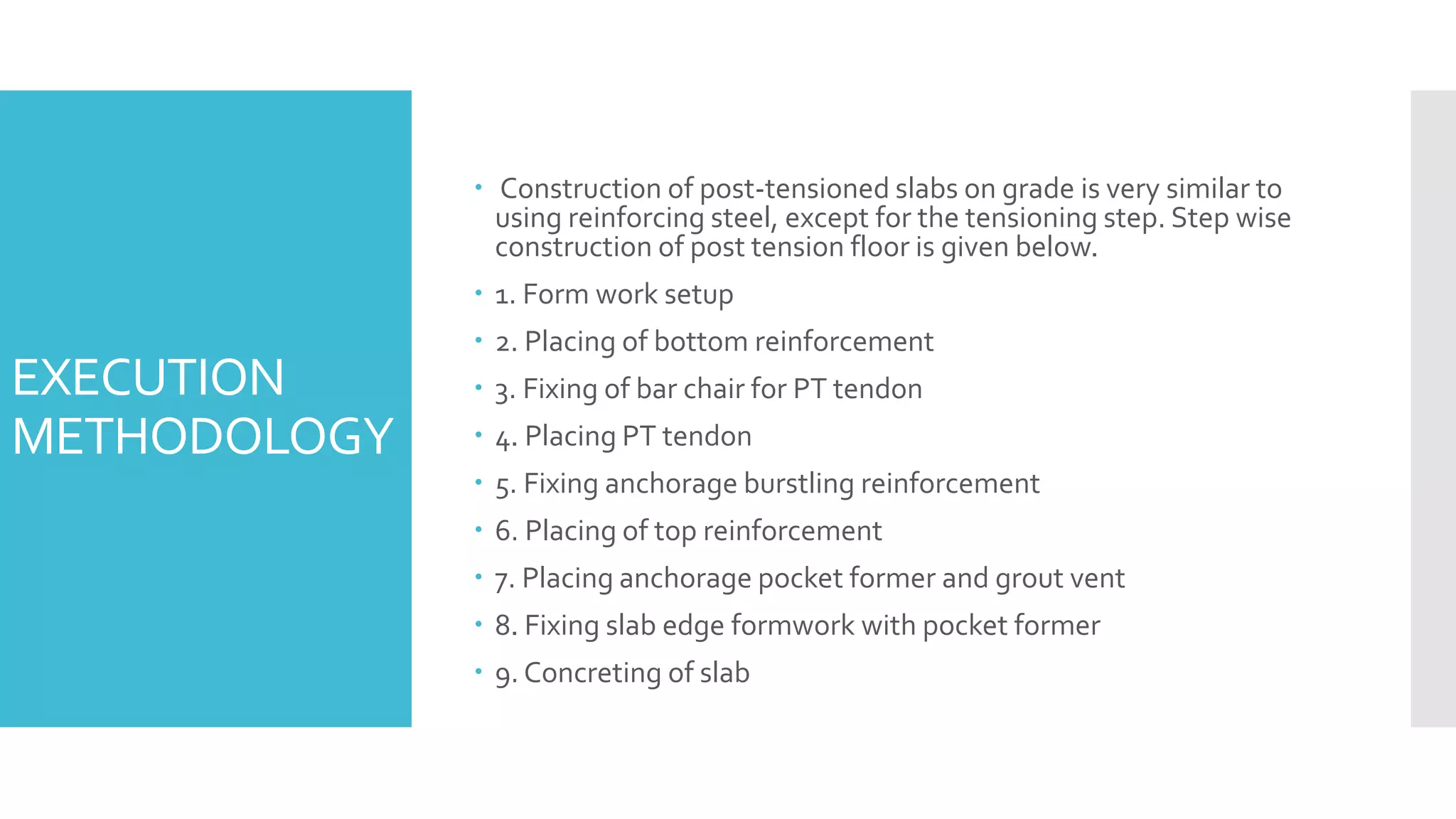
EXECUTION
METHODOLOGY
 Construction of post-tensioned slabs on grade is very similar to
using reinforcing steel, except for the tensioning step. Step wise
construction of post tension floor is given below.
 1. Form work setup
 2. Placing of bottom reinforcement
 3. Fixing of bar chair for PT tendon
 4. Placing PT tendon
 5. Fixing anchorage burstling reinforcement
 6. Placing of top reinforcement
 7. Placing anchorage pocket former and grout vent
 8. Fixing slab edge formwork with pocket former
 9. Concreting of slab
 10. Removal of slab edge formwork
 11. Remove pocket former
 12. Placing anchor head and wedge in position
 13. Stressing
 14. Cutting end of strand
 15. Capping stressing recess with cement mortar
 16. Grouting
 17. Repeat for next floor slab
COMPONENTS
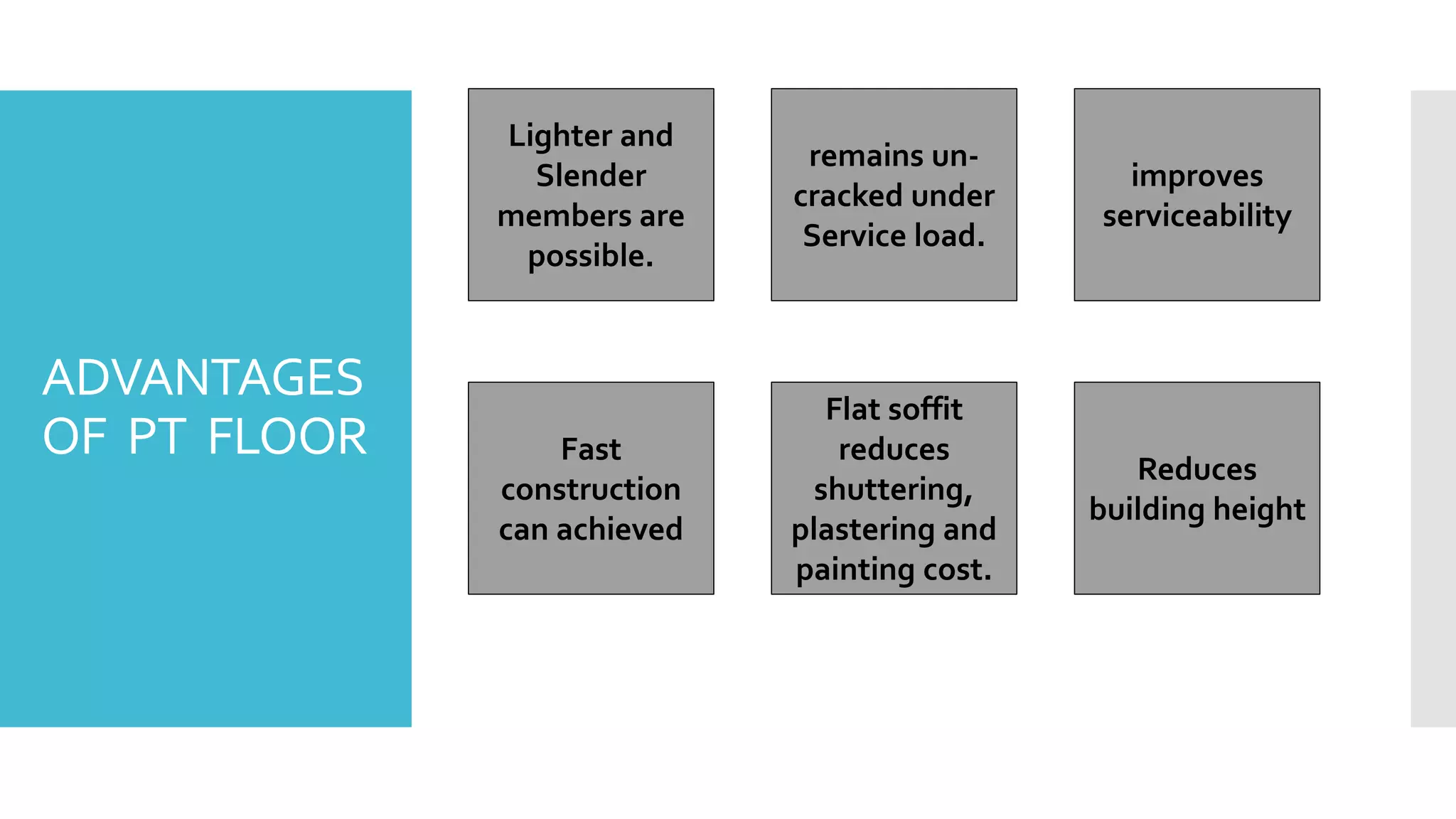
ADVANTAGES
OF PT FLOOR
Lighter and
Slender
members are
possible.
remains un-
cracked under
Service load.
improves
serviceability
Fast
construction
can achieved
Flat soffit
reduces
shuttering,
plastering and
painting cost.
Reduces
building height
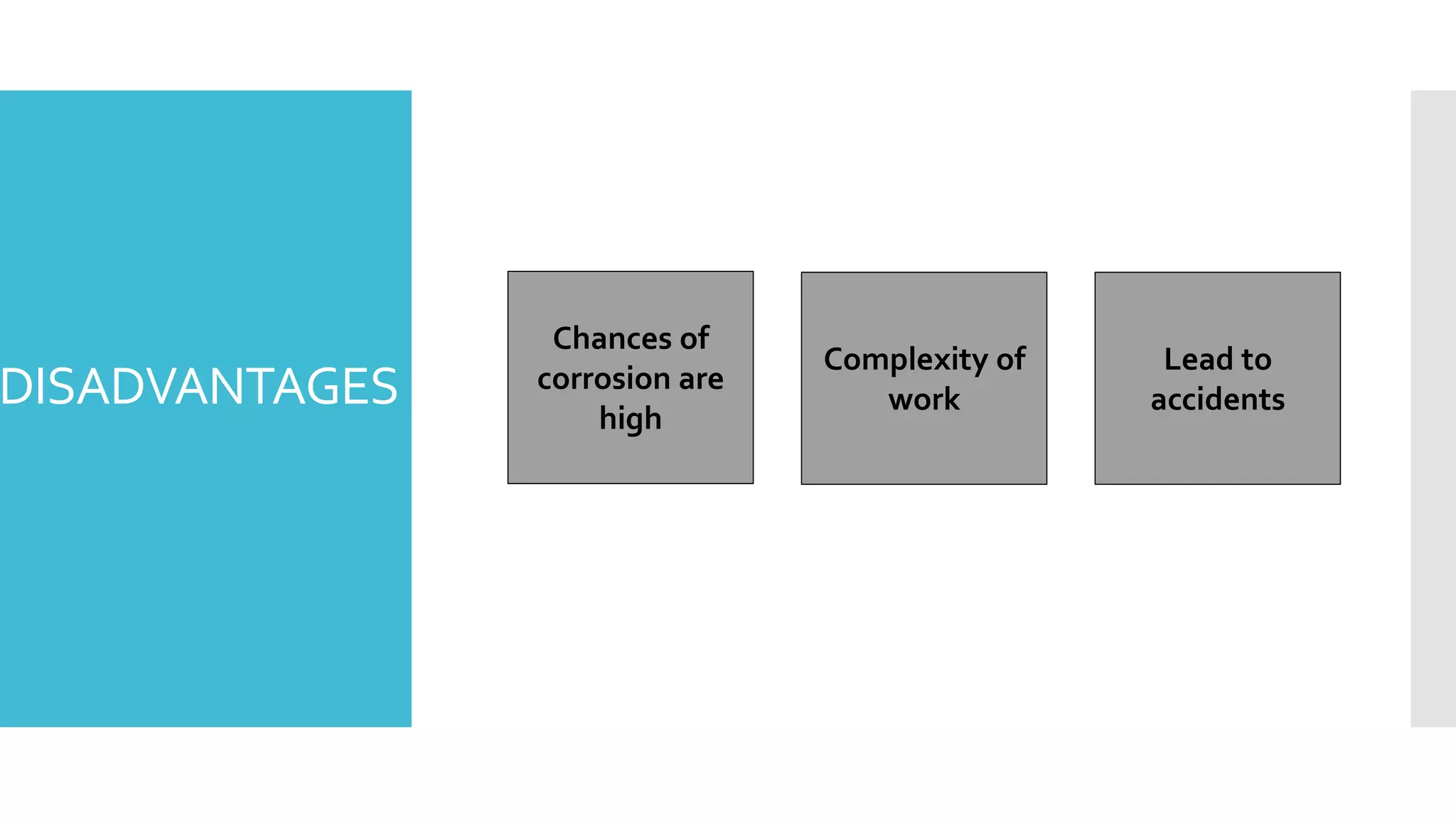
DISADVANTAGES
Chances of
corrosion are
high
Complexity of
work
Lead to
accidents
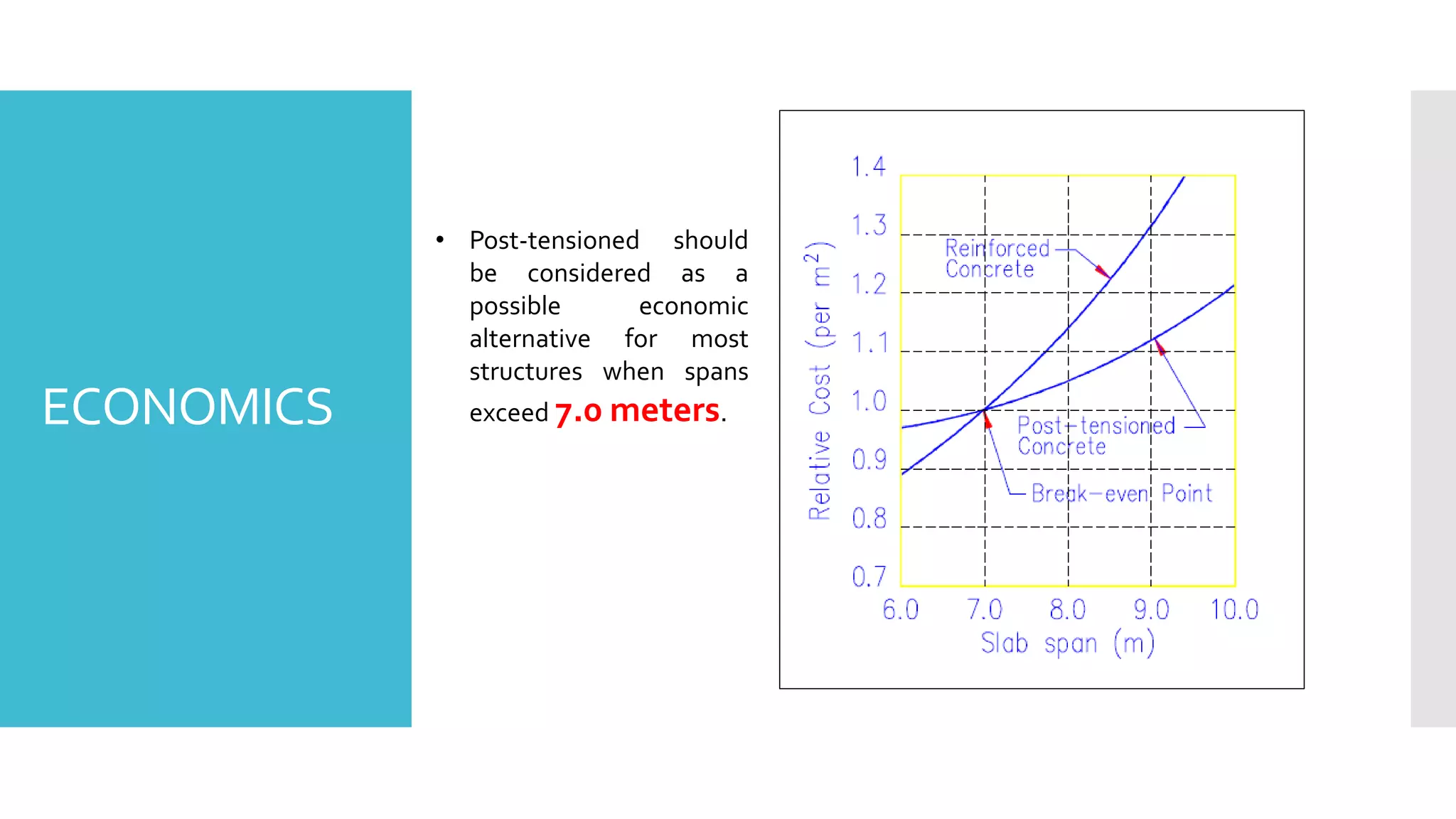
ECONOMICS
• Post-tensioned should
be considered as a
possible economic
alternative for most
structures when spans
exceed 7.0 meters.
ECONOMICS
 P-T reduces the concrete volume by 10 to 20%.
 Cost of PT is typically 20 to 30% less as compared to
conventional reinforced structure.
 For flat slab in 8m x 8m or 9m x 9m Grid, P-T costs approximately
Rs. 40 to 50 per sq. ft. with any kind of desired geometry
availed better than R.C.C.
 Since the reinforcement is protected, P-T reinforced structures
have lower annual maintenance costs overtime
SPEED OF
CONSTRUCTION
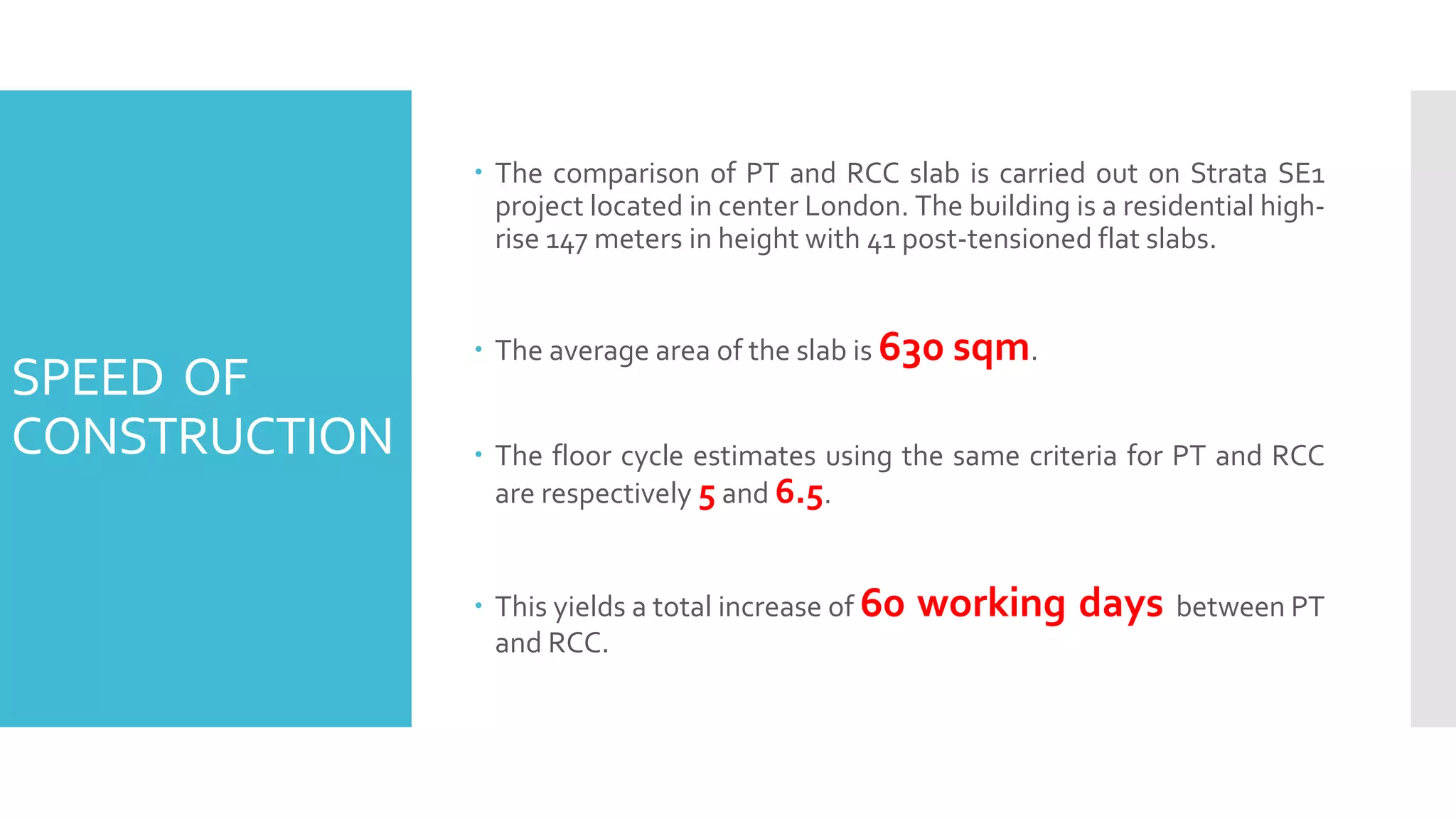
 The comparison of PT and RCC slab is carried out on Strata SE1
project located in center London. The building is a residential high-
rise 147 meters in height with 41 post-tensioned flat slabs.
 The average area of the slab is 630 sqm.
 The floor cycle estimates using the same criteria for PT and RCC
are respectively 5 and 6.5.
 This yields a total increase of 60 working days between PT
and RCC.
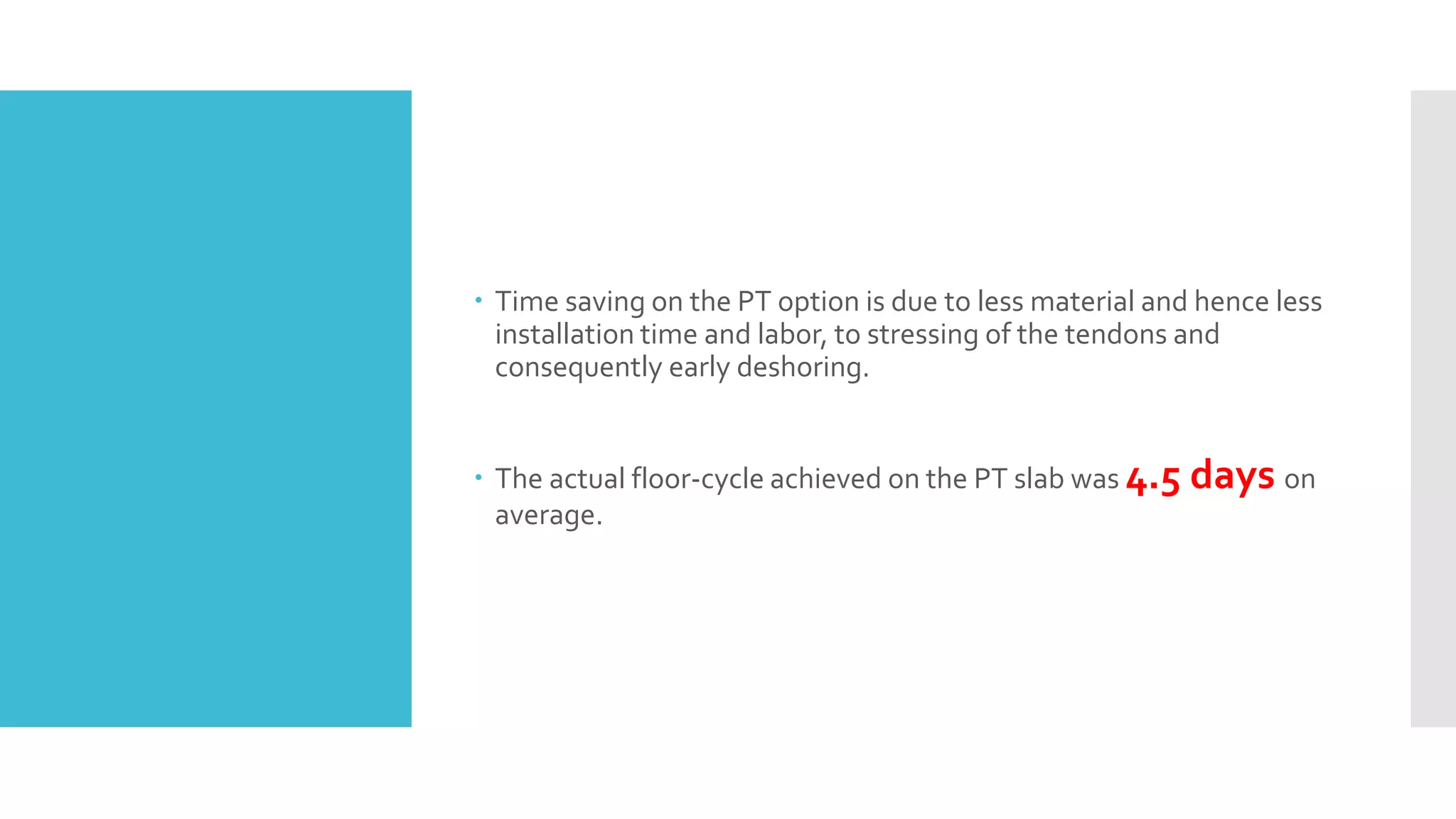
 Time saving on the PT option is due to less material and hence less
installation time and labor, to stressing of the tendons and
consequently early deshoring.
 The actual floor-cycle achieved on the PT slab was 4.5 days on
average.
REFERENCES
 [1] “POST-TENSIONING IN BUILDING STRUCTURES”, Ed Cross1
BE, Grad.Dip(Tech.Mgt), MIEAust, CPEng.
 [2] POST-TENSIONEDSLABS, PUBLISHED BYVSL
INTERNATIONAL LTD.
 [3] Sanfield (India) LTD., PT Slab brochure.
 [4] “A PROJECT-BASEDCOMPARISON BETWEEN REINFORCED
AND POST-TENSIONED STRUCTURES FROMA SUSTAINABILITY
PERSPECTIVE.”,Carol Hayek & Saleem Kalil.
 [5] www.concreteconstruction.net
Thank you

Post tension Floor System

  • 1.
    POST TENSIONED FLOOR SYSTEM Preparedby Aditya Shah (M.Tech CPM) Building Construction System
  • 2.
    INTRODUCTION Post-tensioning is simply amethod of producing prestressed concrete, masonry, and other structural elements process of introducing internal stress into a concrete during the construction process in order to counteract the external loads applied when the structure is put into use Internal forces are applied by tensioning HS steel
  • 3.
  • 4.
    EXECUTION METHODOLOGY  Construction ofpost-tensioned slabs on grade is very similar to using reinforcing steel, except for the tensioning step. Step wise construction of post tension floor is given below.  1. Form work setup  2. Placing of bottom reinforcement  3. Fixing of bar chair for PT tendon  4. Placing PT tendon  5. Fixing anchorage burstling reinforcement  6. Placing of top reinforcement  7. Placing anchorage pocket former and grout vent  8. Fixing slab edge formwork with pocket former  9. Concreting of slab
  • 5.
     10. Removalof slab edge formwork  11. Remove pocket former  12. Placing anchor head and wedge in position  13. Stressing  14. Cutting end of strand  15. Capping stressing recess with cement mortar  16. Grouting  17. Repeat for next floor slab
  • 6.
  • 8.
    ADVANTAGES OF PT FLOOR Lighterand Slender members are possible. remains un- cracked under Service load. improves serviceability Fast construction can achieved Flat soffit reduces shuttering, plastering and painting cost. Reduces building height
  • 10.
  • 11.
    ECONOMICS • Post-tensioned should beconsidered as a possible economic alternative for most structures when spans exceed 7.0 meters.
  • 12.
    ECONOMICS  P-T reducesthe concrete volume by 10 to 20%.  Cost of PT is typically 20 to 30% less as compared to conventional reinforced structure.  For flat slab in 8m x 8m or 9m x 9m Grid, P-T costs approximately Rs. 40 to 50 per sq. ft. with any kind of desired geometry availed better than R.C.C.  Since the reinforcement is protected, P-T reinforced structures have lower annual maintenance costs overtime
  • 13.
    SPEED OF CONSTRUCTION  Thecomparison of PT and RCC slab is carried out on Strata SE1 project located in center London. The building is a residential high- rise 147 meters in height with 41 post-tensioned flat slabs.  The average area of the slab is 630 sqm.  The floor cycle estimates using the same criteria for PT and RCC are respectively 5 and 6.5.  This yields a total increase of 60 working days between PT and RCC.
  • 14.
     Time savingon the PT option is due to less material and hence less installation time and labor, to stressing of the tendons and consequently early deshoring.  The actual floor-cycle achieved on the PT slab was 4.5 days on average.
  • 15.
    REFERENCES  [1] “POST-TENSIONINGIN BUILDING STRUCTURES”, Ed Cross1 BE, Grad.Dip(Tech.Mgt), MIEAust, CPEng.  [2] POST-TENSIONEDSLABS, PUBLISHED BYVSL INTERNATIONAL LTD.  [3] Sanfield (India) LTD., PT Slab brochure.  [4] “A PROJECT-BASEDCOMPARISON BETWEEN REINFORCED AND POST-TENSIONED STRUCTURES FROMA SUSTAINABILITY PERSPECTIVE.”,Carol Hayek & Saleem Kalil.  [5] www.concreteconstruction.net
  • 16.