Post- Harvest Management, Value Addition
and Marketing of Dragon Fruit
Presented by: Alemla Imchen
Dept. of Horticulture, NU:SASRD
POST HARVEST MANAGEMENT
o Highly perishable
o Short shelf life
o Underdeveloped postharvest technologies
o Post harvest loss…
High respiration rate, weight loss and increased ripening
process causes shrivelling of fruit after the eighth day of
harvesting (Ali et al., 2013).
The main postharvest problems of dragon fruit are
mechanical injury, chilling injury, decay and moisture loss
(Nerd et al., 1999; Wall and Khan, 2008; Chandran, 2010).
Source: Wu., 2014
Source: Wu., 2014
1. Harvesting stage
o Non- climacteric fruit
o Determine market life, storage, transport, eating and processing
quality
o Premature- susceptible to physiological disorders; bland taste.
o Overripe- senescence, short storage life and low marketability.
Quality of the fruit does vary between varieties, but harvest time has a much
greater effect on quality than varietal differences. (Karunakaran et al., 2019)
Harvested dragon fruit by (a) twisting
method and (b) knife/secateurs
Magalhaes et al., 2019, Brazil
 Ideal harvesting time: 34- 38 days after anthesis
 After 40 days fruits becomes less visually attractive
Ortiz and Takahashi, 2015, Brazil
 30- 32 days after anthesis
To et al., 2000, Vietnam
 25- 28 days after anthesis for export
 29- 30 days after anthesis for local markets
 30- 35 days after anthesis
Rodeo et al., 2018, Philippines
Karunakaran et al., 2019, India
 30- 40 days after fruitset
Case Study
Source: Magalhaes et al., 2019
2. Sorting and Grading
Systematic sorting and grading is pre- requisite for efficient marketing
According to the Codex standard for pitahayas (2007) laid out by the FAO/WHO
Codex Alimentarius Commission, dragon fruit is classified into three categories
according to their physical characteristics, viz, Extra, Class I and Class II.
Classification Extra Class I Class II
Requirements
Superior quality Good quality Whole, sound, fresh in
appearance
Free of defects Slight defects in shape Slight defects in shape
Must be characteristics of variety &/or
commercial type
Must be characteristics of
variety &/or commercial
type
-
Free of defects Slight defects of skin not
exceeding 1cm2 of total
surface area of fruit
Not exceeding 2cm2 of total
surface area of fruit
Tolerance: 5% by no. or wt. of fruit not
satisfying the req. of the class but
meeting those of class I.
10% by no. or wt. of fruit
not satisfying the req. of the
class but meeting those of
class II
10% with exception of
produce affected by rotting
or any other deteriorating
rendering it unfit for
consumption.
Size grades suggested for Vietnam are:
Extra large >500g
Large 380-500g
Regular 300-380g
Medium 260-300g
Small <260g
(Source: Le et al., 2000)
3. Packaging and Storage
Different packaging approaches of dragon fruit holds immense potential to
reduce rapid shriveling and water loss during storage and handling
According to Nerd and Mirzahi (1999); Nerd et al. (1999),
recommended storage temperature for dragon fruit (H. undatus and H.
polyrhizus) is 10ºC and for yellow pitaya (Selenicereus megalanthus) is 6ºC with
85-90% RH.
Castro et al., 2020, Philippines; Rodeo et al., 2018, Taiwan
• Dragon fruits (H. polyrhizus) sleeved in polystyrene fruit cup &
individually packed in polyethylene and polypropylene non perforated
plastic bags & stored at 5ºC.
• MA packed fruits: 6 weeks, no shriveling
• Non- MA packed fruits: 4 weeks, exhibited yellowing & tip browning
Case study
Jiang et al., 2020, Taiwan
• Pre- harvest application of 100mgL-1 forchlorfenuron (CPPU) on H.
polyrhizus significantly increased bracts thickness, reduced cracking
ratio and increased chlorophyll content; exhibited later incidence of
chilling injury than control fruit during 5ºC storage.
• However, treated fruits had more weight loss and slight increase of
respiration rate compared to the control during storage at 5ºC.
Agustin, 2015, Philippines
• Under ambient (27- 29ºC) condition, dragon fruit (H. polyrhizus) packed
in cling wrap had storage & shelf life of 9 & 2 days respectively; sweeter,
firmer and scored highest over- all acceptability rating.
• At 12- 14ºC, MAP with 0.05mm thick polyethylene bag with two puncher
size perforations extended storage life for 23 days & 3 days shelf life (post
storage at 20ºC).
De Freitas and Mitcham, 2013, California
• Stored dragon fruit (H. undatus) at three different storage conditions (5°C,
7°C, & 10°C) with and without perforated low-density polythene bags,
followed by 5 days storage at 20ºC without bags.
• Best visual appearance after 20 days of storage and after 5 days of shelf life
at 20ºC observed for fruit stored at 5ºC without perforated plastic bag
• Higher temperatures and use of perforated plastic bag increased decay
incidence & decay severity.
Mustafa et al., 2018, Malaysia
• Pre-treated dragon fruit (H. polyrhizus) with four different concentrations
of Salicylic acid (SA) (0.1, 1, 2 and 5 mM) and Methyl Jasmonate (MJ)
(0.01, 0.1, 0.2, and 0.5 mM) at cold storage conditions (6°C) for 21 days.
• During the experiment, it was observed that low dose of SA delayed
process of ripening whereas, MJ increased betacyanins as well as
antioxidant activity and showed a non- significant effect on ripening.
Chutichudet and Chutichudet, 2011, Thailand
• Chitosan coating (3%) increased the storage life of dragon fruit (H.
undatus) up to 8.17 days compared to untreated fruit (7.02 days) under
ambient conditions (27°C and 88% RH).
• Also, reduced stomatal conductance, smaller stomatal size & stomatal
aperture and slowed down fruit withering.
Chandran, 2010, Malaysia
• Dragon fruit wrapped using
cling packaging (0.8 μm) stored
up to 15 days at 6°C compared
to 9 days at 24 ± 1°C.
Fig: Fruit stored at 6°C showed the best results after 15 days
of storage. All three stages of fruits (A) remained unchanged
and appeared fresh both on the exterior (B) and the pulp (C).
Chansamrankul et al., 2008, Thailand
• Fresh cut dragon fruit packed in foam tray and over wrapping with
polyvinyl chloride (PVC) film and stored at 4ºC.
• Results indicated that suitable duration for preparing fresh cut product
from dragon fruit as 2- 4 days after harvesting judged by eating and
external appearance with shelf life of 10 days.
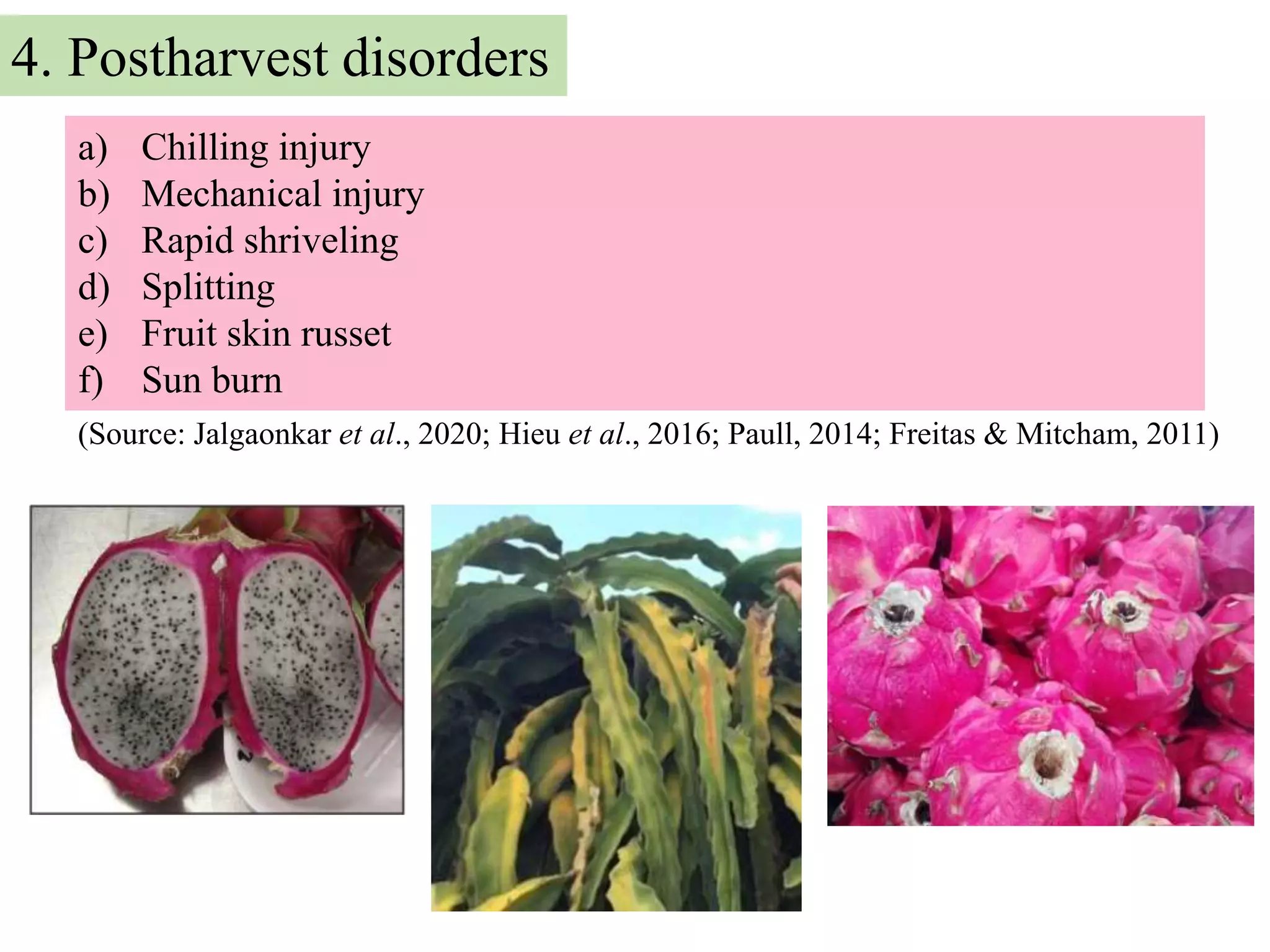
4. Postharvest disorders
a) Chilling injury
b) Mechanical injury
c) Rapid shriveling
d) Splitting
e) Fruit skin russet
f) Sun burn
(Source: Jalgaonkar et al., 2020; Hieu et al., 2016; Paull, 2014; Freitas & Mitcham, 2011)
(Source: Jalgoankar et al., 2020)
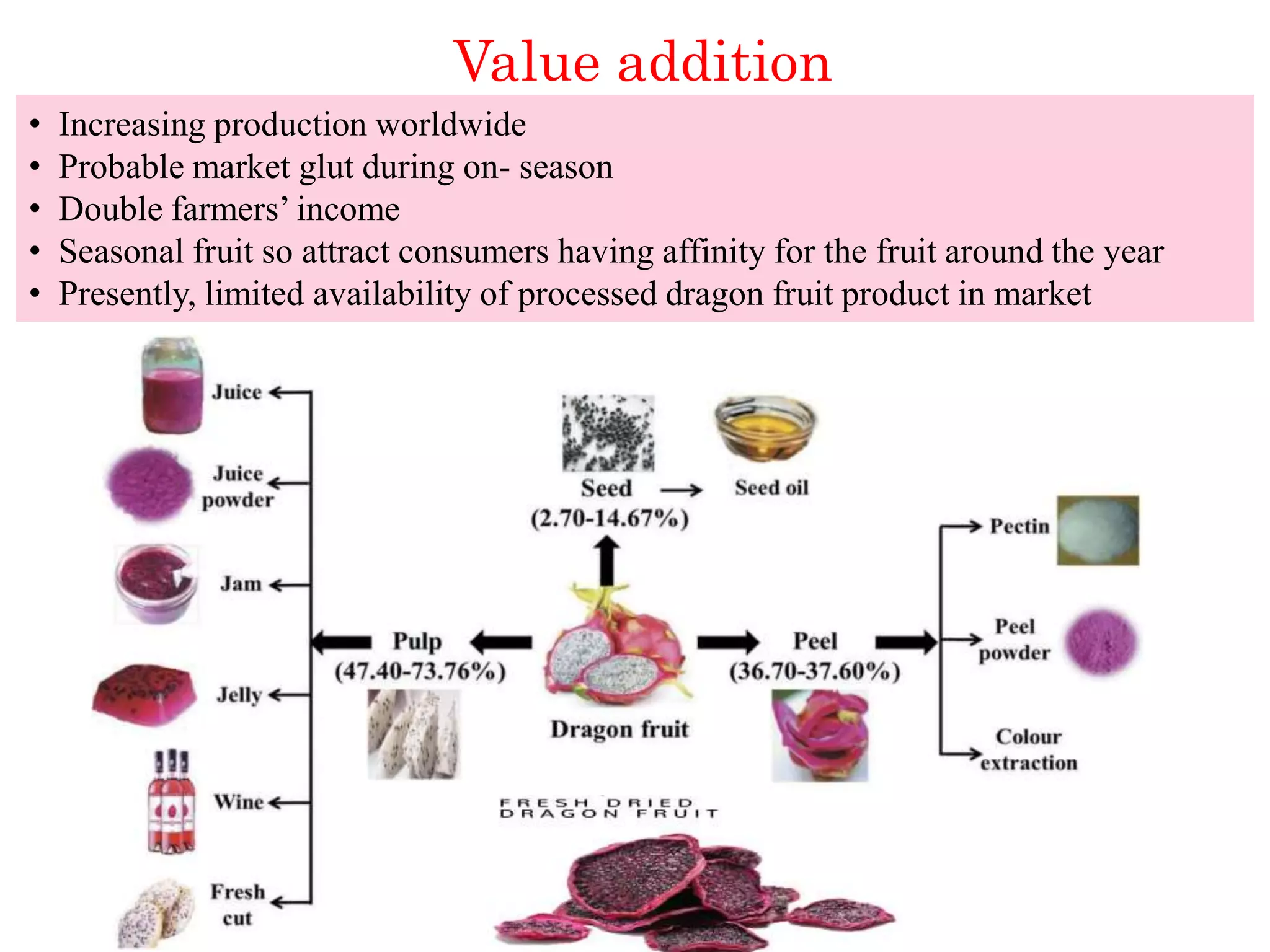
Value addition
• Increasing production worldwide
• Probable market glut during on- season
• Double farmers’ income
• Seasonal fruit so attract consumers having affinity for the fruit around the year
• Presently, limited availability of processed dragon fruit product in market
Trimedona et al., 2020, Indonesia
• Herbal tea prepared with hot oven drying methods from fresh peel of
dragon fruit and ginger.
• Cut into small pieces and dried at 60ºC and ground into tea powder then
mixed as treatments.
• Results showed addition of ginger has no significant effect on phenolic
content, and betacyanin content decreased by the addition of ginger.
Case study
(a) Red dragon fruit peel and ginger powder (b) Herbal tea powder (c) Herbal tea infusion
Minh et al., 2019, Vietnam
• Study on production and preservation of dragon fruit nectar showed
dragon fruit nectar had best quality by adjusting at pH 4.2, sugar
supplementation 8%, 95ºC in 10 minutes, storage at 4  2ºC in glass
bottle.
Jayasinghe et al., 2015, Sri Lanka
• Sugar (10%), gelatin (0.8%) and dragon fruit juice (10%; w/w) added
yoghurt mix was selected as the best product considering its highest
mean rank values recorded for sensory properties.
Panchal et al., 2018, India
• Jelly prepared from 1000ml dragon fruit extract, 550g sugar and 11g of
pectin was found to be best during organoleptic quality.
• Prepared jelly was bottled in pasteurized PET bottles (500ml capacity)
and stored at ambient (30  2ºC) as well refrigerator (5  2ºC)
temperature conditions up to 90 days.
Islam et al., 2012, Bangladesh
• Jelly prepared with standard formulation (0.05%, 0.1% and 1.5% of
pectin) and analyzed for its nutritional composition with standard
method.
• Products were stored at ambient temperature (27ºC to 34ºC) for a
period of 6 months and quality parameters were assessed.
• Treatment containing 1.5% pectin secured highest score for color,
flavor, turbidity and overall acceptability.
Thirugnanasambandham & Sivakumar, 2020, India
• Dragon fruit peels have high content of Betalain contents & disposal of
peel in ecosystem causes two disadvantage- environment degradation and
abundant lose of Betalain.
• Optimum conditions for Microwave Assisted Extraction (MIE) process-
temperature 35 °C, mass of sample 20 g & treatment time 8 min. Under
these conditions, 9 mg/L of Betalain content was extracted.
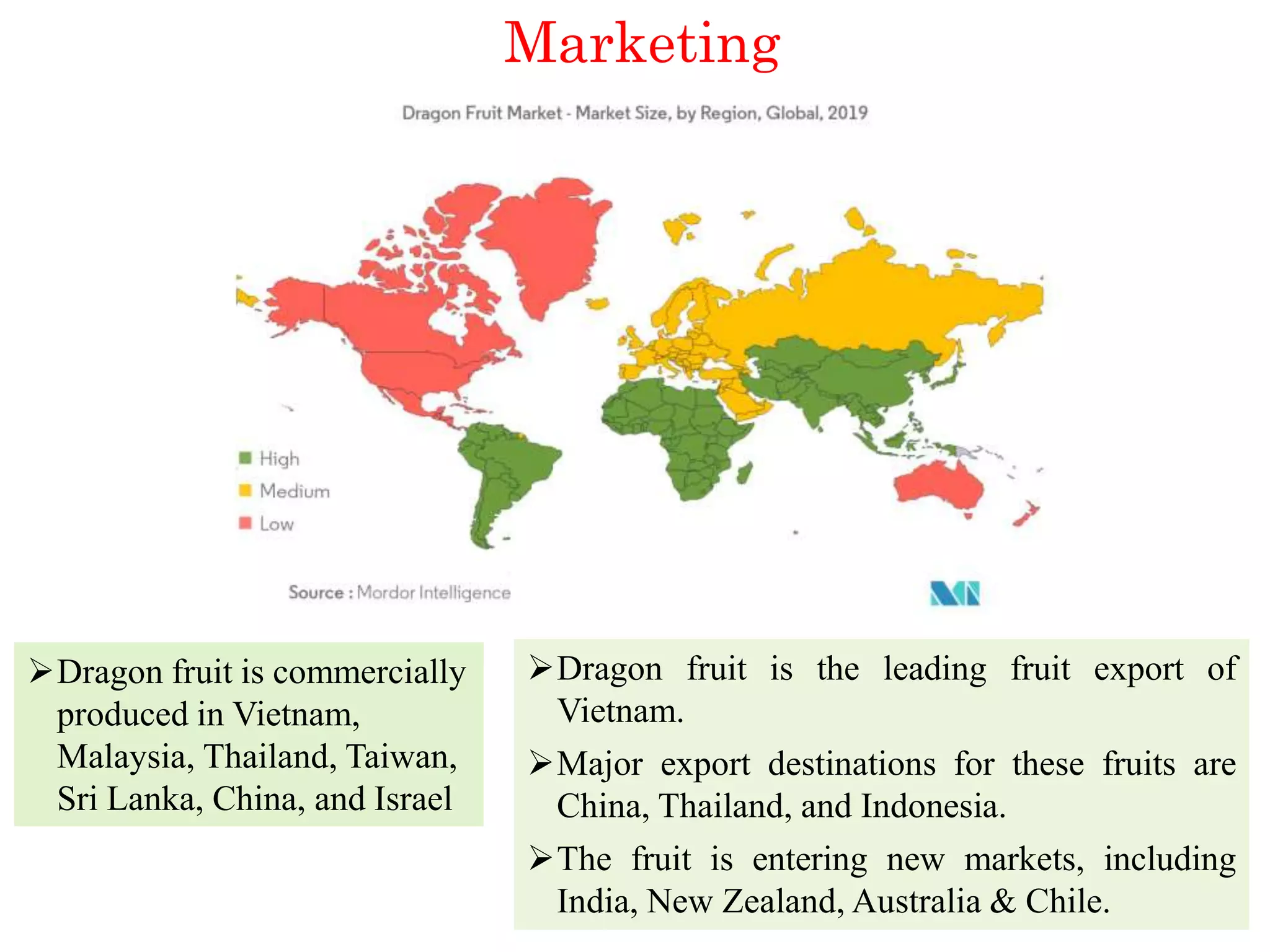
Marketing
Dragon fruit is the leading fruit export of
Vietnam.
Major export destinations for these fruits are
China, Thailand, and Indonesia.
The fruit is entering new markets, including
India, New Zealand, Australia & Chile.
Dragon fruit is commercially
produced in Vietnam,
Malaysia, Thailand, Taiwan,
Sri Lanka, China, and Israel
Source: Le et al., 2000
Source: Nyugen et al., 2020
Figure: Simplified marketing channel of Dragon fruit
Off season production
Turning on light 10hr/day for 18 days can induce flower bud
development during November to December for off season
production (October to March).
Table: Agronomic yield of dragon cactus using different electric bulbs
Source: Pascua et al., 2013
 Plant growth regulator CPPU, a synthetic cytokinin is applied for off-
season production in dragon fruits. Spines on mature stem (over five
months old) are gently scratched out, & brush the white bud with
CPPU solution. The bud develop into a small flower within 4-7 days &
continue to grow afterwards (Saradhuldhat, 2019).
 Supplemental lighting during the night on dragon fruit plant can be
stimulated to long day conditions or night- break to induce off- season
flowering
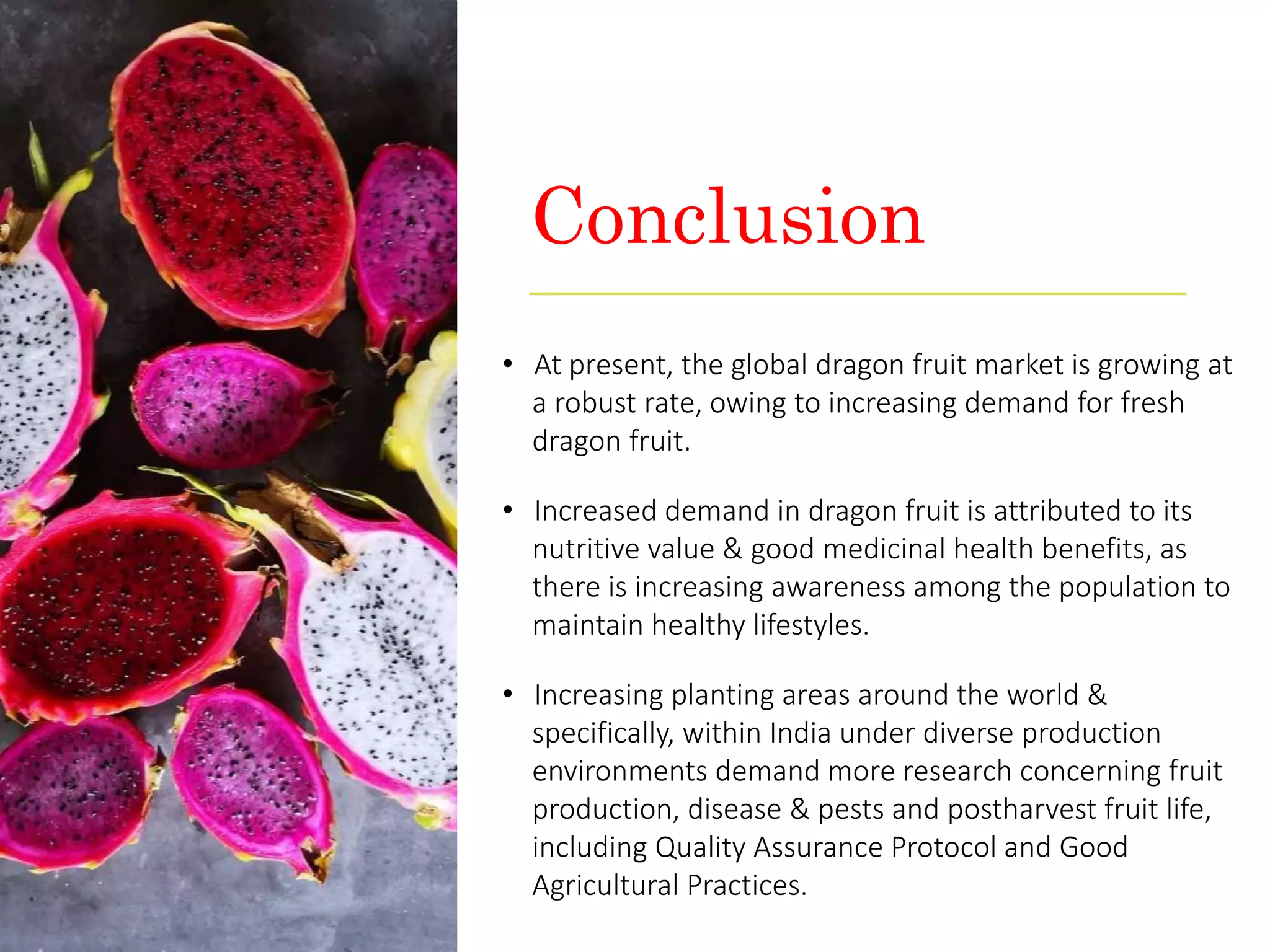
Conclusion
• At present, the global dragon fruit market is growing at
a robust rate, owing to increasing demand for fresh
dragon fruit.
• Increased demand in dragon fruit is attributed to its
nutritive value & good medicinal health benefits, as
there is increasing awareness among the population to
maintain healthy lifestyles.
• Increasing planting areas around the world &
specifically, within India under diverse production
environments demand more research concerning fruit
production, disease & pests and postharvest fruit life,
including Quality Assurance Protocol and Good
Agricultural Practices.
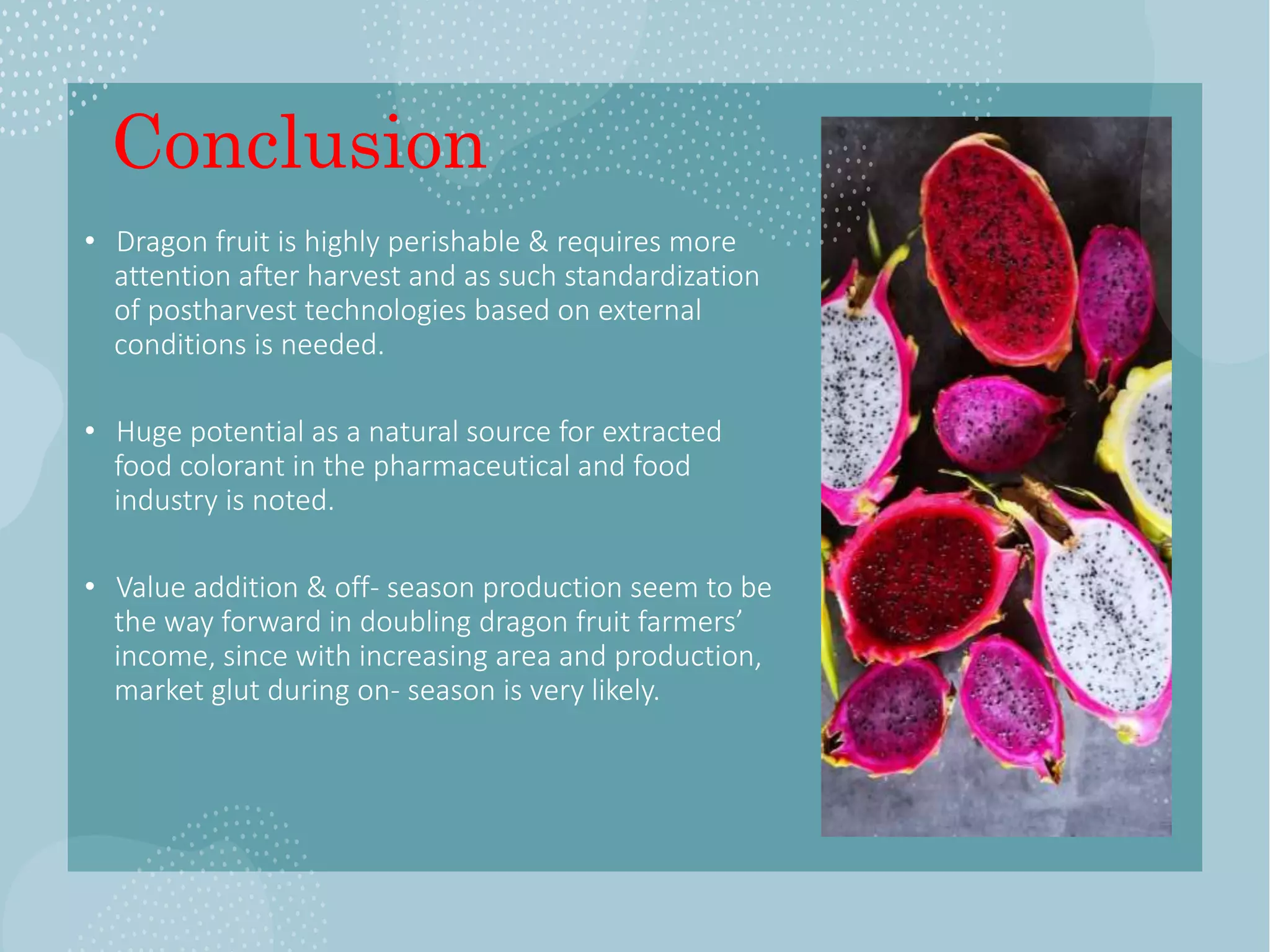
Conclusion
• Dragon fruit is highly perishable & requires more
attention after harvest and as such standardization
of postharvest technologies based on external
conditions is needed.
• Huge potential as a natural source for extracted
food colorant in the pharmaceutical and food
industry is noted.
• Value addition & off- season production seem to be
the way forward in doubling dragon fruit farmers’
income, since with increasing area and production,
market glut during on- season is very likely.
THANK YOU

Post- Harvest Management, Value Addition and Marketing of Dragon Fruit.pptx

  • 1.
    Post- Harvest Management,Value Addition and Marketing of Dragon Fruit Presented by: Alemla Imchen Dept. of Horticulture, NU:SASRD
  • 2.
    POST HARVEST MANAGEMENT oHighly perishable o Short shelf life o Underdeveloped postharvest technologies o Post harvest loss… High respiration rate, weight loss and increased ripening process causes shrivelling of fruit after the eighth day of harvesting (Ali et al., 2013). The main postharvest problems of dragon fruit are mechanical injury, chilling injury, decay and moisture loss (Nerd et al., 1999; Wall and Khan, 2008; Chandran, 2010).
  • 3.
  • 4.
  • 5.
    1. Harvesting stage oNon- climacteric fruit o Determine market life, storage, transport, eating and processing quality o Premature- susceptible to physiological disorders; bland taste. o Overripe- senescence, short storage life and low marketability. Quality of the fruit does vary between varieties, but harvest time has a much greater effect on quality than varietal differences. (Karunakaran et al., 2019) Harvested dragon fruit by (a) twisting method and (b) knife/secateurs
  • 6.
    Magalhaes et al.,2019, Brazil  Ideal harvesting time: 34- 38 days after anthesis  After 40 days fruits becomes less visually attractive Ortiz and Takahashi, 2015, Brazil  30- 32 days after anthesis To et al., 2000, Vietnam  25- 28 days after anthesis for export  29- 30 days after anthesis for local markets  30- 35 days after anthesis Rodeo et al., 2018, Philippines Karunakaran et al., 2019, India  30- 40 days after fruitset Case Study Source: Magalhaes et al., 2019
  • 7.
    2. Sorting andGrading Systematic sorting and grading is pre- requisite for efficient marketing According to the Codex standard for pitahayas (2007) laid out by the FAO/WHO Codex Alimentarius Commission, dragon fruit is classified into three categories according to their physical characteristics, viz, Extra, Class I and Class II. Classification Extra Class I Class II Requirements Superior quality Good quality Whole, sound, fresh in appearance Free of defects Slight defects in shape Slight defects in shape Must be characteristics of variety &/or commercial type Must be characteristics of variety &/or commercial type - Free of defects Slight defects of skin not exceeding 1cm2 of total surface area of fruit Not exceeding 2cm2 of total surface area of fruit Tolerance: 5% by no. or wt. of fruit not satisfying the req. of the class but meeting those of class I. 10% by no. or wt. of fruit not satisfying the req. of the class but meeting those of class II 10% with exception of produce affected by rotting or any other deteriorating rendering it unfit for consumption.
  • 8.
    Size grades suggestedfor Vietnam are: Extra large >500g Large 380-500g Regular 300-380g Medium 260-300g Small <260g (Source: Le et al., 2000)
  • 9.
    3. Packaging andStorage Different packaging approaches of dragon fruit holds immense potential to reduce rapid shriveling and water loss during storage and handling According to Nerd and Mirzahi (1999); Nerd et al. (1999), recommended storage temperature for dragon fruit (H. undatus and H. polyrhizus) is 10ºC and for yellow pitaya (Selenicereus megalanthus) is 6ºC with 85-90% RH.
  • 10.
    Castro et al.,2020, Philippines; Rodeo et al., 2018, Taiwan • Dragon fruits (H. polyrhizus) sleeved in polystyrene fruit cup & individually packed in polyethylene and polypropylene non perforated plastic bags & stored at 5ºC. • MA packed fruits: 6 weeks, no shriveling • Non- MA packed fruits: 4 weeks, exhibited yellowing & tip browning Case study
  • 11.
    Jiang et al.,2020, Taiwan • Pre- harvest application of 100mgL-1 forchlorfenuron (CPPU) on H. polyrhizus significantly increased bracts thickness, reduced cracking ratio and increased chlorophyll content; exhibited later incidence of chilling injury than control fruit during 5ºC storage. • However, treated fruits had more weight loss and slight increase of respiration rate compared to the control during storage at 5ºC.
  • 12.
    Agustin, 2015, Philippines •Under ambient (27- 29ºC) condition, dragon fruit (H. polyrhizus) packed in cling wrap had storage & shelf life of 9 & 2 days respectively; sweeter, firmer and scored highest over- all acceptability rating. • At 12- 14ºC, MAP with 0.05mm thick polyethylene bag with two puncher size perforations extended storage life for 23 days & 3 days shelf life (post storage at 20ºC).
  • 13.
    De Freitas andMitcham, 2013, California • Stored dragon fruit (H. undatus) at three different storage conditions (5°C, 7°C, & 10°C) with and without perforated low-density polythene bags, followed by 5 days storage at 20ºC without bags. • Best visual appearance after 20 days of storage and after 5 days of shelf life at 20ºC observed for fruit stored at 5ºC without perforated plastic bag • Higher temperatures and use of perforated plastic bag increased decay incidence & decay severity.
  • 14.
    Mustafa et al.,2018, Malaysia • Pre-treated dragon fruit (H. polyrhizus) with four different concentrations of Salicylic acid (SA) (0.1, 1, 2 and 5 mM) and Methyl Jasmonate (MJ) (0.01, 0.1, 0.2, and 0.5 mM) at cold storage conditions (6°C) for 21 days. • During the experiment, it was observed that low dose of SA delayed process of ripening whereas, MJ increased betacyanins as well as antioxidant activity and showed a non- significant effect on ripening. Chutichudet and Chutichudet, 2011, Thailand • Chitosan coating (3%) increased the storage life of dragon fruit (H. undatus) up to 8.17 days compared to untreated fruit (7.02 days) under ambient conditions (27°C and 88% RH). • Also, reduced stomatal conductance, smaller stomatal size & stomatal aperture and slowed down fruit withering.
  • 15.
    Chandran, 2010, Malaysia •Dragon fruit wrapped using cling packaging (0.8 μm) stored up to 15 days at 6°C compared to 9 days at 24 ± 1°C. Fig: Fruit stored at 6°C showed the best results after 15 days of storage. All three stages of fruits (A) remained unchanged and appeared fresh both on the exterior (B) and the pulp (C). Chansamrankul et al., 2008, Thailand • Fresh cut dragon fruit packed in foam tray and over wrapping with polyvinyl chloride (PVC) film and stored at 4ºC. • Results indicated that suitable duration for preparing fresh cut product from dragon fruit as 2- 4 days after harvesting judged by eating and external appearance with shelf life of 10 days.
  • 16.
    4. Postharvest disorders a)Chilling injury b) Mechanical injury c) Rapid shriveling d) Splitting e) Fruit skin russet f) Sun burn (Source: Jalgaonkar et al., 2020; Hieu et al., 2016; Paull, 2014; Freitas & Mitcham, 2011)
  • 17.
  • 18.
    Value addition • Increasingproduction worldwide • Probable market glut during on- season • Double farmers’ income • Seasonal fruit so attract consumers having affinity for the fruit around the year • Presently, limited availability of processed dragon fruit product in market
  • 19.
    Trimedona et al.,2020, Indonesia • Herbal tea prepared with hot oven drying methods from fresh peel of dragon fruit and ginger. • Cut into small pieces and dried at 60ºC and ground into tea powder then mixed as treatments. • Results showed addition of ginger has no significant effect on phenolic content, and betacyanin content decreased by the addition of ginger. Case study (a) Red dragon fruit peel and ginger powder (b) Herbal tea powder (c) Herbal tea infusion
  • 20.
    Minh et al.,2019, Vietnam • Study on production and preservation of dragon fruit nectar showed dragon fruit nectar had best quality by adjusting at pH 4.2, sugar supplementation 8%, 95ºC in 10 minutes, storage at 4  2ºC in glass bottle. Jayasinghe et al., 2015, Sri Lanka • Sugar (10%), gelatin (0.8%) and dragon fruit juice (10%; w/w) added yoghurt mix was selected as the best product considering its highest mean rank values recorded for sensory properties.
  • 21.
    Panchal et al.,2018, India • Jelly prepared from 1000ml dragon fruit extract, 550g sugar and 11g of pectin was found to be best during organoleptic quality. • Prepared jelly was bottled in pasteurized PET bottles (500ml capacity) and stored at ambient (30  2ºC) as well refrigerator (5  2ºC) temperature conditions up to 90 days. Islam et al., 2012, Bangladesh • Jelly prepared with standard formulation (0.05%, 0.1% and 1.5% of pectin) and analyzed for its nutritional composition with standard method. • Products were stored at ambient temperature (27ºC to 34ºC) for a period of 6 months and quality parameters were assessed. • Treatment containing 1.5% pectin secured highest score for color, flavor, turbidity and overall acceptability.
  • 22.
    Thirugnanasambandham & Sivakumar,2020, India • Dragon fruit peels have high content of Betalain contents & disposal of peel in ecosystem causes two disadvantage- environment degradation and abundant lose of Betalain. • Optimum conditions for Microwave Assisted Extraction (MIE) process- temperature 35 °C, mass of sample 20 g & treatment time 8 min. Under these conditions, 9 mg/L of Betalain content was extracted.
  • 23.
    Marketing Dragon fruit isthe leading fruit export of Vietnam. Major export destinations for these fruits are China, Thailand, and Indonesia. The fruit is entering new markets, including India, New Zealand, Australia & Chile. Dragon fruit is commercially produced in Vietnam, Malaysia, Thailand, Taiwan, Sri Lanka, China, and Israel
  • 24.
    Source: Le etal., 2000 Source: Nyugen et al., 2020 Figure: Simplified marketing channel of Dragon fruit
  • 25.
    Off season production Turningon light 10hr/day for 18 days can induce flower bud development during November to December for off season production (October to March).
  • 26.
    Table: Agronomic yieldof dragon cactus using different electric bulbs Source: Pascua et al., 2013  Plant growth regulator CPPU, a synthetic cytokinin is applied for off- season production in dragon fruits. Spines on mature stem (over five months old) are gently scratched out, & brush the white bud with CPPU solution. The bud develop into a small flower within 4-7 days & continue to grow afterwards (Saradhuldhat, 2019).  Supplemental lighting during the night on dragon fruit plant can be stimulated to long day conditions or night- break to induce off- season flowering
  • 27.
    Conclusion • At present,the global dragon fruit market is growing at a robust rate, owing to increasing demand for fresh dragon fruit. • Increased demand in dragon fruit is attributed to its nutritive value & good medicinal health benefits, as there is increasing awareness among the population to maintain healthy lifestyles. • Increasing planting areas around the world & specifically, within India under diverse production environments demand more research concerning fruit production, disease & pests and postharvest fruit life, including Quality Assurance Protocol and Good Agricultural Practices.
  • 28.
    Conclusion • Dragon fruitis highly perishable & requires more attention after harvest and as such standardization of postharvest technologies based on external conditions is needed. • Huge potential as a natural source for extracted food colorant in the pharmaceutical and food industry is noted. • Value addition & off- season production seem to be the way forward in doubling dragon fruit farmers’ income, since with increasing area and production, market glut during on- season is very likely.
  • 29.