Postcolonial Study of “The
Reluctant Fundamentalist”
By
Azam Sarwar
Glocal identity
 (A mixture of global and local)
 A term newly coined by Postcolonial scholars to

show the ever clashing mixture of global and local
dualities in immigrants’ personalities.
 Dress
 Language
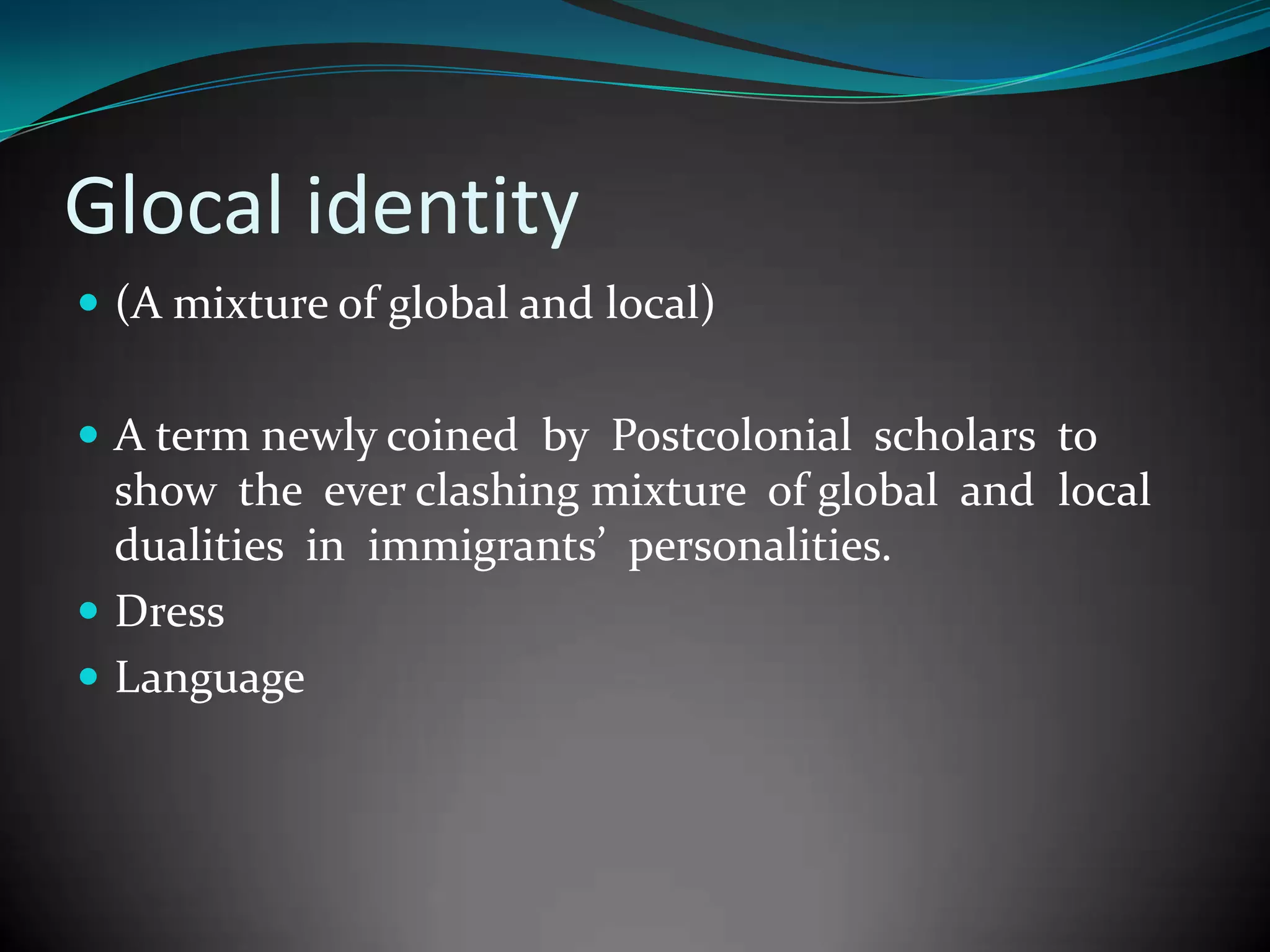
In this
photograph child
(from Hunza) can
be seen donning
a traditional local
cap, while
dressed in
“Western” dress.
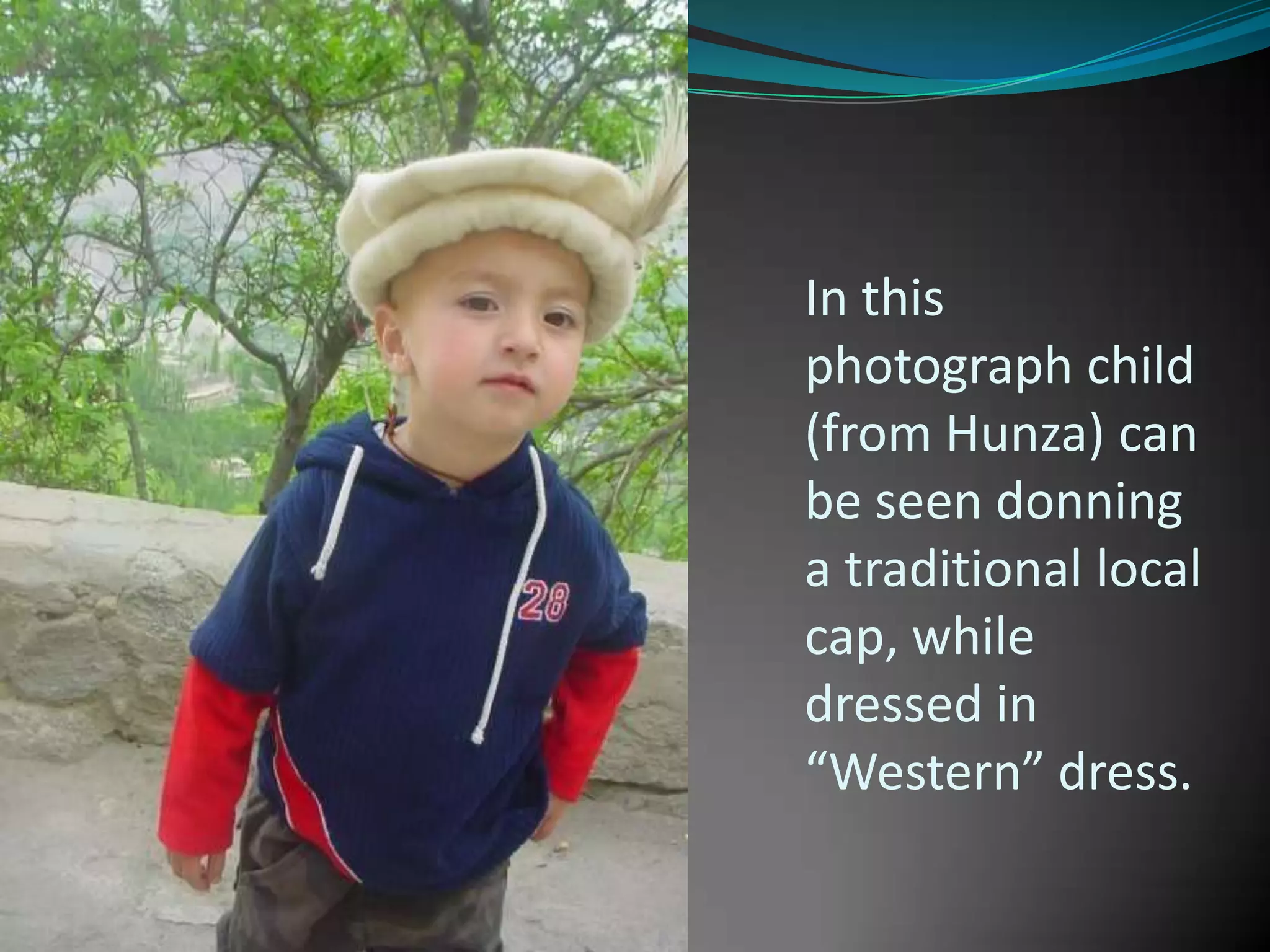
Name: CHANGEZ
Country/City: USA, New York
Nationality: American
Occupation: Underwood
Samson
Mission: “Focus on the
fundamentals”
Special traits: businessman,
suit

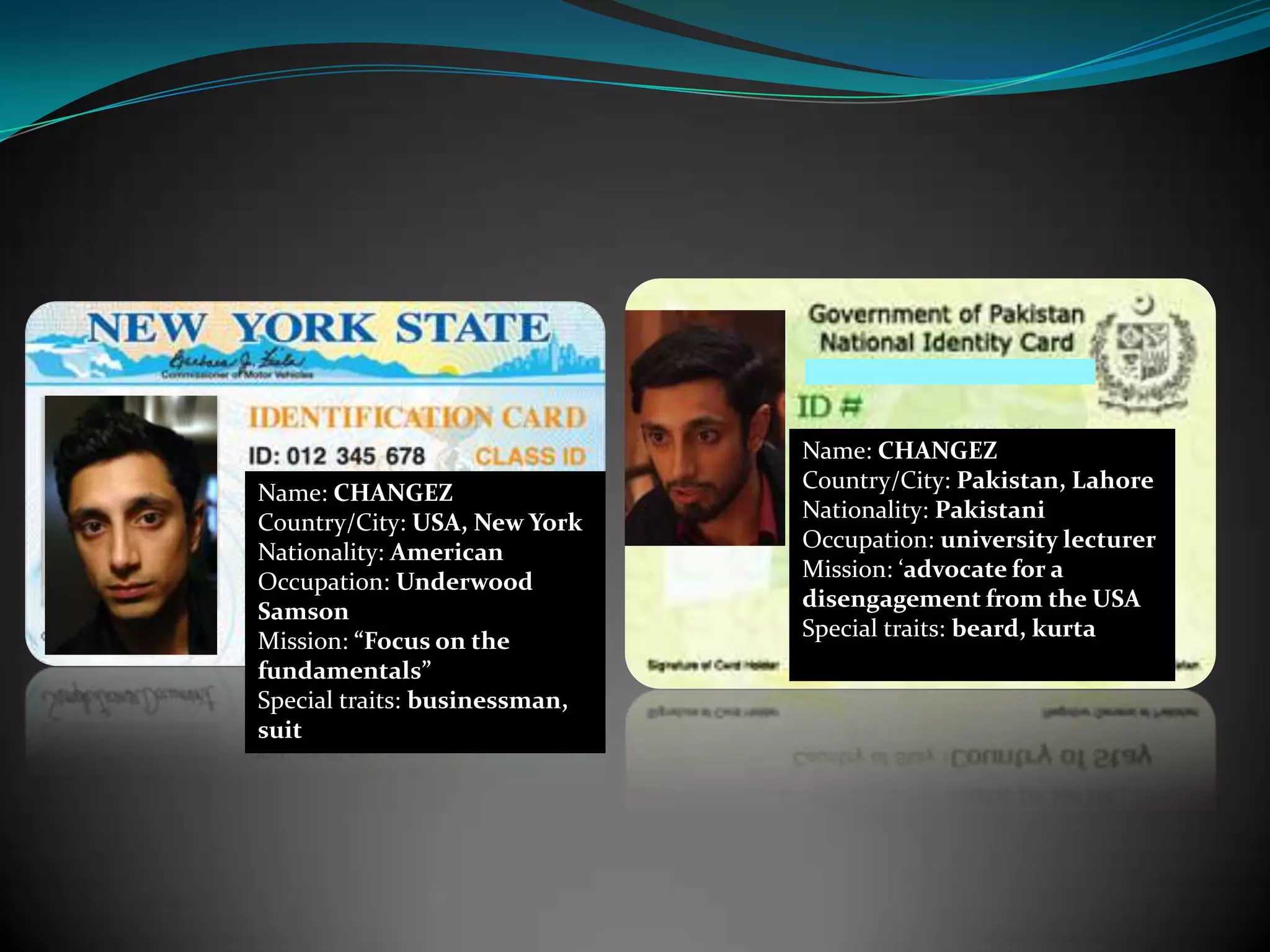
Name: CHANGEZ
Country/City: Pakistan, Lahore
Nationality: Pakistani
Occupation: university lecturer
Mission: ‘advocate for a
disengagement from the USA
Special traits: beard, kurta
Glocal Identity in “The Reluctant
Fundamentalist”
 “I was not certain where I belonged---- in New York, in

Lahore, in both, in neither.”
 “Excuse me, sir, but may I be of assistance? Ah, I see I
have alarmed you. Do not be frightened by my beard:
I am a lover of America.”(p.1)
 “I am both a native of this city and a speaker of your
language,” (p.1)
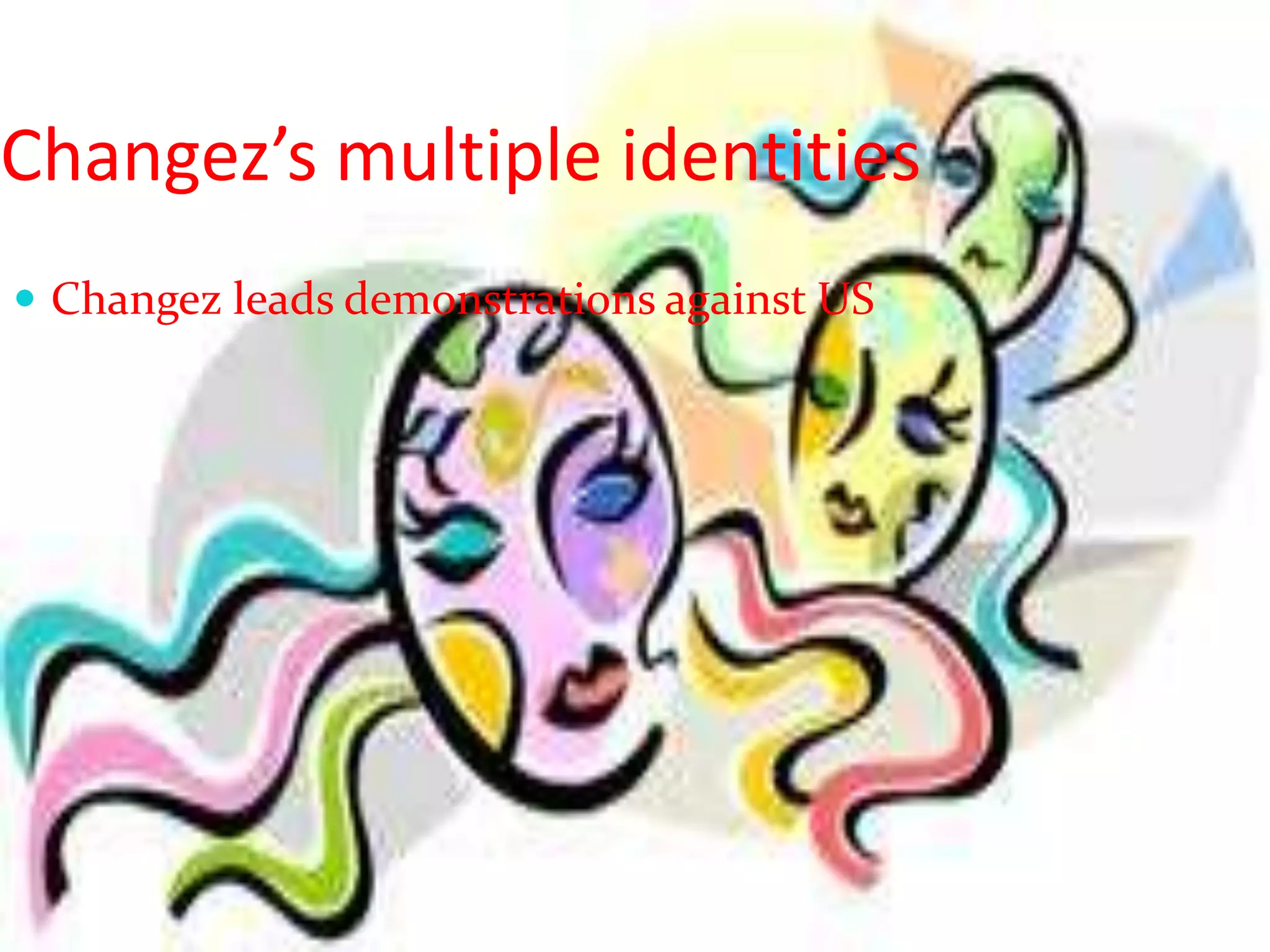
Changez’s multiple identities
 Changez leads demonstrations against US
“The East writes back”
 Edward Said: “the East writes back”
 This novel is a reaction to the discourse of colonization

from the Pakistani side (which stands for the
East) and welcomes de-colonization.
 Changez’s reaction to American attack on Afghanistan
 “Afghanistan was Pakistan’s neighbour, our friend, and

a fellow Muslim nation.” p.114
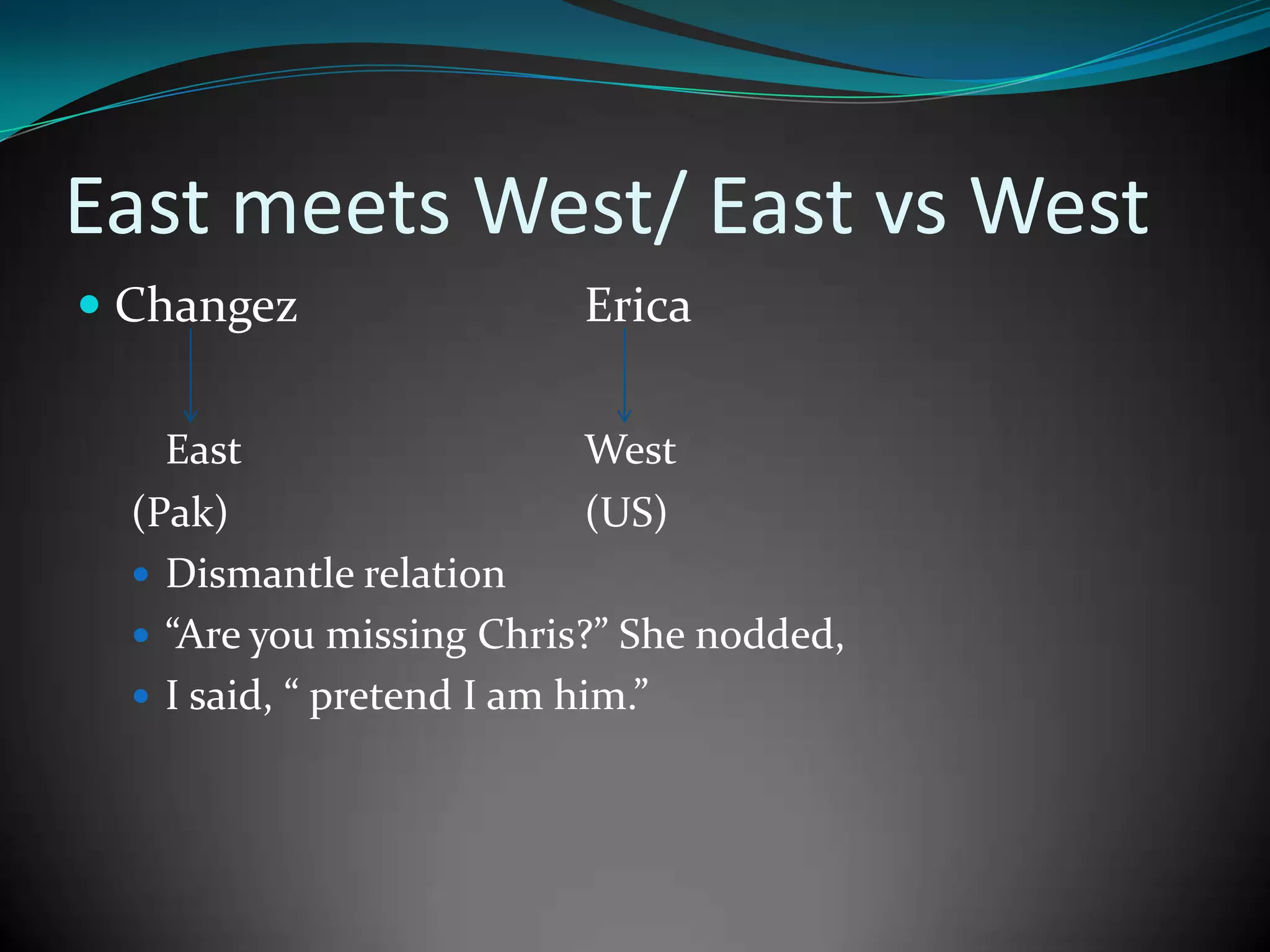
East meets West/ East vs West
 Changez

Erica

East
West
(Pak)
(US)
 Dismantle relation
 “Are you missing Chris?” She nodded,
 I said, “ pretend I am him.”
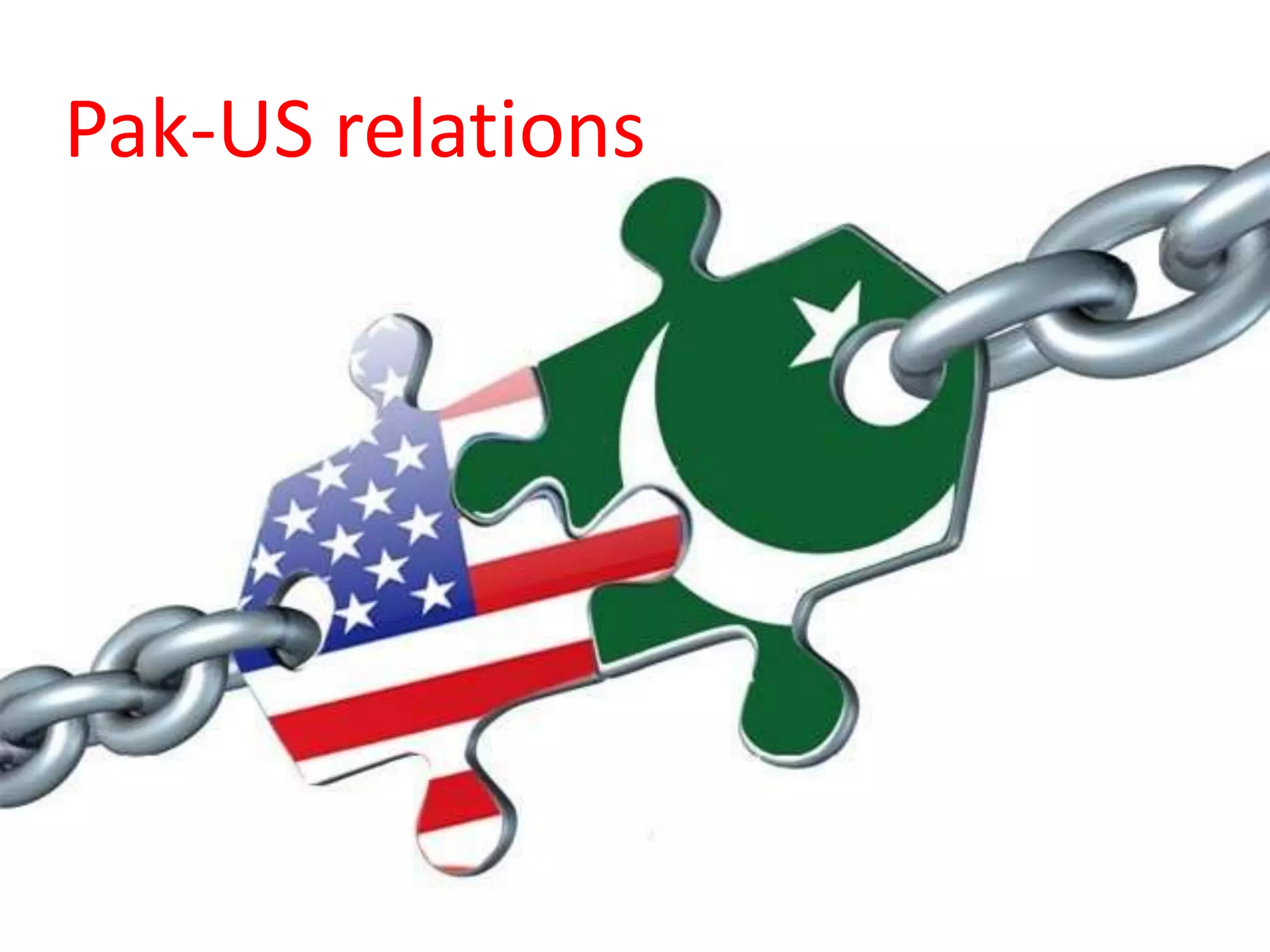
Pak-US relations
“Hegemony”
 “Hegemony is the power of the ruling class to convince

other classes that their interests are the interests of all.”
 “domination by consent.”
(Ashcroft, Bill, Gareth Griffiths, and Helen Tiffin. Postcolonial Studies: The Key Concepts. New York: Routledge,
2001. Print.)
 Globalization is a myth and what is actually taking

place is the spread of American values, power and
products across the globe. Or in other words the
American hegemony.
Hegemony Cont…
 Economic hegemony
 Underwood Samson

 Juan-Bautista: “may I ask you rather personal

question?”
 Changez: “Certainley”
 Jaun-Bautista: “Does it trouble you to make your living
by disrupting the lives of others?”
"Hybridity"
 “Hybridity has frequently been used in post-colonial

discourse to mean simply cross-cultural ‘exchange’.
 “Hybridity commonly refers to the creation of new
transcultural forms.”
(Ashcroft, Bill, Gareth Griffiths, and Helen Tiffin. Postcolonial Studies: The Key Concepts. New York: Routledge,
2001. Print.)

 Hybridization takes many forms: linguistic, cultural,

political, racial, etc.
Cultural hybridity
 Changez drinks wine
 “As we took our seats for the meal, he lifted a bottle of red

wine and said to me, ‘You drink?’ ‘He’s twenty-two,’ Erica’s
mother said on my behalf.” p.32
 Girlfriend
“Neo-liberalism”
 A type of liberalism that believes in a global free

market, without government regulation, with
businesses and industry controlled and run for profit
by private owners
 Underwood Samson, in Changez’s view, is the
clear example of the soullessness of the West.
 Their job epitomizes capitalism to its very core
through the ability to place “value”.
“Neo-liberalism” cont…
 “Does it trouble you to make your living by disrupting

the lives of others?”
 “We just value.”
“Diaspora”
 The voluntary or enforced migration of peoples from

their native homelands. Diaspora literature is often
concerned with questions of maintaining or altering
identity, language, and culture while in another
culture or country.
(http://www3.dbu.edu/mitchell/postcold.htm
White & western superiority vs.
coloured & colonial inferiority
 “I flew to New York uncomfortable in my own face .”

p.44
 “When we arrived, I was separated from my team at
immigration. They joined the queue for American
citizens; I joined the one for foreigners.” p.44
Alterity
 The state of being different or other

(Ashcroft, Griffiths and Tiffin 11)
 The state of being other or different; diversity,
‘otherness.’
(Oxford English Dictionary)
 After 9/11 attack Changez fails to feel like he fits in as a

part of his community.
Post Colonial study of "The reluctant fundamentalist"

Post Colonial study of "The reluctant fundamentalist"

  • 2.
    Postcolonial Study of“The Reluctant Fundamentalist” By Azam Sarwar
  • 3.
    Glocal identity  (Amixture of global and local)  A term newly coined by Postcolonial scholars to show the ever clashing mixture of global and local dualities in immigrants’ personalities.  Dress  Language
  • 4.
    In this photograph child (fromHunza) can be seen donning a traditional local cap, while dressed in “Western” dress.
  • 5.
    Name: CHANGEZ Country/City: USA,New York Nationality: American Occupation: Underwood Samson Mission: “Focus on the fundamentals” Special traits: businessman, suit Name: CHANGEZ Country/City: Pakistan, Lahore Nationality: Pakistani Occupation: university lecturer Mission: ‘advocate for a disengagement from the USA Special traits: beard, kurta
  • 6.
    Glocal Identity in“The Reluctant Fundamentalist”  “I was not certain where I belonged---- in New York, in Lahore, in both, in neither.”  “Excuse me, sir, but may I be of assistance? Ah, I see I have alarmed you. Do not be frightened by my beard: I am a lover of America.”(p.1)  “I am both a native of this city and a speaker of your language,” (p.1)
  • 7.
    Changez’s multiple identities Changez leads demonstrations against US
  • 8.
    “The East writesback”  Edward Said: “the East writes back”  This novel is a reaction to the discourse of colonization from the Pakistani side (which stands for the East) and welcomes de-colonization.  Changez’s reaction to American attack on Afghanistan  “Afghanistan was Pakistan’s neighbour, our friend, and a fellow Muslim nation.” p.114
  • 9.
    East meets West/East vs West  Changez Erica East West (Pak) (US)  Dismantle relation  “Are you missing Chris?” She nodded,  I said, “ pretend I am him.”
  • 10.
  • 11.
    “Hegemony”  “Hegemony isthe power of the ruling class to convince other classes that their interests are the interests of all.”  “domination by consent.” (Ashcroft, Bill, Gareth Griffiths, and Helen Tiffin. Postcolonial Studies: The Key Concepts. New York: Routledge, 2001. Print.)  Globalization is a myth and what is actually taking place is the spread of American values, power and products across the globe. Or in other words the American hegemony.
  • 12.
    Hegemony Cont…  Economichegemony  Underwood Samson  Juan-Bautista: “may I ask you rather personal question?”  Changez: “Certainley”  Jaun-Bautista: “Does it trouble you to make your living by disrupting the lives of others?”
  • 13.
    "Hybridity"  “Hybridity hasfrequently been used in post-colonial discourse to mean simply cross-cultural ‘exchange’.  “Hybridity commonly refers to the creation of new transcultural forms.” (Ashcroft, Bill, Gareth Griffiths, and Helen Tiffin. Postcolonial Studies: The Key Concepts. New York: Routledge, 2001. Print.)  Hybridization takes many forms: linguistic, cultural, political, racial, etc.
  • 14.
    Cultural hybridity  Changezdrinks wine  “As we took our seats for the meal, he lifted a bottle of red wine and said to me, ‘You drink?’ ‘He’s twenty-two,’ Erica’s mother said on my behalf.” p.32  Girlfriend
  • 15.
    “Neo-liberalism”  A typeof liberalism that believes in a global free market, without government regulation, with businesses and industry controlled and run for profit by private owners  Underwood Samson, in Changez’s view, is the clear example of the soullessness of the West.  Their job epitomizes capitalism to its very core through the ability to place “value”.
  • 16.
    “Neo-liberalism” cont…  “Doesit trouble you to make your living by disrupting the lives of others?”  “We just value.”
  • 17.
    “Diaspora”  The voluntaryor enforced migration of peoples from their native homelands. Diaspora literature is often concerned with questions of maintaining or altering identity, language, and culture while in another culture or country. (http://www3.dbu.edu/mitchell/postcold.htm
  • 18.
    White & westernsuperiority vs. coloured & colonial inferiority  “I flew to New York uncomfortable in my own face .” p.44  “When we arrived, I was separated from my team at immigration. They joined the queue for American citizens; I joined the one for foreigners.” p.44
  • 19.
    Alterity  The stateof being different or other (Ashcroft, Griffiths and Tiffin 11)  The state of being other or different; diversity, ‘otherness.’ (Oxford English Dictionary)  After 9/11 attack Changez fails to feel like he fits in as a part of his community.