

Positive Interdependence
             in
     Project Groups
         Saravana Kumar
   Language and Learning Centre
   —“We’ve done this before.”

   —“Group dynamics, teamwork strategies,
    cooperative learning?”

   —“We didn’t do it quite like that!”
Appropriacy in an HE context
   This presentation looks at the
    development of team based oral
    presentations

   In an HE context they are dependent on
    the “appropriate” representation of
    academic ideas and despite lip service
    being paid to new formats and approaches
    to academic work, must still be justified in
    terms of individual student ability in
    relation to other academic programmes
 Communication, planning, writing and
  presentation takes place through positive
  interdependence
 As such students have negotiated every
  step through the processes they work with
  to the final product of their work and the
  presentation
 They have also negotiated how their
  written and oral discourse will be received
  by their audience and justified choices
  accordingly
 Students, often with significantly disparate
  backgrounds, develop their projects
  through a combination of teamwork
  strategies, cooperative learning principles
  and positive group dynamics
 They choose their own groups and
  negotiate their own topics that will
  represent the work to be presented for
  final assessment in the module
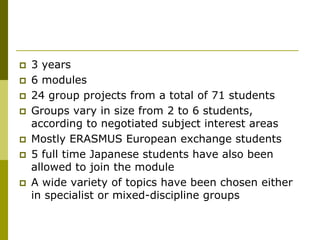
   3 years
   6 modules
   24 group projects from a total of 71 students
   Groups vary in size from 2 to 6 students,
    according to negotiated subject interest areas
   Mostly ERASMUS European exchange students
   5 full time Japanese students have also been
    allowed to join the module
   A wide variety of topics have been chosen either
    in specialist or mixed-discipline groups
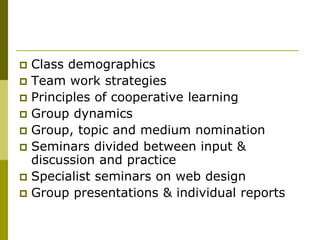
 Class demographics
 Team work strategies
 Principles of cooperative learning
 Group dynamics
 Group, topic and medium nomination
 Seminars divided between input &
  discussion and practice
 Specialist seminars on web design
 Group presentations & individual reports
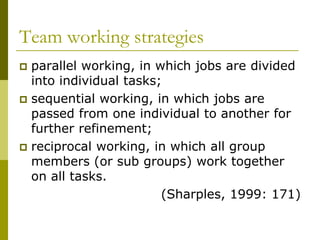
Team working strategies
 parallel working, in which jobs are divided
  into individual tasks;
 sequential working, in which jobs are
  passed from one individual to another for
  further refinement;
 reciprocal working, in which all group
  members (or sub groups) work together
  on all tasks.
                        (Sharples, 1999: 171)
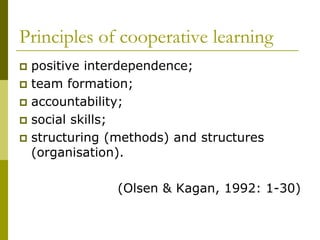
Principles of cooperative learning
 positive interdependence;
 team formation;
 accountability;
 social skills;
 structuring (methods) and structures
  (organisation).

               (Olsen & Kagan, 1992: 1-30)
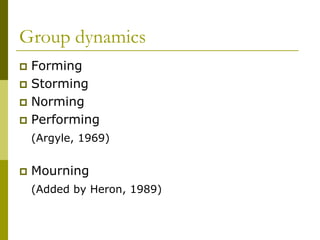
Group dynamics
 Forming
 Storming
 Norming
 Performing
    (Argyle, 1969)


   Mourning
    (Added by Heron, 1989)
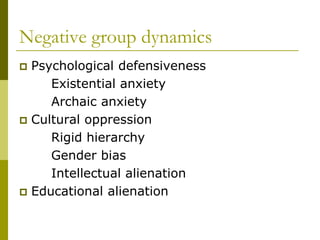
Negative group dynamics
 Psychological defensiveness
     Existential anxiety
     Archaic anxiety
 Cultural oppression
     Rigid hierarchy
     Gender bias
     Intellectual alienation
 Educational alienation
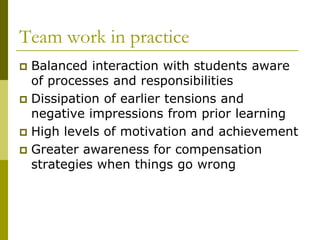
Team work in practice
 Balanced interaction with students aware
  of processes and responsibilities
 Dissipation of earlier tensions and
  negative impressions from prior learning
 High levels of motivation and achievement
 Greater awareness for compensation
  strategies when things go wrong
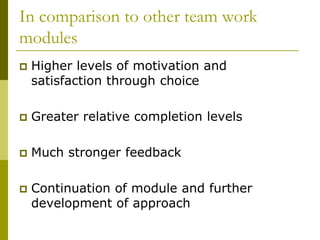
In comparison to other team work
modules
   Higher levels of motivation and
    satisfaction through choice

   Greater relative completion levels

   Much stronger feedback

   Continuation of module and further
    development of approach
Conclusion
   Students work effectively, despite problems
    that all modules face
   Positive group dynamics and reflection on
    processes of team work and CL help students
    understand their ultimate goal: effective
    communication
   This in turn allows students to communicate
    from their own perspectives and aims
   Strong social ties through positive process:
    rare in HE modules
References
   http://users.aber.ac.uk/jpm/el21010/el2.html
   Argyle, M. (1969). Social Interaction. London: Methuen.
   Heron, J. (1989). The Facilitator’s Handbook. Kogan Page.
   Johnson, D.W., Maruyama, G., Johnson, R., Nelson, D. & Skon, L. (1981).
    “Effects of Cooperative, Competitive, and Individualistic Goal Structures on
    Achievement: A Meta-Analysis.” Psychological Bulletin, 89: 47-62. In Kessler, C.
    (Ed.) (1992).
   Johnson, D.W. & Johnson, R.T. (1989). Cooperation and Competition: Theory and
    Research. Interaction Book Company: Edina, MN. In Kessler, C. (Ed.) (1992).
   Kessler, C. (Ed.) (1992). Cooperative Language Learning: A Teacher’s Resource
    Book. Englewood Cliffs, NJ: Prentice Hall Regents.
   Olson, R.E.W-B, & Kagan, S. (1992). “About Cooperative Learning” in Kessler, C.
    (Ed.) (1992).
   Sharples, M. (1999). How We Write: Writing as Creative Design. London:
    Routledge.
   Other references
   Richardson, V., Underhill, A. & Bowen, T. (1991). Group discussion worksheets
    for “Teacher Development in English Language Teaching” British Council International
    Specialist Course. Hastings: ILC/International House.

Positive Interdependence

  • 1.
    Positive Interdependence in Project Groups Saravana Kumar Language and Learning Centre
  • 2.
    —“We’ve done this before.”  —“Group dynamics, teamwork strategies, cooperative learning?”  —“We didn’t do it quite like that!”
  • 3.
    Appropriacy in anHE context  This presentation looks at the development of team based oral presentations  In an HE context they are dependent on the “appropriate” representation of academic ideas and despite lip service being paid to new formats and approaches to academic work, must still be justified in terms of individual student ability in relation to other academic programmes
  • 4.
     Communication, planning,writing and presentation takes place through positive interdependence  As such students have negotiated every step through the processes they work with to the final product of their work and the presentation  They have also negotiated how their written and oral discourse will be received by their audience and justified choices accordingly
  • 5.
     Students, oftenwith significantly disparate backgrounds, develop their projects through a combination of teamwork strategies, cooperative learning principles and positive group dynamics  They choose their own groups and negotiate their own topics that will represent the work to be presented for final assessment in the module
  • 6.
    3 years  6 modules  24 group projects from a total of 71 students  Groups vary in size from 2 to 6 students, according to negotiated subject interest areas  Mostly ERASMUS European exchange students  5 full time Japanese students have also been allowed to join the module  A wide variety of topics have been chosen either in specialist or mixed-discipline groups
  • 7.
     Class demographics Team work strategies  Principles of cooperative learning  Group dynamics  Group, topic and medium nomination  Seminars divided between input & discussion and practice  Specialist seminars on web design  Group presentations & individual reports
  • 8.
    Team working strategies parallel working, in which jobs are divided into individual tasks;  sequential working, in which jobs are passed from one individual to another for further refinement;  reciprocal working, in which all group members (or sub groups) work together on all tasks. (Sharples, 1999: 171)
  • 9.
    Principles of cooperativelearning  positive interdependence;  team formation;  accountability;  social skills;  structuring (methods) and structures (organisation). (Olsen & Kagan, 1992: 1-30)
  • 10.
    Group dynamics  Forming Storming  Norming  Performing (Argyle, 1969)  Mourning (Added by Heron, 1989)
  • 11.
    Negative group dynamics Psychological defensiveness Existential anxiety Archaic anxiety  Cultural oppression Rigid hierarchy Gender bias Intellectual alienation  Educational alienation
  • 12.
    Team work inpractice  Balanced interaction with students aware of processes and responsibilities  Dissipation of earlier tensions and negative impressions from prior learning  High levels of motivation and achievement  Greater awareness for compensation strategies when things go wrong
  • 13.
    In comparison toother team work modules  Higher levels of motivation and satisfaction through choice  Greater relative completion levels  Much stronger feedback  Continuation of module and further development of approach
  • 14.
    Conclusion  Students work effectively, despite problems that all modules face  Positive group dynamics and reflection on processes of team work and CL help students understand their ultimate goal: effective communication  This in turn allows students to communicate from their own perspectives and aims  Strong social ties through positive process: rare in HE modules
  • 15.
    References  http://users.aber.ac.uk/jpm/el21010/el2.html  Argyle, M. (1969). Social Interaction. London: Methuen.  Heron, J. (1989). The Facilitator’s Handbook. Kogan Page.  Johnson, D.W., Maruyama, G., Johnson, R., Nelson, D. & Skon, L. (1981). “Effects of Cooperative, Competitive, and Individualistic Goal Structures on Achievement: A Meta-Analysis.” Psychological Bulletin, 89: 47-62. In Kessler, C. (Ed.) (1992).  Johnson, D.W. & Johnson, R.T. (1989). Cooperation and Competition: Theory and Research. Interaction Book Company: Edina, MN. In Kessler, C. (Ed.) (1992).  Kessler, C. (Ed.) (1992). Cooperative Language Learning: A Teacher’s Resource Book. Englewood Cliffs, NJ: Prentice Hall Regents.  Olson, R.E.W-B, & Kagan, S. (1992). “About Cooperative Learning” in Kessler, C. (Ed.) (1992).  Sharples, M. (1999). How We Write: Writing as Creative Design. London: Routledge.  Other references  Richardson, V., Underhill, A. & Bowen, T. (1991). Group discussion worksheets for “Teacher Development in English Language Teaching” British Council International Specialist Course. Hastings: ILC/International House.