Positioning Yourself for
the Future
Some technologies and trends that I recommend
watching or learning

Scott Lowe, VCDX 39
vExpert, Author, Blogger, Geek
http://blog.scottlowe.org / Twitter: @scott_lowe
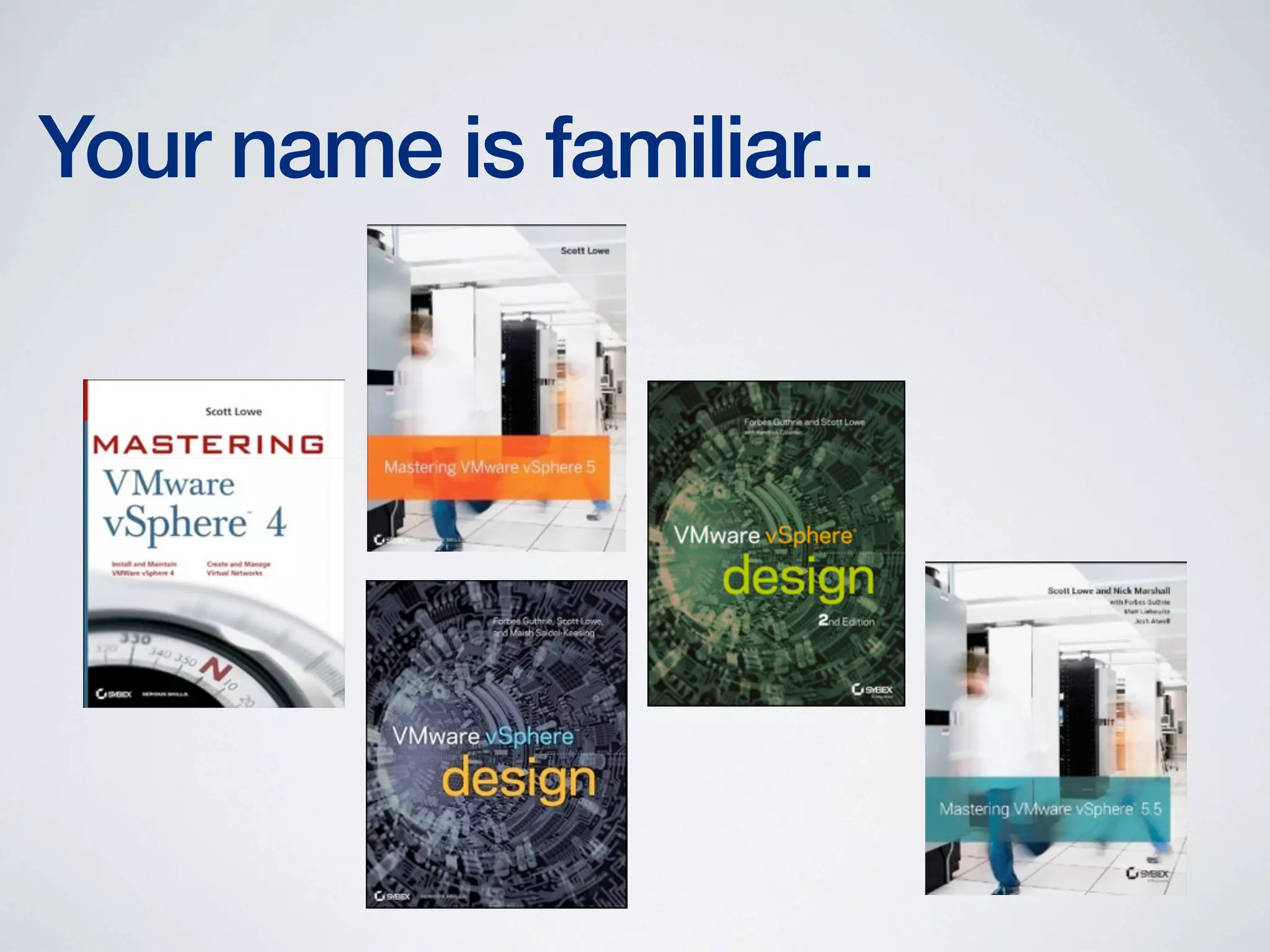
Your name is familiar...
Before going any further
• Get

involved! Audience participation is encouraged and
requested.

• If

you use Twitter, feel free to tweet about this session (use
@VMUGSydney, @MyVMUG or hashtag #VMUGSydney)

•I

encourage you to take photos or videos of today’s session and
share them online

• This

presentation will be made available online after the event
Some history
• In

Oct 2012, I gave a presentation titled “Three Technologies
Worth Watching or Learning”

• Presentation

is available online at <https://speakerdeck.com/
slowe/three-technologies-worth-watching-or-learning>

• This

presentation is an update to that one

• Attempts

to answer the question, “How can I best position
myself for future trends?”
Some new technologies to
watch/learn (2014 edition)

• Linux
• Network
• OS

virtualization

and application containers

• RESTful

APIs
Linux
Why Linux?
• Popping
• Serves

up more and more throughout the data center

as the basis for many products

• Inexpensive
• Key

solution for a variety of issues

things:

• Pick

a distribution (Ubuntu & Red Hat/CentOS seem to be
most prominent)

• Figure

out how to do common tasks (DHCP, DNS, firewall,
web server, proxy, etc.)
Network
virtualization
Why network virtualization?
•A

key part of a cloud/SDDC strategy

• I’m

doing an NSX deep dive today at 3pm

• Key

things:

• Some
• SDN

networking basics (learn the language)

(original definition) and OpenFlow

• Open

vSwitch (OVS)

• Network

encapsulation protocols (STT, GRE/NVGRE, VXLAN)
OS and
application
containers
Why OS and application
containers?
• Lightweight
• Two

examples are Linux containers (LXC) and Docker

• LXC

primarily targeted at OS containers

• Docker
• Can

way of providing isolation

primarily targeted at application containers

provide greater scale for the right use cases

• Complementary

to full machine virtualization (like VMware)
Dockerfile example
FROM ubuntu
MAINTAINER Scott Lowe <address@domain.com>
# Make sure package repositories are correct
RUN echo “deb http://archive.ubuntu.com/ubuntu precise main
universe" > /etc/apt/sources.list
# Update packages and install OpenSSH
RUN apt-get update
RUN apt-get install -y openssh-server
# Expose port and run SSH daemon
EXPOSE 22
CMD [“/usr/sbin/sshd -D”]
RESTful APIs
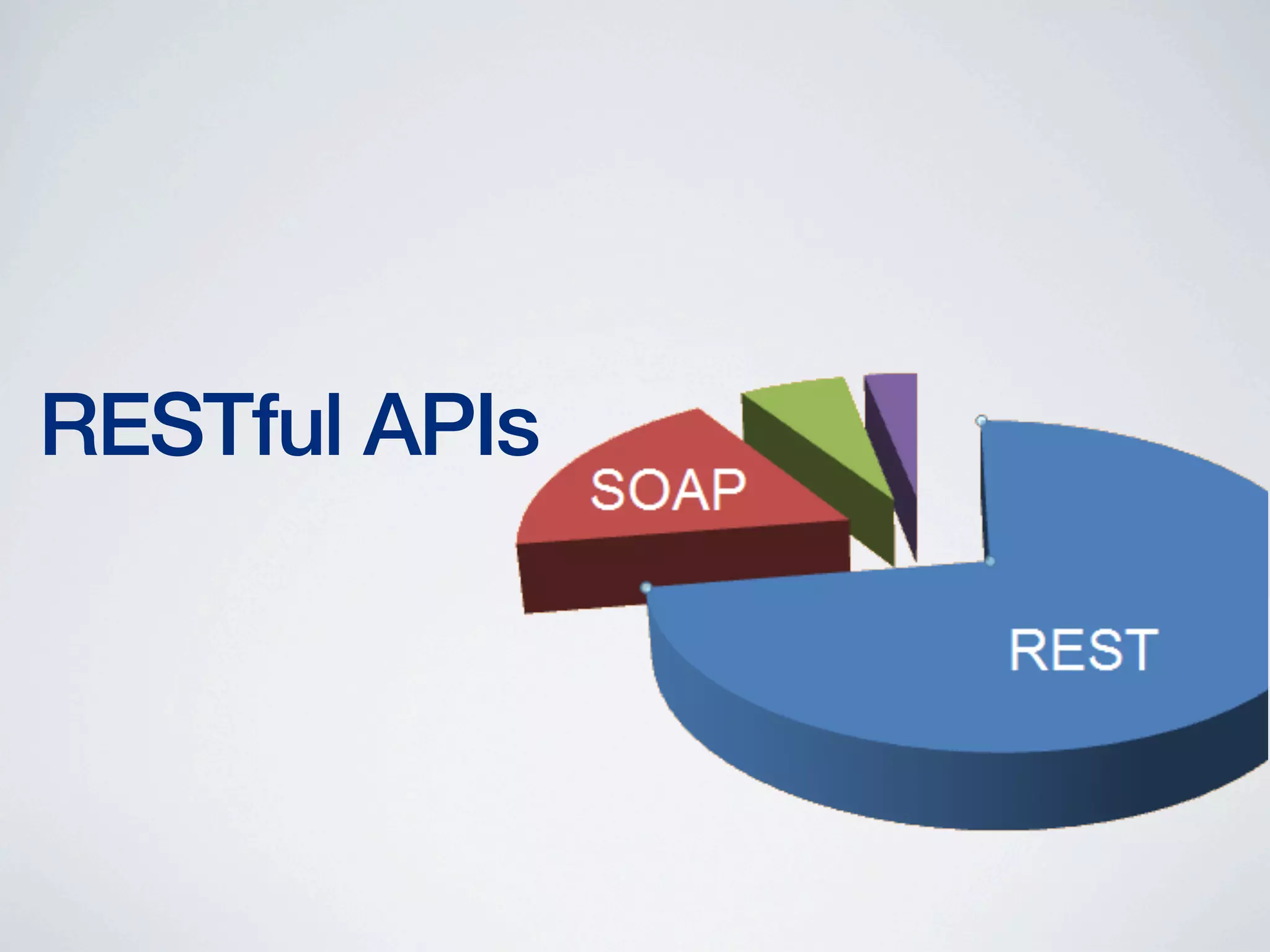
Why RESTful APIs?
• The

data center is increasingly API-driven

• Public

cloud services against which IT is being compared are
API-driven (AWS, for example)

• Understanding
• Key

APIs helps understand how to integrate solutions

items:

• JSON

(JavaScript Object Notation) and XML (eXtensible
Markup Language)

• Using

cURL to interrogate an API
JSON example
{
"result_count": 3,
"results": [
{
"_href": "/ws.v1/lswitch/3ca2d5ef-6a0f-4392-9ec1-a6645234bc55",
"_schema": "/ws.v1/schema/LogicalSwitchConfig",
"type": "LogicalSwitchConfig"
},
{
"_href": "/ws.v1/lswitch/81f51868-2142-48a8-93ff-ef612249e025",
"_schema": "/ws.v1/schema/LogicalSwitchConfig",
"type": "LogicalSwitchConfig"
},
{
"_href": "/ws.v1/lswitch/9fed3467-dd74-421b-ab30-7bc9bfae6248",
"_schema": "/ws.v1/schema/LogicalSwitchConfig",
"type": "LogicalSwitchConfig"
}
]
}
Honourable mentions

• OpenStack
• Configuration

management (CFEngine, Puppet, Chef, Ansible,

Salt)
• Object

storage (Swift, S3)
Questions &
answers
Thank you!
Don’t forget to rate this session and provide feedback (via mobile
app, inside the program guide, or via link sent to your e-mail)

Positioning Yourself for the Future

  • 1.
    Positioning Yourself for theFuture Some technologies and trends that I recommend watching or learning Scott Lowe, VCDX 39 vExpert, Author, Blogger, Geek http://blog.scottlowe.org / Twitter: @scott_lowe
  • 2.
    Your name isfamiliar...
  • 3.
    Before going anyfurther • Get involved! Audience participation is encouraged and requested. • If you use Twitter, feel free to tweet about this session (use @VMUGSydney, @MyVMUG or hashtag #VMUGSydney) •I encourage you to take photos or videos of today’s session and share them online • This presentation will be made available online after the event
  • 4.
    Some history • In Oct2012, I gave a presentation titled “Three Technologies Worth Watching or Learning” • Presentation is available online at <https://speakerdeck.com/ slowe/three-technologies-worth-watching-or-learning> • This presentation is an update to that one • Attempts to answer the question, “How can I best position myself for future trends?”
  • 5.
    Some new technologiesto watch/learn (2014 edition) • Linux • Network • OS virtualization and application containers • RESTful APIs
  • 6.
  • 7.
    Why Linux? • Popping •Serves up more and more throughout the data center as the basis for many products • Inexpensive • Key solution for a variety of issues things: • Pick a distribution (Ubuntu & Red Hat/CentOS seem to be most prominent) • Figure out how to do common tasks (DHCP, DNS, firewall, web server, proxy, etc.)
  • 8.
  • 9.
    Why network virtualization? •A keypart of a cloud/SDDC strategy • I’m doing an NSX deep dive today at 3pm • Key things: • Some • SDN networking basics (learn the language) (original definition) and OpenFlow • Open vSwitch (OVS) • Network encapsulation protocols (STT, GRE/NVGRE, VXLAN)
  • 10.
  • 11.
    Why OS andapplication containers? • Lightweight • Two examples are Linux containers (LXC) and Docker • LXC primarily targeted at OS containers • Docker • Can way of providing isolation primarily targeted at application containers provide greater scale for the right use cases • Complementary to full machine virtualization (like VMware)
  • 12.
    Dockerfile example FROM ubuntu MAINTAINERScott Lowe <address@domain.com> # Make sure package repositories are correct RUN echo “deb http://archive.ubuntu.com/ubuntu precise main universe" > /etc/apt/sources.list # Update packages and install OpenSSH RUN apt-get update RUN apt-get install -y openssh-server # Expose port and run SSH daemon EXPOSE 22 CMD [“/usr/sbin/sshd -D”]
  • 13.
  • 14.
    Why RESTful APIs? •The data center is increasingly API-driven • Public cloud services against which IT is being compared are API-driven (AWS, for example) • Understanding • Key APIs helps understand how to integrate solutions items: • JSON (JavaScript Object Notation) and XML (eXtensible Markup Language) • Using cURL to interrogate an API
  • 15.
    JSON example { "result_count": 3, "results":[ { "_href": "/ws.v1/lswitch/3ca2d5ef-6a0f-4392-9ec1-a6645234bc55", "_schema": "/ws.v1/schema/LogicalSwitchConfig", "type": "LogicalSwitchConfig" }, { "_href": "/ws.v1/lswitch/81f51868-2142-48a8-93ff-ef612249e025", "_schema": "/ws.v1/schema/LogicalSwitchConfig", "type": "LogicalSwitchConfig" }, { "_href": "/ws.v1/lswitch/9fed3467-dd74-421b-ab30-7bc9bfae6248", "_schema": "/ws.v1/schema/LogicalSwitchConfig", "type": "LogicalSwitchConfig" } ] }
  • 16.
    Honourable mentions • OpenStack •Configuration management (CFEngine, Puppet, Chef, Ansible, Salt) • Object storage (Swift, S3)
  • 17.
  • 18.
    Thank you! Don’t forgetto rate this session and provide feedback (via mobile app, inside the program guide, or via link sent to your e-mail)