Vijay Hiranandani
INTRODUCTION

Sea ports are historic, commercial and
infrastructural assets that form the backbone of
national and regional economies.

OUTLINE:
Main features and operations of ports
Importance of ports
Evolution of ports
Types of ports
Port management
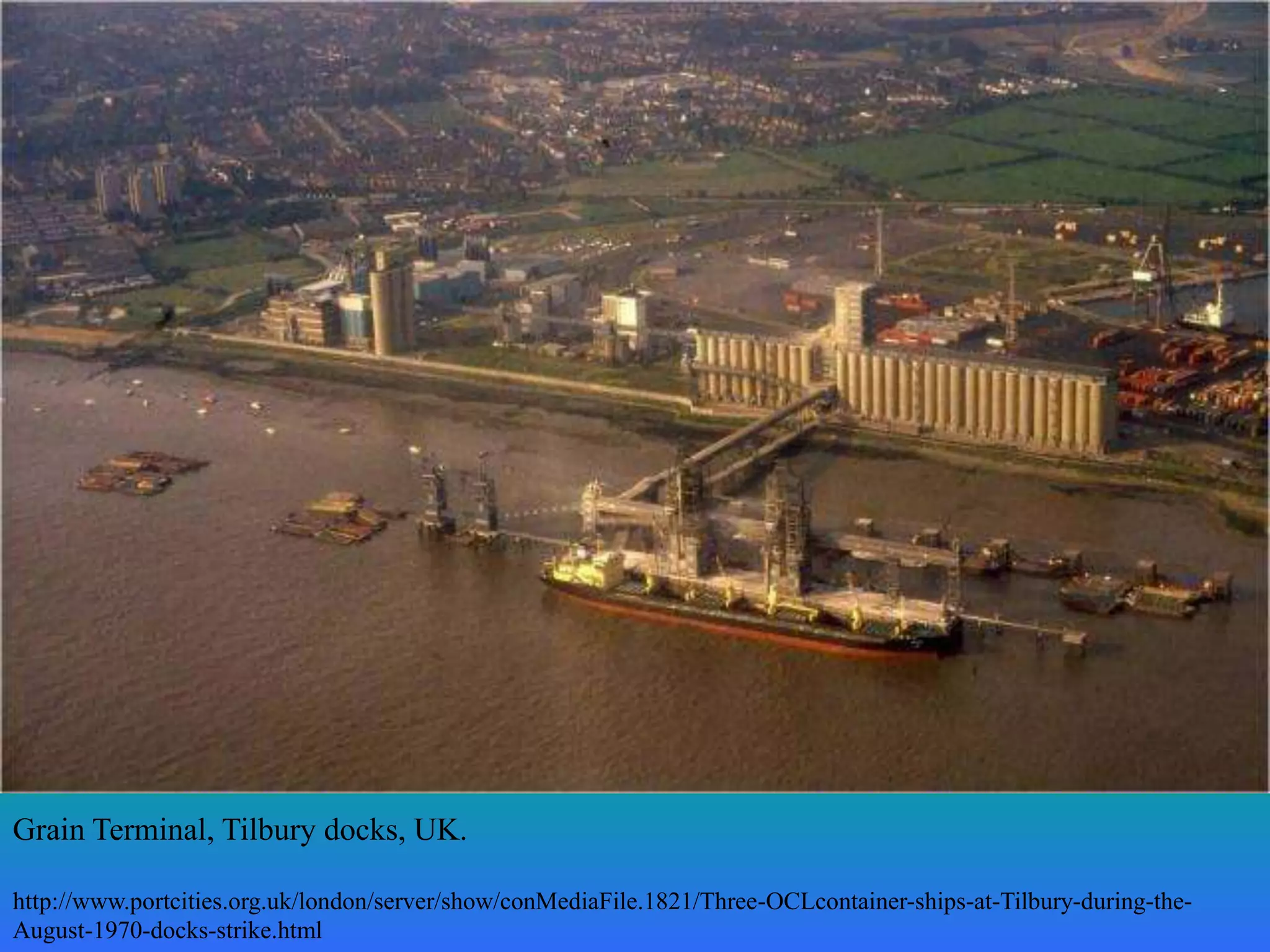
Grain Terminal, Tilbury docks, UK.

http://www.portcities.org.uk/london/server/show/conMediaFile.1821/Three-OCLcontainer-ships-at-Tilbury-during-the-
August-1970-docks-strike.html
MAIN FEATURES & OPERATIONS OF PORTS:

Ports reflect national heritage, local commercial
attitudes, practices, and laws that differ widely between
nations.

Ports require long-term, expensive, and specialized
investments and resources that represent a substantial
chunk of national economy.

Ports are large civil engineering undertakings and a
collection of activities entailing huge sunk costs.

Ports provide ship/shore intermodal interface.
The advent of intermodalism has caused ports to compete
for cargoes. This has jolted businesses to increase port
efficiency and value-added activities in recent years.


Value-added activities range from
   cargo loading and discharging,
   industrial services in ports,
   combining and separating cargoes,
   up-to-date information on inventory and cargo movements,
   stuffing/de-stuffing containers,
   loading cargo in crates and crates on pallets,
   shrink-wrapping, labeling, weighing, repackaging.
Civil engineering features:
  Sea and land access
  Infrastructures for ships berthing & unberthing
  Road and rail networks
  Industrial area management

Administrative functions:
  Control of all modes of vehicles entering and
  leaving the port
  Environmental control
  Dangerous and hazardous cargo control
  Safety and security within the port area
  Immigration, health, customs, and commercial
  documentary control
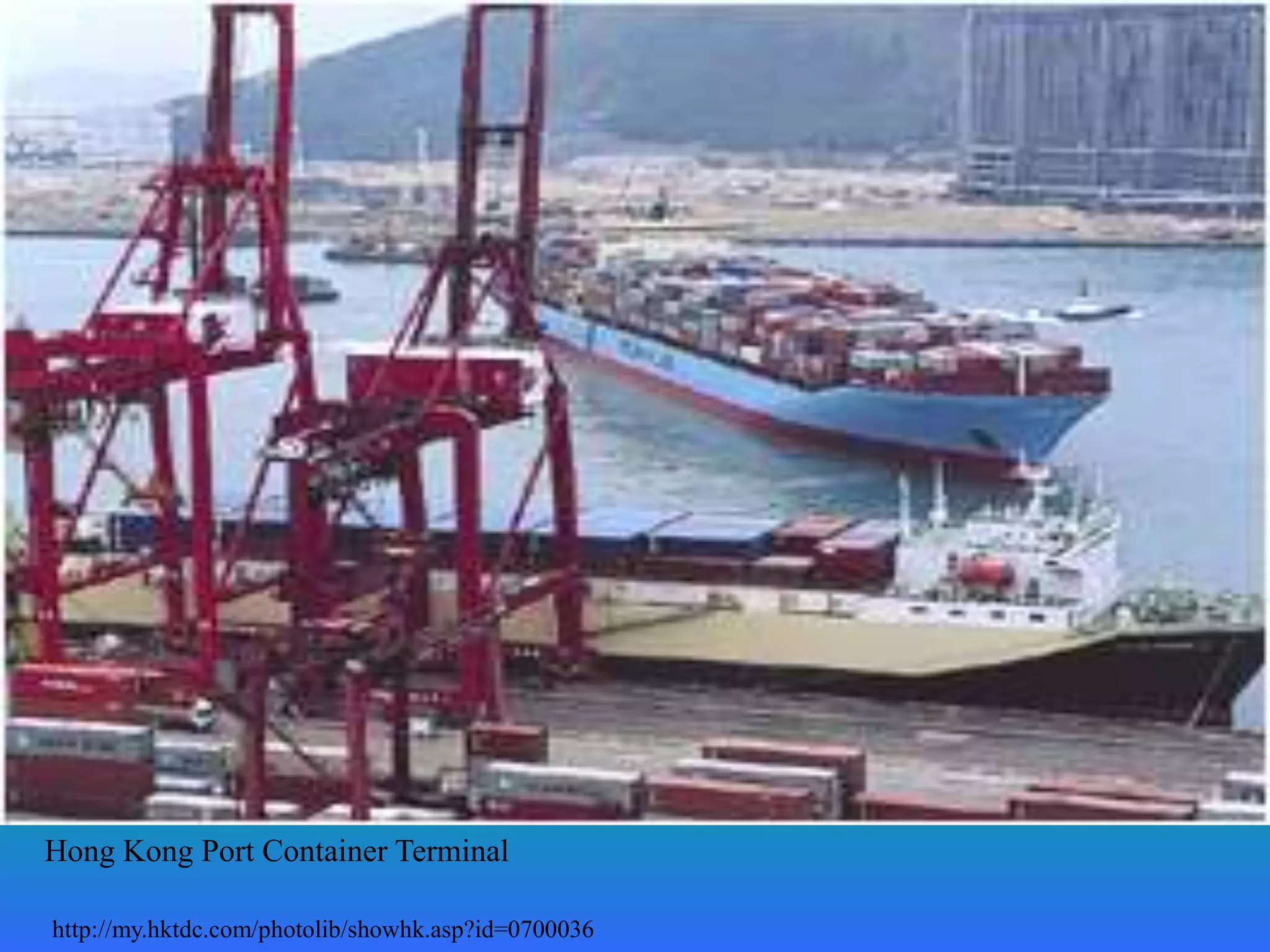
Hong Kong Port Container Terminal

http://my.hktdc.com/photolib/showhk.asp?id=0700036
Operational functions:
  Facilitating arrival and departure of ships
  Providing navigational aids and Vessel Traffic
  Separation (VTS) facilities
  Pilotage, tugging and mooring activities
  Use of berths, sheds, etc
  Loading, discharging, storage and distribution of
  cargo
  Facilitating supply chain logistics and management
WHY ARE SEAPORTS IMPORTANT?
Seaports are a haven with facilities for berthing and
anchoring ships and providing equipment for transfer of
goods from ship-shore, shore-ship & ship-ship.

Ports function as
   distribution centers;
  industrial zones;
  energy supply bases;
  mercantile trading centers with banks, brokers, and
  traders;
  urbanization and city redevelopment centers;
  life activity bases in rural ports;
  maritime leisure bases in cruise passenger ship
  terminals;
  private yacht marinas;
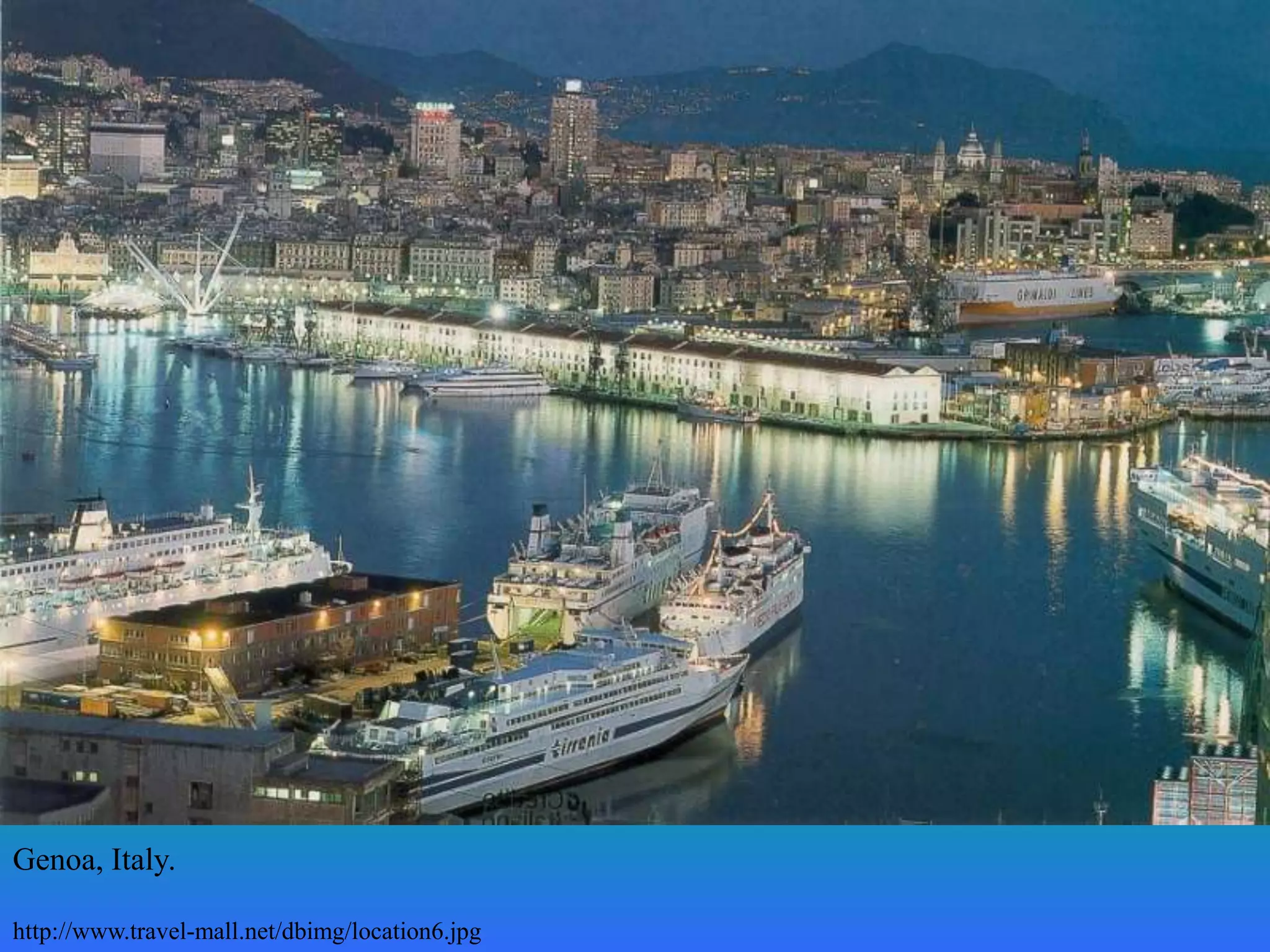
Genoa, Italy.

http://www.travel-mall.net/dbimg/location6.jpg
Ports form a vital aspect of the national transport
infrastructure.

Ports form the main transport link with their
international trading partners and are a focal point for
national and regional motorways and railways.

Ports are a blessing for national prosperity – they
provide a gateway for trade and attract commercial
infrastructure such as banks, shipping agencies, freight
forwarders, stevedores, etc.

Ports create a hustle and bustle of industrial activity.

Ports are places where foreign cultures and ideas
influence a nation.
Ports are a focal point with shallow waters where
ships converge thereby making them vulnerable to
maritime accidents.

Ports are places where valuables are concentrated and
where cargo can be damaged or stolen during handling.

Ports are places where repairs and/or planned
maintenance is carried out on ships.

 Ports are places where
  costly delays can occur,
  ships are surveyed,
  most shipping services – agents, brokers, etc are located,
  cargoes come from, and
  customs and government policies are implemented.
Hamburg Port, Germany

http://www.maritimemarket.ru/images/hamburg.jpg
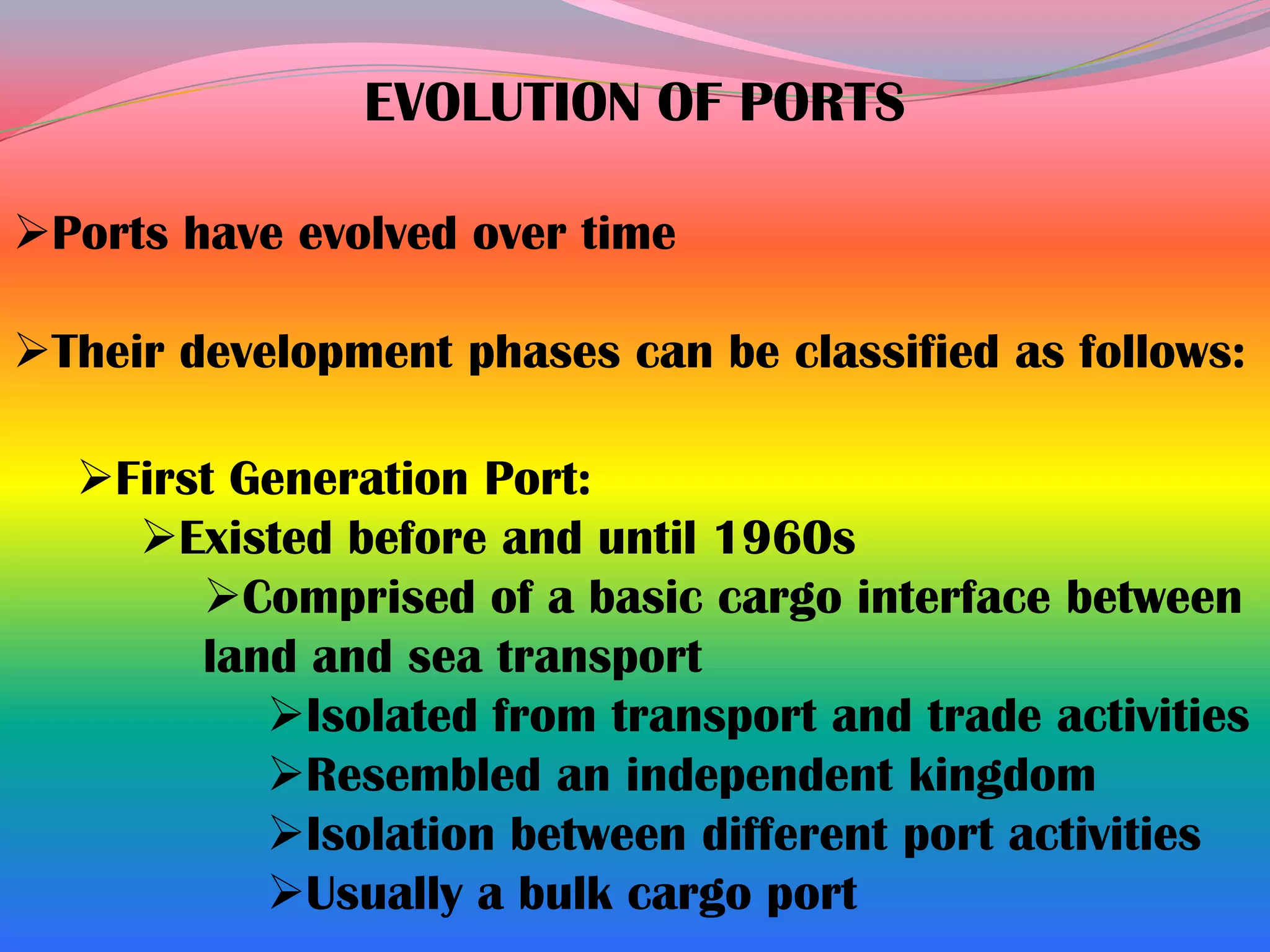
EVOLUTION OF PORTS

Ports have evolved over time

Their development phases can be classified as follows:

  First Generation Port:
    Existed before and until 1960s
       Comprised of a basic cargo interface between
       land and sea transport
          Isolated from transport and trade activities
          Resembled an independent kingdom
          Isolation between different port activities
          Usually a bulk cargo port
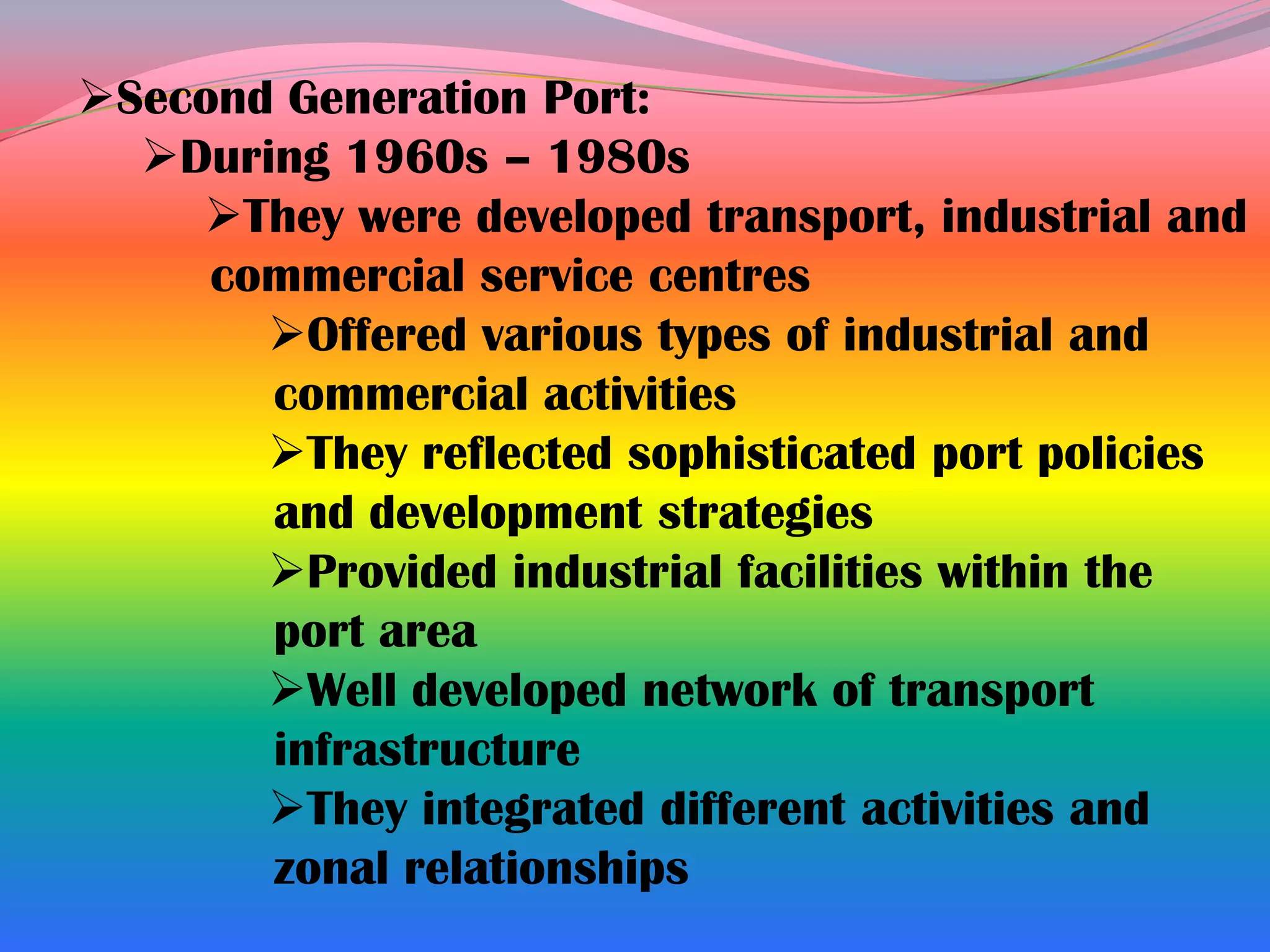
Second Generation Port:
  During 1960s – 1980s
    They were developed transport, industrial and
     commercial service centres
       Offered various types of industrial and
       commercial activities
       They reflected sophisticated port policies
       and development strategies
       Provided industrial facilities within the
       port area
       Well developed network of transport
       infrastructure
       They integrated different activities and
       zonal relationships
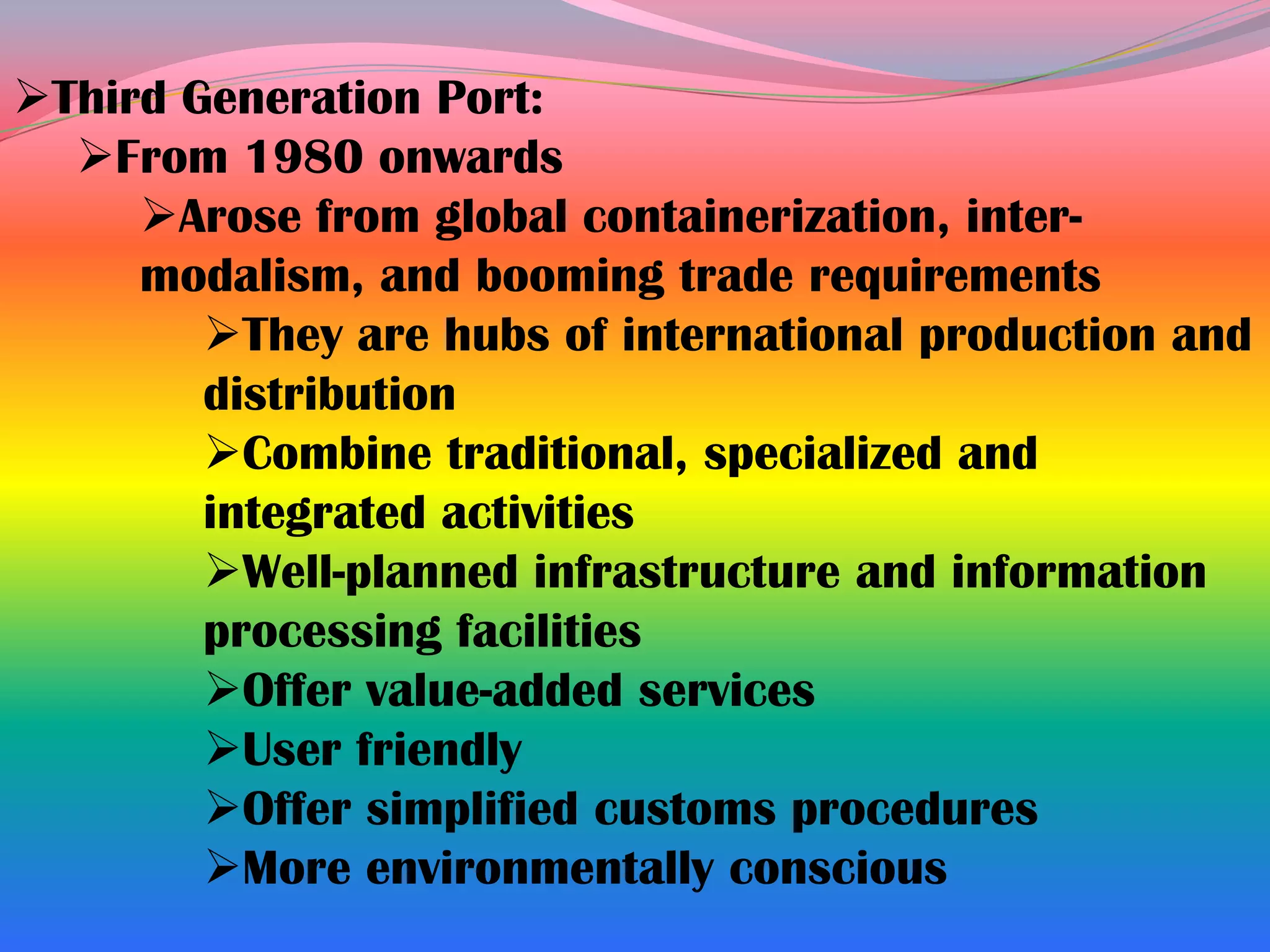
Third Generation Port:
  From 1980 onwards
     Arose from global containerization, inter-
     modalism, and booming trade requirements
        They are hubs of international production and
        distribution
        Combine traditional, specialized and
        integrated activities
        Well-planned infrastructure and information
        processing facilities
        Offer value-added services
        User friendly
        Offer simplified customs procedures
        More environmentally conscious
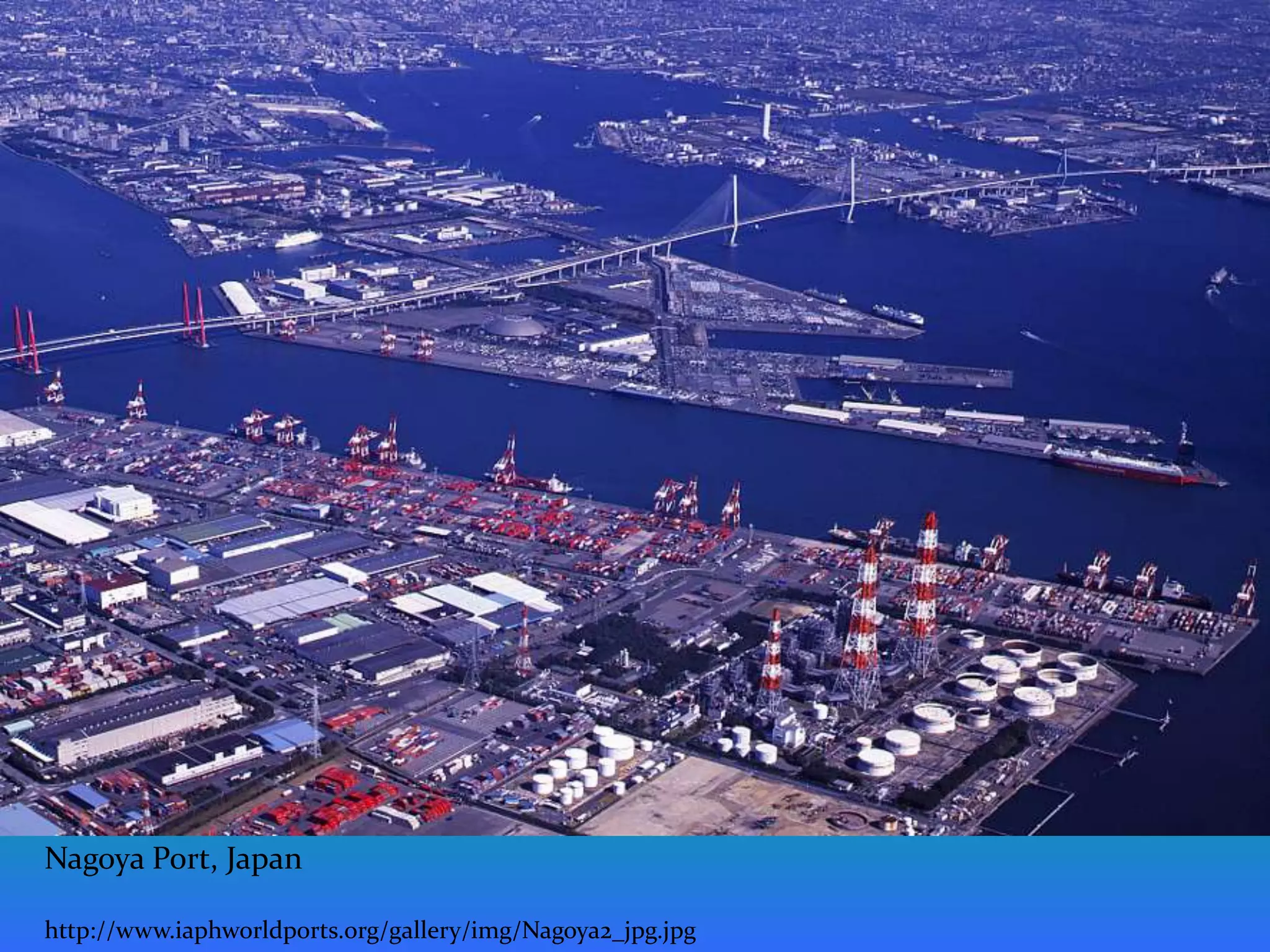
Nagoya Port, Japan

http://www.iaphworldports.org/gallery/img/Nagoya2_jpg.jpg
DIFFERENT TYPES OF PORTS
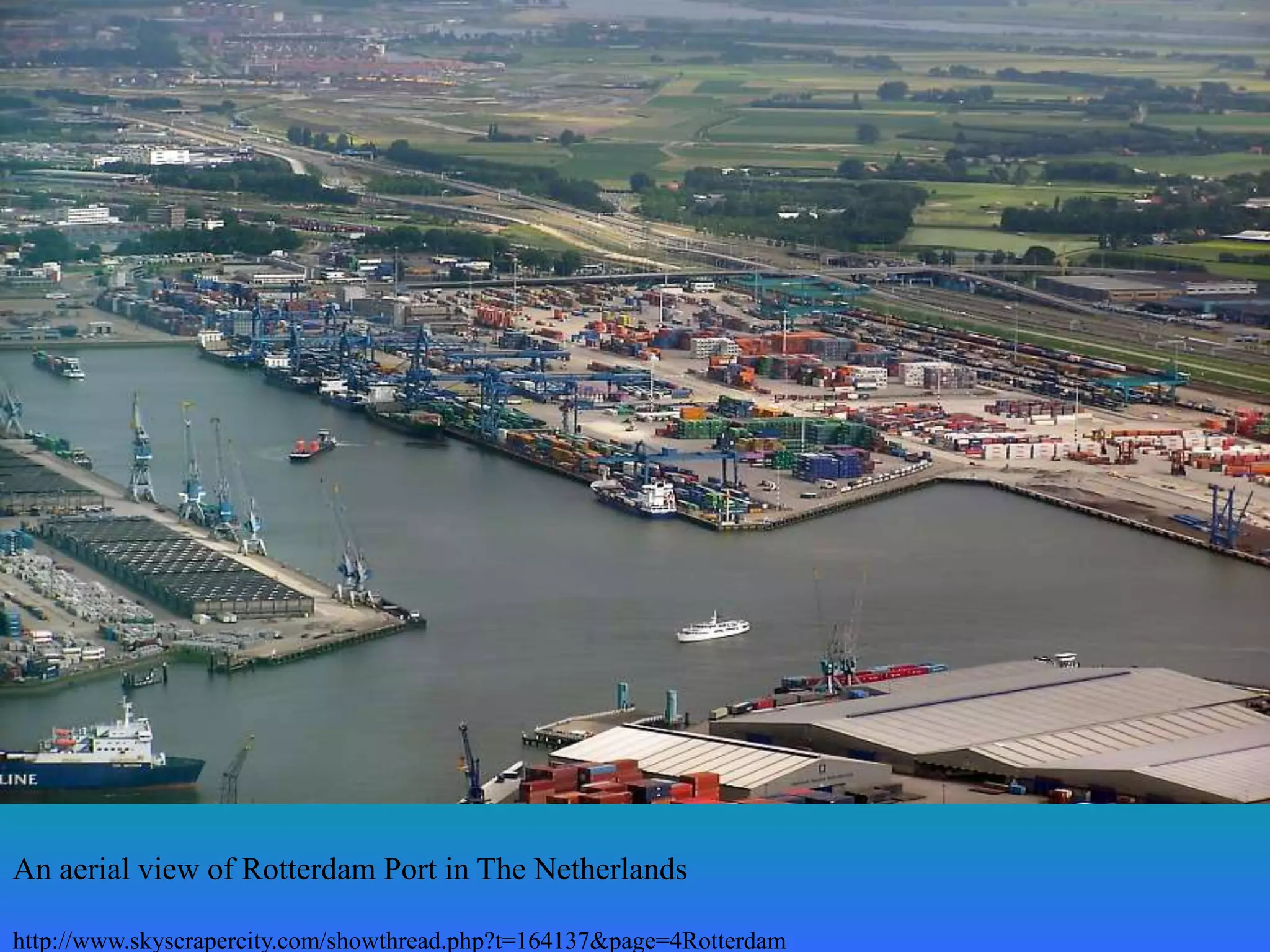
Hub, center or mega port – a major port dealing with
international trade. Example: Rotterdam in The
Netherlands.

Feeder port – to feed and distribute cargo from major
ports. Example: Port Riga in Latvia provides feeder
service to Hamburg in Germany.

Entrepot or transit port – serves as a transit port.
Example: Batumi seaport in Georgia is a transit port for
Kazakh and Azerbaijan.

Domestic port – provides a natural outlet for
surrounding hinterland. Example: Jafarabad port in
India.
An aerial view of Rotterdam Port in The Netherlands

http://www.skyscrapercity.com/showthread.php?t=164137&page=4Rotterdam
PORT MANAGEMENT – A BRIEF
Ports last longer than ships and this requires the port
management to avoid any costly blunders.

Ports are classified according to their ownership or
administration. Basic types are:
  State owned ports
  Autonomous ports
  Municipal owned ports
  Private owned ports

There is an impetus to increase private ownership of
ports.
Ports are governed by various types of boards such as

  Representative Board – consisting of persons
  representing interests concerned with port operation

  Board of Experts – consisting of members with
  proven expertise

  Two Tier Boards – consisting of one tier to run the
  port on day-to-day basis and other tier to plan and
  implement major policies
Port management aims to:
  Operate with overall cost-leadership
     Minimize user payment by ensuring quick ship
     turnover in port
     Minimize through-transport costs
     Minimize port costs

  Maximize benefits
    To port owners
    To the town, region or nation

  Generate employment
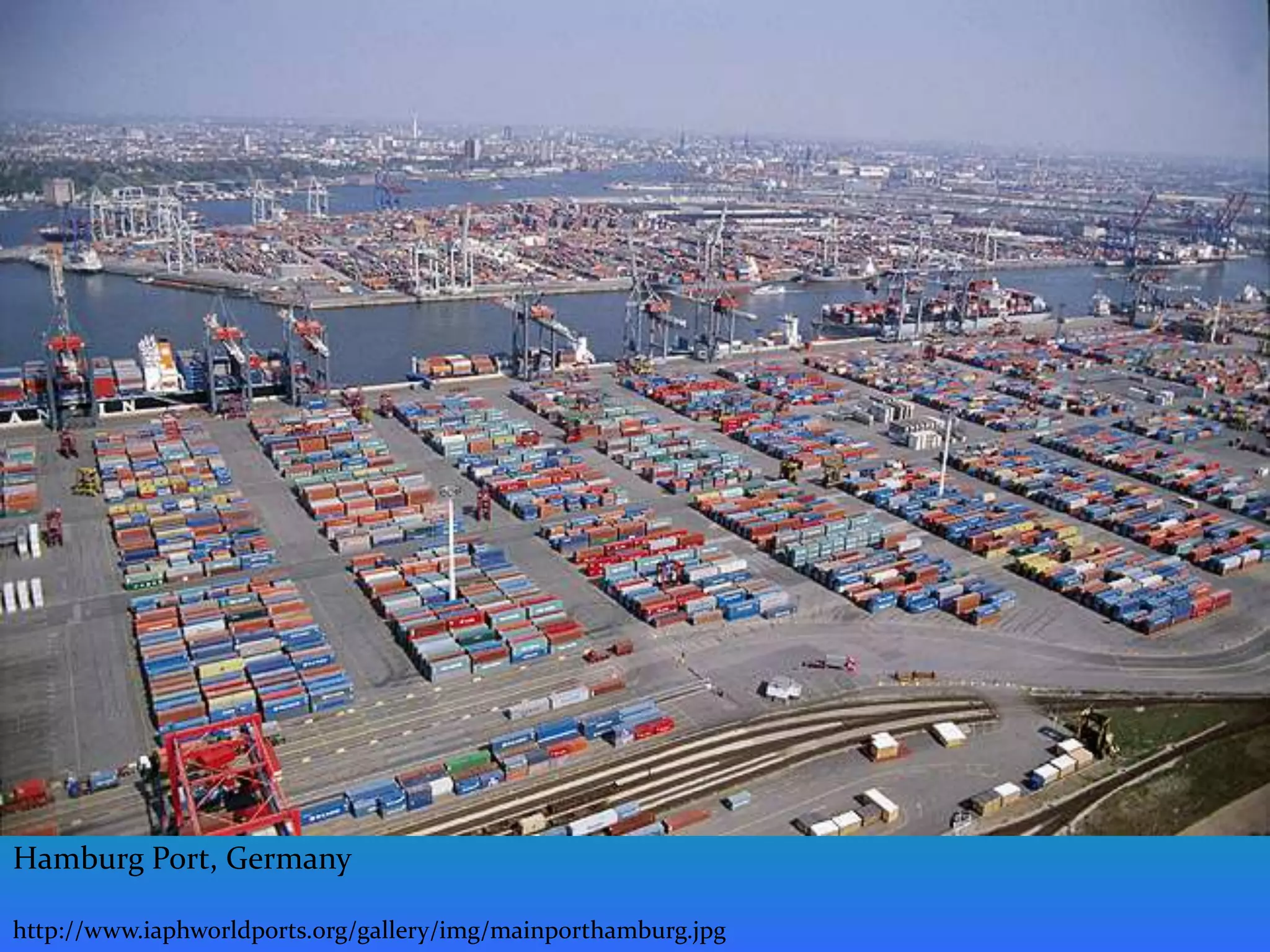
Hamburg Port, Germany

http://www.iaphworldports.org/gallery/img/mainporthamburg.jpg
CONCLUSION

Ports have historical, commercial and
infrastructural significance.

They form the backbone of national and
regional economies.

Supporting efficient port operations and
management is vital for national prosperity.
References

Alderton P.M. (1999). Port Management & Operations.
London: LLP

Grammenos Costas Th. (2002). The Handbook of
Maritime Economics and Business. London: Informa
Professional.

Port operations & management slideshow

  • 1.
  • 2.
    INTRODUCTION Sea ports arehistoric, commercial and infrastructural assets that form the backbone of national and regional economies. OUTLINE: Main features and operations of ports Importance of ports Evolution of ports Types of ports Port management
  • 3.
    Grain Terminal, Tilburydocks, UK. http://www.portcities.org.uk/london/server/show/conMediaFile.1821/Three-OCLcontainer-ships-at-Tilbury-during-the- August-1970-docks-strike.html
  • 4.
    MAIN FEATURES &OPERATIONS OF PORTS: Ports reflect national heritage, local commercial attitudes, practices, and laws that differ widely between nations. Ports require long-term, expensive, and specialized investments and resources that represent a substantial chunk of national economy. Ports are large civil engineering undertakings and a collection of activities entailing huge sunk costs. Ports provide ship/shore intermodal interface.
  • 5.
    The advent ofintermodalism has caused ports to compete for cargoes. This has jolted businesses to increase port efficiency and value-added activities in recent years. Value-added activities range from cargo loading and discharging, industrial services in ports, combining and separating cargoes, up-to-date information on inventory and cargo movements, stuffing/de-stuffing containers, loading cargo in crates and crates on pallets, shrink-wrapping, labeling, weighing, repackaging.
  • 6.
    Civil engineering features: Sea and land access Infrastructures for ships berthing & unberthing Road and rail networks Industrial area management Administrative functions: Control of all modes of vehicles entering and leaving the port Environmental control Dangerous and hazardous cargo control Safety and security within the port area Immigration, health, customs, and commercial documentary control
  • 7.
    Hong Kong PortContainer Terminal http://my.hktdc.com/photolib/showhk.asp?id=0700036
  • 8.
    Operational functions: Facilitating arrival and departure of ships Providing navigational aids and Vessel Traffic Separation (VTS) facilities Pilotage, tugging and mooring activities Use of berths, sheds, etc Loading, discharging, storage and distribution of cargo Facilitating supply chain logistics and management
  • 9.
    WHY ARE SEAPORTSIMPORTANT? Seaports are a haven with facilities for berthing and anchoring ships and providing equipment for transfer of goods from ship-shore, shore-ship & ship-ship. Ports function as  distribution centers; industrial zones; energy supply bases; mercantile trading centers with banks, brokers, and traders; urbanization and city redevelopment centers; life activity bases in rural ports; maritime leisure bases in cruise passenger ship terminals; private yacht marinas;
  • 10.
  • 11.
    Ports form avital aspect of the national transport infrastructure. Ports form the main transport link with their international trading partners and are a focal point for national and regional motorways and railways. Ports are a blessing for national prosperity – they provide a gateway for trade and attract commercial infrastructure such as banks, shipping agencies, freight forwarders, stevedores, etc. Ports create a hustle and bustle of industrial activity. Ports are places where foreign cultures and ideas influence a nation.
  • 12.
    Ports are afocal point with shallow waters where ships converge thereby making them vulnerable to maritime accidents. Ports are places where valuables are concentrated and where cargo can be damaged or stolen during handling. Ports are places where repairs and/or planned maintenance is carried out on ships.  Ports are places where costly delays can occur, ships are surveyed, most shipping services – agents, brokers, etc are located, cargoes come from, and customs and government policies are implemented.
  • 13.
  • 14.
    EVOLUTION OF PORTS Portshave evolved over time Their development phases can be classified as follows: First Generation Port: Existed before and until 1960s Comprised of a basic cargo interface between land and sea transport Isolated from transport and trade activities Resembled an independent kingdom Isolation between different port activities Usually a bulk cargo port
  • 15.
    Second Generation Port: During 1960s – 1980s They were developed transport, industrial and commercial service centres Offered various types of industrial and commercial activities They reflected sophisticated port policies and development strategies Provided industrial facilities within the port area Well developed network of transport infrastructure They integrated different activities and zonal relationships
  • 16.
    Third Generation Port: From 1980 onwards Arose from global containerization, inter- modalism, and booming trade requirements They are hubs of international production and distribution Combine traditional, specialized and integrated activities Well-planned infrastructure and information processing facilities Offer value-added services User friendly Offer simplified customs procedures More environmentally conscious
  • 17.
  • 18.
    DIFFERENT TYPES OFPORTS Hub, center or mega port – a major port dealing with international trade. Example: Rotterdam in The Netherlands. Feeder port – to feed and distribute cargo from major ports. Example: Port Riga in Latvia provides feeder service to Hamburg in Germany. Entrepot or transit port – serves as a transit port. Example: Batumi seaport in Georgia is a transit port for Kazakh and Azerbaijan. Domestic port – provides a natural outlet for surrounding hinterland. Example: Jafarabad port in India.
  • 19.
    An aerial viewof Rotterdam Port in The Netherlands http://www.skyscrapercity.com/showthread.php?t=164137&page=4Rotterdam
  • 20.
    PORT MANAGEMENT –A BRIEF Ports last longer than ships and this requires the port management to avoid any costly blunders. Ports are classified according to their ownership or administration. Basic types are: State owned ports Autonomous ports Municipal owned ports Private owned ports There is an impetus to increase private ownership of ports.
  • 21.
    Ports are governedby various types of boards such as Representative Board – consisting of persons representing interests concerned with port operation Board of Experts – consisting of members with proven expertise Two Tier Boards – consisting of one tier to run the port on day-to-day basis and other tier to plan and implement major policies
  • 22.
    Port management aimsto: Operate with overall cost-leadership Minimize user payment by ensuring quick ship turnover in port Minimize through-transport costs Minimize port costs Maximize benefits To port owners To the town, region or nation Generate employment
  • 23.
  • 24.
    CONCLUSION Ports have historical,commercial and infrastructural significance. They form the backbone of national and regional economies. Supporting efficient port operations and management is vital for national prosperity.
  • 25.
    References Alderton P.M. (1999).Port Management & Operations. London: LLP Grammenos Costas Th. (2002). The Handbook of Maritime Economics and Business. London: Informa Professional.