Port Business Second Edition 2nd Edition Jrgen Sorgenfrei
Port Business Second Edition 2nd Edition Jrgen Sorgenfrei
Port Business Second Edition 2nd Edition Jrgen Sorgenfrei
Port Business Second Edition 2nd Edition Jrgen Sorgenfrei
Port Business Second Edition 2nd Edition Jrgen Sorgenfrei
1.
Port Business SecondEdition 2nd Edition Jrgen
Sorgenfrei download
https://ebookbell.com/product/port-business-second-edition-2nd-
edition-jrgen-sorgenfrei-51027518
Explore and download more ebooks at ebookbell.com
2.
Here are somerecommended products that we believe you will be
interested in. You can click the link to download.
Hci In Business Second International Conference Hcib 2015 Held As Part
Of Hci International 2015 Los Angeles Ca Usa August 27 2015
Proceedings 1st Edition Fiona Fuihoon Nah
https://ebookbell.com/product/hci-in-business-second-international-
conference-hcib-2015-held-as-part-of-hci-international-2015-los-
angeles-ca-usa-august-27-2015-proceedings-1st-edition-fiona-fuihoon-
nah-5235380
Computational Intelligence Communications And Business Analytics
Second International Conference Cicba 2018 Kalyani India July 2728
2018 Revised Selected Papers Part I 1st Ed Jyotsna Kumar Mandal
https://ebookbell.com/product/computational-intelligence-
communications-and-business-analytics-second-international-conference-
cicba-2018-kalyani-india-july-2728-2018-revised-selected-papers-
part-i-1st-ed-jyotsna-kumar-mandal-10494426
Computational Intelligence Communications And Business Analytics
Second International Conference Cicba 2018 Kalyani India July 2728
2018 Revised Selected Papers Part Ii 1st Ed Jyotsna Kumar Mandal
https://ebookbell.com/product/computational-intelligence-
communications-and-business-analytics-second-international-conference-
cicba-2018-kalyani-india-july-2728-2018-revised-selected-papers-part-
ii-1st-ed-jyotsna-kumar-mandal-10494428
Port Business 2nd Revised And Enlarged Edition Jrgen Sorgenfrei
https://ebookbell.com/product/port-business-2nd-revised-and-enlarged-
edition-jrgen-sorgenfrei-36653820
3.
Beyond Booked SolidYour Business Your Life Your Wayits All Inside 1st
Edition Michael Port
https://ebookbell.com/product/beyond-booked-solid-your-business-your-
life-your-wayits-all-inside-1st-edition-michael-port-2495814
Postwar Business Planners In The United States 193948 The Rise Of The
Corporate Moderates Charlie Whitham
https://ebookbell.com/product/postwar-business-planners-in-the-united-
states-193948-the-rise-of-the-corporate-moderates-charlie-
whitham-50221874
The Postpandemic Business Playbook Customercentric Solutions To Help
Your Firm Grow Ofer Mintz
https://ebookbell.com/product/the-postpandemic-business-playbook-
customercentric-solutions-to-help-your-firm-grow-ofer-mintz-46703966
The Posttruth Business Sean Pillot De Chenecey
https://ebookbell.com/product/the-posttruth-business-sean-pillot-de-
chenecey-11841110
Uniform Laws Annotated Volume 7 Part I Business And Financial Laws
2005th Edition Annotations From State And Federal Courts
https://ebookbell.com/product/uniform-laws-annotated-volume-7-part-i-
business-and-financial-laws-2005th-edition-annotations-from-state-and-
federal-courts-59015526
About De|G PRESS
FiveStars as a Rule
De|G PRESS, the startup born out of one of the world’s most venerable publishers,
De Gruyter, promises to bring you an unbiased, valuable, and meticulously edited
work on important topics in the fields of business, information technology, com-
puting, engineering, and mathematics. By selecting the finest authors to present,
without bias, information necessary for their chosen topic for professionals, in
the depth you would hope for, we wish to satisfy your needs and earn our five-star
ranking.
In keeping with these principles, the books you read from De|G PRESS will
be practical, efficient and, if we have done our job right, yield many returns on
their price.
We invite businesses to order our books in bulk in print or electronic form as a
best solution to meeting the learning needs of your organization, or parts of your
organization, in a most cost-effective manner.
There is no better way to learn about a subject in depth than from a book that
is efficient, clear, well organized, and information rich. A great book can provide
life-changing knowledge. We hope that with De|G PRESS books you will find that
to be the case.
DOI 10.1515/9781547400874-203
13.
Contents
Part 1: Developmentof Ports 1
Chapter 1: History of Ports: The Ten Aims of a Port 3
1.1 Ancient Egypt 3
1.2 Roman Empire 7
1.3 Constantinople 12
1.4 Venice and the Mediterranean Merchant Trade 15
1.5 Imperial China: Early Ming Dynasty 16
1.6 Hanseatic League 20
1.7 Historical Drivers of Port Development 28
Chapter 2: Driver of Port Business 31
2.1 Economic Drivers 33
2.2 Political Drivers 35
2.3 Logistical Drivers 38
2.4 Technical Drivers 40
2.5 Financial Drivers 44
2.6 The “Port Model” 45
2.7 Impact on “Port Master Planning” Process 49
Chapter 3: Major Commercial Ports 51
3.1 Classification of Ports 51
3.2 Container Ports 56
3.3 General Cargo Ports 61
3.4 Liquid Bulk Ports 65
3.5 Dry Bulk Ports 67
3.6 RoRo Ports 68
3.7 Ferry Ports 72
3.8 Passenger Ports 73
3.9 Cruise Ports 75
Part 2: Ports in Maritime Supply Chain 79
Chapter 4: The Role of Ports in Supply Chains 81
4.1 Definition “Ports” 81
4.2 Port Functions 83
14.
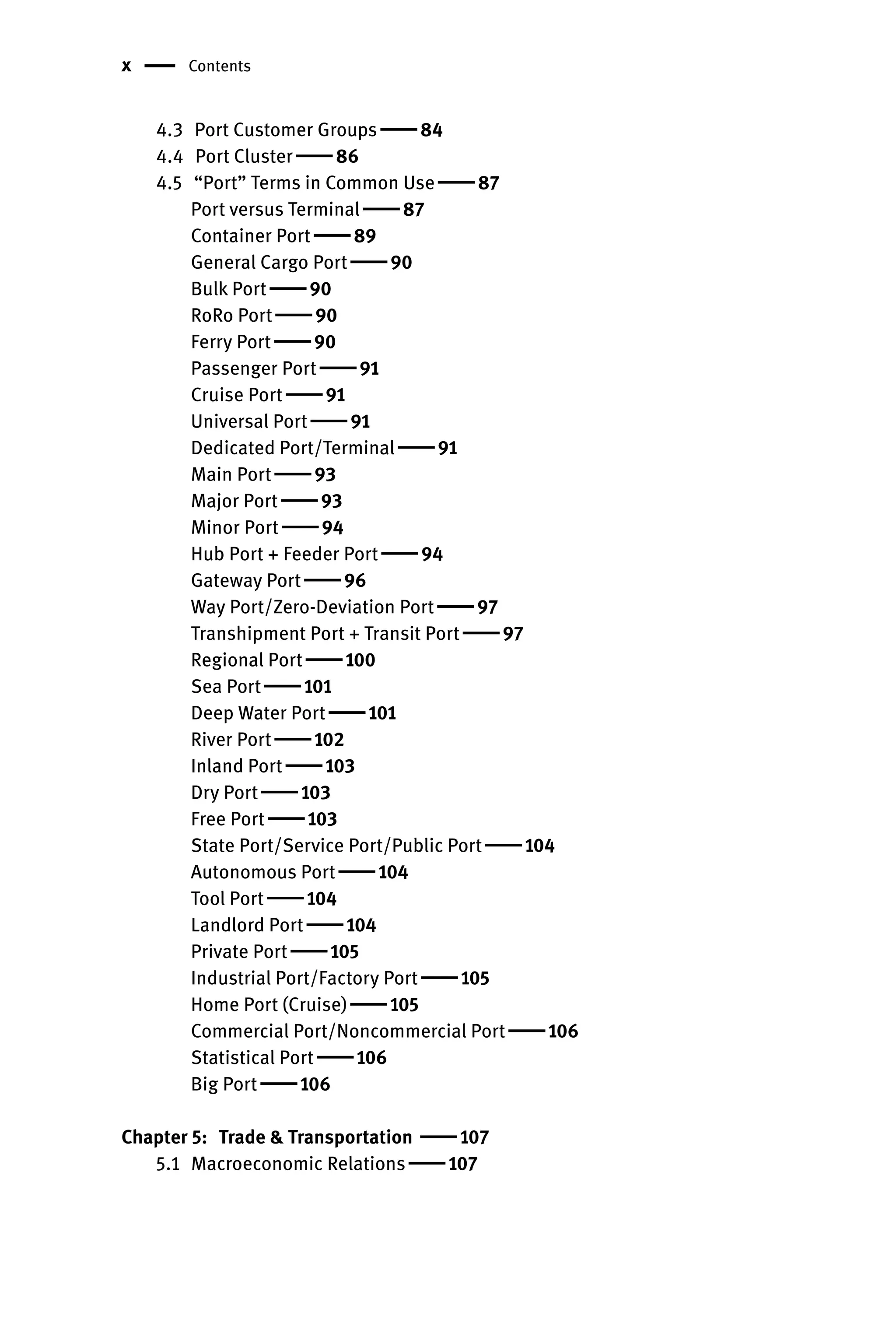
x Contents
4.3 PortCustomer Groups 84
4.4 Port Cluster 86
4.5 “Port” Terms in Common Use 87
Port versus Terminal 87
Container Port 89
General Cargo Port 90
Bulk Port 90
RoRo Port 90
Ferry Port 90
Passenger Port 91
Cruise Port 91
Universal Port 91
Dedicated Port/Terminal 91
Main Port 93
Major Port 93
Minor Port 94
Hub Port + Feeder Port 94
Gateway Port 96
Way Port/Zero-Deviation Port 97
Transhipment Port + Transit Port 97
Regional Port 100
Sea Port 101
Deep Water Port 101
River Port 102
Inland Port 103
Dry Port 103
Free Port 103
State Port/Service Port/Public Port 104
Autonomous Port 104
Tool Port 104
Landlord Port 104
Private Port 105
Industrial Port/Factory Port 105
Home Port (Cruise) 105
Commercial Port/Noncommercial Port 106
Statistical Port 106
Big Port 106
Chapter 5: Trade Transportation 107
5.1 Macroeconomic Relations 107
15.
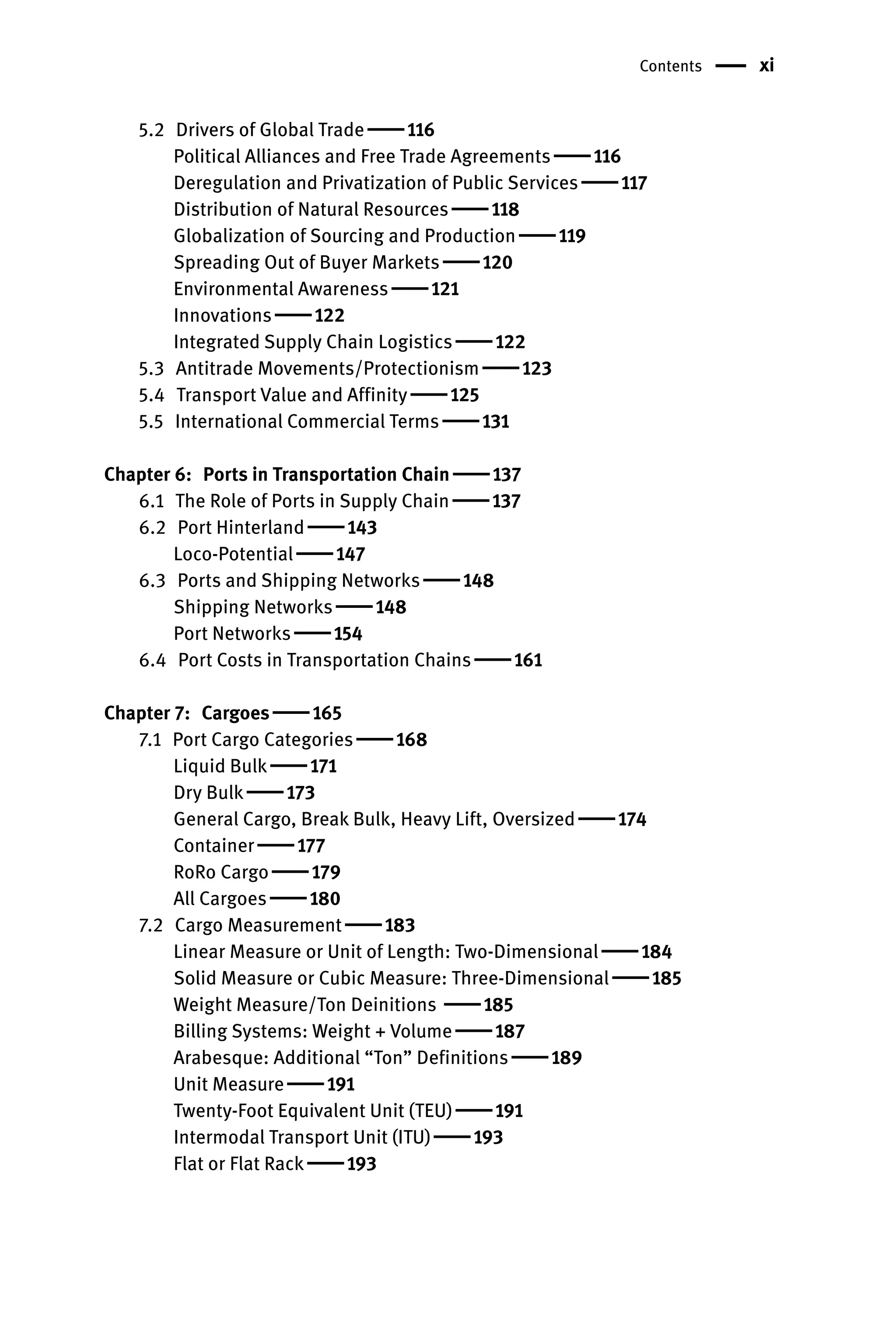
Contents xi
5.2 Driversof Global Trade 116
Political Alliances and Free Trade Agreements 116
Deregulation and Privatization of Public Services 117
Distribution of Natural Resources 118
Globalization of Sourcing and Production 119
Spreading Out of Buyer Markets 120
Environmental Awareness 121
Innovations 122
Integrated Supply Chain Logistics 122
5.3 Antitrade Movements/Protectionism 123
5.4 Transport Value and Affinity 125
5.5 International Commercial Terms 131
Chapter 6: Ports in Transportation Chain 137
6.1 The Role of Ports in Supply Chain 137
6.2 Port Hinterland 143
Loco-Potential 147
6.3 Ports and Shipping Networks 148
Shipping Networks 148
Port Networks 154
6.4 Port Costs in Transportation Chains 161
Chapter 7: Cargoes 165
7.1 Port Cargo Categories 168
Liquid Bulk 171
Dry Bulk 173
General Cargo, Break Bulk, Heavy Lift, Oversized 174
Container 177
RoRo Cargo 179
All Cargoes 180
7.2 Cargo Measurement 183
Linear Measure or Unit of Length: Two-Dimensional 184
Solid Measure or Cubic Measure: Three-Dimensional 185
Weight Measure/Ton Deinitions 185
Billing Systems: Weight + Volume 187
Arabesque: Additional “Ton” Definitions 189
Unit Measure 191
Twenty-Foot Equivalent Unit (TEU) 191
Intermodal Transport Unit (ITU) 193
Flat or Flat Rack 193
16.
RoRo Unit orRoRo Flat 193
Car Equivalent Unit (CEU) 194
Verified Gross Mass (VGM) 195
7.3 Errors in Port Cargo Measurement 195
Workflow Difficulties 196
Ineffective Enforcement 196
Perception that Weight Is Peripheral 196
Using Different Standards to Measure 197
Statistical Consequences 198
Part 3: Port Management 203
Chapter 8: Frame Conditions 205
8.1 Port Business Environment 205
8.2 Basic Management Concepts 208
8.3 Port Labor Organization 217
8.4 Cultural and Religious Influence 220
Chapter 9: Port Commercialization and Privatization 223
9.1 Background for Port Reform 223
9.2 Commercialization 225
9.3 Privatization 227
The French Example 228
9.4 Ways to Privatize 229
Chapter 10: Port Governance 233
10.1 Port Authorities 233
10.2 Sphere of Activity: The PA-Paradox 238
10.3 Objectives of a Port Authority 243
10.4 PA Task Overview 248
Executive Management 248
Strategic Planning 249
Engineering and Real Estate 251
Access Channel and Turning Basins 252
Finance and Administration 253
Legal 257
Human Resources 259
Origination/Business Development 259
Public Affairs and Economic Analysis 260
17.
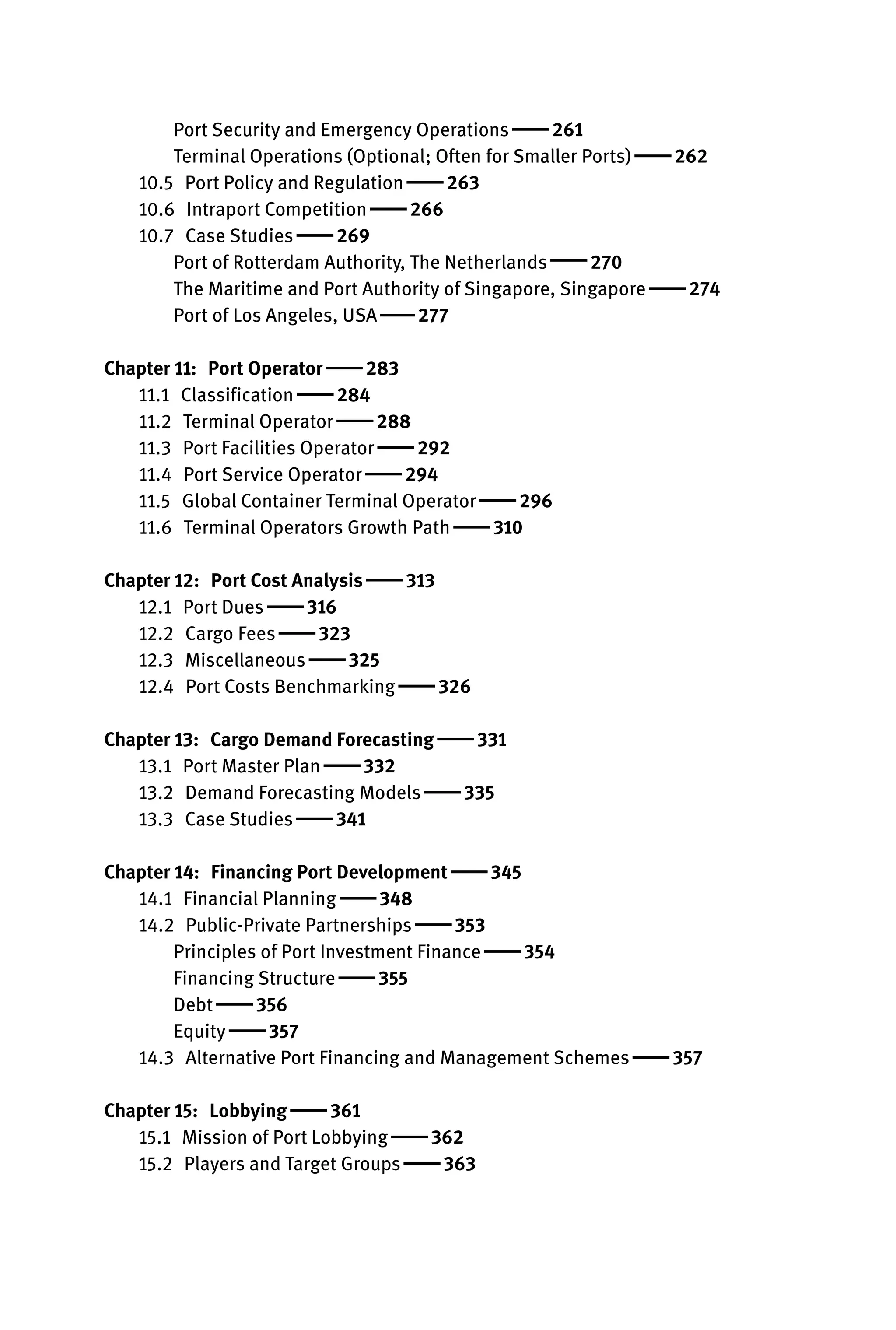
Port Security andEmergency Operations 261
Terminal Operations (Optional; Often for Smaller Ports) 262
10.5 Port Policy and Regulation 263
10.6 Intraport Competition 266
10.7 Case Studies 269
Port of Rotterdam Authority, The Netherlands 270
The Maritime and Port Authority of Singapore, Singapore 274
Port of Los Angeles, USA 277
Chapter 11: Port Operator 283
11.1 Classification 284
11.2 Terminal Operator 288
11.3 Port Facilities Operator 292
11.4 Port Service Operator 294
11.5 Global Container Terminal Operator 296
11.6 Terminal Operators Growth Path 310
Chapter 12: Port Cost Analysis 313
12.1 Port Dues 316
12.2 Cargo Fees 323
12.3 Miscellaneous 325
12.4 Port Costs Benchmarking 326
Chapter 13: Cargo Demand Forecasting 331
13.1 Port Master Plan 332
13.2 Demand Forecasting Models 335
13.3 Case Studies 341
Chapter 14: Financing Port Development 345
14.1 Financial Planning 348
14.2 Public-Private Partnerships 353
Principles of Port Investment Finance 354
Financing Structure 355
Debt 356
Equity 357
14.3 Alternative Port Financing and Management Schemes 357
Chapter 15: Lobbying 361
15.1 Mission of Port Lobbying 362
15.2 Players and Target Groups 363
18.
xiv Contents
15.3 Advocateof Port Policy 369
15.4 Port Marketing 372
Part 4:
Subjects with a Major Impact on
Port Business 377
Chapter 16: Increased Economic Efficiency 379
16.1 Economies of Scale for Ships and Ports 379
Container Vessel Size 379
Larger Terminals 383
Deep Water 384
Dedicated Terminals; Vertical Integration; Concentration 385
Horizontal Integration 386
16.2 Performance Measurement 387
Technical Port and Terminal Indicator 387
Trade Indicator 389
Weighting Rules 391
16.3 Productivity of Container Terminals 392
16.4 Overcoming Market Imbalances 401
16.5 Port Competition 402
Chapter 17: Tendency to Oligopolize 405
17.1 “Big Is Beautiful”—Impact of Mega Vessels 406
17.2 Vertical Integration of Services 410
17.3 Horizontal Integration of Services 413
Chapter 18: Affairs of Geostrategic Concern 417
18.1 Port Positioning in Global Container Trade 417
18.2 Offshore Resourcing 421
18.3 OBOR/BRI/New Maritime Silk Road 424
18.4 Arctic Shipping 427
Chapter 19: Global Maritime Bottlenecks 431
19.1 Major Oil Chokepoints 431
19.2 Strategic Canals: Panama, Suez, etc. 437
19.3 Backlash on Ports 445
Chapter 20: Port-City Interface 447
20.1 Historic Port-City Relations 447
20.2 Regional City Development Policies 450
19.
Contents xv
20.3 PortIndustry 452
20.4 Cruise Shipping/Tourism 455
20.5 Port Hinterland Access 457
Chapter 21: Port Community Systems 461
21.1 Background of PCS 461
International PCS Association—Definitions 463
Typical PCS Services 464
21.2 Big Data in Port Business 465
21.3 Maritime 4.0 468
21.4 Game Changer: Blockchain 470
Chapter 22: Environmental Issues 473
22.1 Emission Control Areas 475
22.2 Bunker Fuel 480
Alternatives—LNG, Methanol, and Scrubbers 483
22.3 Green Ships 484
22.4 Green Ports 486
22.5 Marine Environment 488
Appendices 491
Appendix A: Abbreviations 493
Appendix B: Glossary 499
Appendix C: Bibliography 511
Articles and Working Papers 511
Books 512
Dissertations and Theses 514
Magazines, Newspapers, and Periodicals 516
Maritime Statistics 517
Private Reports and Documents 517
Public Internet Websites (plus date when visited) 518
Appendix D: Definition: “Container” 521
Index 527
21.
Preface to theSecond Edition
Five years ago, when the first edition of this book was published, there was
widely accepted confidence in the maritime markets that in 2015, or 2016 at the
latest, the global conditions for ports and shipping would be back to normal. This
meant: back to the situation before the Financial Crisis, and all the problems in
its aftermath. But this did not happen! Ten years later the maritime industry, and
so ports, still suffer. All types of ports were directly or indirectly affected.
According to the International Chamber of Shipping around 90% of world
trade is maritime trade, and ports are the gateways to the markets for the ship-
ping industry. Everyone who eats Argentinian meat, uses an Asian manufactured
mobile phone or laptop, who drives a European car or wears clothes made in
South Asia indirectly participates in the advantages the efficient maritime supply
chains offer. However, despite the huge economic importance, the economic
framework for the maritime industry and so for the commercial ports around the
world is still challenging. There have been periods of favorable market perfor-
mance over the past decade for shipping, but they led to an overbuilding of new
vessels, and these ships needed to be employed. The result for some ports was a
gain of new services, while others lost the calls. Rate collapses followed vessel
oversupply, and the pressure on all partners along the supply chain deteriorated.
Nevertheless, the pressure to invest in new equipment in order to serve the vessels
and to create a wider network of potential ports of call was still there.
In the past, ports often were considered as gateways to the world, growth poles,
job-machines, tax generators, facilitators of trade, but the positive image has been
tarnished. At the same time multiple new mega trends evolved. For instance, the
Chinese government announced the huge trade and transport initiative “OBOR”
One Belt, One Road. The melting ice in the Arctic already today offers new alterna-
tives for East Asia—Europe trade, with the consequence of new routes. A series of
international regulations will kick in, and the maritime industry will need to follow
several new emission rules set by the International Maritime Organization, and
ports will need to collect the waste. On shore power supply for vessels becomes
an increasingly important topic, but as there is no standard, ports are confronted
with multiple technical solutions. New emission rules will lead to revised bunker
activities very soon, and ports are requested to provide the necessary infrastruc-
ture. Big ships like the 20,000+ TEU container vessel offer economy of scale savings
for the ship owners, and ports need to invest in bigger cranes, larger terminals and
deeper water or miss participating in the efficiency increase. The need for attractive
inner-city residential areas squeezes especially old ports to vacate their attractive
locations and to find new areas for their business.
DOI 10.1515/9781547400874-205
22.
xviii Preface tothe Second Edition
This book provides a unique study of the business of ports: what makes them
work, what makes them fail, and how they might operate in the future. For this
purpose, the first chapters look back into the history of ports, then provide a
status quo view of ports today. Part 2 concentrates on the supply chain view and
provides trade and transportation background information, explaining the role
ports play along the transportation chain and focuses finally on the cargos that
are transported and the problems that may occur in cargo measurement.
Part 3 explains basic port management models, discusses trends, analyzes
the fundamentals of port governance and port operations and discusses the role
of port lobbying. The explanations of port business end in Part 4 with a discus-
sion of mega trends that already or may in future impact ports and terminals.
As the title “Port Business” indicates, this book is written for everybody
with interests in trade and transportation and the role ports play in the global
supply chain. It shall explain what ports are, which role they can play and what
the restrictions are, how they are managed, what drives the business and which
trends influence them.
23.
Preface
The world economyhas globalized at a tremendous pace over the past 30 years,
exporting over a quarter of its merchandise output in 2010, up from 17% in 1980.
Economies have become more interdependent and the digital revolution has
brought buyers and sellers from around the globe closer together. While some
16% of world trade passes overland, 6.7% through pipelines, and 0.3 via air,
it is estimated that world seaborne trade by volume amounts to 77% of total
world trade. In 2010, this meant a total of 7.9 bn tonnes were transported by sea
in the world. With the globalization of the world economy, a nation’s economic
competitiveness is linked increasingly to its ability to ship raw materials, inter-
mediate goods, and final products efficiently and economically, and to receive
these goods in productive, efficient and cost-effective ports. Excessive port costs
on the other hand, or delays, can prompt investors to locate new production
facilities in other countries or regions. Ports failing to adapt these trends and
falling back in modernization could be left behind.
Throughout history, port locations have been selected to optimize access to
land and navigable water, for commercial or military demand, and for shelter
from wind and waves. Ports handled every kind of traffic and every kind of cargo,
provided all kinds of logistics services, and have been an inherent part of historic
city life. Today, in times of raising vessel sizes, ports struggle with deeper water
and the pressure to be more efficient at lower costs. Medium-sized ports face new
pressures of specialization and targeting selected market niches, while the very
few so-called Mega-Ports have to offer the whole range of activities, yet remain
specialists for all kinds of goods that are traded around the world.
Commercial databases list more than 11,000 commercial ports and termi-
nals around the world, and port business increases in complexity every year. It
is the intention of this book to put the port business into the right perspective
and provide insight. For this purpose, the first part looks back into the history
of ports then provides a status quo of ports today. Part two concentrates on the
supply chain view and provides trade and transportation background informa-
tion, explaining the role ports play along the transportation chain and focusing
finally on the cargoes that are transported and the problems that may occur in
cargo measurement.
Part three explains basic port management models, discusses trends and
analyzes the fundamentals of port governance and port operations and dis-
cusses the role of port lobbying. The explanations of port business end in part
four with a discussion of mega trends that already or may in future impact ports
and terminals.
DOI 10.1515/9781547400874-206
24.
xx Preface
As thetitle “Port Business” indicates, this book is written for everybody
with interests in trade and transportation and the role ports play in the global
supply chain. It shall explain what ports are, which role they can play and what
the restrictions are, how they are managed, what drives the business and which
trends influence them. Whilst all the information is published in good faith the
author cannot accept any liability for any errors contained herein. The author
can be contacted via mail: www.juergen.sorgenfrei@gmail.com and would love
to receive comments and suggestions for improvements.
Chapter 1
History ofPorts: The Ten Aims of a Port
The maritime movement of goods and people has always been the cheapest
and most convenient form of transportation, and for that reason the world has
built ports since at least 6,000 BC. The advancements made to ports over their
historical development reveal their major functions and what drives port busi-
ness. Below are the highlights of ancient port development: a brief history of the
moments and motivations that led us to the harbors of today. In all, there are ten
objectives that ports could be designed to accomplish. They will be introduced as
we proceed through the chapter.
It is more than fifty years ago that Fritz Voigt published his famous textbook
about transport science theory and global traffic development, named “Verkehr.”
In the first half of Part II he gave an overview about the historic development of
all modes of transportation. Already in the preliminary remarks he stated: “Der
geschichtliche Teil soll ... vorzugsweise die Theorie der Verkehrswirtschaft ergänzen
und die volkswirtschaftliche Gestaltungskraft des Verkehrs systems … aufzeigen”
(Voigt 1965, page 3), loosely translated: “The historical studies should prefera-
bly complement the theory of transport science and demonstrate the economic
power of the transport system.” His understanding was that theory should always
be measured at reality. Landing stages and ports evolved alongside the technol-
ogy of the ships that they served. Initially, ports were simple wooden posts that
served to tie rafts, dugout logs or curved wooden branches covered with the hides
of animals.1 As river traffic increased, simple piers were built to accommodate
deeper ships that carried larger and heavier loads. The first two of the ten targets
were accomplished back in Ancient Egypt.
1.1 Ancient Egypt
Egyptian history dates to about 4000 BC, when the kingdoms of Upper and
Lower Egypt, already highly sophisticated, were united. The earliest known
pyramids in Egypt are the pyramids of Saqqara, located approximately 20
km south of modern-day Cairo. Of huge interest from a construction point of
1 For a similar kind of ship please refer to: Heyerdahl, Thor: Kon-Tiki: Across the Pacific by Raft,
Rand McNally Company, USA, Chicago 1950.
DOI 10.1515/9781547400874-001
28.
4 Chapter 1:History of Ports: The Ten Aims of a Port
view is also the so-called forgotten pyramid in Abu Rawash; built by Khufu’s2
son Djedefre, and most likely destroyed during the reign of roman emperor Octa-
vian. The area of Giza plateau, today a tourist highlight in Egypt, is a vast burial
ground, serving as the necropolis for the ancient Egyptian capital Memphis.
Saqqara features numerous pyramids, including the world-famous Step Pyramid
of Djoser, built during the Third Dynasty, which spans approximately from 2686
to 2613 BC.
Before, by the time of the early dynastic period of Egyptian history, approxi-
mately 3100 BC, those with sufficient means were buried in bench-like structures
known as Mastabas. The first documented Egyptian pyramid is attributed to the
architect Imhotep, who planned what Egyptologists believe to be a tomb for the
pharaoh Djoser. Imhotep is credited with being the first to conceive the notion of
stacking Mastabas on top of each other—creating an edifice composed of several
“steps” that decreased in size toward its apex. The result was the Step Pyramid
of Djoser that was designed to serve as a gigantic stairway by which the soul of
the deceased pharaoh could ascend to the heavens. Such was the importance of
Imhotep’s achievement that he was deified by later Egyptians. Both Mastabas and
Pyramids functioned as tombs for pharaohs. In Ancient Egypt, a pyramid was
referred to as mer, literally “place of ascendance.”
Mastabas and Pyramids continue to be some of the most impressive human
buildings.3 Although it is impossible to measure the real weight of a pyramid, cal-
culations show that still today in the 21st century the later built Great Pyramid of
Khufu on the Giza plateau is still one of the largest structures ever raised by man.
And it is the only one of the Seven Wonders of the Ancient World still in existence.
Having the impressive dimensions of the ancient Egyptian buildings in mind,
and bearing in mind that we talk about a historic time that is approximately 5,000
years ago, consider: how did they erect these impressive buildings? Where did the
material come from? How did they organize the transport from the mines to the
construction field? And finally: what role did ancient harbors and ports play in
the building of the pyramids?
At construction, the Great Pyramid is estimated to have weighed 5.9 million
tons. Based on this estimate, building the structure in twenty years would require
installing approximately 800 metric tons (mt) of stone every day. Similarly, since
it consists of an estimated 2.3 million blocks, completing the building in twenty
years would involve moving an average of more than twelve of the blocks into
2 Also known as “Cheops”/Greek language.
3 Latest sources indicate that more than 100 pyramids have been built in ancient Egypt. Most of
them have been plundered and destroyed.
29.
Ancient Egypt 5
placeeach hour, day and night.4 Additionally, many of the casing stones and
inner chamber blocks of the Great Pyramid were fit together with extremely high
precision. Based on measurements taken on the north eastern casing stones, the
mean opening of the joints is only 0.5 millimeters wide (1/50th of an inch). Where
did the millions of limestone and granite blocks come from, and how did the
Egyptians organize deliveries of twelve blocks per hour, every hour, for twenty
years? In modern words: how were the logistics organized?
It is generally believed that much of the limestone was transported from
nearby quarries. The Tura limestone used for the casing was quarried across
the river Nile. The largest granite stones in the pyramid, found in the “King’s
chamber,” weigh 25 to 80 mt and were transported from Aswan, more than 500
miles away. Once the blocks were cut, they were carried by boat either up or down
the Nile to the pyramid site. It is estimated that 5.5 million tons of limestone,
8,000 tons of granite (imported from Aswan), and 500,000 tons of mortar were
used in the construction of the Great Pyramid. A huge part of this has been carried
by ship on the river and on special canals, which allowed having the material
directly at the construction field. At the end of the canal there must have been a
special purpose unloading facility, that is, a specialized port.
Generally speaking, a harbor is a protected area of water. A port is a harbor,
plus terminal facilities: piers, wharves, docks, store buildings, and an infrastruc-
ture of roads and rivers or canals. Therefore, a harbor is just a very important part
of a port. On the Giza construction field there was no natural harbor. It can thus
be concluded that the ancient Egyptians were the first civilization to construct
purpose-built artificial canals and harbors, equipped with specialized handling
facilities, that is, the first ports in human history.
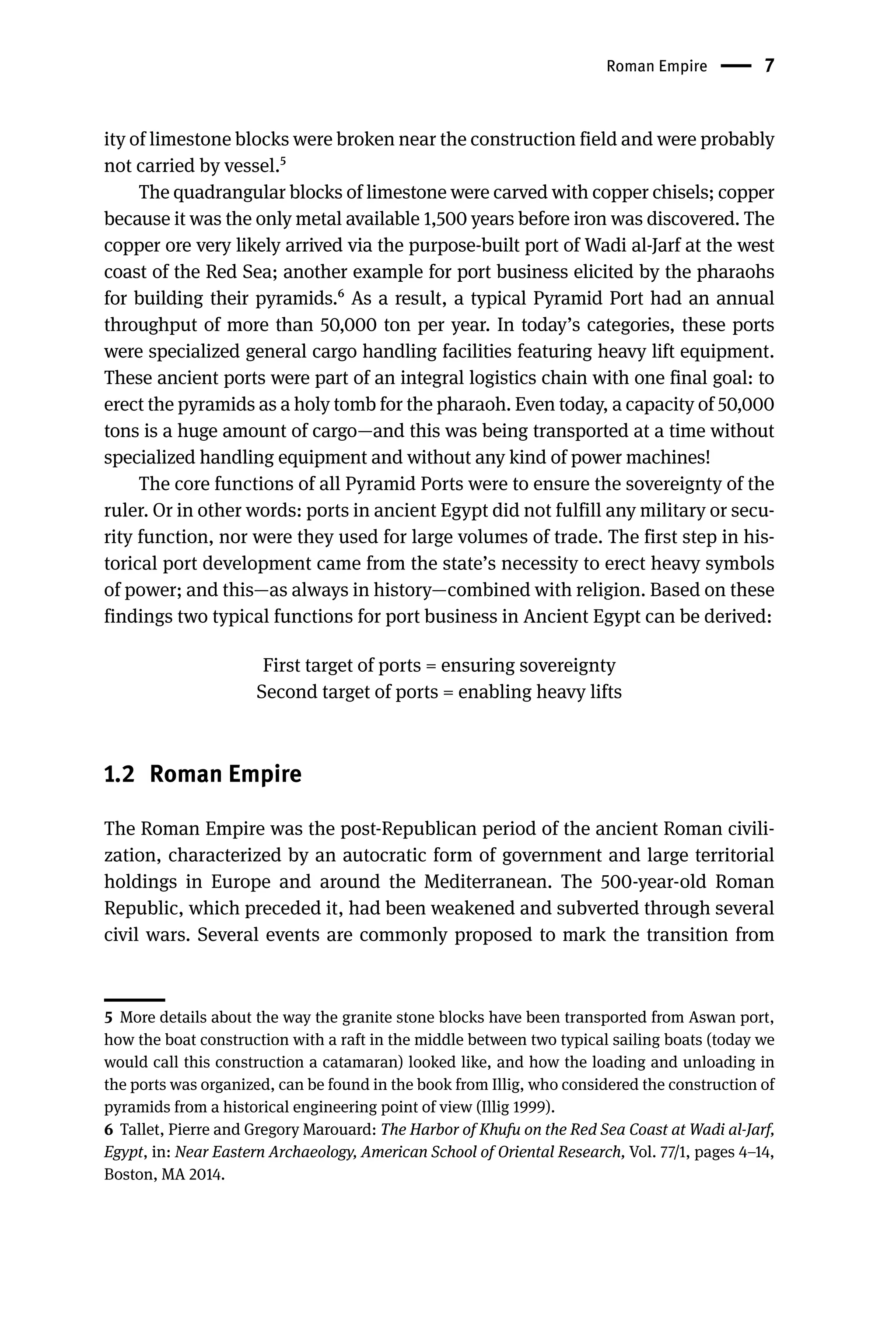
Figure 1.1, a copy taken from a relief in Hatschepsut temple in Dar el-Bahari
(Eggebrecht 1984, page 374), shows the ship transport of two obelisks on the river
Nile. Calculations assume that both obelisks shown in the relief have a length of
29.50 m, and each of them is fixed on its own wooden sledge. The total weight of
the obelisks is expected to sum up to 650 tons. On both sides of the ship trans-
port there must have been specialized loading and unloading facilities; the first
known heavy lift port facilities.
4 The first precision measurements of the pyramid were made by Egyptologist Sir Flinders Petrie
in 1880–1882 and published as The Pyramids and Temples of Gise. Almost all reports that fol-
lowed are based on his measurements.
30.
6 Chapter 1:History of Ports: The Ten Aims of a Port
Figure 1.1: Egyptian ship carrying obelisks
It is very likely that the first ports that were built for the construction of the pyr-
amids were the first specialized cargo handling facility for maritime trade in
human history. No specialized facilities were necessary for the cargoes carried
before the pyramids, also not for fishery boats. We do not know in which years
the first ports were constructed, nor do we know where exactly these ports were
located; but to honor the ancient Egyptians we will call these first commercial
cargo ports with specialized facilities Egyptian Pyramid Ports.
Calculations from Egyptologists show that the capacity of a typical “Pyramid
Port” like the specialized cargo port for the Great Khufu pyramid must have been
able to unload on average seven vessels per day, each boat carrying ten blocks of
stone (Illig 1999, page 46). It is very likely that for the great pyramid two special-
ized port facilities in Giza were in operation. Total annual capacities of these port
facilities were:
7 vessel * 10 stones = 70 blocks of stone per day
Each block at least 2 metric tons * 70 blocks = 140 mt per day
365 days * 140 mt = 51,100 mt annual capacity
51,100 mt per year multiplied by twenty years of construction comes to a total
volume of a little more than 1 mill ton. This means that only 17% of the total mass
of 5.9 mill mt were carried by boat, or looked at the other way around: the major-
31.
Roman Empire 7
ityof limestone blocks were broken near the construction field and were probably
not carried by vessel.5
The quadrangular blocks of limestone were carved with copper chisels; copper
because it was the only metal available 1,500 years before iron was discovered. The
copper ore very likely arrived via the purpose-built port of Wadi al-Jarf at the west
coast of the Red Sea; another example for port business elicited by the pharaohs
for building their pyramids.6 As a result, a typical Pyramid Port had an annual
throughput of more than 50,000 ton per year. In today’s categories, these ports
were specialized general cargo handling facilities featuring heavy lift equipment.
These ancient ports were part of an integral logistics chain with one final goal: to
erect the pyramids as a holy tomb for the pharaoh. Even today, a capacity of 50,000
tons is a huge amount of cargo—and this was being transported at a time without
specialized handling equipment and without any kind of power machines!
The core functions of all Pyramid Ports were to ensure the sovereignty of the
ruler. Or in other words: ports in ancient Egypt did not fulfill any military or secu-
rity function, nor were they used for large volumes of trade. The first step in his-
torical port development came from the state’s necessity to erect heavy symbols
of power; and this—as always in history—combined with religion. Based on these
findings two typical functions for port business in Ancient Egypt can be derived:
First target of ports = ensuring sovereignty
Second target of ports = enabling heavy lifts
1.2 Roman Empire
The Roman Empire was the post-Republican period of the ancient Roman civili-
zation, characterized by an autocratic form of government and large territorial
holdings in Europe and around the Mediterranean. The 500-year-old Roman
Republic, which preceded it, had been weakened and subverted through several
civil wars. Several events are commonly proposed to mark the transition from
5 More details about the way the granite stone blocks have been transported from Aswan port,
how the boat construction with a raft in the middle between two typical sailing boats (today we
would call this construction a catamaran) looked like, and how the loading and unloading in
the ports was organized, can be found in the book from Illig, who considered the construction of
pyramids from a historical engineering point of view (Illig 1999).
6 Tallet, Pierre and Gregory Marouard: The Harbor of Khufu on the Red Sea Coast at Wadi al-Jarf,
Egypt, in: Near Eastern Archaeology, American School of Oriental Research, Vol. 77/1, pages 4–14,
Boston, MA 2014.
32.
8 Chapter 1:History of Ports: The Ten Aims of a Port
Republic to Empire, including Julius Caesar’s appointment as perpetual dicta-
tor (44 BC), the Battle of Actium (2 September 31 BC), and the Roman Senate’s
granting to Octavian the honorific Augustus (16 January 27 BC). However, for our
historical overview it is sufficient to bear in mind that this historical era occurred
over 1,000 years after that of Ancient Egypt.
Roman expansion began in the days of the Republic, but the Empire reached
its greatest extent under Emperor Trajan: during his reign (98 to 117 AD) the
Roman Empire controlled approximately 6.5 million km2
of land surface. Because
of the Empire’s vast extent and long endurance, the institutions and culture of
Rome had a profound and lasting influence on the development of language, reli-
gion, architecture, philosophy, law, and forms of government in the territory it
governed. This influence was felt particularly in Europe, and later by means of
European expansionism, throughout the modern world.
Due to the vast size of the Empire, trade was vital for the success of Ancient
Rome—and thus, so were its ports. Trade was encouraged by many years of peace
within the Empire, and when it collapsed, trade throughout the areas that had
once made up the Roman Empire also collapsed.
The Roman Empire was crisscrossed with trade routes. There were sea routes
that covered the Mediterranean and Black seas, and the Romans built numerous
ports. Trade and transporting the Roman Army were the two principle reasons
for building ships, harbors, and roads. The most important harbor was Ostia as it
was the nearest major port to Rome itself.7 Ostia was situated at the mouth of the
River Tiber and was only 15 miles from Rome. Many ships traveled between Ostia
and the major North African city of Carthage, a journey that took between three to
five days. Ships also arrived at Ostia from Spain and France. All their goods could
be quickly moved to Rome itself as they were taken in barges to the city up the
River Tiber after slaves had transferred the products from the merchant ships to
the barges. Ironically, the port of Ostia was to play a major part in the downfall of
Rome when Alaric the Goth captured the port in 409 AD knowing that controlling
this port would let him literally starve Rome by cutting off food shipments.
The Romans imported a variety of materials and transported them on man-
made port hinterland roads like the well-known and still today usable “Via Ost-
iensis” to the capital Rome: beef, corn, glassware, iron, lead, leather, marble,
7 Lehmann-Hartleben, Karl: Die antiken Hafenanlagen des Mittelmeeres. Beiträge zur Ges-
chichte des Städtebaus im Altertum. 1923. Neudruck: Scientia-Verlag, Aalen, Germany 1963. K.
Lehmann-Hartleben published a synthesis of ancient harbors in the Mediterranean. His book
contains a catalog of 303 harbors. It mentions 184 out of at least 240 major ports in the eastern
Mediterranean, and 84 of around 180 major ports in the western Mediterranean Sea.
33.
Roman Empire 9
oliveoil, perfumes, purple dye, silk, silver, spices, timber, tin, and wine were
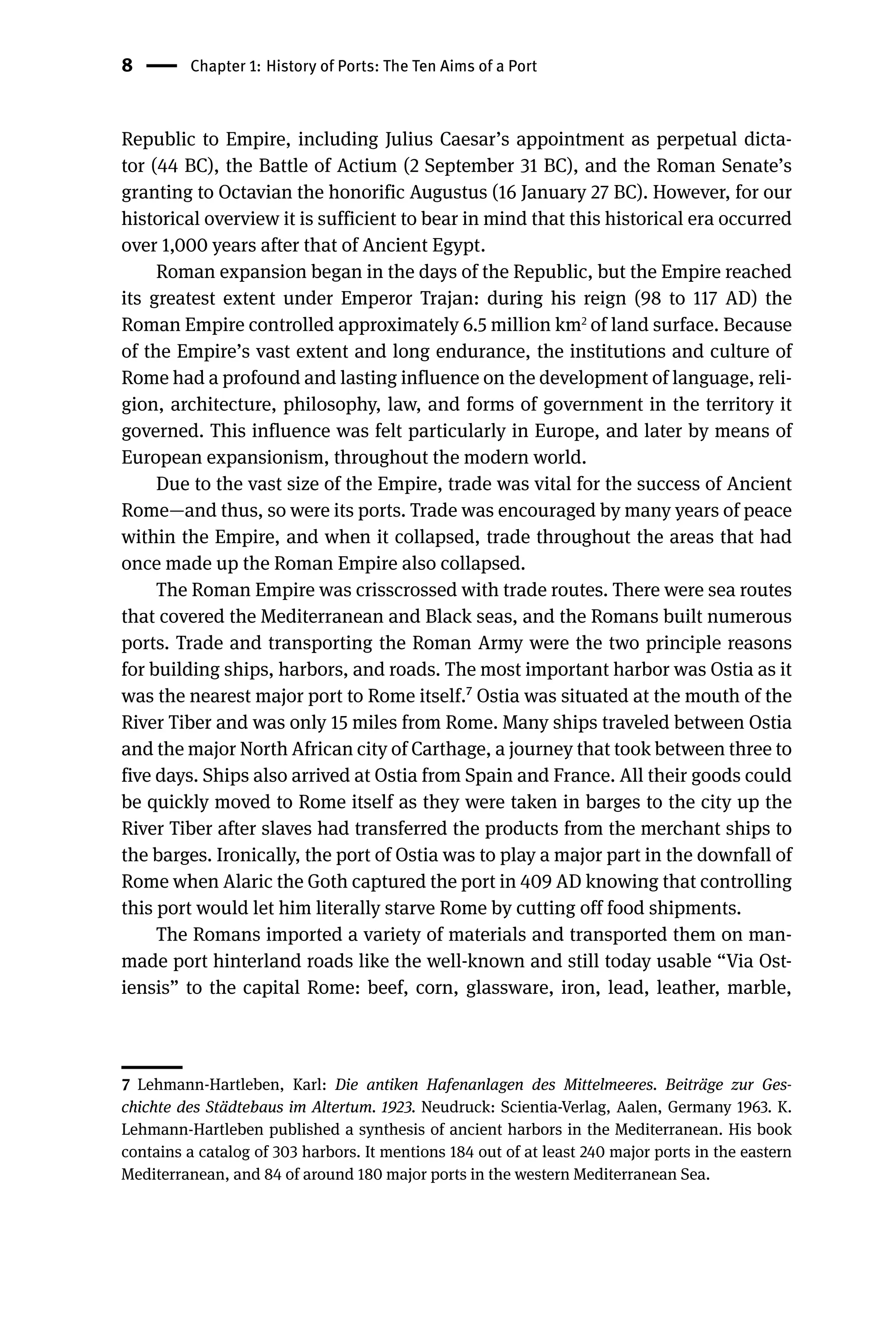
among the main imports (Figure 1.2). Rome’s primary trading partners were in
Spain, France, the Middle East, and North Africa. Britain exported lead, woolen
products, and tin. In return, it imported wine, olive oil, pottery, and papyrus from
Rome, while British traders relied on the Romans to provide security within the
Empire.
Merchant ships and Roman port business reached their apogee during the
Imperial period. Thanks to modern underwater excavations of ancient ship-
wrecks, we know Rome had an extraordinary typological variety: from vessels
used for short and medium-length coastal voyages with capacity up to 150 metric
tons, to large merchant ships for longer distance like the huge amphora carriers
with a capacity of up to 10,000 amphorae or 500 metric tons, or the huge grain
carriers operating out of Syracuse, or Caligula’s mega obelisk-carrier (1,300 t).
Each year approximately 1,200 large vessels containing 50,000 modii (approx.
350 mt) reached Rome. If we consider that navigation was suspended during the
four winter months (the famous mare clausum “closed sea,” of the Romans), we
reach an average of five large grain vessels per navigable day. This seems to be a
relatively small number compared with the largest ports of today like Singapore
where on average 180 cargo vessels per day have been served in 2017, but for most
of the small- and medium-sized ports of today five large cargo carriers per day is
still an impressive figure.
Figure 1.2: Via Ostiensis: The hinterland connection to the city of Rome
34.
10 Chapter 1:History of Ports: The Ten Aims of a Port
Very large ships required large ports. Their numbers were restricted—most
harbors were constructed for the smaller ships. Generally speaking, the unload-
ing of a ship of 150 mt would have taken two to four days, while a cargo of 250 mt
required six to eight days. Certain cargoes required special loading and unloading
facilities. Sacks of grain and lighter amphorae could be carried by dockhands.
Heavier amphorae were carried by two men, using poles slipped through the
handles. Mobile cranes were used for lifting heavy objects such as marble sar-
cophagi and wild animals in cages. For the unloading of an obelisk, weighing
many tons, exceptionally strong manually operated wooden treadwheel cranes
must have been built.
It is very likely that the Roman navy used warships of similar size to the
merchant ships. The Roman navy not only aided in the supply and transport of
the legions, but also helped in the protection of the frontiers in the rivers Rhine
and Danube (in current-day Germany and Austria). During the First Punic War,
the Roman navy was massively expanded and played a vital role in the Roman
victory and the Roman Republic’s ascension to hegemony in the Mediterranean
Sea. During the imperial period, the Mediterranean became a peaceful “Roman
lake”; in the absence of a maritime enemy, the navy was reduced mostly to patrol
and transport duties. Another of its duties was the protection of the very import-
ant maritime trade routes against the threat of pirates. Therefore, it patrolled all
the Mediterranean, parts of the North Atlantic (coasts of Hispania, Gaul, and Bri-
tannia), and had a naval presence in the Black Sea. Many of the Roman ports
frequently hosted navy ships in their waters. Also, it is very likely that ports such
as Ostia provided specialized handling facilities for all kinds of vessels, that is,
adequate berthing facilities like stony quay walls and anchoring facilities, moles,
and breakwaters, specialized warehouses, access to hinterland roads, numbers
of ship chandlers, merchants, etc.8
The northern shore of the Mediterranean Sea is often steep, but contains
many small natural harbors and landing places. The southern shore has very few
natural harbors, and here artificial harbors had to be built. However, ports could
be built with relative ease in the Mediterranean Sea, because of the almost com-
plete absence of tides. Things were different outside the Strait of Gibraltar, for
example, in Gades (Cádiz), at the mouth of the Guadalquivir river—this was a
tidal port. Heavy weather and strong tides were a real threat for the sailing ships.
8 A good illustrated overview about ancient port facilities can be found under the address of the
RGZM Römisch-Germanisches Zentralmuseum in Mainz, Germany. The title of the project is “The
NAVIS II project”: http://www2.rgzm.de/Navis2/Home/Frames.htm
35.
Roman Empire 11
Whatdid create a problem for port access was the silt that the rivers took to
the sea. The silt was carried along the coast by the Mediterranean current in a
counterclockwise direction with the effect of frequently new sand banks, shallow
waters, and an increased risk of stranding. Ports were therefore usually built at
the opposite side of the delta. Alexandria’s port, for example, was to the west of
the Nile delta and therefore safe from the river silt. The Imperial ports of Ostia on
the other hand suffered from their location north of the Tiber mouth: the coun-
terclockwise current took silt to the harbors. During many centuries the coastline
slowly moved seaward, and the harbors are today several kilometers inland.
The winds were another factor influencing harbor and port construction. Vir-
tually all the best known ancient ports on the Tyrrhenian Sea shelter themselves
from winds from the west and north. Often the construction of a harbor was a
huge effort. The river port of Arles was, during the Republic, connected to the
sea through channels, the Fossae Marianae. They made the Rhône delta navi-
gable. The Romans sometimes used concrete that could set under water. Moles
and breakwaters were constructed to provide protection against storms. Usually
they were solid structures. Arched moles were built in the Bay of Naples during
the early Empire. The idea behind the arches was that the water passing through
them removed silt. The experiment was apparently not successful. In the second
century, moles without a connection to the land were built, possibly with the
same purpose.
Roman trade was the engine that drove the Roman economy of the late
Republic and the early Roman Empire. Fashions and trends in archeology have
tended to neglect the economic basis of the Empire in favor of the lingua franca
of Latin and the exploits of the Roman legions. But the language and the legions
were supported by trade while being part of its backbone. Romans were business-
men and the longevity of their Empire was due to their commercial trade, and
ports played a vital role in Roman times as facilitators of trade and as home base
for the navy. Based on these findings the following two targets can be added as
typical ancient port functions:
Third target of ports = facilitator of river coastal trade
Fourth target of ports = naval base
36.
12 Chapter 1:History of Ports: The Ten Aims of a Port
1.3 Constantinople
During its long history, the city known today as Istanbul has served as the capital
of the Roman Empire (330–395 AD), the Eastern Roman (Byzantine) Empire
(395–1204 and 1261–1453), the Latin Empire (1204–1261), and the Ottoman Empire
(1453–1922).9 The huge steps in maritime development and the progress in tech-
nology during the times of the Eastern Roman Empire call for taking a closer look
at this era. The city of Constantinople was founded in 330 AD, at ancient Byzan-
tium as the new capital of the Roman Empire by Constantine I, after whom it was
named. The city was the largest and wealthiest European city of the Middle Ages
and shared the glories of the Byzantine Empire. As successor of the first Roman
Empire it was often called “The second Rome.” The number of inhabitants during
the late Byzantine period can be estimated between 300,000 and 400,000. The
city was built on seven hills as well as on the Bosporus, and thus presented an
impregnable fortress enclosing magnificent palaces, domes, and towers. The
Church of Hagia Sophia, the sacred palace of the emperors, the hippodrome, and
the Golden Gate were among the largest of the many churches, public edifices,
and monuments lining the arcaded avenues and squares.
The Harbor of Eleutherios, later known as the Harbor of Theodosius, was
one of the major ports of ancient Constantinople, located beneath the modern
Yenikapi quarter of Istanbul. The harbor was located on the south side of the
peninsula where the city is built, facing the Sea of Marmara. It was built in the
late 4th century during the reign of Theodosius I, and was the city’s major point
of trade. The area was later transformed for agricultural use due to the effects of
erosion and silting. In Ottoman times, the area was built over. In November 2005,
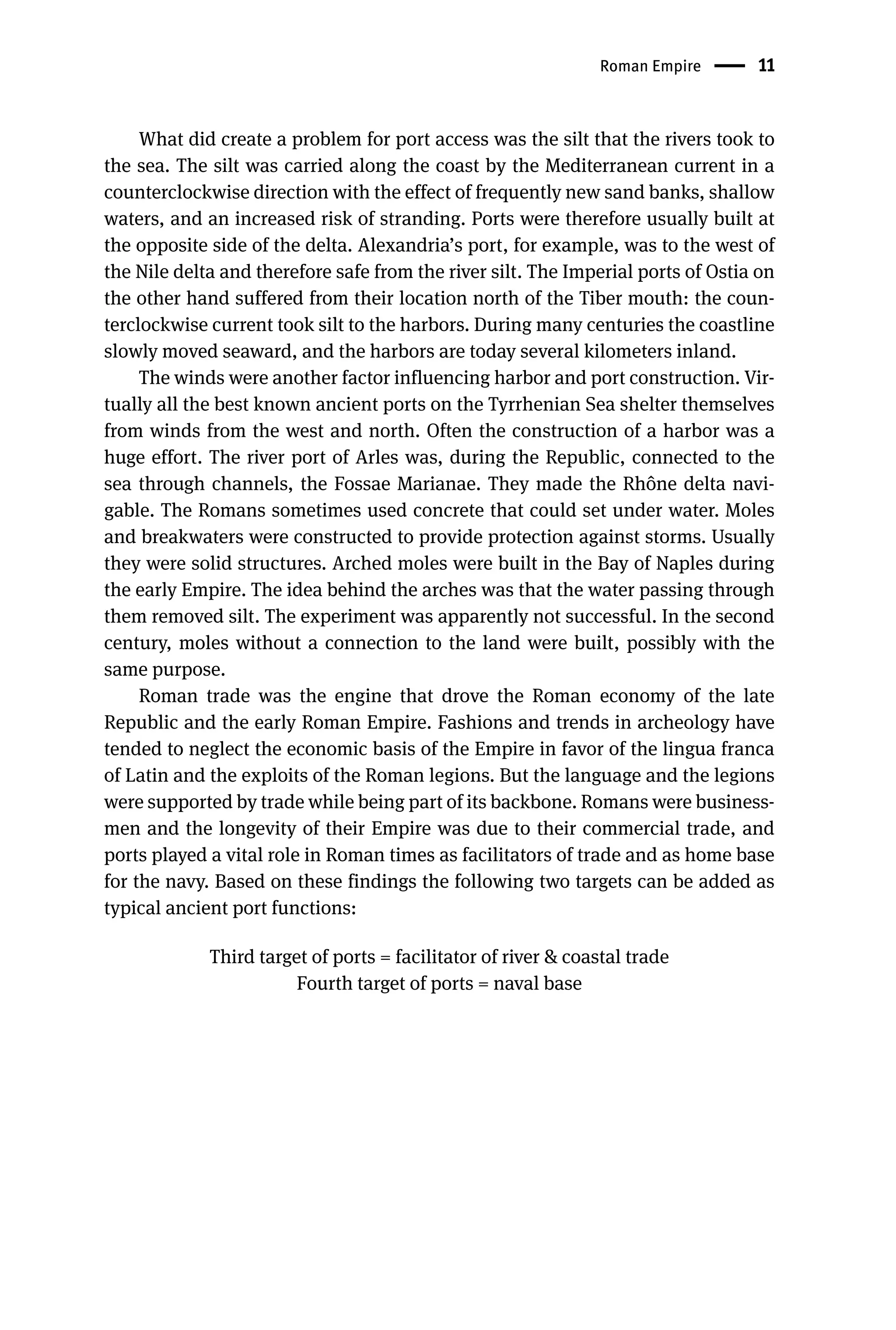
workers on the Bosporus Rail and Metro Tunnel Project discovered the silted-up
remains of the harbor10 as Figure 1.3 below shows.
9 The internet page “LIVIUS: Articles on Ancient History” contains a short overview about the
development of Constantinople: http://www.livius.org/cn-cs/constantinople/constan-tino-
ple01.html
10 An interesting background story, enriched with a couple of unique pictures about the arche-
ological work can be found at: http://www.saudiaramcoworld.com/issue/ 200901/uncovering.
yenikapi.htm
37.
Constantinople 13
“The remainsof the port were discovered in 2004 when excavation began for the $4-billion
Marmaray urban transit system’s hub, which was then redesigned to accommodate the
10-square-block dig site. The ancient port today lies inland by about a kilometer—one of the
reasons it lay undiscovered for so long.”
Source: http://www.saudiaramco-world.com/issue/200901/uncovering.yenikapi.htm
Figure 1.3: Yenikapi Port excavation site
Excavations produced evidence of the 4th-century Port of Theodosius. There,
archaeologists uncovered traces of the city wall of Constantine the Great, and the
remains of over thirty-five Byzantine ships from the 7th to 10th centuries, includ-
ing several Byzantine rowed ships (perhaps warships), remains of which had never
before been found. From brick-transport vessels to round-hulled cargo boats 19
meters (60’) long and small lighters used to off-load larger ships, Yenikapi is yield-
ing the full gamut of ships that once busied one of the most active harbors of the
middle ages. Some of the merchant vessels still contained their cargoes on board,
preserved thanks to their burial in a thick layer of wet mud. In addition, the exca-
vation has uncovered the oldest evidence of settlement in Istanbul, with artifacts,
including amphorae, pottery fragments, shells, pieces of bone, horse skulls, and
some human skulls found in a bag, dating back to 6000 BC.
The entire size of the harbor was likely an area of 10 hectares or approxi-
mately 1 mill sq ft. Graphical reconstructions of the jetties suggest that the total
length of all piers in the port might have amounted to 4,000 m. Thus, the port was
able to accommodate several hundred ships at a time, for example, during win-
38.
14 Chapter 1:History of Ports: The Ten Aims of a Port
tertime when the traffic nearly comes to a standstill due to weather conditions.
For large ships with several hundred tons of cargo the port already provides quay
walls of stone, which simplified the loading and unloading significantly over
wooden gangplanks or simply wooden bridges, with the result of increased pro-
ductivity. Directly behind the jetties and quay walls were large warehouses, for
example, for storing the grain imports from Alexandria, and where many other
goods were also up for resale or stored as buffer stocks. The whole port complex
was protected by large harbor walls and breakwaters from the influences of the
weather. Thus, it is demonstrated that back to the time of the Roman Empire ports
were constructed as efficient protection for merchant vessels from severe weather
conditions. The harbor served additionally as a naval base.
The development of the Byzantine Empire has gone hand in hand with the
development of trade. Even bigger and better equipped ships, protected by a pow-
erful navy, discovered new trade routes and new trade partners. Inner Mediter-
ranean and Atlantic coastal trade evolved to Africa, the Middle East, India, and
Asia. The number of trading partners grew constantly, and the tasks for the navy
to protect the trade grew in parallel.
Constantinople was the major trade center in the eastern Mediterranean Sea
from the 4th century until river silt filled the port in around 1500 AD; the harbor,
its stone walls, and amazingly well-preserved remnants of the port’s activities lay
forgotten for centuries. The fall of Constantinople to the Turks in 1453 disrupted
the traditional land trade route from Europe to Asia. Europe was forced to find
alternate maritime routes. One alternative, followed by Columbus in 1492, was to
sail to the west and the other alternative, followed by Vasco de Gama in 1497, was
to sail to the East. Columbus stumbled upon the American continent, while Gama
found a maritime route to India using the Cape of Good Hope.
As a result of investigating the port and shipping business in times of the
Eastern Roman Empire the following two functions can be added as typical
targets for port business:
Fifth target of ports = facilitator of international trade
Sixth target of ports = protection of the fleet
39.
Venice and theMediterranean Merchant Trade 15
1.4 Venice and the Mediterranean Merchant Trade
After the collapse of the Roman Empire and several waves of Germanic and Hun
invasions, a population of obviously former Roman inhabitants settled in the
Venetian lagoon already in 5th century and founded the city of Venice in north-
eastern Italy. The shallow Venetian Lagoon, an enclosed bay that lies between the
mouths of the Po and the Piave rivers, was certainly not an ideal place for a new
settlement, but it was a safe place. The refugees from Roman cities and from the
undefended countryside finally built the so-called apostolic families, the twelve
founding families of Venice who elected the first doge, who in most cases traced
their lineage back to Roman families. Later, the city was historically the capital of
the Republic of Venice and developed into a major financial and maritime power
during the Middle Ages and Renaissance, as well as a very important center of
commerce (especially silk, grain, and spice) in the 13th century up to the end of
the 17th century. The City State of Venice is considered to have been the first real
international financial center, which gradually emerged from the 9th century to
its peak in the 14th century. This made Venice a wealthy city throughout most of
its history.
The first refugees started to build houses of wattle and daub, and anchored
branches with stakes to protect the foundations from currents. They started to
construct boats and to obtain food by fishing. They dried seawater to extract salt
and suddenly the economy of Venice was created. By the year 548 AD, Venice
was already a strong power, controlling all trade on the Adriatic Sea. By the 9th
century, Venice developed into a city-state and became the most famous of the
so-called Mediterranean “Maritime Republics.”11 This is why Venice is the best
example for the development of the Mediterranean Merchant trade during the
Middle Ages.
In addition to Mediterranean trade, Venice played an important role in early
Europe-Asia trade as well. Venice’s goal in building an empire was not to rule
over far-flung lands or to propagate religion, but to protect, expand, and encour-
age global trade beyond the Mediterranean; and if trade was power, then knowl-
edge of the major trading regions in the world—the overland as well as the mar-
itime Silk Road—was a vital part of successful trading relationships. Within this
network, the port of Venice was the final destination for the ancient Chinese Mar-
itime Silk Road. Recently, the port has again been mentioned as a potential hub
11 Others ancient “Maritime Republics” or city states are: Amalfi, Ancona, Gaeta, Genoa, Noli,
Pisa, and Ragusa. During the Middle Ages these cities built fleets of ships both for their own
protection and to support extensive trade networks across the Mediterranean.
40.
16 Chapter 1:History of Ports: The Ten Aims of a Port
for the New Maritime Silk Road, today better known as Chinese “One Belt, One
Road” or OBOR-project (for more details, see Chapter 18.3).
Due to its location within the Venetian Lagoon, the Port of Venice always
played a key role in facilitating global trade as an engine for wealth and growth.
Venice was established out of trade and conflict with the East, and became immor-
tal thanks to its merchants, who headed East, notably to Constantinople, Cairo,
and Kashgar. A famous name of this time that is still today associated with the
image of a traveler, adventurer, and trader is Marco Polo. The strategic position
of the port, provided by the lagoon on which the city was built, in combination
with the merchant spirit of its people allowed Venice to rise as a maritime power.
Seventh target of ports = facilitator of global trade
1.5 Imperial China: Early Ming Dynasty
The Ming Dynasty lasted from 1368 until 1644 AD, and after the Han and Tang
dynasties, this was another high time in China’s history. The greatest diplomatic
highlights of the Ming Dynasty were the enormous maritime tributary missions
and expeditions of Admiral Zheng He (1371–1433),12 a favored eunuch commander
of the Yongle Emperor (reign 1402–1424). Because of a report that the former
emperor Hui-ti had fled overseas (and presumably for other reasons, such as pro-
moting Chinese influence or trade opportunities), Emperor Yongle sent out expe-
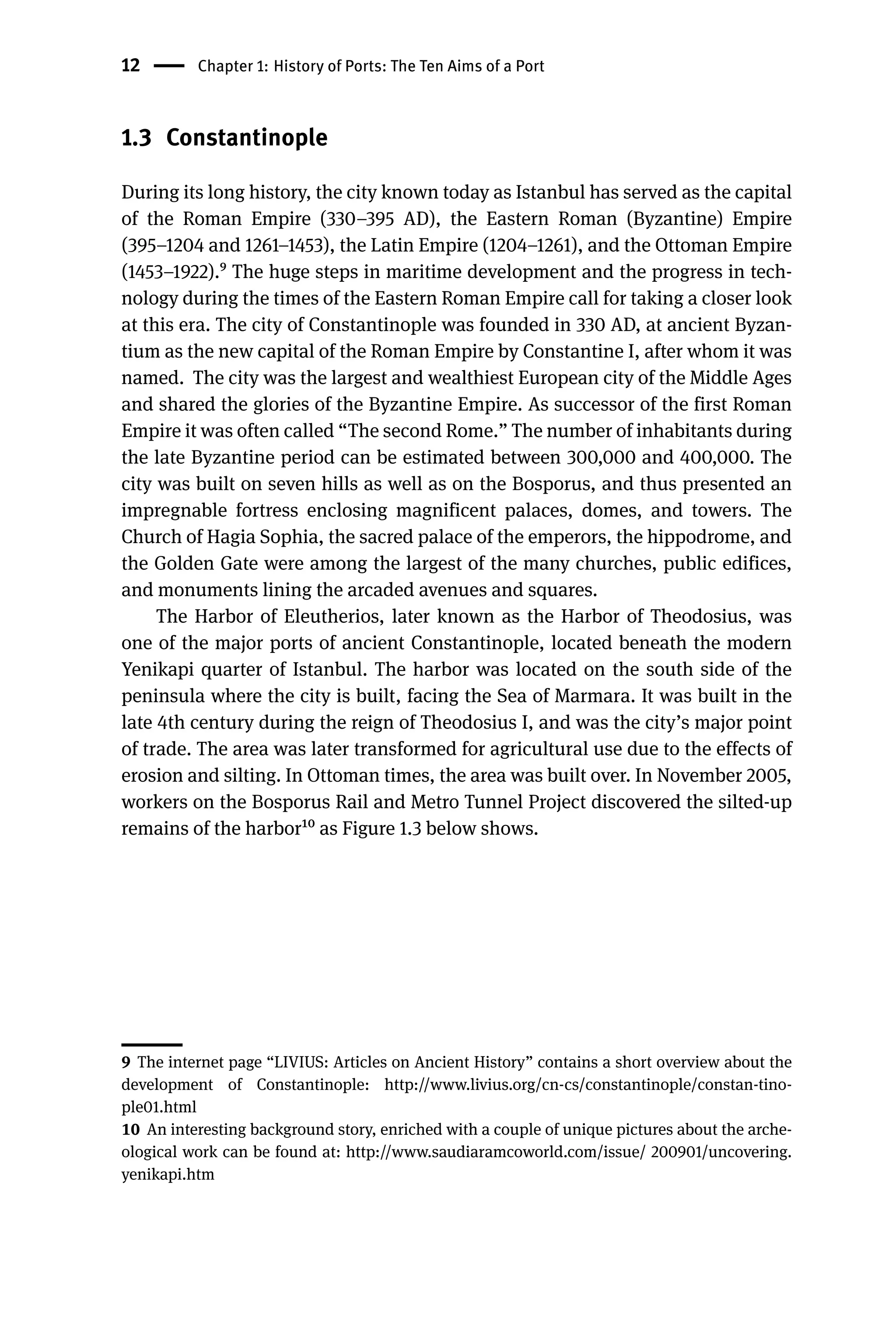
ditions overseas under Admiral Zheng He’s command. In a period of twenty-eight
years, from 1405 to 1433, Zheng directed seven expeditions and visited no fewer
than thirty-seven countries (Figure 1.4).
12 Born into a family named Ma, presumably of Mongol-Arab origin, in central Yunnan Prov-
ince, Zheng He was selected to be castrated by the general in charge of recruiting eunuchs for
the court in 1381, when he was about ten years old. Born as Ma He as the second son of a Muslim
family; later also known as Ma Sanbao.
41.
Imperial China: EarlyMing Dynasty 17
Source: http://ngm.nationalgeographic.com/ngm/0507/feature2/map.html
Figure 1.4: Voyages of Zheng He
Zheng He’s missions docked at ports throughout much of the Asian world, includ-
ing those in Borneo, the Malay state of the Malacca Sultanate, Sri Lanka, India,
Persia, Arabia, and East Africa. All this had taken place about half a century
before the famous European sailor Columbus’s voyage to America.13 Meanwhile,
the Chinese under Yongle invaded northern Vietnam in 1402, and remained there
until 1428. During the Ming Dynasty, the Chinese also traded domestically by
using the important fluvial transport network with several artificial canals con-
nected to form the so-called Beijing-Hangzhou Grand Canal.14 With a total length
of 1,776 km or 1,104 miles, it is the longest canal or artificial waterway in the world.
Some parts of it are still being used today. It is noticed that in 1430, Ming Emperor
Xuan Zong commissioned Zheng He to deliver a message to foreign nations that
13 According to the book 1421. The Year China discovered the World by Gavin Menzies, Columbus
was about seventy years behind the Chinese. Menzies collected a huge number of documents
that—according to him—give good reasons to believe that China discovered America (Menzies
2003).
14 For details of the Grand Canal, its history, the technique applied, and the Ming Dynasty res-
toration works at the Canal, please refer to: http://en.wikipedia.org/wiki/Grand_Canal_ (China)
42.
18 Chapter 1:History of Ports: The Ten Aims of a Port
he was enthroned with a new era named Xuan De. Reliable sources emphasized
that this was the key purpose of the seventh and the last expedition for Zheng He.
Large tributary missions such as the ones mentioned above were halted after
Zheng He, with periods of isolationism in late Ming Dynasty, coupled with the
need to defend China’s large eastern coastal areas against marauding Japanese
pirates. Although it was severely limited by the state, trade was not overall forbid-
den. After 1578, it was completely liberalized. Upon their arrival in the early 16th
century, the Portuguese traded with the Chinese at Tuen Mun, despite some hos-
tilities exchanged between both sides. The Ming Chinese also traded avidly with
the Spanish, sending numerous Chinese trade ships annually to the Philippines
in order to sell them Chinese goods in exchange for mita-mined silver from the
New World colonies of Spain. There was so much Spanish silver entering China
that the Spanish minted silver currency became commonplace in Ming China.
The Ming Chinese attempted to convert the silver currency back to copper cur-
rency, but the economic damage was done.
In the early days of the Ming Dynasty, China was an advanced country in
the world. At the orders of Emperor Yongle, a vast fleet set sail in July 1405 from
Liujia Harbor near Suzhou on a distant voyage. The purpose was to establish
relations with foreign countries, to expand trade contacts, and to look for trea-
sures to satisfy the desire of the sovereign for luxuries. Under the command of
Zheng He was a vast fleet of sixty-two ships manned by more than 27,800 men,
including sailors, clerks, interpreters, officers and soldiers, artisans, medical
men, and meteorologists. On board the ships were large quantities of cargoes that
could be broken down into over forty different categories, including silk goods,
porcelain, gold and silverware, copper utensils, iron implements, cotton goods,
mercury, umbrellas, and straw mats. The Emperor was very pleased with Zheng
He’s extraordinary feats as an envoy in making visits to various foreign countries.
Between 1405 and 1433, Zheng He had been ordered eight times to act as envoy to
countries lying to the west of China. Each time he had under his command a big
fleet and a staff of more than 20,000 men.
On each voyage Zheng He was acting as the envoy and commercial represen-
tative of the Ming court. No matter what country he visited, he called on the ruler
of the land, presenting to him valuable gifts in token of China’s sincere desire
to develop friendly relations and inviting the host sovereign to send emissaries
to China. Wherever he was, he made a careful study of the customs and habits
of local residents. Showing them due respect, he bartered or dealt with them
through consultation and negotiation based on equality and mutual benefit.
In the expeditions Admiral Zheng made over three decades, China built a
total of 1,622 ships. Each of the sixty-two flag ships of the expeditionary fleet were
more than 400 ft long and 170 ft wide, holding a crew of up to 1,000. In 1983
43.
Imperial China: EarlyMing Dynasty 19
a sternpost rudder 36.2 ft long and 1.25 ft in diameter was uncovered from the
mud in the remains of one of the Ming naval shipyards in Nanjing. Such a rudder
would have belonged to a ship at least 400 ft long. Just for comparison: Colum-
bus’s flagship, the Santa Maria was 75 ft by 25 ft. Ming ships were larger than
any of their predecessors, and the subtle rationale for their being is quite simple:
they were meant to carry huge loads and go long distances. Calculations with the
sternpost rudder as reference and the collection of historical sources show that
the fleet for the first expedition consists of:
–
– Treasure ships, used by the commander of the fleet and his deputies: nine-
masted, about 127 meters (416 ft) long and 52 m (170 ft) wide. This is the size
and shape of a football field.
–
– Equine ships, carrying horses and tribute goods and repair material for the
fleet: eight-masted, about 103 m (339 ft) long and 42 m (138 ft) wide.
–
– Supply ships, containing staple for the crew: seven-masted, about 78 m
(257 ft) long and 35 m (115 ft) wide.
–
– Troop transports: six-masted, about 67 m (220 ft) long and 25 m (83 ft) wide.
–
– Fuchuan warships: five-masted, about 50 m (165 ft) long.
–
– Patrol boats: eight-oared, about 37 m (120 ft) long.
–
– Water tankers, with one-month’s supply of fresh water.
Six more expeditions took place, from 1407 to 1433, with fleets of comparable size.
If the accounts can be taken as factual, Zheng He’s treasure ships were
mammoth ships with nine masts, four decks, and could accommodate more than
500 passengers, as well as a massive amount of cargo. Marco Polo and Ibn Battuta
both described multimasted ships carrying 500 to 1,000 passengers in their trans-
lated accounts (Needham 1971, pages 460–470). Niccoló Da Conti, a contempo-
rary of Zheng He, was also an eyewitness of ships in Southeast Asia, claiming to
have seen five-masted junks weighing about 2,000 metric tons (Needham 1971,
page 452).
Many details of the early Ming Dynasty and the voyages of Admiral Zheng
He are known today. What is missing in all studies, books, and reports is more
detailed information on the harbors and port facilities of that time. However, it
is very likely that specialized loading and unloading facilities had been in opera-
tion, particularly for the large treasure ships. Similarly, it is obvious that sufficient
anchorage space and/or mooring facilities for the entire fleet had been available.
It is also very likely that the ports of the Ming Dynasty, analogous to the period
of the second Roman Empire, were built in protected bays or estuaries like the
ones in Constantinople. Many of the jetties and mooring facilities—as well as the
ships—were built of wood. Whether there was already specialized lifting equip-
ment in use, like wooden cranes to utilize the leverage effect, is not known with
44.
20 Chapter 1:History of Ports: The Ten Aims of a Port
certainty, though very likely. It remains that even at the time of Admiral Zheng
He specialized berthing for his treasure fleet must have existed and specific port
functions must have been fulfilled.
Admiral Zheng He’s role in the Ming Dynasty demonstrates the eighth use for
ports:
Eighth target of ports = home base for colonial missions + expeditions
1.6 Hanseatic League
The Hanseatic League (Hansa) was formed around the middle of the 12th century
by German and Scandinavian seafaring merchants. At the time, the League was an
economic alliance of trading cities in Northern Europe and their merchant guilds
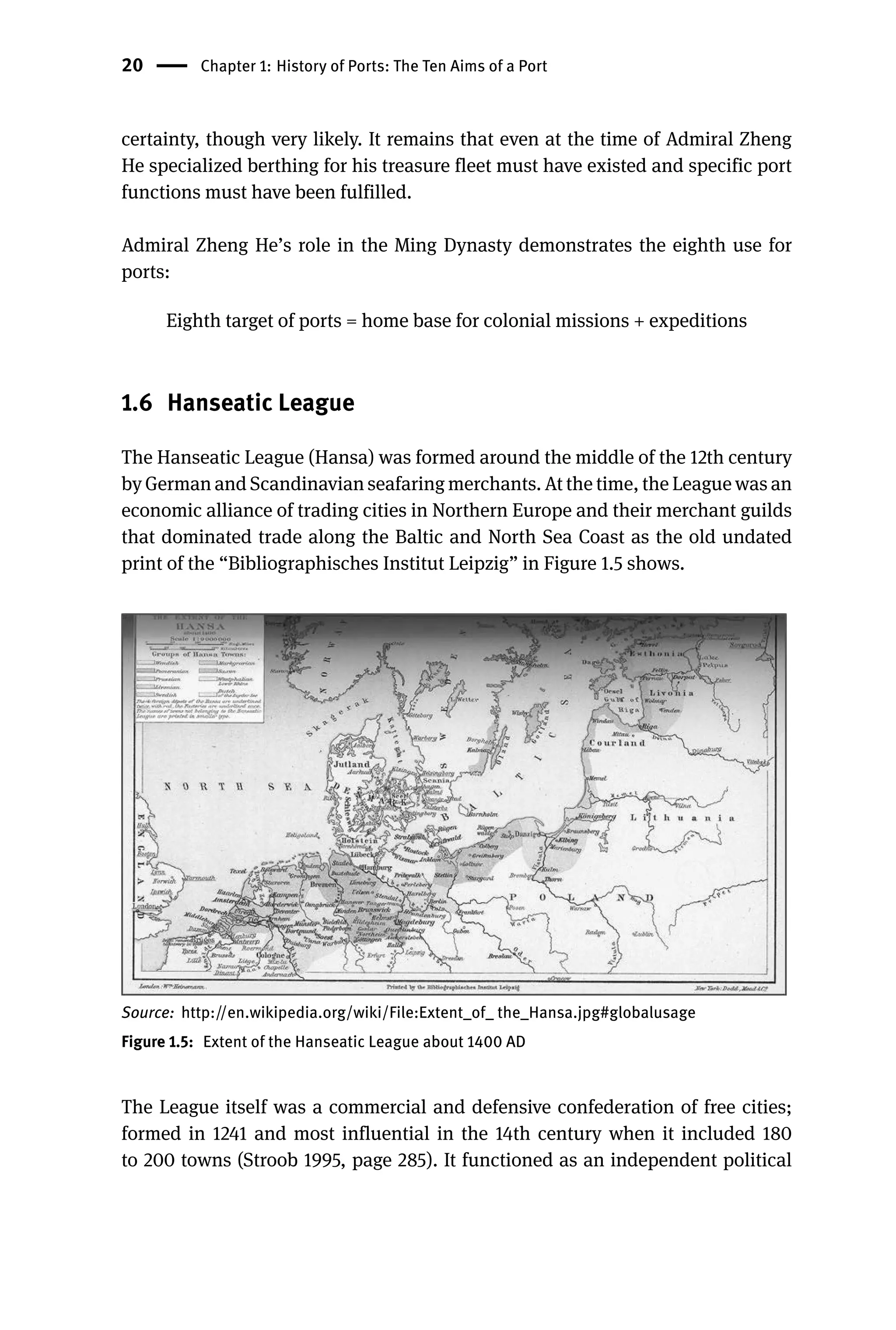
that dominated trade along the Baltic and North Sea Coast as the old undated
print of the “Bibliographisches Institut Leipzig” in Figure 1.5 shows.
Source: http://en.wikipedia.org/wiki/File:Extent_of_ the_Hansa.jpg#globalusage
Figure 1.5: Extent of the Hanseatic League about 1400 AD
The League itself was a commercial and defensive confederation of free cities;
formed in 1241 and most influential in the 14th century when it included 180
to 200 towns (Stroob 1995, page 285). It functioned as an independent political
45.
Hanseatic League 21
power;the last official assembly (the so-called Hansetag) in the northern German
City of Lübeck—the “Queen of Hansa”—was held in 1669.
The Port of Lübeck is a major port in northern Germany. Lying about 14 km
southwest of the Baltic Sea, it rests on the Wakenitz and Trave rivers. It was the
main city of the Hanseatic League and a commercial hub for northern Europe
throughout the Middle Ages, and, in 1987, it was recognized by UNESCO as a
World Heritage Site. Still today, the Port of Lübeck is the city’s largest employer
and it is Germany’s biggest port on the Baltic Sea.
Count Adolf II of Holstein founded the city in 1143, but it was destroyed by
a fire in 1157. Duke of Saxony Henry III rebuilt the town two years later, and it
quickly became an important focal point for trade for raw materials and manu-
facturing for all Northern and Eastern Europe. Denmark held the Port of Lübeck
in the early 13th century, but Frederick II made it his imperial city in 1226. During
his reign, the city had its own constitution and laws and was self-governed for the
most part. The council was dominated by merchants, and the city was oriented
to trade for many centuries. Many Baltic cities later took the “Laws of Lübeck,”
revealing its great influence.
In Figure 1.6, an old copperplate engraving shows the typical organization of
a Hanseatic city; Visby (today Sweden/Gotland): resident houses, market place,
one or more churches as well as the city administration in the center, all of this
protected by the town wall, and the heart of the merchants’ business, the port,
as central in- and outgate for the trade directly located at the waterfront and con-
nected via roads with the city center.
Close behind the quay walls and mooring places are a huge number of
warehouses; most of them typically multistoried red brick stone buildings with
winches under the front roof. Several cities in the Baltic like Lübeck in Germany
or Riga in Latvia still preserve today the remaining historic Hanseatic buildings
as part of their own history. In the following sections, the port of Lübeck shall
be considered in more depth. As Lübeck was the most important port of the
whole Hanseatic League, it can be assumed that nearly all the other Hanseatic
ports operated in a similar nature, and their principles of trade—manifested in
the Laws—followed the same rules and regulations. Further, the techniques and
developments were most advanced in Lübeck. In this sense, Lübeck can be seen
as a spearhead and representative of the Hanse.
46.
22 Chapter 1:History of Ports: The Ten Aims of a Port
Source: Copy taken from: Stroob 1995, page 162ff. Stroob in turn took the picture from: Braun,
G., F. Hogenberg, Civitates orbis terrarium, 1572–1618 (Facsimile edition) Kassel, Germany
1965, part 5, no. 39.
Figure 1.6: Hanseatic city of Visby, approximately 1598
Only very few of the Hanseatic trade documents issued in medieval Lübeck exist
today. One of these is a customs document that is taken from Dollinger 1998, page
571. It shows the port’s import and export statistic by regions and by goods for the
year 1368/1369. As Dollinger already noticed, this statistic is probably not com-
plete due to missing reports, and it may be that some of the trade is intentionally
not shown; for the simple reason to save customs duties. In addition, it must be
noticed that the a.m. statistic was made in times of war, and so the “normally”
good trade relations, for example, with Norway have not been reported in this
statistic (Dollinger 1998, page 277). However, it is one of the first documents that
is available and it is a helpful document for getting an overview of the trade via
the port of Lübeck in the 14th century. In addition to the values shown in local
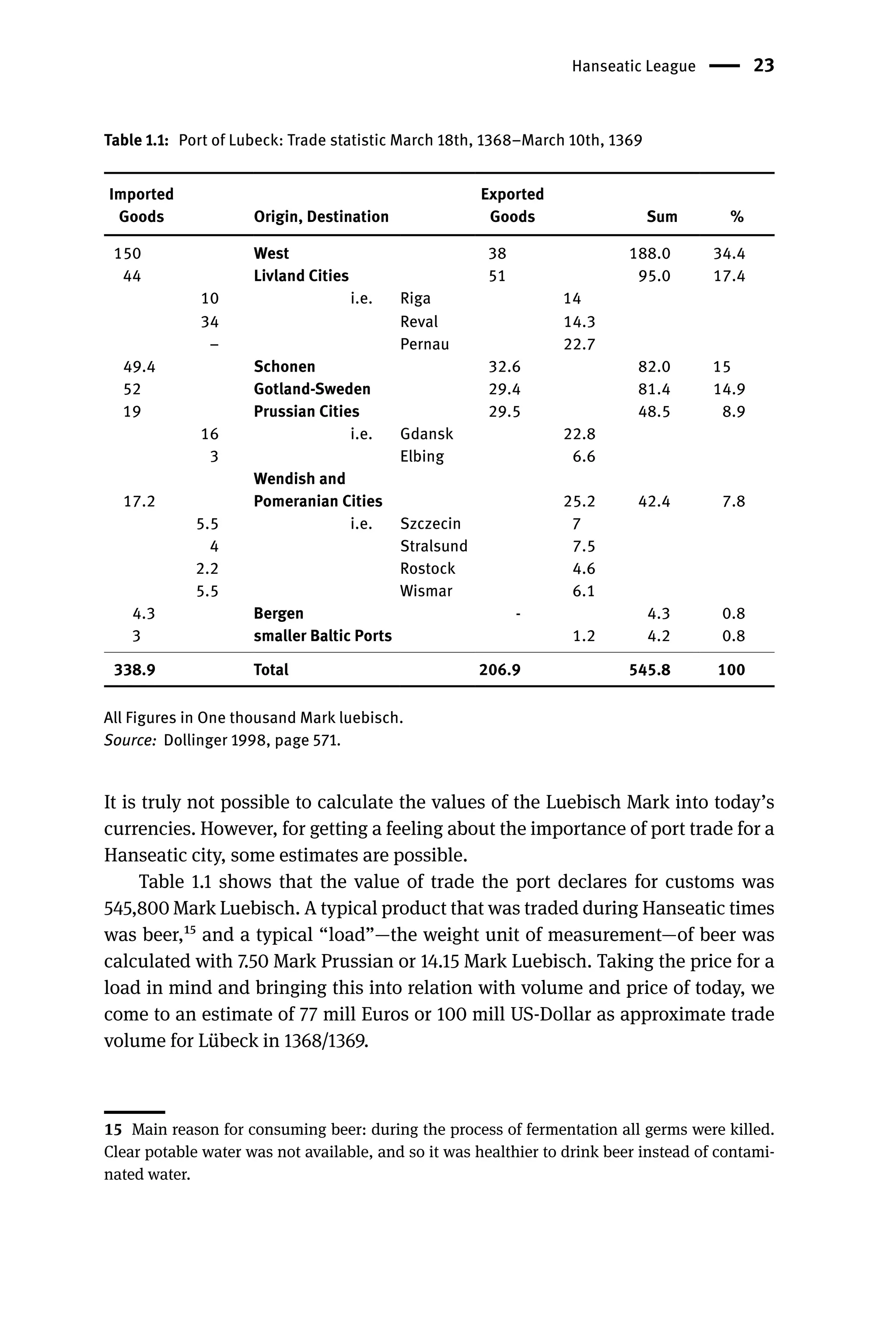
currency, the Luebisch Mark, Table 1.1 indicates the major trading regions in
northern Europe.
47.
Hanseatic League 23
Table1.1: Port of Lubeck: Trade statistic March 18th, 1368–March 10th, 1369
Imported
Goods Origin, Destination
Exported
Goods Sum %
150 West 38 188.0 34.4
44 Livland Cities 51 95.0 17.4
10 i.e. Riga 14
34 Reval 14.3
– Pernau 22.7
49.4 Schonen 32.6 82.0 15
52 Gotland-Sweden 29.4 81.4 14.9
19 Prussian Cities 29.5 48.5 8.9
16 i.e. Gdansk 22.8
3 Elbing 6.6
Wendish and
17.2 Pomeranian Cities 25.2 42.4 7.8
5.5 i.e. Szczecin 7
4 Stralsund 7.5
2.2 Rostock 4.6
5.5 Wismar 6.1
4.3 Bergen - 4.3 0.8
3 smaller Baltic Ports 1.2 4.2 0.8
338.9 Total 206.9 545.8 100
All Figures in One thousand Mark luebisch.
Source: Dollinger 1998, page 571.
It is truly not possible to calculate the values of the Luebisch Mark into today’s
currencies. However, for getting a feeling about the importance of port trade for a
Hanseatic city, some estimates are possible.
Table 1.1 shows that the value of trade the port declares for customs was
545,800 Mark Luebisch. A typical product that was traded during Hanseatic times
was beer,15 and a typical “load”—the weight unit of measurement—of beer was
calculated with 7.50 Mark Prussian or 14.15 Mark Luebisch. Taking the price for a
load in mind and bringing this into relation with volume and price of today, we
come to an estimate of 77 mill Euros or 100 mill US-Dollar as approximate trade
volume for Lübeck in 1368/1369.
15 Main reason for consuming beer: during the process of fermentation all germs were killed.
Clear potable water was not available, and so it was healthier to drink beer instead of contami-
nated water.
48.
24 Chapter 1:History of Ports: The Ten Aims of a Port
Again, the estimation is only a very rough indication, based on only one of the
typical consumer goods of ancient Hanseatic times, and it has only been made for
showing the relevance of the port of Lübeck for a typical Hanseatic village with
approximately 20,000 inhabitants. But what we can imagine is that a port like the
one in Lübeck with this impressive trade volume was of huge importance! And
just to put these figures into context, in the second half of the 14th century, a city
with 20,000 inhabitants was a large city.
The two largest cities in northern Germany at this time were Cologne and
Lübeck. And if we keep in mind that hinterland connections and the transport
capacity via road were limited, it is even easier to understand that merchants and
businessmen engaged in shipping and ports were the gateway to success! The
official customs statistic for the a.m. year 1368/1369 quoted 680 seagoing vessels
in the Port of Lübeck (Dollinger 1998, page 572); this means an average of two
ships per day. This is also a reasonable figure for a medium-sized modern port.
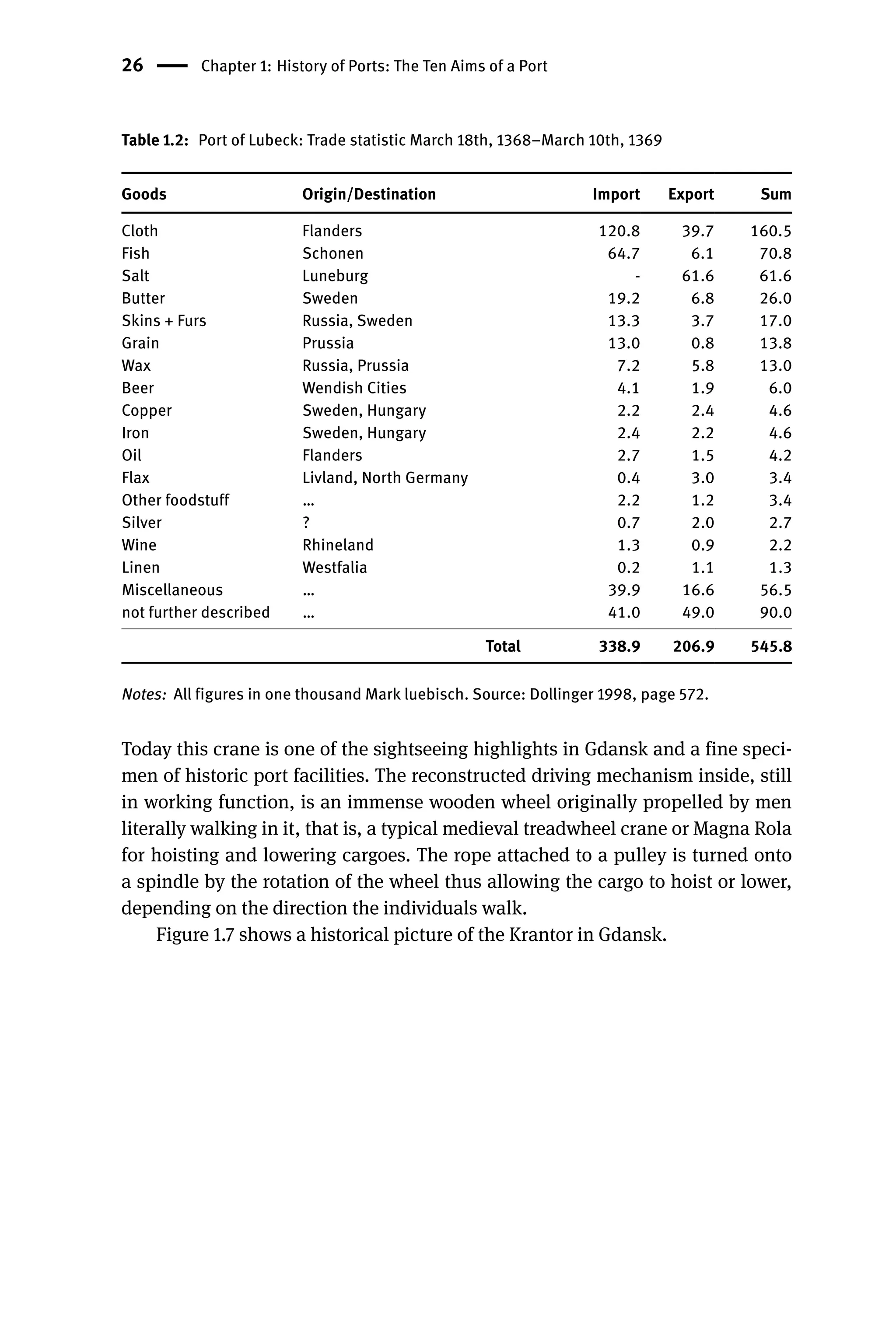
The structure of the cargo transported via the port of Lübeck in the year 1368/1369
is shown in Table 1.2; again, an extract from the customs declarations and to be
judged with caution.
Thinking in today’s categories, most of the goods are typically general cargo
goods and will fall into this category. Grain, copper, and iron could be classi-
fied as typical bulk products, but the way the cargo was probably loaded and
discharged (in sacks or bags, or as single pieces) will lead to a classification as
general cargo.
Table 1.2 shows another important phenomenon: more and more goods
coming from distant destinations were often goods that were produced in this
respective area, because the craftsmen specialized themselves on these products.
The result was better quality goods and lower production costs. Economist would
call this the realization of comparative cost advantages. The Hanseatic merchants
realized this via distinctive trade networks; they were the first traders who estab-
lished specialized and committed trade offices in remote cities. These trade net-
works as facilitators for the realization of comparative advantages must be judged
as founding principle and key success factor of the Hanseatic League. Typical
products that were traded are clothes from Flanders, butter from Sweden, or linen
from Westfalia.
Other products like salt from Luneburg were traded because there are only
very few natural salt domes and/or caverns in Northern Europe. Luneburg
had a regional monopoly as salt exporter and grew up on this business to a
prosperous city.
Table 1.2 is expressed in values, but what is of interest for getting a feeling
about the port performance is a statistic in volumes/tons. Unfortunately, port
trade statistics in volumes from 14th century BC do not exist, and no historic
49.
Hanseatic League 25
sourcecan be found that provides an accurate estimate. But the existing few
sources available should provide a decent rough estimate:
–
– Prices for the goods that have been traded are available (Dollinger 1998, page
574), and when we take the unit price and count back the values from Mark
Luebisch in metric tons, we will come to the first conclusion that the volume
in Port of Lübeck in the year 1368/1369 totaled approximately 41,000 mt. This
figure is to be judged as a first very rough and basic estimate.
–
– It is known that in the year 1368/1369 in total 680 seagoing ships called the
port of Lübeck. The typical ships of that time have been the so-called Cog
with a maximum cargo load up to 200 mt, and later in the second half of
14th century the so-called Hulk, a ship of new generation with a maximum
load of 300 mt. It is to be supposed that both types of ships called at the
Port of Lübeck that time, and that normally the ships were not “fully laden”
as seaman typically say; this means: the ships were used with full tonnage
capacity; this was for various reasons, like having a lot of light-weight but
voluminous cargo on board. That maximum use of storage room in square
meters does not automatically mean that the weight limit in mt is reached
due to the specific weight of the different cargoes. It can be estimated that
up to 70,000 mt of cargo could have been shipped via the port, that is, a little
more than 100 mt per ship on average.
Considering that the customs trade statistic probably shows values below the
reality, and that the estimations of ship capacity and utilization are also very
vague, it is nonetheless possible to conclude that the trade volume has been in
the range of 50,000 to 70,000 mt of cargo per year. Again, this is just an indica-
tion, but it helps to adjust the dimension we have in mind. For a port in the 14th
century that trades with several partners in a network, this is certainly an impres-
sive volume.
The final observation for the Hanseatic League ports shall concentrate on the
techniques in the ports, and here especially the lifting technology, that is, the
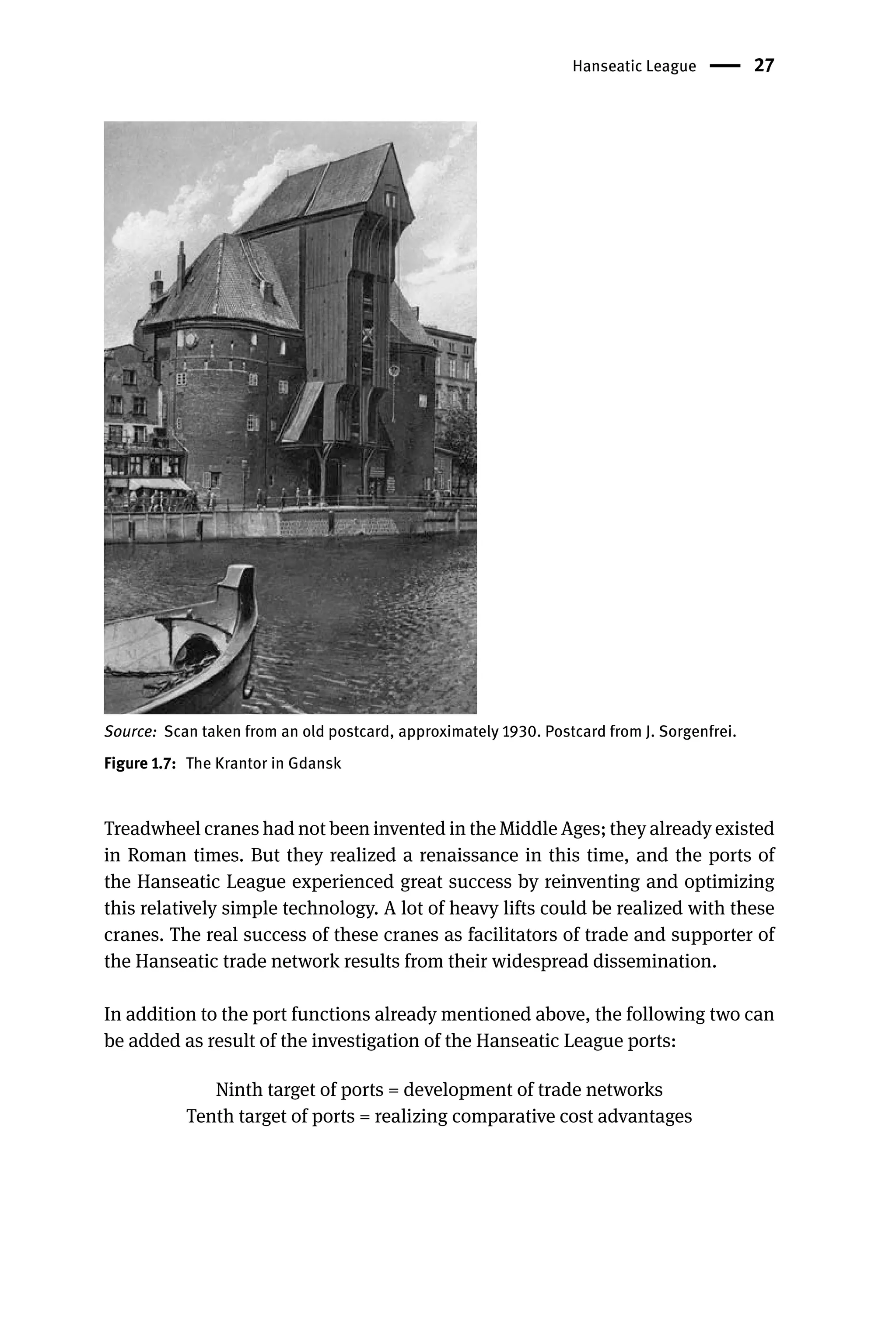
development of cranes. Back in the middle ages the crane in the Hanseatic city
Gdansk was the largest port crane for cargo handling in Europe. The crane was
built in the 14th century. What is unique for this crane is that it combined the
functions of a city gate and a port crane, named Krantor.
50.
26 Chapter 1:History of Ports: The Ten Aims of a Port
Table 1.2: Port of Lubeck: Trade statistic March 18th, 1368–March 10th, 1369
Goods Origin/Destination Import Export Sum
Cloth Flanders 120.8 39.7 160.5
Fish Schonen 64.7 6.1 70.8
Salt Luneburg - 61.6 61.6
Butter Sweden 19.2 6.8 26.0
Skins + Furs Russia, Sweden 13.3 3.7 17.0
Grain Prussia 13.0 0.8 13.8
Wax Russia, Prussia 7.2 5.8 13.0
Beer Wendish Cities 4.1 1.9 6.0
Copper Sweden, Hungary 2.2 2.4 4.6
Iron Sweden, Hungary 2.4 2.2 4.6
Oil Flanders 2.7 1.5 4.2
Flax Livland, North Germany 0.4 3.0 3.4
Other foodstuff … 2.2 1.2 3.4
Silver ? 0.7 2.0 2.7
Wine Rhineland 1.3 0.9 2.2
Linen Westfalia 0.2 1.1 1.3
Miscellaneous … 39.9 16.6 56.5
not further described … 41.0 49.0 90.0
Total 338.9 206.9 545.8
Notes: All figures in one thousand Mark luebisch. Source: Dollinger 1998, page 572.
Today this crane is one of the sightseeing highlights in Gdansk and a fine speci-
men of historic port facilities. The reconstructed driving mechanism inside, still
in working function, is an immense wooden wheel originally propelled by men
literally walking in it, that is, a typical medieval treadwheel crane or Magna Rola
for hoisting and lowering cargoes. The rope attached to a pulley is turned onto
a spindle by the rotation of the wheel thus allowing the cargo to hoist or lower,
depending on the direction the individuals walk.
Figure 1.7 shows a historical picture of the Krantor in Gdansk.
51.
Hanseatic League 27
Source:Scan taken from an old postcard, approximately 1930. Postcard from J. Sorgenfrei.
Figure 1.7: The Krantor in Gdansk
Treadwheel cranes had not been invented in the Middle Ages; they already existed
in Roman times. But they realized a renaissance in this time, and the ports of
the Hanseatic League experienced great success by reinventing and optimizing
this relatively simple technology. A lot of heavy lifts could be realized with these
cranes. The real success of these cranes as facilitators of trade and supporter of
the Hanseatic trade network results from their widespread dissemination.
In addition to the port functions already mentioned above, the following two can
be added as result of the investigation of the Hanseatic League ports:
Ninth target of ports = development of trade networks
Tenth target of ports = realizing comparative cost advantages
52.
28 Chapter 1:History of Ports: The Ten Aims of a Port
1.7 Historical Drivers of Port Development
Ports fulfilled a variety of functions in history. The ports analyzed in this chapter
stand proxy for typical trends that could be analyzed in parallel to the develop-
ment of the human society and their techniques. The first ports just supported
the requirements of the government, no matter whether it was a pharaoh, an
emperor, or a king. Later, the diversified and wide-stretched needs of more and
more people could be realized by using ports. But one fundamental character-
istic never changed: ports have never been constructed and operated purely for
their own sake. They served derivate purposes; or in other words: all kinds of port
activity has never been for itself; there was always another need or desire behind
their design.
Based on the historic approach, we can accumulate the ten targets as typical
drivers for constructing and operating ports. The targets are listed in Table 1.3.
Table 1.3: Historical targets of ports
Historical targets of ports Equivalent Driver Category
1. Ensuring sovereignty Political
2. Enabling heavy lifts Technical
3. Facilitator of river coastal trade Logistical
4. Naval base Political
5. Facilitator of international trade Logistical
6. Protection of the fleet Technical
7. Facilitator of global trade Logistical
8. Home base for missions expeditions Technical
9. Development of trade networks Economic
10. Realizing comparative cost advantages Economic
In history, early port activities have been for both military and business/com-
mercial reasons. Later, with increasing specialization, the military functions as
well as their equipment—the ships, terminals, warehouses, etc.—and the need
for higher safety and security functions led to separate facilities. In this book we
will not include the military development of ports. Rather, we will concentrate
on the business or commercial functions of ports.
The targets in Table 1.3 can be grouped so that historically developed func-
tions like the one for river and coastal trade, later international trade beyond the
nearby open seas, and in more recent times the global trade between continents,
are summed up as one major target: logistical facilitation of trade. The remaining
historical targets of the list of ten can be grouped as well, so that the complete list
53.
Historical Drivers ofPort Development 29
can be grouped and subsumed in modern terminology under four categories of
drivers for port business: economic, political, logistical, technical.
Chapter 2 will pick up these core categories of drivers and finally add an addi-
tional one, that also in history had implicitly been of huge importance: financial
targets or more precisely, financial restrictions. This means that the final list of
drivers for port development consists of five groups of targets:
–
– Economic
–
– Political
–
– Logistical
–
– Technical
–
– Financial
Although the world is more complex in the 21st century and the wording in busi-
ness often covers what is behind the scenes, it will be found that the five main
categories are still essential for efficient port business today.
PLEASE READ THISBEFORE YOU DISTRIBUTE OR USE THIS WORK
To protect the Project Gutenberg™ mission of promoting the free
distribution of electronic works, by using or distributing this work (or
any other work associated in any way with the phrase “Project
Gutenberg”), you agree to comply with all the terms of the Full
Project Gutenberg™ License available with this file or online at
www.gutenberg.org/license.
Section 1. General Terms of Use and
Redistributing Project Gutenberg™
electronic works
1.A. By reading or using any part of this Project Gutenberg™
electronic work, you indicate that you have read, understand, agree
to and accept all the terms of this license and intellectual property
(trademark/copyright) agreement. If you do not agree to abide by all
the terms of this agreement, you must cease using and return or
destroy all copies of Project Gutenberg™ electronic works in your
possession. If you paid a fee for obtaining a copy of or access to a
Project Gutenberg™ electronic work and you do not agree to be
bound by the terms of this agreement, you may obtain a refund
from the person or entity to whom you paid the fee as set forth in
paragraph 1.E.8.
1.B. “Project Gutenberg” is a registered trademark. It may only be
used on or associated in any way with an electronic work by people
who agree to be bound by the terms of this agreement. There are a
few things that you can do with most Project Gutenberg™ electronic
works even without complying with the full terms of this agreement.
See paragraph 1.C below. There are a lot of things you can do with
Project Gutenberg™ electronic works if you follow the terms of this
agreement and help preserve free future access to Project
Gutenberg™ electronic works. See paragraph 1.E below.
57.
1.C. The ProjectGutenberg Literary Archive Foundation (“the
Foundation” or PGLAF), owns a compilation copyright in the
collection of Project Gutenberg™ electronic works. Nearly all the
individual works in the collection are in the public domain in the
United States. If an individual work is unprotected by copyright law
in the United States and you are located in the United States, we do
not claim a right to prevent you from copying, distributing,
performing, displaying or creating derivative works based on the
work as long as all references to Project Gutenberg are removed. Of
course, we hope that you will support the Project Gutenberg™
mission of promoting free access to electronic works by freely
sharing Project Gutenberg™ works in compliance with the terms of
this agreement for keeping the Project Gutenberg™ name associated
with the work. You can easily comply with the terms of this
agreement by keeping this work in the same format with its attached
full Project Gutenberg™ License when you share it without charge
with others.
1.D. The copyright laws of the place where you are located also
govern what you can do with this work. Copyright laws in most
countries are in a constant state of change. If you are outside the
United States, check the laws of your country in addition to the
terms of this agreement before downloading, copying, displaying,
performing, distributing or creating derivative works based on this
work or any other Project Gutenberg™ work. The Foundation makes
no representations concerning the copyright status of any work in
any country other than the United States.
1.E. Unless you have removed all references to Project Gutenberg:
1.E.1. The following sentence, with active links to, or other
immediate access to, the full Project Gutenberg™ License must
appear prominently whenever any copy of a Project Gutenberg™
work (any work on which the phrase “Project Gutenberg” appears,
or with which the phrase “Project Gutenberg” is associated) is
accessed, displayed, performed, viewed, copied or distributed:
58.
This eBook isfor the use of anyone anywhere in the
United States and most other parts of the world at no
cost and with almost no restrictions whatsoever. You
may copy it, give it away or re-use it under the terms
of the Project Gutenberg License included with this
eBook or online at www.gutenberg.org. If you are not
located in the United States, you will have to check the
laws of the country where you are located before using
this eBook.
1.E.2. If an individual Project Gutenberg™ electronic work is derived
from texts not protected by U.S. copyright law (does not contain a
notice indicating that it is posted with permission of the copyright
holder), the work can be copied and distributed to anyone in the
United States without paying any fees or charges. If you are
redistributing or providing access to a work with the phrase “Project
Gutenberg” associated with or appearing on the work, you must
comply either with the requirements of paragraphs 1.E.1 through
1.E.7 or obtain permission for the use of the work and the Project
Gutenberg™ trademark as set forth in paragraphs 1.E.8 or 1.E.9.
1.E.3. If an individual Project Gutenberg™ electronic work is posted
with the permission of the copyright holder, your use and distribution
must comply with both paragraphs 1.E.1 through 1.E.7 and any
additional terms imposed by the copyright holder. Additional terms
will be linked to the Project Gutenberg™ License for all works posted
with the permission of the copyright holder found at the beginning
of this work.
1.E.4. Do not unlink or detach or remove the full Project
Gutenberg™ License terms from this work, or any files containing a
part of this work or any other work associated with Project
Gutenberg™.
1.E.5. Do not copy, display, perform, distribute or redistribute this
electronic work, or any part of this electronic work, without
59.
prominently displaying thesentence set forth in paragraph 1.E.1
with active links or immediate access to the full terms of the Project
Gutenberg™ License.
1.E.6. You may convert to and distribute this work in any binary,
compressed, marked up, nonproprietary or proprietary form,
including any word processing or hypertext form. However, if you
provide access to or distribute copies of a Project Gutenberg™ work
in a format other than “Plain Vanilla ASCII” or other format used in
the official version posted on the official Project Gutenberg™ website
(www.gutenberg.org), you must, at no additional cost, fee or
expense to the user, provide a copy, a means of exporting a copy, or
a means of obtaining a copy upon request, of the work in its original
“Plain Vanilla ASCII” or other form. Any alternate format must
include the full Project Gutenberg™ License as specified in
paragraph 1.E.1.
1.E.7. Do not charge a fee for access to, viewing, displaying,
performing, copying or distributing any Project Gutenberg™ works
unless you comply with paragraph 1.E.8 or 1.E.9.
1.E.8. You may charge a reasonable fee for copies of or providing
access to or distributing Project Gutenberg™ electronic works
provided that:
• You pay a royalty fee of 20% of the gross profits you derive
from the use of Project Gutenberg™ works calculated using the
method you already use to calculate your applicable taxes. The
fee is owed to the owner of the Project Gutenberg™ trademark,
but he has agreed to donate royalties under this paragraph to
the Project Gutenberg Literary Archive Foundation. Royalty
payments must be paid within 60 days following each date on
which you prepare (or are legally required to prepare) your
periodic tax returns. Royalty payments should be clearly marked
as such and sent to the Project Gutenberg Literary Archive
Foundation at the address specified in Section 4, “Information
60.
about donations tothe Project Gutenberg Literary Archive
Foundation.”
• You provide a full refund of any money paid by a user who
notifies you in writing (or by e-mail) within 30 days of receipt
that s/he does not agree to the terms of the full Project
Gutenberg™ License. You must require such a user to return or
destroy all copies of the works possessed in a physical medium
and discontinue all use of and all access to other copies of
Project Gutenberg™ works.
• You provide, in accordance with paragraph 1.F.3, a full refund of
any money paid for a work or a replacement copy, if a defect in
the electronic work is discovered and reported to you within 90
days of receipt of the work.
• You comply with all other terms of this agreement for free
distribution of Project Gutenberg™ works.
1.E.9. If you wish to charge a fee or distribute a Project Gutenberg™
electronic work or group of works on different terms than are set
forth in this agreement, you must obtain permission in writing from
the Project Gutenberg Literary Archive Foundation, the manager of
the Project Gutenberg™ trademark. Contact the Foundation as set
forth in Section 3 below.
1.F.
1.F.1. Project Gutenberg volunteers and employees expend
considerable effort to identify, do copyright research on, transcribe
and proofread works not protected by U.S. copyright law in creating
the Project Gutenberg™ collection. Despite these efforts, Project
Gutenberg™ electronic works, and the medium on which they may
be stored, may contain “Defects,” such as, but not limited to,
incomplete, inaccurate or corrupt data, transcription errors, a
copyright or other intellectual property infringement, a defective or
61.
damaged disk orother medium, a computer virus, or computer
codes that damage or cannot be read by your equipment.
1.F.2. LIMITED WARRANTY, DISCLAIMER OF DAMAGES - Except for
the “Right of Replacement or Refund” described in paragraph 1.F.3,
the Project Gutenberg Literary Archive Foundation, the owner of the
Project Gutenberg™ trademark, and any other party distributing a
Project Gutenberg™ electronic work under this agreement, disclaim
all liability to you for damages, costs and expenses, including legal
fees. YOU AGREE THAT YOU HAVE NO REMEDIES FOR
NEGLIGENCE, STRICT LIABILITY, BREACH OF WARRANTY OR
BREACH OF CONTRACT EXCEPT THOSE PROVIDED IN PARAGRAPH
1.F.3. YOU AGREE THAT THE FOUNDATION, THE TRADEMARK
OWNER, AND ANY DISTRIBUTOR UNDER THIS AGREEMENT WILL
NOT BE LIABLE TO YOU FOR ACTUAL, DIRECT, INDIRECT,
CONSEQUENTIAL, PUNITIVE OR INCIDENTAL DAMAGES EVEN IF
YOU GIVE NOTICE OF THE POSSIBILITY OF SUCH DAMAGE.
1.F.3. LIMITED RIGHT OF REPLACEMENT OR REFUND - If you
discover a defect in this electronic work within 90 days of receiving
it, you can receive a refund of the money (if any) you paid for it by
sending a written explanation to the person you received the work
from. If you received the work on a physical medium, you must
return the medium with your written explanation. The person or
entity that provided you with the defective work may elect to provide
a replacement copy in lieu of a refund. If you received the work
electronically, the person or entity providing it to you may choose to
give you a second opportunity to receive the work electronically in
lieu of a refund. If the second copy is also defective, you may
demand a refund in writing without further opportunities to fix the
problem.
1.F.4. Except for the limited right of replacement or refund set forth
in paragraph 1.F.3, this work is provided to you ‘AS-IS’, WITH NO
OTHER WARRANTIES OF ANY KIND, EXPRESS OR IMPLIED,
62.
INCLUDING BUT NOTLIMITED TO WARRANTIES OF
MERCHANTABILITY OR FITNESS FOR ANY PURPOSE.
1.F.5. Some states do not allow disclaimers of certain implied
warranties or the exclusion or limitation of certain types of damages.
If any disclaimer or limitation set forth in this agreement violates the
law of the state applicable to this agreement, the agreement shall be
interpreted to make the maximum disclaimer or limitation permitted
by the applicable state law. The invalidity or unenforceability of any
provision of this agreement shall not void the remaining provisions.
1.F.6. INDEMNITY - You agree to indemnify and hold the Foundation,
the trademark owner, any agent or employee of the Foundation,
anyone providing copies of Project Gutenberg™ electronic works in
accordance with this agreement, and any volunteers associated with
the production, promotion and distribution of Project Gutenberg™
electronic works, harmless from all liability, costs and expenses,
including legal fees, that arise directly or indirectly from any of the
following which you do or cause to occur: (a) distribution of this or
any Project Gutenberg™ work, (b) alteration, modification, or
additions or deletions to any Project Gutenberg™ work, and (c) any
Defect you cause.
Section 2. Information about the Mission
of Project Gutenberg™
Project Gutenberg™ is synonymous with the free distribution of
electronic works in formats readable by the widest variety of
computers including obsolete, old, middle-aged and new computers.
It exists because of the efforts of hundreds of volunteers and
donations from people in all walks of life.
Volunteers and financial support to provide volunteers with the
assistance they need are critical to reaching Project Gutenberg™’s
goals and ensuring that the Project Gutenberg™ collection will
63.
remain freely availablefor generations to come. In 2001, the Project
Gutenberg Literary Archive Foundation was created to provide a
secure and permanent future for Project Gutenberg™ and future
generations. To learn more about the Project Gutenberg Literary
Archive Foundation and how your efforts and donations can help,
see Sections 3 and 4 and the Foundation information page at
www.gutenberg.org.
Section 3. Information about the Project
Gutenberg Literary Archive Foundation
The Project Gutenberg Literary Archive Foundation is a non-profit
501(c)(3) educational corporation organized under the laws of the
state of Mississippi and granted tax exempt status by the Internal
Revenue Service. The Foundation’s EIN or federal tax identification
number is 64-6221541. Contributions to the Project Gutenberg
Literary Archive Foundation are tax deductible to the full extent
permitted by U.S. federal laws and your state’s laws.
The Foundation’s business office is located at 809 North 1500 West,
Salt Lake City, UT 84116, (801) 596-1887. Email contact links and up
to date contact information can be found at the Foundation’s website
and official page at www.gutenberg.org/contact
Section 4. Information about Donations to
the Project Gutenberg Literary Archive
Foundation
Project Gutenberg™ depends upon and cannot survive without
widespread public support and donations to carry out its mission of
increasing the number of public domain and licensed works that can
be freely distributed in machine-readable form accessible by the
widest array of equipment including outdated equipment. Many
64.
small donations ($1to $5,000) are particularly important to
maintaining tax exempt status with the IRS.
The Foundation is committed to complying with the laws regulating
charities and charitable donations in all 50 states of the United
States. Compliance requirements are not uniform and it takes a
considerable effort, much paperwork and many fees to meet and
keep up with these requirements. We do not solicit donations in
locations where we have not received written confirmation of
compliance. To SEND DONATIONS or determine the status of
compliance for any particular state visit www.gutenberg.org/donate.
While we cannot and do not solicit contributions from states where
we have not met the solicitation requirements, we know of no
prohibition against accepting unsolicited donations from donors in
such states who approach us with offers to donate.
International donations are gratefully accepted, but we cannot make
any statements concerning tax treatment of donations received from
outside the United States. U.S. laws alone swamp our small staff.
Please check the Project Gutenberg web pages for current donation
methods and addresses. Donations are accepted in a number of
other ways including checks, online payments and credit card
donations. To donate, please visit: www.gutenberg.org/donate.
Section 5. General Information About
Project Gutenberg™ electronic works
Professor Michael S. Hart was the originator of the Project
Gutenberg™ concept of a library of electronic works that could be
freely shared with anyone. For forty years, he produced and
distributed Project Gutenberg™ eBooks with only a loose network of
volunteer support.
65.
Project Gutenberg™ eBooksare often created from several printed
editions, all of which are confirmed as not protected by copyright in
the U.S. unless a copyright notice is included. Thus, we do not
necessarily keep eBooks in compliance with any particular paper
edition.
Most people start at our website which has the main PG search
facility: www.gutenberg.org.
This website includes information about Project Gutenberg™,
including how to make donations to the Project Gutenberg Literary
Archive Foundation, how to help produce our new eBooks, and how
to subscribe to our email newsletter to hear about new eBooks.
Welcome to ourwebsite – the perfect destination for book lovers and
knowledge seekers. We believe that every book holds a new world,
offering opportunities for learning, discovery, and personal growth.
That’s why we are dedicated to bringing you a diverse collection of
books, ranging from classic literature and specialized publications to
self-development guides and children's books.
More than just a book-buying platform, we strive to be a bridge
connecting you with timeless cultural and intellectual values. With an
elegant, user-friendly interface and a smart search system, you can
quickly find the books that best suit your interests. Additionally,
our special promotions and home delivery services help you save time
and fully enjoy the joy of reading.
Join us on a journey of knowledge exploration, passion nurturing, and
personal growth every day!
ebookbell.com