U.S. Culture
List as many “American
values” that you can think
of
Remember values are the standards by
which people define good and bad,
beautiful and ugly
Basic Values
According to sociologist Robin Williams, 15
basic values are dominant in US culture:
Success -Science
Hard work -External conformity
Efficiency -Individualism
Material comfort -In-group superiority
Morality -Equality
Humanitarianism - Freedom
Progress - Patriotism
Democracy
Value Clusters
Made up of related core values that
come together to form a larger whole
Example: Success
We find hard work, education, efficiency,
material comfort and individualism all
bound together
Value Contractions
Some values conflict with each other
Example: There cannot be full
expressions of democracy, equality,
racism and sexism at the same time
As society changes some values are
challenged and undergo modification
Culture War
Core values do not change without
meeting strong resistance
Today’s clash in values is so severe
that it is referred to a culture war
Values blind people
Values and their supporting beliefs may
blind people to other social
circumstances
Example: the emphasis on individualism
So high that many people in the US believe
that everyone is free to pursue the goal of
success
Blinds them to the consequences of family
poverty, lack of education and dead-end
jobs
Ideal Culture v. Real Culture
Ideal Culture- refers to the ideal values
and norms of people
Most people fall short of this
Real Culture- norms and values that
people actually follow
Changing Society
As society changes over time new
values emerge that reflect changed
social conditions
For example: leisure, physical fitness,
self-fulfillment, concern for environment
Culture Changes is 3 ways
Invention- creating new cultural elements
Telephone, airplane, internet
Discovery- Recognizing a better
understanding of something already in
existence
X-Ray, DNA
Diffusion- The spread of cultural traits from
one society to another
Jazz music, slang words, etc.
technology
Central to material culture is technology
Refers to tool but can include the skills
or procedures to make and use those
tools
New technologies refer to the emerging
technologies that have a major impact
on human life
Culture Lag
Term coined by William Ogburn
Refers to a situation in which not all
parts of a culture change at the same
pace
A group’s material culture usually
changes first
Non-material culture lags behind
Sometimes non-material culture never
catches up
Cultural diffusion
The transmission of cultural
characteristics
Material culture is more likely to change
because of cultural diffusion
One consequence: Cultural leveling
The process in which cultures become
similar to one another
Example: Japan adopting western culture
Culture Clash
Differences among cultures can be expected
to generate most of the conflict around the
world
Coming in contact with radically different
cultures produces culture shock
Challenging our basic assumptions about life
Ethnocentrism
The attitude that one’s own culture is
superior to those of other people
Can serve as the glue to hold society
together
Strong sense of unity as a nation
Cultural Relativism
The belief that a culture must be
understood on its own terms
Looking at a culture from their own
perspective and understand why they do
things their way
Can contribute to international peace
Multicultural
US is made up of different cultures
I.e. Anglo, Hispanic, African
Multiculturalism- a state in which all
subcultures in the same society are equal to
one another
Varies in degree from 1 society to another
Switzerland most multicultural (Fr, Gm, It)
Bosnia- minorities are despised and often killed
US somewhere in between
US Multiculturalism
Eurocentrism- view the world from
the standpoint of European culture
Afrocentrism- the view of world
from the standpoint of African
culture
Pop Culture
Popular culture consists of relatively
unsophisticated artistic creations that
appeal to the mass audience
Movies, tv shows, music
Cultural Universals
All human beings have the same needs that
must be met in order to survive
Biological needs- food and shelter
Social needs- clothing, complex communication,
peaceful coexistence, aesthetic spiritual experiences
These needs are universal
Cultural Universals- practices found in all
cultures as the means for meeting the same
human needs
Food gathering - art forms
Building houses - religion
Developing language
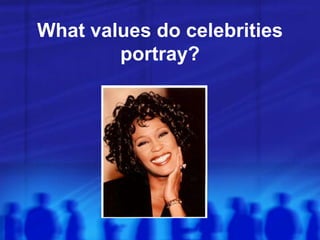
What values do celebrities
portray?

US Culture.ppt

  • 1.
  • 2.
    List as many“American values” that you can think of Remember values are the standards by which people define good and bad, beautiful and ugly
  • 3.
    Basic Values According tosociologist Robin Williams, 15 basic values are dominant in US culture: Success -Science Hard work -External conformity Efficiency -Individualism Material comfort -In-group superiority Morality -Equality Humanitarianism - Freedom Progress - Patriotism Democracy
  • 4.
    Value Clusters Made upof related core values that come together to form a larger whole Example: Success We find hard work, education, efficiency, material comfort and individualism all bound together
  • 5.
    Value Contractions Some valuesconflict with each other Example: There cannot be full expressions of democracy, equality, racism and sexism at the same time As society changes some values are challenged and undergo modification
  • 6.
    Culture War Core valuesdo not change without meeting strong resistance Today’s clash in values is so severe that it is referred to a culture war
  • 7.
    Values blind people Valuesand their supporting beliefs may blind people to other social circumstances Example: the emphasis on individualism So high that many people in the US believe that everyone is free to pursue the goal of success Blinds them to the consequences of family poverty, lack of education and dead-end jobs
  • 8.
    Ideal Culture v.Real Culture Ideal Culture- refers to the ideal values and norms of people Most people fall short of this Real Culture- norms and values that people actually follow
  • 9.
    Changing Society As societychanges over time new values emerge that reflect changed social conditions For example: leisure, physical fitness, self-fulfillment, concern for environment
  • 10.
    Culture Changes is3 ways Invention- creating new cultural elements Telephone, airplane, internet Discovery- Recognizing a better understanding of something already in existence X-Ray, DNA Diffusion- The spread of cultural traits from one society to another Jazz music, slang words, etc.
  • 11.
    technology Central to materialculture is technology Refers to tool but can include the skills or procedures to make and use those tools New technologies refer to the emerging technologies that have a major impact on human life
  • 12.
    Culture Lag Term coinedby William Ogburn Refers to a situation in which not all parts of a culture change at the same pace A group’s material culture usually changes first Non-material culture lags behind Sometimes non-material culture never catches up
  • 13.
    Cultural diffusion The transmissionof cultural characteristics Material culture is more likely to change because of cultural diffusion One consequence: Cultural leveling The process in which cultures become similar to one another Example: Japan adopting western culture
  • 14.
    Culture Clash Differences amongcultures can be expected to generate most of the conflict around the world Coming in contact with radically different cultures produces culture shock Challenging our basic assumptions about life
  • 15.
    Ethnocentrism The attitude thatone’s own culture is superior to those of other people Can serve as the glue to hold society together Strong sense of unity as a nation
  • 16.
    Cultural Relativism The beliefthat a culture must be understood on its own terms Looking at a culture from their own perspective and understand why they do things their way Can contribute to international peace
  • 17.
    Multicultural US is madeup of different cultures I.e. Anglo, Hispanic, African Multiculturalism- a state in which all subcultures in the same society are equal to one another Varies in degree from 1 society to another Switzerland most multicultural (Fr, Gm, It) Bosnia- minorities are despised and often killed US somewhere in between
  • 18.
    US Multiculturalism Eurocentrism- viewthe world from the standpoint of European culture Afrocentrism- the view of world from the standpoint of African culture
  • 19.
    Pop Culture Popular cultureconsists of relatively unsophisticated artistic creations that appeal to the mass audience Movies, tv shows, music
  • 20.
    Cultural Universals All humanbeings have the same needs that must be met in order to survive Biological needs- food and shelter Social needs- clothing, complex communication, peaceful coexistence, aesthetic spiritual experiences These needs are universal Cultural Universals- practices found in all cultures as the means for meeting the same human needs Food gathering - art forms Building houses - religion Developing language
  • 21.
    What values docelebrities portray?