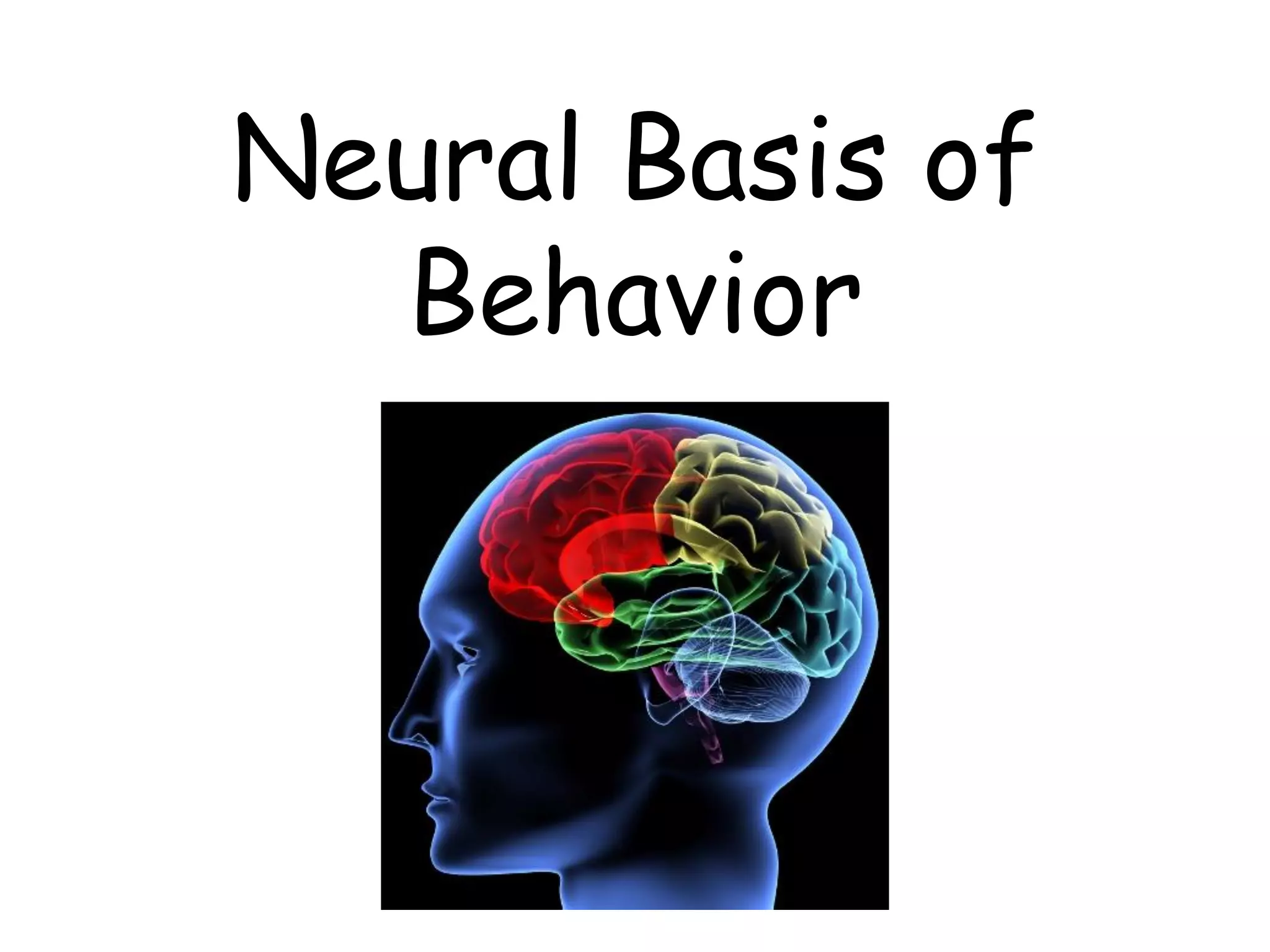
Neural Basis of
Behavior
Neural Basis of Behavior
• Brain basics and neurogeography
• Brain cells
• Action potentials
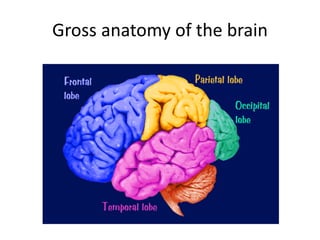
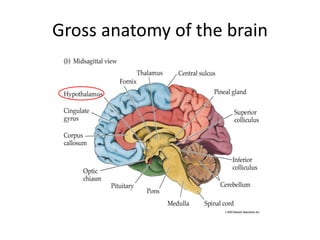
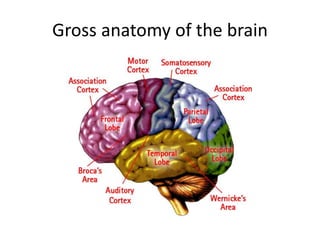
Gross anatomy of the brain
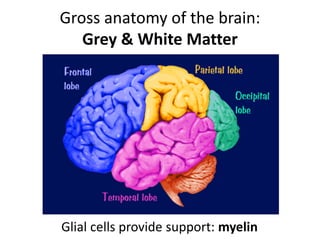
Gross anatomy of the brain:
Grey & White Matter
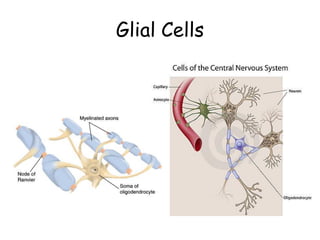
Glial cells provide support: myelin
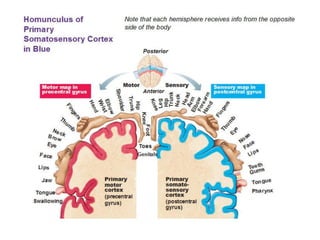
Gross anatomy of the brain
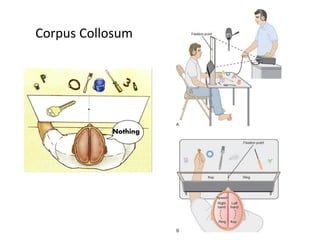
Nothing
Corpus Collosum
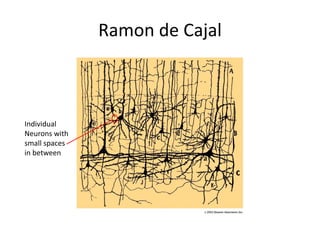
Ramon de Cajal
Individual
Neurons with
small spaces
in between
Neurons: Structure
• Parts of neurons
• Relationship to synapses
• Insulation
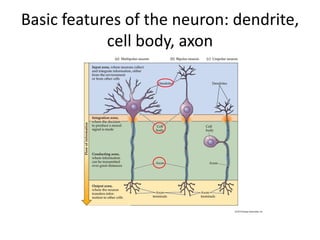
Basic features of the neuron: dendrite,
cell body, axon
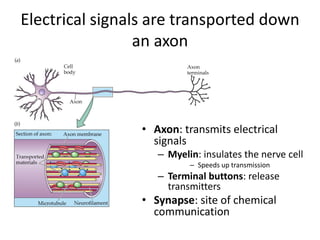
Electrical signals are transported down
an axon
• Dendrites: receive information
• inputs
• Axon: transmits electrical
signals
– Myelin: insulates the nerve cell
– Speeds up transmission
– Terminal buttons: release
transmitters
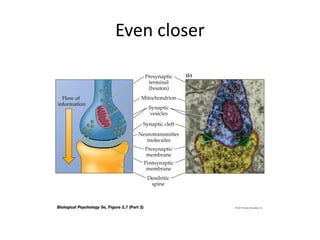
• Synapse: site of chemical
communication
Glial Cells
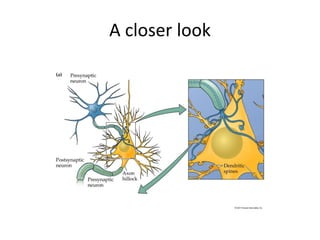
A closer look
Even closer
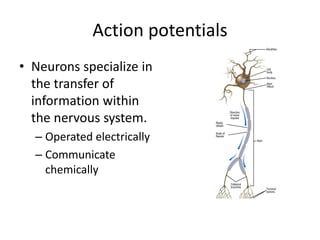
Action potentials
• Neurons specialize in
the transfer of
information within
the nervous system.
– Operated electrically
– Communicate
chemically
Generation, Transmission, &
Integration of Neural Signals
• Electrical Signals are the vocabulary of the
nervous system
• Synaptic transmission is precise
• An action potential is a rapid electrical signal
that travels along the axon of a neuron.
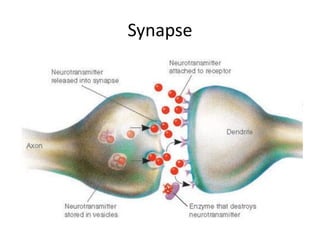
• A neurotransmitter is a messenger between
neurons
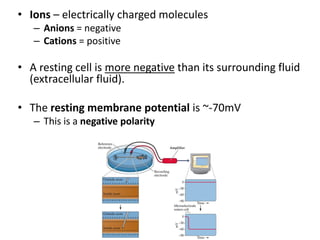
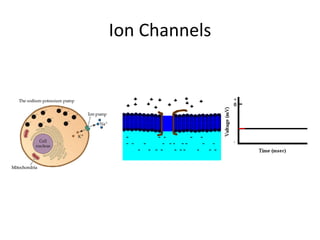
• Ions – electrically charged molecules
– Anions = negative
– Cations = positive
• A resting cell is more negative than its surrounding fluid
(extracellular fluid).
• The resting membrane potential is ~-70mV
– This is a negative polarity
Ion Channels
Synapse
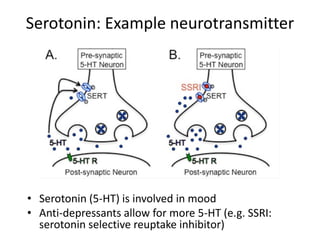
Serotonin: Example neurotransmitter
• Serotonin (5-HT) is involved in mood
• Anti-depressants allow for more 5-HT (e.g. SSRI:
serotonin selective reuptake inhibitor)
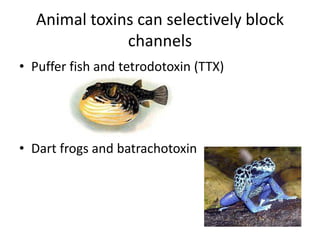
Animal toxins can selectively block
channels
• Puffer fish and tetrodotoxin (TTX)
• Dart frogs and batrachotoxin
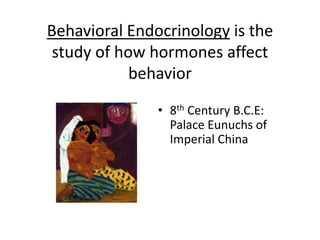
Behavioral Endocrinology is the
study of how hormones affect
behavior
• 8th Century B.C.E:
Palace Eunuchs of
Imperial China
• Hormones provide a mechanism of
chemical communication within the body
– Over 80 hormones have been identified in
mammals
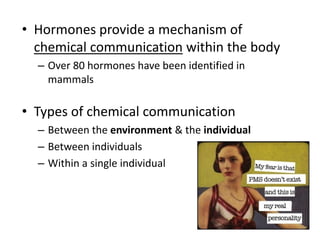
• Types of chemical communication
– Between the environment & the individual
– Between individuals
– Within a single individual
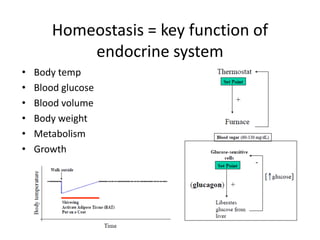
Homeostasis = key function of
endocrine system
• Body temp
• Blood glucose
• Blood volume
• Body weight
• Metabolism
• Growth
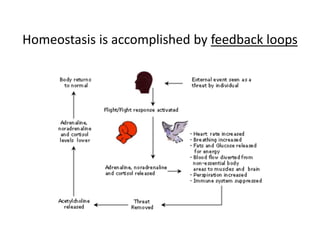
Homeostasis is accomplished by feedback loops
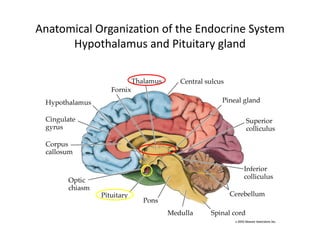
Anatomical Organization of the Endocrine System
Hypothalamus and Pituitary gland
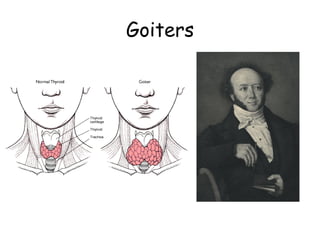
Goiters
Genes and Behavior:
The Field of Behavioral Genetics
• Behavioral genetics = the study of the
influence of genetic factors on behavioral
traits
• Chromosomes – strands of DNA carrying
genetic information
– Human cells contain 46 chromosomes in pairs
(sex-cells – 23 single)
– Each chromosome – thousands of genes, also
in pairs
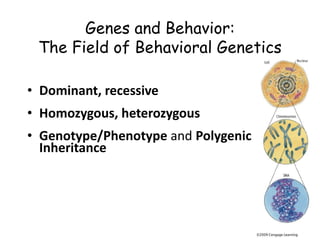
• Dominant, recessive
• Homozygous, heterozygous
• Genotype/Phenotype and Polygenic
Inheritance
Genes and Behavior:
The Field of Behavioral Genetics
Research Methods in Behavioral
Genetics
• Family studies – does it run in the family?
• Twin studies – compare resemblance of
identical (monozygotic) and fraternal
(dizygotic) twins on a trait
• Adoption studies – examine resemblance
between adopted children and their biological
and adoptive parents

PoP wk 2

  • 1.
  • 2.
    Neural Basis ofBehavior • Brain basics and neurogeography • Brain cells • Action potentials
  • 3.
  • 4.
    Gross anatomy ofthe brain: Grey & White Matter Glial cells provide support: myelin
  • 5.
  • 6.
  • 10.
  • 11.
    Ramon de Cajal Individual Neuronswith small spaces in between
  • 12.
    Neurons: Structure • Partsof neurons • Relationship to synapses • Insulation
  • 13.
    Basic features ofthe neuron: dendrite, cell body, axon
  • 14.
    Electrical signals aretransported down an axon • Dendrites: receive information • inputs • Axon: transmits electrical signals – Myelin: insulates the nerve cell – Speeds up transmission – Terminal buttons: release transmitters • Synapse: site of chemical communication
  • 15.
  • 16.
  • 17.
  • 18.
    Action potentials • Neuronsspecialize in the transfer of information within the nervous system. – Operated electrically – Communicate chemically
  • 19.
    Generation, Transmission, & Integrationof Neural Signals • Electrical Signals are the vocabulary of the nervous system • Synaptic transmission is precise • An action potential is a rapid electrical signal that travels along the axon of a neuron. • A neurotransmitter is a messenger between neurons
  • 20.
    • Ions –electrically charged molecules – Anions = negative – Cations = positive • A resting cell is more negative than its surrounding fluid (extracellular fluid). • The resting membrane potential is ~-70mV – This is a negative polarity
  • 21.
  • 22.
  • 23.
    Serotonin: Example neurotransmitter •Serotonin (5-HT) is involved in mood • Anti-depressants allow for more 5-HT (e.g. SSRI: serotonin selective reuptake inhibitor)
  • 24.
    Animal toxins canselectively block channels • Puffer fish and tetrodotoxin (TTX) • Dart frogs and batrachotoxin
  • 25.
    Behavioral Endocrinology isthe study of how hormones affect behavior • 8th Century B.C.E: Palace Eunuchs of Imperial China
  • 26.
    • Hormones providea mechanism of chemical communication within the body – Over 80 hormones have been identified in mammals • Types of chemical communication – Between the environment & the individual – Between individuals – Within a single individual
  • 27.
    Homeostasis = keyfunction of endocrine system • Body temp • Blood glucose • Blood volume • Body weight • Metabolism • Growth
  • 28.
    Homeostasis is accomplishedby feedback loops
  • 29.
    Anatomical Organization ofthe Endocrine System Hypothalamus and Pituitary gland
  • 30.
  • 31.
    Genes and Behavior: TheField of Behavioral Genetics • Behavioral genetics = the study of the influence of genetic factors on behavioral traits • Chromosomes – strands of DNA carrying genetic information – Human cells contain 46 chromosomes in pairs (sex-cells – 23 single) – Each chromosome – thousands of genes, also in pairs
  • 32.
    • Dominant, recessive •Homozygous, heterozygous • Genotype/Phenotype and Polygenic Inheritance Genes and Behavior: The Field of Behavioral Genetics
  • 33.
    Research Methods inBehavioral Genetics • Family studies – does it run in the family? • Twin studies – compare resemblance of identical (monozygotic) and fraternal (dizygotic) twins on a trait • Adoption studies – examine resemblance between adopted children and their biological and adoptive parents