AL-BAIRAQ
I AM DISCOVERING
MATERIALS
POLYMERS
ARQ_GENERATION_X IDM14
Qamar Nidal Hind Almarri
Sarah Albaker Amal Abdullah
TABLE OF CONTENTS
•Introduction
•Activities
•Changing polymer pellets
•Hunting for polymers
•Comparing viscosity of liquids
•Testing the strength of different polymers
•Designing a humidity sensor
•Final Product Idea: Humidity-Sensing
Packaging Material
INTRODUCTION
Polymer
noun
plural noun: polymers
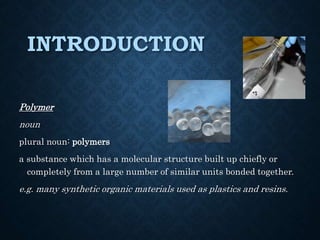
a substance which has a molecular structure built up chiefly or
completely from a large number of similar units bonded together.
e.g. many synthetic organic materials used as plastics and resins.
ACTIVITIES
CHANGING POLYMER PELLETS.
Activity 1
Part one
Changing polymer pellets.
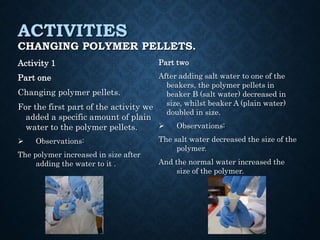
For the first part of the activity we
added a specific amount of plain
water to the polymer pellets.
 Observations:
The polymer increased in size after
adding the water to it .
Part two
After adding salt water to one of the
beakers, the polymer pellets in
beaker B (salt water) decreased in
size, whilst beaker A (plain water)
doubled in size.
 Observations:
The salt water decreased the size of the
polymer.
And the normal water increased the
size of the polymer.
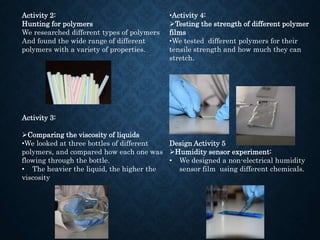
Activity 2:
Hunting for polymers
We researched different types of polymers
And found the wide range of different
polymers with a variety of properties.
Activity 3:
Comparing the viscosity of liquids
•We looked at three bottles of different
polymers, and compared how each one was
flowing through the bottle.
• The heavier the liquid, the higher the
viscosity
•Activity 4:
Testing the strength of different polymer
films
•We tested different polymers for their
tensile strength and how much they can
stretch.
Design Activity 5
Humidity sensor experiment:
• We designed a non-electrical humidity
sensor film using different chemicals.
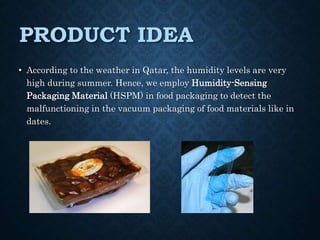
PRODUCT IDEA
• According to the weather in Qatar, the humidity levels are very
high during summer. Hence, we employ Humidity-Sensing
Packaging Material (HSPM) in food packaging to detect the
malfunctioning in the vacuum packaging of food materials like in
dates.
BENEFITS
Our product idea helps to sort the improperly packed dates boxes,
so that the laborers can easily repackage/replace them with new
packaging.
Material and Methods
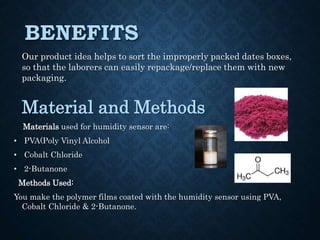
Materials used for humidity sensor are:
• PVA(Poly Vinyl Alcohol
• Cobalt Chloride
• 2-Butanone
Methods Used:
You make the polymer films coated with the humidity sensor using PVA,
Cobalt Chloride & 2-Butanone.
RESULTS
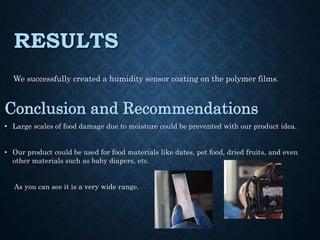
We successfully created a humidity sensor coating on the polymer films.
Conclusion and Recommendations
• Large scales of food damage due to moisture could be prevented with our product idea.
• Our product could be used for food materials like dates, pet food, dried fruits, and even
other materials such as baby diapers, etc.
As you can see it is a very wide range.
ACKNOWLEDGMENT
Many thanks to my teachers, school and AL-Bairaq team from
Center for Advanced Materials (CAM), Qatar University for
supporting us during our journey with a AL-Bairaq.
Also, I would like to thank the sponsors UNESCO, Qatar
National Commission.

Polymers, Humidity Sensing Packaging material Idm14

  • 1.
    AL-BAIRAQ I AM DISCOVERING MATERIALS POLYMERS ARQ_GENERATION_XIDM14 Qamar Nidal Hind Almarri Sarah Albaker Amal Abdullah
  • 2.
    TABLE OF CONTENTS •Introduction •Activities •Changingpolymer pellets •Hunting for polymers •Comparing viscosity of liquids •Testing the strength of different polymers •Designing a humidity sensor •Final Product Idea: Humidity-Sensing Packaging Material
  • 3.
    INTRODUCTION Polymer noun plural noun: polymers asubstance which has a molecular structure built up chiefly or completely from a large number of similar units bonded together. e.g. many synthetic organic materials used as plastics and resins.
  • 4.
    ACTIVITIES CHANGING POLYMER PELLETS. Activity1 Part one Changing polymer pellets. For the first part of the activity we added a specific amount of plain water to the polymer pellets.  Observations: The polymer increased in size after adding the water to it . Part two After adding salt water to one of the beakers, the polymer pellets in beaker B (salt water) decreased in size, whilst beaker A (plain water) doubled in size.  Observations: The salt water decreased the size of the polymer. And the normal water increased the size of the polymer.
  • 5.
    Activity 2: Hunting forpolymers We researched different types of polymers And found the wide range of different polymers with a variety of properties. Activity 3: Comparing the viscosity of liquids •We looked at three bottles of different polymers, and compared how each one was flowing through the bottle. • The heavier the liquid, the higher the viscosity •Activity 4: Testing the strength of different polymer films •We tested different polymers for their tensile strength and how much they can stretch. Design Activity 5 Humidity sensor experiment: • We designed a non-electrical humidity sensor film using different chemicals.
  • 6.
    PRODUCT IDEA • Accordingto the weather in Qatar, the humidity levels are very high during summer. Hence, we employ Humidity-Sensing Packaging Material (HSPM) in food packaging to detect the malfunctioning in the vacuum packaging of food materials like in dates.
  • 7.
    BENEFITS Our product ideahelps to sort the improperly packed dates boxes, so that the laborers can easily repackage/replace them with new packaging. Material and Methods Materials used for humidity sensor are: • PVA(Poly Vinyl Alcohol • Cobalt Chloride • 2-Butanone Methods Used: You make the polymer films coated with the humidity sensor using PVA, Cobalt Chloride & 2-Butanone.
  • 8.
    RESULTS We successfully createda humidity sensor coating on the polymer films. Conclusion and Recommendations • Large scales of food damage due to moisture could be prevented with our product idea. • Our product could be used for food materials like dates, pet food, dried fruits, and even other materials such as baby diapers, etc. As you can see it is a very wide range.
  • 9.
    ACKNOWLEDGMENT Many thanks tomy teachers, school and AL-Bairaq team from Center for Advanced Materials (CAM), Qatar University for supporting us during our journey with a AL-Bairaq. Also, I would like to thank the sponsors UNESCO, Qatar National Commission.