POLYMER
STRUCTURES
Desiree Jane Enriquez
Sarah Reyes
Bernald Cabrera
Nephtalie Cruz
Arwie Mendoza
1
POLYMER

2
Polymer History
Originally natural polymers
were used in
Wood
Cotton
Leather

Rubber
Wool
Silk

Synthetic Polymers
Plastics
Rubbers

Fiber materials

3
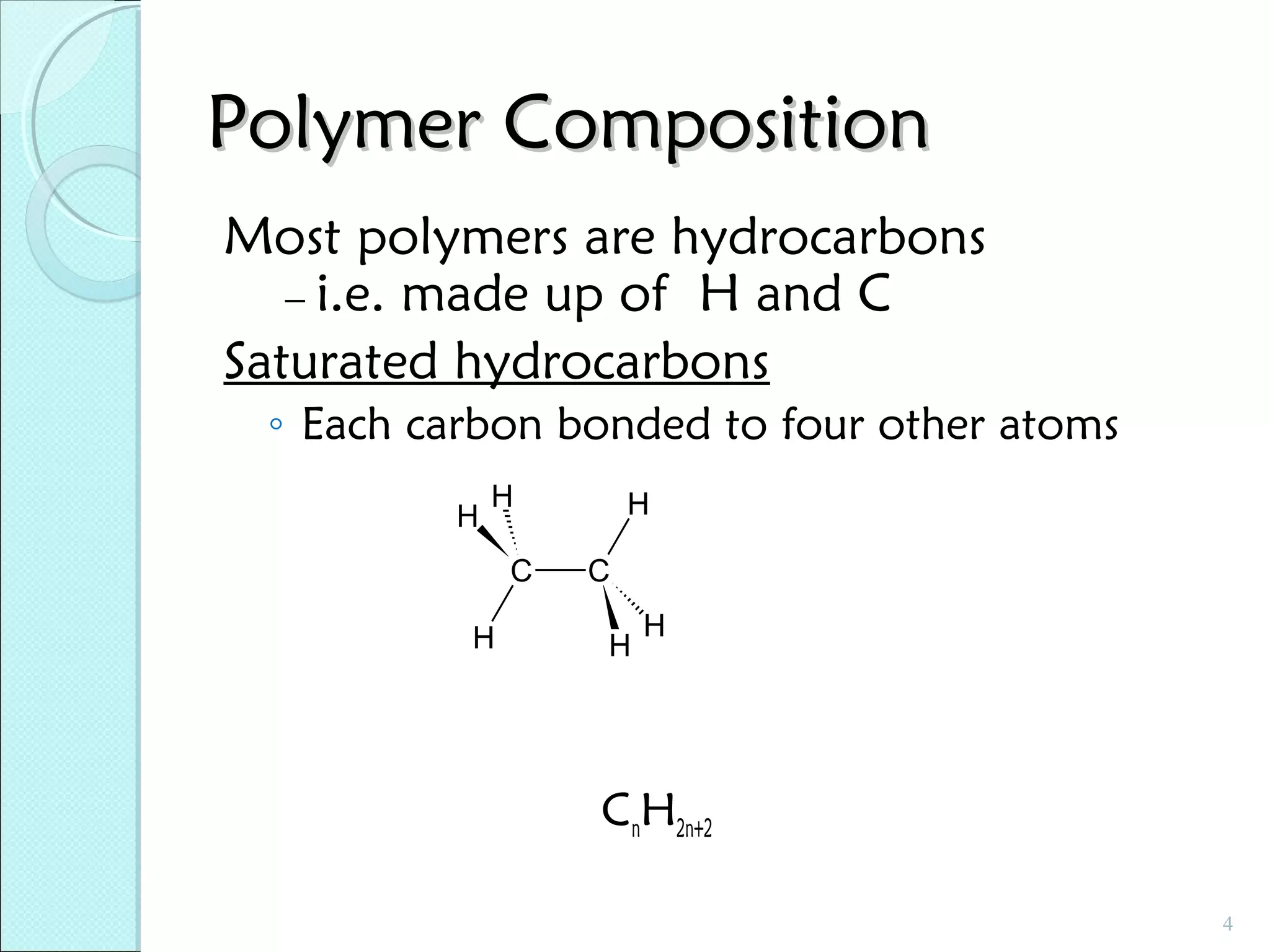
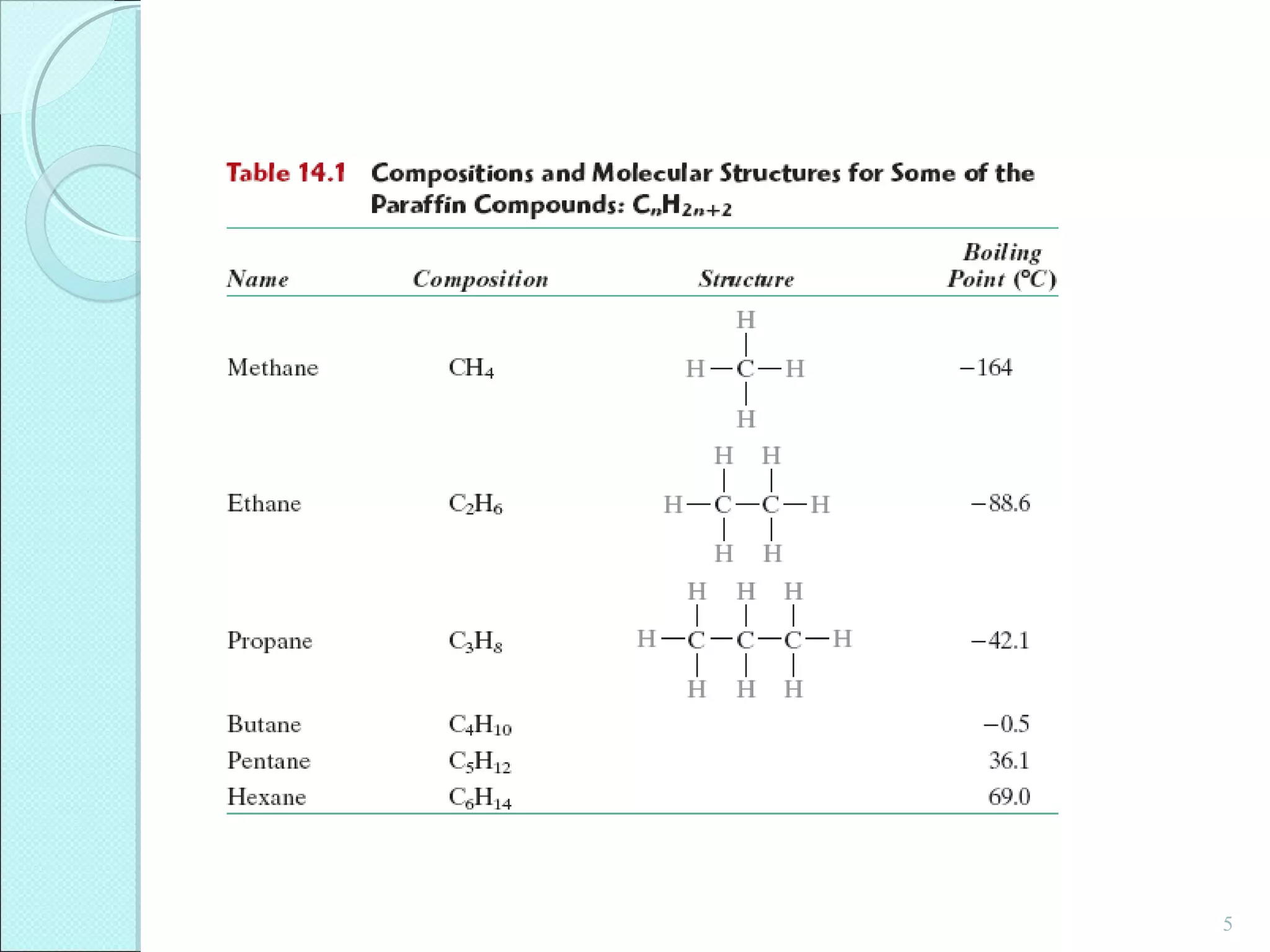
Polymer Composition
Most polymers are hydrocarbons
– i.e. made up of H and C
Saturated hydrocarbons
◦ Each carbon bonded to four other atoms
H

H
C

H

H
C
H

H

CnH2n+2
4
5
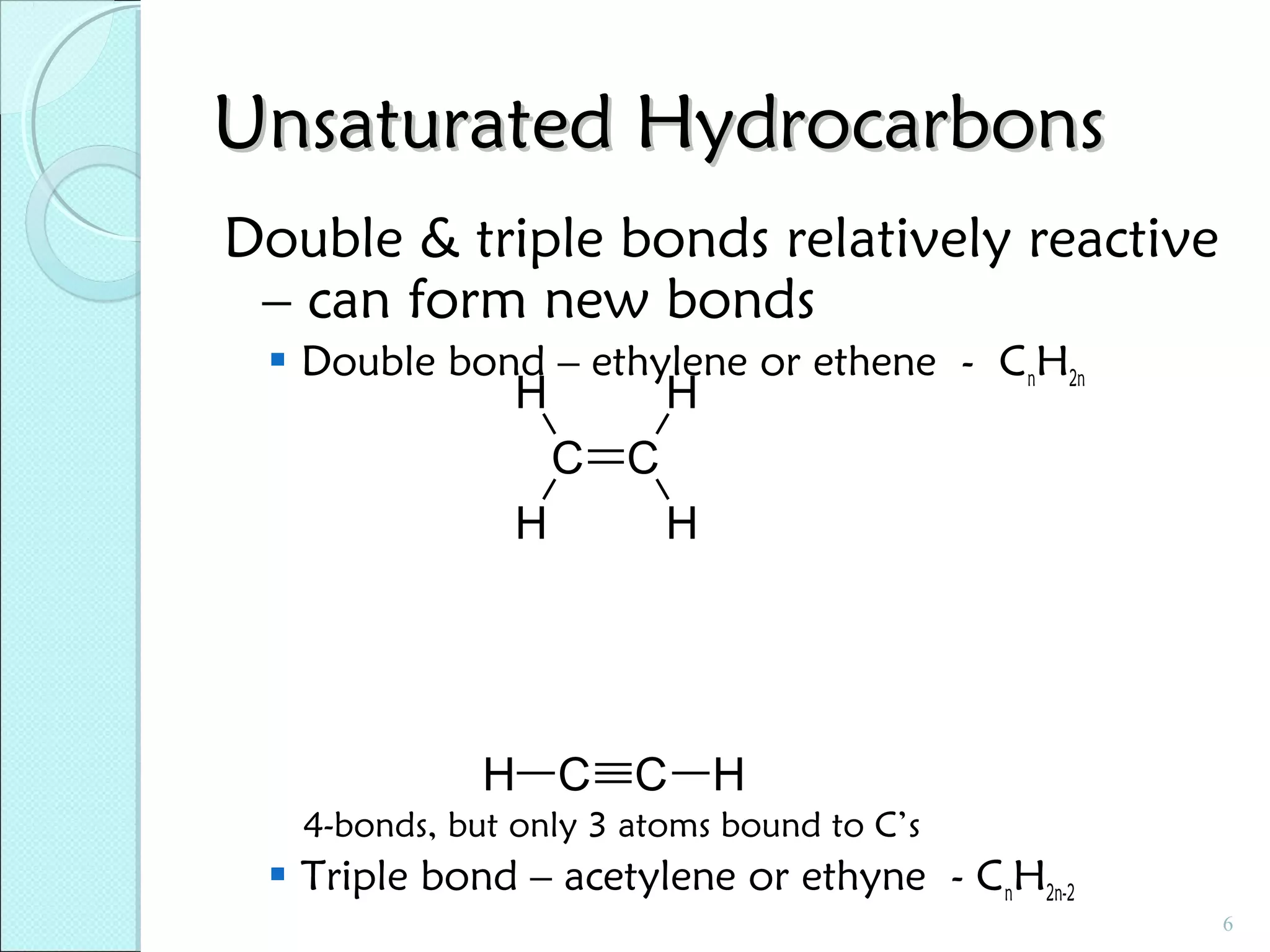
Unsaturated Hydrocarbons
Double & triple bonds relatively reactive
– can form new bonds
 Double bond – ethylene or ethene - CnH2n

H

H

C C
H

H

H C C H
4-bonds, but only 3 atoms bound to C’s

 Triple bond – acetylene or ethyne - CnH2n-2
6
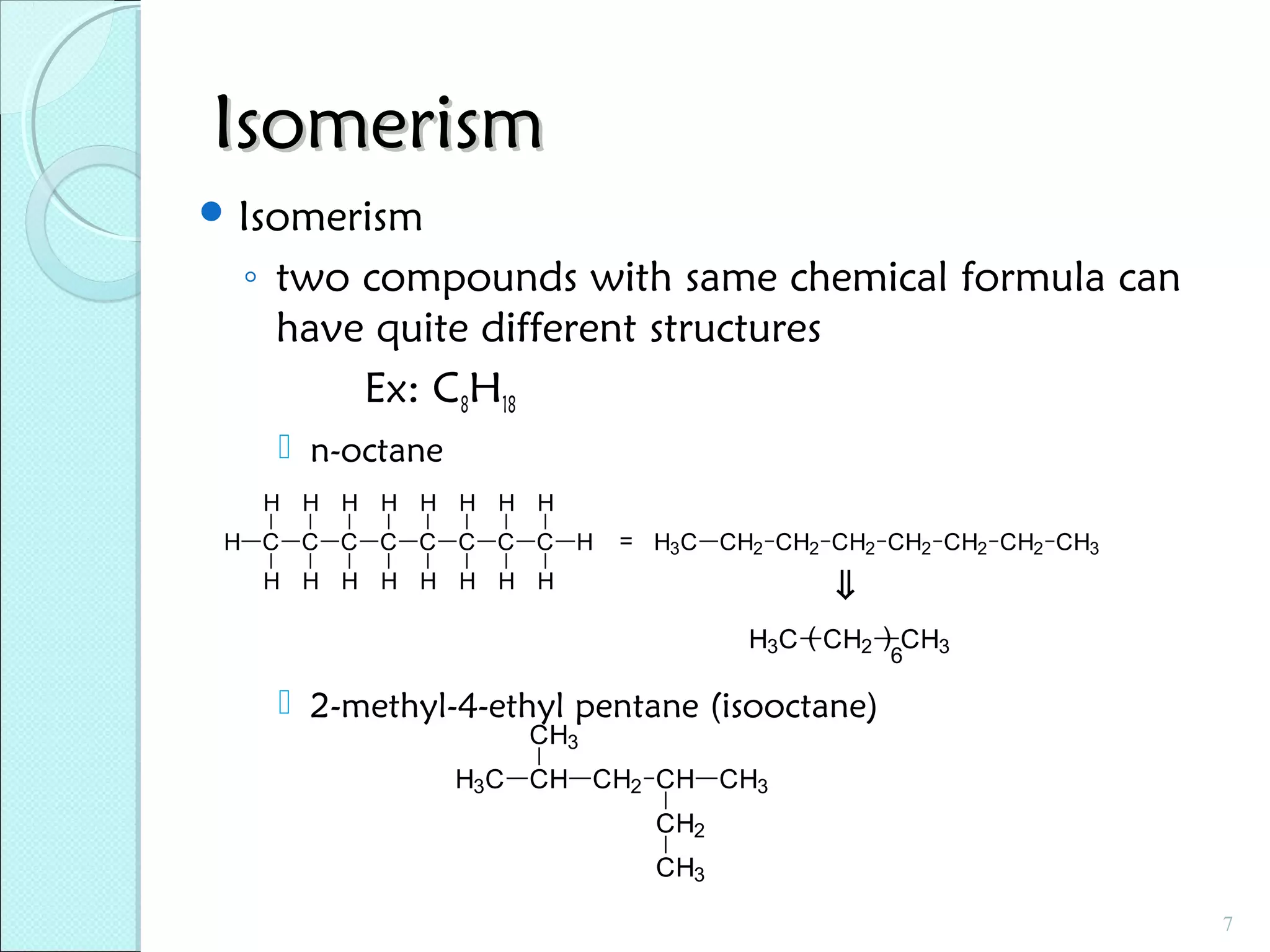
Isomerism
 Isomerism

◦ two compounds with same chemical formula can
have quite different structures
Ex: C8H18
 n-octane
H H H H H H H H
H C C C C C C C C H

= H3C CH2 CH2 CH2 CH2 CH2 CH2 CH3

⇓

H H H H H H H H

H3C ( CH2 ) CH3
6

 2-methyl-4-ethyl pentane (isooctane)
CH3

H3C CH CH2 CH CH3
CH2
CH3
7
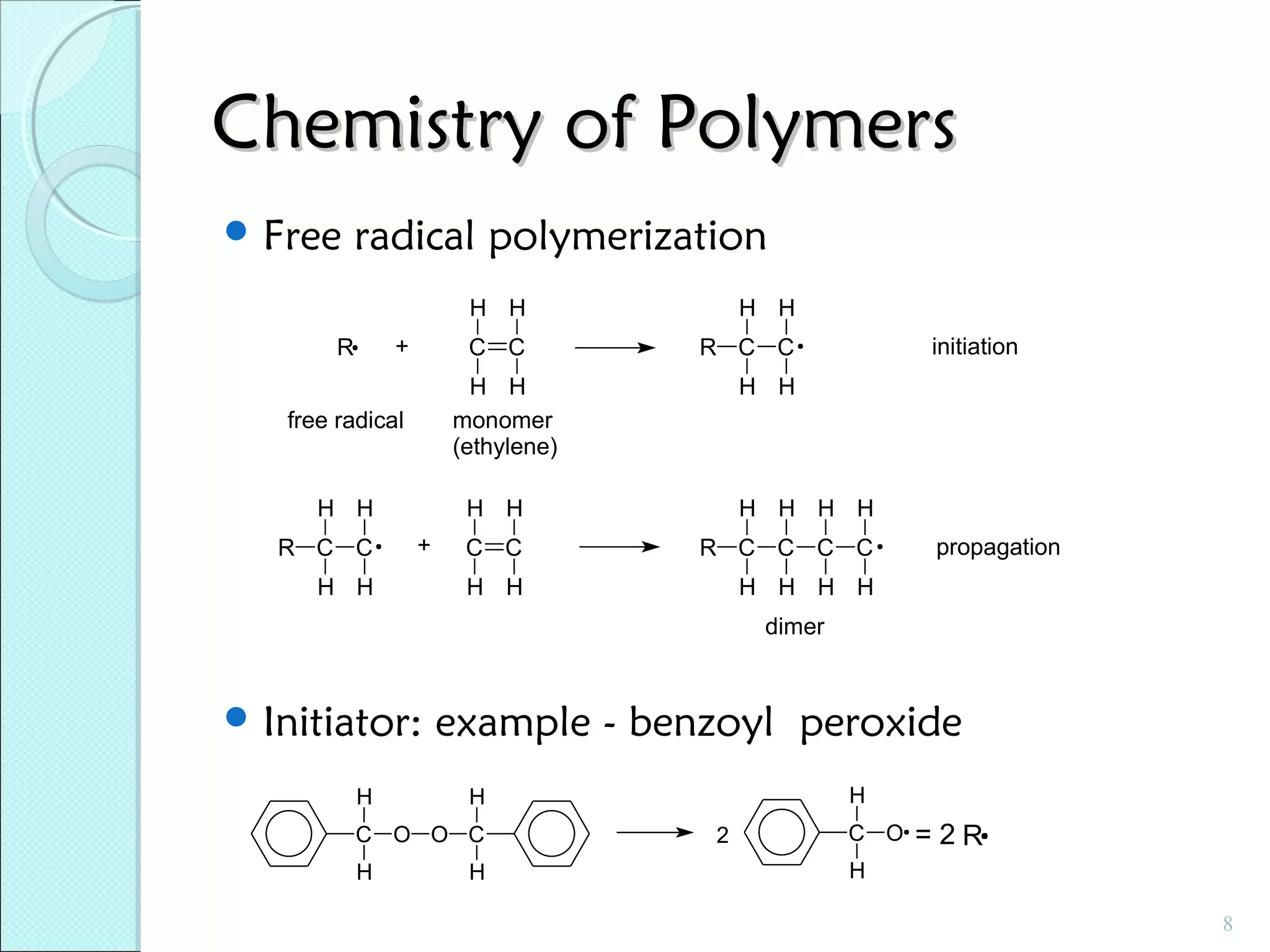
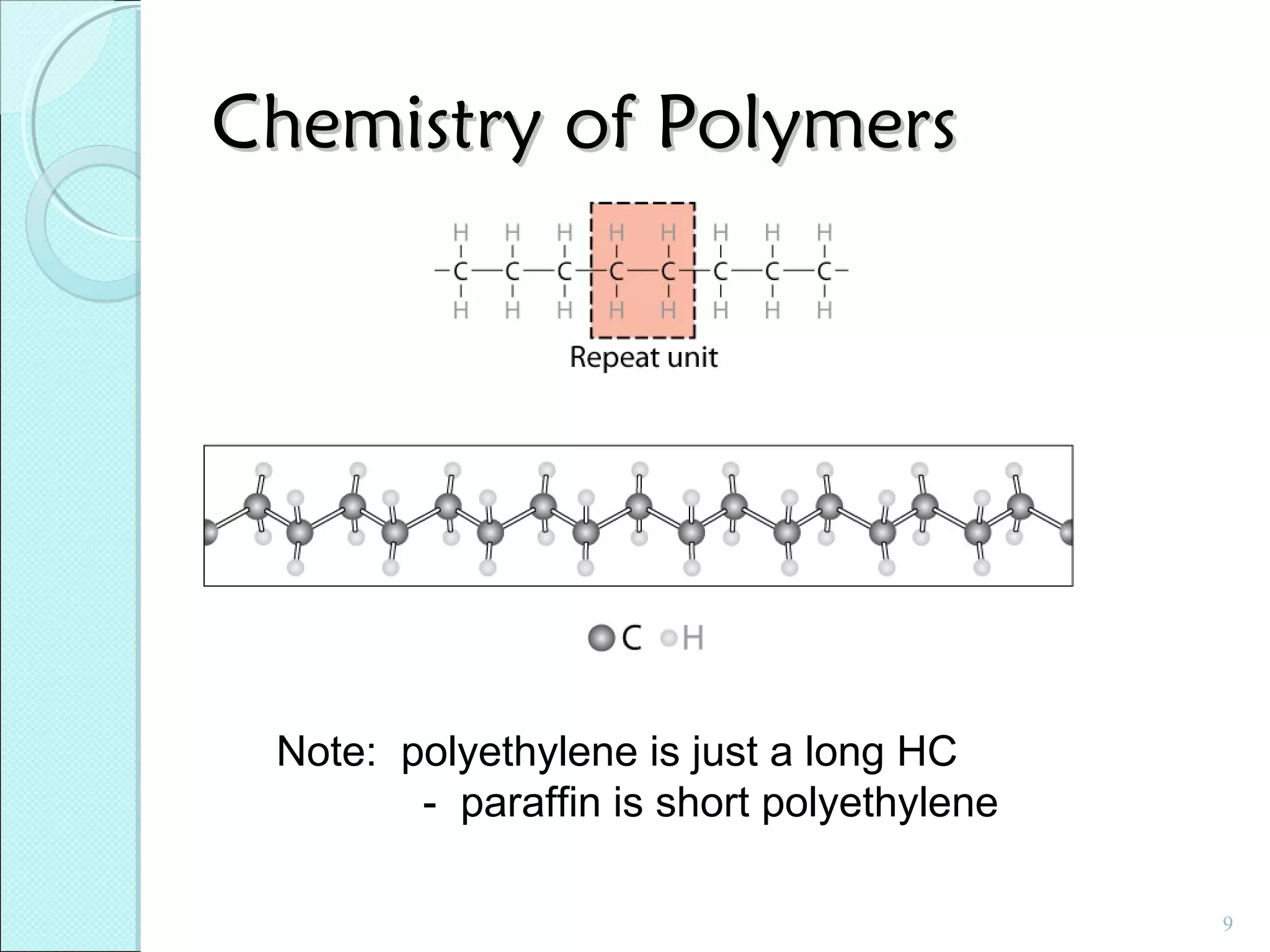
Chemistry of Polymers
 Free

radical polymerization
H H
C C

+

R

R C C

H H
monomer
(ethylene)

free radical

H H
R C C

H H
initiation

H H

H H
+

H H

H H H H

C C

R C C C C

H H

H H H H

propagation

dimer

 Initiator:
H

example - benzoyl peroxide

C O O C
H

H

H
H

2

C O

=2R

H
8
Chemistry of Polymers

Note: polyethylene is just a long HC
- paraffin is short polyethylene
9
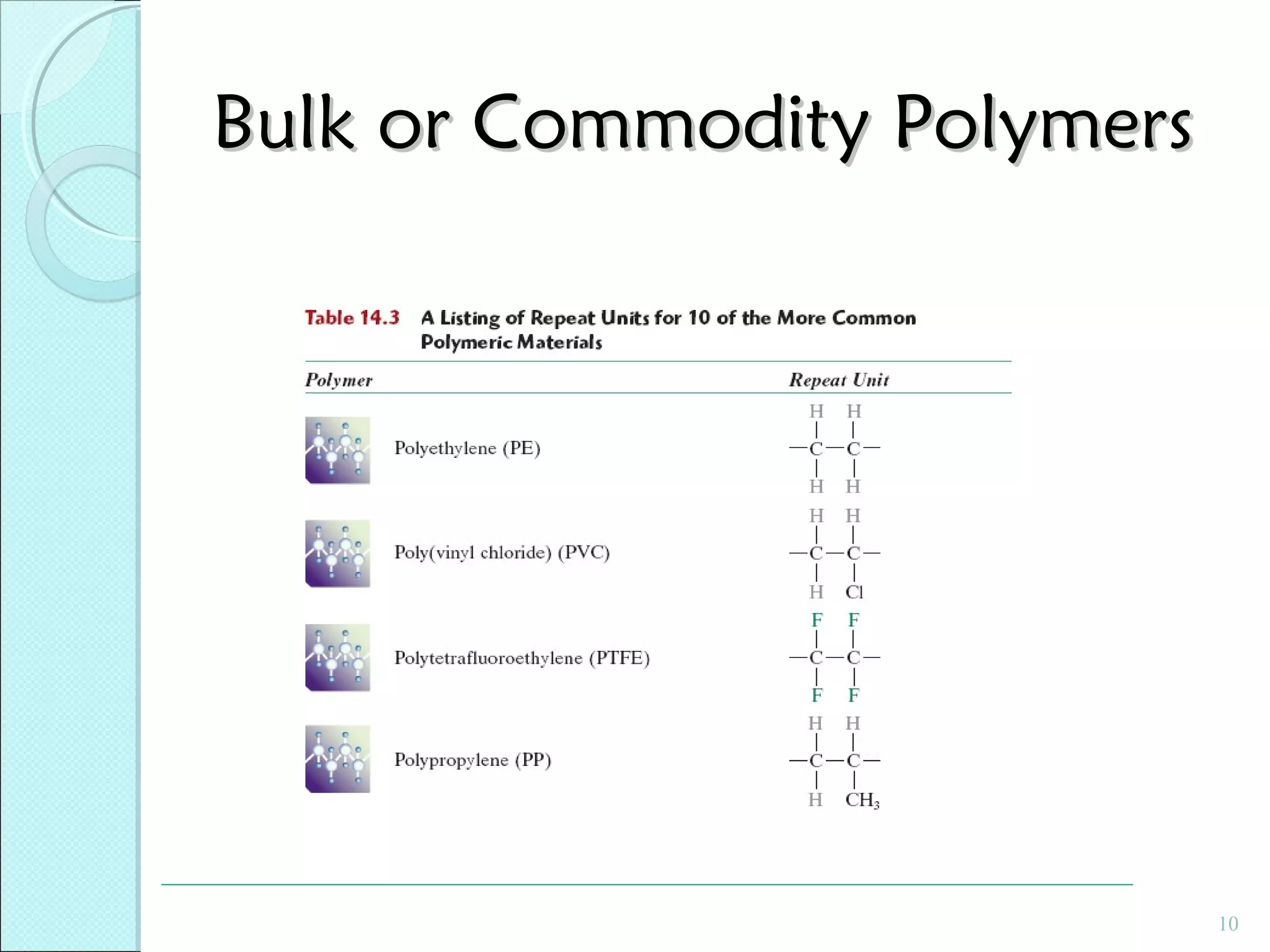
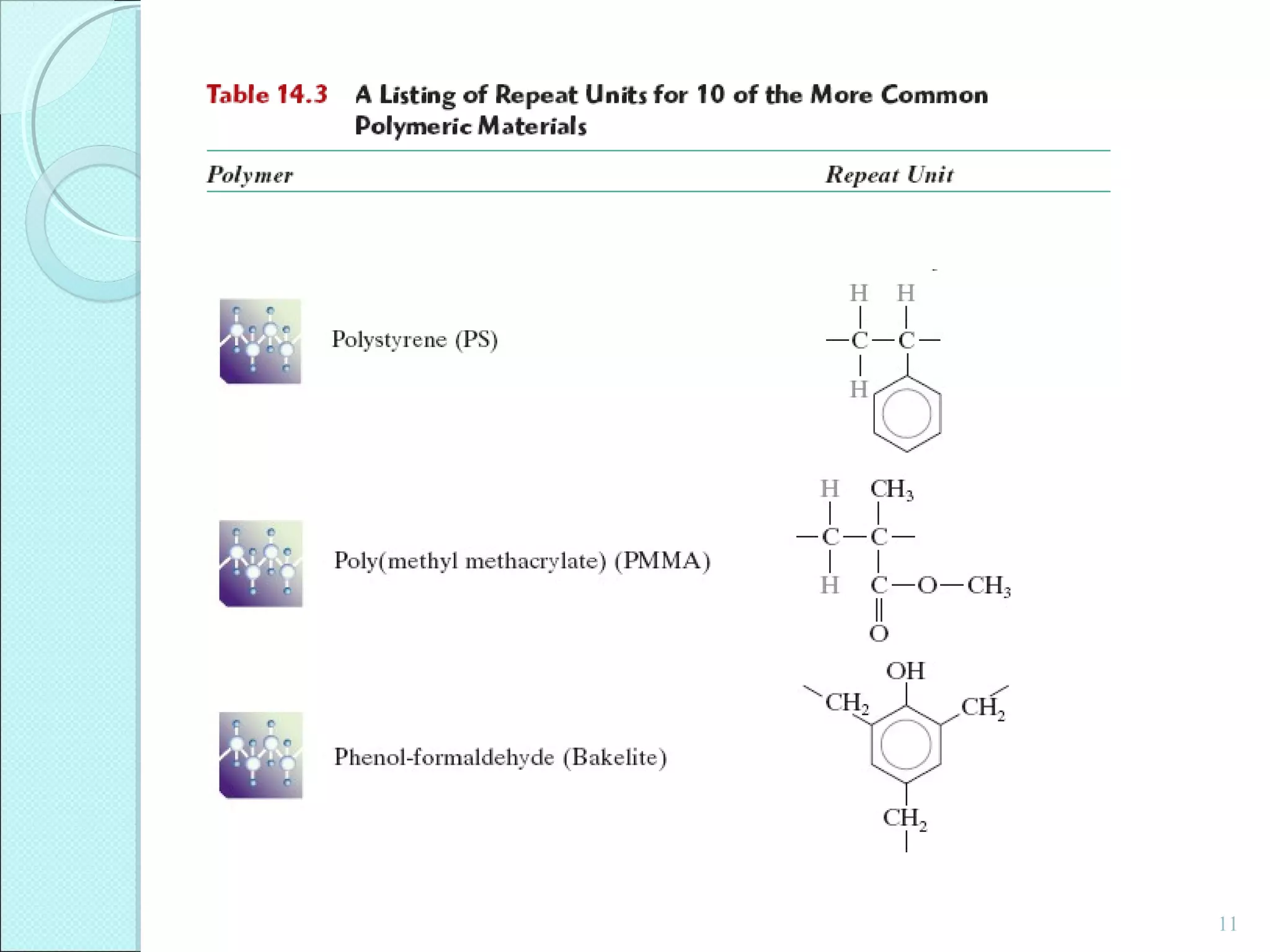
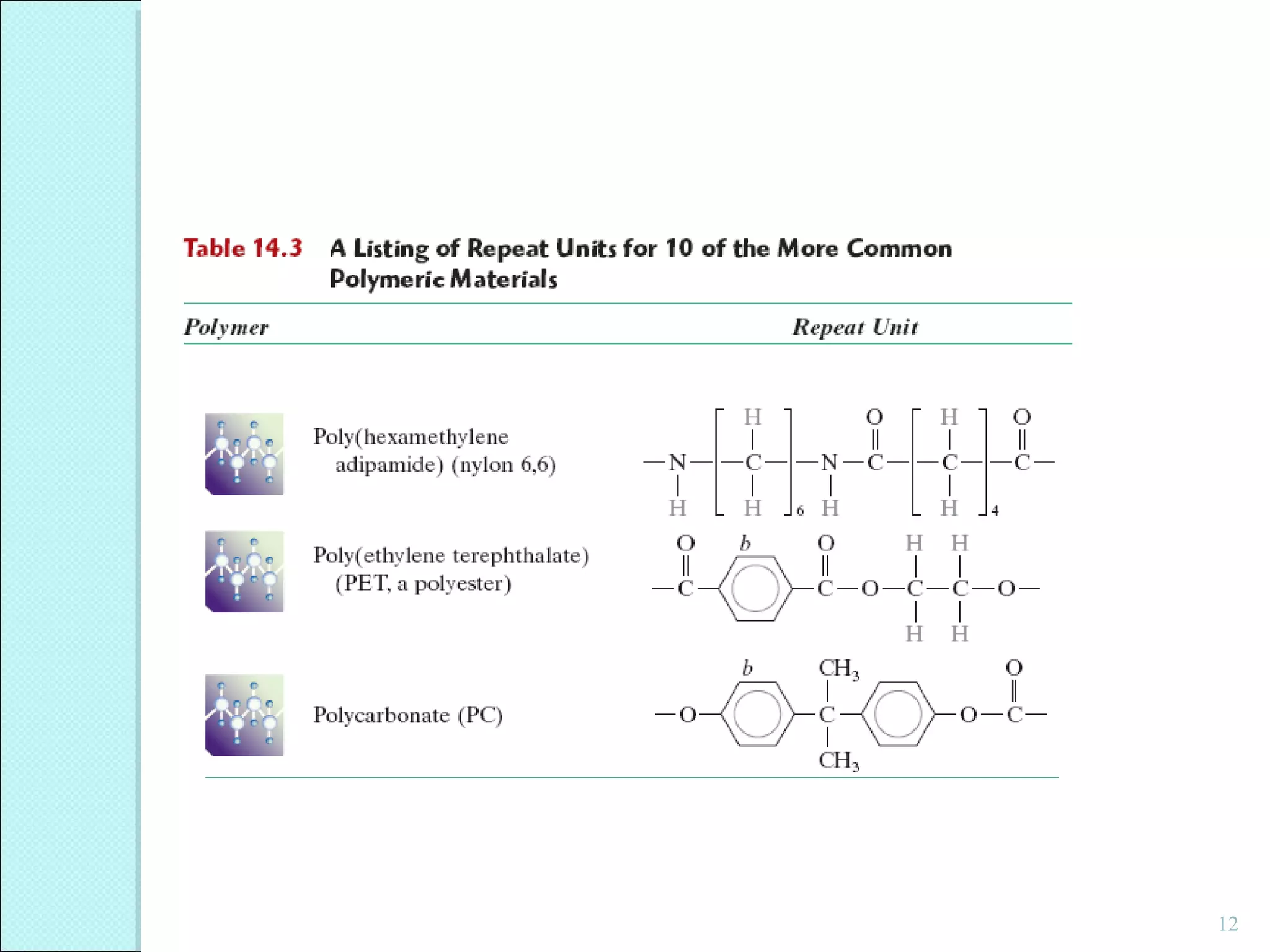
Bulk or Commodity Polymers

10
11
12
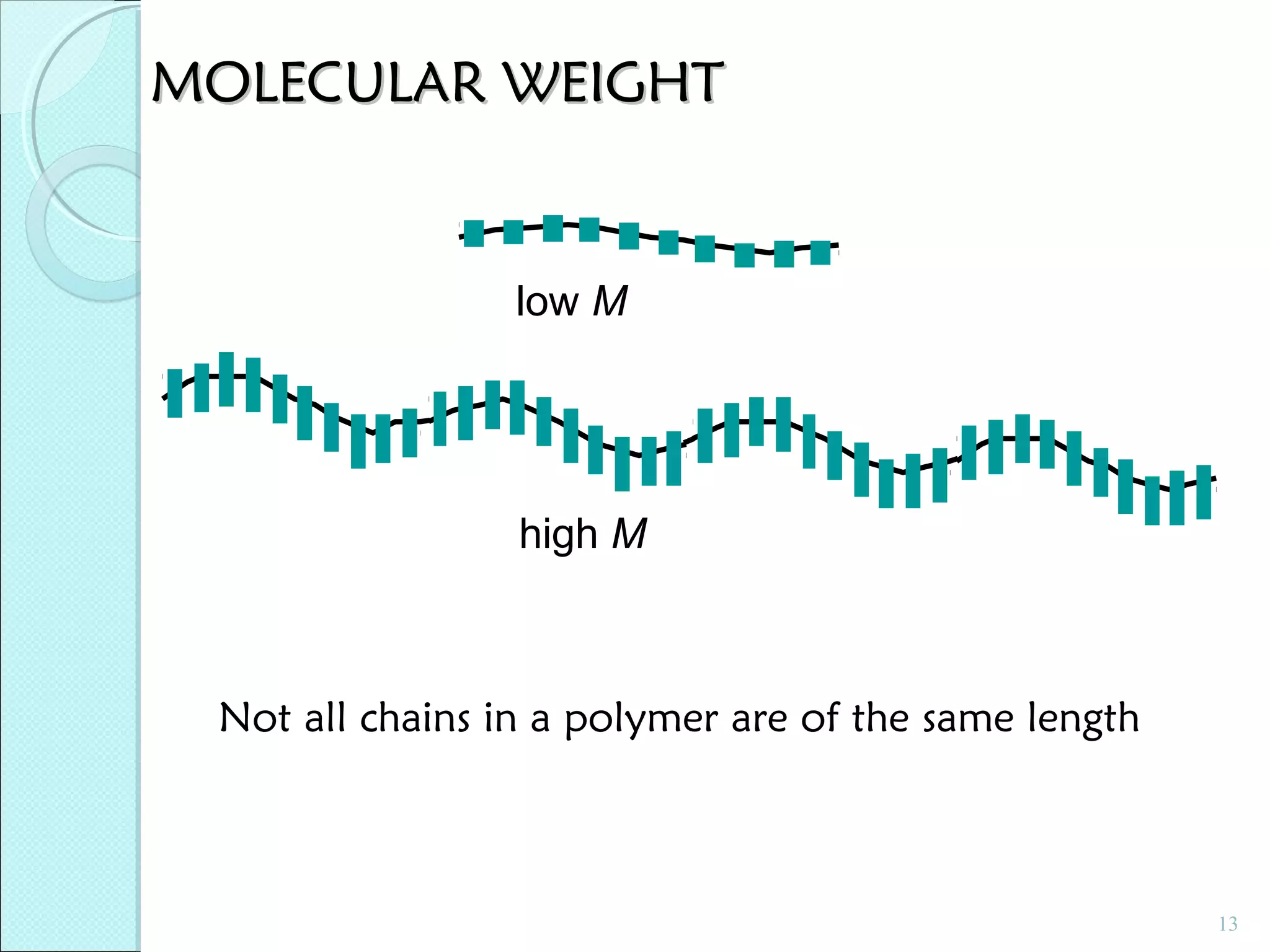
MOLECULAR WEIGHT

low M

high M

Not all chains in a polymer are of the same length

13
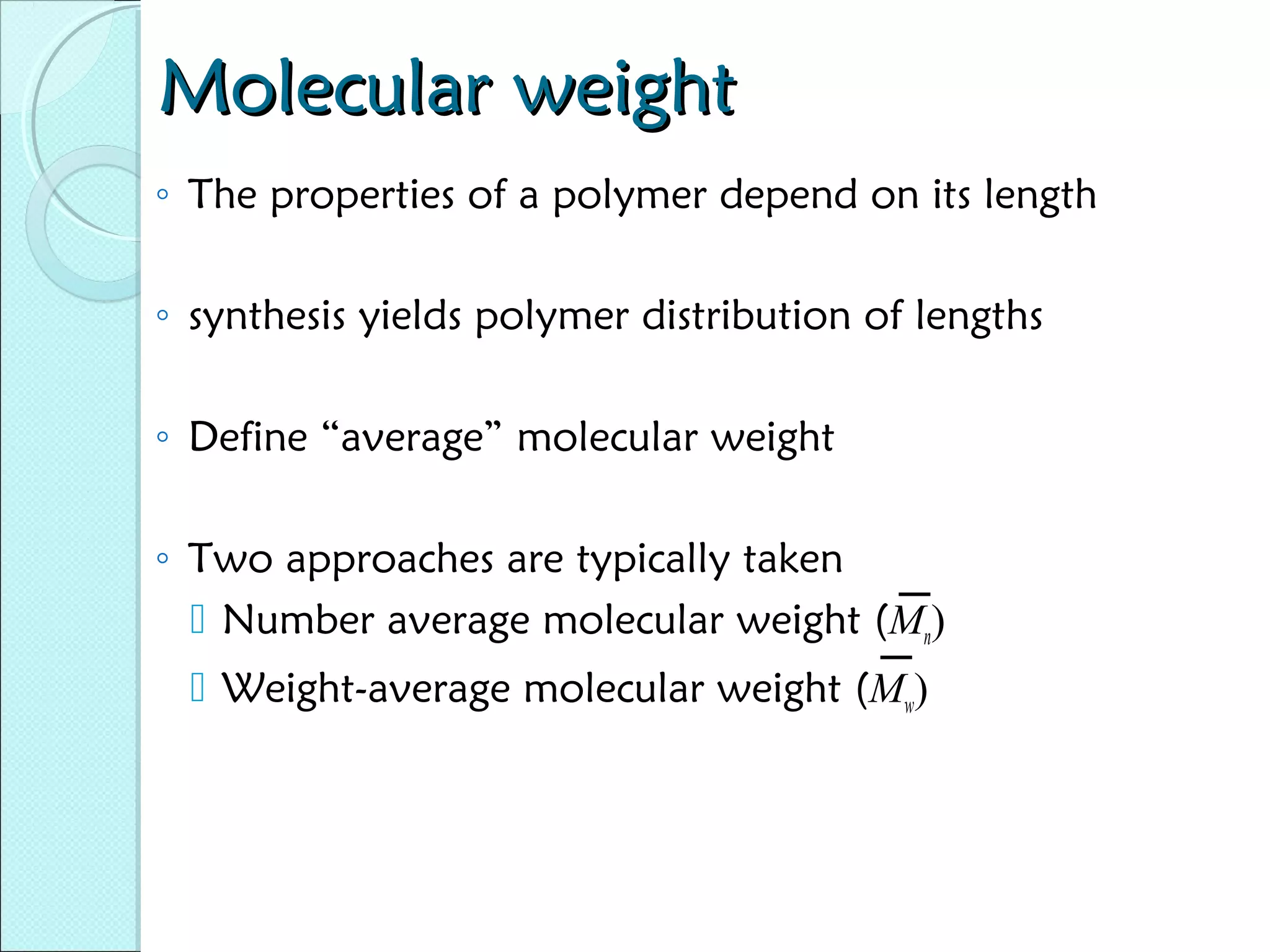
Molecular weight
◦ The properties of a polymer depend on its length
◦ synthesis yields polymer distribution of lengths
◦ Define “average” molecular weight
◦ Two approaches are typically taken
 Number average molecular weight (Mn)
 Weight-average molecular weight (Mw)
Molecular mass example
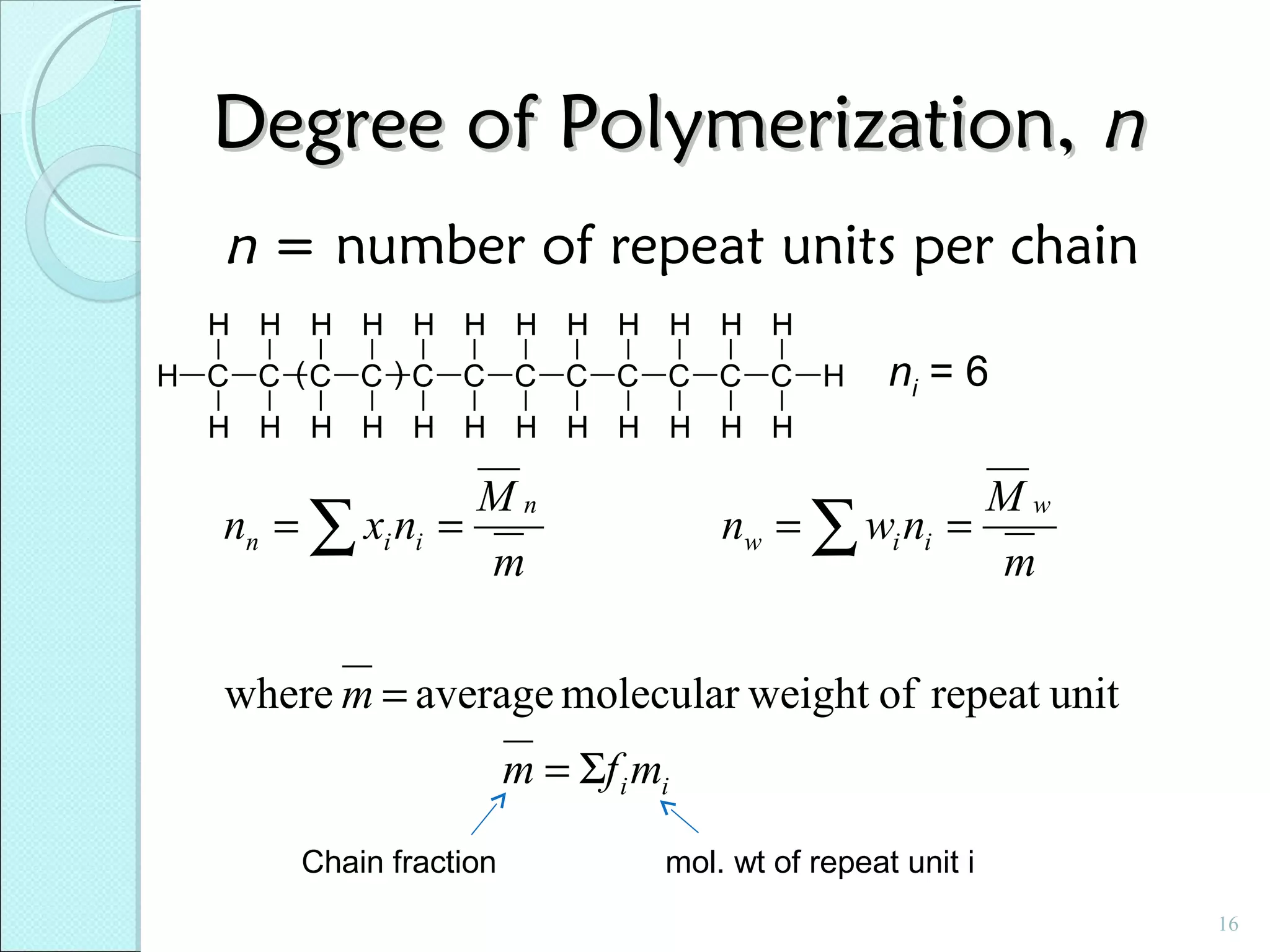
Degree of Polymerization, n
n = number of repeat units per chain
H H H H H H H H H H H H
H C C (C C ) C C C C C C C C H

ni = 6

H H H H H H H H H H H H

Mn
nn = ∑ xi ni =
m

Mw
nw = ∑ wi ni =
m

where m = average molecular weight of repeat unit
m = Σf i mi
Chain fraction

mol. wt of repeat unit i
16
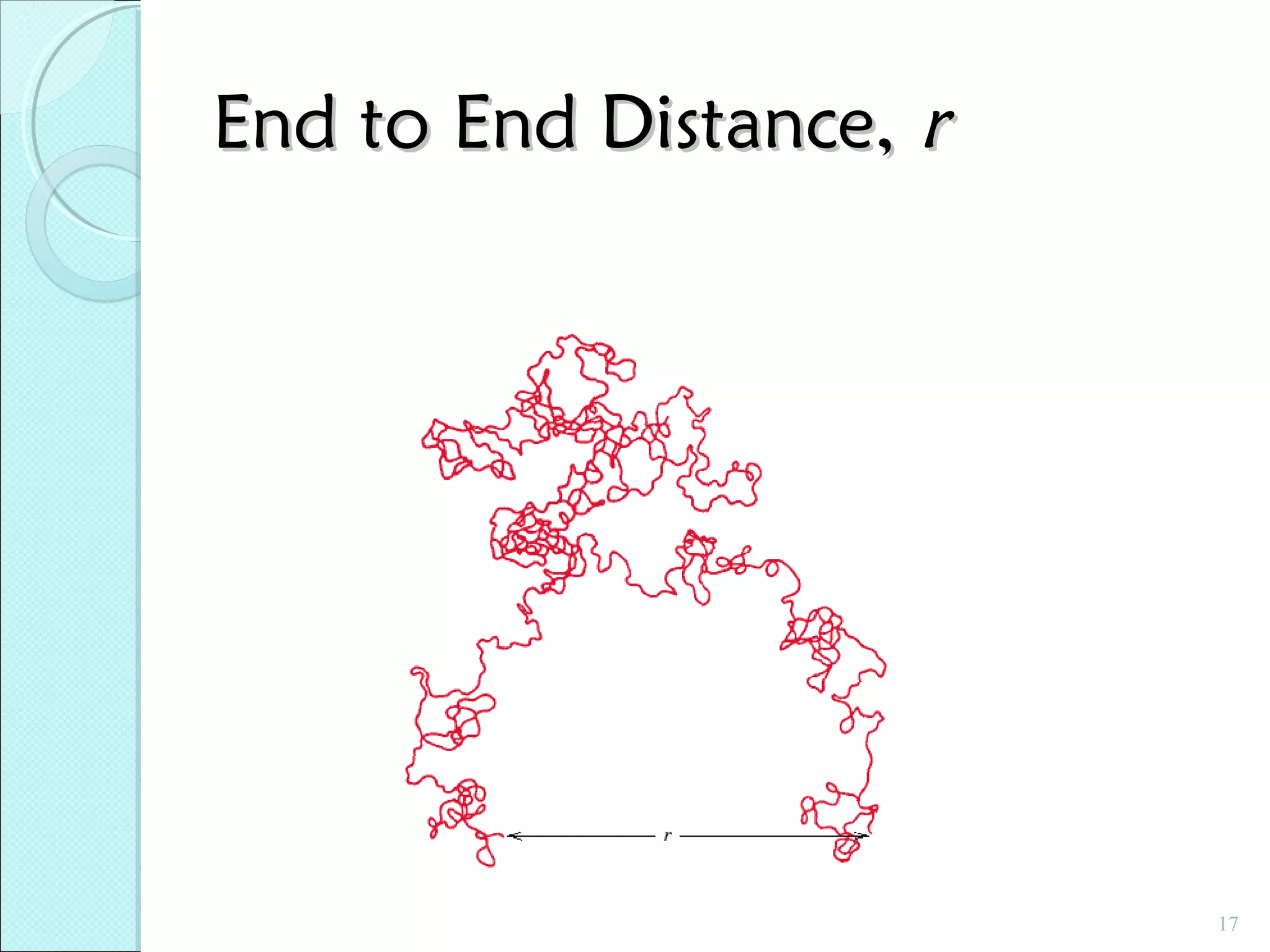
End to End Distance, r

17
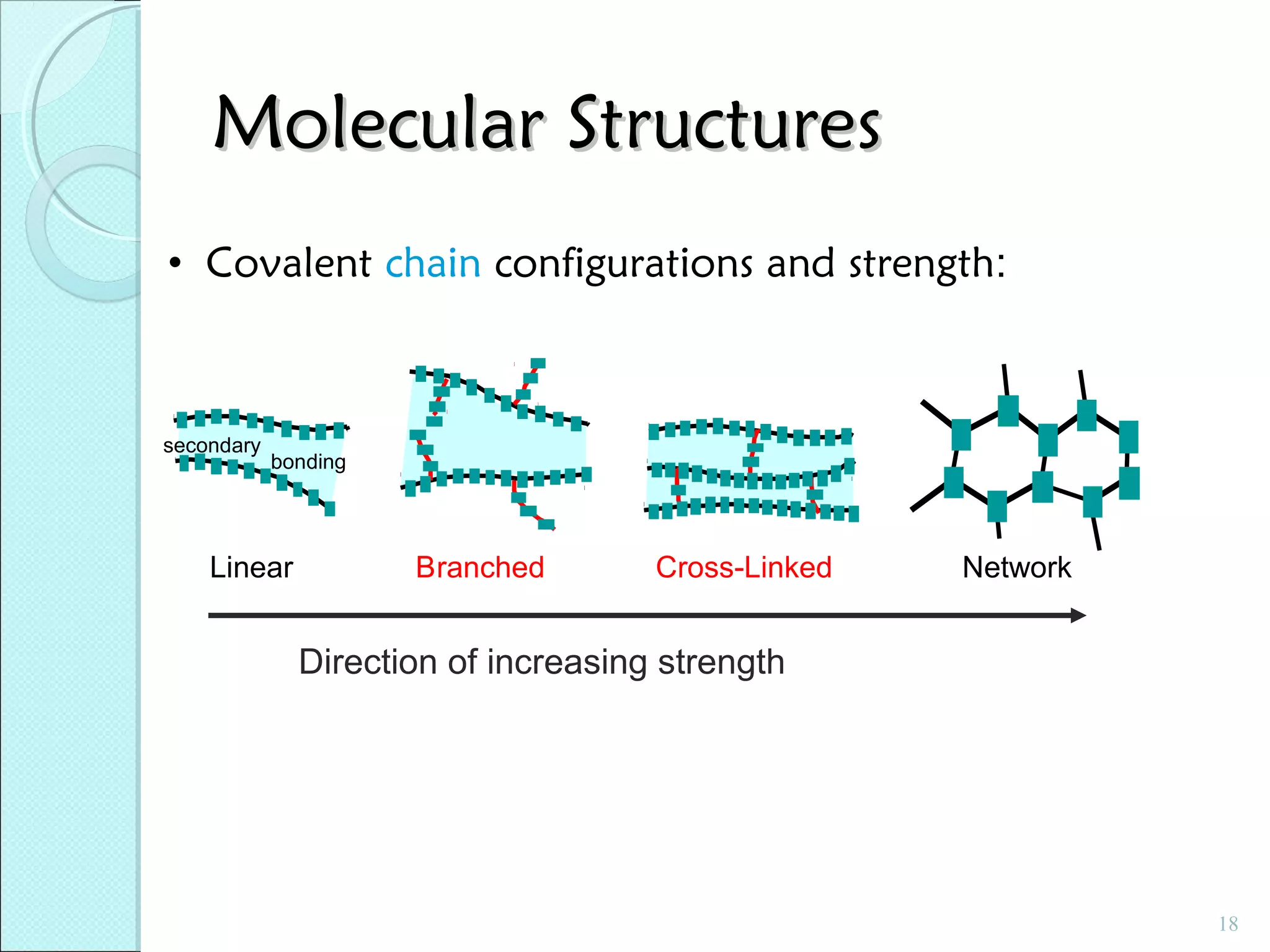
Molecular Structures
• Covalent chain configurations and strength:

secondary

bonding

Linear

Branched

Cross-Linked

Network

Direction of increasing strength

18
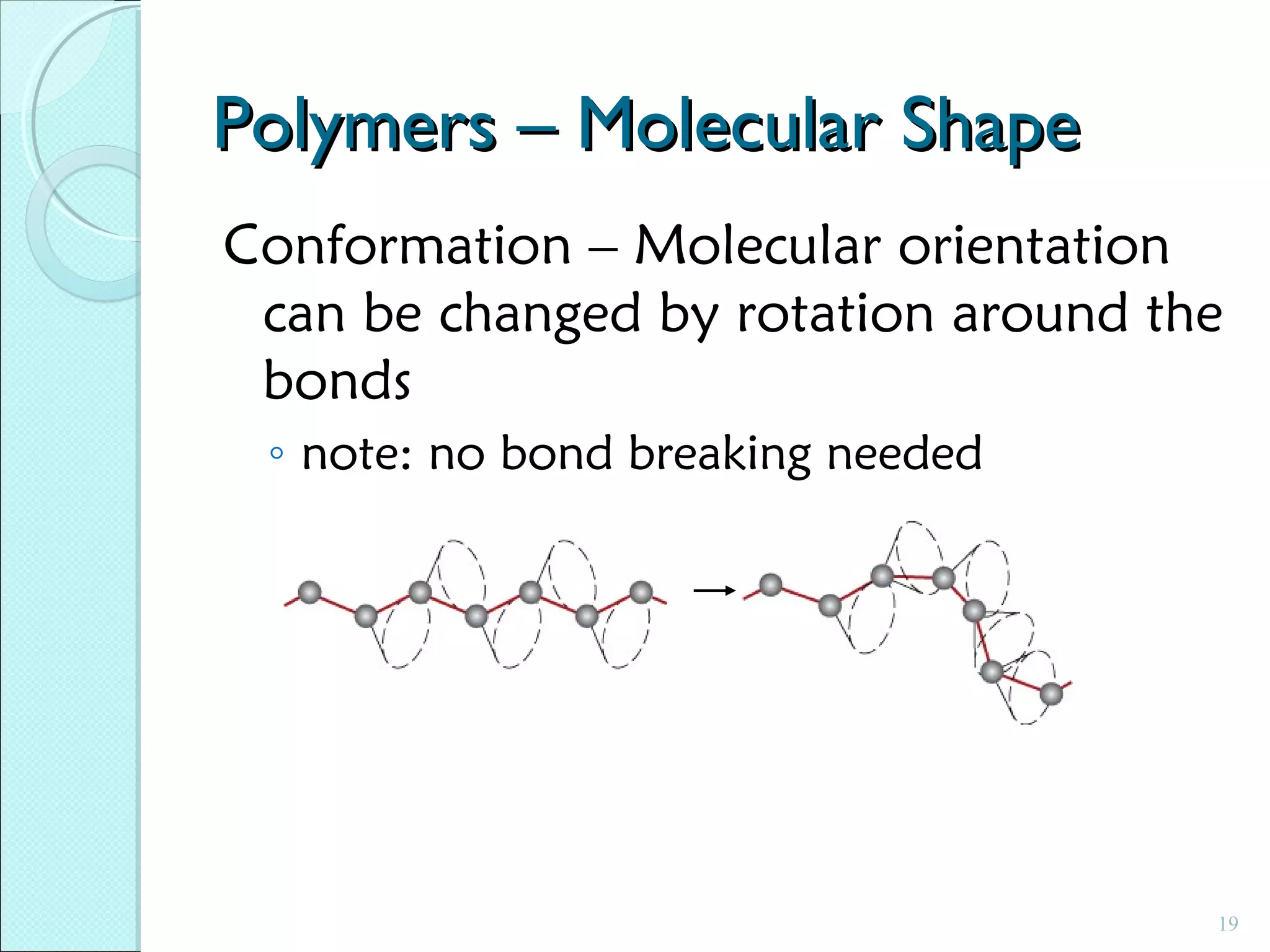
Polymers – Molecular Shape
Conformation – Molecular orientation
can be changed by rotation around the
bonds
◦ note: no bond breaking needed

19
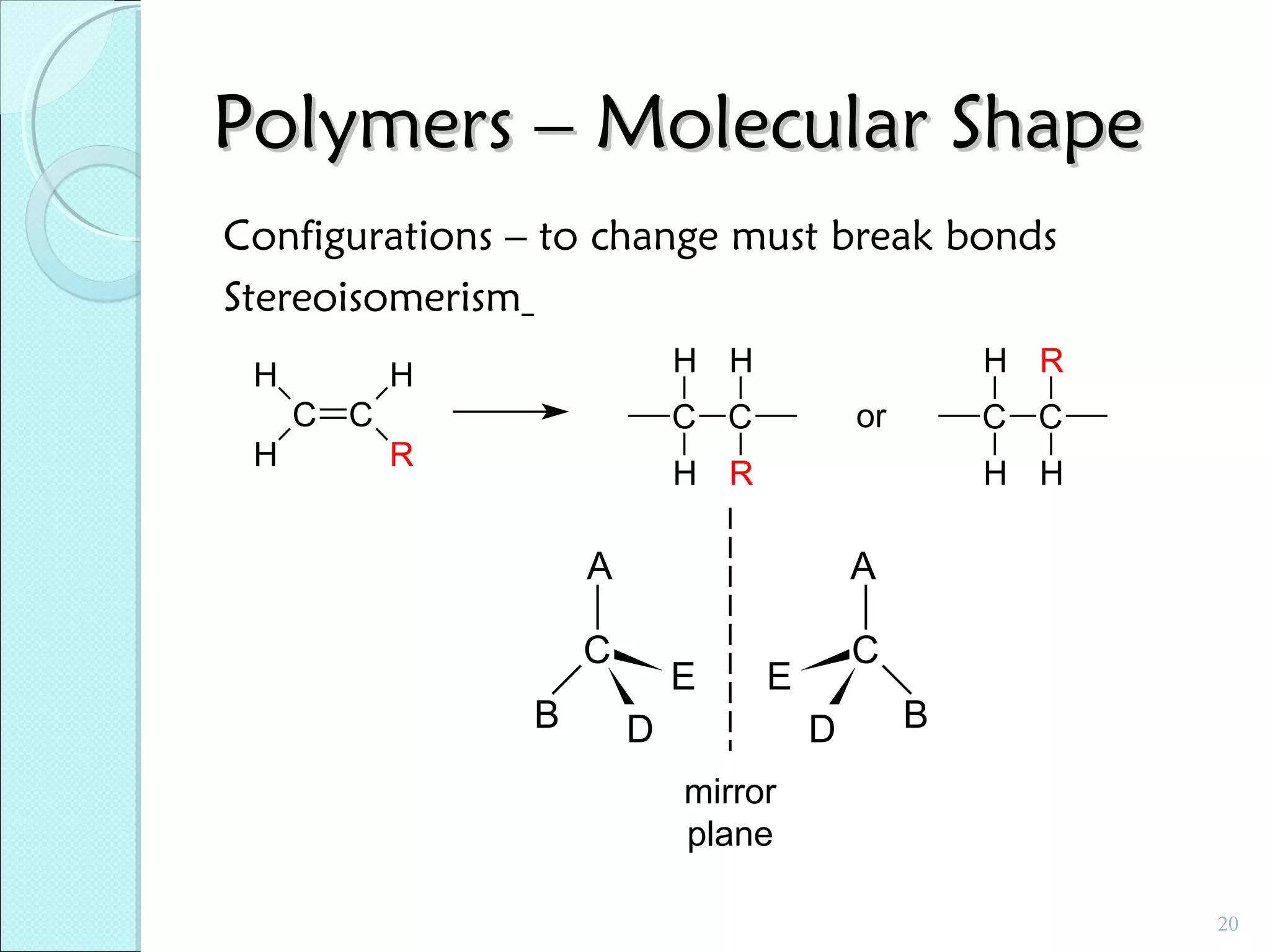
Polymers – Molecular Shape
Configurations – to change must break bonds
Stereoisomerism
H

H H

H
C C

H

H R
or

C C
R

C C

H R

H H

A

A

C
B

E

C

E

D

D

B

mirror
plane
20
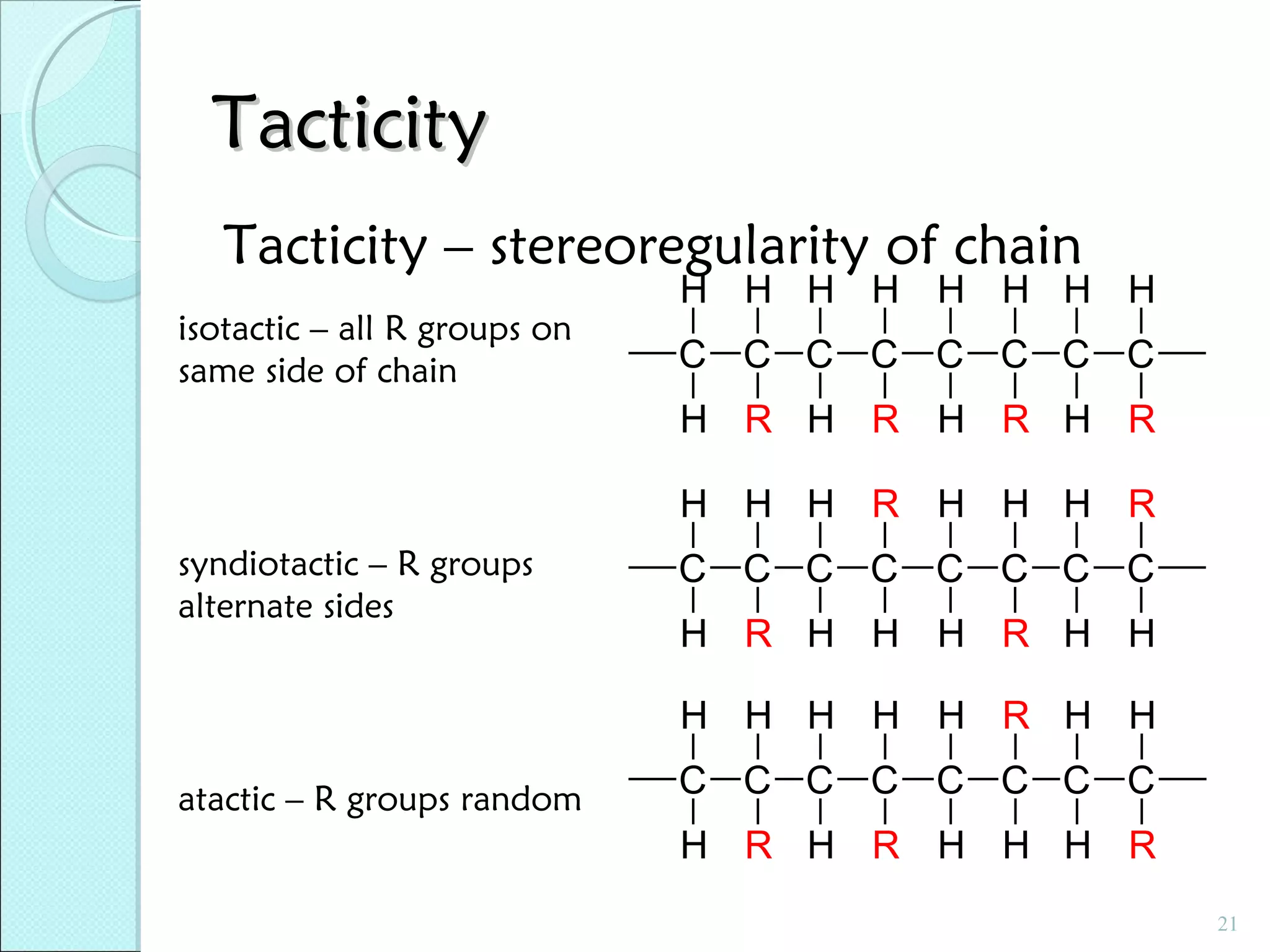
Tacticity
Tacticity – stereoregularity of chain
isotactic – all R groups on
same side of chain

H H H H H H H H

C C C C C C C C
H R H R H R H R
H H H R H H H R

syndiotactic – R groups
alternate sides

C C C C C C C C
H R H H H R H H
H H H H H R H H

atactic – R groups random

C C C C C C C C
H R H R H H H R
21
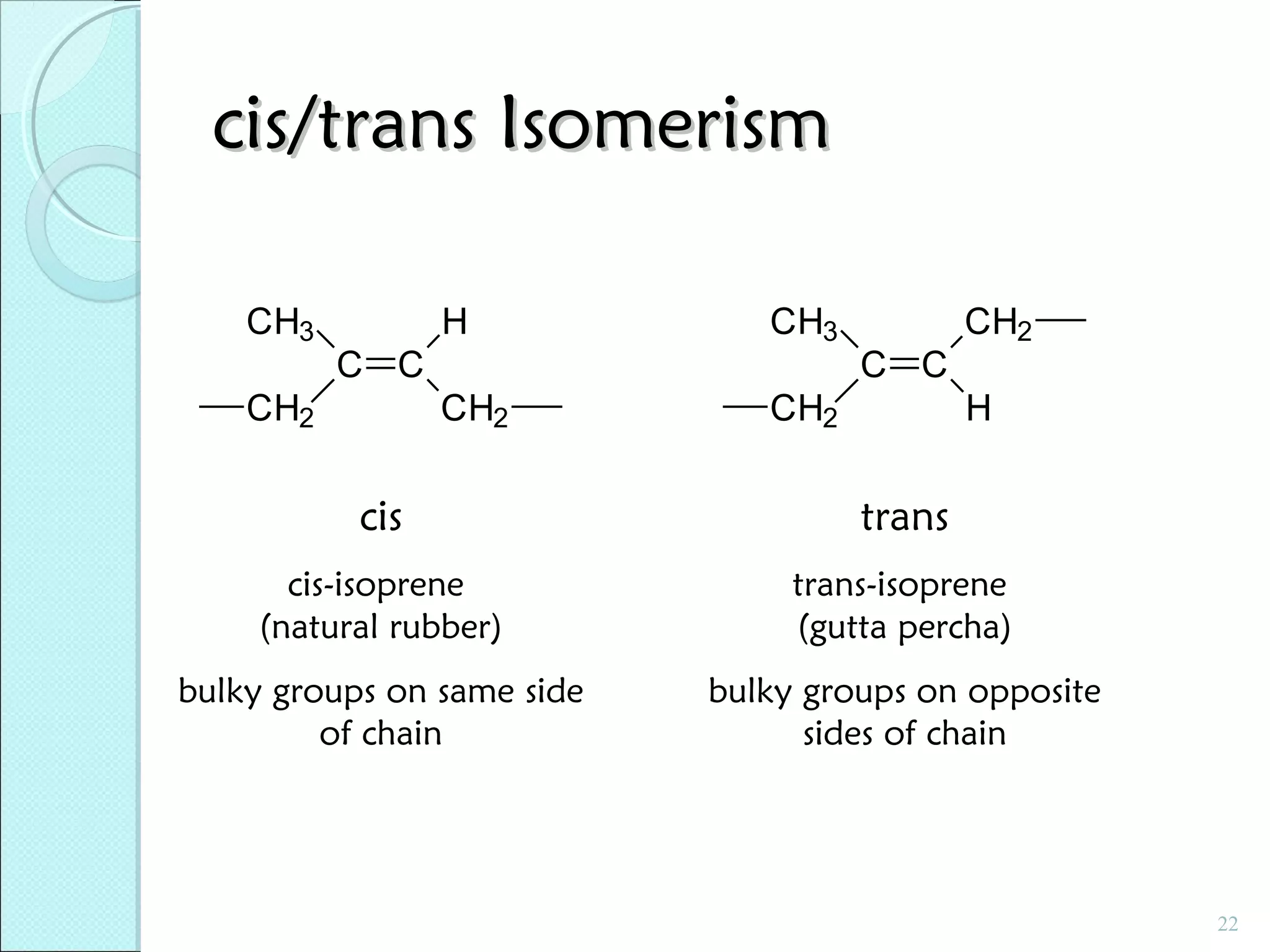
cis/trans Isomerism
CH3

H
C C

CH2

CH2

CH3

C C

CH2

CH2
H

cis

trans

cis-isoprene
(natural rubber)

trans-isoprene
(gutta percha)

bulky groups on same side
of chain

bulky groups on opposite
sides of chain

22
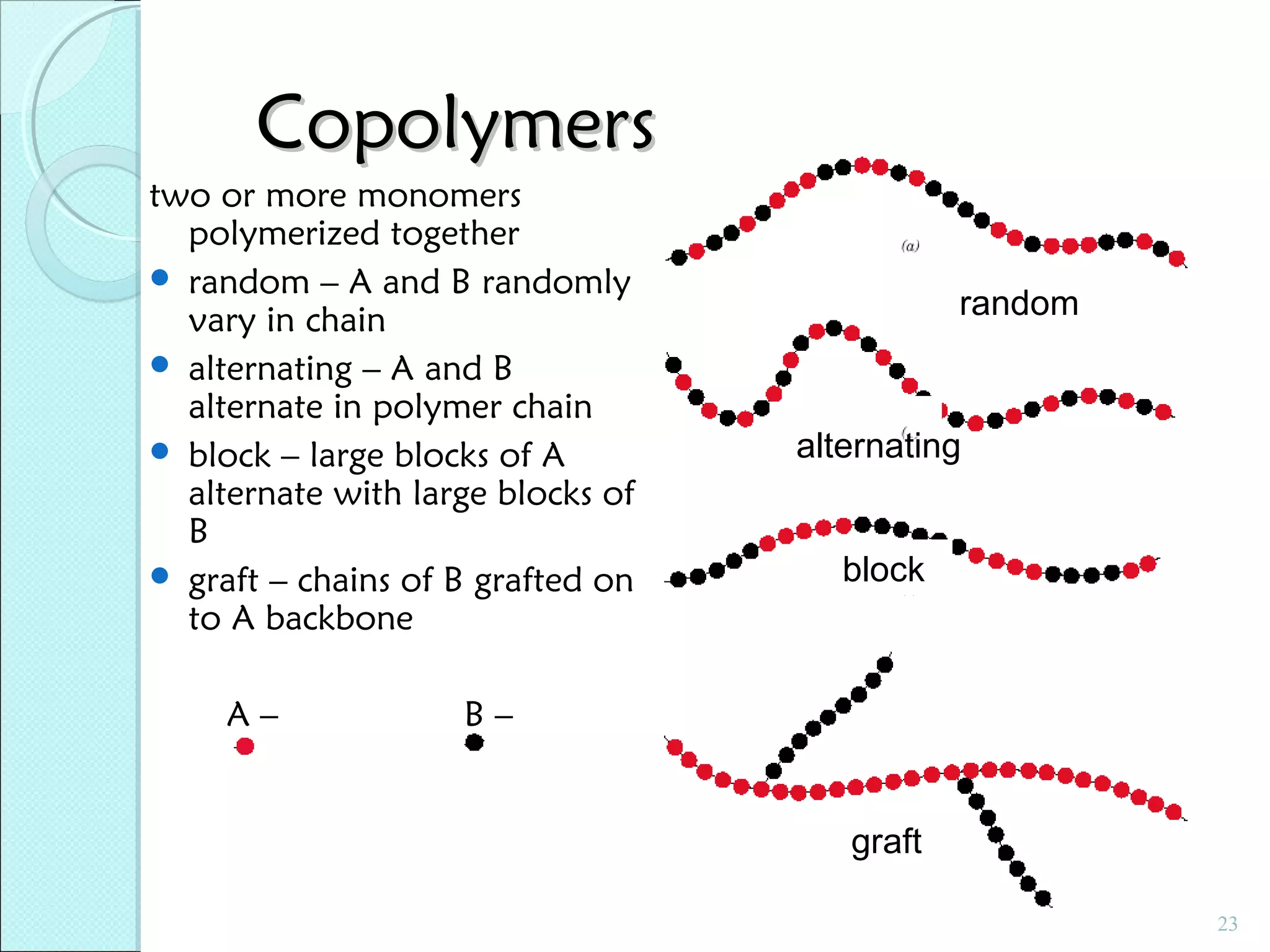
Copolymers
two or more monomers
polymerized together
 random – A and B randomly
vary in chain
 alternating – A and B
alternate in polymer chain
 block – large blocks of A
alternate with large blocks of
B
 graft – chains of B grafted on
to A backbone
A–

random

alternating
block

B–
graft
23
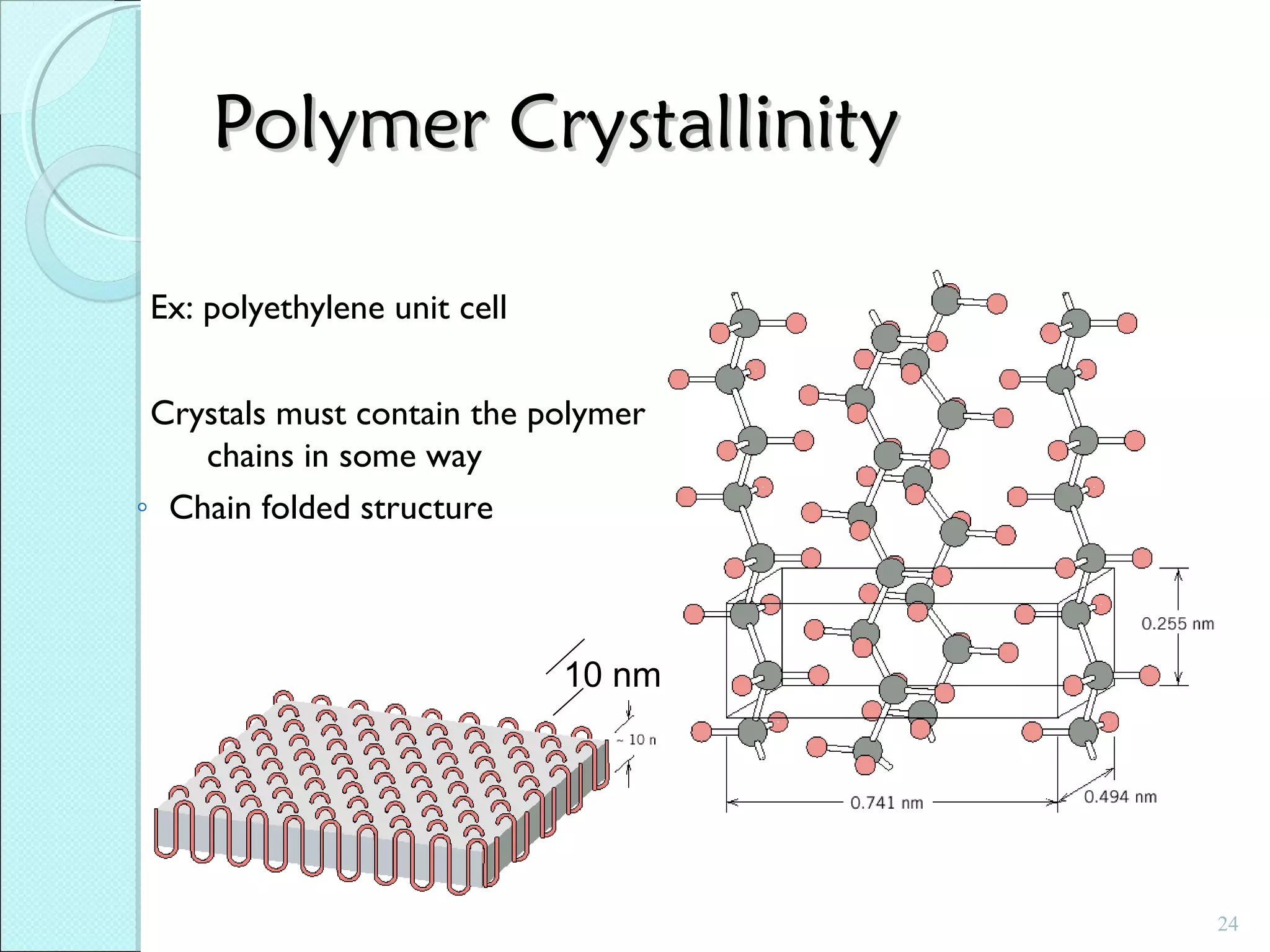
Polymer Crystallinity
Ex: polyethylene unit cell
Crystals must contain the polymer
chains in some way
◦ Chain folded structure

10 nm

24
Polymer Crystallinity
Polymers rarely 100% crystalline


Too difficult to get all those chains
aligned

• %

Crystallinity: % of material

that is crystalline.

-- TS and E often increase
with % crystallinity.
-- Annealing causes
crystalline regions
to grow. % crystallinity
increases.

25
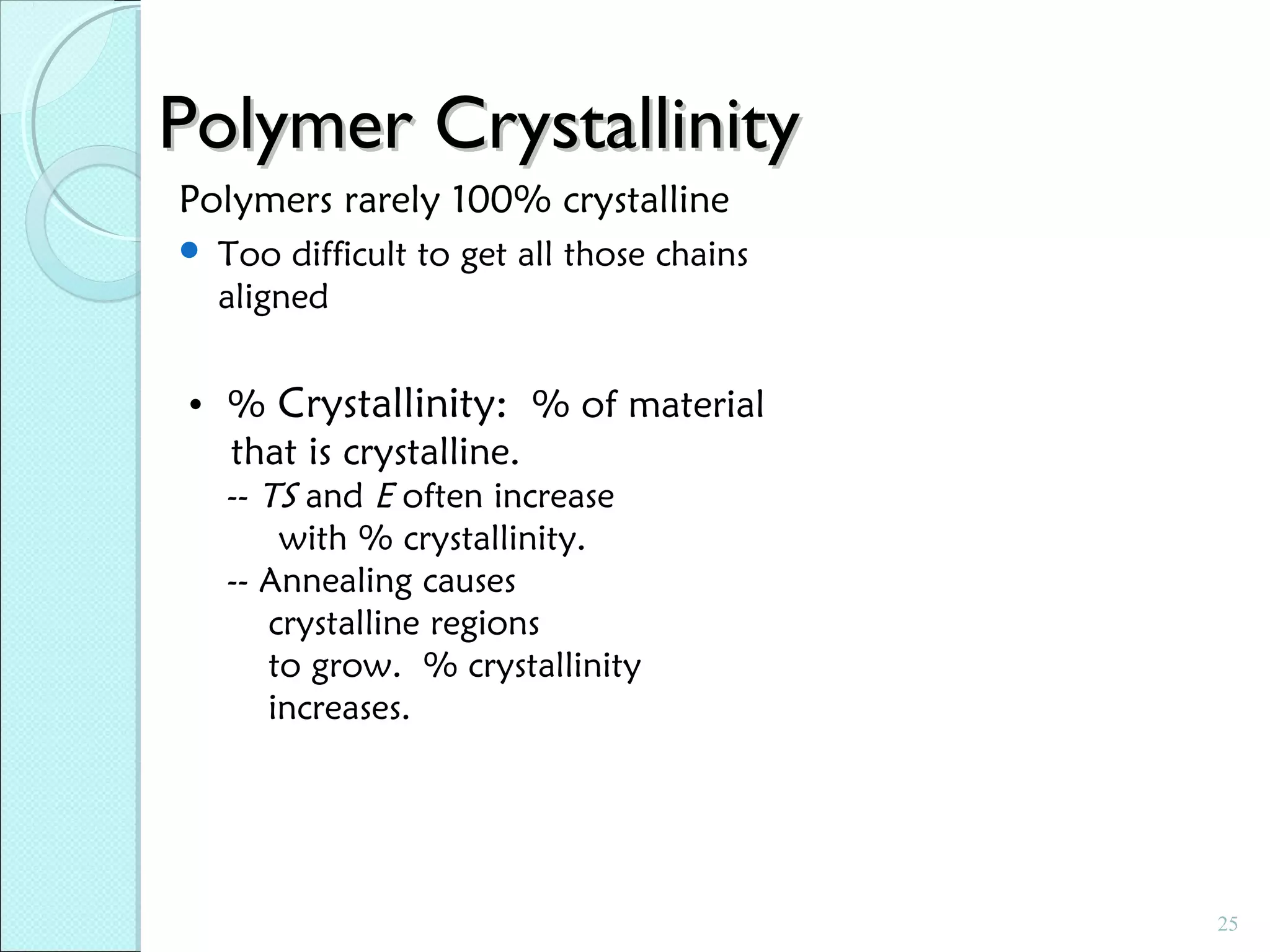
Polymer Crystal Forms
 Single

crystals – only if slow careful growth

26
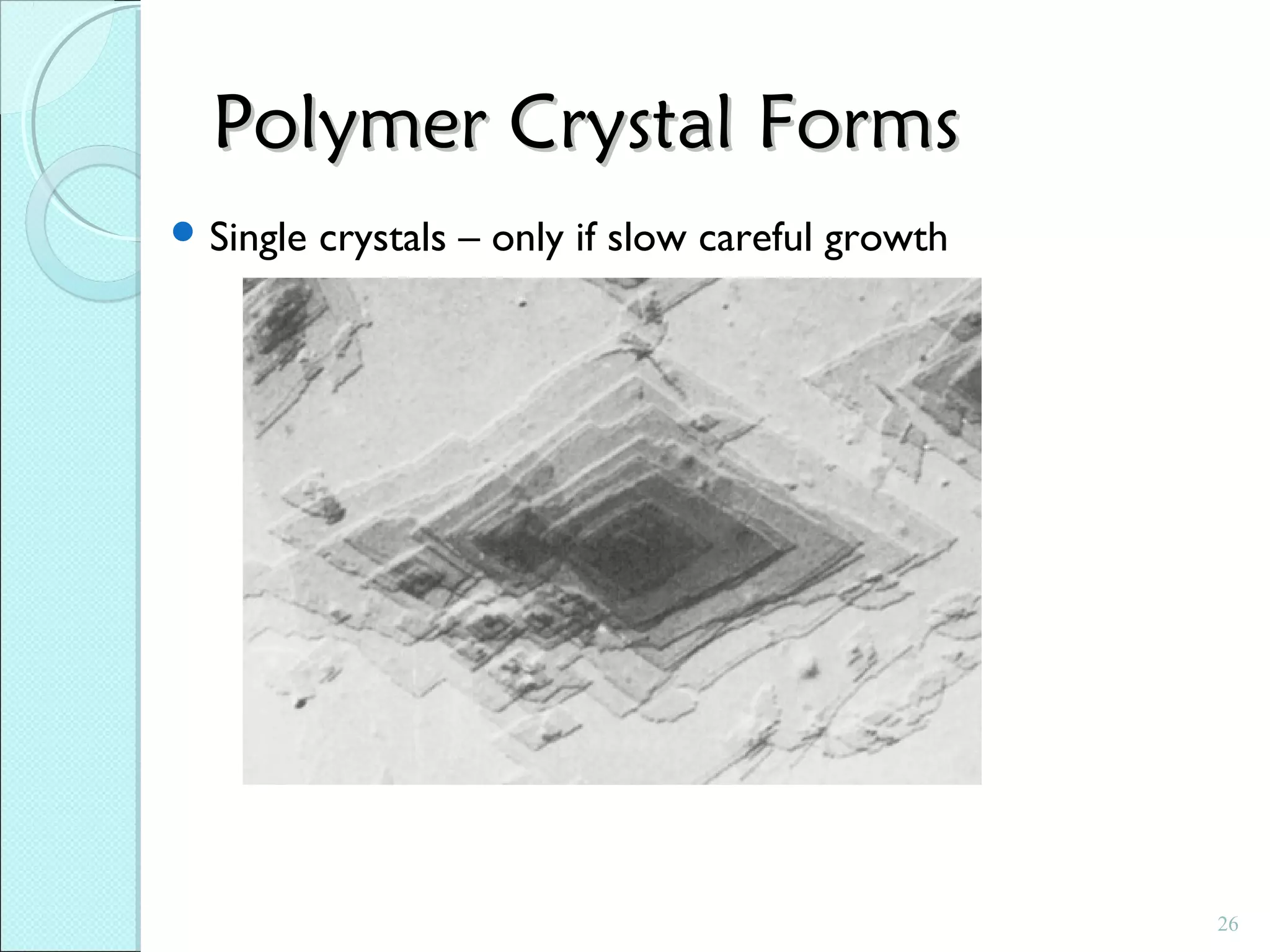
Polymer Crystal Forms
 Spherulites

– fast
growth – forms lamellar
(layered) structures

27
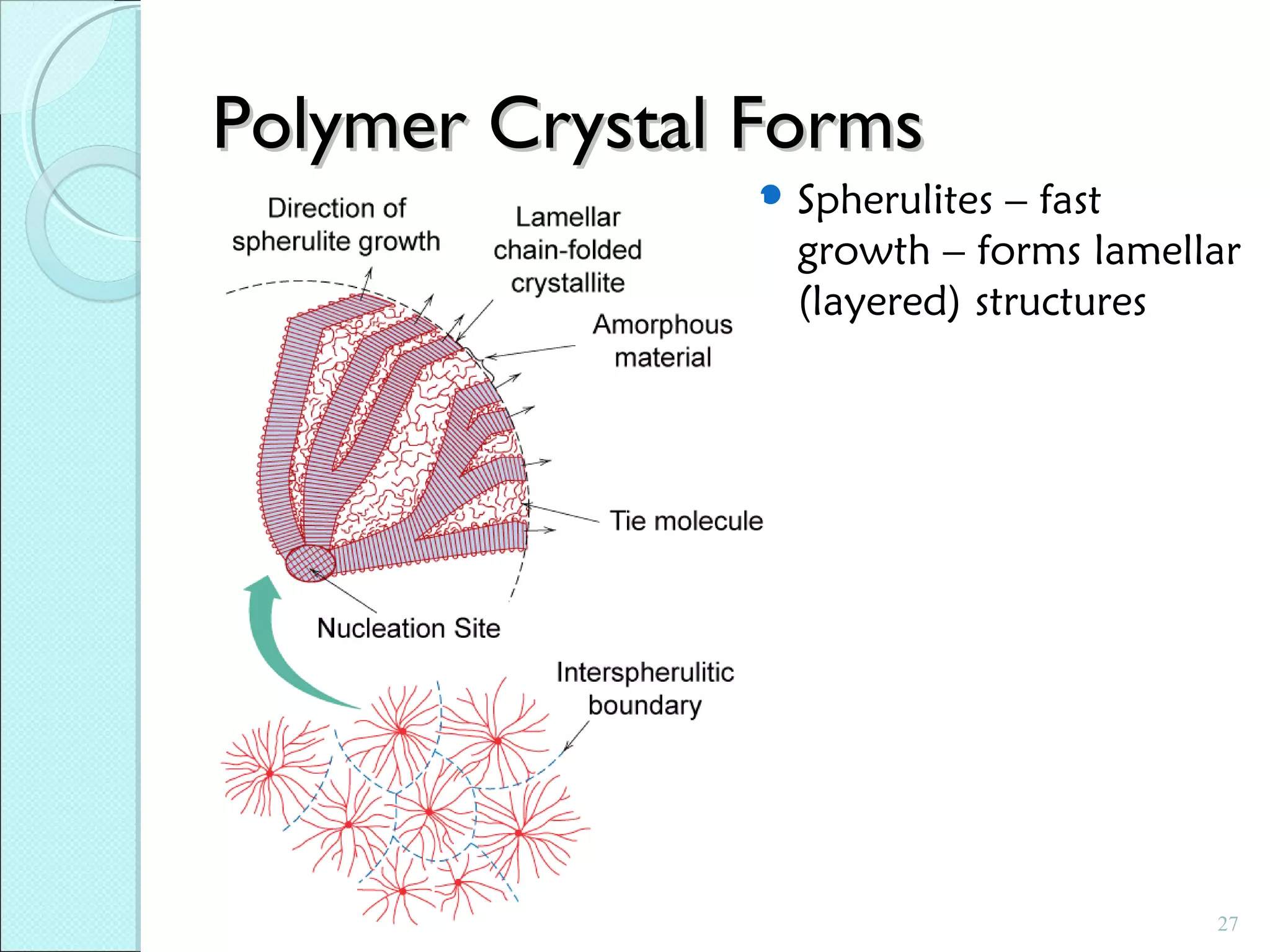
Spherulites – crossed polarizers
Maltese cross

28

Polymer structures

  • 1.
    POLYMER STRUCTURES Desiree Jane Enriquez SarahReyes Bernald Cabrera Nephtalie Cruz Arwie Mendoza 1
  • 2.
  • 3.
    Polymer History Originally naturalpolymers were used in Wood Cotton Leather Rubber Wool Silk Synthetic Polymers Plastics Rubbers Fiber materials 3
  • 4.
    Polymer Composition Most polymersare hydrocarbons – i.e. made up of H and C Saturated hydrocarbons ◦ Each carbon bonded to four other atoms H H C H H C H H CnH2n+2 4
  • 5.
  • 6.
    Unsaturated Hydrocarbons Double &triple bonds relatively reactive – can form new bonds  Double bond – ethylene or ethene - CnH2n H H C C H H H C C H 4-bonds, but only 3 atoms bound to C’s  Triple bond – acetylene or ethyne - CnH2n-2 6
  • 7.
    Isomerism  Isomerism ◦ twocompounds with same chemical formula can have quite different structures Ex: C8H18  n-octane H H H H H H H H H C C C C C C C C H = H3C CH2 CH2 CH2 CH2 CH2 CH2 CH3 ⇓ H H H H H H H H H3C ( CH2 ) CH3 6  2-methyl-4-ethyl pentane (isooctane) CH3 H3C CH CH2 CH CH3 CH2 CH3 7
  • 8.
    Chemistry of Polymers Free radical polymerization H H C C + R R C C H H monomer (ethylene) free radical H H R C C H H initiation H H H H + H H H H H H C C R C C C C H H H H H H propagation dimer  Initiator: H example - benzoyl peroxide C O O C H H H H 2 C O =2R H 8
  • 9.
    Chemistry of Polymers Note:polyethylene is just a long HC - paraffin is short polyethylene 9
  • 10.
    Bulk or CommodityPolymers 10
  • 11.
  • 12.
  • 13.
    MOLECULAR WEIGHT low M highM Not all chains in a polymer are of the same length 13
  • 14.
    Molecular weight ◦ Theproperties of a polymer depend on its length ◦ synthesis yields polymer distribution of lengths ◦ Define “average” molecular weight ◦ Two approaches are typically taken  Number average molecular weight (Mn)  Weight-average molecular weight (Mw)
  • 15.
  • 16.
    Degree of Polymerization,n n = number of repeat units per chain H H H H H H H H H H H H H C C (C C ) C C C C C C C C H ni = 6 H H H H H H H H H H H H Mn nn = ∑ xi ni = m Mw nw = ∑ wi ni = m where m = average molecular weight of repeat unit m = Σf i mi Chain fraction mol. wt of repeat unit i 16
  • 17.
    End to EndDistance, r 17
  • 18.
    Molecular Structures • Covalentchain configurations and strength: secondary bonding Linear Branched Cross-Linked Network Direction of increasing strength 18
  • 19.
    Polymers – MolecularShape Conformation – Molecular orientation can be changed by rotation around the bonds ◦ note: no bond breaking needed 19
  • 20.
    Polymers – MolecularShape Configurations – to change must break bonds Stereoisomerism H H H H C C H H R or C C R C C H R H H A A C B E C E D D B mirror plane 20
  • 21.
    Tacticity Tacticity – stereoregularityof chain isotactic – all R groups on same side of chain H H H H H H H H C C C C C C C C H R H R H R H R H H H R H H H R syndiotactic – R groups alternate sides C C C C C C C C H R H H H R H H H H H H H R H H atactic – R groups random C C C C C C C C H R H R H H H R 21
  • 22.
    cis/trans Isomerism CH3 H C C CH2 CH2 CH3 CC CH2 CH2 H cis trans cis-isoprene (natural rubber) trans-isoprene (gutta percha) bulky groups on same side of chain bulky groups on opposite sides of chain 22
  • 23.
    Copolymers two or moremonomers polymerized together  random – A and B randomly vary in chain  alternating – A and B alternate in polymer chain  block – large blocks of A alternate with large blocks of B  graft – chains of B grafted on to A backbone A– random alternating block B– graft 23
  • 24.
    Polymer Crystallinity Ex: polyethyleneunit cell Crystals must contain the polymer chains in some way ◦ Chain folded structure 10 nm 24
  • 25.
    Polymer Crystallinity Polymers rarely100% crystalline  Too difficult to get all those chains aligned • % Crystallinity: % of material that is crystalline. -- TS and E often increase with % crystallinity. -- Annealing causes crystalline regions to grow. % crystallinity increases. 25
  • 26.
    Polymer Crystal Forms Single crystals – only if slow careful growth 26
  • 27.
    Polymer Crystal Forms Spherulites – fast growth – forms lamellar (layered) structures 27
  • 28.
    Spherulites – crossedpolarizers Maltese cross 28

Editor's Notes

  • #10 Polymer- can have various lengths depending on number of repeat units
  • #11 Relatively few polymers responsible for virtually all polymers sold – these are the bulk or commodity polymers
  • #14 Simple for small molecules All the same size Number of grams/mole Polymers – distribution of chain sizes
  • #15 End of lecture 1