CREATED BY
MR.MAYUR S HIWALE
A MAN MADE CRISIS
Harmful substances that contaminates the
environment is pollution .
 Causes adverse changes in the environment,
 Damage to the ecosystem,
 Increases the toxicity of an environment,
 Disturbing the eco cycle and aesthetics of
our surrounding.
POLLUTION
Substances which causes pollution are
pollutants.
They may
 Gases
 Noise
 Dust
 Litter
 Intense light
POLLUTANTS
 Air Pollution
 Water Pollution
 Noise Pollution
 Land (Soil) Pollution
 Light Pollution
 Radioactive Pollution
Types of pollution
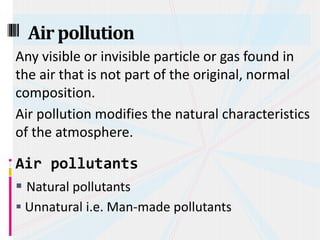
Any visible or invisible particle or gas found in
the air that is not part of the original, normal
composition.
Air pollution modifies the natural characteristics
of the atmosphere.
Air pollutants
 Natural pollutants
 Unnatural i.e. Man-made pollutants
Air pollution
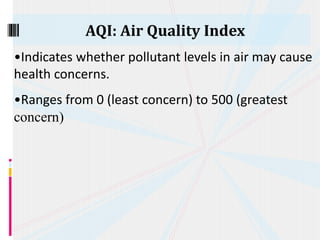
AQI: Air Quality Index
•Indicates whether pollutant levels in air may cause
health concerns.
•Ranges from 0 (least concern) to 500 (greatest
concern)
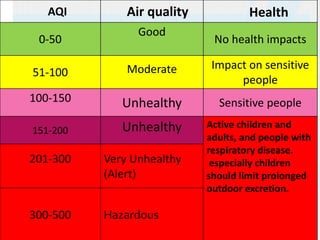
AQI Air quality Health
0-50
Good
No health impacts
51-100 Moderate Impact on sensitive
people
100-150 Unhealthy Sensitive people
151-200 Unhealthy Active children and
adults, and people with
respiratory disease.
especially children
should limit prolonged
outdoor excretion.
201-300 Very Unhealthy
(Alert)
300-500 Hazardous
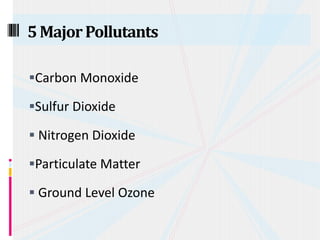
Carbon Monoxide
Sulfur Dioxide
 Nitrogen Dioxide
Particulate Matter
 Ground Level Ozone
5MajorPollutants
Smog
Combination of gases with water vapor and dust.
Combination of words smoke and fog.
 Acid Rain
Respiratory diseases
Agricultural effects
Reduces the Ozone layer
AIRPOLLUTIONEFFECTS
 Use of public vehicle / transport
 Stringent industrial emission standards
 Replacement of conventional resources by non
conventional resources
 Ban on burning of solid waste
Mass awareness should be increased through electronic
and print media
 Research on control of emissions
Remedies forcontrolling airpollution
Water pollution refers to the contamination
of water bodies.
Include lakes, rivers, oceans, aquifers and
groundwater.
Water pollution affects plants and organisms
living in these bodies of water.
Damaging individual species and natural
biological communities.
Waterpollution
 Organic Contaminants (Detergents, Herbicides,
etc.)
 Inorganic Contaminants (Heavy Metals, Ammonia,
etc)
 Solid Waste (Plastics, Paper, Food waste)
 Thermal Pollution (Discharge of warm water into
water bodies by factories)
 Chemical and Oïl Spill
 Sewage
 Runoff of Pesticides & Fertilizers
WaterPollutants
Toxic water supply
Disturbing the marine life cycle
 Causes diseases to the human being as well as
animals
Effectsofwaterpollution
 Don’t throw paints and oils in water channels
 Use environment friendly household products,
such as washing powder, household cleaning
agents etc.
 Take great care not to overuse pesticides and
fertilizers
 Don’t throw litter into rivers, lakes or oceans.
Help clean up any litter you see on beaches or in
rivers and lakes, make sure it is safe to collect the
litter and put it in a nearby dustbin.
Preventing waterpollution
Suspended, solid particles and inorganic material
can be removed by the use of filters.
 Use of biological filters and processes can
naturally degrade the organic waste material.
 After above two steps chemical additives are
supplied to get rid of any left-over impurities.
Treatment of polluted water
Noise pollution is displeasing or excessive noise
that may disrupt the activity or balance of human
or animal life.
Noise means disgust or discomfort hearing from
environment.
It is an underrated environmental problem because
of the fact that we can’t see, smell, or taste it.
NoisePollution
Transportation systems.
 Aircrafts.
Trains.
Loud speakers and DJ and music systems.
Various machines.
Sources ofNoisePollution
 The noise intensity is measured in decibels or dB.
person can bear the noise up to 85 decibels, after
which his hearing power can be damaged.
Noise pollution can damage physiological and
psychological health.
High blood pressure, stress related illness, sleep
disruption, hearing loss, and productivity loss are
the problems related to noise pollution.
It can also cause memory loss, severe depression,
and panic attacks
Effectsofnoisepollution
 Similar to automobiles, lubrication of the
machinery and servicing should be done to
minimize noise generation.
 Soundproof doors and windows can be installed
to block unwanted noise from outside.
 Regulations should be imposed to restrict the
usage of play loudspeakers in crowded areas and
public place.
 Factories and industries should be located far
from the residential areas.
Controlling noise
Pollution - a man made crisis ppt

Pollution - a man made crisis ppt

  • 1.
    CREATED BY MR.MAYUR SHIWALE A MAN MADE CRISIS
  • 2.
    Harmful substances thatcontaminates the environment is pollution .  Causes adverse changes in the environment,  Damage to the ecosystem,  Increases the toxicity of an environment,  Disturbing the eco cycle and aesthetics of our surrounding. POLLUTION
  • 3.
    Substances which causespollution are pollutants. They may  Gases  Noise  Dust  Litter  Intense light POLLUTANTS
  • 4.
     Air Pollution Water Pollution  Noise Pollution  Land (Soil) Pollution  Light Pollution  Radioactive Pollution Types of pollution
  • 5.
    Any visible orinvisible particle or gas found in the air that is not part of the original, normal composition. Air pollution modifies the natural characteristics of the atmosphere. Air pollutants  Natural pollutants  Unnatural i.e. Man-made pollutants Air pollution
  • 6.
    AQI: Air QualityIndex •Indicates whether pollutant levels in air may cause health concerns. •Ranges from 0 (least concern) to 500 (greatest concern)
  • 7.
    AQI Air qualityHealth 0-50 Good No health impacts 51-100 Moderate Impact on sensitive people 100-150 Unhealthy Sensitive people 151-200 Unhealthy Active children and adults, and people with respiratory disease. especially children should limit prolonged outdoor excretion. 201-300 Very Unhealthy (Alert) 300-500 Hazardous
  • 8.
    Carbon Monoxide Sulfur Dioxide Nitrogen Dioxide Particulate Matter  Ground Level Ozone 5MajorPollutants
  • 9.
    Smog Combination of gaseswith water vapor and dust. Combination of words smoke and fog.  Acid Rain Respiratory diseases Agricultural effects Reduces the Ozone layer AIRPOLLUTIONEFFECTS
  • 10.
     Use ofpublic vehicle / transport  Stringent industrial emission standards  Replacement of conventional resources by non conventional resources  Ban on burning of solid waste Mass awareness should be increased through electronic and print media  Research on control of emissions Remedies forcontrolling airpollution
  • 11.
    Water pollution refersto the contamination of water bodies. Include lakes, rivers, oceans, aquifers and groundwater. Water pollution affects plants and organisms living in these bodies of water. Damaging individual species and natural biological communities. Waterpollution
  • 12.
     Organic Contaminants(Detergents, Herbicides, etc.)  Inorganic Contaminants (Heavy Metals, Ammonia, etc)  Solid Waste (Plastics, Paper, Food waste)  Thermal Pollution (Discharge of warm water into water bodies by factories)  Chemical and Oïl Spill  Sewage  Runoff of Pesticides & Fertilizers WaterPollutants
  • 13.
    Toxic water supply Disturbingthe marine life cycle  Causes diseases to the human being as well as animals Effectsofwaterpollution
  • 14.
     Don’t throwpaints and oils in water channels  Use environment friendly household products, such as washing powder, household cleaning agents etc.  Take great care not to overuse pesticides and fertilizers  Don’t throw litter into rivers, lakes or oceans. Help clean up any litter you see on beaches or in rivers and lakes, make sure it is safe to collect the litter and put it in a nearby dustbin. Preventing waterpollution
  • 15.
    Suspended, solid particlesand inorganic material can be removed by the use of filters.  Use of biological filters and processes can naturally degrade the organic waste material.  After above two steps chemical additives are supplied to get rid of any left-over impurities. Treatment of polluted water
  • 16.
    Noise pollution isdispleasing or excessive noise that may disrupt the activity or balance of human or animal life. Noise means disgust or discomfort hearing from environment. It is an underrated environmental problem because of the fact that we can’t see, smell, or taste it. NoisePollution
  • 17.
    Transportation systems.  Aircrafts. Trains. Loudspeakers and DJ and music systems. Various machines. Sources ofNoisePollution
  • 18.
     The noiseintensity is measured in decibels or dB. person can bear the noise up to 85 decibels, after which his hearing power can be damaged. Noise pollution can damage physiological and psychological health. High blood pressure, stress related illness, sleep disruption, hearing loss, and productivity loss are the problems related to noise pollution. It can also cause memory loss, severe depression, and panic attacks Effectsofnoisepollution
  • 19.
     Similar toautomobiles, lubrication of the machinery and servicing should be done to minimize noise generation.  Soundproof doors and windows can be installed to block unwanted noise from outside.  Regulations should be imposed to restrict the usage of play loudspeakers in crowded areas and public place.  Factories and industries should be located far from the residential areas. Controlling noise