CLASS: B.COM (H) I SEM
ROLL NO:
7,11,41,50,57
GUIDED BY:
Mrs. SEEMA
MAM
POLLUTION
(A Problem )
I will be discussing….
Definition.
Types Of Pollution.
Causes.
Effects.
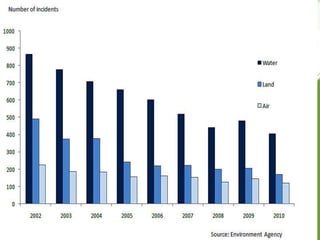
Statistical data.
Definition
• Pollution is the introduction of
contaminants into the natural environment
that cause adverse change, in the form of
killing of life ,toxicity of environment ,
damage to ecosystem and aesthetics of
our surrounding .
Definition (contd)
• An unwanted change in the environment
which involves the physical, biological and
chemical changes involving air, water and
land which affects the human life in one way
or the other”.
• Pollution has become a serious issue after
World War II in developing countries due to
unchecked rapid industrialization. Pollution is
the root cause of many diseases that kill and
disable living organisms.
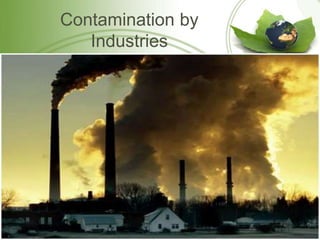
Contamination by
Industries
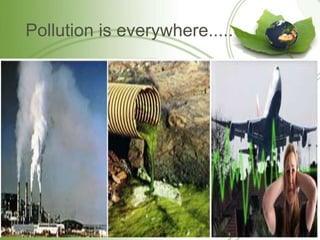
Pollution is everywhere.....
Types
Air Pollution.
Water Pollution.
Noise Pollution.
Soil contamination (by lead, heavy
metals)
Light pollution.
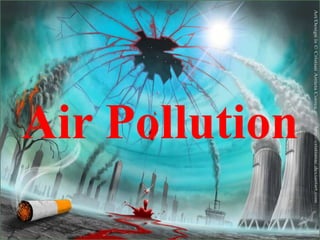
Air Pollution
Air Pollution
• Air pollution is contamination of
the indoor or outdoor environment
by any chemical, physical or
biological agent that modifies the
natural characteristics of the
atmosphere.
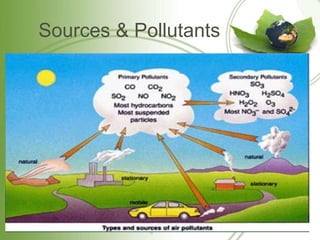
Sources Of Air Pollution
• Household combustion devices.
• Motor vehicles.
• Industrial facilities.
• Forest fires
Pollutants causing Air
Pollution……
• Include particulate matter.
• Carbon monoxide.
• Ozone.
• Nitrogen dioxide .
• Sulfur dioxide
Sources & Pollutants
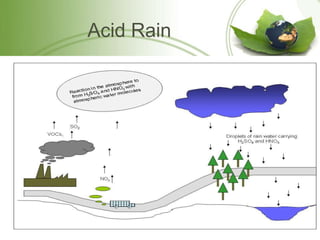
Acid Rain
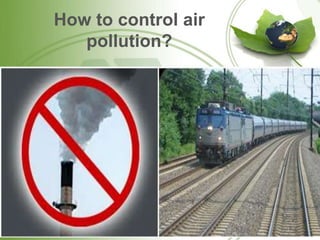
How to control air
pollution?
Air Pollution do have….
• Health effects
• Effects on cardiovascular health
• Effects on breathing (asthma).
• Links to cancer
• Effects on children
• Health effects in relatively "clean" areas
How to control air
pollution?
• Maintaining a healthy distance between the
industrial and residential areas.
• The chimneys should be constructed tall in
size so that the emissions must be released
higher up in the environment
• The sculpture must be removed after burning.
• The gasoline must have anti knocking
agents..
• The mining area should be planted with trees.
How to control air pollution?
• The coal fuel should be replaced with gas
fuel to control the air pollution.
• The automobiles must be designed with
emission control system.
• The wastes must be removed and recycled
in the industrial plants and refineries.
• Plants like pine and ribes need to be
planted to metabolize the nitrogen oxides
and other pollutants.
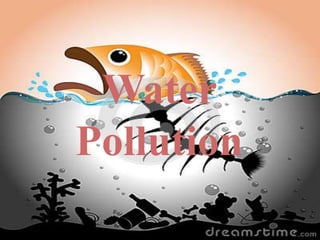
Water
Pollution
Water Pollution…
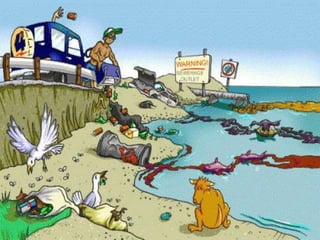
• Water pollution is the contamination of
water bodies (e.g. lakes, rivers, oceans,
aquifers and groundwater).
• Water pollution occurs when pollutants are
discharged directly or indirectly into water
bodies without adequate treatment to
remove harmful compounds.
.
Water Pollution…
• Water pollution affects plants and
organisms living in these bodies of water.
In almost all cases the effect is damaging
not only to individual species and
populations, but also to the natural
biological communities
Polluted Water…
• Domestic sewage.
• Industrial wastewater.
• Agricultural wastewater.
• Construction site stormwater.
• Urban runoff (stormwater).
Water Pollutants….
• Petroleum hydrocarbons
• Plastics
• Pesticides
• Heavy metals
• Sewage
• Radioactive waste
• Thermal effluents
Water Pollutants…
• Detergents
• Chloroform
• Food processing waste, (fats and grease)
• Insecticides and herbicides.
• Petroleum hydrocarbons, (gasoline, diesel
fuel, jet fuels, and fuel oil).
• Lubricants (motor oil).
• From stormwater runoff.
Preventing Water
Pollution…
• Conserve water by turning off the tap.
• Mind what you throw down your sink or toilet.
• Don’t throw paints and oils in water channels.
• Use environment friendly household products,
such as washing powder, household cleaning
agents etc.
• Take great care not to overuse pesticides and
fertilizers.
• Don’t throw litter into rivers, lakes or oceans. Help
clean up any litter you see on beaches or in rivers
and lakes, make sure it is safe to collect the litter
and put it in a nearby dustbin.
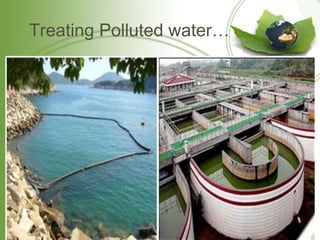
Treating Polluted Water...
• Suspended, solid particles and inorganic
material can be removed by the use of
filters.
• Use of biological filters and processes can
naturally degrade the organic waste
material.
• After above two steps chemical additives
are supplied to get rid of any left-over
impurities.
Treating Polluted water…
LIGHT POLLUTION
Light Pollution
Light Pollution
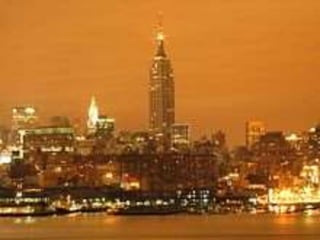
• Light pollution, also known as photo
pollution or luminous pollution, is
excessive, misdirected, or obtrusive
artificial light. Pollution is the adding-
of/added light itself, in analogy to added
sound, carbon dioxide, etc.
Light pollution Causes..
• Degradation of photic habitat by artificial
light.
• Alteration of natural light levels in the
outdoor environment.
• Due to Indoor light pollution human health
is compromised.
Controlling Light Pollution..
• Excessive lighting should be avoided.
• For Lighting an applicable design should
be followed.
• Light engineering should be applied for
streets.
NOISE POLLUTION
Noise Pollution..
Noise Pollution
• Noise pollution is displeasing or excessive
noise that may disrupt the activity or
balance of human or animal life.
• Noise means disgust or discomfort hearing
from environment.
Sources of Noise
Pollution…
• Machines.
• Transportation systems.
• Motor vehicles.
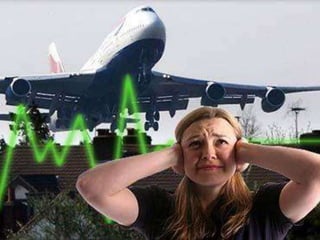
• Aircrafts.
• Trains.
• Poor urban planning.
Effects of Noise Pollution
• Noise pollution affects both health and behavior.
• Unwanted sound (noise) can damage
psychological health.
• Noise pollution can cause
• Annoyance
• Aggression .
• Hypertension .
• High stress levels .
• Hearing loss.
• sleep disturbances, and other harmful effects.
Effects of Noise Pollution
• Chronic exposure to noise may cause
noise-induced hearing loss.
• Older males exposed to significant
occupational noise demonstrate
significantly reduced hearing sensitivity
than their non-exposed peers.
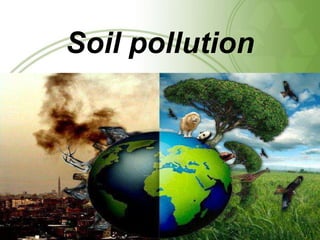
Soil pollution
Soil Pollution..
• Soil contamination or soil pollution is
caused by the presence of xenobiotic
(human-made) chemicals or other
alteration in the natural soil environment.
• It is typically caused by
• industrial activity.
• agricultural chemicals.
• improper disposal of waste.
Soil Contaminating
Chemicals…..
• Petroleum hydrocarbons.
• Polynuclear aromatic hydrocarbons.
Pesticides
• Lead and Other heavy metals.
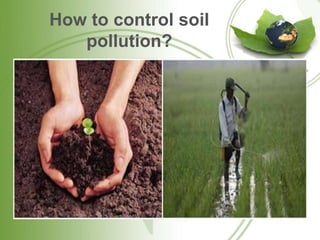
How to control soil
pollution?
How to control soil
pollution?
• Limit the use of fertilizers and pesticides
• Awareness about biological control methods
and their implementation
• The grazing must be controlled and forest
management should be done properly
• The afforestation and reforestation must take
place
• Proper preventive methods like shields should
be used in areas of wind erosion and wind
breaks
How to control soil
pollution?
• Treating Wastes of industries.
• Treating nuclear waste.
• Proper disposing of plastics and other
garbage materials.
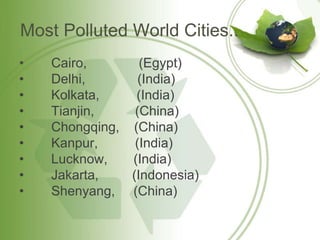
Most Polluted World Cities..
• Cairo, (Egypt)
• Delhi, (India)
• Kolkata, (India)
• Tianjin, (China)
• Chongqing, (China)
• Kanpur, (India)
• Lucknow, (India)
• Jakarta, (Indonesia)
• Shenyang, (China)
Pollution
A Single Solution…..
• Go green.
• Reduce
THANK YOU !!!

A5 (communication)

  • 1.
    CLASS: B.COM (H)I SEM ROLL NO: 7,11,41,50,57 GUIDED BY: Mrs. SEEMA MAM
  • 2.
  • 3.
    I will bediscussing…. Definition. Types Of Pollution. Causes. Effects. Statistical data.
  • 4.
    Definition • Pollution isthe introduction of contaminants into the natural environment that cause adverse change, in the form of killing of life ,toxicity of environment , damage to ecosystem and aesthetics of our surrounding .
  • 5.
    Definition (contd) • Anunwanted change in the environment which involves the physical, biological and chemical changes involving air, water and land which affects the human life in one way or the other”. • Pollution has become a serious issue after World War II in developing countries due to unchecked rapid industrialization. Pollution is the root cause of many diseases that kill and disable living organisms.
  • 7.
  • 8.
  • 9.
    Types Air Pollution. Water Pollution. NoisePollution. Soil contamination (by lead, heavy metals) Light pollution.
  • 10.
  • 11.
    Air Pollution • Airpollution is contamination of the indoor or outdoor environment by any chemical, physical or biological agent that modifies the natural characteristics of the atmosphere.
  • 12.
    Sources Of AirPollution • Household combustion devices. • Motor vehicles. • Industrial facilities. • Forest fires
  • 13.
    Pollutants causing Air Pollution…… •Include particulate matter. • Carbon monoxide. • Ozone. • Nitrogen dioxide . • Sulfur dioxide
  • 14.
  • 15.
  • 16.
    How to controlair pollution?
  • 17.
    Air Pollution dohave…. • Health effects • Effects on cardiovascular health • Effects on breathing (asthma). • Links to cancer • Effects on children • Health effects in relatively "clean" areas
  • 18.
    How to controlair pollution? • Maintaining a healthy distance between the industrial and residential areas. • The chimneys should be constructed tall in size so that the emissions must be released higher up in the environment • The sculpture must be removed after burning. • The gasoline must have anti knocking agents.. • The mining area should be planted with trees.
  • 19.
    How to controlair pollution? • The coal fuel should be replaced with gas fuel to control the air pollution. • The automobiles must be designed with emission control system. • The wastes must be removed and recycled in the industrial plants and refineries. • Plants like pine and ribes need to be planted to metabolize the nitrogen oxides and other pollutants.
  • 20.
  • 21.
    Water Pollution… • Waterpollution is the contamination of water bodies (e.g. lakes, rivers, oceans, aquifers and groundwater). • Water pollution occurs when pollutants are discharged directly or indirectly into water bodies without adequate treatment to remove harmful compounds. .
  • 22.
    Water Pollution… • Waterpollution affects plants and organisms living in these bodies of water. In almost all cases the effect is damaging not only to individual species and populations, but also to the natural biological communities
  • 24.
    Polluted Water… • Domesticsewage. • Industrial wastewater. • Agricultural wastewater. • Construction site stormwater. • Urban runoff (stormwater).
  • 25.
    Water Pollutants…. • Petroleumhydrocarbons • Plastics • Pesticides • Heavy metals • Sewage • Radioactive waste • Thermal effluents
  • 26.
    Water Pollutants… • Detergents •Chloroform • Food processing waste, (fats and grease) • Insecticides and herbicides. • Petroleum hydrocarbons, (gasoline, diesel fuel, jet fuels, and fuel oil). • Lubricants (motor oil). • From stormwater runoff.
  • 27.
    Preventing Water Pollution… • Conservewater by turning off the tap. • Mind what you throw down your sink or toilet. • Don’t throw paints and oils in water channels. • Use environment friendly household products, such as washing powder, household cleaning agents etc. • Take great care not to overuse pesticides and fertilizers. • Don’t throw litter into rivers, lakes or oceans. Help clean up any litter you see on beaches or in rivers and lakes, make sure it is safe to collect the litter and put it in a nearby dustbin.
  • 28.
    Treating Polluted Water... •Suspended, solid particles and inorganic material can be removed by the use of filters. • Use of biological filters and processes can naturally degrade the organic waste material. • After above two steps chemical additives are supplied to get rid of any left-over impurities.
  • 29.
  • 30.
  • 31.
  • 32.
    Light Pollution • Lightpollution, also known as photo pollution or luminous pollution, is excessive, misdirected, or obtrusive artificial light. Pollution is the adding- of/added light itself, in analogy to added sound, carbon dioxide, etc.
  • 33.
    Light pollution Causes.. •Degradation of photic habitat by artificial light. • Alteration of natural light levels in the outdoor environment. • Due to Indoor light pollution human health is compromised.
  • 34.
    Controlling Light Pollution.. •Excessive lighting should be avoided. • For Lighting an applicable design should be followed. • Light engineering should be applied for streets.
  • 35.
  • 36.
  • 37.
    Noise Pollution • Noisepollution is displeasing or excessive noise that may disrupt the activity or balance of human or animal life. • Noise means disgust or discomfort hearing from environment.
  • 38.
    Sources of Noise Pollution… •Machines. • Transportation systems. • Motor vehicles. • Aircrafts. • Trains. • Poor urban planning.
  • 39.
    Effects of NoisePollution • Noise pollution affects both health and behavior. • Unwanted sound (noise) can damage psychological health. • Noise pollution can cause • Annoyance • Aggression . • Hypertension . • High stress levels . • Hearing loss. • sleep disturbances, and other harmful effects.
  • 40.
    Effects of NoisePollution • Chronic exposure to noise may cause noise-induced hearing loss. • Older males exposed to significant occupational noise demonstrate significantly reduced hearing sensitivity than their non-exposed peers.
  • 41.
  • 42.
    Soil Pollution.. • Soilcontamination or soil pollution is caused by the presence of xenobiotic (human-made) chemicals or other alteration in the natural soil environment. • It is typically caused by • industrial activity. • agricultural chemicals. • improper disposal of waste.
  • 43.
    Soil Contaminating Chemicals….. • Petroleumhydrocarbons. • Polynuclear aromatic hydrocarbons. Pesticides • Lead and Other heavy metals.
  • 44.
    How to controlsoil pollution?
  • 45.
    How to controlsoil pollution? • Limit the use of fertilizers and pesticides • Awareness about biological control methods and their implementation • The grazing must be controlled and forest management should be done properly • The afforestation and reforestation must take place • Proper preventive methods like shields should be used in areas of wind erosion and wind breaks
  • 46.
    How to controlsoil pollution? • Treating Wastes of industries. • Treating nuclear waste. • Proper disposing of plastics and other garbage materials.
  • 47.
    Most Polluted WorldCities.. • Cairo, (Egypt) • Delhi, (India) • Kolkata, (India) • Tianjin, (China) • Chongqing, (China) • Kanpur, (India) • Lucknow, (India) • Jakarta, (Indonesia) • Shenyang, (China)
  • 48.
  • 49.
    A Single Solution….. •Go green. • Reduce
  • 50.