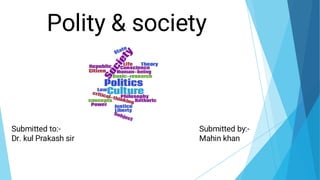
Polity & society
Submitted to:-
Dr. kul Prakash sir
Submitted by:-
Mahin khan
What is polity?
A polity is an identifiable political entity – a group of people
with a collective identity, who are organized by some form
of institutionalized social relations, and have a capacity to
mobilize resources.A polity can be any other group of people
organized for governance (such as a corporate board), the
government of a country, or of a country subdivision. A polity
may be a republic administered by an elected representative,
or the realm of a hereditary monarch.
Concept of constitution
What is constitution?
A constitution is primarily a set of rules and principles specifying how
a country should be governed, how power is distributed and
controlled, and what rights citizens possess.
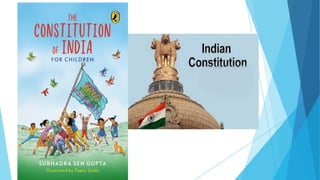
Constitution of India
The Constitution of India is the supreme law of India. The document
lays down the framework that demarcates fundamental political
code, structure, procedures, powers, and duties of government
institutions and sets out fundamental rights, directive principles, and
the duties of citizens. It is the longest written national constitution in
the world.
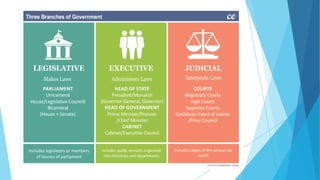
Organs of government
There are three organs of government
Legislature
Executive
Judiciary
Legislature
legislature of the Union, which is called Parliament,
consists of the President and two Houses, known
as ch House has to meet within six months of its
previous Council of States (Rajya Sabha) and House
of the People (Lok Sabha). Easitting. A joint sitting of
two Houses can be held in certain cases.
Executive
The executive is the branch of government
responsible for the implementation of laws and
policies adopted by the legislature. The
executive is often involved in the framing of
policy. The official designations of the
executive vary from country to country.
Judiciary
The judiciary is that branch of the government
that interprets the law, settles disputes and
administers justice to all citizens. The judiciary
is considered the watchdog of democracy,
and also the guardian of the Constitution.
Unitary
government
vs
Federal
government
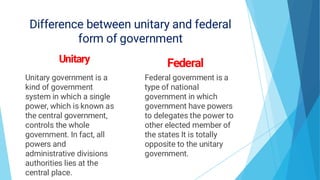
Difference between unitary and federal
form of government
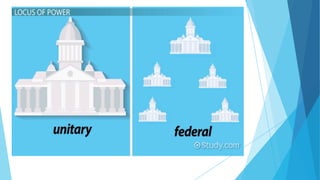
Unitary
Unitary government is a
kind of government
system in which a single
power, which is known as
the central government,
controls the whole
government. In fact, all
powers and
administrative divisions
authorities lies at the
central place.
Federal
Federal government is a
type of national
government in which
government have powers
to delegates the power to
other elected member of
the states It is totally
opposite to the unitary
government.
Parliamentary government
A Parliamentary government is a democratic
administration in which the government is
formed by the political party that obtains the
most seats in the legislature or Parliament
during the federal election.
The term “ Parliamentary government” refers
to the fact that the Parliament has all the
authority.
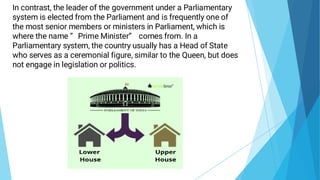
In contrast, the leader of the government under a Parliamentary
system is elected from the Parliament and is frequently one of
the most senior members or ministers in Parliament, which is
where the name “ Prime Minister” comes from. In a
Parliamentary system, the country usually has a Head of State
who serves as a ceremonial figure, similar to the Queen, but does
not engage in legislation or politics.
Presidential government
A presidential system, also known as a single
executive system, is a form of government in which
the president heads an executive branch that is
independent of the legislative branch. A presidential
system is one in which the head of state is also the
head of government, and the executive branch is
independent of the legislative branch.
The United States, for example, is governed by a
presidential system.
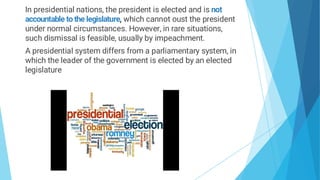
In presidential nations, the president is elected and is not
accountable to the legislature, which cannot oust the president
under normal circumstances. However, in rare situations,
such dismissal is feasible, usually by impeachment.
A presidential system differs from a parliamentary system, in
which the leader of the government is elected by an elected
legislature
THANK
YOU

polity and society.pdf

  • 1.
    Polity & society Submittedto:- Dr. kul Prakash sir Submitted by:- Mahin khan
  • 2.
    What is polity? Apolity is an identifiable political entity – a group of people with a collective identity, who are organized by some form of institutionalized social relations, and have a capacity to mobilize resources.A polity can be any other group of people organized for governance (such as a corporate board), the government of a country, or of a country subdivision. A polity may be a republic administered by an elected representative, or the realm of a hereditary monarch.
  • 3.
    Concept of constitution Whatis constitution? A constitution is primarily a set of rules and principles specifying how a country should be governed, how power is distributed and controlled, and what rights citizens possess. Constitution of India The Constitution of India is the supreme law of India. The document lays down the framework that demarcates fundamental political code, structure, procedures, powers, and duties of government institutions and sets out fundamental rights, directive principles, and the duties of citizens. It is the longest written national constitution in the world.
  • 5.
    Organs of government Thereare three organs of government Legislature Executive Judiciary
  • 6.
    Legislature legislature of theUnion, which is called Parliament, consists of the President and two Houses, known as ch House has to meet within six months of its previous Council of States (Rajya Sabha) and House of the People (Lok Sabha). Easitting. A joint sitting of two Houses can be held in certain cases.
  • 7.
    Executive The executive isthe branch of government responsible for the implementation of laws and policies adopted by the legislature. The executive is often involved in the framing of policy. The official designations of the executive vary from country to country.
  • 8.
    Judiciary The judiciary isthat branch of the government that interprets the law, settles disputes and administers justice to all citizens. The judiciary is considered the watchdog of democracy, and also the guardian of the Constitution.
  • 10.
  • 11.
    Difference between unitaryand federal form of government Unitary Unitary government is a kind of government system in which a single power, which is known as the central government, controls the whole government. In fact, all powers and administrative divisions authorities lies at the central place. Federal Federal government is a type of national government in which government have powers to delegates the power to other elected member of the states It is totally opposite to the unitary government.
  • 13.
    Parliamentary government A Parliamentarygovernment is a democratic administration in which the government is formed by the political party that obtains the most seats in the legislature or Parliament during the federal election. The term “ Parliamentary government” refers to the fact that the Parliament has all the authority.
  • 14.
    In contrast, theleader of the government under a Parliamentary system is elected from the Parliament and is frequently one of the most senior members or ministers in Parliament, which is where the name “ Prime Minister” comes from. In a Parliamentary system, the country usually has a Head of State who serves as a ceremonial figure, similar to the Queen, but does not engage in legislation or politics.
  • 15.
    Presidential government A presidentialsystem, also known as a single executive system, is a form of government in which the president heads an executive branch that is independent of the legislative branch. A presidential system is one in which the head of state is also the head of government, and the executive branch is independent of the legislative branch. The United States, for example, is governed by a presidential system.
  • 16.
    In presidential nations,the president is elected and is not accountable to the legislature, which cannot oust the president under normal circumstances. However, in rare situations, such dismissal is feasible, usually by impeachment. A presidential system differs from a parliamentary system, in which the leader of the government is elected by an elected legislature
  • 17.