I Love Poetry!
Notetaking Guide:
Record What You
Learn!
Poetry is a kind of musical
and focused writing designed
to appeal to emotion and
imagination. There are many
types of poems:
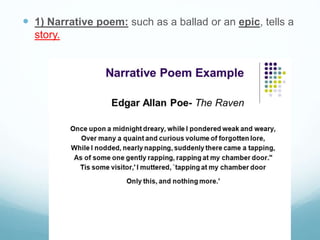
 1) Narrative poem: such as a ballad or an epic, tells a
story.
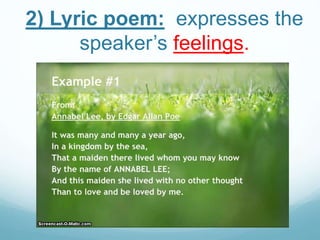
2) Lyric poem: expresses the
speaker’s feelings.
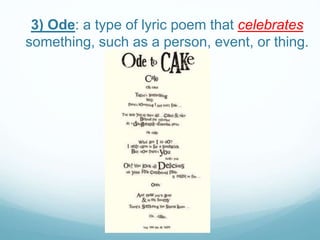
3) Ode: a type of lyric poem that celebrates
something, such as a person, event, or thing.
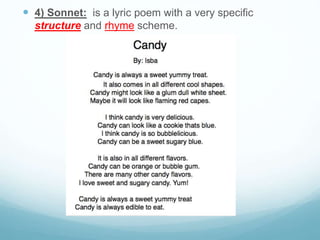
 4) Sonnet: is a lyric poem with a very specific
structure and rhyme scheme.
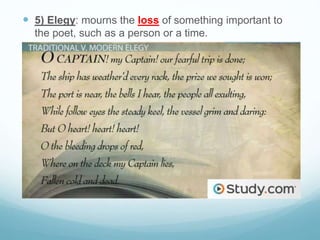
 5) Elegy: mourns the loss of something important to
the poet, such as a person or a time.
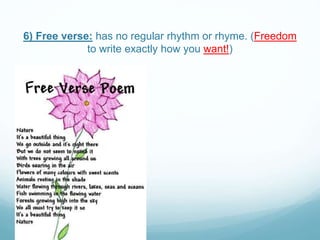
6) Free verse: has no regular rhythm or rhyme. (Freedom
to write exactly how you want!)
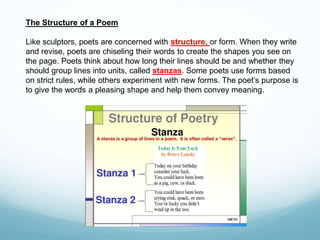
The Structure of a Poem
Like sculptors, poets are concerned with structure, or form. When they write
and revise, poets are chiseling their words to create the shapes you see on
the page. Poets think about how long their lines should be and whether they
should group lines into units, called stanzas. Some poets use forms based
on strict rules, while others experiment with new forms. The poet’s purpose is
to give the words a pleasing shape and help them convey meaning.
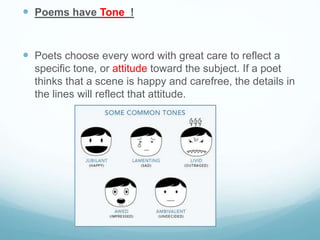
 Poems have Tone_!
 Poets choose every word with great care to reflect a
specific tone, or attitude toward the subject. If a poet
thinks that a scene is happy and carefree, the details in
the lines will reflect that attitude.
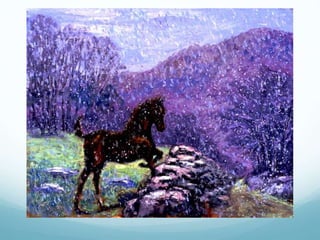
Poems have Imagery!
 Think of a poet as an artist who is creating a picture
with words. Like painters, poets want to share a
special, personal vision of the world. To do this, poets
use imagery, or word that create pictures, that put your
imagination to work. Such images can make you see
things in new and unexpected ways.
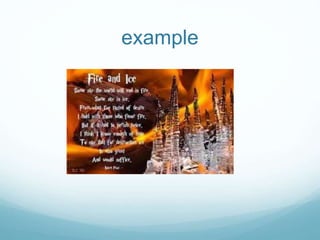
example
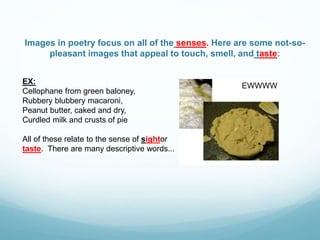
Images in poetry focus on all of the senses. Here are some not-so-
pleasant images that appeal to touch, smell, and taste:
EX:
Cellophane from green baloney,
Rubbery blubbery macaroni,
Peanut butter, caked and dry,
Curdled milk and crusts of pie
All of these relate to the sense of sightor
taste. There are many descriptive words...
EWWWW
A Poem Has Figurative Language!
 Along with images, poets use figures of speech to
share their special, personal visions of the world.
Figures of speech are comparisons that point out
connections between dissimilar things.
A simile is a comparison of two unlike things using the
words like or as.
EX: And we saw him, or thought we saw him, dim and
gray, like a shadow against the curtain of falling flakes.
-from “The Runaway” by Robert Frost
What is the comparison?
___________________________________________
______________________________________________
_____________________
_________________________________
A metaphor compares two unlike things, but it does so
without using like or other such words.
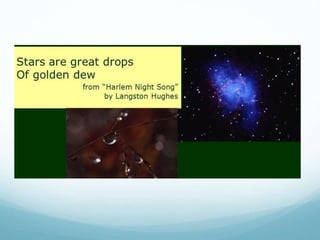
Stars are great drops
Of golden dew.
-from “Harlem Night Song”
by Langston Hughes
What is the comparison?
___________________________________________
______________________________________________
Please turn into the inbox
when finished 

Poetry notes slides Ms. Vanko

  • 1.
    I Love Poetry! NotetakingGuide: Record What You Learn!
  • 2.
    Poetry is akind of musical and focused writing designed to appeal to emotion and imagination. There are many types of poems:
  • 3.
     1) Narrativepoem: such as a ballad or an epic, tells a story.
  • 4.
    2) Lyric poem:expresses the speaker’s feelings.
  • 5.
    3) Ode: atype of lyric poem that celebrates something, such as a person, event, or thing.
  • 6.
     4) Sonnet:is a lyric poem with a very specific structure and rhyme scheme.
  • 7.
     5) Elegy:mourns the loss of something important to the poet, such as a person or a time.
  • 8.
    6) Free verse:has no regular rhythm or rhyme. (Freedom to write exactly how you want!)
  • 9.
    The Structure ofa Poem Like sculptors, poets are concerned with structure, or form. When they write and revise, poets are chiseling their words to create the shapes you see on the page. Poets think about how long their lines should be and whether they should group lines into units, called stanzas. Some poets use forms based on strict rules, while others experiment with new forms. The poet’s purpose is to give the words a pleasing shape and help them convey meaning.
  • 10.
     Poems haveTone_!  Poets choose every word with great care to reflect a specific tone, or attitude toward the subject. If a poet thinks that a scene is happy and carefree, the details in the lines will reflect that attitude.
  • 11.
    Poems have Imagery! Think of a poet as an artist who is creating a picture with words. Like painters, poets want to share a special, personal vision of the world. To do this, poets use imagery, or word that create pictures, that put your imagination to work. Such images can make you see things in new and unexpected ways.
  • 12.
  • 13.
    Images in poetryfocus on all of the senses. Here are some not-so- pleasant images that appeal to touch, smell, and taste: EX: Cellophane from green baloney, Rubbery blubbery macaroni, Peanut butter, caked and dry, Curdled milk and crusts of pie All of these relate to the sense of sightor taste. There are many descriptive words... EWWWW
  • 14.
    A Poem HasFigurative Language!  Along with images, poets use figures of speech to share their special, personal visions of the world. Figures of speech are comparisons that point out connections between dissimilar things.
  • 15.
    A simile isa comparison of two unlike things using the words like or as. EX: And we saw him, or thought we saw him, dim and gray, like a shadow against the curtain of falling flakes. -from “The Runaway” by Robert Frost What is the comparison? ___________________________________________ ______________________________________________ _____________________ _________________________________
  • 17.
    A metaphor comparestwo unlike things, but it does so without using like or other such words. Stars are great drops Of golden dew. -from “Harlem Night Song” by Langston Hughes What is the comparison? ___________________________________________ ______________________________________________
  • 19.
    Please turn intothe inbox when finished 