PO 202
Spring 2017
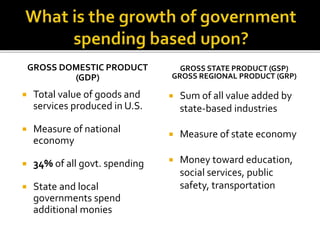
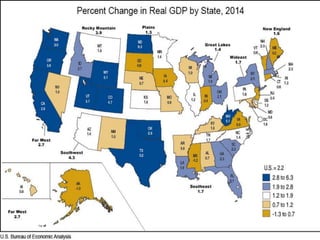
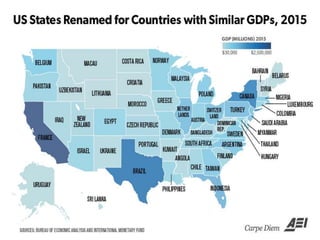
GROSS DOMESTIC PRODUCT
(GDP)
 Total value of goods and
services produced in U.S.
 Measure of national
economy
 34% of all govt. spending
 State and local
governments spend
additional monies
GROSS STATE PRODUCT (GSP)
GROSS REGIONAL PRODUCT (GRP)
 Sum of all value added by
state-based industries
 Measure of state economy
 Money toward education,
social services, public
safety, transportation
 State and local governments benefit from
intergovernmental transfers.
 Local governments rely heavily on states and
federal govt. for financial assistance.
 State and local financial relations are closely
tied to national government.
 Importance of Diversity
 Levels of Government andTheirTaxes
 IncomeTax (National Government)
 SalesTax (State Government)
 PropertyTax (Local Government)
 What is a tax burden?
 Taxes as percent of person’s income
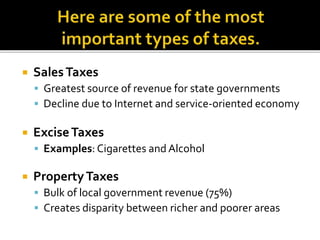
 SalesTaxes
 Greatest source of revenue for state governments
 Decline due to Internet and service-oriented economy
 ExciseTaxes
 Examples: Cigarettes and Alcohol
 PropertyTaxes
 Bulk of local government revenue (75%)
 Creates disparity between richer and poorer areas
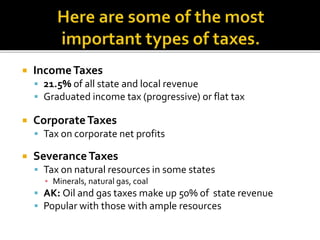
 IncomeTaxes
 21.5% of all state and local revenue
 Graduated income tax (progressive) or flat tax
 CorporateTaxes
 Tax on corporate net profits
 SeveranceTaxes
 Tax on natural resources in some states
▪ Minerals, natural gas, coal
 AK: Oil and gas taxes make up 50% of state revenue
 Popular with those with ample resources
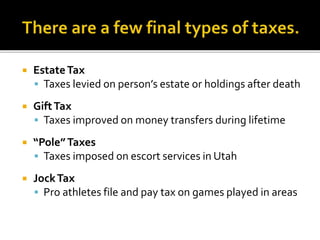
 EstateTax
 Taxes levied on person’s estate or holdings after death
 GiftTax
 Taxes improved on money transfers during lifetime
 “Pole”Taxes
 Taxes imposed on escort services in Utah
 JockTax
 Pro athletes file and pay tax on games played in areas
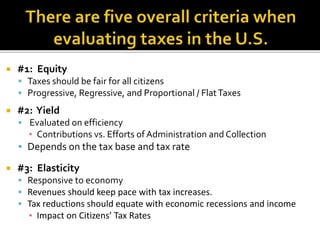
 #1: Equity
 Taxes should be fair for all citizens
 Progressive, Regressive, and Proportional / FlatTaxes
 #2: Yield
 Evaluated on efficiency
▪ Contributions vs. Efforts of Administration and Collection
 Depends on the tax base and tax rate
 #3: Elasticity
 Responsive to economy
 Revenues should keep pace with tax increases.
 Tax reductions should equate with economic recessions and income
▪ Impact on Citizens’ Tax Rates
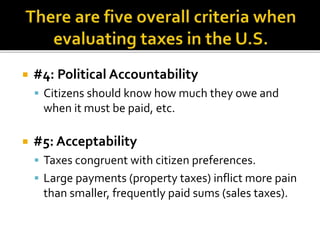
 #4: Political Accountability
 Citizens should know how much they owe and
when it must be paid, etc.
 #5: Acceptability
 Taxes congruent with citizen preferences.
 Large payments (property taxes) inflict more pain
than smaller, frequently paid sums (sales taxes).
PO 202 Fiscal Policy

PO 202 Fiscal Policy

  • 1.
  • 4.
    GROSS DOMESTIC PRODUCT (GDP) Total value of goods and services produced in U.S.  Measure of national economy  34% of all govt. spending  State and local governments spend additional monies GROSS STATE PRODUCT (GSP) GROSS REGIONAL PRODUCT (GRP)  Sum of all value added by state-based industries  Measure of state economy  Money toward education, social services, public safety, transportation
  • 8.
     State andlocal governments benefit from intergovernmental transfers.  Local governments rely heavily on states and federal govt. for financial assistance.  State and local financial relations are closely tied to national government.
  • 9.
     Importance ofDiversity  Levels of Government andTheirTaxes  IncomeTax (National Government)  SalesTax (State Government)  PropertyTax (Local Government)  What is a tax burden?  Taxes as percent of person’s income
  • 11.
     SalesTaxes  Greatestsource of revenue for state governments  Decline due to Internet and service-oriented economy  ExciseTaxes  Examples: Cigarettes and Alcohol  PropertyTaxes  Bulk of local government revenue (75%)  Creates disparity between richer and poorer areas
  • 13.
     IncomeTaxes  21.5%of all state and local revenue  Graduated income tax (progressive) or flat tax  CorporateTaxes  Tax on corporate net profits  SeveranceTaxes  Tax on natural resources in some states ▪ Minerals, natural gas, coal  AK: Oil and gas taxes make up 50% of state revenue  Popular with those with ample resources
  • 14.
     EstateTax  Taxeslevied on person’s estate or holdings after death  GiftTax  Taxes improved on money transfers during lifetime  “Pole”Taxes  Taxes imposed on escort services in Utah  JockTax  Pro athletes file and pay tax on games played in areas
  • 16.
     #1: Equity Taxes should be fair for all citizens  Progressive, Regressive, and Proportional / FlatTaxes  #2: Yield  Evaluated on efficiency ▪ Contributions vs. Efforts of Administration and Collection  Depends on the tax base and tax rate  #3: Elasticity  Responsive to economy  Revenues should keep pace with tax increases.  Tax reductions should equate with economic recessions and income ▪ Impact on Citizens’ Tax Rates
  • 17.
     #4: PoliticalAccountability  Citizens should know how much they owe and when it must be paid, etc.  #5: Acceptability  Taxes congruent with citizen preferences.  Large payments (property taxes) inflict more pain than smaller, frequently paid sums (sales taxes).