WHAT MAKES A SUCCESSFUL
TAX STATE?
Prosper Society, 2 September 2015
Miranda Stewart
Professor and Director, Tax and Transfer
Policy Institute, The ANU
The long view: what is tax for?
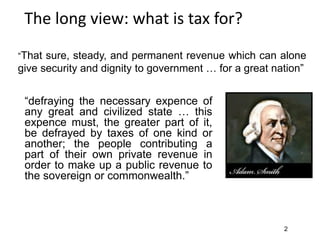
“defraying the necessary expence of
any great and civilized state … this
expence must, the greater part of it,
be defrayed by taxes of one kind or
another; the people contributing a
part of their own private revenue in
order to make up a public revenue to
the sovereign or commonwealth.”
2
“That sure, steady, and permanent revenue which can alone
give security and dignity to government … for a great nation”
3
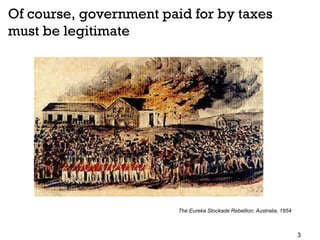
Of course, government paid for by taxes
must be legitimate
The Eureka Stockade Rebellion, Australia, 1854
4
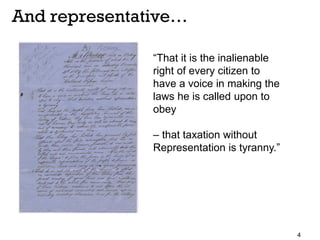
“That it is the inalienable
right of every citizen to
have a voice in making the
laws he is called upon to
obey
– that taxation without
Representation is tyranny.”
And representative…
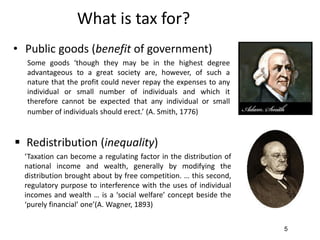
What is tax for?
• Public goods (benefit of government)
Some goods ‘though they may be in the highest degree
advantageous to a great society are, however, of such a
nature that the profit could never repay the expenses to any
individual or small number of individuals and which it
therefore cannot be expected that any individual or small
number of individuals should erect.’ (A. Smith, 1776)
5
 Redistribution (inequality)
‘Taxation can become a regulating factor in the distribution of
national income and wealth, generally by modifying the
distribution brought about by free competition. … this second,
regulatory purpose to interference with the uses of individual
incomes and wealth … is a ‘social welfare’ concept beside the
‘purely financial’ one’(A. Wagner, 1893)
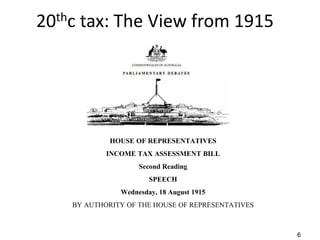
20thc tax: The View from 1915
6
HOUSE OF REPRESENTATIVES
INCOME TAX ASSESSMENT BILL
Second Reading
SPEECH
Wednesday, 18 August 1915
BY AUTHORITY OF THE HOUSE OF REPRESENTATIVES
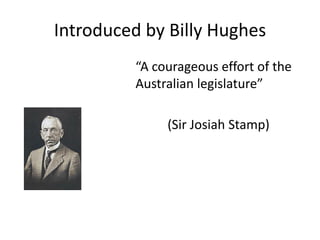
Introduced by Billy Hughes
“A courageous effort of the
Australian legislature”
(Sir Josiah Stamp)
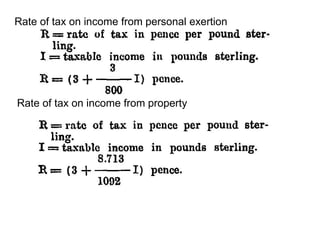
Rate of tax on income from personal exertion
Rate of tax on income from property
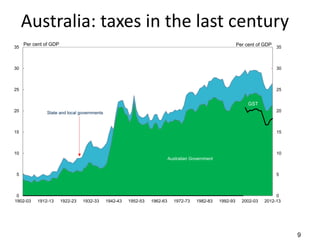
Australia: taxes in the last century
9
0
5
10
15
20
25
30
35
0
5
10
15
20
25
30
35
1902-03 1912-13 1922-23 1932-33 1942-43 1952-53 1962-63 1972-73 1982-83 1992-93 2002-03 2012-13
Per cent of GDPPer cent of GDP
Australian Government
State and local governments
GST
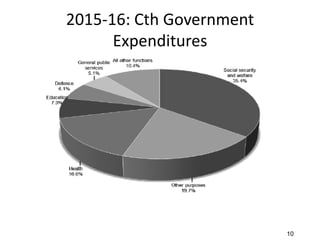
2015-16: Cth Government
Expenditures
10
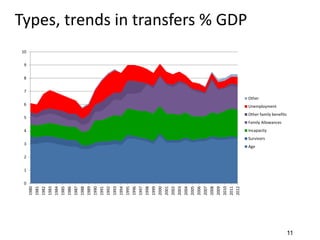
Types, trends in transfers % GDP
0
1
2
3
4
5
6
7
8
9
10
1980
1981
1982
1983
1984
1985
1986
1987
1988
1989
1990
1991
1992
1993
1994
1995
1996
1997
1998
1999
2000
2001
2002
2003
2004
2005
2006
2007
2008
2009
2010
2011
2012
Other
Unemployment
Other family benefits
Family Allowances
Incapacity
Survivors
Age
11
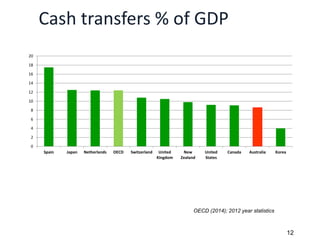
Cash transfers % of GDP
0
2
4
6
8
10
12
14
16
18
20
Spain Japan Netherlands OECD Switzerland United
Kingdom
New
Zealand
United
States
Canada Australia Korea
OECD (2014); 2012 year statistics
12
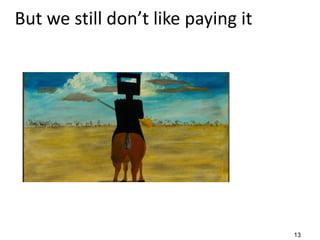
But we still don’t like paying it
13
Tax principles
• Efficiency – I prefer, the goal of Prosperity
• Fairness
• Resilience – in our social-ecological context
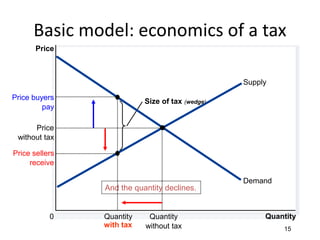
Size of tax (wedge)
Quantity0
Price
Price buyers
pay
Price sellers
receive
Demand
Supply
Price
without tax
Quantity
without tax
Quantity
with tax
And the quantity declines.
Basic model: economics of a tax
15
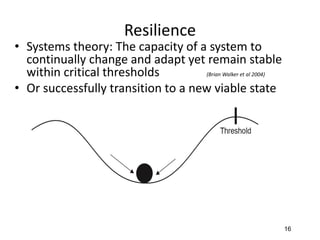
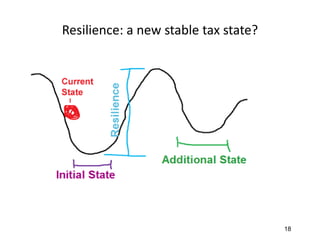
Resilience
• Systems theory: The capacity of a system to
continually change and adapt yet remain stable
within critical thresholds (Brian Walker et al 2004)
• Or successfully transition to a new viable state
16
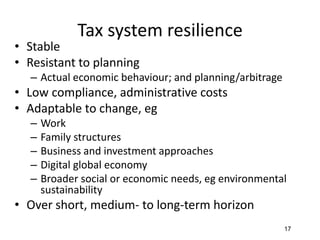
Tax system resilience
• Stable
• Resistant to planning
– Actual economic behaviour; and planning/arbitrage
• Low compliance, administrative costs
• Adaptable to change, eg
– Work
– Family structures
– Business and investment approaches
– Digital global economy
– Broader social or economic needs, eg environmental
sustainability
• Over short, medium- to long-term horizon
17
Resilience: a new stable tax state?
18
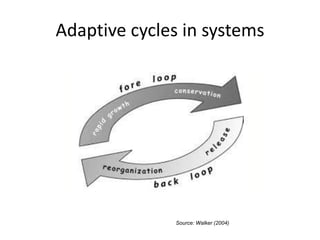
Adaptive cycles in systems
Source: Walker (2004)
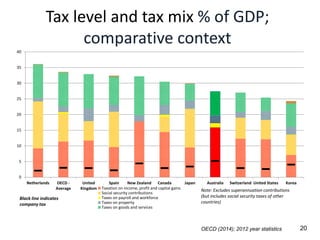
Tax level and tax mix % of GDP;
comparative context
20
Per cent of GDP
Note: Excludes superannuation contributions
(but includes social security taxes of other
countries)
0
5
10
15
20
25
30
35
40
Netherlands OECD -
Average
United
Kingdom
Spain New Zealand Canada Japan Australia Switzerland United States Korea
Taxation on income, profit and capital gains
Social security contributions
Taxes on payroll and workforce
Taxes on property
Taxes on goods and services
Black line indicates
company tax
OECD (2014); 2012 year statistics
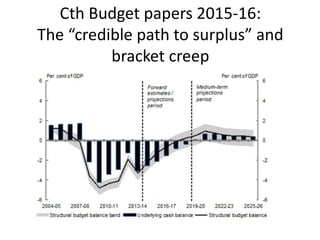
Cth Budget papers 2015-16:
The “credible path to surplus” and
bracket creep
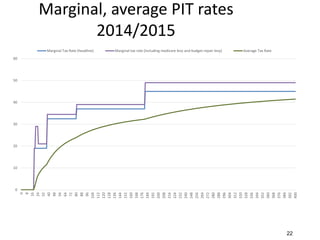
Marginal, average PIT rates
2014/2015
0
10
20
30
40
50
60
0
8
16
24
32
40
48
56
64
72
80
88
96
104
112
120
128
136
144
152
160
168
176
184
192
200
208
216
224
232
240
248
256
264
272
280
288
296
304
312
320
328
336
344
352
360
368
376
384
392
400
Marginal Tax Rate (headline) Marginal tax rate (including medicare levy and budget repair levy) Average Tax Rate
22
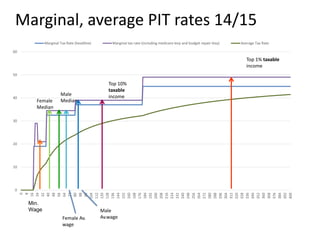
Marginal, average PIT rates 14/15
0
10
20
30
40
50
60
0
8
16
24
32
40
48
56
64
72
80
88
96
104
112
120
128
136
144
152
160
168
176
184
192
200
208
216
224
232
240
248
256
264
272
280
288
296
304
312
320
328
336
344
352
360
368
376
384
392
400
Marginal Tax Rate (headline) Marginal tax rate (including medicare levy and budget repair levy) Average Tax Rate
Min.
Wage
Female
Median
Male
Median
Female Av.
wage
Male
Av.wage
Top 10%
taxable
income
Top 1% taxable
income
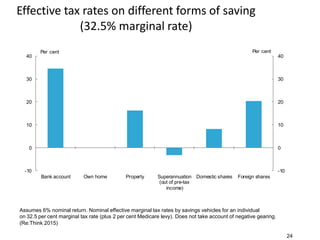
Effective tax rates on different forms of saving
(32.5% marginal rate)
Assumes 6% nominal return. Nominal effective marginal tax rates by savings vehicles for an individual
on 32.5 per cent marginal tax rate (plus 2 per cent Medicare levy). Does not take account of negative gearing.
(Re:Think 2015)
-10
0
10
20
30
40
-10
0
10
20
30
40
Bank account Own home Property Superannuation
(out of pre-tax
income)
Domestic shares Foreign shares
Per centPer cent
24
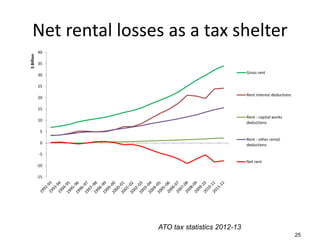
Net rental losses as a tax shelter
25
-15
-10
-5
0
5
10
15
20
25
30
35
40
$Billion
Gross rent
Rent interest deductions
Rent - capital works
deductions
Rent - other rental
deductions
Net rent
ATO tax statistics 2012-13
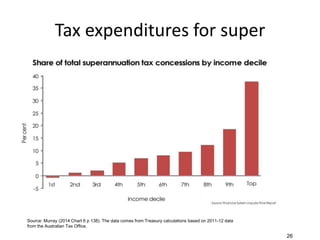
Tax expenditures for super
Source: Murray (2014 Chart 6 p 138). The data comes from Treasury calculations based on 2011-12 data
from the Australian Tax Office.
26
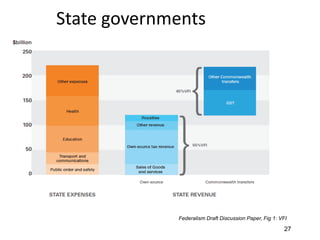
State governments
Federalism Draft Discussion Paper, Fig 1: VFI
27
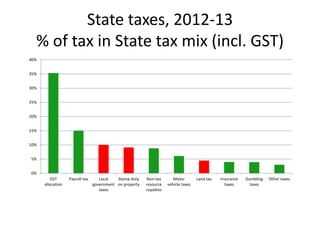
State taxes, 2012-13
% of tax in State tax mix (incl. GST)
0%
5%
10%
15%
20%
25%
30%
35%
40%
GST
allocation
Payroll tax Local
government
taxes
Stamp duty
on property
Non-tax
resource
royalties
Motor
vehicle taxes
Land tax Insurance
taxes
Gambling
taxes
Other taxes
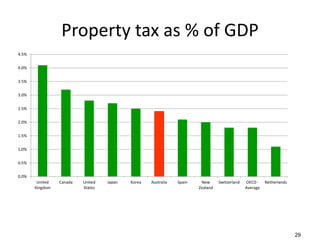
Property tax as % of GDP
29
0.0%
0.5%
1.0%
1.5%
2.0%
2.5%
3.0%
3.5%
4.0%
4.5%
United
Kingdom
Canada United
States
Japan Korea Australia Spain New
Zealand
Switzerland OECD -
Average
Netherlands
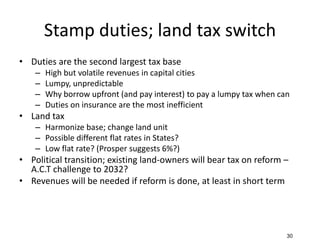
Stamp duties; land tax switch
• Duties are the second largest tax base
– High but volatile revenues in capital cities
– Lumpy, unpredictable
– Why borrow upfront (and pay interest) to pay a lumpy tax when can
– Duties on insurance are the most inefficient
• Land tax
– Harmonize base; change land unit
– Possible different flat rates in States?
– Low flat rate? (Prosper suggests 6%?)
• Political transition; existing land-owners will bear tax on reform –
A.C.T challenge to 2032?
• Revenues will be needed if reform is done, at least in short term
30
Thank you!
Questions

Tax State Resilience

  • 1.
    WHAT MAKES ASUCCESSFUL TAX STATE? Prosper Society, 2 September 2015 Miranda Stewart Professor and Director, Tax and Transfer Policy Institute, The ANU
  • 2.
    The long view:what is tax for? “defraying the necessary expence of any great and civilized state … this expence must, the greater part of it, be defrayed by taxes of one kind or another; the people contributing a part of their own private revenue in order to make up a public revenue to the sovereign or commonwealth.” 2 “That sure, steady, and permanent revenue which can alone give security and dignity to government … for a great nation”
  • 3.
    3 Of course, governmentpaid for by taxes must be legitimate The Eureka Stockade Rebellion, Australia, 1854
  • 4.
    4 “That it isthe inalienable right of every citizen to have a voice in making the laws he is called upon to obey – that taxation without Representation is tyranny.” And representative…
  • 5.
    What is taxfor? • Public goods (benefit of government) Some goods ‘though they may be in the highest degree advantageous to a great society are, however, of such a nature that the profit could never repay the expenses to any individual or small number of individuals and which it therefore cannot be expected that any individual or small number of individuals should erect.’ (A. Smith, 1776) 5  Redistribution (inequality) ‘Taxation can become a regulating factor in the distribution of national income and wealth, generally by modifying the distribution brought about by free competition. … this second, regulatory purpose to interference with the uses of individual incomes and wealth … is a ‘social welfare’ concept beside the ‘purely financial’ one’(A. Wagner, 1893)
  • 6.
    20thc tax: TheView from 1915 6 HOUSE OF REPRESENTATIVES INCOME TAX ASSESSMENT BILL Second Reading SPEECH Wednesday, 18 August 1915 BY AUTHORITY OF THE HOUSE OF REPRESENTATIVES
  • 7.
    Introduced by BillyHughes “A courageous effort of the Australian legislature” (Sir Josiah Stamp)
  • 8.
    Rate of taxon income from personal exertion Rate of tax on income from property
  • 9.
    Australia: taxes inthe last century 9 0 5 10 15 20 25 30 35 0 5 10 15 20 25 30 35 1902-03 1912-13 1922-23 1932-33 1942-43 1952-53 1962-63 1972-73 1982-83 1992-93 2002-03 2012-13 Per cent of GDPPer cent of GDP Australian Government State and local governments GST
  • 10.
  • 11.
    Types, trends intransfers % GDP 0 1 2 3 4 5 6 7 8 9 10 1980 1981 1982 1983 1984 1985 1986 1987 1988 1989 1990 1991 1992 1993 1994 1995 1996 1997 1998 1999 2000 2001 2002 2003 2004 2005 2006 2007 2008 2009 2010 2011 2012 Other Unemployment Other family benefits Family Allowances Incapacity Survivors Age 11
  • 12.
    Cash transfers %of GDP 0 2 4 6 8 10 12 14 16 18 20 Spain Japan Netherlands OECD Switzerland United Kingdom New Zealand United States Canada Australia Korea OECD (2014); 2012 year statistics 12
  • 13.
    But we stilldon’t like paying it 13
  • 14.
    Tax principles • Efficiency– I prefer, the goal of Prosperity • Fairness • Resilience – in our social-ecological context
  • 15.
    Size of tax(wedge) Quantity0 Price Price buyers pay Price sellers receive Demand Supply Price without tax Quantity without tax Quantity with tax And the quantity declines. Basic model: economics of a tax 15
  • 16.
    Resilience • Systems theory:The capacity of a system to continually change and adapt yet remain stable within critical thresholds (Brian Walker et al 2004) • Or successfully transition to a new viable state 16
  • 17.
    Tax system resilience •Stable • Resistant to planning – Actual economic behaviour; and planning/arbitrage • Low compliance, administrative costs • Adaptable to change, eg – Work – Family structures – Business and investment approaches – Digital global economy – Broader social or economic needs, eg environmental sustainability • Over short, medium- to long-term horizon 17
  • 18.
    Resilience: a newstable tax state? 18
  • 19.
    Adaptive cycles insystems Source: Walker (2004)
  • 20.
    Tax level andtax mix % of GDP; comparative context 20 Per cent of GDP Note: Excludes superannuation contributions (but includes social security taxes of other countries) 0 5 10 15 20 25 30 35 40 Netherlands OECD - Average United Kingdom Spain New Zealand Canada Japan Australia Switzerland United States Korea Taxation on income, profit and capital gains Social security contributions Taxes on payroll and workforce Taxes on property Taxes on goods and services Black line indicates company tax OECD (2014); 2012 year statistics
  • 21.
    Cth Budget papers2015-16: The “credible path to surplus” and bracket creep
  • 22.
    Marginal, average PITrates 2014/2015 0 10 20 30 40 50 60 0 8 16 24 32 40 48 56 64 72 80 88 96 104 112 120 128 136 144 152 160 168 176 184 192 200 208 216 224 232 240 248 256 264 272 280 288 296 304 312 320 328 336 344 352 360 368 376 384 392 400 Marginal Tax Rate (headline) Marginal tax rate (including medicare levy and budget repair levy) Average Tax Rate 22
  • 23.
    Marginal, average PITrates 14/15 0 10 20 30 40 50 60 0 8 16 24 32 40 48 56 64 72 80 88 96 104 112 120 128 136 144 152 160 168 176 184 192 200 208 216 224 232 240 248 256 264 272 280 288 296 304 312 320 328 336 344 352 360 368 376 384 392 400 Marginal Tax Rate (headline) Marginal tax rate (including medicare levy and budget repair levy) Average Tax Rate Min. Wage Female Median Male Median Female Av. wage Male Av.wage Top 10% taxable income Top 1% taxable income
  • 24.
    Effective tax rateson different forms of saving (32.5% marginal rate) Assumes 6% nominal return. Nominal effective marginal tax rates by savings vehicles for an individual on 32.5 per cent marginal tax rate (plus 2 per cent Medicare levy). Does not take account of negative gearing. (Re:Think 2015) -10 0 10 20 30 40 -10 0 10 20 30 40 Bank account Own home Property Superannuation (out of pre-tax income) Domestic shares Foreign shares Per centPer cent 24
  • 25.
    Net rental lossesas a tax shelter 25 -15 -10 -5 0 5 10 15 20 25 30 35 40 $Billion Gross rent Rent interest deductions Rent - capital works deductions Rent - other rental deductions Net rent ATO tax statistics 2012-13
  • 26.
    Tax expenditures forsuper Source: Murray (2014 Chart 6 p 138). The data comes from Treasury calculations based on 2011-12 data from the Australian Tax Office. 26
  • 27.
    State governments Federalism DraftDiscussion Paper, Fig 1: VFI 27
  • 28.
    State taxes, 2012-13 %of tax in State tax mix (incl. GST) 0% 5% 10% 15% 20% 25% 30% 35% 40% GST allocation Payroll tax Local government taxes Stamp duty on property Non-tax resource royalties Motor vehicle taxes Land tax Insurance taxes Gambling taxes Other taxes
  • 29.
    Property tax as% of GDP 29 0.0% 0.5% 1.0% 1.5% 2.0% 2.5% 3.0% 3.5% 4.0% 4.5% United Kingdom Canada United States Japan Korea Australia Spain New Zealand Switzerland OECD - Average Netherlands
  • 30.
    Stamp duties; landtax switch • Duties are the second largest tax base – High but volatile revenues in capital cities – Lumpy, unpredictable – Why borrow upfront (and pay interest) to pay a lumpy tax when can – Duties on insurance are the most inefficient • Land tax – Harmonize base; change land unit – Possible different flat rates in States? – Low flat rate? (Prosper suggests 6%?) • Political transition; existing land-owners will bear tax on reform – A.C.T challenge to 2032? • Revenues will be needed if reform is done, at least in short term 30
  • 31.