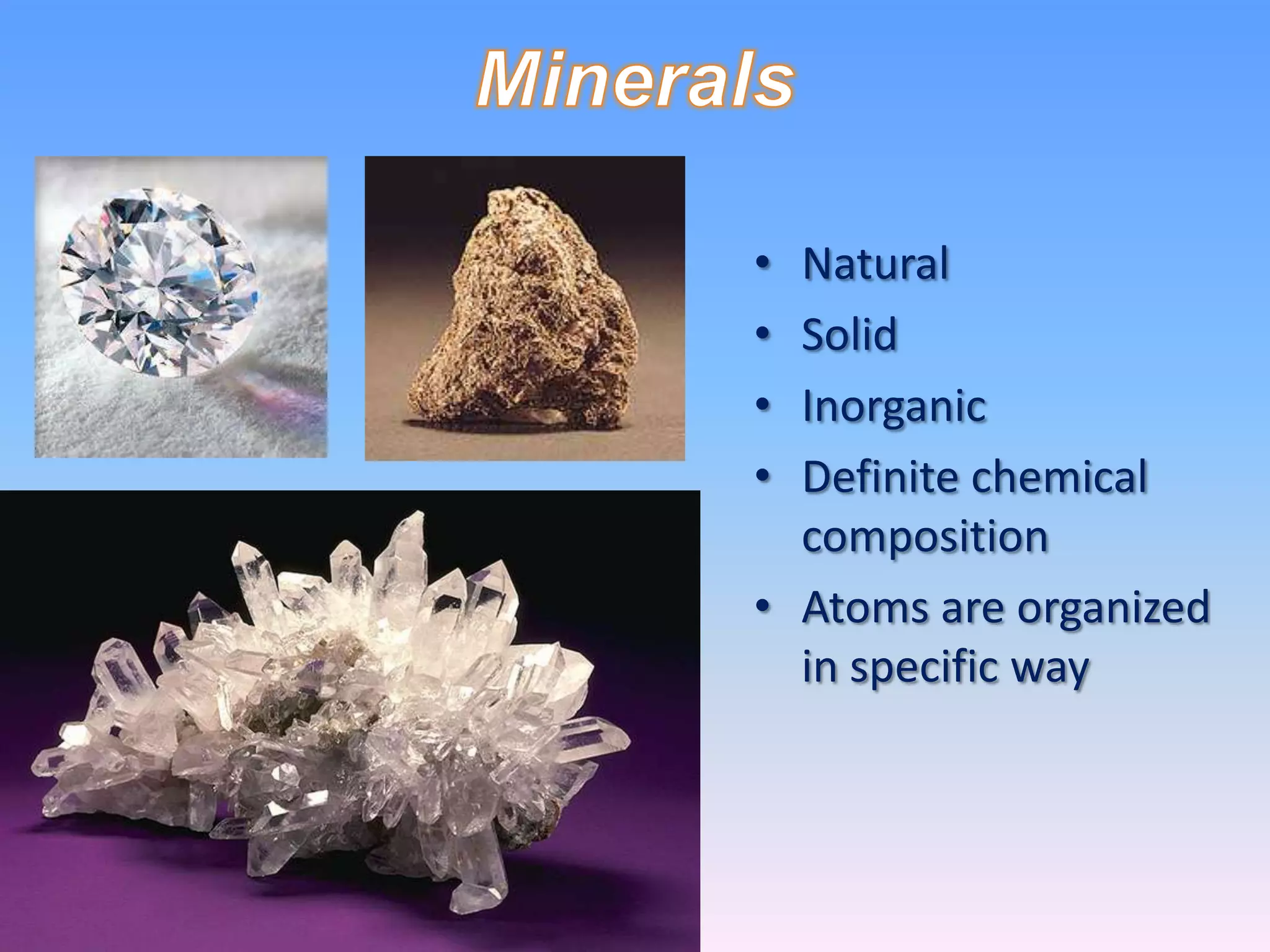
• Natural
• Solid
• Inorganic
• Definite chemical
  composition
• Atoms are organized
  in specific way
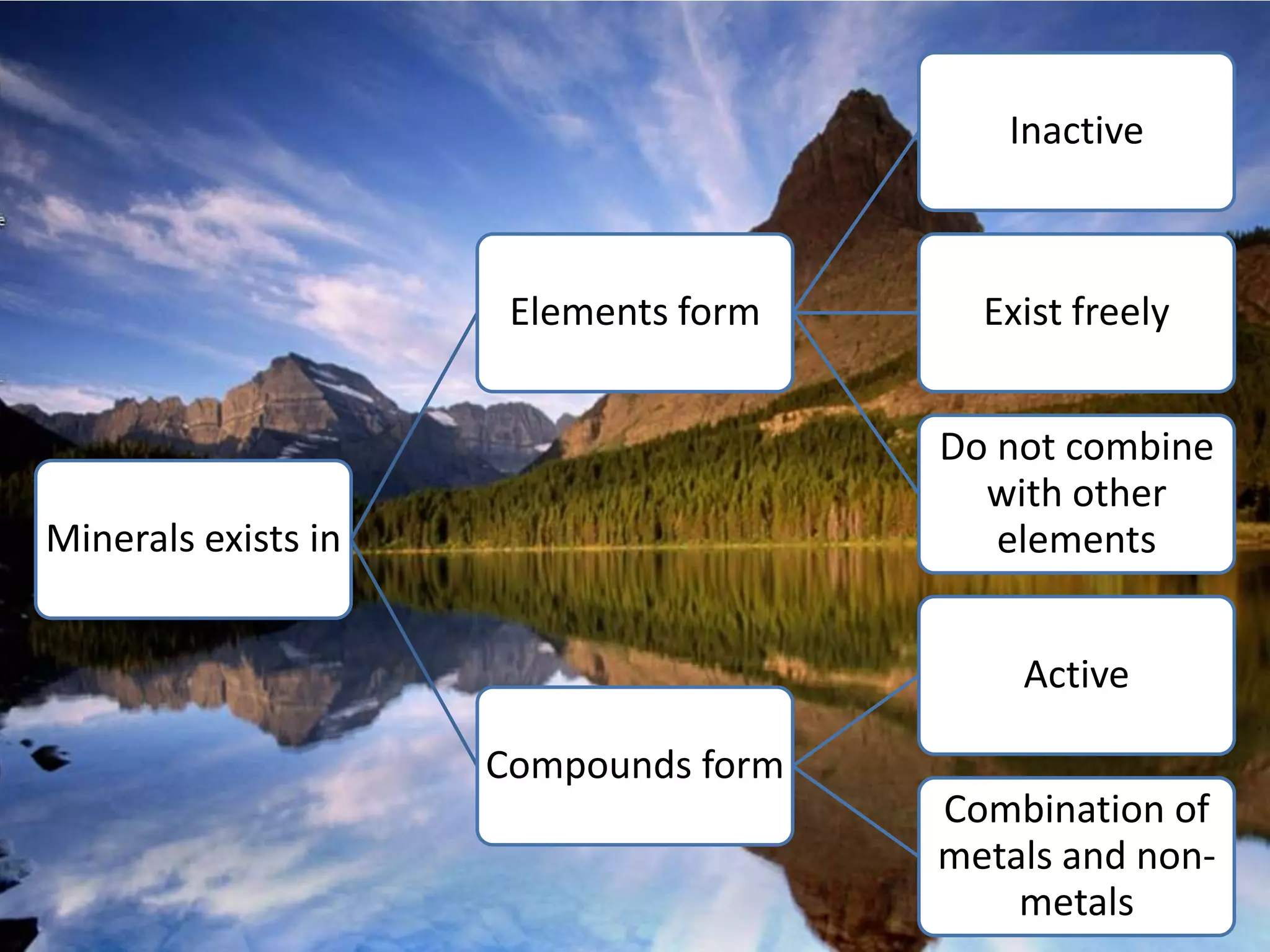
Inactive


                      Elements form     Exist freely


                                      Do not combine
                                        with other
Minerals exists in                       elements


                                          Active

                     Compounds form
                                      Combination of
                                      metals and non-
                                          metals
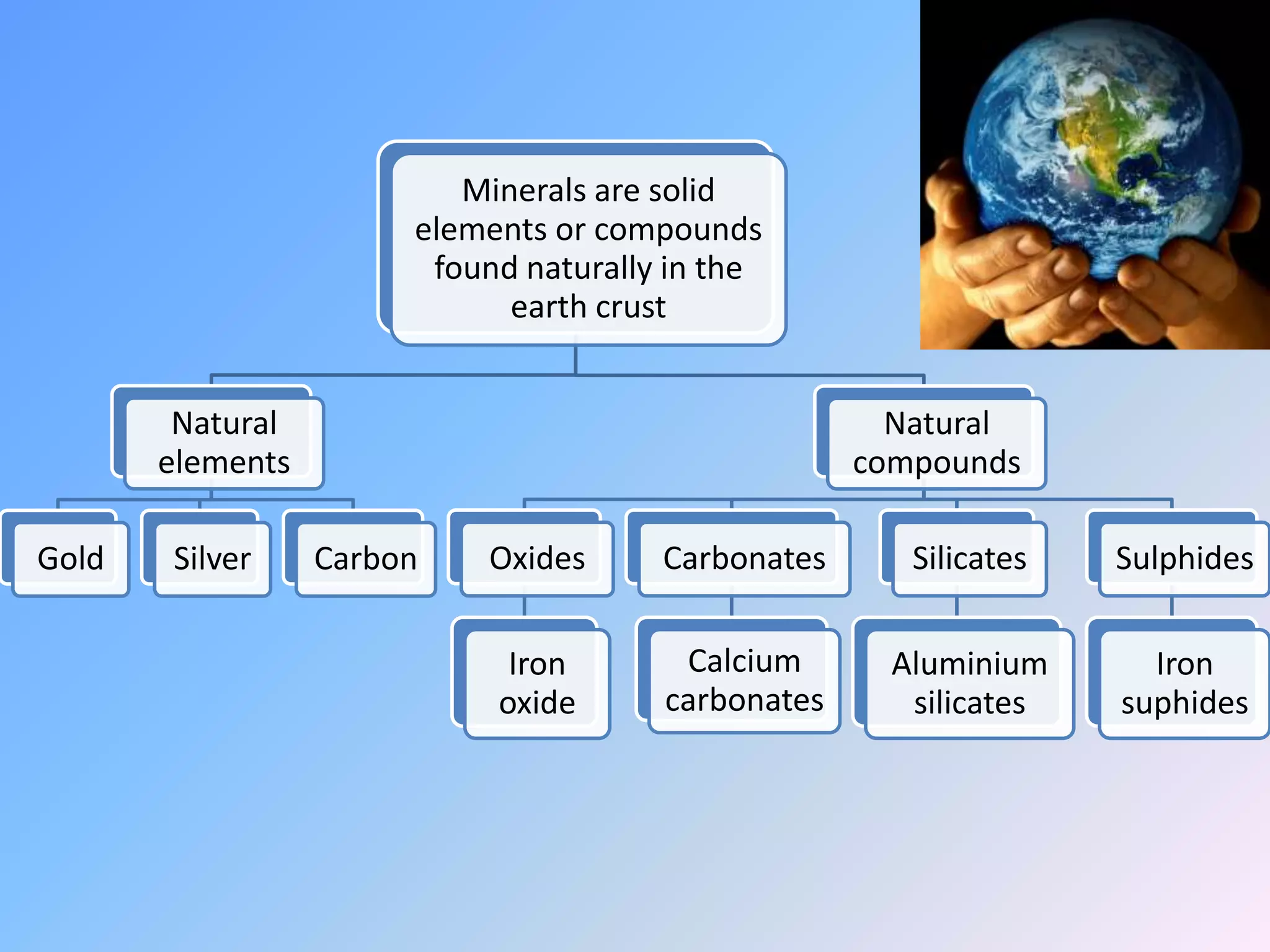
Minerals are solid
                       elements or compounds
                        found naturally in the
                             earth crust


        Natural                                       Natural
       elements                                     compounds

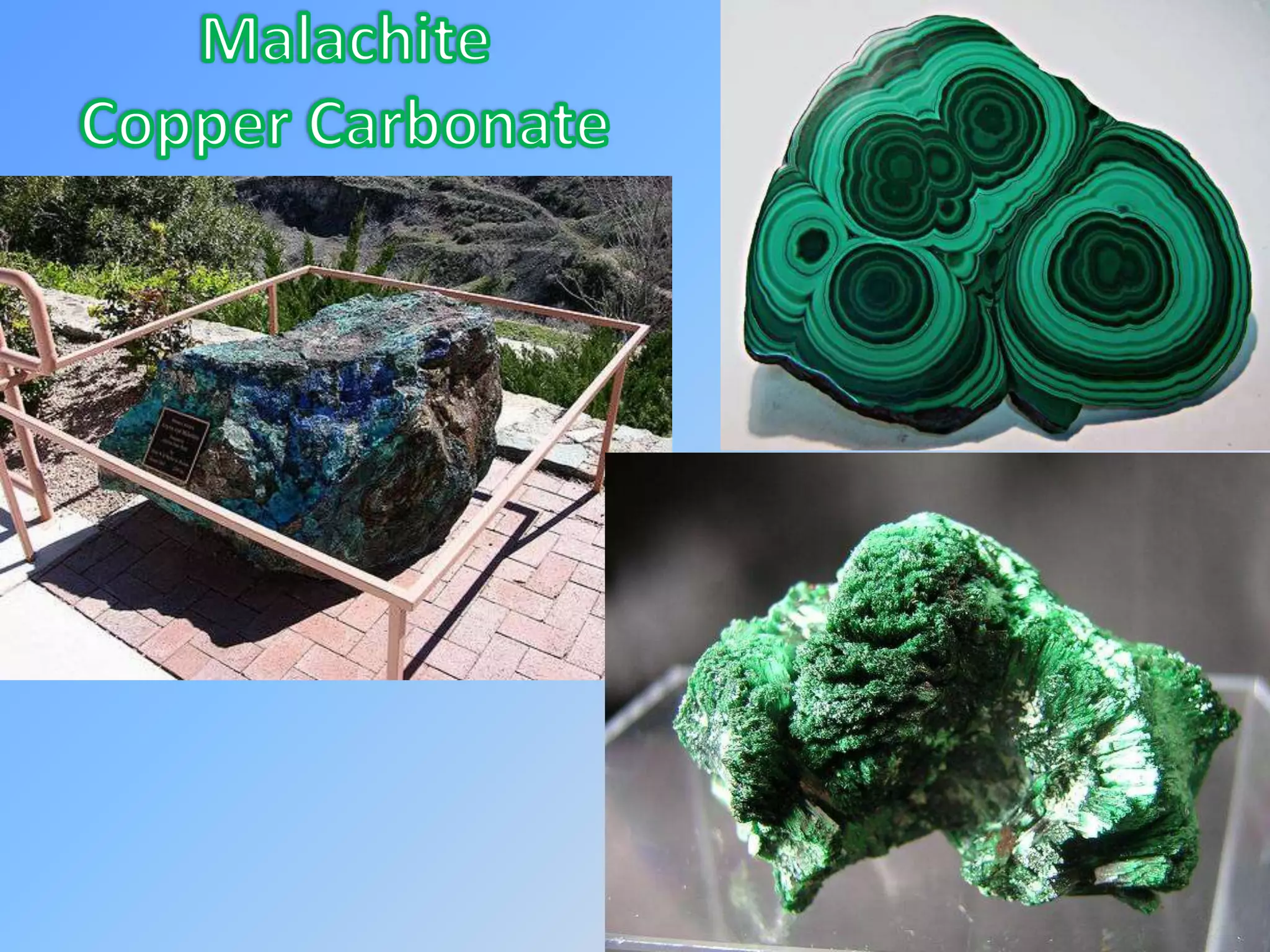
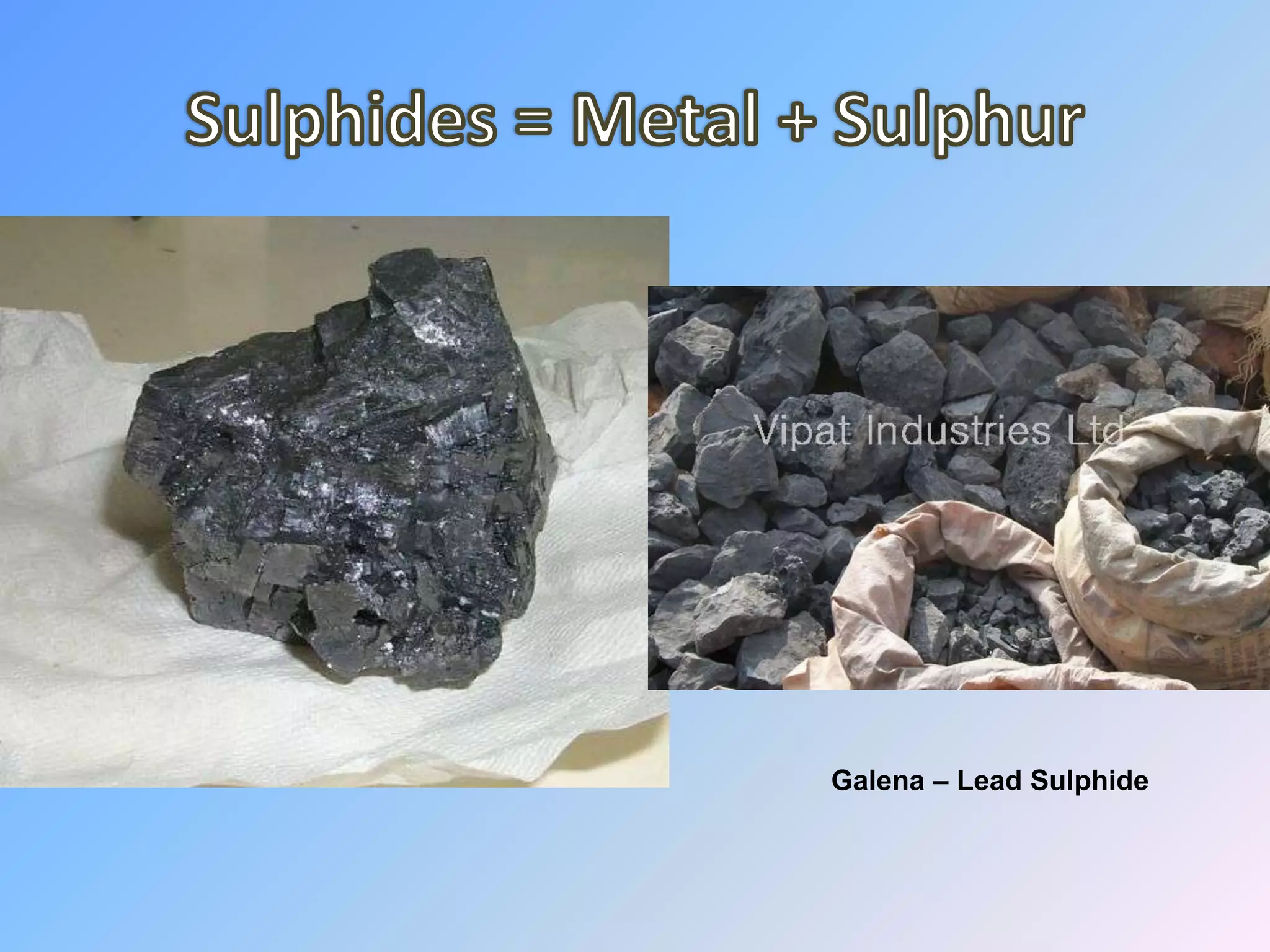
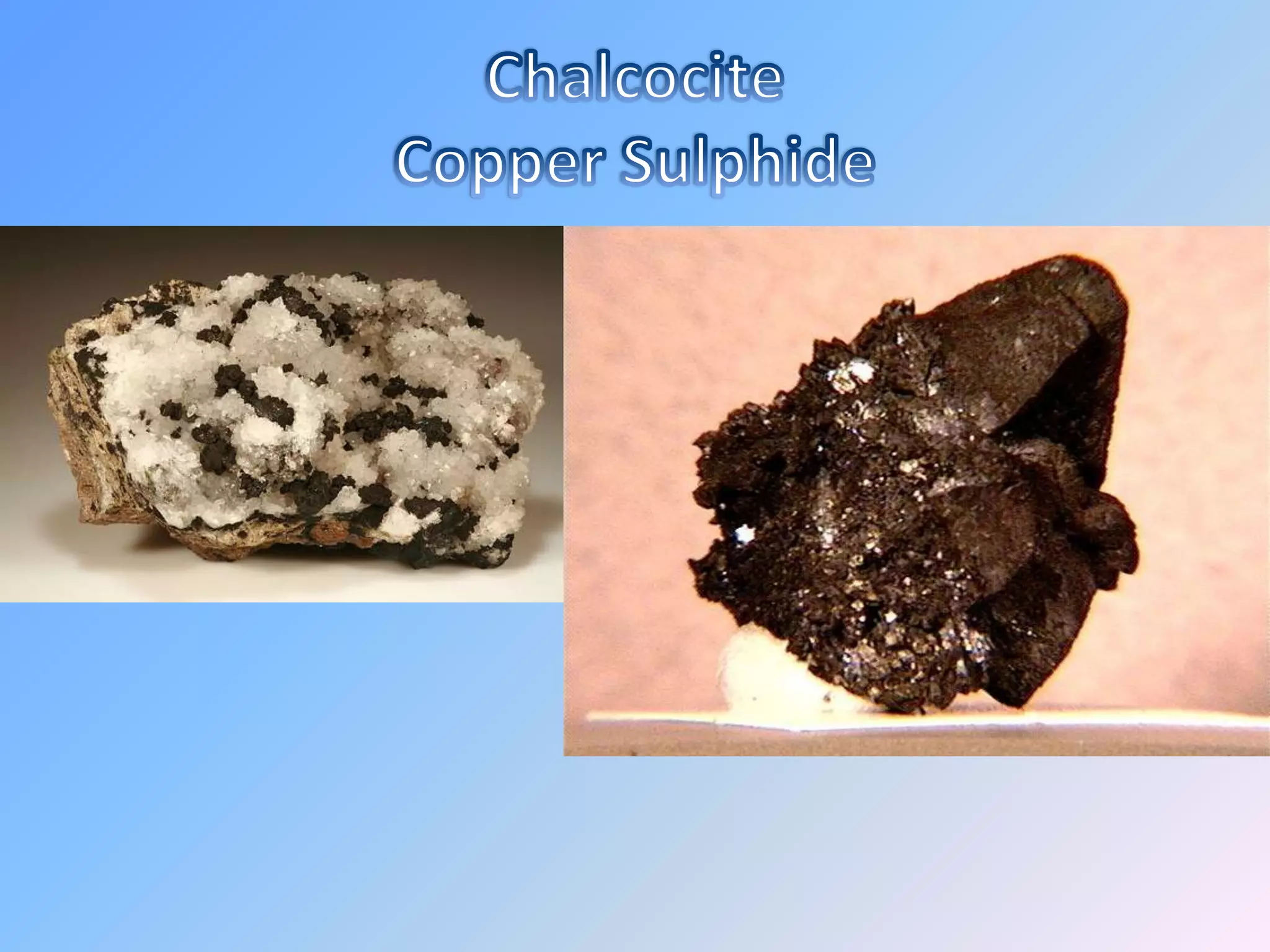
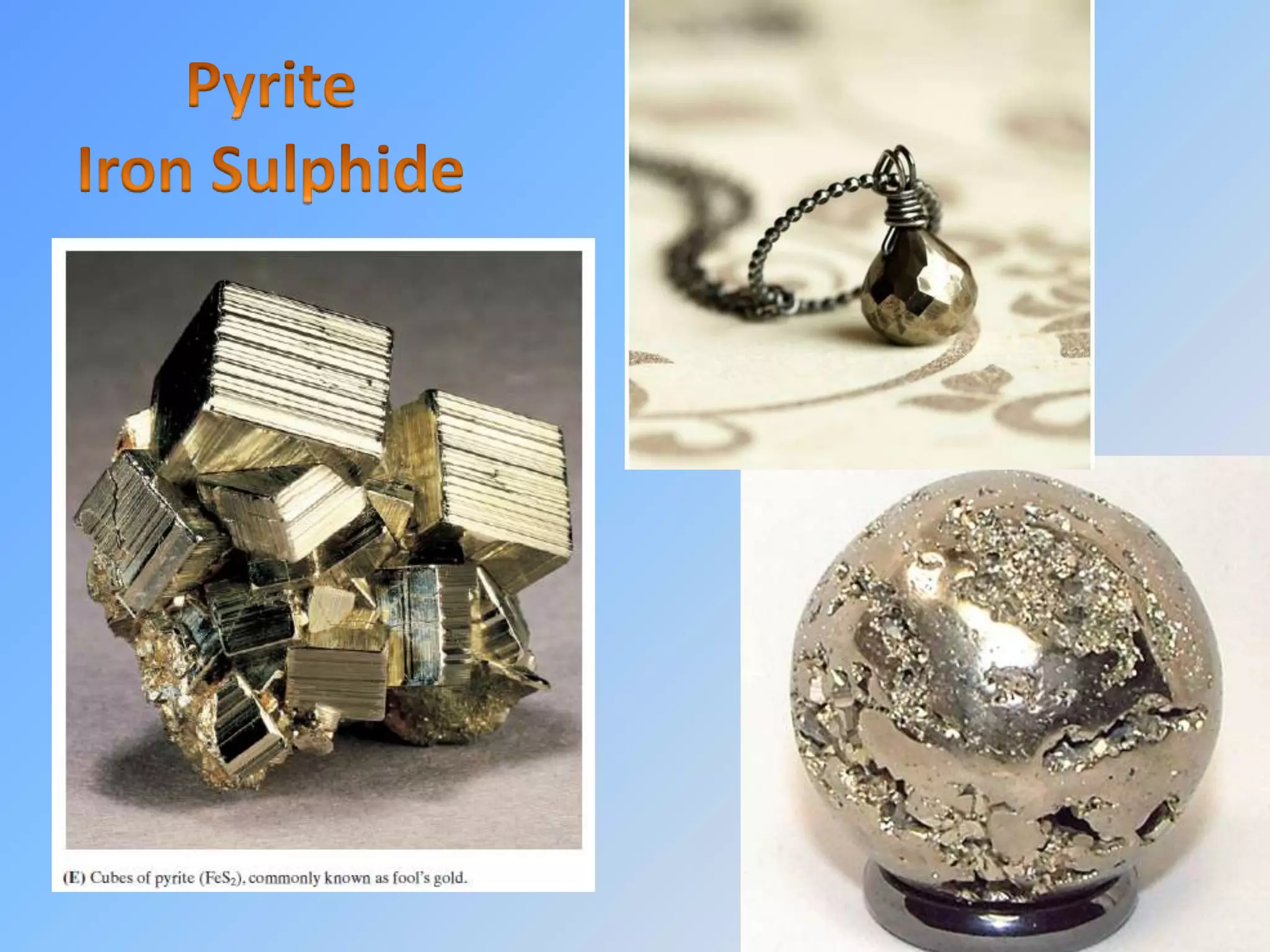
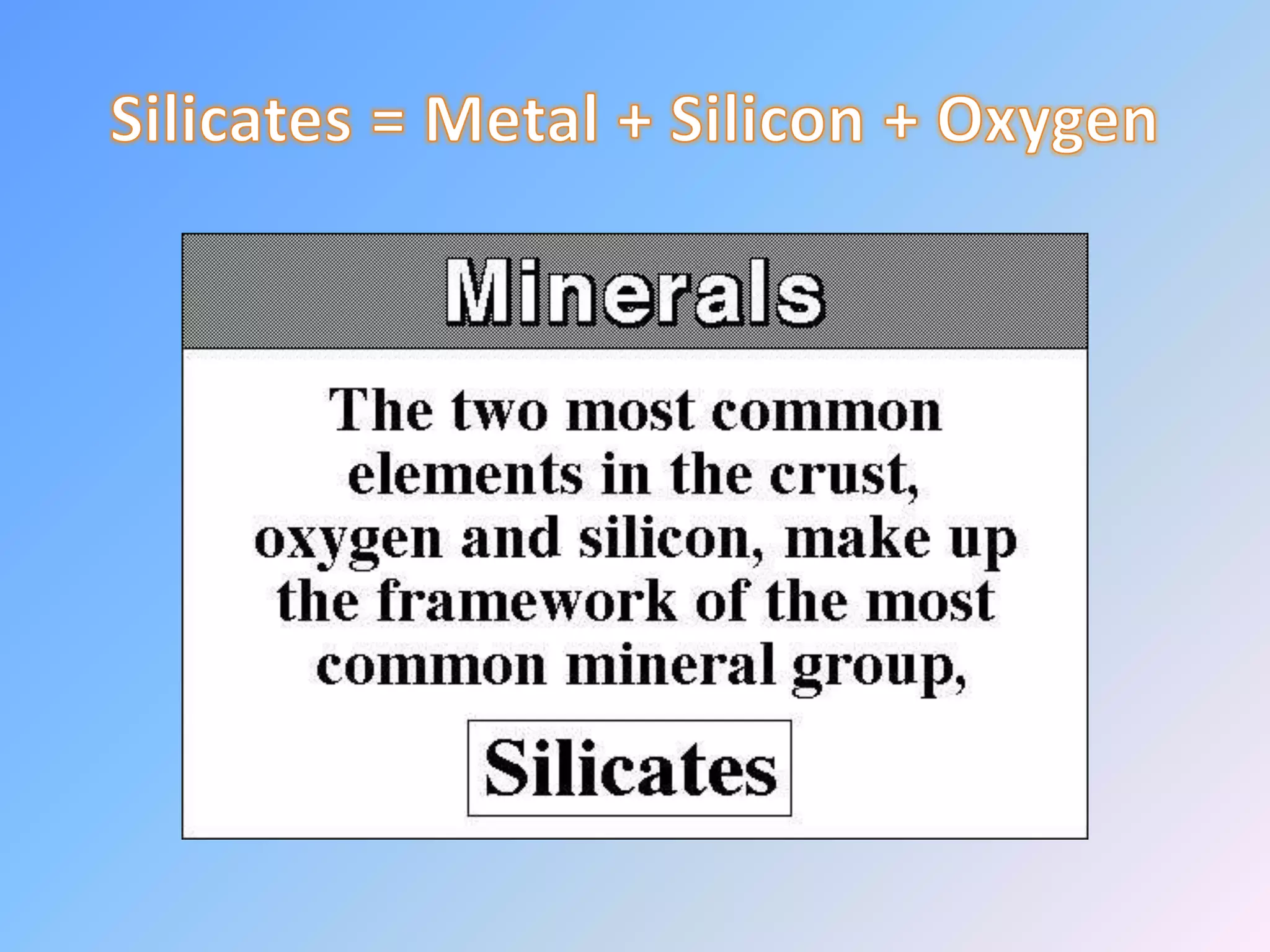
Gold   Silver     Carbon   Oxides      Carbonates      Silicates   Sulphides

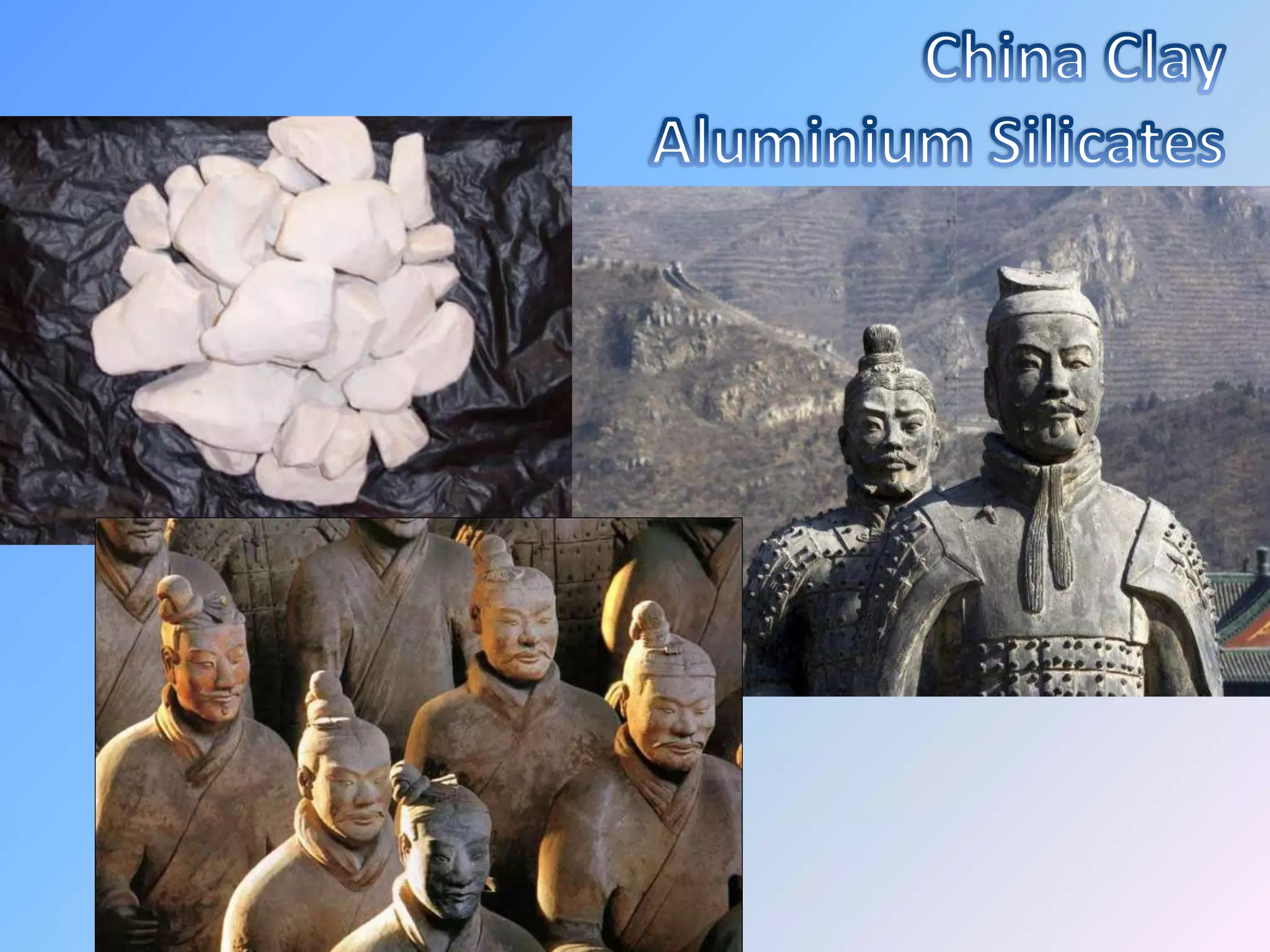
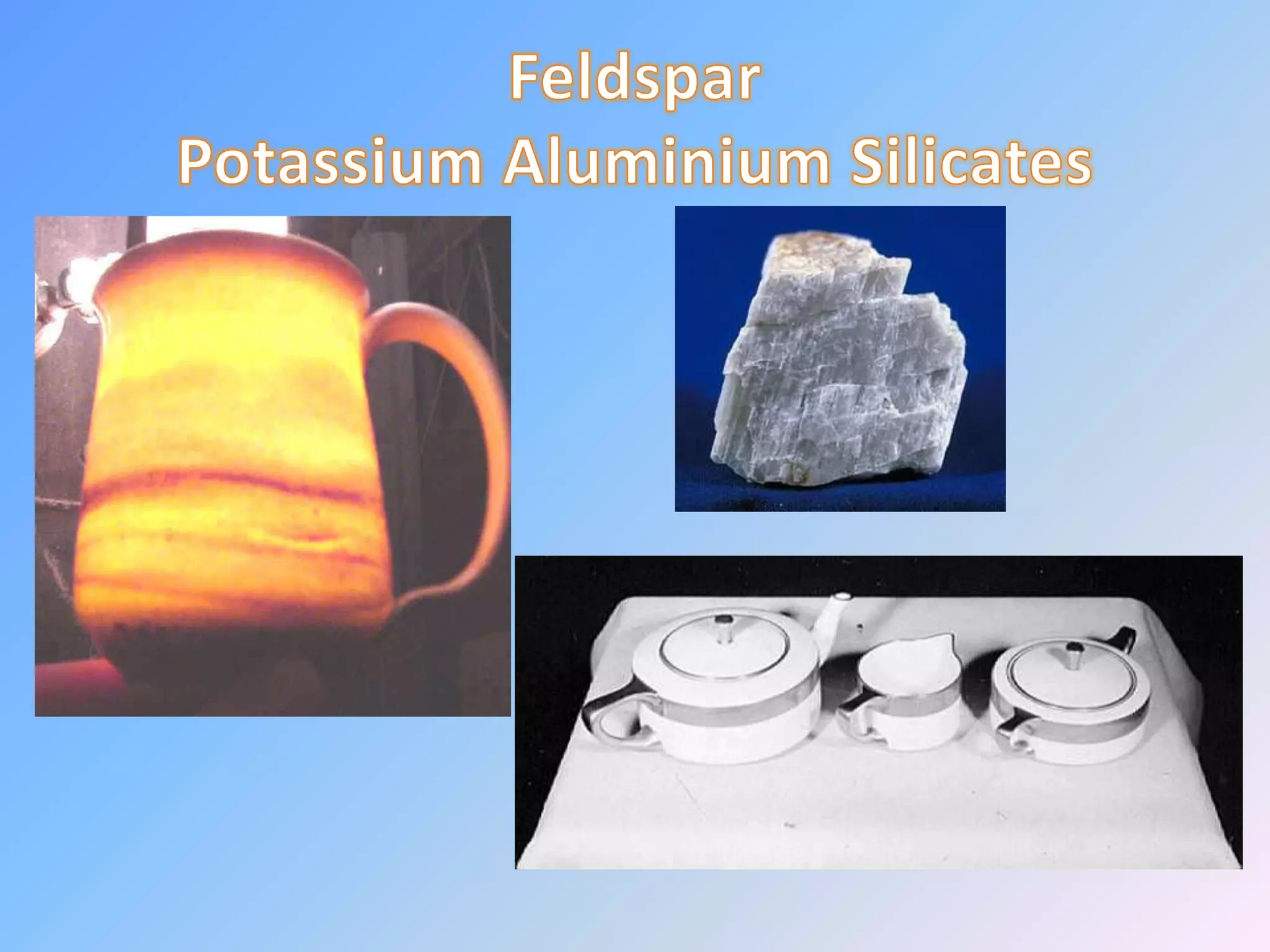
                             Iron       Calcium       Aluminium      Iron
                            oxide      carbonates      silicates   suphides
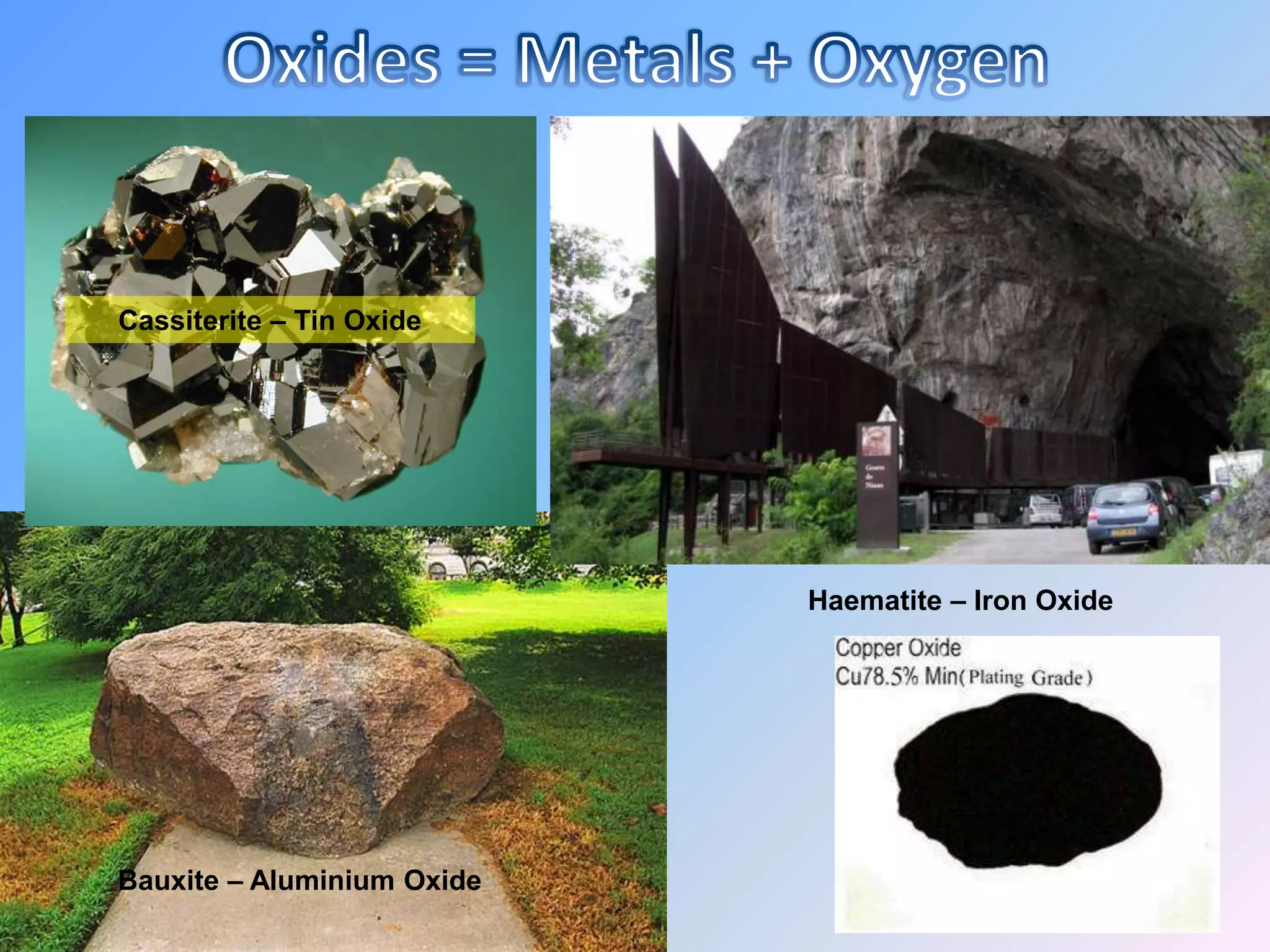
Cassiterite – Tin Oxide


                            Haematite – Iron Oxide


Bauxite – Aluminium Oxide
Galena – Lead Sulphide
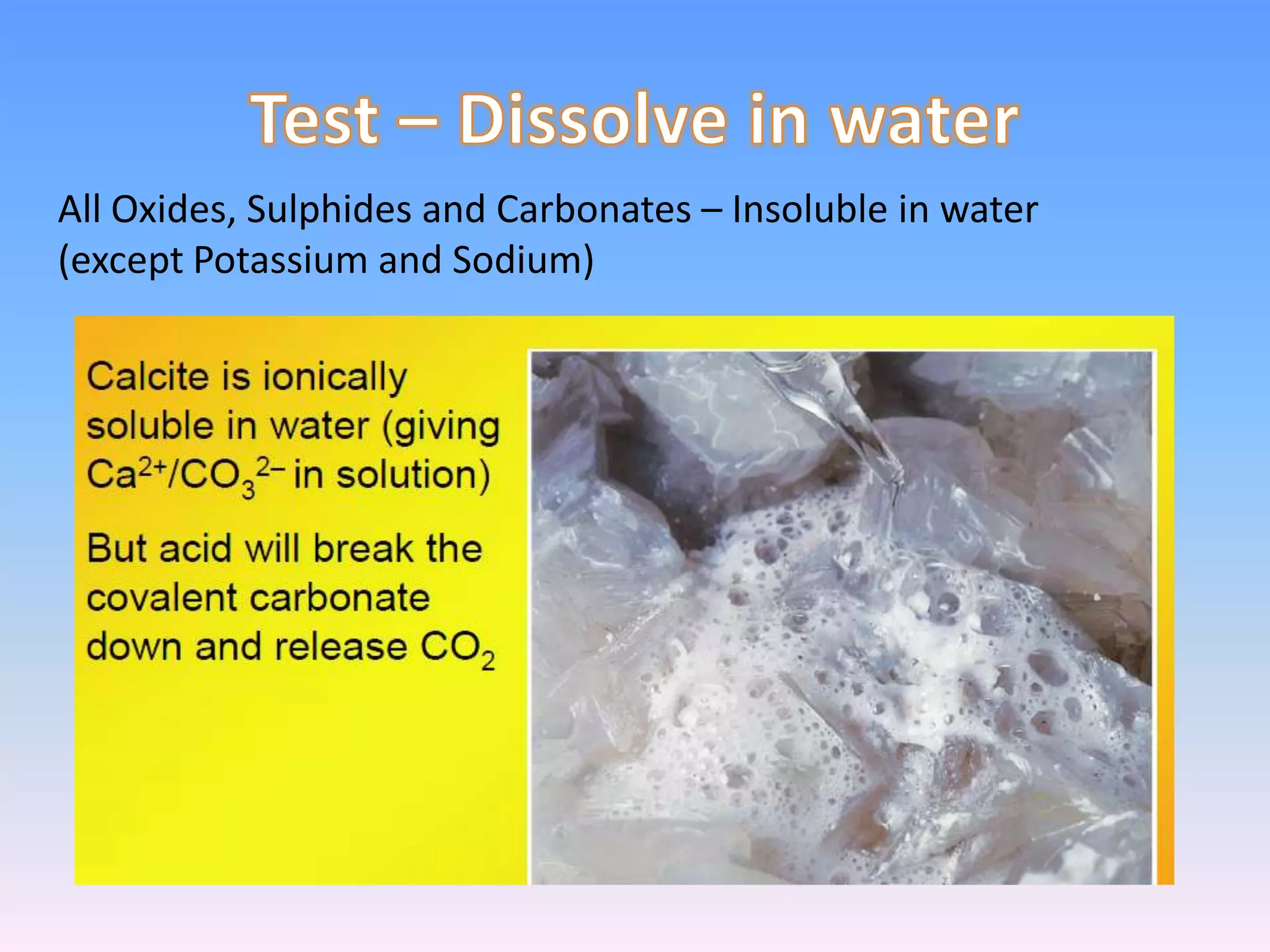
All Oxides, Sulphides and Carbonates – Insoluble in water
(except Potassium and Sodium)
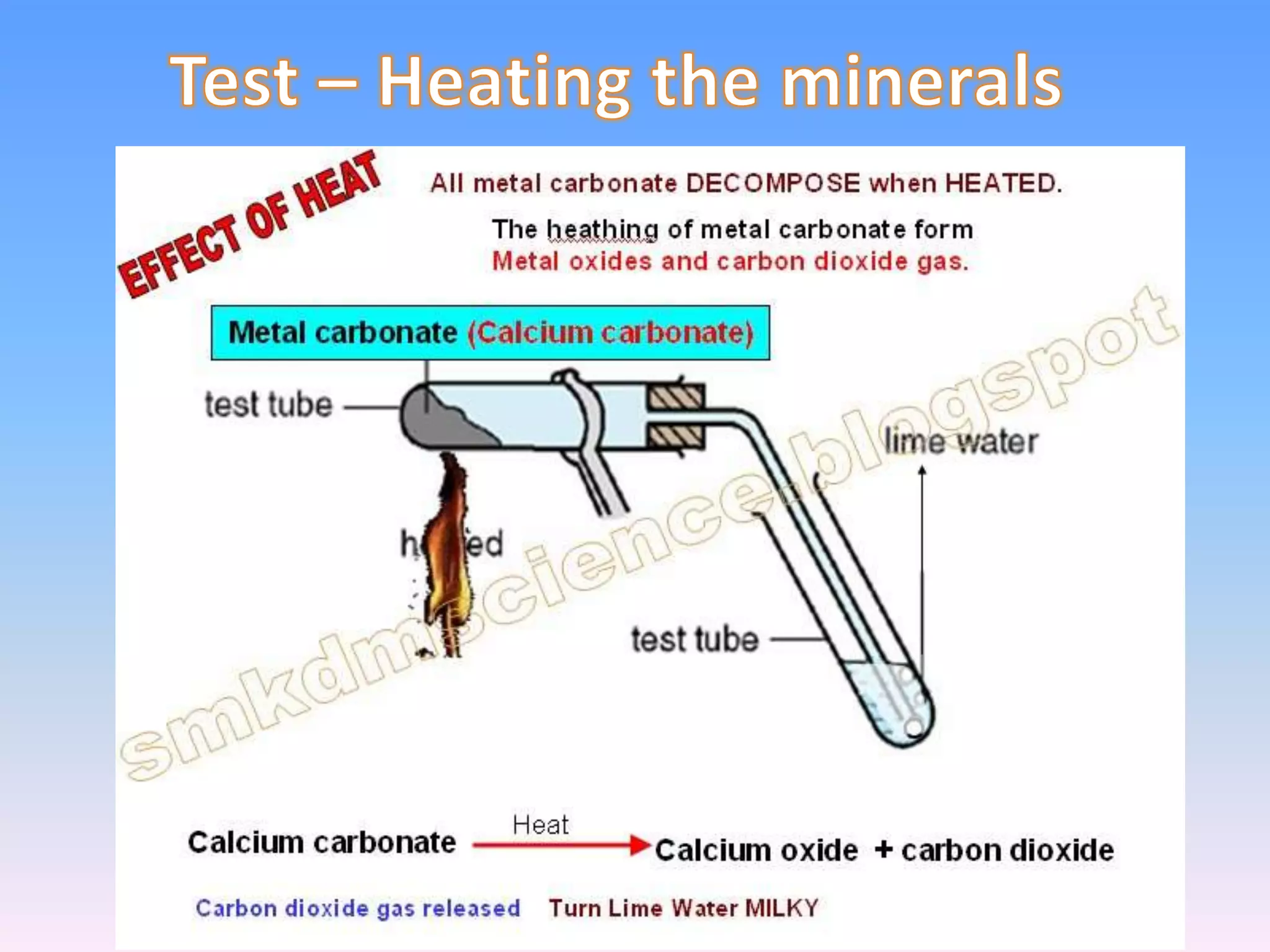
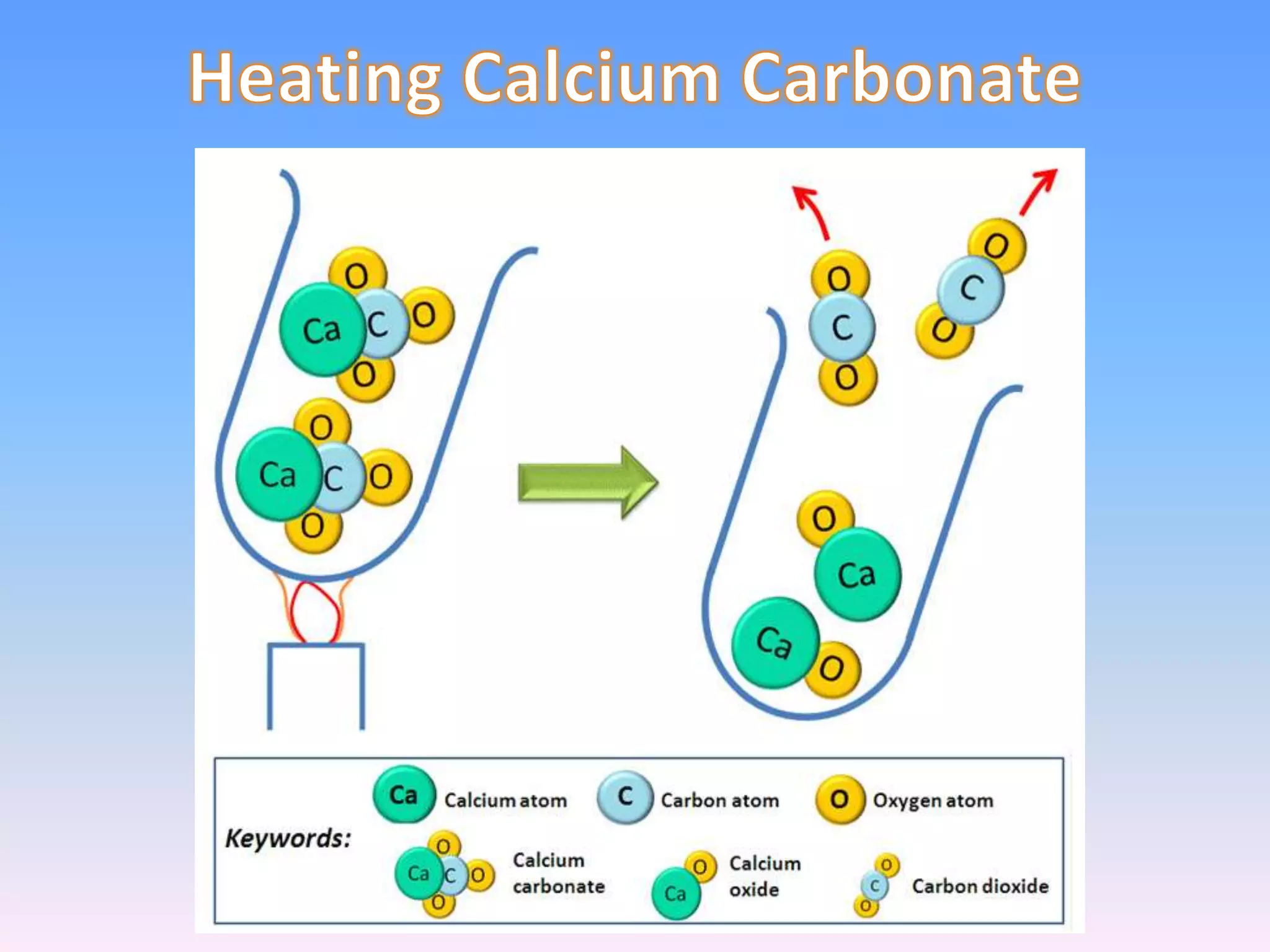
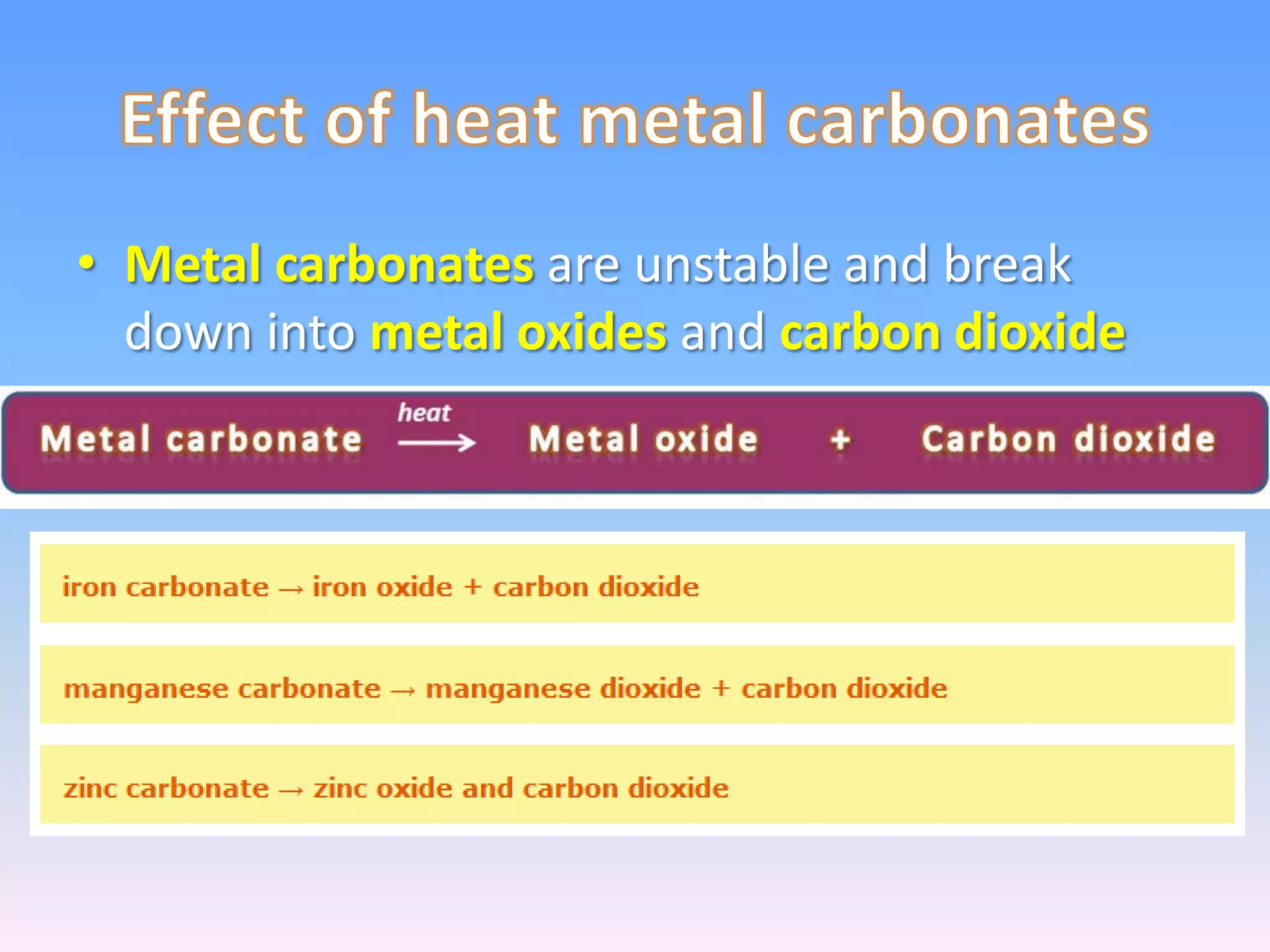
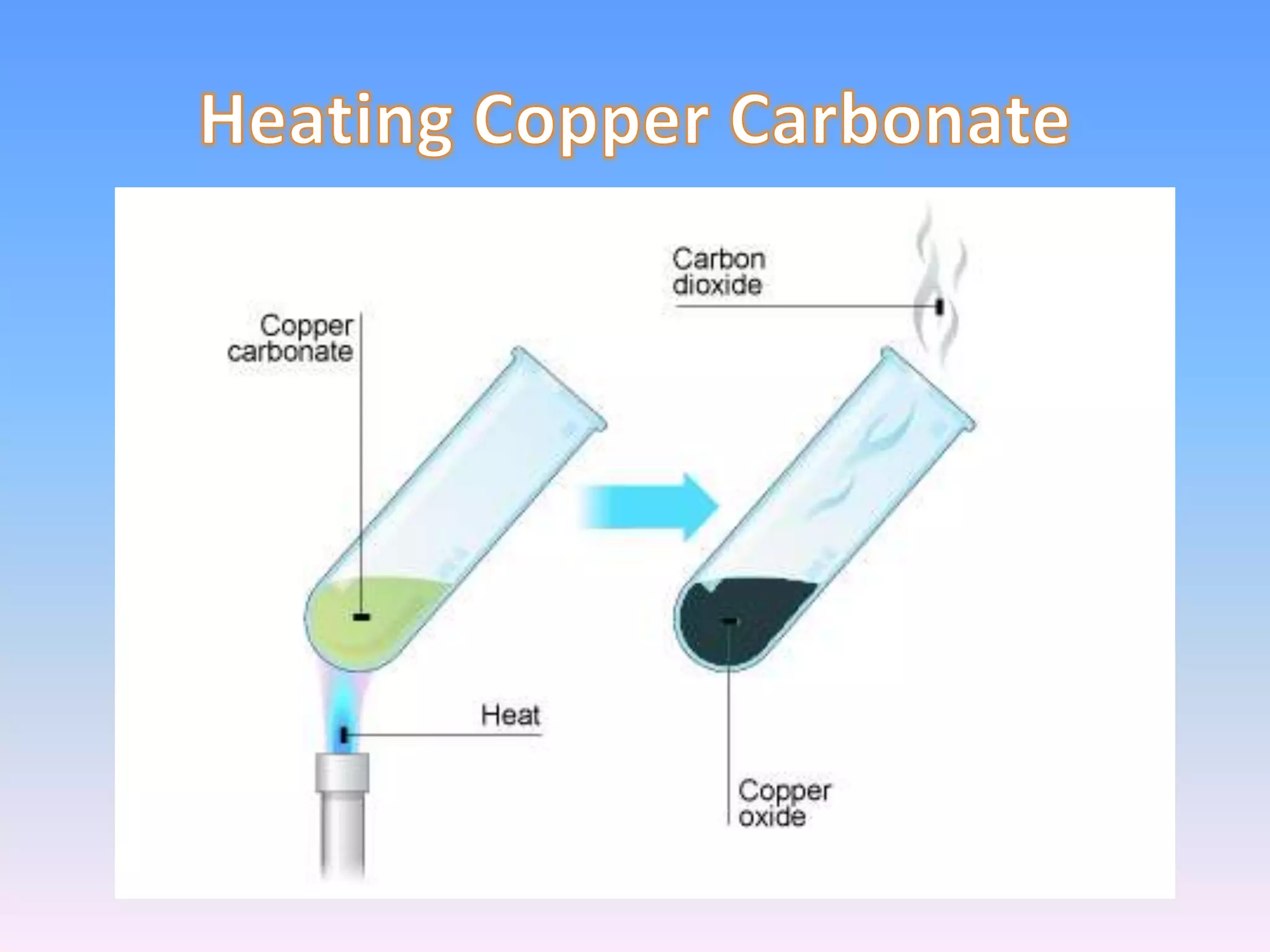
• Metal carbonates are unstable and break
  down into metal oxides and carbon dioxide
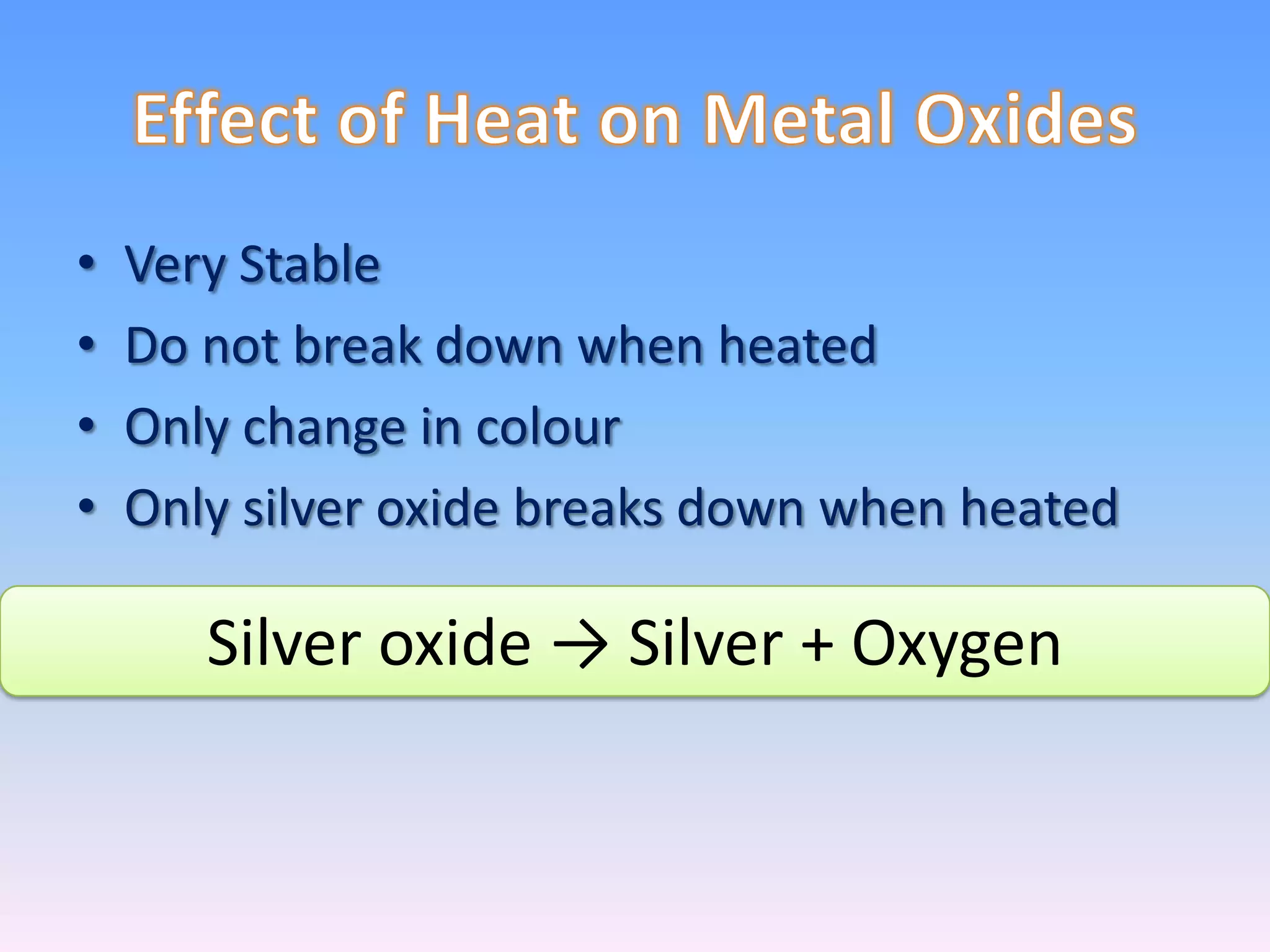
•   Very Stable
•   Do not break down when heated
•   Only change in colour
•   Only silver oxide breaks down when heated

       Silver oxide → Silver + Oxygen
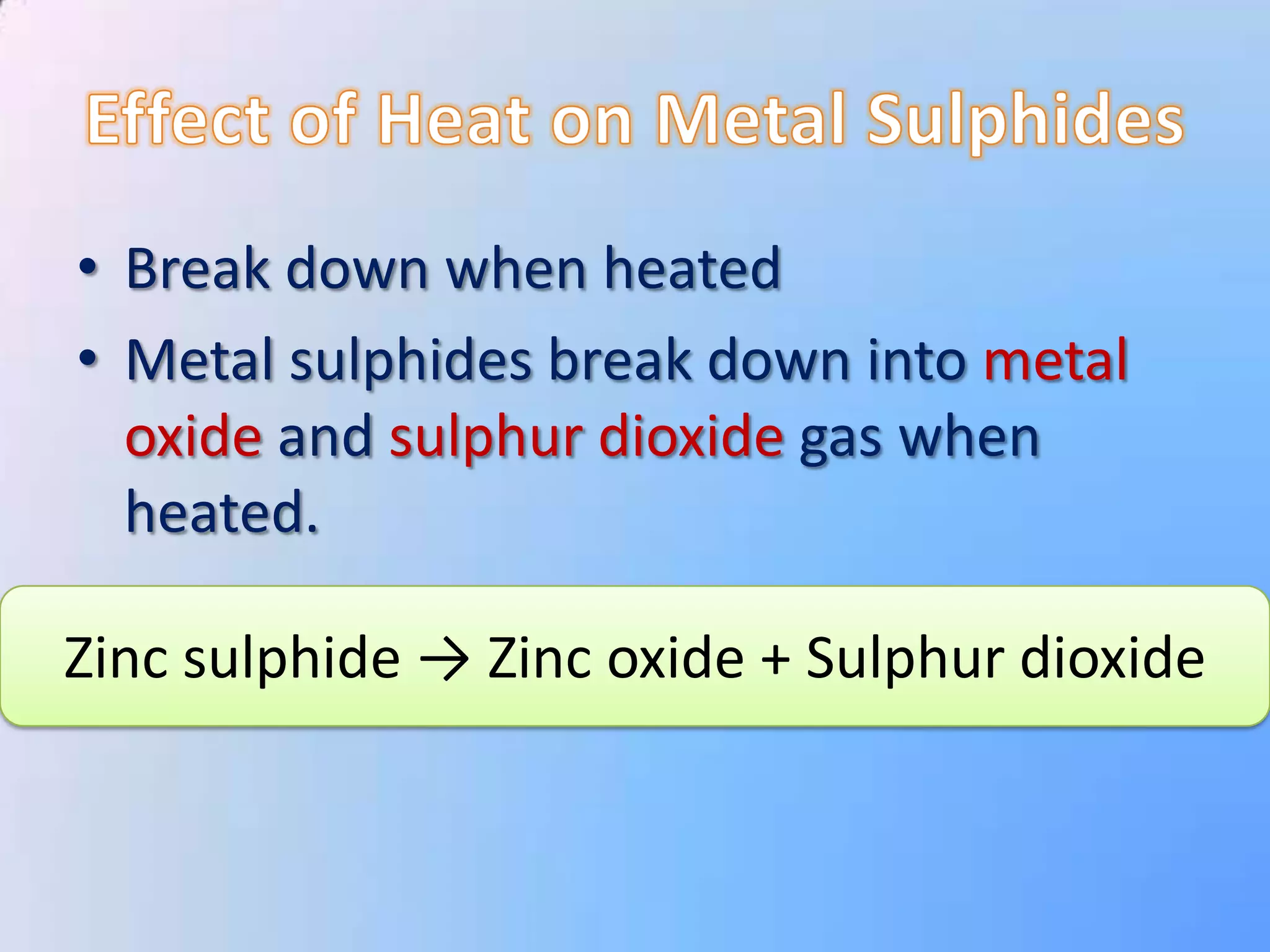
• Break down when heated
• Metal sulphides break down into metal
  oxide and sulphur dioxide gas when
  heated.

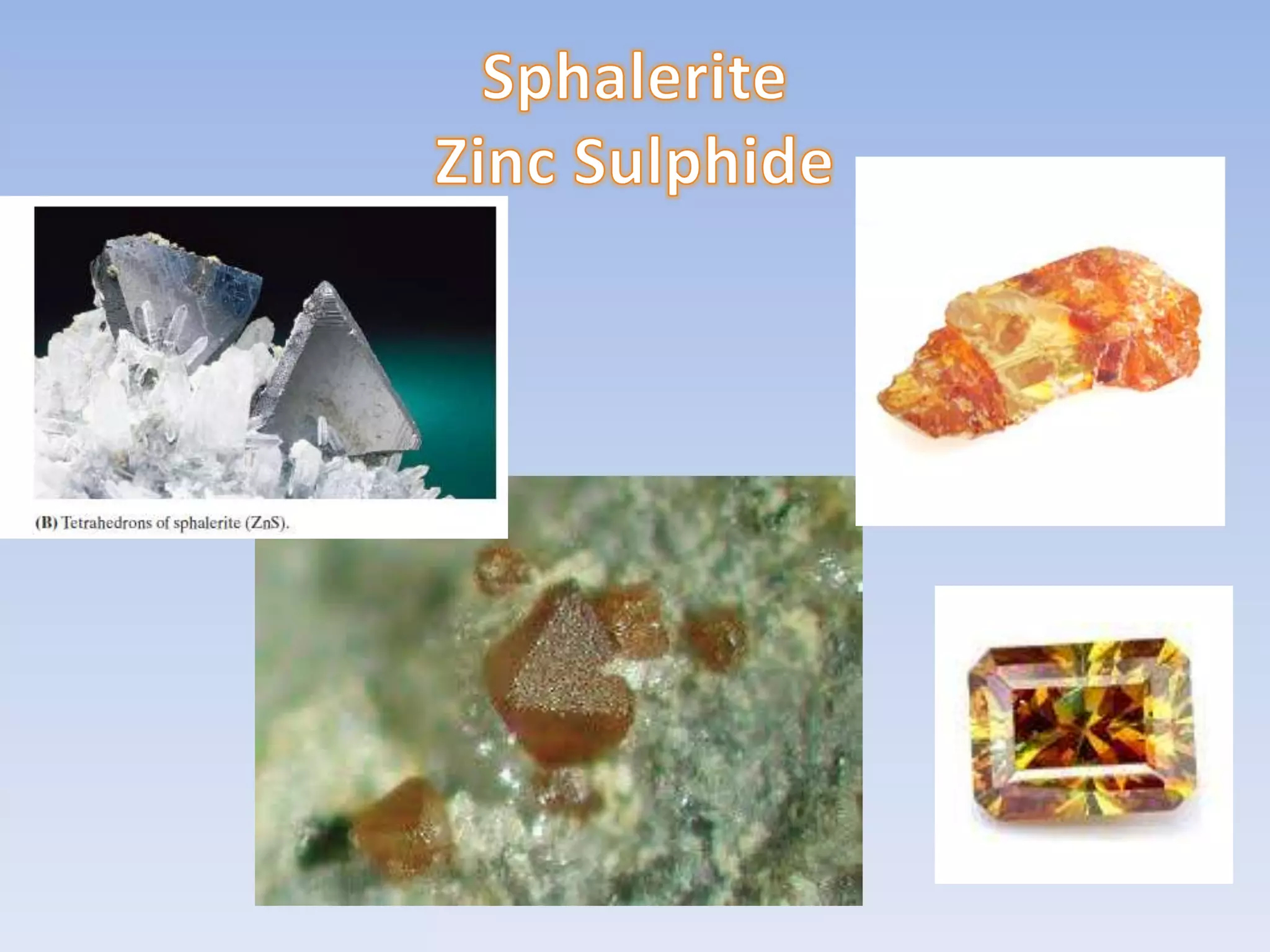
Zinc sulphide → Zinc oxide + Sulphur dioxide
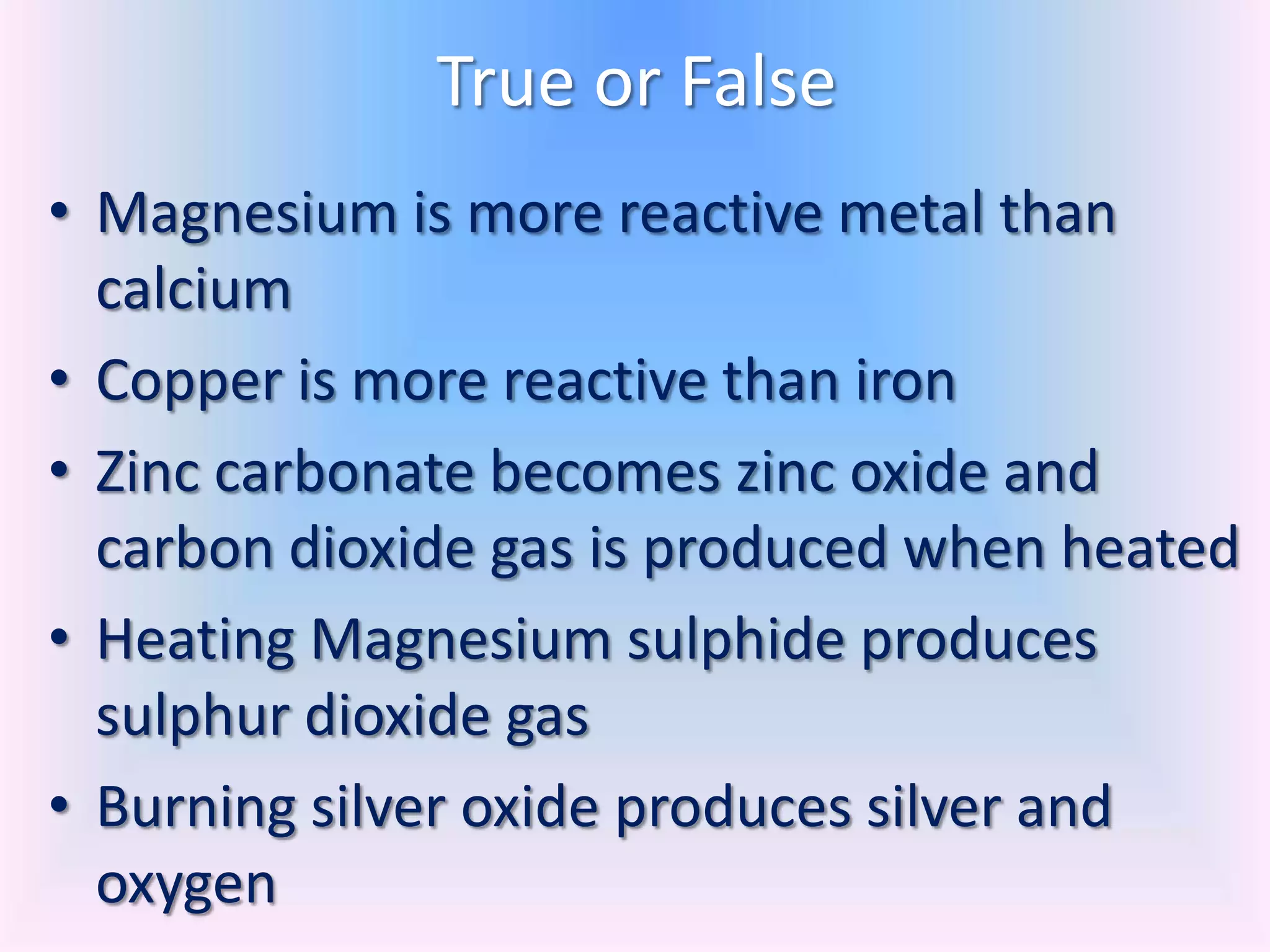
True or False
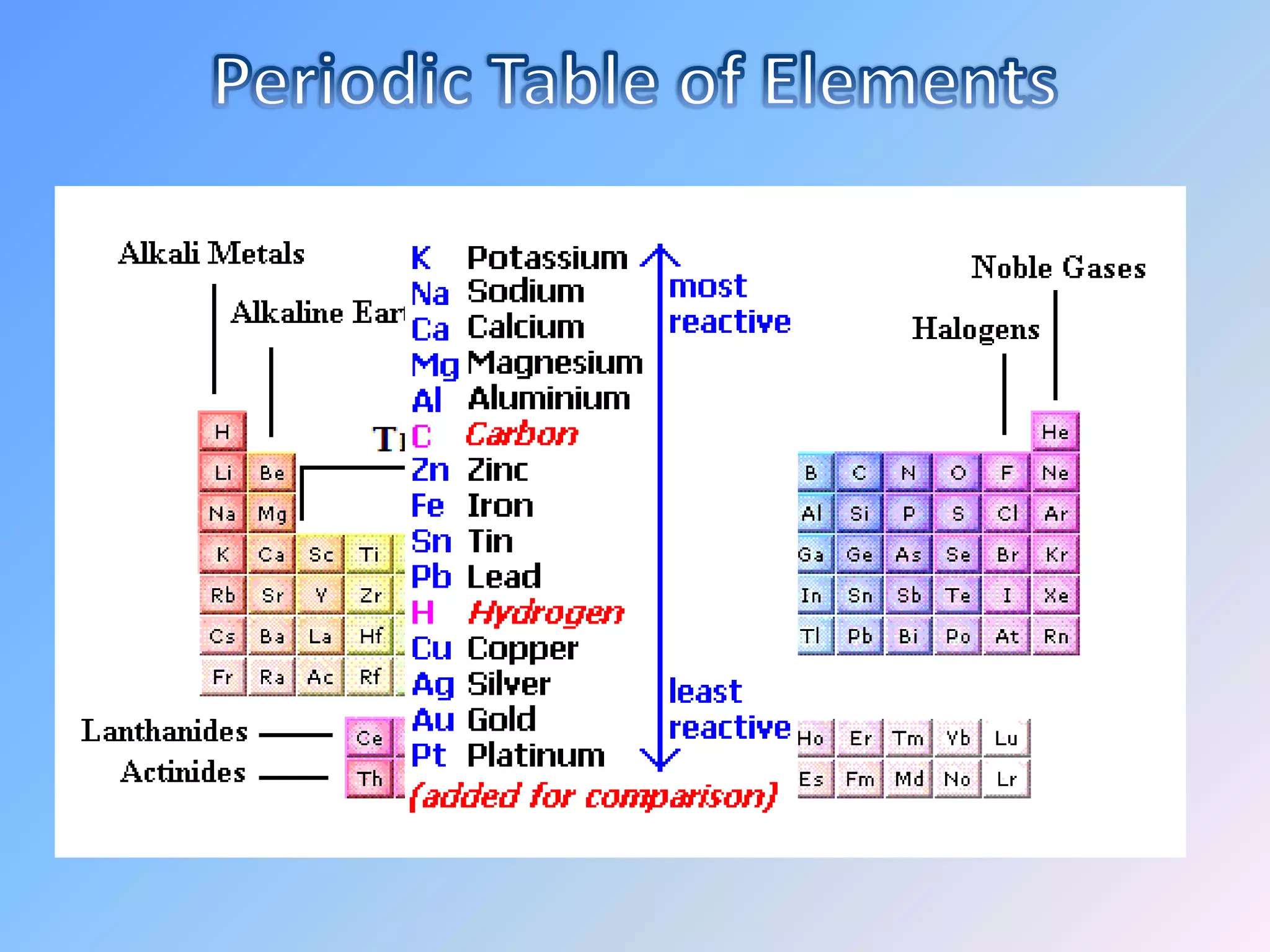
• Magnesium is more reactive metal than
  calcium
• Copper is more reactive than iron
• Zinc carbonate becomes zinc oxide and
  carbon dioxide gas is produced when heated
• Heating Magnesium sulphide produces
  sulphur dioxide gas
• Burning silver oxide produces silver and
  oxygen
Form 3 PMR Science Chapter 6 Minerals in Earth Crust

Form 3 PMR Science Chapter 6 Minerals in Earth Crust

  • 4.
    • Natural • Solid •Inorganic • Definite chemical composition • Atoms are organized in specific way
  • 8.
    Inactive Elements form Exist freely Do not combine with other Minerals exists in elements Active Compounds form Combination of metals and non- metals
  • 10.
    Minerals are solid elements or compounds found naturally in the earth crust Natural Natural elements compounds Gold Silver Carbon Oxides Carbonates Silicates Sulphides Iron Calcium Aluminium Iron oxide carbonates silicates suphides
  • 12.
    Cassiterite – TinOxide Haematite – Iron Oxide Bauxite – Aluminium Oxide
  • 18.
  • 30.
    All Oxides, Sulphidesand Carbonates – Insoluble in water (except Potassium and Sodium)
  • 34.
    • Metal carbonatesare unstable and break down into metal oxides and carbon dioxide
  • 36.
    Very Stable • Do not break down when heated • Only change in colour • Only silver oxide breaks down when heated Silver oxide → Silver + Oxygen
  • 37.
    • Break downwhen heated • Metal sulphides break down into metal oxide and sulphur dioxide gas when heated. Zinc sulphide → Zinc oxide + Sulphur dioxide
  • 39.
    True or False •Magnesium is more reactive metal than calcium • Copper is more reactive than iron • Zinc carbonate becomes zinc oxide and carbon dioxide gas is produced when heated • Heating Magnesium sulphide produces sulphur dioxide gas • Burning silver oxide produces silver and oxygen