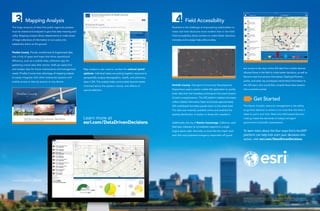
The document discusses how geographic information system (GIS) technology helps community leaders make more informed decisions and take real-time action. It provides four key ways GIS does this: 1) Real-time dashboards visualize real-time data to help allocate resources efficiently during emergencies; 2) Story maps improve communication and understanding with stakeholders; 3) Map analysis helps communities understand and combat issues like the opioid epidemic; 4) Field accessibility allows workers to make better remote decisions and assign help without delay.