Low-Tech Weather Monitoring for High-
Impact Resilience in Southern Zambia
- Division of Land O’Lakes Inc. founded in
1981, that leverages corporate experience
and expertise
- Our Vision: To be a global leader in
transforming lives by engaging in agriculture and
enterprise partnerships that replace poverty with
prosperity and dependency with self-reliance.
- Our Mission: Help farmers around the world
improve incomes and quality of life
Who We Are
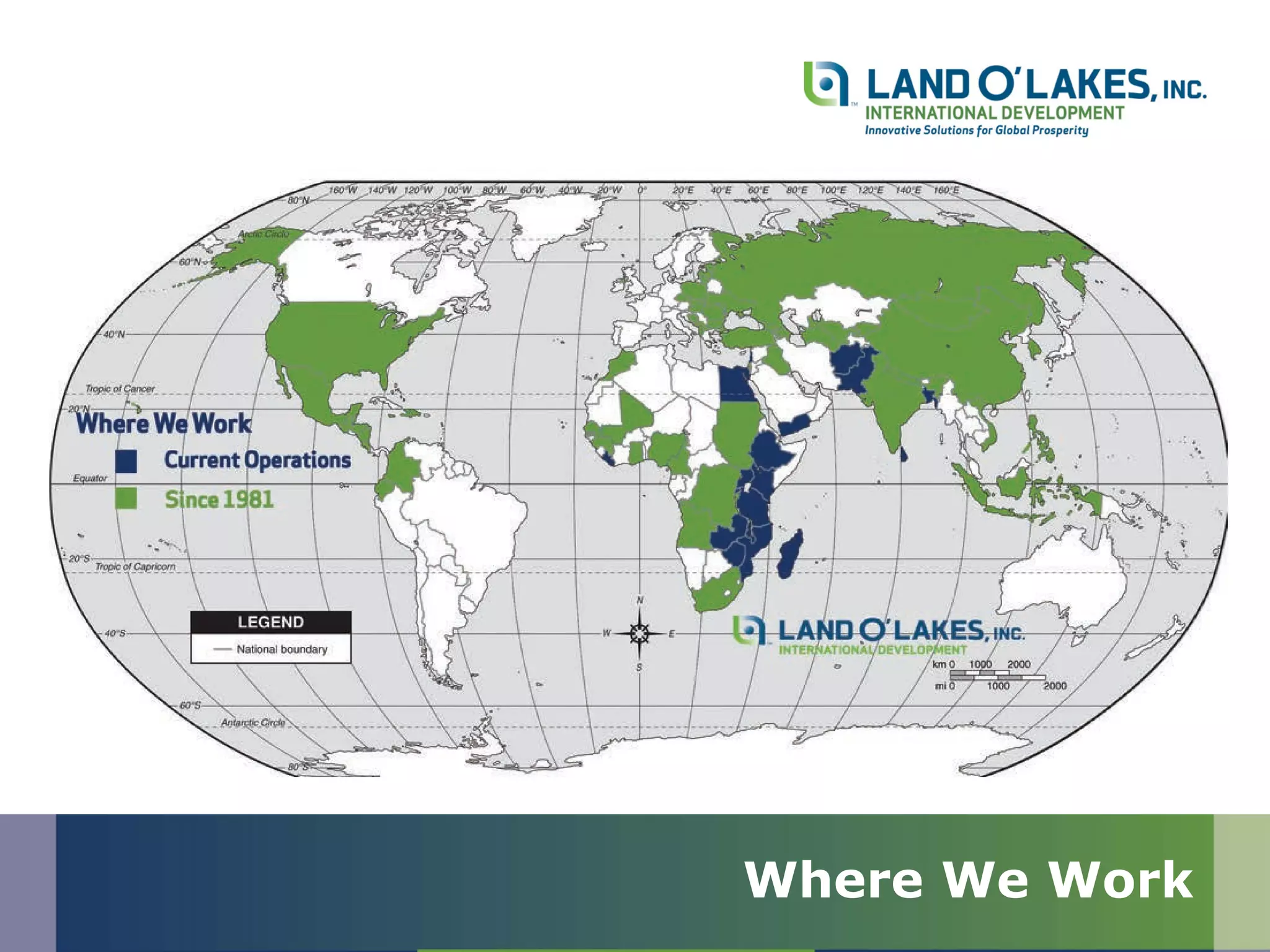
Where We Work
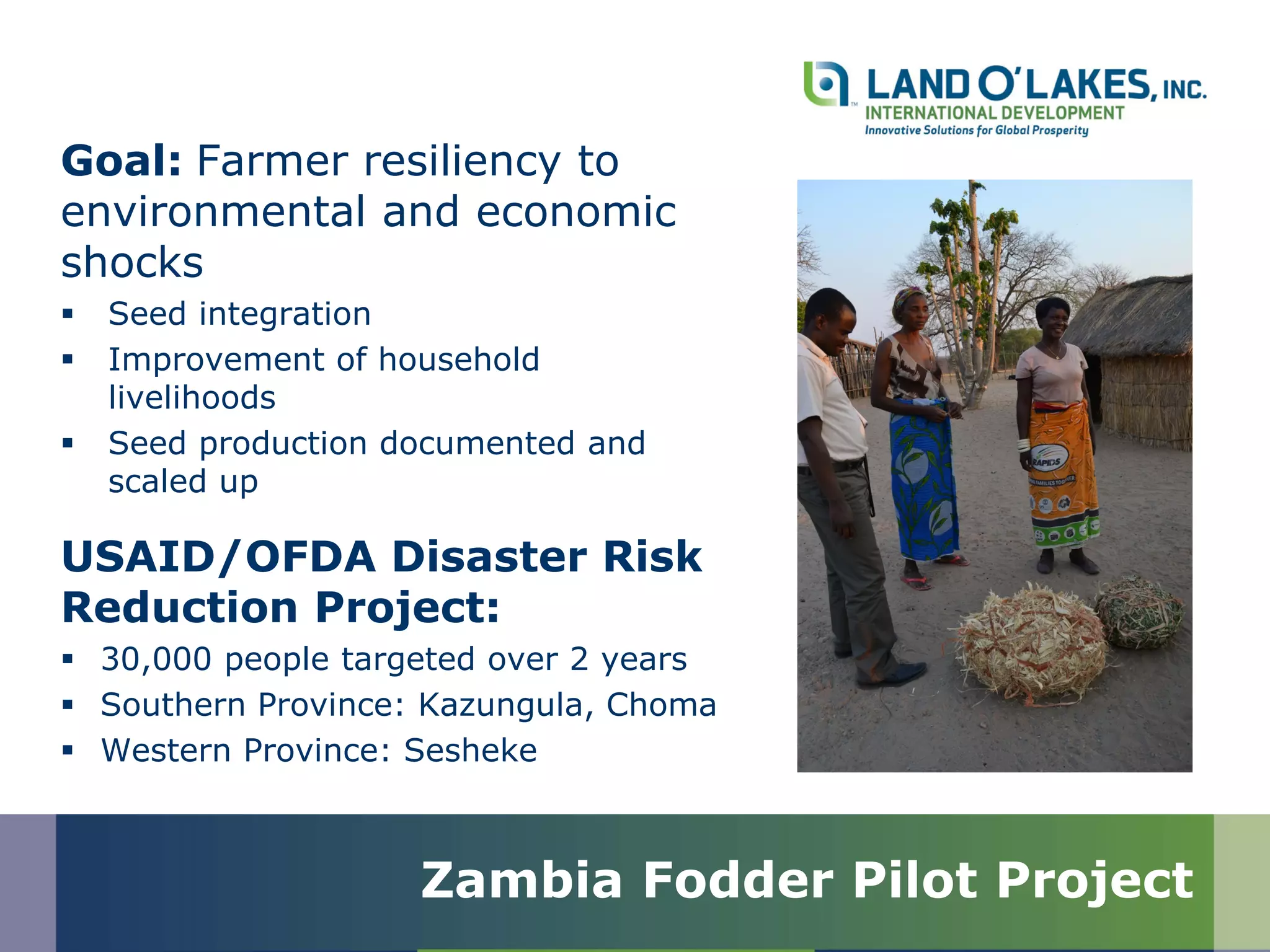
Goal: Farmer resiliency to
environmental and economic
shocks
 Seed integration
 Improvement of household
livelihoods
 Seed production documented and
scaled up
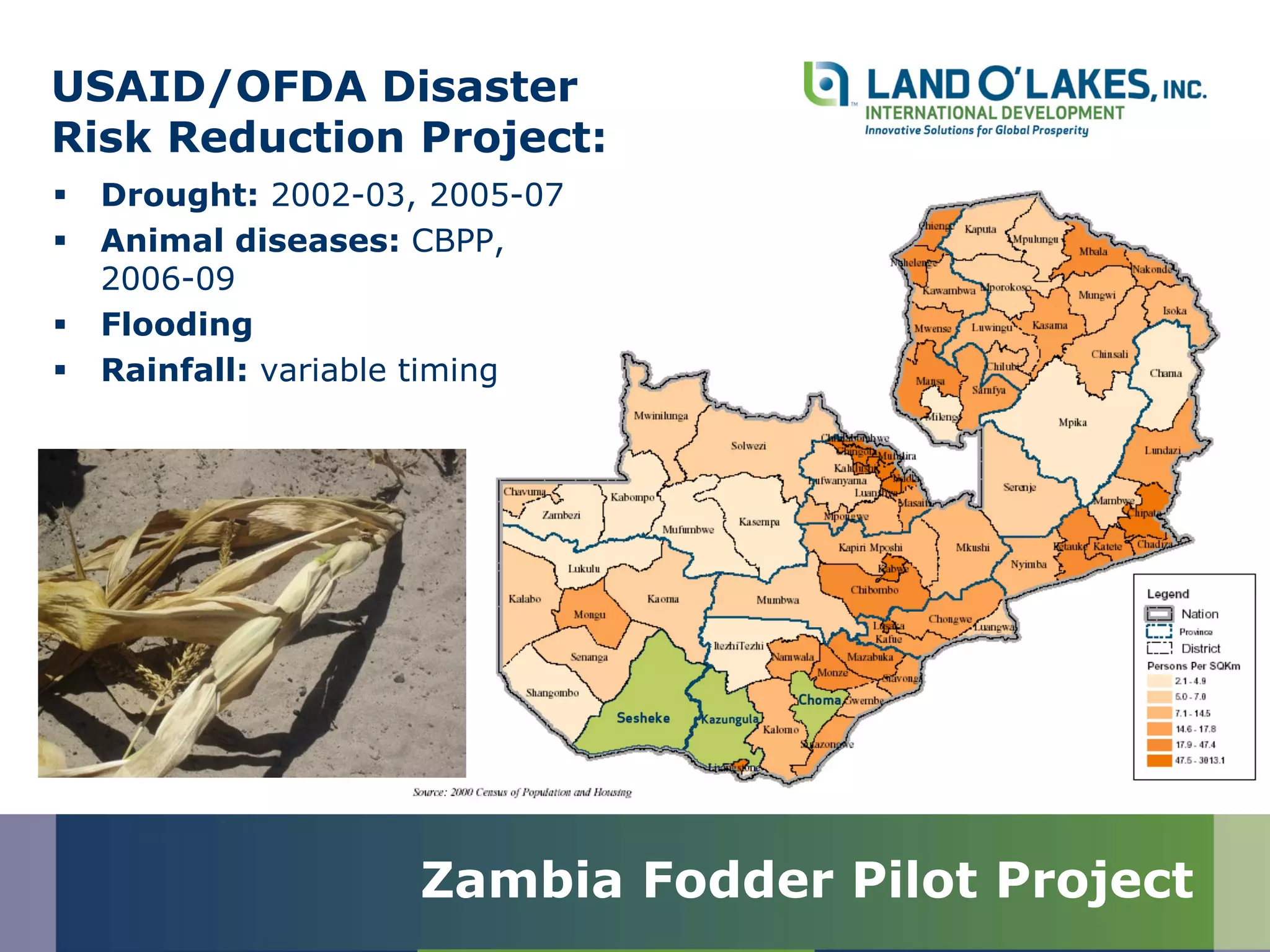
USAID/OFDA Disaster Risk
Reduction Project:
 30,000 people targeted over 2 years
 Southern Province: Kazungula, Choma
 Western Province: Sesheke
Zambia Fodder Pilot Project
USAID/OFDA Disaster
Risk Reduction Project:
 Drought: 2002-03, 2005-07
 Animal diseases: CBPP,
2006-09
 Flooding
 Rainfall: variable timing
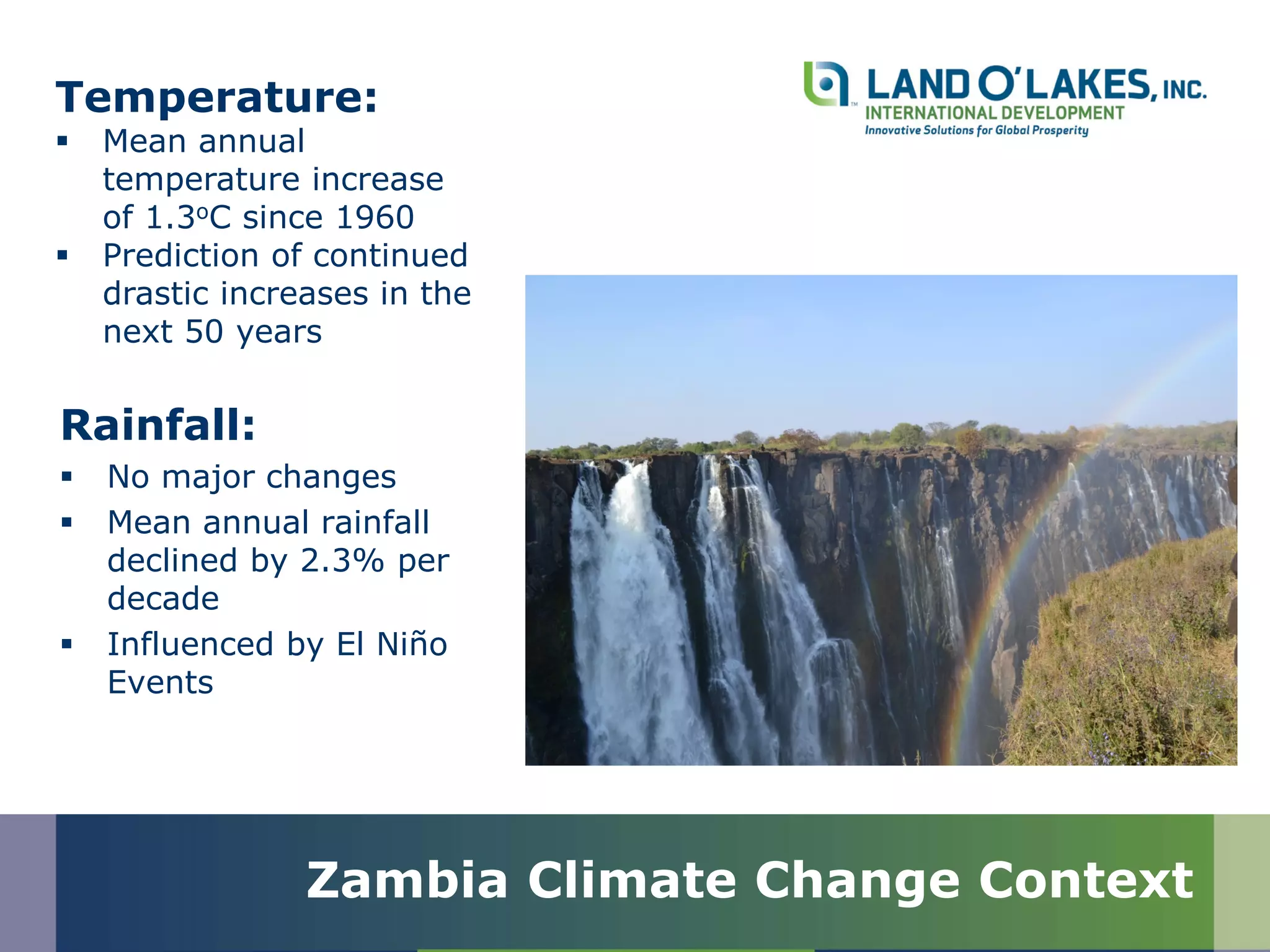
Rainfall:
 No major changes
 Mean annual rainfall
declined by 2.3% per
decade
 Influenced by El Niño
Events
Zambia Climate Change Context
Temperature:
 Mean annual
temperature increase
of 1.3oC since 1960
 Prediction of continued
drastic increases in the
next 50 years
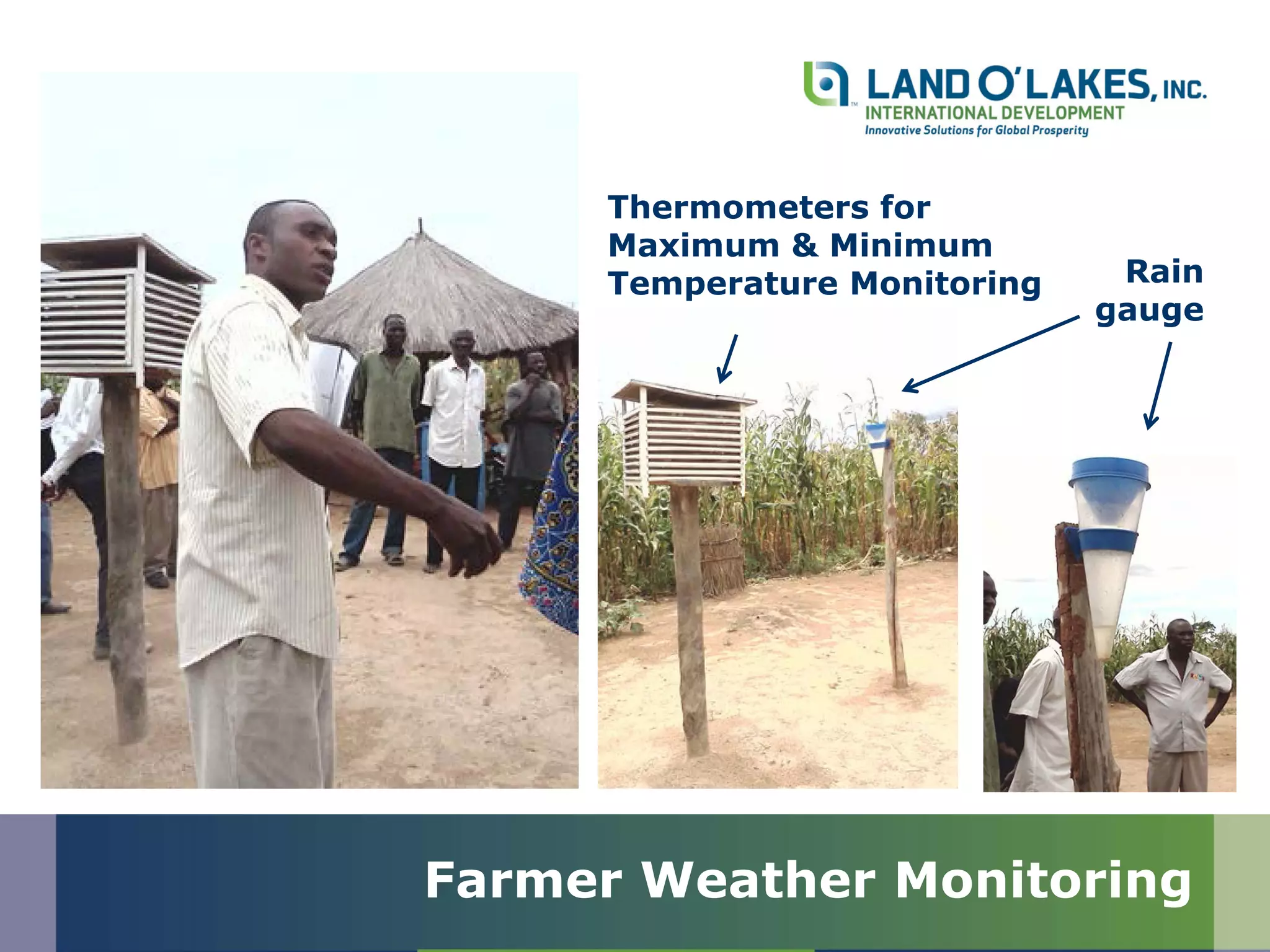
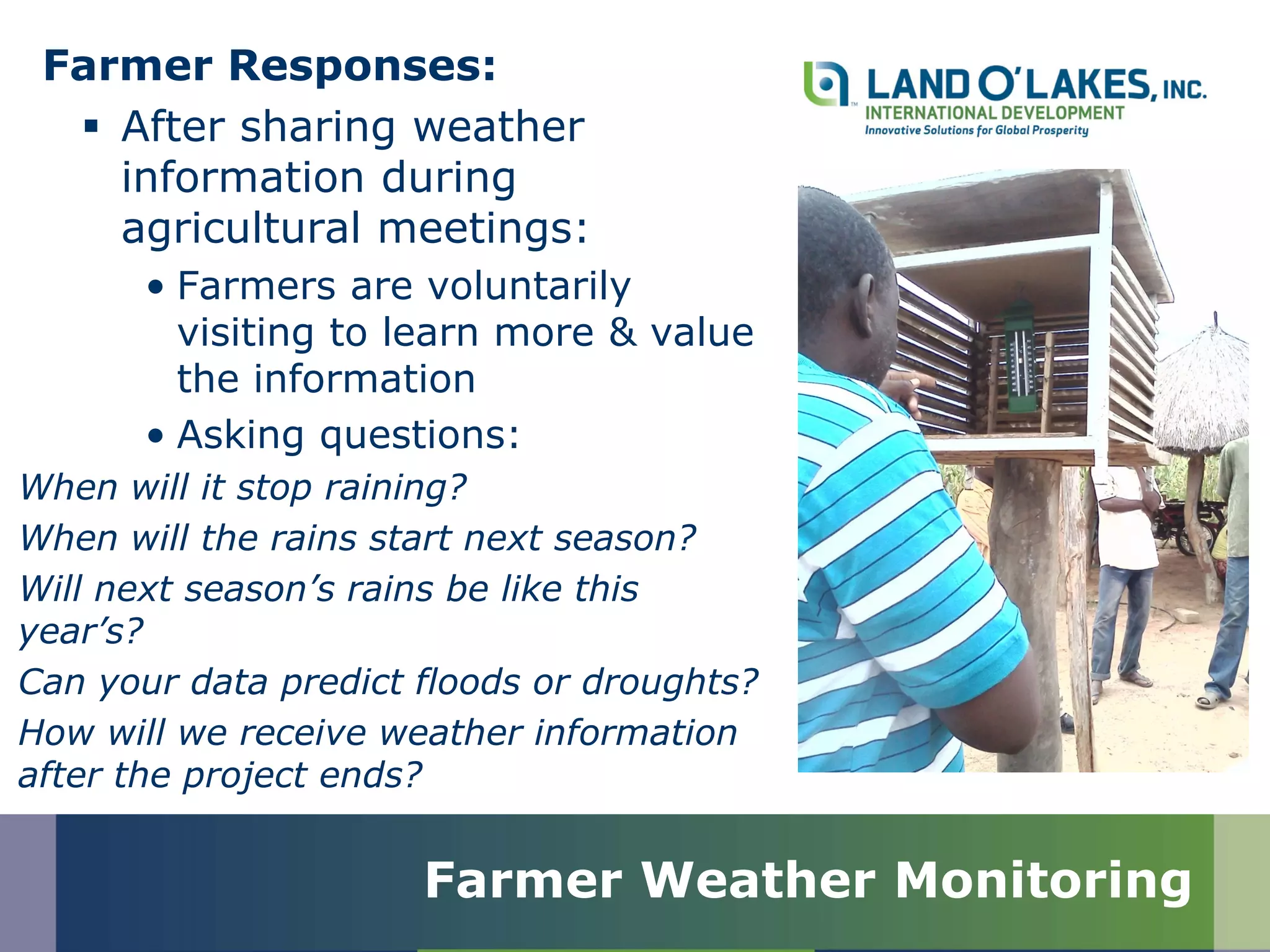
Thermometers for
Maximum & Minimum
Temperature Monitoring Rain
gauge
Farmer Weather Monitoring
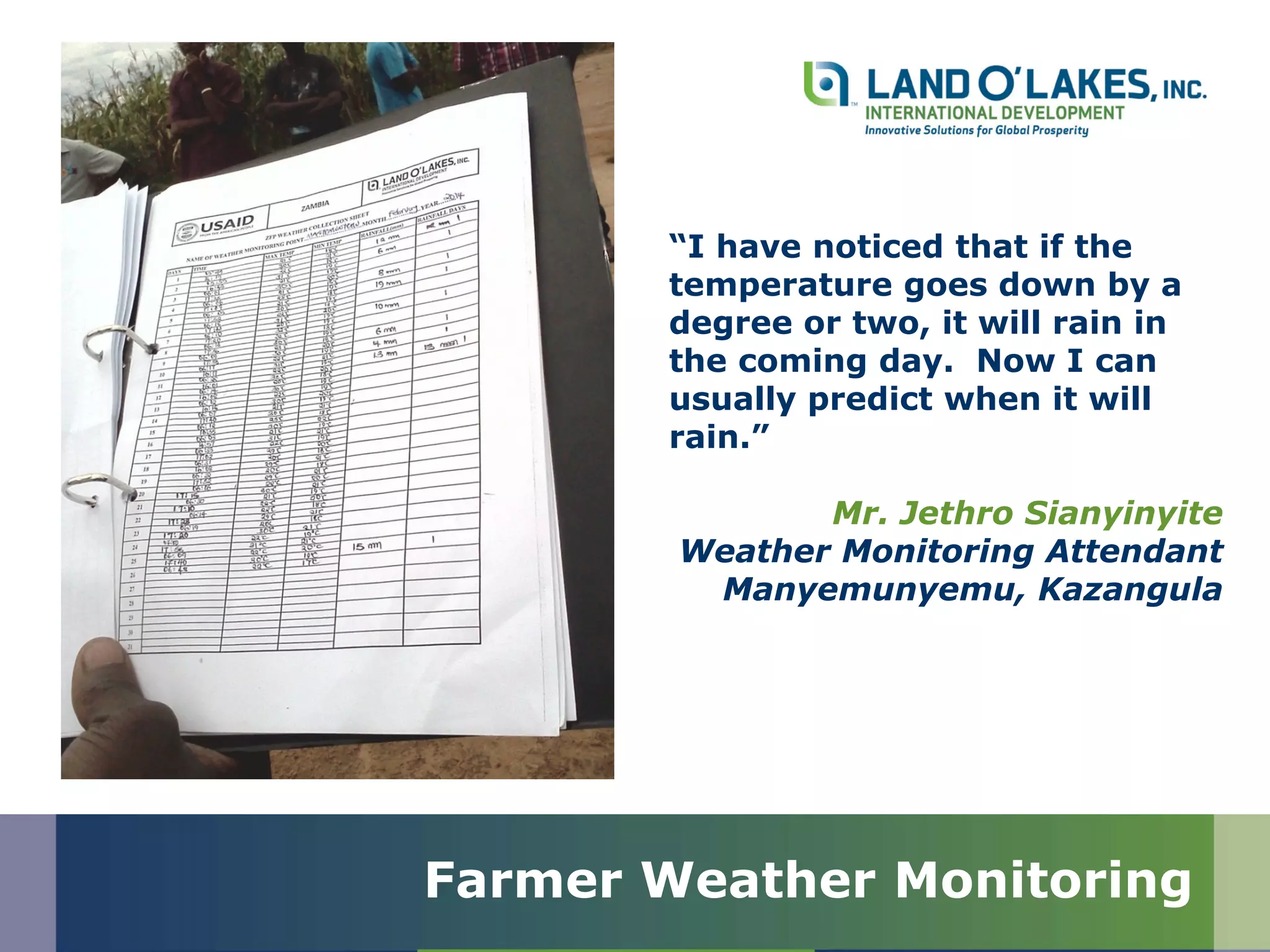
“I have noticed that if the
temperature goes down by a
degree or two, it will rain in
the coming day. Now I can
usually predict when it will
rain.”
Mr. Jethro Sianyinyite
Weather Monitoring Attendant
Manyemunyemu, Kazangula
Farmer Weather Monitoring
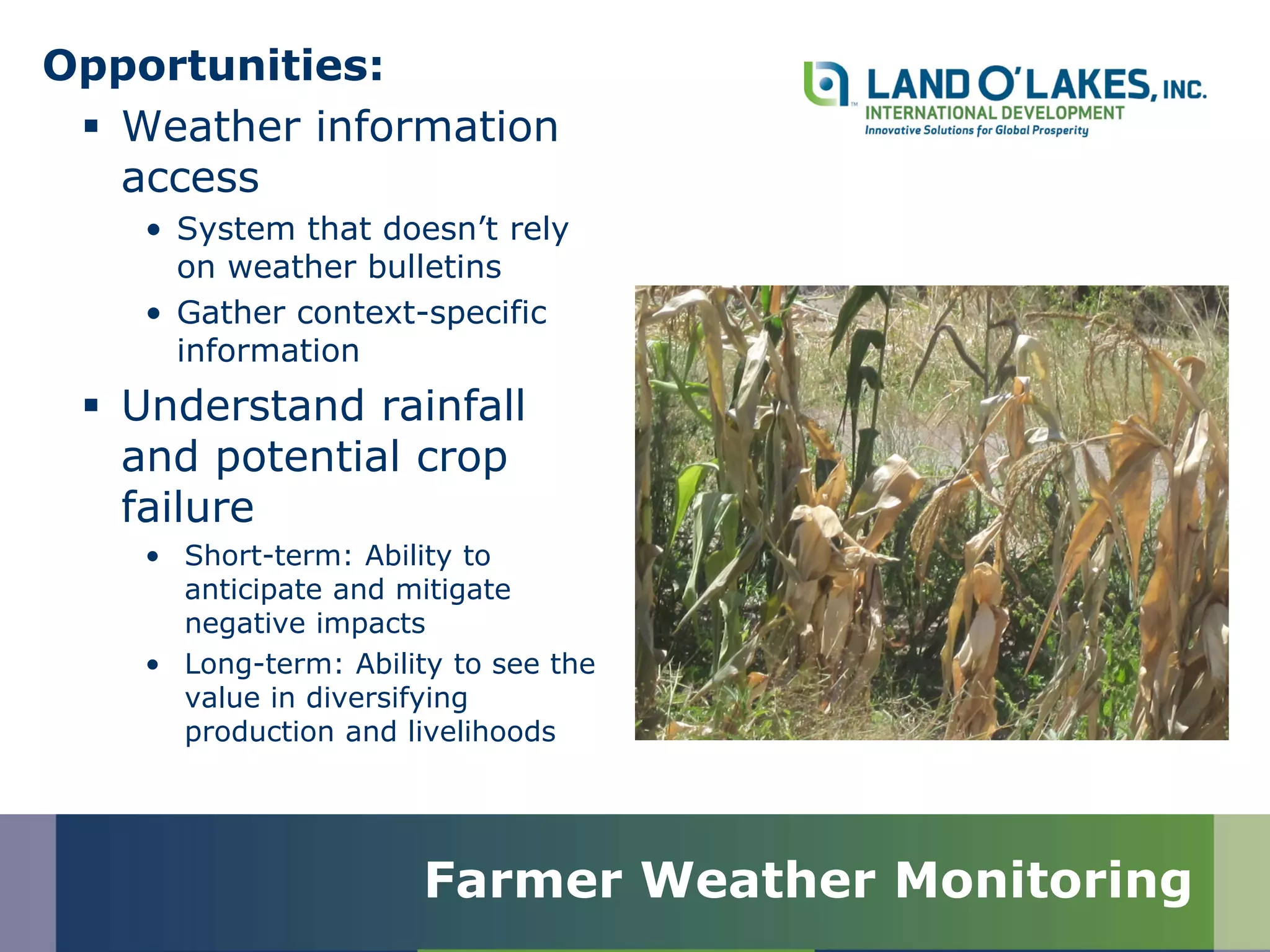
Opportunities:
 Weather information
access
• System that doesn’t rely
on weather bulletins
• Gather context-specific
information
 Understand rainfall
and potential crop
failure
• Short-term: Ability to
anticipate and mitigate
negative impacts
• Long-term: Ability to see the
value in diversifying
production and livelihoods
Farmer Weather Monitoring
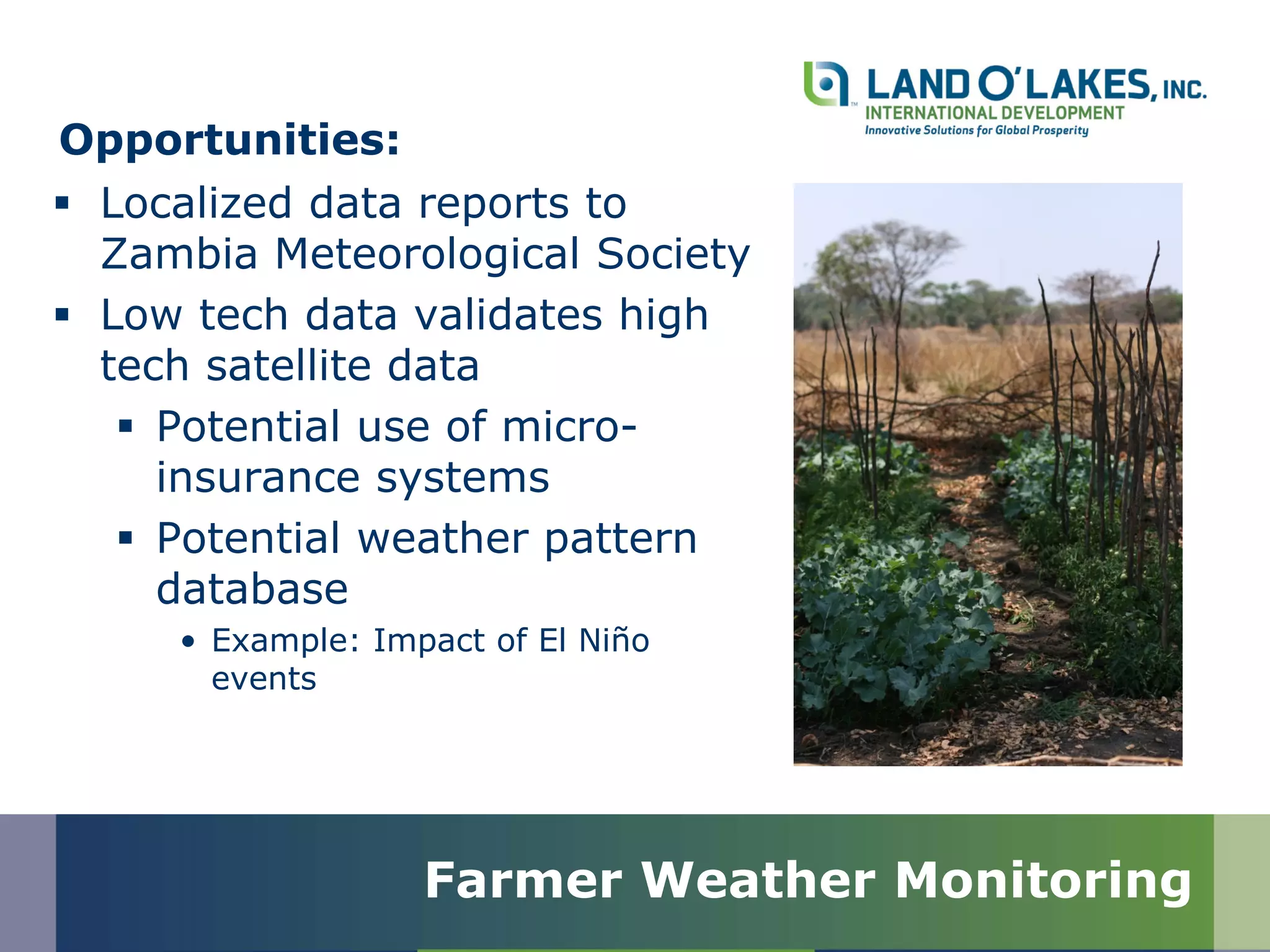
 Localized data reports to
Zambia Meteorological Society
 Low tech data validates high
tech satellite data
 Potential use of micro-
insurance systems
 Potential weather pattern
database
• Example: Impact of El Niño
events
Farmer Weather Monitoring
Opportunities:
Farmer Responses:
 After sharing weather
information during
agricultural meetings:
• Farmers are voluntarily
visiting to learn more & value
the information
• Asking questions:
When will it stop raining?
When will the rains start next season?
Will next season’s rains be like this
year’s?
Can your data predict floods or droughts?
How will we receive weather information
after the project ends?
Farmer Weather Monitoring
Opportunities for
Disaster Response:
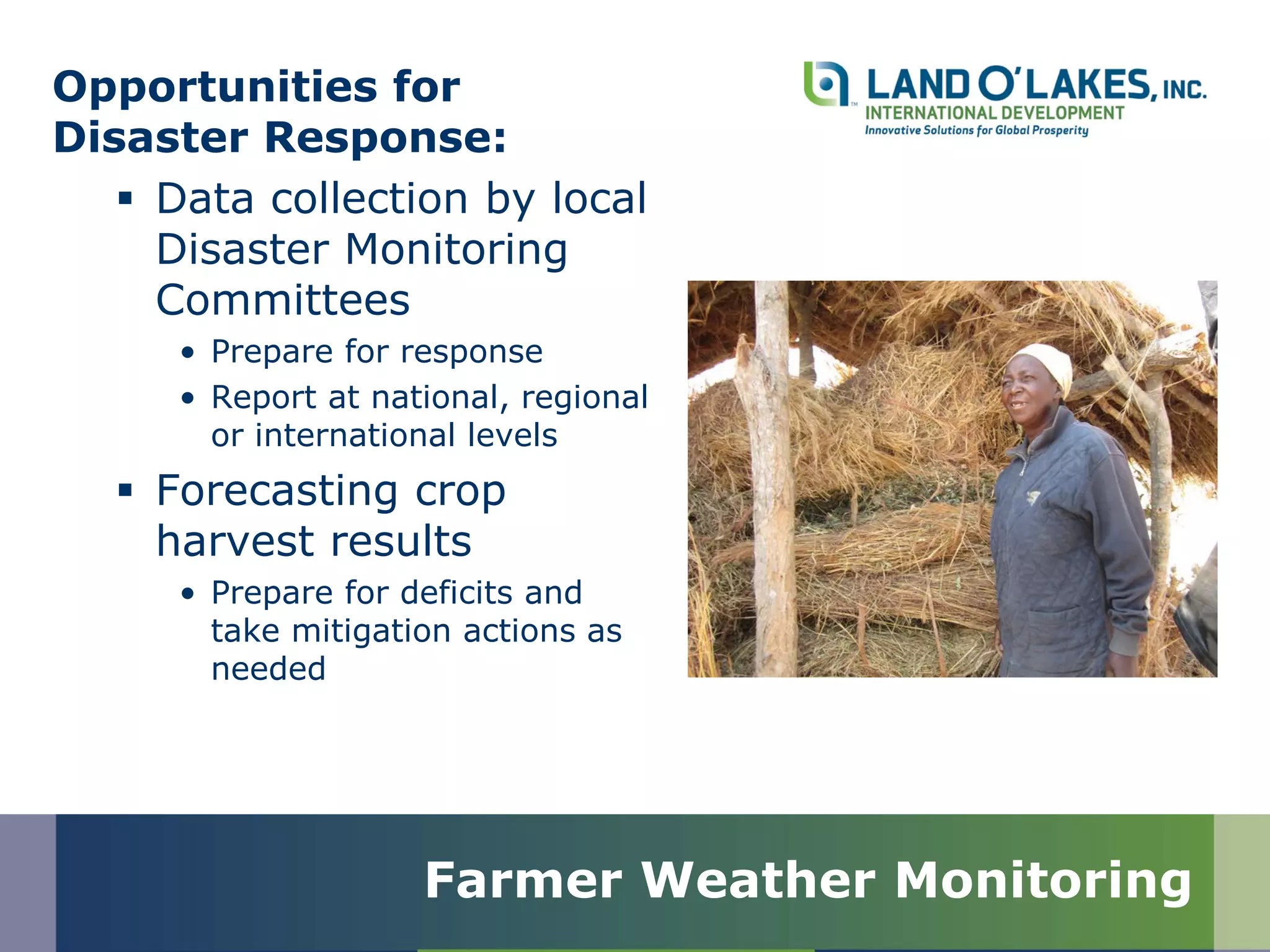
 Data collection by local
Disaster Monitoring
Committees
• Prepare for response
• Report at national, regional
or international levels
 Forecasting crop
harvest results
• Prepare for deficits and
take mitigation actions as
needed
Farmer Weather Monitoring
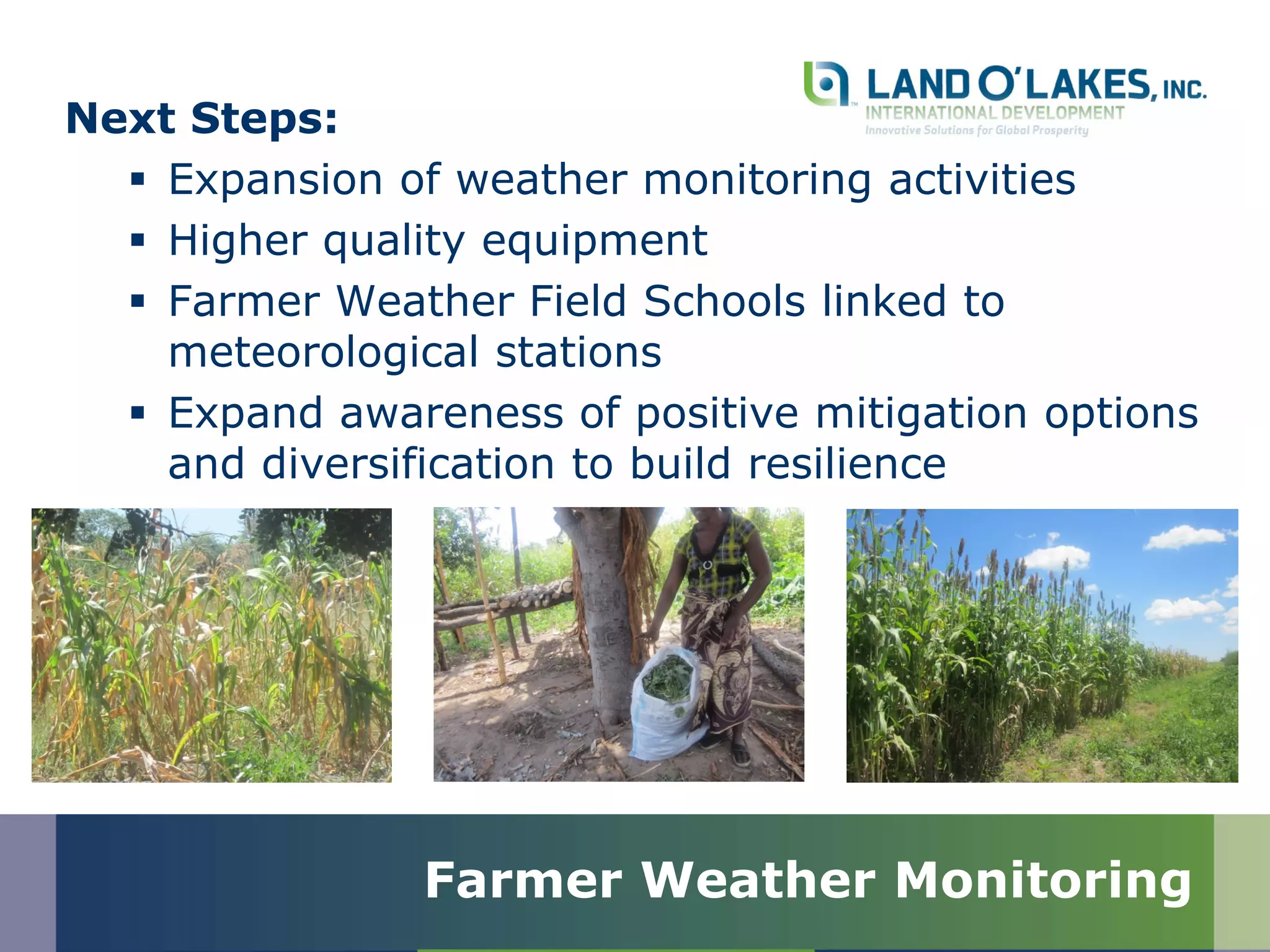
Next Steps:
 Expansion of weather monitoring activities
 Higher quality equipment
 Farmer Weather Field Schools linked to
meteorological stations
 Expand awareness of positive mitigation options
and diversification to build resilience

Low Tech Weather Monitoring for High Tech Resilience

  • 1.
    Low-Tech Weather Monitoringfor High- Impact Resilience in Southern Zambia
  • 2.
    - Division ofLand O’Lakes Inc. founded in 1981, that leverages corporate experience and expertise - Our Vision: To be a global leader in transforming lives by engaging in agriculture and enterprise partnerships that replace poverty with prosperity and dependency with self-reliance. - Our Mission: Help farmers around the world improve incomes and quality of life Who We Are
  • 3.
  • 4.
    Goal: Farmer resiliencyto environmental and economic shocks  Seed integration  Improvement of household livelihoods  Seed production documented and scaled up USAID/OFDA Disaster Risk Reduction Project:  30,000 people targeted over 2 years  Southern Province: Kazungula, Choma  Western Province: Sesheke Zambia Fodder Pilot Project
  • 5.
    Zambia Fodder PilotProject USAID/OFDA Disaster Risk Reduction Project:  Drought: 2002-03, 2005-07  Animal diseases: CBPP, 2006-09  Flooding  Rainfall: variable timing
  • 6.
    Rainfall:  No majorchanges  Mean annual rainfall declined by 2.3% per decade  Influenced by El Niño Events Zambia Climate Change Context Temperature:  Mean annual temperature increase of 1.3oC since 1960  Prediction of continued drastic increases in the next 50 years
  • 7.
    Thermometers for Maximum &Minimum Temperature Monitoring Rain gauge Farmer Weather Monitoring
  • 8.
    “I have noticedthat if the temperature goes down by a degree or two, it will rain in the coming day. Now I can usually predict when it will rain.” Mr. Jethro Sianyinyite Weather Monitoring Attendant Manyemunyemu, Kazangula Farmer Weather Monitoring
  • 9.
    Opportunities:  Weather information access •System that doesn’t rely on weather bulletins • Gather context-specific information  Understand rainfall and potential crop failure • Short-term: Ability to anticipate and mitigate negative impacts • Long-term: Ability to see the value in diversifying production and livelihoods Farmer Weather Monitoring
  • 10.
     Localized datareports to Zambia Meteorological Society  Low tech data validates high tech satellite data  Potential use of micro- insurance systems  Potential weather pattern database • Example: Impact of El Niño events Farmer Weather Monitoring Opportunities:
  • 11.
    Farmer Responses:  Aftersharing weather information during agricultural meetings: • Farmers are voluntarily visiting to learn more & value the information • Asking questions: When will it stop raining? When will the rains start next season? Will next season’s rains be like this year’s? Can your data predict floods or droughts? How will we receive weather information after the project ends? Farmer Weather Monitoring
  • 12.
    Opportunities for Disaster Response: Data collection by local Disaster Monitoring Committees • Prepare for response • Report at national, regional or international levels  Forecasting crop harvest results • Prepare for deficits and take mitigation actions as needed Farmer Weather Monitoring
  • 13.
    Farmer Weather Monitoring NextSteps:  Expansion of weather monitoring activities  Higher quality equipment  Farmer Weather Field Schools linked to meteorological stations  Expand awareness of positive mitigation options and diversification to build resilience