Plato’s Theory of Forms, and 
the Sun, Line and Cave 
A falasafaz! presentation 
1
Plato 
What is justice? 
What is the ideal 
state? 
What is the human 
soul? 
What is 
knowledge? 
What is reality? 
2
Understanding Plato 
• How does Plato 
understand the nature 
of reality? 
• What is the relationship 
between existence, 
knowledge, and virtue? 
• How successful are 
Plato’s Sun, Line & Cave 
similes? 
3
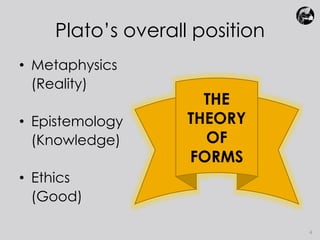
Plato’s overall position 
• Metaphysics 
(Reality) 
• Epistemology 
(Knowledge) 
• Ethics 
(Good) 
THE 
THEORY 
OF 
FORMS 
4
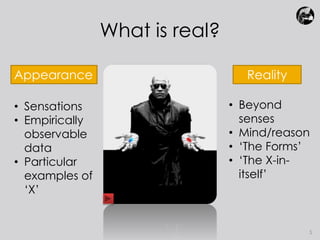
What is real? 
5 
Appearance Reality 
• Sensations 
• Empirically 
observable 
data 
• Particular 
examples of 
‘X’ 
• Beyond 
senses 
• Mind/reason 
• ‘The Forms’ 
• ‘The X-in-itself’
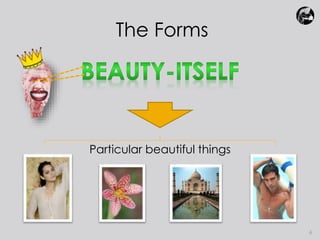
The Forms 
6 
Particular beautiful things
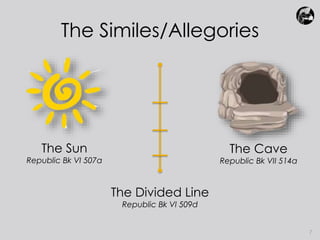
The Similes/Allegories 
7 
The Sun 
Republic Bk VI 507a 
The Divided Line 
Republic Bk VI 509d 
The Cave 
Republic Bk VII 514a
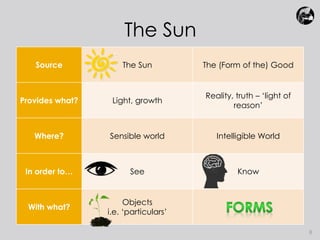
The Sun 
8 
Source The Sun The (Form of the) Good 
Provides what? Light, growth 
Reality, truth – ‘light of 
reason’ 
Where? Sensible world Intelligible World 
In order to… See Know 
With what? 
Objects 
i.e. ‘particulars’
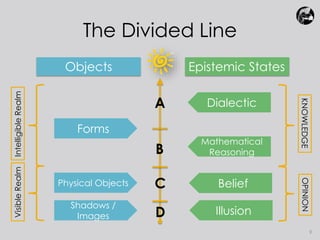
The Divided Line 
9 
Objects Epistemic States 
Forms 
Physical Objects 
Shadows / 
Images 
Dialectic 
Belief 
A 
B 
C 
D 
Mathematical 
Reasoning 
Illusion 
Visible Realm Intelligible Realm 
KNOWLEDGE OPINION
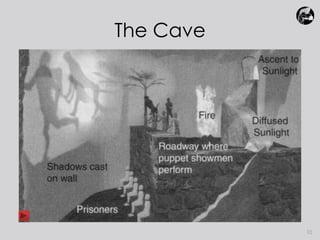
The Cave 
10
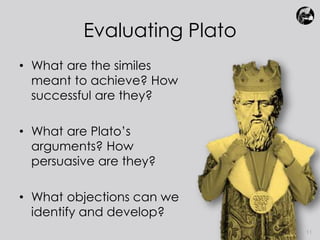
Evaluating Plato 
• What are the similes 
meant to achieve? How 
successful are they? 
• What are Plato’s 
arguments? How 
persuasive are they? 
• What objections can we 
identify and develop? 
11
This work is licensed under the Creative Commons Attribution- 
NonCommercial-ShareAlike 2.0 UK: England & Wales License. 
To view a copy of this license, visit 
http://creativecommons.org/licenses/by-nc-sa/2.0/uk/ or send a letter 
to Creative Commons, PO Box 1866, Mountain View, CA 94042, USA. 
12

Plato's Theory of Forms, and the Sun, Line and Cave

  • 1.
    Plato’s Theory ofForms, and the Sun, Line and Cave A falasafaz! presentation 1
  • 2.
    Plato What isjustice? What is the ideal state? What is the human soul? What is knowledge? What is reality? 2
  • 3.
    Understanding Plato •How does Plato understand the nature of reality? • What is the relationship between existence, knowledge, and virtue? • How successful are Plato’s Sun, Line & Cave similes? 3
  • 4.
    Plato’s overall position • Metaphysics (Reality) • Epistemology (Knowledge) • Ethics (Good) THE THEORY OF FORMS 4
  • 5.
    What is real? 5 Appearance Reality • Sensations • Empirically observable data • Particular examples of ‘X’ • Beyond senses • Mind/reason • ‘The Forms’ • ‘The X-in-itself’
  • 6.
    The Forms 6 Particular beautiful things
  • 7.
    The Similes/Allegories 7 The Sun Republic Bk VI 507a The Divided Line Republic Bk VI 509d The Cave Republic Bk VII 514a
  • 8.
    The Sun 8 Source The Sun The (Form of the) Good Provides what? Light, growth Reality, truth – ‘light of reason’ Where? Sensible world Intelligible World In order to… See Know With what? Objects i.e. ‘particulars’
  • 9.
    The Divided Line 9 Objects Epistemic States Forms Physical Objects Shadows / Images Dialectic Belief A B C D Mathematical Reasoning Illusion Visible Realm Intelligible Realm KNOWLEDGE OPINION
  • 10.
  • 11.
    Evaluating Plato •What are the similes meant to achieve? How successful are they? • What are Plato’s arguments? How persuasive are they? • What objections can we identify and develop? 11
  • 12.
    This work islicensed under the Creative Commons Attribution- NonCommercial-ShareAlike 2.0 UK: England & Wales License. To view a copy of this license, visit http://creativecommons.org/licenses/by-nc-sa/2.0/uk/ or send a letter to Creative Commons, PO Box 1866, Mountain View, CA 94042, USA. 12