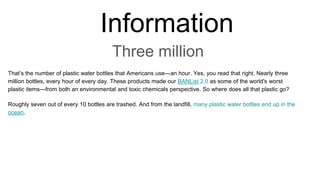

plastic in the ocean
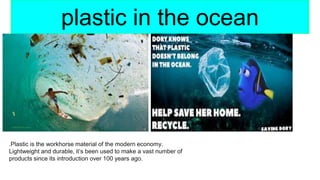
.Plastic is the workhorse material of the modern economy.
Lightweight and durable, it’s been used to make a vast number of
products since its introduction over 100 years ago.
Information
Three million
That’s the number of plastic water bottles that Americans use—an hour. Yes, you read that right. Nearly three
million bottles, every hour of every day. These products made our BANList 2.0 as some of the world's worst
plastic items—from both an environmental and toxic chemicals perspective. So where does all that plastic go?
Roughly seven out of every 10 bottles are trashed. And from the landfill, many plastic water bottles end up in the
ocean.
What can we do to reduce plastic in the ocean?
1. Wean yourself off disposable plastics.
Ninety percent of the plastic items in our daily lives are used once and then chucked: grocery bags, plastic
wrap, disposable cutlery, straws, coffee-cup lids. Take note of how often you rely on these products and
replace them with reusable versions. It only takes a few times of bringing your own bags to the store,
silverware to the office, or travel mug to Starbucks before it becomes habit.
2. Stop buying water.
Each year, close to 20 billion plastic bottles are tossed in the trash. Carry a reusable bottle in your bag,
and you’ll never be caught having to resort to a Poland Spring or Evian again. If you’re nervous about the
What can we do to reduce plastic bottles in the ocean?(2)
3. Boycott microbeads.
Those little plastic scrubbers found in so many beauty products—facial scrubs, toothpaste, body
washes—might look harmless, but their tiny size allows them to slip through water-treatment plants.
Unfortunately, they also look just like food to some marine animals. Opt for products with natural
exfoliants, like oatmeal or salt.
4. Cook more.
Not only is it healthier, but making your own meals doesn’t involve takeout containers or doggy bags. For
those times when you do order in or eat out, tell the establishment you don’t need any plastic cutlery or,
for some serious extra credit, bring your own food-storage containers to restaurants for leftovers.
What can we do to reduce plastic in the ocean?(3)
5. Purchase items secondhand.
New toys and electronic gadgets, especially, come with all kinds of plastic packaging—from those
frustrating hard-to-crack shells to twisty ties. Search the shelves of thrift stores, neighborhood garage
sales, or online postings for items that are just as good when previously used. You’ll save yourself a few
bucks, too.
6. Recycle (duh).
It seems obvious, but we’re not doing a great job of it. For example, less than 14 percent of plastic
packaging is recycled. Confused about what can and can’t go in the bin? Check out the number on the
bottom of the container. Most beverage and liquid cleaner bottles will be #1 (PET), which is commonly
accepted by most curbside recycling companies. Containers marked #2 (HDPE; typically slightly heavier-
What can we do to reduce plastic in the ocean?(4)
7. Support a bag tax or ban.
Urge your elected officials to follow the lead of those in San Francisco, Chicago, and close to 150 other
cities and counties by introducing or supporting legislation that would make plastic-bag use less desirable.
8. Buy in bulk.
Single-serving yogurts, travel-size toiletries, tiny packages of nuts—consider the product-to-packaging
ratio of items you tend to buy often and select the bigger container instead of buying several smaller ones
over time.
What can we do to reduce plastic in the ocean?(5)
9. Bring your own garment bag to the dry cleaner.
Invest in a zippered fabric bag and request that your cleaned items be returned in it instead of sheathed in
plastic. (And while you’re at it, make sure you’re frequenting a dry cleaner that skips the perc, a toxic
chemical found in some cleaning solvents.
10. Put pressure on manufacturers.
Though we can make a difference through our own habits, corporations obviously have a much bigger
footprint. If you believe a company could be smarter about its packaging, make your voice heard. Write a
letter, send a tweet, or hit them where it really hurts: Give your money to a more sustainable competitor.
Thanks for watching!!!!!!!!!!!!!!!!!
Made by:Mateo Karnisauskis!!!!!!!!!!!

Plastic in the ocean

  • 1.
    plastic in theocean .Plastic is the workhorse material of the modern economy. Lightweight and durable, it’s been used to make a vast number of products since its introduction over 100 years ago.
  • 2.
    Information Three million That’s thenumber of plastic water bottles that Americans use—an hour. Yes, you read that right. Nearly three million bottles, every hour of every day. These products made our BANList 2.0 as some of the world's worst plastic items—from both an environmental and toxic chemicals perspective. So where does all that plastic go? Roughly seven out of every 10 bottles are trashed. And from the landfill, many plastic water bottles end up in the ocean.
  • 3.
    What can wedo to reduce plastic in the ocean? 1. Wean yourself off disposable plastics. Ninety percent of the plastic items in our daily lives are used once and then chucked: grocery bags, plastic wrap, disposable cutlery, straws, coffee-cup lids. Take note of how often you rely on these products and replace them with reusable versions. It only takes a few times of bringing your own bags to the store, silverware to the office, or travel mug to Starbucks before it becomes habit. 2. Stop buying water. Each year, close to 20 billion plastic bottles are tossed in the trash. Carry a reusable bottle in your bag, and you’ll never be caught having to resort to a Poland Spring or Evian again. If you’re nervous about the
  • 4.
    What can wedo to reduce plastic bottles in the ocean?(2) 3. Boycott microbeads. Those little plastic scrubbers found in so many beauty products—facial scrubs, toothpaste, body washes—might look harmless, but their tiny size allows them to slip through water-treatment plants. Unfortunately, they also look just like food to some marine animals. Opt for products with natural exfoliants, like oatmeal or salt. 4. Cook more. Not only is it healthier, but making your own meals doesn’t involve takeout containers or doggy bags. For those times when you do order in or eat out, tell the establishment you don’t need any plastic cutlery or, for some serious extra credit, bring your own food-storage containers to restaurants for leftovers.
  • 5.
    What can wedo to reduce plastic in the ocean?(3) 5. Purchase items secondhand. New toys and electronic gadgets, especially, come with all kinds of plastic packaging—from those frustrating hard-to-crack shells to twisty ties. Search the shelves of thrift stores, neighborhood garage sales, or online postings for items that are just as good when previously used. You’ll save yourself a few bucks, too. 6. Recycle (duh). It seems obvious, but we’re not doing a great job of it. For example, less than 14 percent of plastic packaging is recycled. Confused about what can and can’t go in the bin? Check out the number on the bottom of the container. Most beverage and liquid cleaner bottles will be #1 (PET), which is commonly accepted by most curbside recycling companies. Containers marked #2 (HDPE; typically slightly heavier-
  • 6.
    What can wedo to reduce plastic in the ocean?(4) 7. Support a bag tax or ban. Urge your elected officials to follow the lead of those in San Francisco, Chicago, and close to 150 other cities and counties by introducing or supporting legislation that would make plastic-bag use less desirable. 8. Buy in bulk. Single-serving yogurts, travel-size toiletries, tiny packages of nuts—consider the product-to-packaging ratio of items you tend to buy often and select the bigger container instead of buying several smaller ones over time.
  • 7.
    What can wedo to reduce plastic in the ocean?(5) 9. Bring your own garment bag to the dry cleaner. Invest in a zippered fabric bag and request that your cleaned items be returned in it instead of sheathed in plastic. (And while you’re at it, make sure you’re frequenting a dry cleaner that skips the perc, a toxic chemical found in some cleaning solvents. 10. Put pressure on manufacturers. Though we can make a difference through our own habits, corporations obviously have a much bigger footprint. If you believe a company could be smarter about its packaging, make your voice heard. Write a letter, send a tweet, or hit them where it really hurts: Give your money to a more sustainable competitor.
  • 8.
    Thanks for watching!!!!!!!!!!!!!!!!! Madeby:Mateo Karnisauskis!!!!!!!!!!!