1
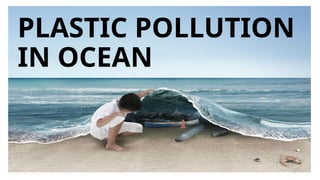
PLASTIC POLLUTION
IN OCEAN
2
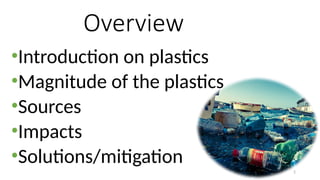
Overview
•Introduction on plastics
•Magnitude of the plastics
•Sources
•Impacts
•Solutions/mitigation
3
Lesson Objectives
•Students are able to develop understanding about the
negative impact caused by the use of plastics,
particularly in oceans.
•Students are able to develop ideas about how we can
minimize the damage caused by plastics in oceans.
4
What is plastic?
•Plastics are synthetic material
•Usually made from oil or natural gas
•Plastics are made by linking thousands of
monomers(like bisphenol-A (BPA) and vinyl chloride, are
harmful and toxic).
•The main types are :
• Polyethylene(bottles,jars,bags,cups)
• Polystyrene(cups,pellets)
• Polypropylene(bottlecaps,drinkingstraws)
• PVC(shoes,pipes,furniture)
5
Magnitude of problem increasing
• Rapid and substantial increase in anthropogenic debris on the ocean surface and
beaches over recent decades.
• Global plastic production has increased from 5million tons to over 250 million tons
current.
• Because
• Inexpensive
• Light weight
• Strong
• Durable
• Easy to use
• About 3 metric tones of plastic is estimated to be entering
the oceans every 15sec.
6
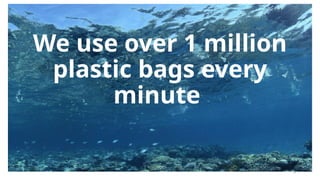
We use over 1 million
plastic bags every
minute
7
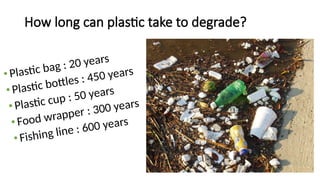
How long can plastic take to degrade?
• Plastic bag : 20 years
• Plastic bottles : 450 years
• Plastic cup : 50 years
• Food wrapper : 300 years
• Fishing line : 600 years
8
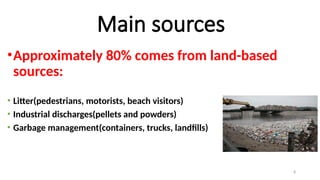
Main sources
•Approximately 80% comes from land-based
sources:
• Litter(pedestrians, motorists, beach visitors)
• Industrial discharges(pellets and powders)
• Garbage management(containers, trucks, landfills)
9
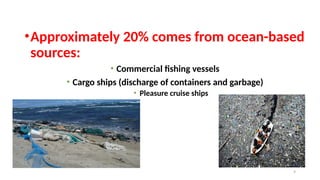
•Approximately 20% comes from ocean-based
sources:
• Commercial fishing vessels
• Cargo ships (discharge of containers and garbage)
• Pleasure cruise ships
10
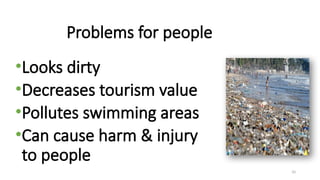
Problems for people
•Looks dirty
•Decreases tourism value
•Pollutes swimming areas
•Can cause harm & injury
to people
11
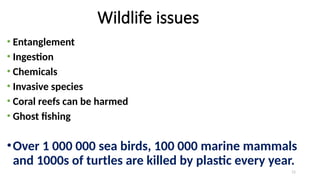
Wildlife issues
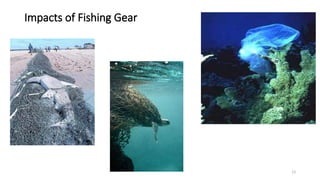
• Entanglement
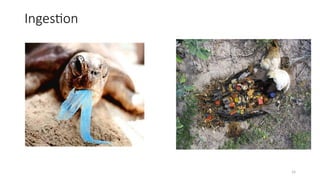
• Ingestion
• Chemicals
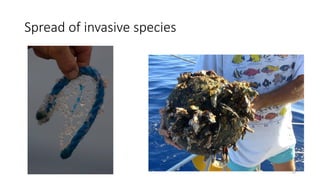
• Invasive species
• Coral reefs can be harmed
• Ghost fishing
•Over 1 000 000 sea birds, 100 000 marine mammals
and 1000s of turtles are killed by plastic every year.
12
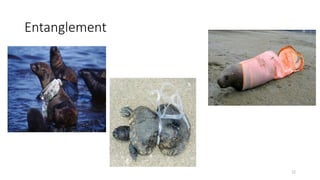
Entanglement
13
Impacts of Fishing Gear
14
Ingestion
World Oceans Day 2015
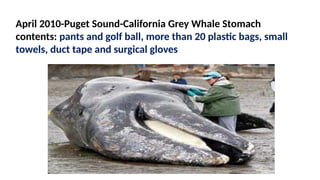
April 2010-Puget Sound-California Grey Whale Stomach
contents: pants and golf ball, more than 20 plastic bags, small
towels, duct tape and surgical gloves
16
Spread of invasive species
17
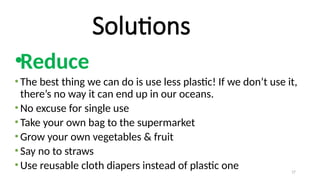
Solutions
•Reduce
• The best thing we can do is use less plastic! If we don’t use it,
there’s no way it can end up in our oceans.
• No excuse for single use
• Take your own bag to the supermarket
• Grow your own vegetables & fruit
• Say no to straws
• Use reusable cloth diapers instead of plastic one
18
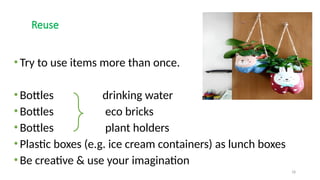
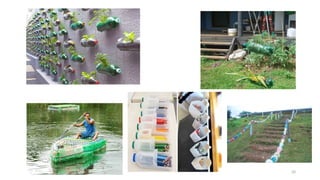
Reuse
•Try to use items more than once.
•Bottles drinking water
•Bottles eco bricks
•Bottles plant holders
•Plastic boxes (e.g. ice cream containers) as lunch boxes
•Be creative & use your imagination
19
Recycle
• rubbish new useful products.
• Paper, plastics, glass, metal and textiles can all be recycled.
•Others
• Put in the dustbin
• Compost
20
21
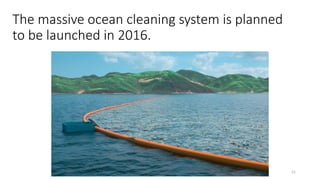
The massive ocean cleaning system is planned
to be launched in 2016.
22
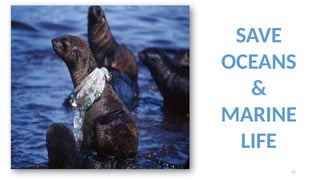
SAVE
OCEANS
&
MARINE
LIFE
23
Thank you

Plastics in Oceans - Consequences and Solutions.pptx

  • 1.
  • 2.
    2 Overview •Introduction on plastics •Magnitudeof the plastics •Sources •Impacts •Solutions/mitigation
  • 3.
    3 Lesson Objectives •Students areable to develop understanding about the negative impact caused by the use of plastics, particularly in oceans. •Students are able to develop ideas about how we can minimize the damage caused by plastics in oceans.
  • 4.
    4 What is plastic? •Plasticsare synthetic material •Usually made from oil or natural gas •Plastics are made by linking thousands of monomers(like bisphenol-A (BPA) and vinyl chloride, are harmful and toxic). •The main types are : • Polyethylene(bottles,jars,bags,cups) • Polystyrene(cups,pellets) • Polypropylene(bottlecaps,drinkingstraws) • PVC(shoes,pipes,furniture)
  • 5.
    5 Magnitude of problemincreasing • Rapid and substantial increase in anthropogenic debris on the ocean surface and beaches over recent decades. • Global plastic production has increased from 5million tons to over 250 million tons current. • Because • Inexpensive • Light weight • Strong • Durable • Easy to use • About 3 metric tones of plastic is estimated to be entering the oceans every 15sec.
  • 6.
    6 We use over1 million plastic bags every minute
  • 7.
    7 How long canplastic take to degrade? • Plastic bag : 20 years • Plastic bottles : 450 years • Plastic cup : 50 years • Food wrapper : 300 years • Fishing line : 600 years
  • 8.
    8 Main sources •Approximately 80%comes from land-based sources: • Litter(pedestrians, motorists, beach visitors) • Industrial discharges(pellets and powders) • Garbage management(containers, trucks, landfills)
  • 9.
    9 •Approximately 20% comesfrom ocean-based sources: • Commercial fishing vessels • Cargo ships (discharge of containers and garbage) • Pleasure cruise ships
  • 10.
    10 Problems for people •Looksdirty •Decreases tourism value •Pollutes swimming areas •Can cause harm & injury to people
  • 11.
    11 Wildlife issues • Entanglement •Ingestion • Chemicals • Invasive species • Coral reefs can be harmed • Ghost fishing •Over 1 000 000 sea birds, 100 000 marine mammals and 1000s of turtles are killed by plastic every year.
  • 12.
  • 13.
  • 14.
  • 15.
    World Oceans Day2015 April 2010-Puget Sound-California Grey Whale Stomach contents: pants and golf ball, more than 20 plastic bags, small towels, duct tape and surgical gloves
  • 16.
  • 17.
    17 Solutions •Reduce • The bestthing we can do is use less plastic! If we don’t use it, there’s no way it can end up in our oceans. • No excuse for single use • Take your own bag to the supermarket • Grow your own vegetables & fruit • Say no to straws • Use reusable cloth diapers instead of plastic one
  • 18.
    18 Reuse •Try to useitems more than once. •Bottles drinking water •Bottles eco bricks •Bottles plant holders •Plastic boxes (e.g. ice cream containers) as lunch boxes •Be creative & use your imagination
  • 19.
    19 Recycle • rubbish newuseful products. • Paper, plastics, glass, metal and textiles can all be recycled. •Others • Put in the dustbin • Compost
  • 20.
  • 21.
    21 The massive oceancleaning system is planned to be launched in 2016.
  • 22.
  • 23.