Microplastics
Microplastics
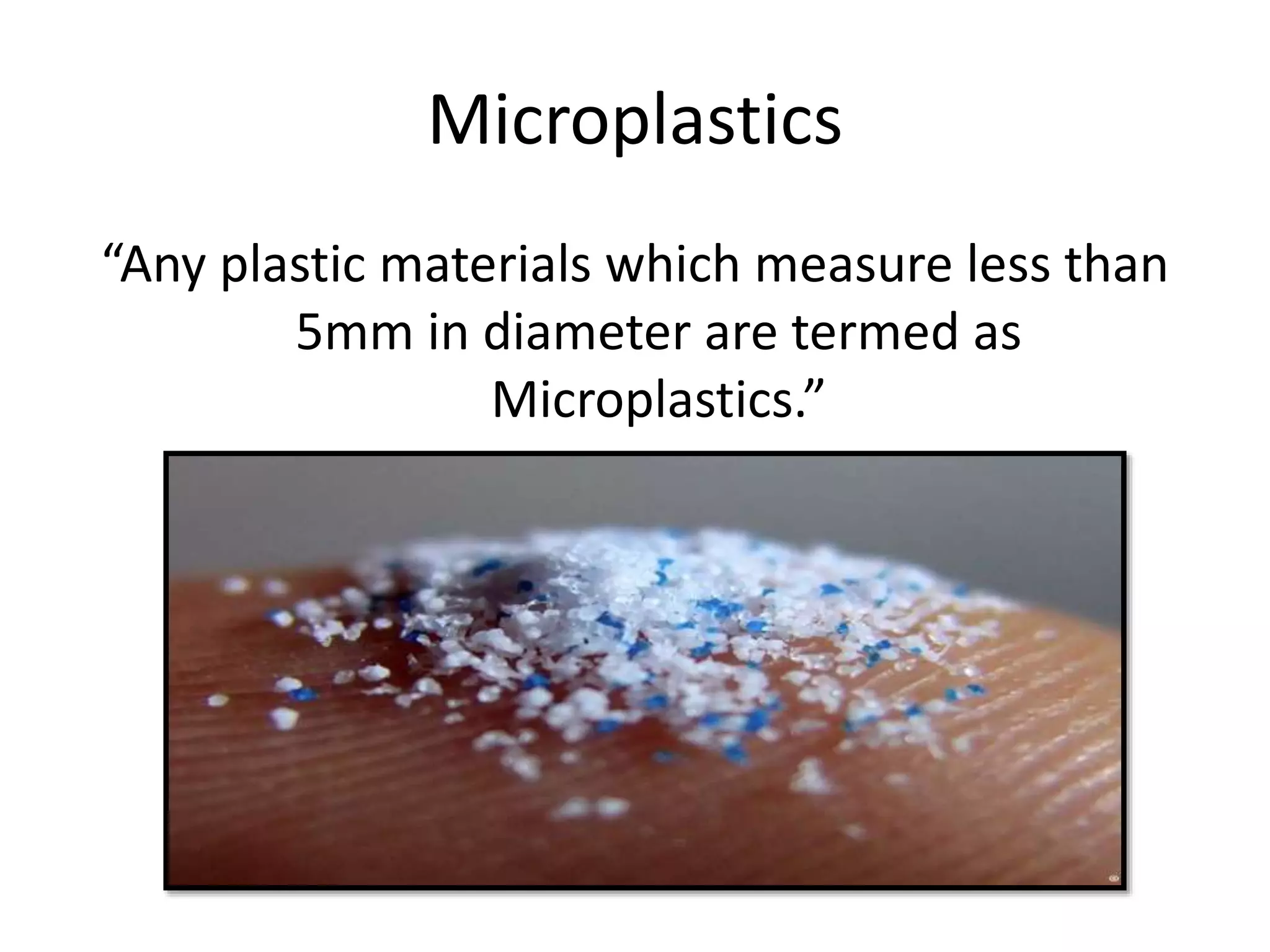
“Any plastic materials which measure less than
5mm in diameter are termed as
Microplastics.”
Classification of Microplastics
• Primary Microplastics:
They already are smaller in and are produced
for external human use.
• Secondary Microplastics:
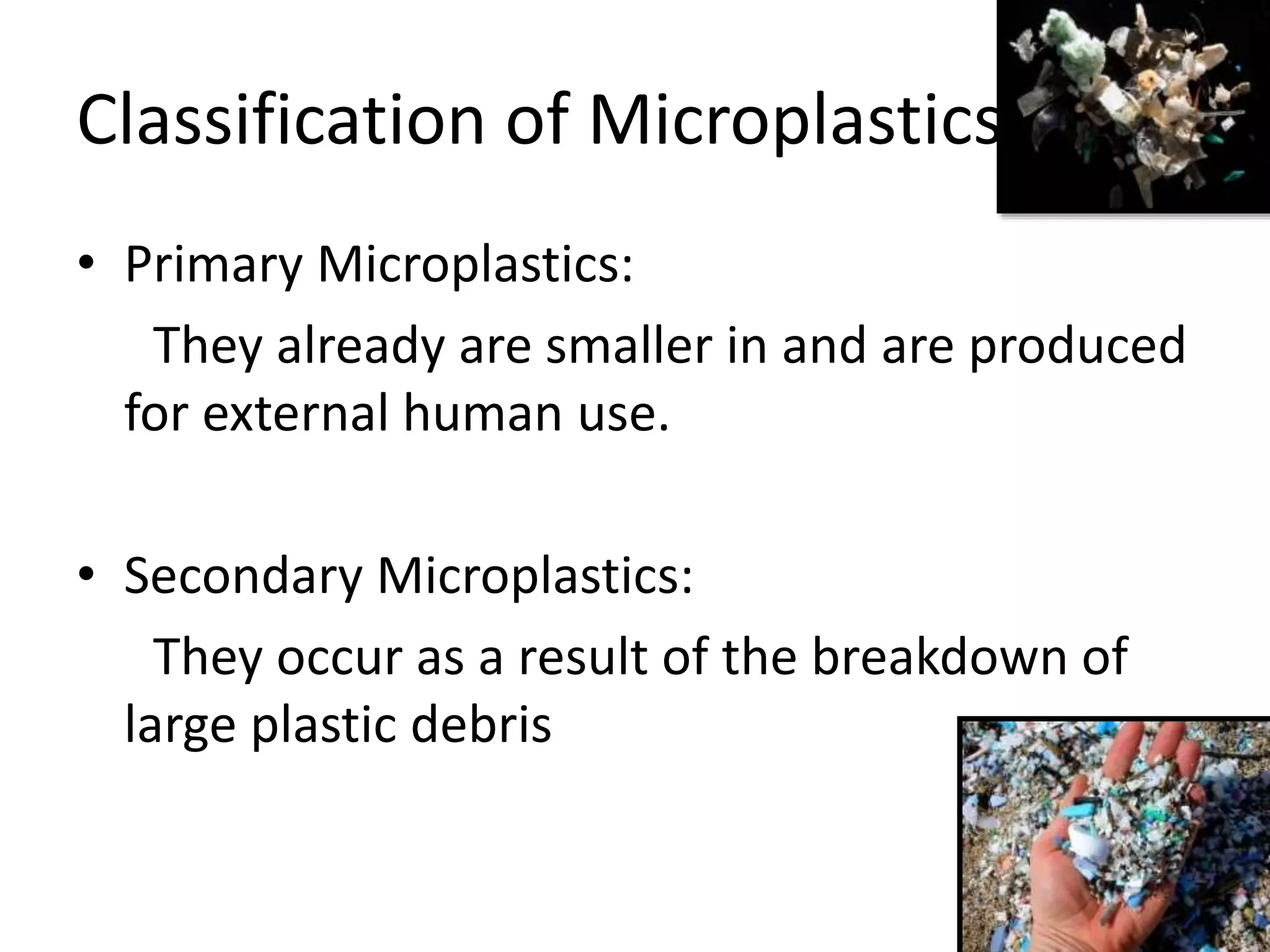
They occur as a result of the breakdown of
large plastic debris
Sources of Microplastics
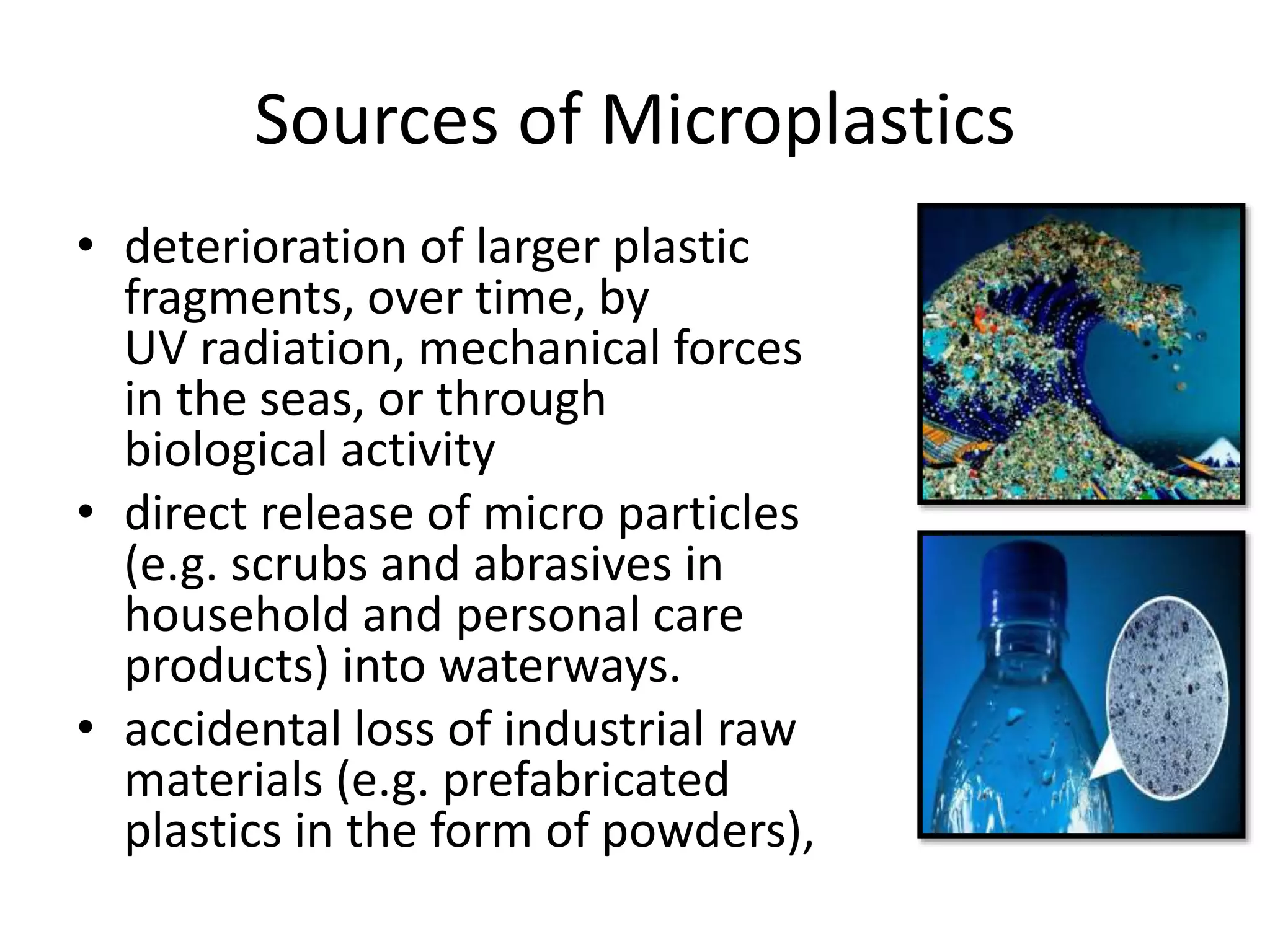
• deterioration of larger plastic
fragments, over time, by
UV radiation, mechanical forces
in the seas, or through
biological activity
• direct release of micro particles
(e.g. scrubs and abrasives in
household and personal care
products) into waterways.
• accidental loss of industrial raw
materials (e.g. prefabricated
plastics in the form of powders),
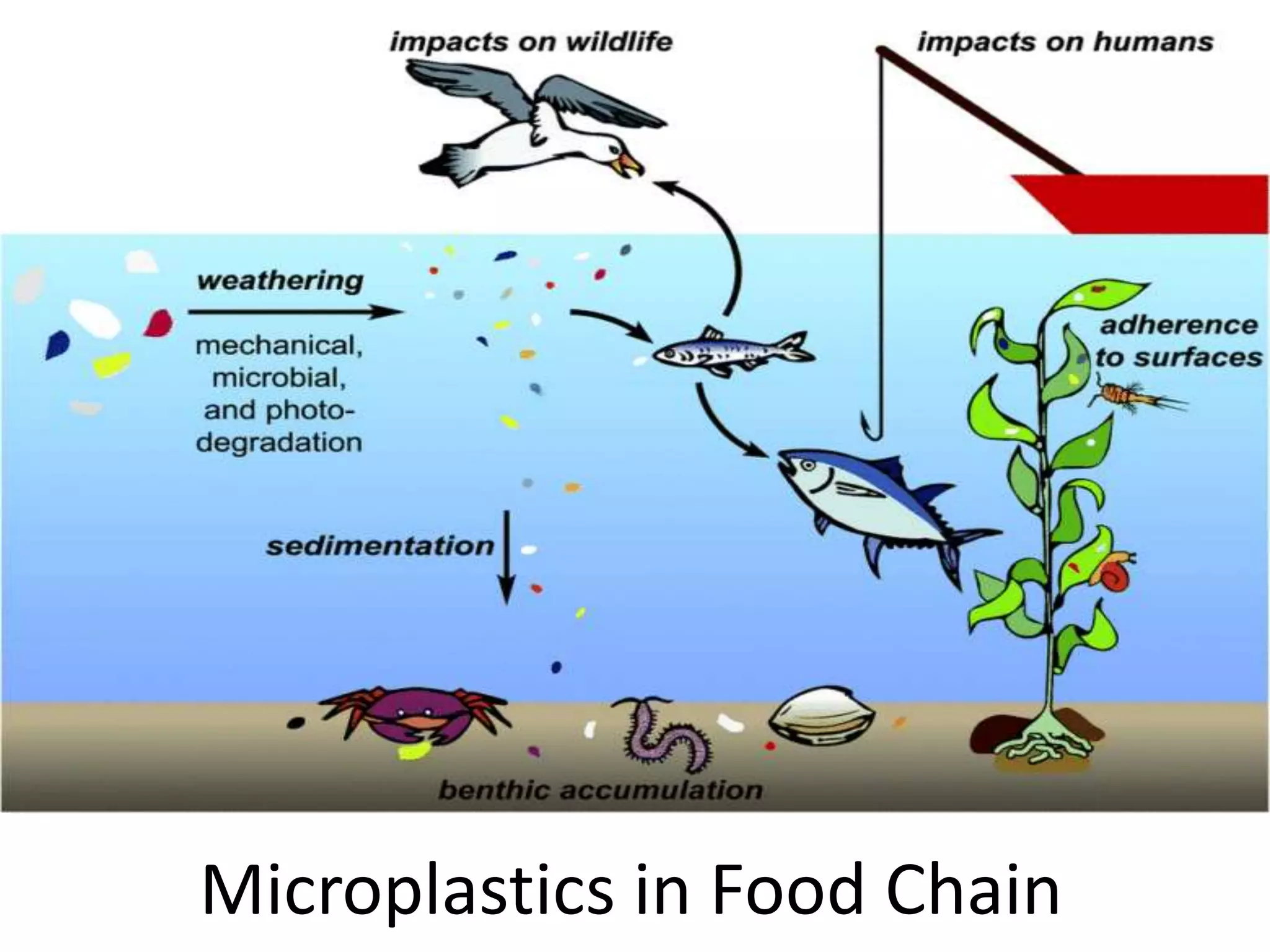
Microplastics in Food Chain
Impacts
• Fish mistake them for plankton –
leading them to die of
undernourishment or constipation
• Many other animals on the marine food
chain ingest them as well
• Plastics can sink to the sea floor,
affecting sediment dwelling species
• When plastic is exposed to UV rays in
water, it releases harmful chemical
compounds not found in nature (BPA)
WHO Study
• Analysis of 259 bottles
from 19 locations in nine
countries across 11
different brands found an
average of 325 plastic
particles for every litre of
water being sold.
• The most common type of
plastic fragment found was
polypropylene – the same
type of plastic used to
make bottle caps.
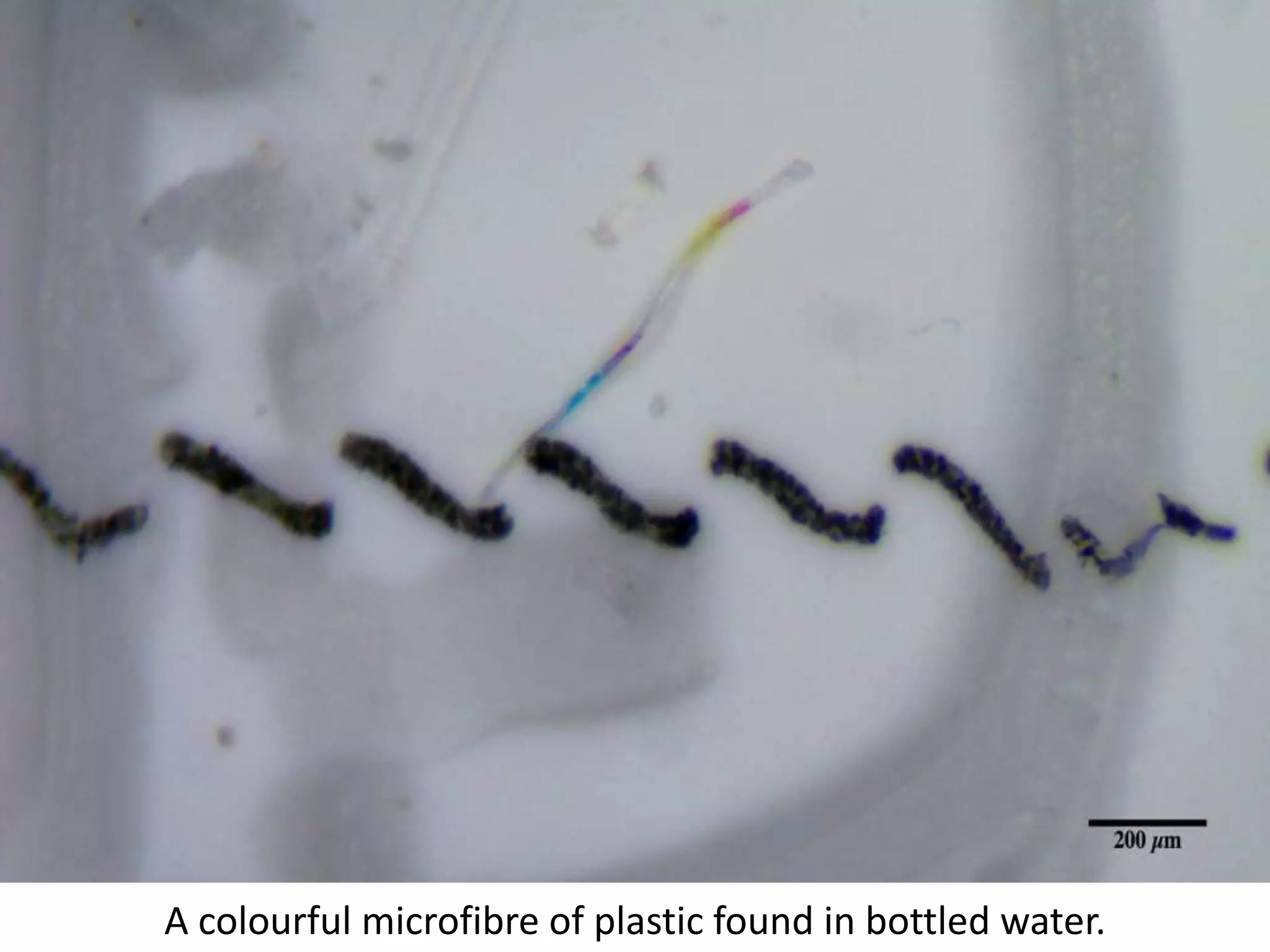
A colourful microfibre of plastic found in bottled water.
In one bottle of Nestlé Pure Life, concentrations
were as high as 10,000 plastic pieces per litre
of water.
Of the 259 bottles tested, only 17 were free of
plastics, according to the study.
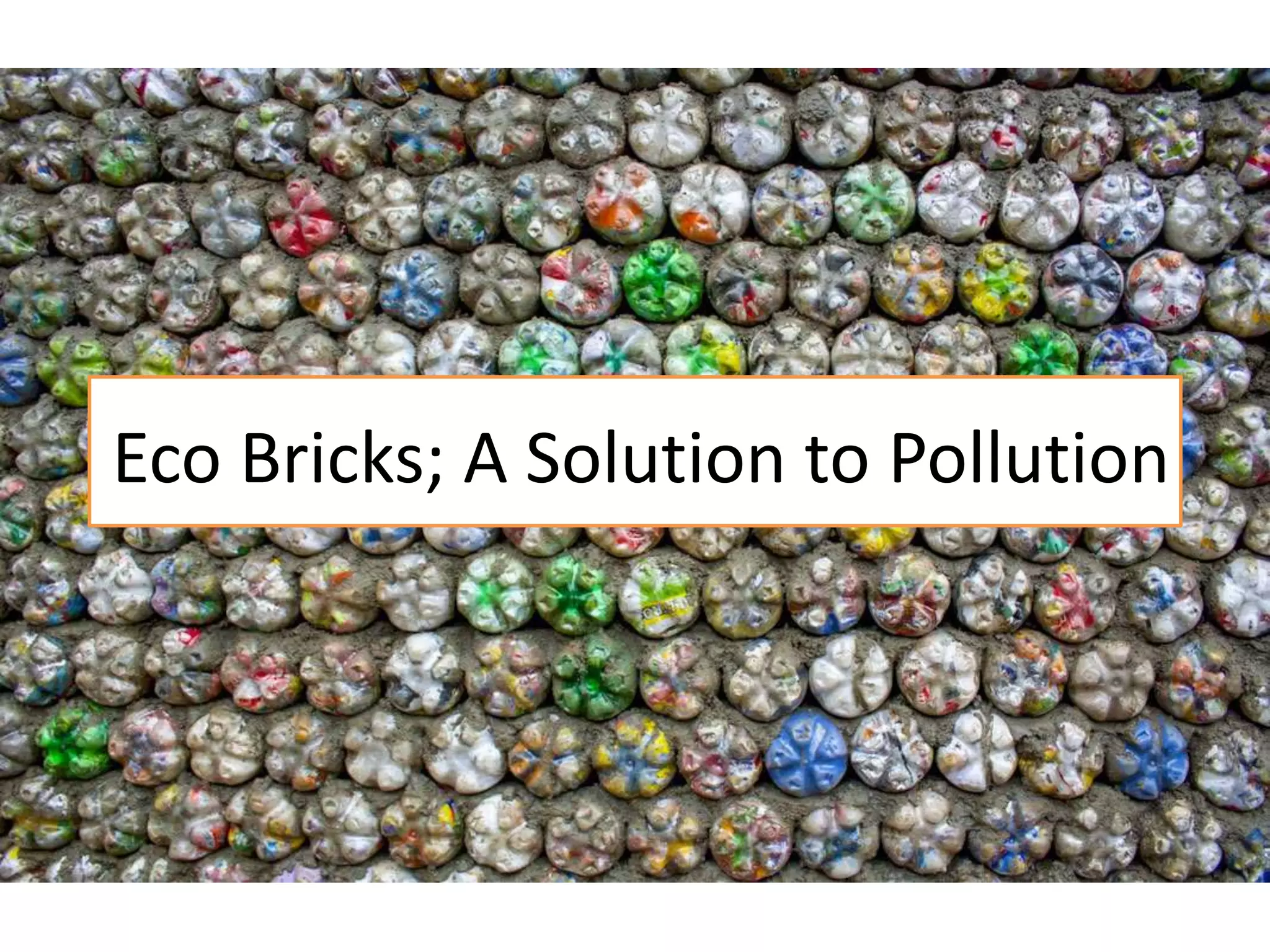
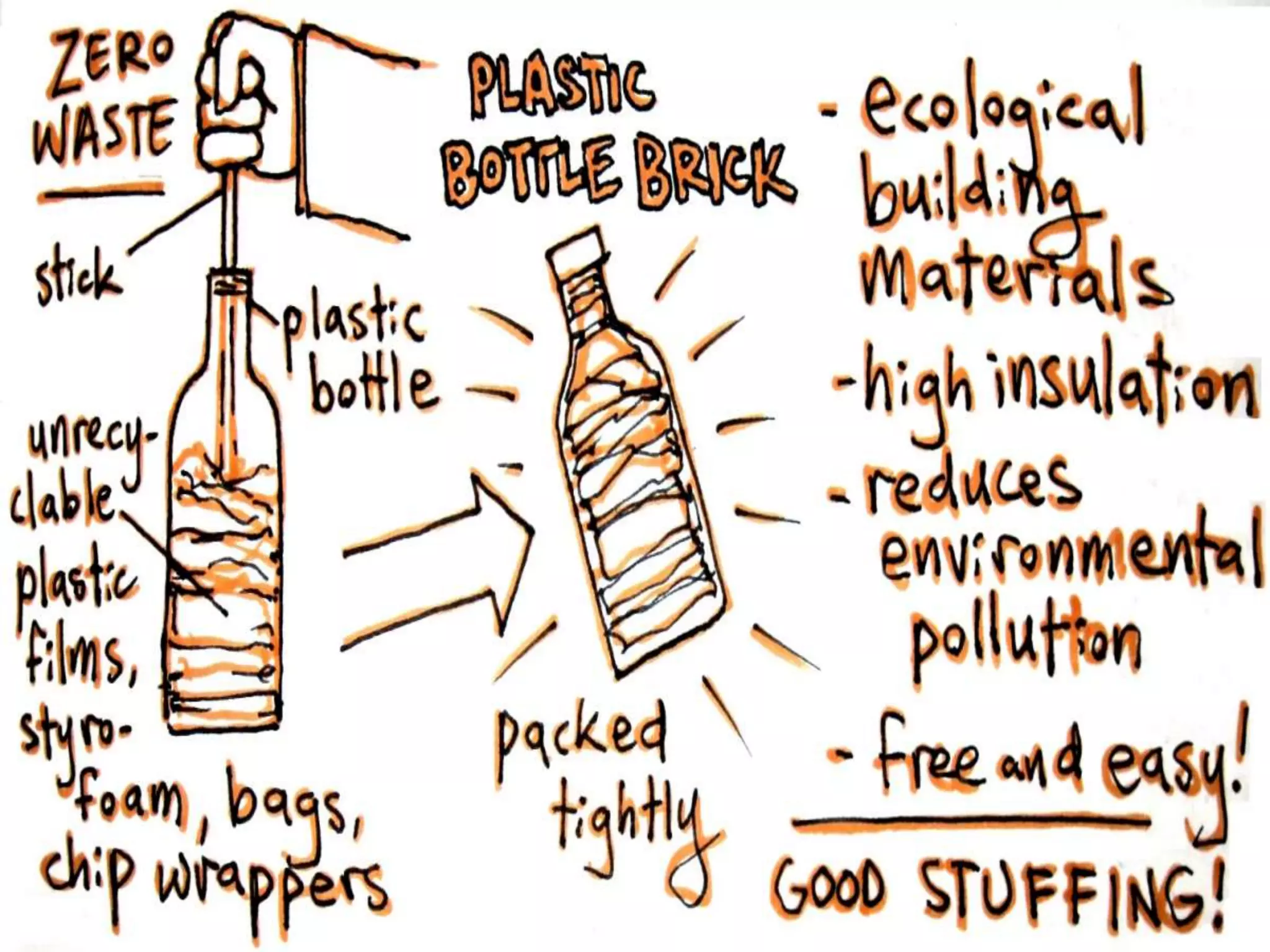
Eco Bricks; A Solution to Pollution
• An Ecobrick is a plastic bottle
packed tight with used, clean
and dry plastic to create a
building block that can be used
over and over again.
• Ecobricks can also be packed
with other non-biological ‘waste’
that are toxic to the environment
(i.e. styrofoam, wires, small
batteries, etc.). .
Ecobricks are used
to make modular
furniture, garden
spaces, walls and
even full scale
buildings.
Microplastics

Microplastics

  • 1.
  • 2.
    Microplastics “Any plastic materialswhich measure less than 5mm in diameter are termed as Microplastics.”
  • 3.
    Classification of Microplastics •Primary Microplastics: They already are smaller in and are produced for external human use. • Secondary Microplastics: They occur as a result of the breakdown of large plastic debris
  • 5.
    Sources of Microplastics •deterioration of larger plastic fragments, over time, by UV radiation, mechanical forces in the seas, or through biological activity • direct release of micro particles (e.g. scrubs and abrasives in household and personal care products) into waterways. • accidental loss of industrial raw materials (e.g. prefabricated plastics in the form of powders),
  • 6.
  • 7.
    Impacts • Fish mistakethem for plankton – leading them to die of undernourishment or constipation • Many other animals on the marine food chain ingest them as well • Plastics can sink to the sea floor, affecting sediment dwelling species • When plastic is exposed to UV rays in water, it releases harmful chemical compounds not found in nature (BPA)
  • 9.
    WHO Study • Analysisof 259 bottles from 19 locations in nine countries across 11 different brands found an average of 325 plastic particles for every litre of water being sold. • The most common type of plastic fragment found was polypropylene – the same type of plastic used to make bottle caps.
  • 10.
    A colourful microfibreof plastic found in bottled water.
  • 11.
    In one bottleof Nestlé Pure Life, concentrations were as high as 10,000 plastic pieces per litre of water. Of the 259 bottles tested, only 17 were free of plastics, according to the study.
  • 13.
    Eco Bricks; ASolution to Pollution
  • 14.
    • An Ecobrickis a plastic bottle packed tight with used, clean and dry plastic to create a building block that can be used over and over again. • Ecobricks can also be packed with other non-biological ‘waste’ that are toxic to the environment (i.e. styrofoam, wires, small batteries, etc.). .
  • 16.
    Ecobricks are used tomake modular furniture, garden spaces, walls and even full scale buildings.

Editor's Notes

  • #6 deterioration of larger plastic fragments, over time, with or without assistance from UV radiation, mechanical forces in the seas (e.g. wave action, or through biological activity (e.g. shredding and grinding by marine organisms);
  • #8 BPA = Bisphenol A,,, Bisphenol A is found in the hard plastic bottles many people use every day. It can imitate the body's hormones, and it can interfere with the production, secretion, transport, action, function, and elimination of natural hormones.