Plaster of Paris
Chemistry Lab Project
Cody Hunter
Definition of Plaster of Paris
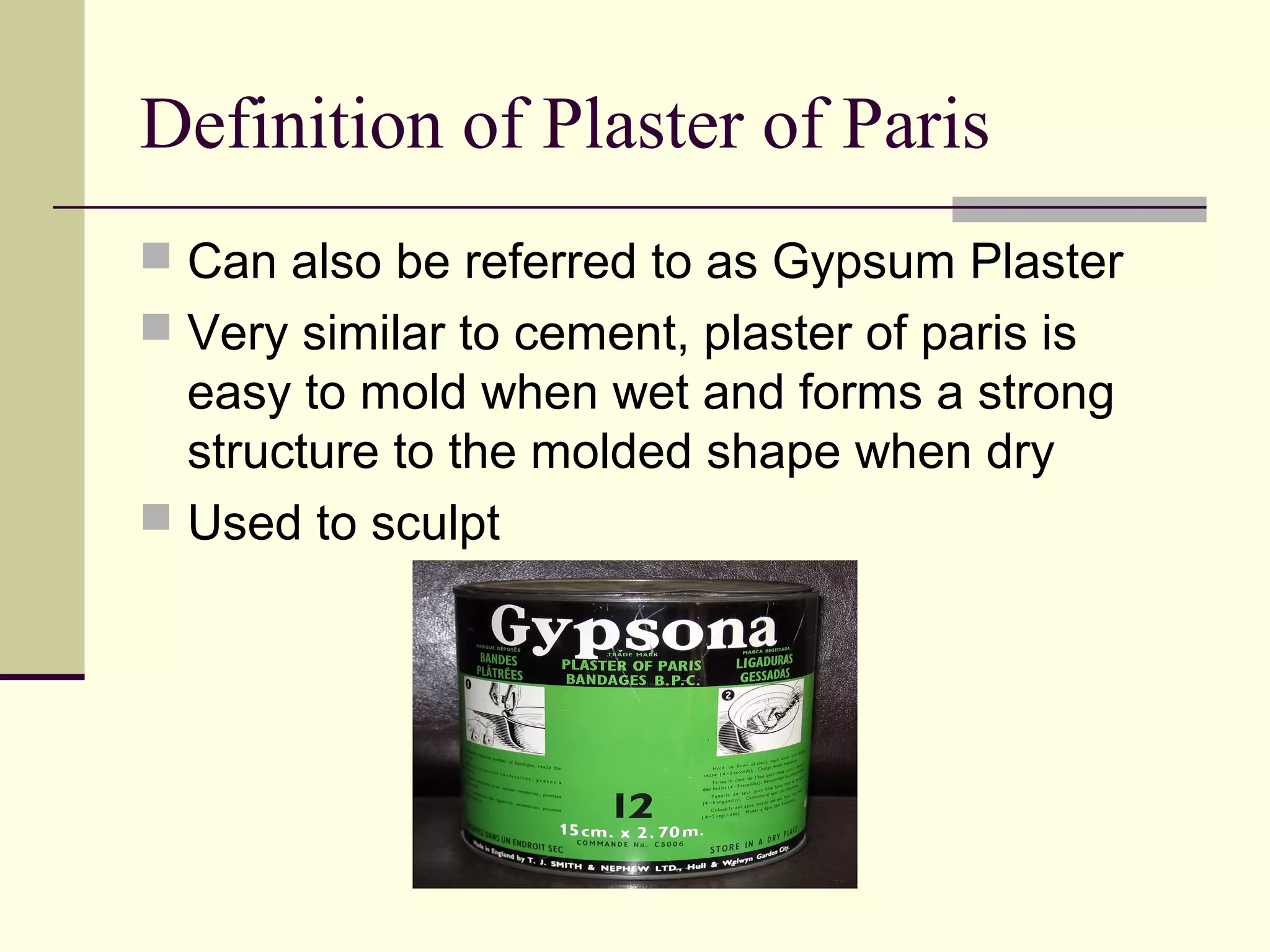
 Can also be referred to as Gypsum Plaster
 Very similar to cement, plaster of paris is
easy to mold when wet and forms a strong
structure to the molded shape when dry
 Used to sculpt
Relation To Embalming
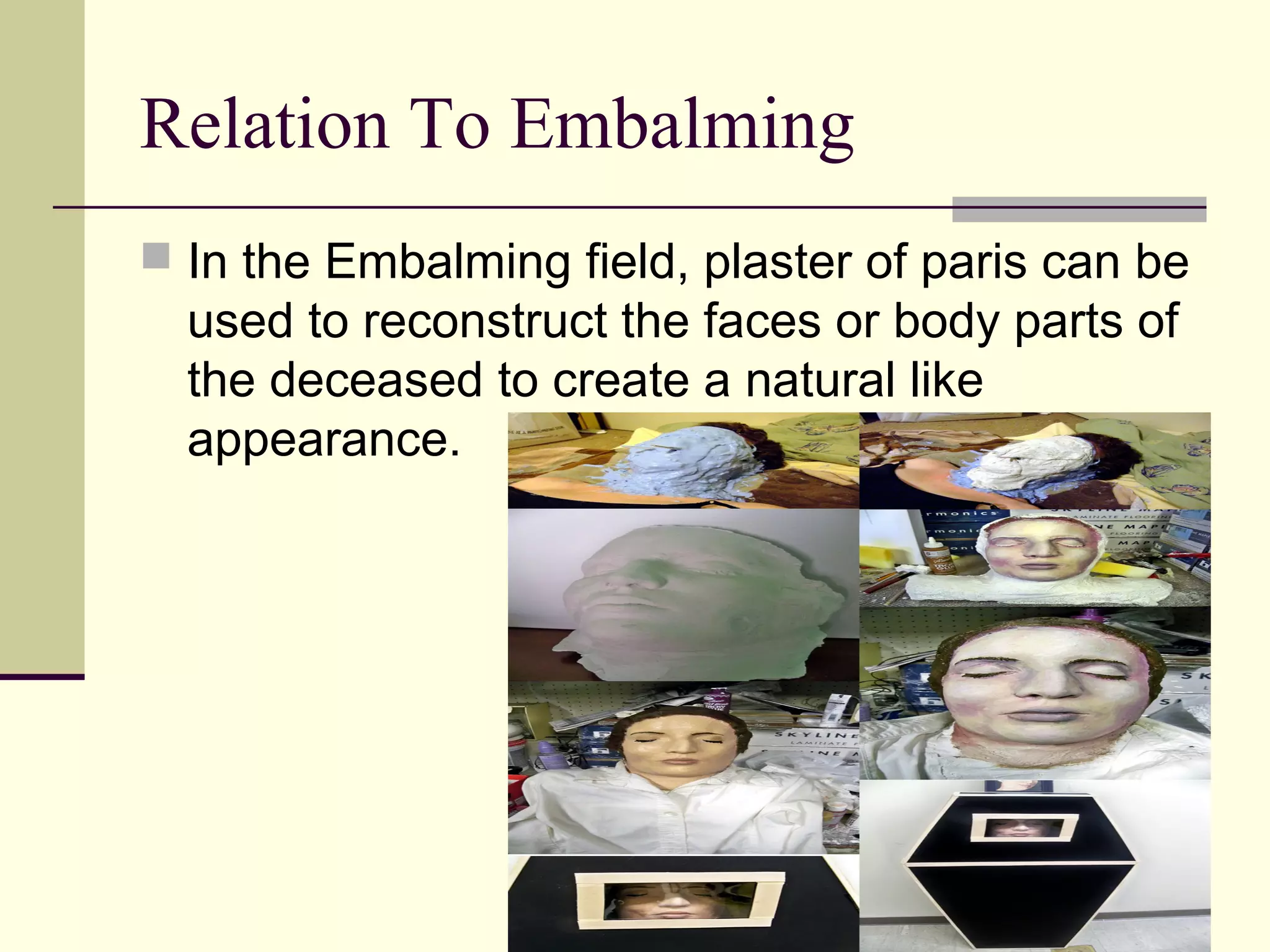
 In the Embalming field, plaster of paris can be
used to reconstruct the faces or body parts of
the deceased to create a natural like
appearance.
Interesting Facts
 Plaster of Paris is formed by heating Gypsum
to 300 degrees Fahrenheit
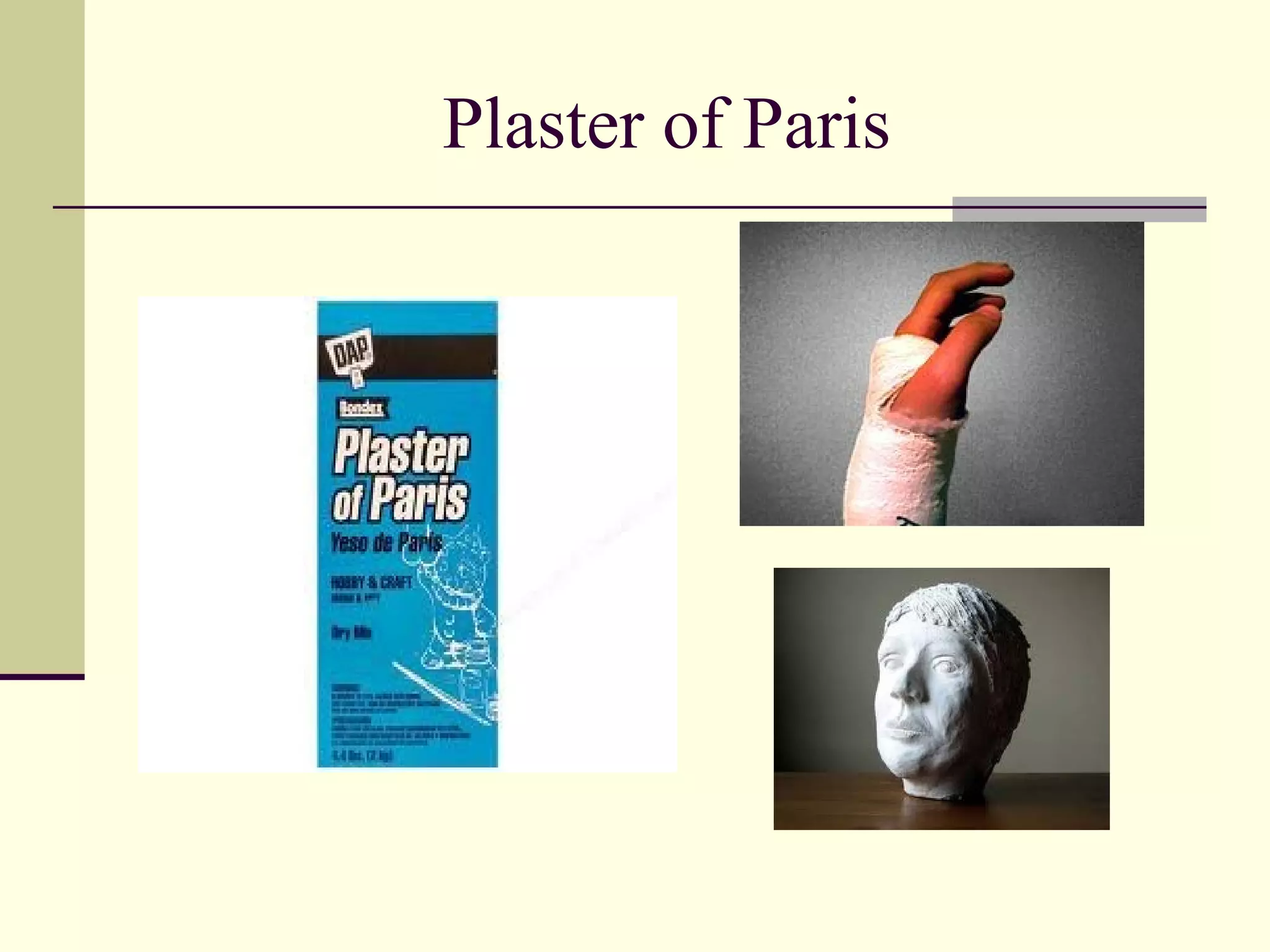
 Plaster of Paris has many different uses such
as: molding orthopedic casts and creating
movie and tv sets.
 Plaster of Paris got its name from a large
gypsum deposit that is located in Paris.
Importance of Plaster of Paris
2CaSO4·H2O + Heat → 2CaSO4·½H2O + 3H2O
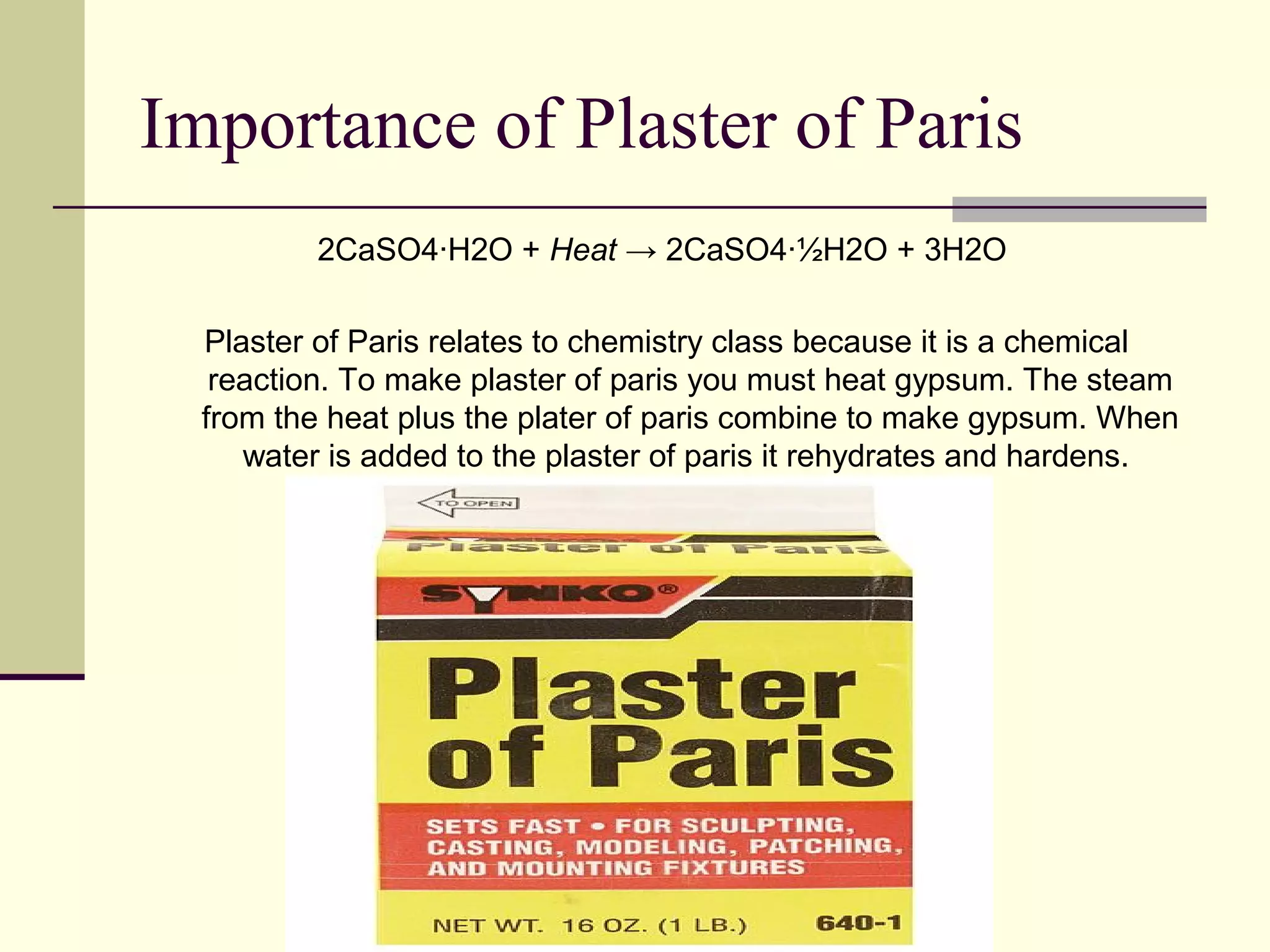
Plaster of Paris relates to chemistry class because it is a chemical
reaction. To make plaster of paris you must heat gypsum. The steam
from the heat plus the plater of paris combine to make gypsum. When
water is added to the plaster of paris it rehydrates and hardens.
Questions about Plaster of Paris
After researching plaster of paris and using it several times
in my career field there is little left to be understood.
However, I have read on several websites and blogs
that state when directly applied to the skin can cause
burns and irritation but found very little evidence
supporting. I would like to know if it does burn your skin
and why?
Plaster of Paris
Works Cited
 http://www.iseek.org/careers/careerDetail?id=2&o
 http://www.chemicalformula.org/plaster-of-paris
 http://en.wikipedia.org/wiki/Plaster#Gypsum_
plaster_.28plaster_of_Paris.29

Plaster of paris

  • 1.
    Plaster of Paris ChemistryLab Project Cody Hunter
  • 2.
    Definition of Plasterof Paris  Can also be referred to as Gypsum Plaster  Very similar to cement, plaster of paris is easy to mold when wet and forms a strong structure to the molded shape when dry  Used to sculpt
  • 3.
    Relation To Embalming In the Embalming field, plaster of paris can be used to reconstruct the faces or body parts of the deceased to create a natural like appearance.
  • 4.
    Interesting Facts  Plasterof Paris is formed by heating Gypsum to 300 degrees Fahrenheit  Plaster of Paris has many different uses such as: molding orthopedic casts and creating movie and tv sets.  Plaster of Paris got its name from a large gypsum deposit that is located in Paris.
  • 5.
    Importance of Plasterof Paris 2CaSO4·H2O + Heat → 2CaSO4·½H2O + 3H2O Plaster of Paris relates to chemistry class because it is a chemical reaction. To make plaster of paris you must heat gypsum. The steam from the heat plus the plater of paris combine to make gypsum. When water is added to the plaster of paris it rehydrates and hardens.
  • 6.
    Questions about Plasterof Paris After researching plaster of paris and using it several times in my career field there is little left to be understood. However, I have read on several websites and blogs that state when directly applied to the skin can cause burns and irritation but found very little evidence supporting. I would like to know if it does burn your skin and why?
  • 7.
  • 8.
    Works Cited  http://www.iseek.org/careers/careerDetail?id=2&o http://www.chemicalformula.org/plaster-of-paris  http://en.wikipedia.org/wiki/Plaster#Gypsum_ plaster_.28plaster_of_Paris.29