By Luke Jarrat, Alina Pritchard, Ryan Marks & Amit
                                         Nathwani
Web 2.0
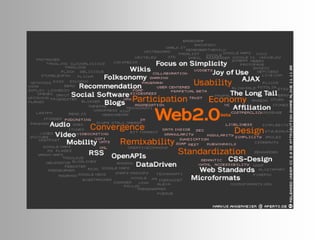
• “Web 2.0 is the network as platform, spanning
  all connected devices” Tim O’Reily

• User does not have to be technically inept

• Content can be placed on multiple platforms

• No need to download programs, software etc.
Folksonomy
• It is a type of distributed classification system

• Individuals and groups create these systems

• Tags are added to items online by users
The History of Folksonomy
• Meta data was born in the late 1990s

• Delicious created in 2003

• Users were able to tag using key words

• Thomas Vander Wal created the term
  Folksonomy.

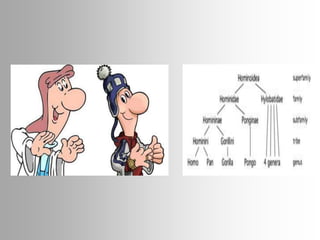
• A hybrid of folk and taxonomy
Folk and Taxonomy
• Martin Lister defines taxonomy “a particular
  classification scheme”

• Folk = common people

• Combined = social classification of social
  matters
How people use tags
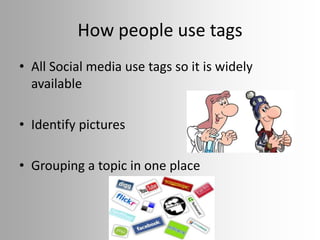
• All Social media use tags so it is widely
  available

• Identify pictures

• Grouping a topic in one place
Hash Tagging (#)
• Twitter

• # allow users to get the information they
  require

• @ tag people
Advantages of Tagging
• It defines the user

• People can see other people who are tagging the
  same thing

• Browsing made easier

• Cost saving because tagging taps into an existing
  base of information
Disadvantages of Tagging
• Could lead to miscommunication or false
  presentation of data/identity

• You have a lack of control over how you’re
  tagged

• Privacy issues that arise from tagging
How to improve tagging
• A subject has to be accepted before being
  published

• Auto correct
Conclusion
• Folksonomy is a positive trait of web 2.0

• Represents progression

• Shows how unique people are

• There are some flaws, however

Plan for folksonomy presentation

  • 1.
    By Luke Jarrat,Alina Pritchard, Ryan Marks & Amit Nathwani
  • 2.
    Web 2.0 • “Web2.0 is the network as platform, spanning all connected devices” Tim O’Reily • User does not have to be technically inept • Content can be placed on multiple platforms • No need to download programs, software etc.
  • 3.
    Folksonomy • It isa type of distributed classification system • Individuals and groups create these systems • Tags are added to items online by users
  • 5.
    The History ofFolksonomy • Meta data was born in the late 1990s • Delicious created in 2003 • Users were able to tag using key words • Thomas Vander Wal created the term Folksonomy. • A hybrid of folk and taxonomy
  • 6.
    Folk and Taxonomy •Martin Lister defines taxonomy “a particular classification scheme” • Folk = common people • Combined = social classification of social matters
  • 7.
    How people usetags • All Social media use tags so it is widely available • Identify pictures • Grouping a topic in one place
  • 8.
    Hash Tagging (#) •Twitter • # allow users to get the information they require • @ tag people
  • 10.
    Advantages of Tagging •It defines the user • People can see other people who are tagging the same thing • Browsing made easier • Cost saving because tagging taps into an existing base of information
  • 11.
    Disadvantages of Tagging •Could lead to miscommunication or false presentation of data/identity • You have a lack of control over how you’re tagged • Privacy issues that arise from tagging
  • 12.
    How to improvetagging • A subject has to be accepted before being published • Auto correct
  • 13.
    Conclusion • Folksonomy isa positive trait of web 2.0 • Represents progression • Shows how unique people are • There are some flaws, however