
Picture This!
Exploring Picture Books
Through Art Programming
Robin L. Gibson & Rebecca O’Neil
Westerville Public Library
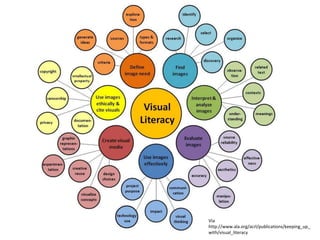
Via
http://www.ala.org/acrl/publications/keeping_up_
with/visual_literacy
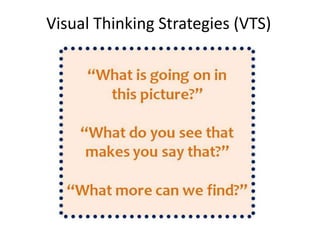
Visual Thinking Strategies (VTS)
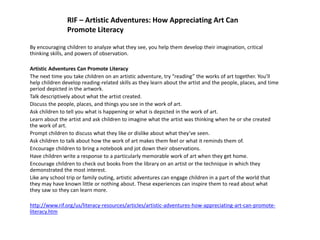
RIF – Artistic Adventures: How Appreciating Art Can
Promote Literacy
By encouraging children to analyze what they see, you help them develop their imagination, critical
thinking skills, and powers of observation.
Artistic Adventures Can Promote Literacy
The next time you take children on an artistic adventure, try “reading” the works of art together. You’ll
help children develop reading-related skills as they learn about the artist and the people, places, and time
period depicted in the artwork.
Talk descriptively about what the artist created.
Discuss the people, places, and things you see in the work of art.
Ask children to tell you what is happening or what is depicted in the work of art.
Learn about the artist and ask children to imagine what the artist was thinking when he or she created
the work of art.
Prompt children to discuss what they like or dislike about what they’ve seen.
Ask children to talk about how the work of art makes them feel or what it reminds them of.
Encourage children to bring a notebook and jot down their observations.
Have children write a response to a particularly memorable work of art when they get home.
Encourage children to check out books from the library on an artist or the technique in which they
demonstrated the most interest.
Like any school trip or family outing, artistic adventures can engage children in a part of the world that
they may have known little or nothing about. These experiences can inspire them to read about what
they saw so they can learn more.
http://www.rif.org/us/literacy-resources/articles/artistic-adventures-how-appreciating-art-can-promote-
literacy.htm
Picture This Program Format
- A series of programs – this allows for continuity; one week we may make
something that is to be used the next week (examples – Eric Carle paints
his paper for collages, so did we; scratchboard – you can buy it, but we
made our own the week ahead of time)
- Focus on the illustrator of picture books; we try to use the same process,
or as close to it as we can get
- First week make a portfolio – the work is kept here at the library for this
program, do get to keep it all at the end
- Next to the last week they review their portfolio and choose one or two
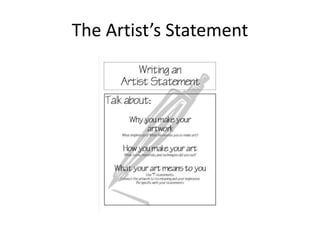
entries for the art show. They are the curators of the show and write an
artist’s statement to accompany their work.
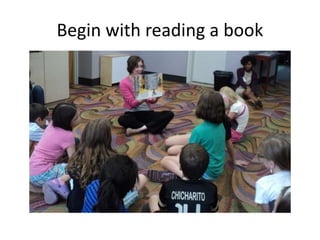
Begin with reading a book
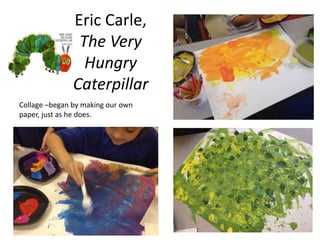
Eric Carle,
The Very
Hungry
Caterpillar
Collage –began by making our own
paper, just as he does.
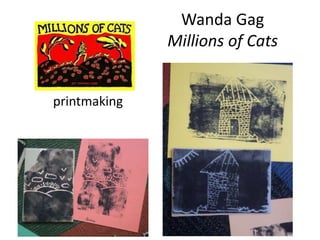
Wanda Gag
Millions of Cats
printmaking
•
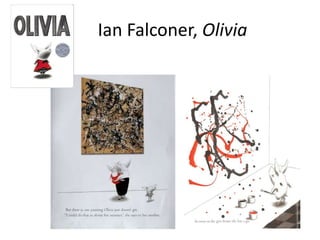
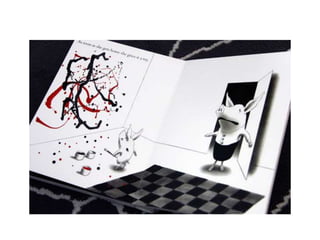
Ian Falconer, Olivia
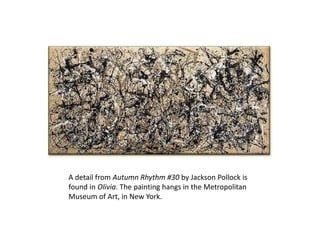
A detail from Autumn Rhythm #30 by Jackson Pollock is
found in Olivia. The painting hangs in the Metropolitan
Museum of Art, in New York.
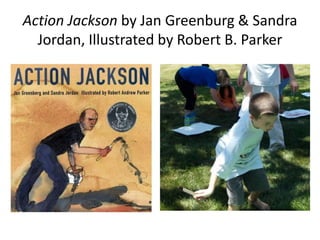
Action Jackson by Jan Greenburg & Sandra
Jordan, Illustrated by Robert B. Parker
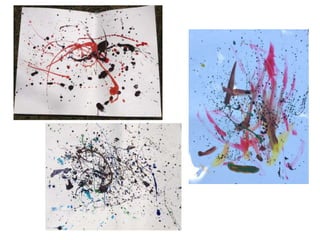
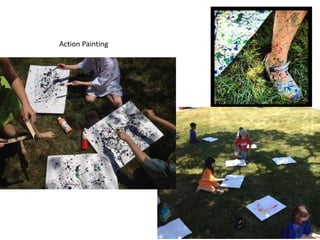
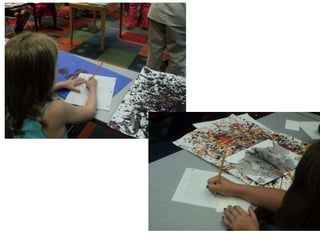
Action Painting
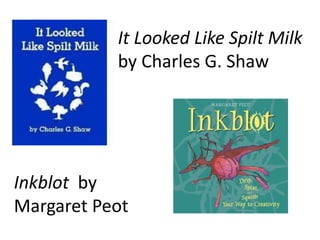
It Looked Like Spilt Milk
by Charles G. Shaw
Inkblot by
Margaret Peot
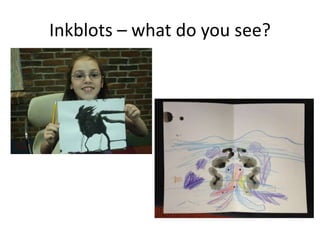
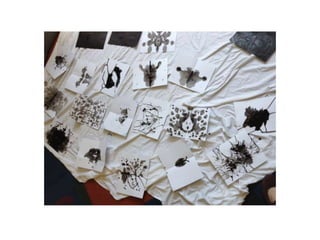
Inkblots – what do you see?
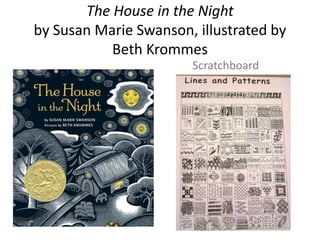
The House in the Night
by Susan Marie Swanson, illustrated by
Beth Krommes
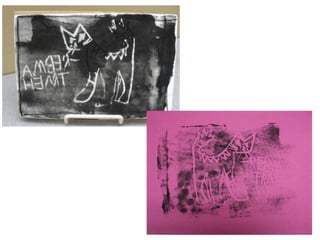
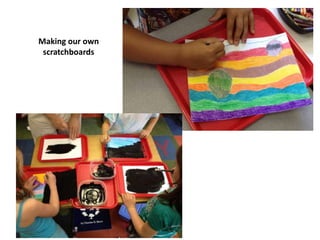
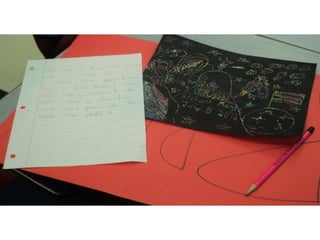
Scratchboard
Making our own
scratchboards
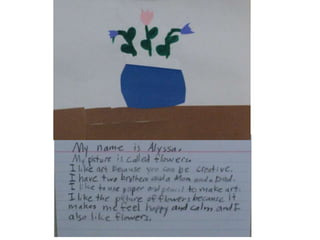
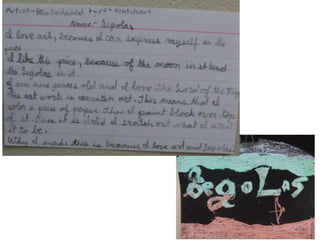
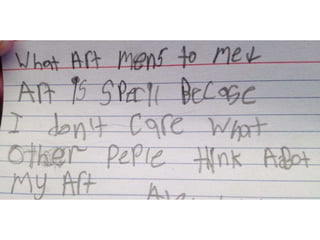
The Artist’s Statement
What does a curator do?
Ask:
Who has ever visited an art museum?
How were things arranged?
Do you collect anything yourself?
The curator organizes the art work – decides what is
included, where it should be put, in what order, what
explanation to give.
Participants are the curators in Picture This. They have
the power of choice, to make decisions.
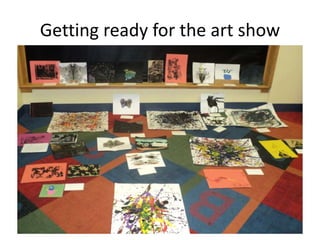
Getting ready for the art show
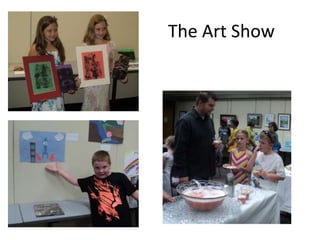
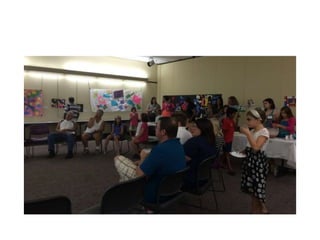
The Art Show
Resources
• Making Art with Children blog, Eric Carle Museum of Picture Book Art
http://carlemuseum.org/blogs/making-art
• Storybook Art: hands-on art for children in the styles of 100 great picture book
illustrators by Mary Ann Kohl. Bright Ring Publications, 2003.
• Kid Made Modern by Todd Oldham. Ammo Books, 2009.
• Pinterest: https://www.pinterest.com/bkmuse/picture-this-2012/
https://www.pinterest.com/bkmuse/picture-this-2013-caldecott-edition/
https://www.pinterest.com/bkmuse/picture-this-2014-fine-art-edition/
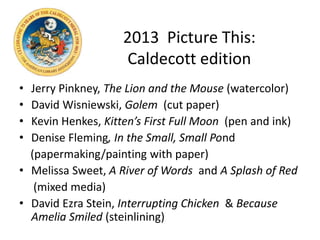
2013 Picture This:
Caldecott edition
• Jerry Pinkney, The Lion and the Mouse (watercolor)
• David Wisniewski, Golem (cut paper)
• Kevin Henkes, Kitten’s First Full Moon (pen and ink)
• Denise Fleming, In the Small, Small Pond
(papermaking/painting with paper)
• Melissa Sweet, A River of Words and A Splash of Red
(mixed media)
• David Ezra Stein, Interrupting Chicken & Because
Amelia Smiled (steinlining)
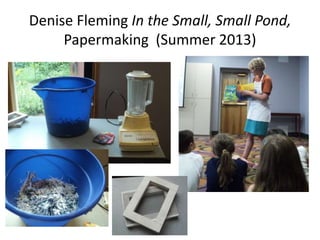
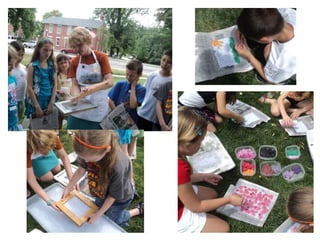
Denise Fleming In the Small, Small Pond,
Papermaking (Summer 2013)
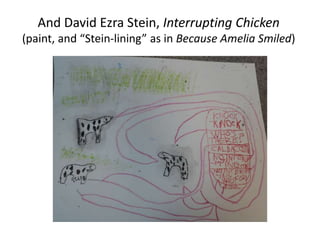
And David Ezra Stein, Interrupting Chicken
(paint, and “Stein-lining” as in Because Amelia Smiled)
Picture This 2014
Fine Art Edition
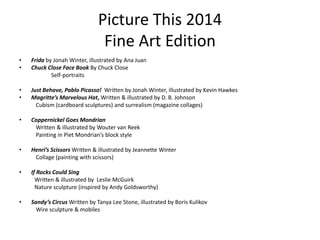
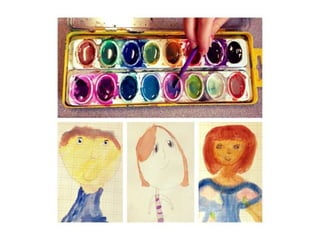
• Frida by Jonah Winter, illustrated by Ana Juan
• Chuck Close Face Book By Chuck Close
Self-portraits
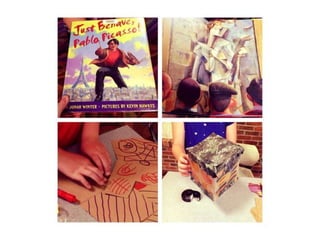
• Just Behave, Pablo Picasso! Written by Jonah Winter, illustrated by Kevin Hawkes
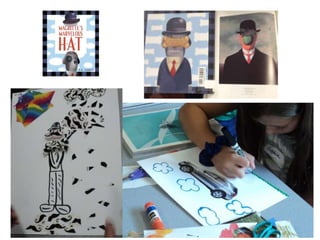
• Magritte’s Marvelous Hat, Written & illustrated by D. B. Johnson
Cubism (cardboard sculptures) and surrealism (magazine collages)
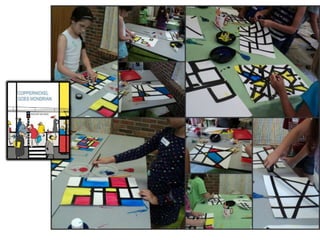
• Coppernickel Goes Mondrian
Written & illustrated by Wouter van Reek
Painting in Piet Mondrian’s block style
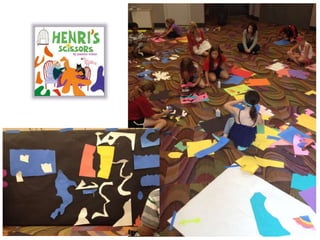
• Henri’s Scissors Written & illustrated by Jeannette Winter
Collage (painting with scissors)
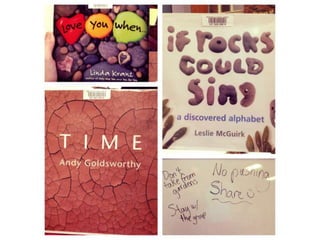
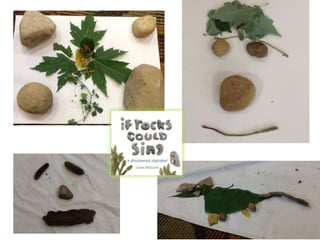
• If Rocks Could Sing
Written & illustrated by Leslie McGuirk
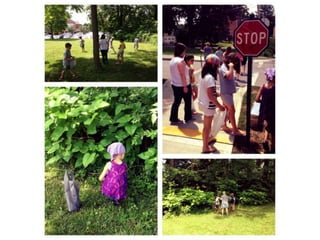
Nature sculpture (inspired by Andy Goldsworthy)
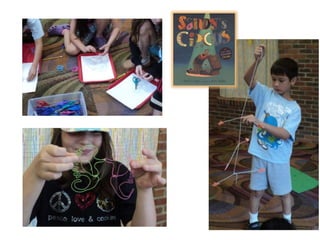
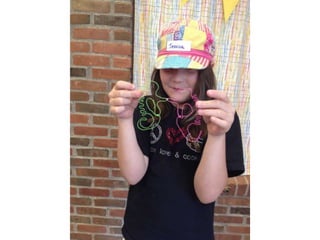
• Sandy’s Circus Written by Tanya Lee Stone, illustrated by Boris Kulikov
Wire sculpture & mobiles
Thank you!

Picture This: Exploring Picture Books Through Art Programming

  • 1.
    Picture This! Exploring PictureBooks Through Art Programming Robin L. Gibson & Rebecca O’Neil Westerville Public Library
  • 3.
  • 4.
  • 5.
    RIF – ArtisticAdventures: How Appreciating Art Can Promote Literacy By encouraging children to analyze what they see, you help them develop their imagination, critical thinking skills, and powers of observation. Artistic Adventures Can Promote Literacy The next time you take children on an artistic adventure, try “reading” the works of art together. You’ll help children develop reading-related skills as they learn about the artist and the people, places, and time period depicted in the artwork. Talk descriptively about what the artist created. Discuss the people, places, and things you see in the work of art. Ask children to tell you what is happening or what is depicted in the work of art. Learn about the artist and ask children to imagine what the artist was thinking when he or she created the work of art. Prompt children to discuss what they like or dislike about what they’ve seen. Ask children to talk about how the work of art makes them feel or what it reminds them of. Encourage children to bring a notebook and jot down their observations. Have children write a response to a particularly memorable work of art when they get home. Encourage children to check out books from the library on an artist or the technique in which they demonstrated the most interest. Like any school trip or family outing, artistic adventures can engage children in a part of the world that they may have known little or nothing about. These experiences can inspire them to read about what they saw so they can learn more. http://www.rif.org/us/literacy-resources/articles/artistic-adventures-how-appreciating-art-can-promote- literacy.htm
  • 6.
    Picture This ProgramFormat - A series of programs – this allows for continuity; one week we may make something that is to be used the next week (examples – Eric Carle paints his paper for collages, so did we; scratchboard – you can buy it, but we made our own the week ahead of time) - Focus on the illustrator of picture books; we try to use the same process, or as close to it as we can get - First week make a portfolio – the work is kept here at the library for this program, do get to keep it all at the end - Next to the last week they review their portfolio and choose one or two entries for the art show. They are the curators of the show and write an artist’s statement to accompany their work.
  • 8.
  • 10.
    Eric Carle, The Very Hungry Caterpillar Collage–began by making our own paper, just as he does.
  • 12.
    Wanda Gag Millions ofCats printmaking
  • 14.
  • 15.
    A detail fromAutumn Rhythm #30 by Jackson Pollock is found in Olivia. The painting hangs in the Metropolitan Museum of Art, in New York.
  • 17.
    Action Jackson byJan Greenburg & Sandra Jordan, Illustrated by Robert B. Parker
  • 19.
  • 21.
    It Looked LikeSpilt Milk by Charles G. Shaw Inkblot by Margaret Peot
  • 22.
    Inkblots – whatdo you see?
  • 24.
    The House inthe Night by Susan Marie Swanson, illustrated by Beth Krommes Scratchboard
  • 25.
  • 26.
  • 33.
    What does acurator do? Ask: Who has ever visited an art museum? How were things arranged? Do you collect anything yourself? The curator organizes the art work – decides what is included, where it should be put, in what order, what explanation to give. Participants are the curators in Picture This. They have the power of choice, to make decisions.
  • 34.
    Getting ready forthe art show
  • 35.
  • 37.
    Resources • Making Artwith Children blog, Eric Carle Museum of Picture Book Art http://carlemuseum.org/blogs/making-art • Storybook Art: hands-on art for children in the styles of 100 great picture book illustrators by Mary Ann Kohl. Bright Ring Publications, 2003. • Kid Made Modern by Todd Oldham. Ammo Books, 2009. • Pinterest: https://www.pinterest.com/bkmuse/picture-this-2012/ https://www.pinterest.com/bkmuse/picture-this-2013-caldecott-edition/ https://www.pinterest.com/bkmuse/picture-this-2014-fine-art-edition/
  • 38.
    2013 Picture This: Caldecottedition • Jerry Pinkney, The Lion and the Mouse (watercolor) • David Wisniewski, Golem (cut paper) • Kevin Henkes, Kitten’s First Full Moon (pen and ink) • Denise Fleming, In the Small, Small Pond (papermaking/painting with paper) • Melissa Sweet, A River of Words and A Splash of Red (mixed media) • David Ezra Stein, Interrupting Chicken & Because Amelia Smiled (steinlining)
  • 39.
    Denise Fleming Inthe Small, Small Pond, Papermaking (Summer 2013)
  • 41.
    And David EzraStein, Interrupting Chicken (paint, and “Stein-lining” as in Because Amelia Smiled)
  • 42.
    Picture This 2014 FineArt Edition • Frida by Jonah Winter, illustrated by Ana Juan • Chuck Close Face Book By Chuck Close Self-portraits • Just Behave, Pablo Picasso! Written by Jonah Winter, illustrated by Kevin Hawkes • Magritte’s Marvelous Hat, Written & illustrated by D. B. Johnson Cubism (cardboard sculptures) and surrealism (magazine collages) • Coppernickel Goes Mondrian Written & illustrated by Wouter van Reek Painting in Piet Mondrian’s block style • Henri’s Scissors Written & illustrated by Jeannette Winter Collage (painting with scissors) • If Rocks Could Sing Written & illustrated by Leslie McGuirk Nature sculpture (inspired by Andy Goldsworthy) • Sandy’s Circus Written by Tanya Lee Stone, illustrated by Boris Kulikov Wire sculpture & mobiles
  • 54.

Editor's Notes

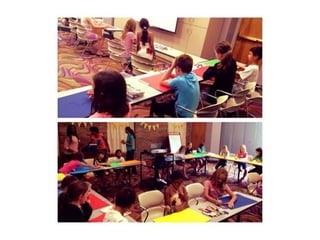
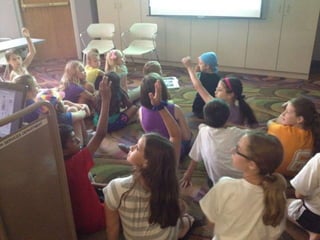
  • #9 Open with icebreaker activity, read book, often show clips – videos, about artist, if possible artist themselves speaking about art or making art. Then we explain what we are doing today. An hour and a half. Teen volunteers help.
  • #11 Began with one of the most recognizable books/artists in children’s literature, Eric Carle. Instructions on his website for painting paper – he paints tissue paper; we decided to use regular paper.
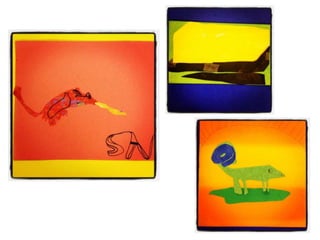
  • #12 Dragon & “Butter”
  • #13 One of the first masters of the picture book, Gag is often credited with being the first to utilize both sides of the page – to carry the picture across the two page spread. We carved into soft foam pieces (much softer than wood!) and used black tempera paint. Kids learned about the reverse nature of the process of printmaking.
  • #15 When Olivia sees this painting, her response is the same as many others: “I could do this myself.” Unlike most people though, Olivia actually tries.
  • #16 Talked about monochromatic nature of this work, and also of the book Olivia - mainly black and white, with accents of red.
  • #17 Love Olivia’s mother’s expression in this two page spread!
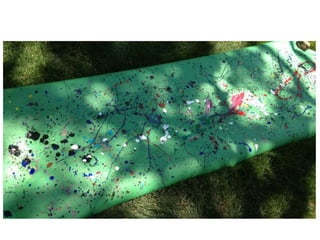
  • #20 We watched a video of Jackson Pollock painting and learned about how much actually went into his paintings. We talked about size and scale (something that is very hard to get a sense of from a book. We made individual spatter paintings and a large, collaborative work.
  • #25 Different media teach/use different vocabulary Line Linear Cross hatching - almost monochromactic; like red is used to great effect in Olivia, yellow is used in the same way in the house in the night . . .
  • #26 We made our own scratchboard to start with. Process is one of the things we emphasize in the program.
  • #29 Writing + editing + revising + rewriting the artist’s statement – literacy connections. (Amberheart was based on one of the Warriors series – clearly an obsession for this artist during this period!) Many did have relationships to favorite books or characters.
  • #32 Look at he detail in this statement!
  • #34 Collector – keeper – interpreter – this part plus artist’s statement = REFLECTION piece!
  • #36 Culminating event; family & friends invited, dress up, “fancy” refreshments – a celebration, a festive occasion. Staff invited to come as well.