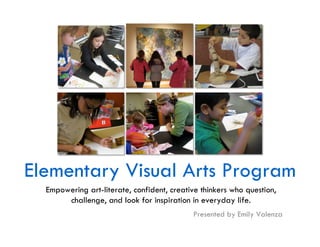
Elementary Visual Arts Program
  Empowering art-literate, confident, creative thinkers who question,
       challenge, and look for inspiration in everyday life.
                                            Presented by Emily Valenza
Meeting and Exceeding National
                 Standards
                           National Art Standard Excerpt (5-8)
           http://artsedge.kennedy-center.org/educators/standards.aspx

•    In grades 5-8, students' visual expressions       •    Their own art making becomes infused with a variety of
     become more individualistic and imaginative.           images and approaches. They learn that preferences
     The problem-solving activities inherent in             of others may differ from their own. Students
     art making help them develop cognitive,                refine the questions that they ask in response to
     affective, and psychomotor skills. They select         artworks. This leads them to an appreciation of multiple
     and transform ideas, discriminate,                     artistic solutions and interpretations. Study of historical
                                                            and cultural contexts gives students insights into the
     synthesize and appraise, and they apply                role played by the visual arts in human
     these skills to their expanding knowledge of
     the visual arts and to their own creative work.        achievement. As they consider examples of visual art
     Students understand that making and                    works within historical contexts, students gain a deeper
                                                            appreciation of their own values, of the values of
     responding to works of visual art are                  other people, and the connection of the visual arts
     inextricably interwoven and that                       to universal human needs, values, and beliefs.
     perception, analysis, and critical                     They understand that the art of a culture is influenced by
     judgment are inherent to both.                         aesthetic ideas as well as by social, political, economic,
                                                            and other factors. Through these efforts, students develop
                                                            an understanding of the meaning and import of the visual
                                                            world in which they live.
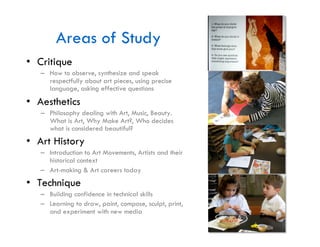
Areas of Study
•  Critique
   –  How to observe, synthesize and speak
      respectfully about art pieces, using precise
      language, asking effective questions
•  Aesthetics
   –  Philosophy dealing with Art, Music, Beauty.
      What is Art, Why Make Art?, Who decides
      what is considered beautiful?
•  Art History
   –  Introduction to Art Movements, Artists and their
      historical context
   –  Art-making & Art careers today
•  Technique
   –  Building confidence in technical skills
   –  Learning to draw, paint, compose, sculpt, print,
      and experiment with new media
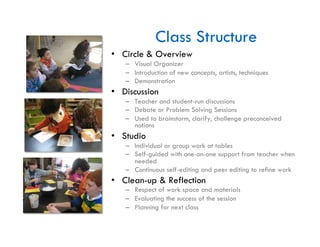
Class Structure
•  Circle & Overview
   –  Visual Organizer
   –  Introduction of new concepts, artists, techniques
   –  Demonstration
•  Discussion
   –  Teacher and student-run discussions
   –  Debate or Problem Solving Sessions
   –  Used to brainstorm, clarify, challenge preconceived
      notions
•  Studio
   –  Individual or group work at tables
   –  Self-guided with one-on-one support from teacher when
      needed
   –  Continuous self-editing and peer editing to refine work
•  Clean-up & Reflection
   –  Respect of work space and materials
   –  Evaluating the success of the session
   –  Planning for next class
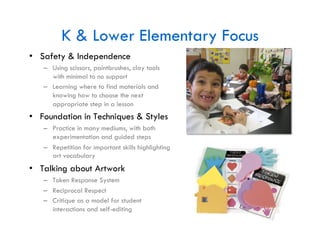
K & Lower Elementary Focus
•  Safety & Independence
   –  Using scissors, paintbrushes, clay tools
      with minimal to no support
   –  Learning where to find materials and
      knowing how to choose the next
      appropriate step in a lesson
•  Foundation in Techniques & Styles
   –  Practice in many mediums, with both
      experimentation and guided steps
   –  Repetition for important skills highlighting
      art vocabulary
•  Talking about Artwork
   –  Token Response System
   –  Reciprocal Respect
   –  Critique as a model for student
      interactions and self-editing
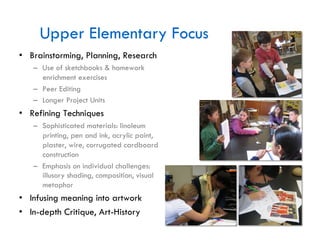
Upper Elementary Focus
•  Brainstorming, Planning, Research
   –  Use of sketchbooks & homework
      enrichment exercises
   –  Peer Editing
   –  Longer Project Units
•  Refining Techniques
   –  Sophisticated materials: linoleum
      printing, pen and ink, acrylic paint,
      plaster, wire, corrugated cardboard
      construction
   –  Emphasis on individual challenges:
      illusory shading, composition, visual
      metaphor
•  Infusing meaning into artwork
•  In-depth Critique, Art-History
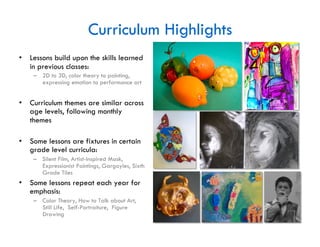
Curriculum Highlights
•  Lessons build upon the skills learned
   in previous classes:
    –  2D to 3D, color theory to painting,
       expressing emotion to performance art


•  Curriculum themes are similar across
   age levels, following monthly
   themes

•  Some lessons are fixtures in certain
   grade level curricula:
    –  Silent Film, Artist-Inspired Mask,
       Expressionist Paintings, Gargoyles, Sixth
       Grade Tiles
•  Some lessons repeat each year for
   emphasis:
    –  Color Theory, How to Talk about Art,
       Still Life, Self-Portraiture, Figure
       Drawing
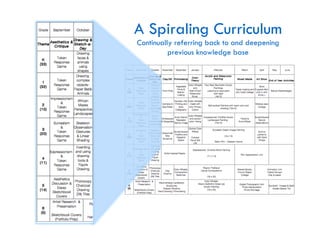
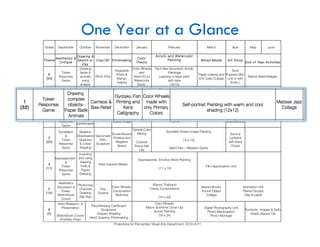
A Spiraling Curriculum
Continually referring back to and deepening
          previous knowledge base
One Year at a Glance
Grade    September      October      November    December         January                   February                    March             April         May          June

                      Drawing &                                                    Acrylic and Watercolor
        Aesthetics &                                               Color                   Painting
Theme                 Sketch-a- Clay/3D Printmaking                                                                 Mixed Media       Art Show
          Critique                                                Theory                                                                             End of Year Activities
                          Day
                        Drawing                                 Color Wheels       Paul Klee Geometric Acrylic
                                               Vegetable                                                                                 Sock
           Token        faces &                                     and                     Paintings
  K                                              Prints &                                                          Paper-making and Puppets Skit-
          Response      animals Pinch Pots                       Warm/Cool           Learning to layer paint                                       Nature Assemblages
 (33)                                            Stamp-                                                            Eric Carle Collage Link in with
            Game          using                                  Watercolor                 with tape
                                                 making                                                                                 Emily L
                         shapes                                    Study                     ( 9x12)
                       Drawing
                                              Gyotaku Fish      Color Wheels
           Token        complex
   1                               Cameos & Printing and         made with                                                           Matisse Jazz
          Response      objects-                                                      Self-portrait Painting with warm and cool
 (32)                              Bas-Relief     Kanji         only Primary                                                           Collage
            Game      Paper Batik                                                                   shading (12x12)
                                               Calligraphy         Colors
                        Animals
        Impressionism
                         African                                Color Wheels
              &                               Andy Warhol                    Impressionist/ Pointilist Acrylic                       Scratchboard
   2                     Masks Grotesques                        and optical                                          Panama
           Token                                Repeated                         Landscape Painting                                     Nature
 (10)                 Perspective & Gargoyles                   color mixing                                         Kuna Molas
          Response                            Stamp Image                               (10x14)                                      observations
                      Landscapes
            Game
                                                                Optical Color
         Surrealism    Skeleton                                                           Surrealist Dream Image Painting
                                             Scratchboard         Mixing                                                                Sumi-e
             &        Observation Giacometti
   3                                          Positive and                                                                             Lanterns
           Token       Gestures      Wire                                                              ( 8 x 10)
 (20)                                          Negative           Colored                                                              with Kanji
         Response      & Linear   Sculpture
                                                Space            Pencil Still                                                           Chops
           Game        Shading                                                              Silent Film – Western Genre
                                                                   Life
                    Inventing
      Expressionism and using                                       Expressionist Emotive Word Painting
            &        drawing
   4                                  Artist Inspired Masks
          Token      tools &                                                                                           Film Appreciation Unit
 (11)                                                                                (11 x 14)
        Response      Figure
          Game       Drawing

         Aesthetics                                                              Wayne Theibaud
                     Photocopy
        Discussion &                            Color Wheels,                                                       Altered Books,                  Animation Unit
   5                  Charcoal         Clay                                     Candy Compositions
           Essay                                Composition                                                         Found Object                    Paired Groups
 (14)                 Drawing         Ocarina
        Sketchbook                                Sketches                                                              Collage                      Clay & paper
                      Zillij Tiles                                                   (16 x 20)
           Covers
         Artist Research &                                                     Color Wheels,
                                Rauchenberg Cardboard
            Presentation                                                  Macro (Extreme Close-Up)                    Digital Photography Unit
  6                                   Sculptures                                                                                                     Symbolic Images & Sixth
                                                                              Acrylic Painting                          Photo-Manipulation
 (5)                               Drapery Shading                                                                                                      Grade Glazed Tile
        Sketchbook Covers                                                         (18 x 24)                                Photo-Montage
                               Hand Drawing /Printmaking
          (Portfolio Prep)
                                                 Projections for Elementary Visual Arts Department, 2010-2011
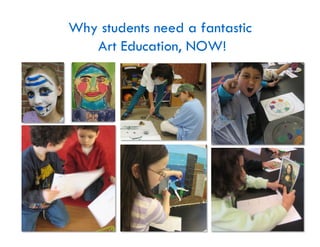
Why students need a fantastic
   Art Education, NOW!
•  High standards create excellent achievements
   –  Elementary students are capable of astounding creations and
      understanding
•  Art’s possibilities are limitless
   –  It is essential that students know art is not just making a pretty
      picture
•  Art is a powerful mode of communication
   –  Effective even if written and verbal expression may be
      lagging
•  Without Art History, Critique, and Aesthetics students
   cannot make an informed decision to make the choice to
   continue when art is merely an elective subject
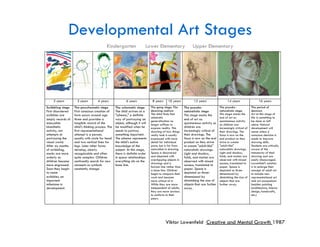
Developmental Art Stages
     Kindergarten   Lower Elementary   Upper Elementary


                            Viktor Lowenfeld Creative and Mental Growth 1987
Goals for Program Growth

•    International Critiques, Partner Classrooms
•    Virtual tours of museums around the world
•    Digital Photography
•    Expanded portfolio prep built into curriculum
•    Interactive Parent/Teacher Conferences
     –  Conference + activities to try at home
Contact me!

Have questions, suggestions, or would you just
 like more information? Set up a meeting or
 email me!
                        emily_v@kingsley.org

Visit the Kingsley Parent Portal for photos,
  videos, and suggestions for home activities!

Visual Arts Curriculum

  • 1.
    Elementary Visual ArtsProgram Empowering art-literate, confident, creative thinkers who question, challenge, and look for inspiration in everyday life. Presented by Emily Valenza
  • 2.
    Meeting and ExceedingNational Standards National Art Standard Excerpt (5-8) http://artsedge.kennedy-center.org/educators/standards.aspx •  In grades 5-8, students' visual expressions •  Their own art making becomes infused with a variety of become more individualistic and imaginative. images and approaches. They learn that preferences The problem-solving activities inherent in of others may differ from their own. Students art making help them develop cognitive, refine the questions that they ask in response to affective, and psychomotor skills. They select artworks. This leads them to an appreciation of multiple and transform ideas, discriminate, artistic solutions and interpretations. Study of historical and cultural contexts gives students insights into the synthesize and appraise, and they apply role played by the visual arts in human these skills to their expanding knowledge of the visual arts and to their own creative work. achievement. As they consider examples of visual art Students understand that making and works within historical contexts, students gain a deeper appreciation of their own values, of the values of responding to works of visual art are other people, and the connection of the visual arts inextricably interwoven and that to universal human needs, values, and beliefs. perception, analysis, and critical They understand that the art of a culture is influenced by judgment are inherent to both. aesthetic ideas as well as by social, political, economic, and other factors. Through these efforts, students develop an understanding of the meaning and import of the visual world in which they live.
  • 3.
    Areas of Study • Critique –  How to observe, synthesize and speak respectfully about art pieces, using precise language, asking effective questions •  Aesthetics –  Philosophy dealing with Art, Music, Beauty. What is Art, Why Make Art?, Who decides what is considered beautiful? •  Art History –  Introduction to Art Movements, Artists and their historical context –  Art-making & Art careers today •  Technique –  Building confidence in technical skills –  Learning to draw, paint, compose, sculpt, print, and experiment with new media
  • 4.
    Class Structure •  Circle& Overview –  Visual Organizer –  Introduction of new concepts, artists, techniques –  Demonstration •  Discussion –  Teacher and student-run discussions –  Debate or Problem Solving Sessions –  Used to brainstorm, clarify, challenge preconceived notions •  Studio –  Individual or group work at tables –  Self-guided with one-on-one support from teacher when needed –  Continuous self-editing and peer editing to refine work •  Clean-up & Reflection –  Respect of work space and materials –  Evaluating the success of the session –  Planning for next class
  • 5.
    K & LowerElementary Focus •  Safety & Independence –  Using scissors, paintbrushes, clay tools with minimal to no support –  Learning where to find materials and knowing how to choose the next appropriate step in a lesson •  Foundation in Techniques & Styles –  Practice in many mediums, with both experimentation and guided steps –  Repetition for important skills highlighting art vocabulary •  Talking about Artwork –  Token Response System –  Reciprocal Respect –  Critique as a model for student interactions and self-editing
  • 6.
    Upper Elementary Focus • Brainstorming, Planning, Research –  Use of sketchbooks & homework enrichment exercises –  Peer Editing –  Longer Project Units •  Refining Techniques –  Sophisticated materials: linoleum printing, pen and ink, acrylic paint, plaster, wire, corrugated cardboard construction –  Emphasis on individual challenges: illusory shading, composition, visual metaphor •  Infusing meaning into artwork •  In-depth Critique, Art-History
  • 7.
    Curriculum Highlights •  Lessonsbuild upon the skills learned in previous classes: –  2D to 3D, color theory to painting, expressing emotion to performance art •  Curriculum themes are similar across age levels, following monthly themes •  Some lessons are fixtures in certain grade level curricula: –  Silent Film, Artist-Inspired Mask, Expressionist Paintings, Gargoyles, Sixth Grade Tiles •  Some lessons repeat each year for emphasis: –  Color Theory, How to Talk about Art, Still Life, Self-Portraiture, Figure Drawing
  • 8.
    A Spiraling Curriculum Continuallyreferring back to and deepening previous knowledge base
  • 9.
    One Year ata Glance Grade September October November December January February March April May June Drawing & Acrylic and Watercolor Aesthetics & Color Painting Theme Sketch-a- Clay/3D Printmaking Mixed Media Art Show Critique Theory End of Year Activities Day Drawing Color Wheels Paul Klee Geometric Acrylic Vegetable Sock Token faces & and Paintings K Prints & Paper-making and Puppets Skit- Response animals Pinch Pots Warm/Cool Learning to layer paint Nature Assemblages (33) Stamp- Eric Carle Collage Link in with Game using Watercolor with tape making Emily L shapes Study ( 9x12) Drawing Gyotaku Fish Color Wheels Token complex 1 Cameos & Printing and made with Matisse Jazz Response objects- Self-portrait Painting with warm and cool (32) Bas-Relief Kanji only Primary Collage Game Paper Batik shading (12x12) Calligraphy Colors Animals Impressionism African Color Wheels & Andy Warhol Impressionist/ Pointilist Acrylic Scratchboard 2 Masks Grotesques and optical Panama Token Repeated Landscape Painting Nature (10) Perspective & Gargoyles color mixing Kuna Molas Response Stamp Image (10x14) observations Landscapes Game Optical Color Surrealism Skeleton Surrealist Dream Image Painting Scratchboard Mixing Sumi-e & Observation Giacometti 3 Positive and Lanterns Token Gestures Wire ( 8 x 10) (20) Negative Colored with Kanji Response & Linear Sculpture Space Pencil Still Chops Game Shading Silent Film – Western Genre Life Inventing Expressionism and using Expressionist Emotive Word Painting & drawing 4 Artist Inspired Masks Token tools & Film Appreciation Unit (11) (11 x 14) Response Figure Game Drawing Aesthetics Wayne Theibaud Photocopy Discussion & Color Wheels, Altered Books, Animation Unit 5 Charcoal Clay Candy Compositions Essay Composition Found Object Paired Groups (14) Drawing Ocarina Sketchbook Sketches Collage Clay & paper Zillij Tiles (16 x 20) Covers Artist Research & Color Wheels, Rauchenberg Cardboard Presentation Macro (Extreme Close-Up) Digital Photography Unit 6 Sculptures Symbolic Images & Sixth Acrylic Painting Photo-Manipulation (5) Drapery Shading Grade Glazed Tile Sketchbook Covers (18 x 24) Photo-Montage Hand Drawing /Printmaking (Portfolio Prep) Projections for Elementary Visual Arts Department, 2010-2011
  • 10.
    Why students needa fantastic Art Education, NOW!
  • 11.
    •  High standardscreate excellent achievements –  Elementary students are capable of astounding creations and understanding •  Art’s possibilities are limitless –  It is essential that students know art is not just making a pretty picture •  Art is a powerful mode of communication –  Effective even if written and verbal expression may be lagging •  Without Art History, Critique, and Aesthetics students cannot make an informed decision to make the choice to continue when art is merely an elective subject
  • 12.
    Developmental Art Stages Kindergarten Lower Elementary Upper Elementary Viktor Lowenfeld Creative and Mental Growth 1987
  • 13.
    Goals for ProgramGrowth •  International Critiques, Partner Classrooms •  Virtual tours of museums around the world •  Digital Photography •  Expanded portfolio prep built into curriculum •  Interactive Parent/Teacher Conferences –  Conference + activities to try at home
  • 14.
    Contact me! Have questions,suggestions, or would you just like more information? Set up a meeting or email me! emily_v@kingsley.org Visit the Kingsley Parent Portal for photos, videos, and suggestions for home activities!