Physiology of nose
Sandeep singh (89)
Functions of nose
1. breathing
2. Air conditioning of inspired air
3. Protection of lower airway
4. Ventilation and drainage of
   p.n.s.
5. Olfaction
6. Nasal resistance
7. Vocal resonance
8. Nasal refluxes
1.Breathing
 Nose is the natural pathway for breathing. Mouth
  breathing is acquired through learning
 newborn infant with choanal atresia may asphyxiate
  to death if urgent measures are not taken to relieve
  it
 The nose also permits breathing and eating to go on
  simultaneously
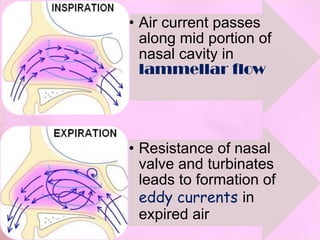
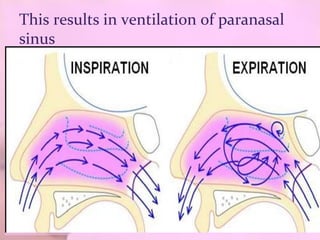
 During expiration, air current follows the same
  course as during inspiration, but the entire air
  current is not expelled directly through the nares.
 Friction offered at limen nasi converts it into eddies
  under cover of inferior and middle turbinates and
  this ventilates the sinuses through the ostia.
• Air current passes
  along mid portion of
  nasal cavity in
  lammellar flow


• Resistance of nasal
  valve and turbinates
  leads to formation of
  eddy currents in
  expired air
This results in ventilation of paranasal
sinus
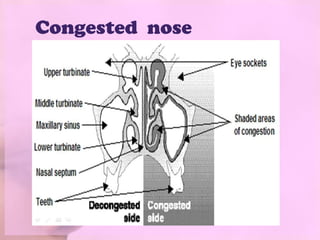
Nasal cycle
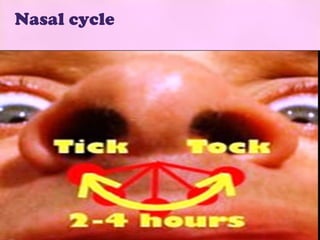
  Under autonomic nervous system Nasal mucosa
  undergoes rhythmic cyclical congestion and
  decongestion, thus controlling the air flow
  through nasal chambers.
  When one nasal chamber is working, total nasal
  respiration, equal to that of both nasal
  chambers, is carried out by it.
  cycle lasts 2-12 hours (average 2.5-4 hours)
Nasal cycle
Congested nose
2. Air conditioning
 Nose is called the "air-conditioner" for lungs.
 adjusts temperature and humidity of inspired air before it
 passes it on to the lungs
  Temperature control of the inspired air is regulated by
 large surface of nasal mucosa, particularly in the region
 of middle and inferior turbinates and adjacent parts of the
 septum ( highly vascular with cavernous venous spaces)
 This makes an efficient "radiator" mechanism to warm up
 the cold air. Inspired air which may be at 20°C or
 O°C or even at subzero temperature is heated to near
 body temperature in one-fourth of second
 Similarly, hot air is cooled to the body
 temperature
Humidification
humidity of atmospheric a ir varies depending on
climatic conditions.
Nasal mucosa adjusts the relative humidity of
the
inspired air to 75% or more.
Moisture is essential for integrity and function of
the
ciliary epithelium
Humidification also has a significant effect on
gas exchange in the lower airways.
3. Protection of lower airway
  Filtration and purification.particles >3 um are trapped
 by Nasal vibrissae
 Particles smaller than 0.5 um seem to pass through
 the nose into lower airways without difficulty.
 Muco-cilliary blanket traps pathogens in inspired air >0.5
 microns and transports them to nasopharynx for
 swallowing
 Sneezing protects against irritants
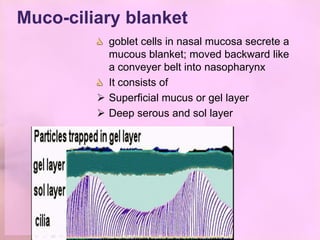
Muco-ciliary blanket
           goblet cells in nasal mucosa secrete a
           mucous blanket; moved backward like
           a conveyer belt into nasopharynx
           It consists of
          Superficial mucus or gel layer
          Deep serous and sol layer
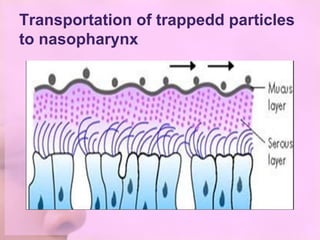
Transportation of trappedd particles
to nasopharynx
Factors compromising the
mucociliary functions
   dry atmostphere
   Smoking
   Air pollutants and nasal irritants
   Infections0
   Excessive summer and excessive
   cold
   Hypoxia
   Drugs (anaesthetics, sedatives,
   topical nasal decongestants, beta
   blockers)
Enzymes and immunoglobulins
   Nasal secretions also contain an
   enzyme called muramidase
   (lysozyme)
   which kills bacteria and viruses.
   ImmunoglobulIns IgA and IgE, and
   interferon are also present in nasal
   secretions and provide immunity
   against upper respiratory tract
   infections.
Sneezing
 protective reflex.
 Foreign particles which irritate nasal
 mucosa a re expelled by sneezing
 Copious flow of nasal secretions that
 foltows initation
 by noxious substance helps to wash them
 out.
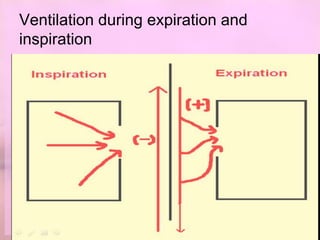
4. Ventilation of paranasal sinuses
    Inspiration creates negative pressure in
    nasal cavity thus sucks the air out from
    paranasal sinuses via their ostium

    Expiration creates positive pressure in
    nasal cavity thus ventilates the para
    nasal sinuses via there ostium
Ventilation during expiration and
inspiration
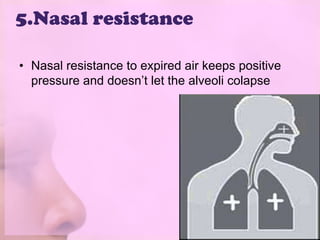
5.Nasal resistance

• Nasal resistance to expired air keeps positive
  pressure and doesn’t let the alveoli colapse
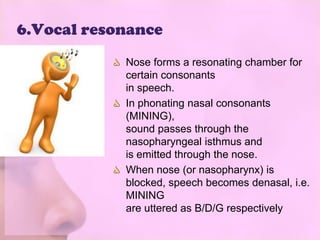
6.Vocal resonance
            Nose forms a resonating chamber for
            certain consonants
            in speech.
            In phonating nasal consonants
            (MINING),
            sound passes through the
            nasopharyngeal isthmus and
            is emitted through the nose.
            When nose (or nasopharynx) is
            blocked, speech becomes denasal, i.e.
            MINING
            are uttered as B/D/G respectively
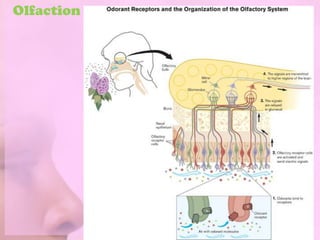
Olfaction
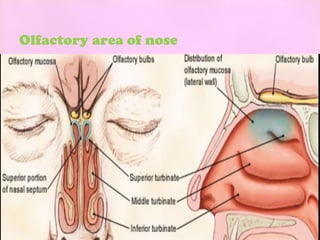
Olfactory area of nose
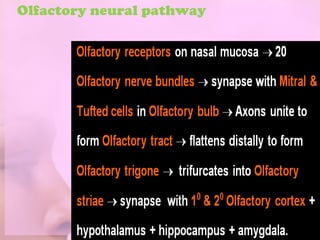
Olfactory neural pathway
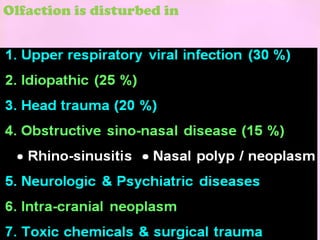
Olfaction is disturbed in
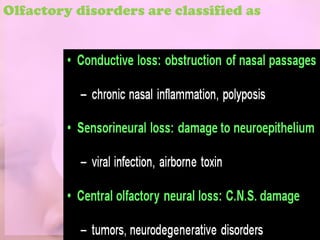
Olfactory disorders are classified as
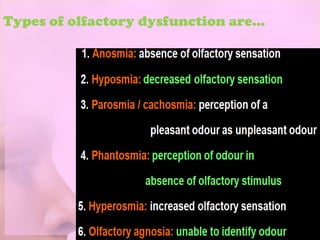
Types of olfactory dysfunction are…
Thank you

Physiology of nose

  • 1.
  • 2.
    Functions of nose 1.breathing 2. Air conditioning of inspired air 3. Protection of lower airway 4. Ventilation and drainage of p.n.s. 5. Olfaction 6. Nasal resistance 7. Vocal resonance 8. Nasal refluxes
  • 3.
    1.Breathing  Nose isthe natural pathway for breathing. Mouth breathing is acquired through learning  newborn infant with choanal atresia may asphyxiate to death if urgent measures are not taken to relieve it  The nose also permits breathing and eating to go on simultaneously  During expiration, air current follows the same course as during inspiration, but the entire air current is not expelled directly through the nares.  Friction offered at limen nasi converts it into eddies under cover of inferior and middle turbinates and this ventilates the sinuses through the ostia.
  • 4.
    • Air currentpasses along mid portion of nasal cavity in lammellar flow • Resistance of nasal valve and turbinates leads to formation of eddy currents in expired air
  • 5.
    This results inventilation of paranasal sinus
  • 6.
    Nasal cycle Under autonomic nervous system Nasal mucosa undergoes rhythmic cyclical congestion and decongestion, thus controlling the air flow through nasal chambers. When one nasal chamber is working, total nasal respiration, equal to that of both nasal chambers, is carried out by it. cycle lasts 2-12 hours (average 2.5-4 hours)
  • 7.
  • 8.
  • 9.
    2. Air conditioning Nose is called the "air-conditioner" for lungs. adjusts temperature and humidity of inspired air before it passes it on to the lungs Temperature control of the inspired air is regulated by large surface of nasal mucosa, particularly in the region of middle and inferior turbinates and adjacent parts of the septum ( highly vascular with cavernous venous spaces) This makes an efficient "radiator" mechanism to warm up the cold air. Inspired air which may be at 20°C or O°C or even at subzero temperature is heated to near body temperature in one-fourth of second Similarly, hot air is cooled to the body temperature
  • 10.
    Humidification humidity of atmospherica ir varies depending on climatic conditions. Nasal mucosa adjusts the relative humidity of the inspired air to 75% or more. Moisture is essential for integrity and function of the ciliary epithelium Humidification also has a significant effect on gas exchange in the lower airways.
  • 11.
    3. Protection oflower airway Filtration and purification.particles >3 um are trapped by Nasal vibrissae Particles smaller than 0.5 um seem to pass through the nose into lower airways without difficulty. Muco-cilliary blanket traps pathogens in inspired air >0.5 microns and transports them to nasopharynx for swallowing Sneezing protects against irritants
  • 12.
    Muco-ciliary blanket goblet cells in nasal mucosa secrete a mucous blanket; moved backward like a conveyer belt into nasopharynx It consists of  Superficial mucus or gel layer  Deep serous and sol layer
  • 13.
    Transportation of trappeddparticles to nasopharynx
  • 14.
    Factors compromising the mucociliaryfunctions dry atmostphere Smoking Air pollutants and nasal irritants Infections0 Excessive summer and excessive cold Hypoxia Drugs (anaesthetics, sedatives, topical nasal decongestants, beta blockers)
  • 15.
    Enzymes and immunoglobulins Nasal secretions also contain an enzyme called muramidase (lysozyme) which kills bacteria and viruses. ImmunoglobulIns IgA and IgE, and interferon are also present in nasal secretions and provide immunity against upper respiratory tract infections.
  • 16.
    Sneezing protective reflex. Foreign particles which irritate nasal mucosa a re expelled by sneezing Copious flow of nasal secretions that foltows initation by noxious substance helps to wash them out.
  • 17.
    4. Ventilation ofparanasal sinuses Inspiration creates negative pressure in nasal cavity thus sucks the air out from paranasal sinuses via their ostium Expiration creates positive pressure in nasal cavity thus ventilates the para nasal sinuses via there ostium
  • 18.
  • 19.
    5.Nasal resistance • Nasalresistance to expired air keeps positive pressure and doesn’t let the alveoli colapse
  • 20.
    6.Vocal resonance Nose forms a resonating chamber for certain consonants in speech. In phonating nasal consonants (MINING), sound passes through the nasopharyngeal isthmus and is emitted through the nose. When nose (or nasopharynx) is blocked, speech becomes denasal, i.e. MINING are uttered as B/D/G respectively
  • 21.
  • 22.
  • 23.
  • 24.
  • 25.
  • 26.
    Types of olfactorydysfunction are…
  • 27.

Editor's Notes

  • #4 natural is theinstinct to breath through the nose that a newborninfant with choanalatresia may asphyxiate to death ifurgent measures are not taken to relieve it
  • #5 Default path of breathing as breathing per mouth is learned laterAir current passes along mid portion of nasal cavity in lammellar flow