Welcome to our
SCIENCE class
Presented by Jocelyn O. Millano
DISCUSSION
Biological
Macromolecules
Biological
macromolecules
- are large, organic molecule such as
carbohydrates, lipids, proteins, and
nucleic acids. Most of them are organic
compounds and the functional group
determines their chemical properties.
Biomolecules have a huge variety of
functions, such as storing energy,
protection, etc.
The word carbohydrate may be broken down to carbon and
hydrate. Another term for carbohydrate is saccharide.
Carbohydrates are the primary energy source of the human body.
The different saccharides that humans eat are converted to
glucose which can be readily used by the body. The excessive
consumption of carbohydrates is converted to glycogen which is
stored in the liver and in muscles.
Glycogen is a slow releasing carbohydrate.
Carbohydrates
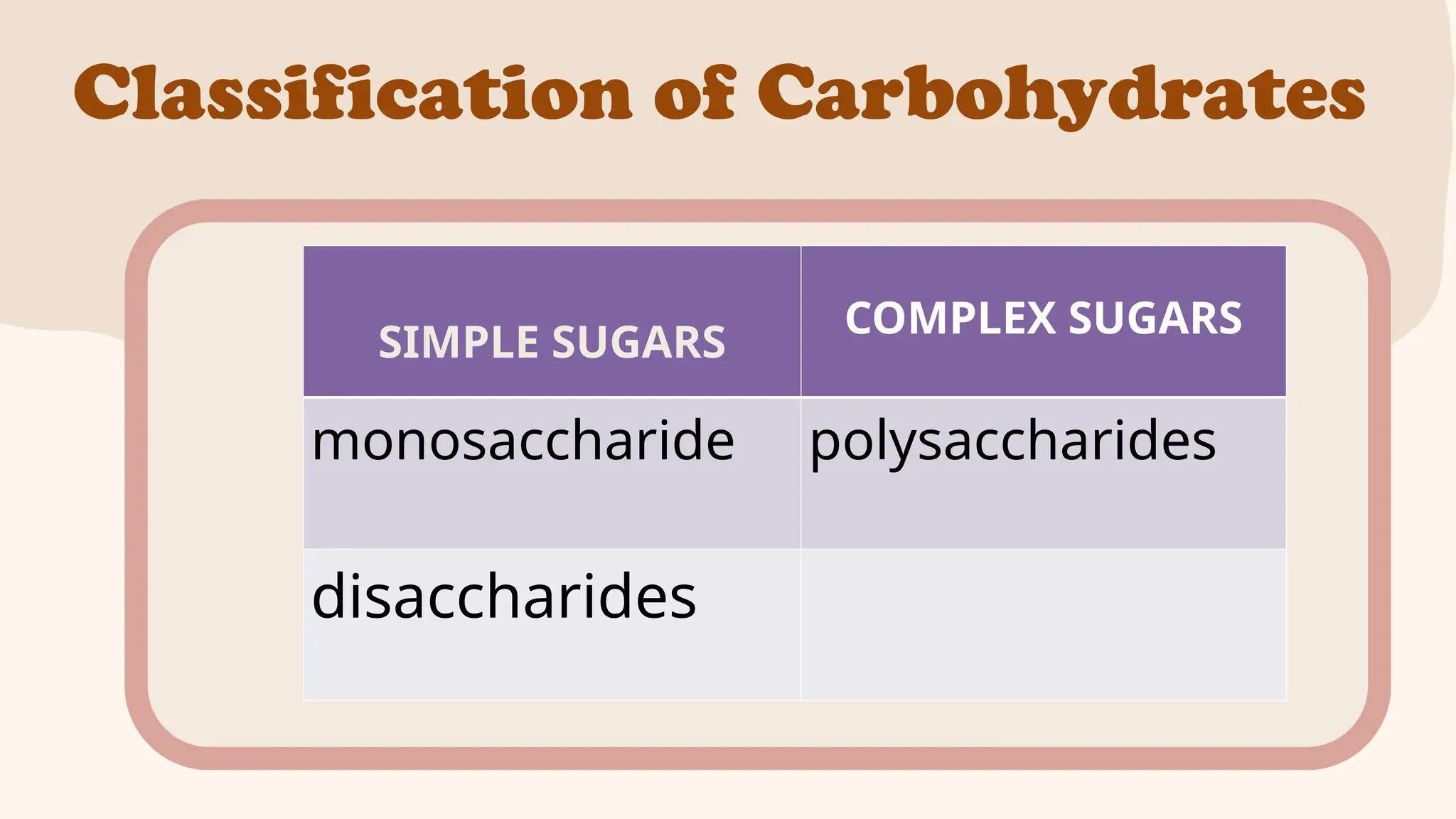
Classification of Carbohydrates
SIMPLE SUGARS
COMPLEX SUGARS
monosaccharide polysaccharides
disaccharides
Monosaccharide
(one saccharide)
Disaccharides
(two saccharides)
Polysaccharides
(many saccharides)
Lipids or Fats
Lipids or fats are important nutrients in your body but
eating too many especially unhealthy fats such as saturated
fats and trans fats can lead to heart disease, cancer, and
obesity.
Lipids also serve other functions such as material for cell
membrane, insulation to maintain body temperature, aid in
digestion, and as signal molecules.
Classifications of
Lipids
Triglyceride
Phospholipid
steroid
Examples of Lipids
Fats
Oil
They are under triglycerides because they
are composed of glycerol and three fatty
acids.
Examples of Lipids
Fat refers to solid triglyceride usually from animal
sources such as meat, milk, butter, margarine,
eggs, and cheese.
Oil refers to liquid triglycerides from plant sources.
Examples are olive oil, corn oil, sunflower oil, and
soybean oil. Animal fats contain high percentages
of saturated fatty acids while plant oils are mostly
unsaturated fatty acids.
Proteins
Proteins are composed of four elements,
namely: carbon, hydrogen, oxygen, and
nitrogen.
Sulfur and other metals are sometimes also
found in proteins.
If carbohydrates are made up of saccharides,
proteins are made up of amino acids.
Examples of Proteins
Keratin is a structural protein found in hair,
skin, and nails.
Fibroin / Silk protein - Fibroin is found in silk.
Silk has a smooth and soft texture. It is one of
the strongest natural fibers that have high
resistance to deformation. It is also a good
insulating material.
Examples of Proteins
Myoglobin is a polypeptide
that stores oxygen in muscles.
It contains a heme group
which has an iron where the
oxygen is stored.
Examples of Proteins
Collagen is a major insoluble fibrous protein found
in connective tissues such as tendons, ligaments,
skin, cartilage and the cornea of the eye. It
comprises as much as 30% of proteins in animals.
Enzymes function to catalyze chemical reactions.
They either speed up a reaction, lower the needed
energy for a reaction to take place, or bind
substances to their specific partners.
Examples of Enzymes
a. Lipase - help in digestion of fats
b. Pepsin - help in breaking down proteins
into peptides (smaller units)
c. Sucrase - also called invertase; help in the
digestion of sugars and starches
NUCLEIC ACID
Nucleic acids play an essential role in the storage,
transfer, and expression of genetic information.
Nucleic acid was discovered by a 24-year old Swiss
physician named Friedrich Miescher in 1868.
He found out that nucleic acids contain carbon,
hydrogen, oxygen, nitrogen, and phosphorus.
Nucleic acids are composed of nucleotides.
Examples of Nucleic acids
DNA (deoxyribonucleic acid) and RNA(ribonucleic
acid).
DNA is a nucleic acid that carries the genetic code
of organisms. It is fondly termed as the blueprint of
life.
RNA - carries the information from the DNA to the
cellular factories for the synthesis of proteins.
Three Parts of Nucleotide
 Nitrogenous base
 Five-carbon carbohydrate or sugar
 Phosphate group
Structures of the Different
Biomolecules
Remember this mnemonic device of biomolecules:
CHO CHO CHON CHONP
Structures of the Different
Biomolecules
ACTIVITY: MEAL PLAN
Biological Macromolecules Lesson quarter one

Biological Macromolecules Lesson quarter one

  • 1.
    Welcome to our SCIENCEclass Presented by Jocelyn O. Millano
  • 2.
  • 3.
  • 4.
    Biological macromolecules - are large,organic molecule such as carbohydrates, lipids, proteins, and nucleic acids. Most of them are organic compounds and the functional group determines their chemical properties. Biomolecules have a huge variety of functions, such as storing energy, protection, etc.
  • 5.
    The word carbohydratemay be broken down to carbon and hydrate. Another term for carbohydrate is saccharide. Carbohydrates are the primary energy source of the human body. The different saccharides that humans eat are converted to glucose which can be readily used by the body. The excessive consumption of carbohydrates is converted to glycogen which is stored in the liver and in muscles. Glycogen is a slow releasing carbohydrate. Carbohydrates
  • 6.
    Classification of Carbohydrates SIMPLESUGARS COMPLEX SUGARS monosaccharide polysaccharides disaccharides
  • 7.
  • 8.
  • 9.
  • 11.
    Lipids or Fats Lipidsor fats are important nutrients in your body but eating too many especially unhealthy fats such as saturated fats and trans fats can lead to heart disease, cancer, and obesity. Lipids also serve other functions such as material for cell membrane, insulation to maintain body temperature, aid in digestion, and as signal molecules.
  • 12.
  • 13.
    Examples of Lipids Fats Oil Theyare under triglycerides because they are composed of glycerol and three fatty acids.
  • 14.
    Examples of Lipids Fatrefers to solid triglyceride usually from animal sources such as meat, milk, butter, margarine, eggs, and cheese. Oil refers to liquid triglycerides from plant sources. Examples are olive oil, corn oil, sunflower oil, and soybean oil. Animal fats contain high percentages of saturated fatty acids while plant oils are mostly unsaturated fatty acids.
  • 17.
    Proteins Proteins are composedof four elements, namely: carbon, hydrogen, oxygen, and nitrogen. Sulfur and other metals are sometimes also found in proteins. If carbohydrates are made up of saccharides, proteins are made up of amino acids.
  • 18.
    Examples of Proteins Keratinis a structural protein found in hair, skin, and nails. Fibroin / Silk protein - Fibroin is found in silk. Silk has a smooth and soft texture. It is one of the strongest natural fibers that have high resistance to deformation. It is also a good insulating material.
  • 19.
    Examples of Proteins Myoglobinis a polypeptide that stores oxygen in muscles. It contains a heme group which has an iron where the oxygen is stored.
  • 20.
    Examples of Proteins Collagenis a major insoluble fibrous protein found in connective tissues such as tendons, ligaments, skin, cartilage and the cornea of the eye. It comprises as much as 30% of proteins in animals. Enzymes function to catalyze chemical reactions. They either speed up a reaction, lower the needed energy for a reaction to take place, or bind substances to their specific partners.
  • 21.
    Examples of Enzymes a.Lipase - help in digestion of fats b. Pepsin - help in breaking down proteins into peptides (smaller units) c. Sucrase - also called invertase; help in the digestion of sugars and starches
  • 23.
    NUCLEIC ACID Nucleic acidsplay an essential role in the storage, transfer, and expression of genetic information. Nucleic acid was discovered by a 24-year old Swiss physician named Friedrich Miescher in 1868. He found out that nucleic acids contain carbon, hydrogen, oxygen, nitrogen, and phosphorus. Nucleic acids are composed of nucleotides.
  • 24.
    Examples of Nucleicacids DNA (deoxyribonucleic acid) and RNA(ribonucleic acid). DNA is a nucleic acid that carries the genetic code of organisms. It is fondly termed as the blueprint of life. RNA - carries the information from the DNA to the cellular factories for the synthesis of proteins.
  • 25.
    Three Parts ofNucleotide  Nitrogenous base  Five-carbon carbohydrate or sugar  Phosphate group
  • 27.
    Structures of theDifferent Biomolecules Remember this mnemonic device of biomolecules: CHO CHO CHON CHONP
  • 28.
    Structures of theDifferent Biomolecules
  • 29.