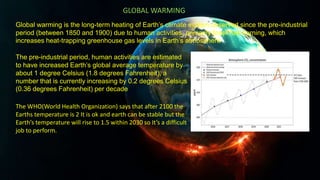
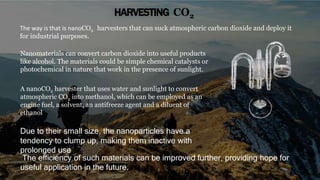
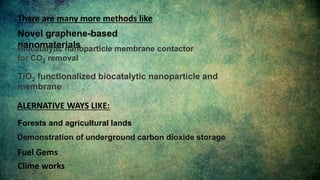
Nanomaterials have potential to help mitigate pollution and climate change through various applications. They can efficiently capture carbon dioxide from air and toxic pollutants from water, and degrade waste into useful products. Some examples include nano-scale CO2 harvesters that convert carbon dioxide into fuels and chemicals using sunlight, and highly permeable carbon capture membranes that more efficiently separate carbon dioxide from power plant exhaust. However, nanomaterials must become more economical and replace existing technologies completely to be fully implemented. Overall, continued research into novel graphene and biocatalytic nanomaterials may lead to more effective carbon capture and storage solutions.