
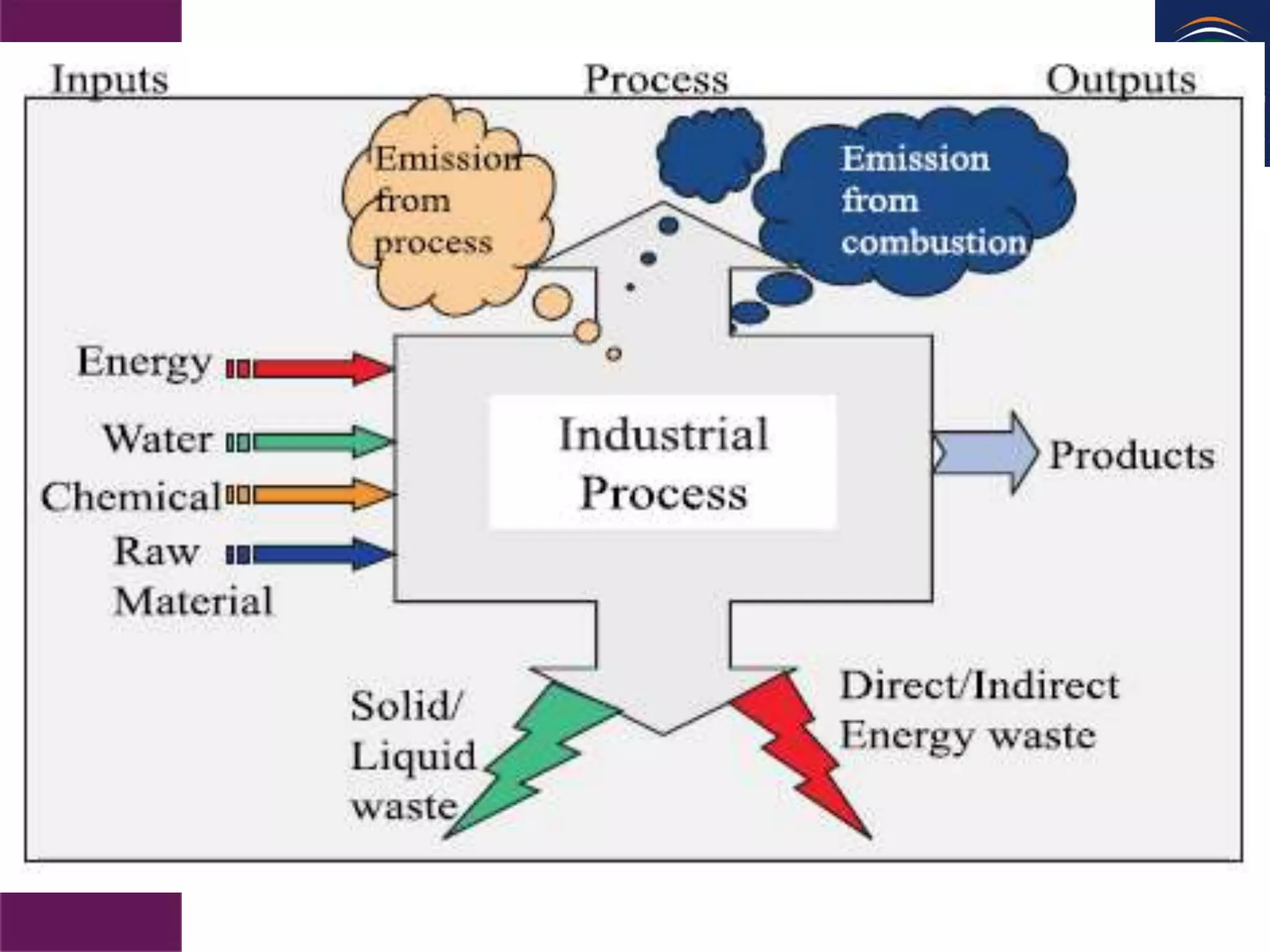
• Usage of energy resources in industry leads to environmental damages by
polluting the atmosphere
• Major effects on:
1. Climatic conditions
2. Health problems
3. Aqua life
4. Green house effect – Global warming – Acid rain
Major air pollutants:
• SO2, NOX and CO emissions -- boilers and furnaces
• CFC emissions -- refrigerants use, etc.
• Toxic gases – chemical and fertilizers industries
• Particulate matter -- Cement plants and power plants
• Known or suspected harmful effects on human health and the
environment
• Basically the products of combustion from fossil fuel use
• Air pollutants from these sources may not only create problems near to
these sources but also can cause problems far away
• Can travel long distances, chemically react in the atmosphere to produce
secondary pollutants such as acid rain or ozone
• High levels of smoke and SO2 arising from the combustion of sulphur-
containing fossil fuels such as coal for domestic and industrial purposes
• Smog resulting from the combined effects of black smoke, sulphate / acid
aerosol and fog
• Traffic emissions -- Petrol and diesel- engined motor vehicles emit a wide
variety of pollutants –CO, NOx, VOCs and particulates
• Photochemical reactions resulting from the action of sunlight on NO2 and
VOCs from vehicles -- formation of ozone, a secondary long-range
pollutant impacts in rural areas often far from the original emission site
• Acid rain is another long-range pollutant influenced by vehicle NOx
emissions
• Principle pollutants produced by industrial, domestic and traffic sources
are sulphur dioxide, nitrogen oxides, particulate matter, carbon monoxide,
ozone, hydrocarbons, benzene, 1,3-butadiene, toxic organic micro
pollutants, lead and heavy metals
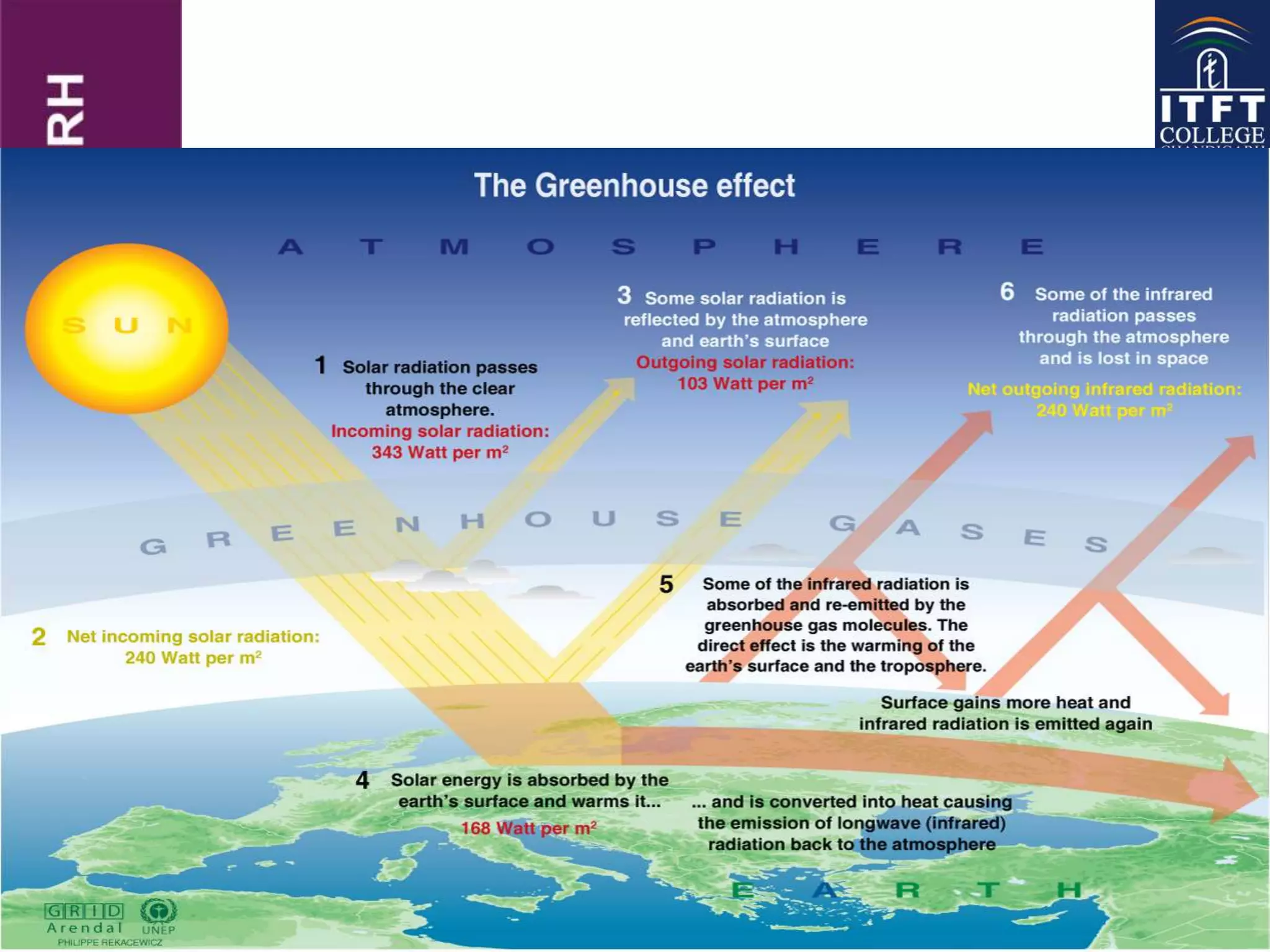
• Human activities, particularly the combustion of fossil fuels, have made
the blanket of greenhouse gases (water vapour, carbon dioxide, methane,
ozone etc.) around the earth thicker
• The resulting increase in global temperature is altering the complex web
of systems that allow life to thrive on earth such as rainfall, wind patterns,
ocean currents and distribution of plant and animal species
• GHGs keep the earth 30 degrees warmer than it would be otherwise
• Human activities that are responsible for making the greenhouse layer
thicker are emissions of carbon dioxide from the combustion of coal, oil
and natural gas
• Carbon dioxide is responsible for 60% of the "enhanced greenhouse
effect“
• Carbon dioxide levels in the atmospheric are rising by over 10% every 20
years
• Minimum predicted shifts in climate are likely to be significant and
disruptive
• The global temperature may climb from 1.4 to 5.8 degrees C
• The sea level may rise from 9 to 88 cm
• Severe storms and floods
• Food shortages
• Dwindling freshwater supply
• Loss of biodiversity
• Increased diseases
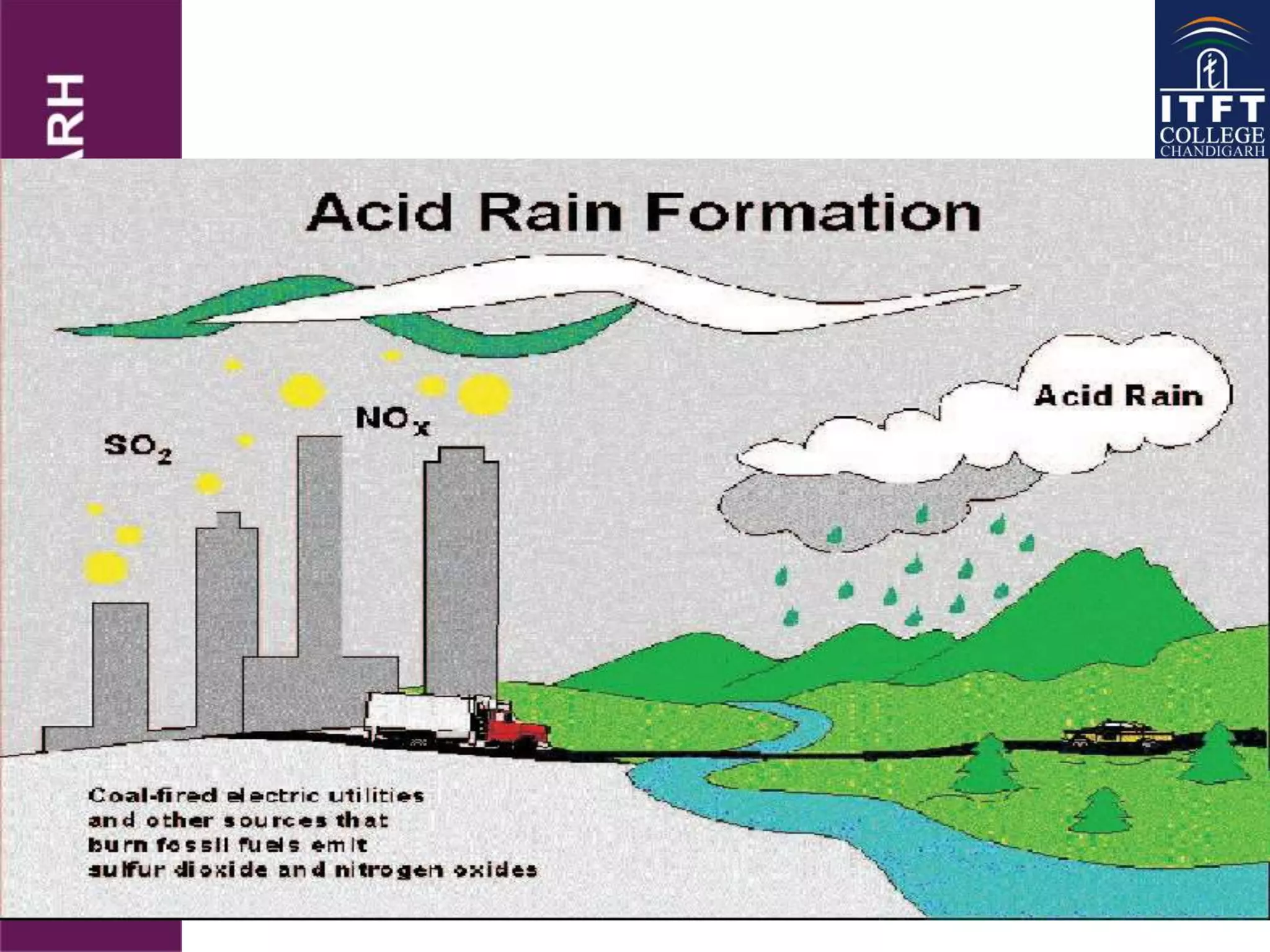
• Caused by release of SOX and NOX from combustion of fossil fuels, which
then mix with water vapour in atmosphere to form sulphuric and nitric
acids respectively
Effects:
• Acidification of lakes, streams, and soils
• Direct and indirect effects
• Killing of wildlife
• Decay of building materials and paints, statues, and sculptures
• Health problems

Itft ecological balance

  • 2.
    • Usage ofenergy resources in industry leads to environmental damages by polluting the atmosphere • Major effects on: 1. Climatic conditions 2. Health problems 3. Aqua life 4. Green house effect – Global warming – Acid rain
  • 4.
    Major air pollutants: •SO2, NOX and CO emissions -- boilers and furnaces • CFC emissions -- refrigerants use, etc. • Toxic gases – chemical and fertilizers industries • Particulate matter -- Cement plants and power plants
  • 5.
    • Known orsuspected harmful effects on human health and the environment • Basically the products of combustion from fossil fuel use • Air pollutants from these sources may not only create problems near to these sources but also can cause problems far away • Can travel long distances, chemically react in the atmosphere to produce secondary pollutants such as acid rain or ozone
  • 6.
    • High levelsof smoke and SO2 arising from the combustion of sulphur- containing fossil fuels such as coal for domestic and industrial purposes • Smog resulting from the combined effects of black smoke, sulphate / acid aerosol and fog • Traffic emissions -- Petrol and diesel- engined motor vehicles emit a wide variety of pollutants –CO, NOx, VOCs and particulates
  • 7.
    • Photochemical reactionsresulting from the action of sunlight on NO2 and VOCs from vehicles -- formation of ozone, a secondary long-range pollutant impacts in rural areas often far from the original emission site • Acid rain is another long-range pollutant influenced by vehicle NOx emissions • Principle pollutants produced by industrial, domestic and traffic sources are sulphur dioxide, nitrogen oxides, particulate matter, carbon monoxide, ozone, hydrocarbons, benzene, 1,3-butadiene, toxic organic micro pollutants, lead and heavy metals
  • 8.
    • Human activities,particularly the combustion of fossil fuels, have made the blanket of greenhouse gases (water vapour, carbon dioxide, methane, ozone etc.) around the earth thicker • The resulting increase in global temperature is altering the complex web of systems that allow life to thrive on earth such as rainfall, wind patterns, ocean currents and distribution of plant and animal species
  • 10.
    • GHGs keepthe earth 30 degrees warmer than it would be otherwise • Human activities that are responsible for making the greenhouse layer thicker are emissions of carbon dioxide from the combustion of coal, oil and natural gas • Carbon dioxide is responsible for 60% of the "enhanced greenhouse effect“ • Carbon dioxide levels in the atmospheric are rising by over 10% every 20 years
  • 11.
    • Minimum predictedshifts in climate are likely to be significant and disruptive • The global temperature may climb from 1.4 to 5.8 degrees C • The sea level may rise from 9 to 88 cm • Severe storms and floods • Food shortages • Dwindling freshwater supply • Loss of biodiversity • Increased diseases
  • 13.
    • Caused byrelease of SOX and NOX from combustion of fossil fuels, which then mix with water vapour in atmosphere to form sulphuric and nitric acids respectively Effects: • Acidification of lakes, streams, and soils • Direct and indirect effects • Killing of wildlife • Decay of building materials and paints, statues, and sculptures • Health problems