Professor Virginia Rosete
Universidad Tecnológica de Cancún
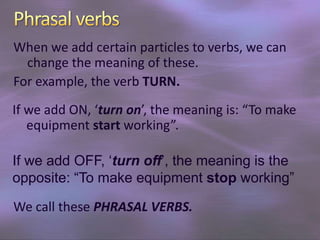
When we add certain particles to verbs, we can
change the meaning of these.
For example, the verb TURN.

If we add ON, ‘turn on’, the meaning is: “To make
equipment start working”.
If we add OFF, „turn off‟, the meaning is the
opposite: “To make equipment stop working”
We call these PHRASAL VERBS.
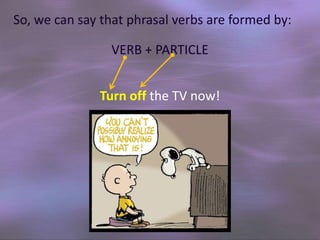
So, we can say that phrasal verbs are formed by:
VERB + PARTICLE
Turn off the TV now!
I have to pick out a nice dress for the party.
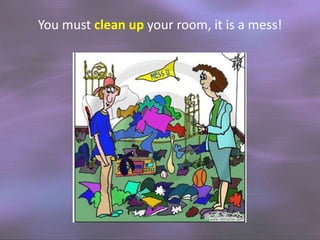
You must clean up your room, it is a mess!
Take off those tennis, they are too big for you.
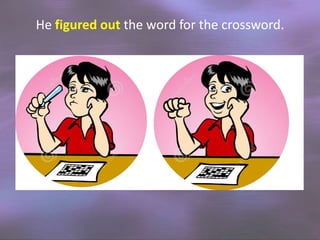
He figured out the word for the crossword.
The girls dressed up for tea time.
He is picking up the pen.

The bus will pick up my
daughter.
I have to hang up my blue suit.
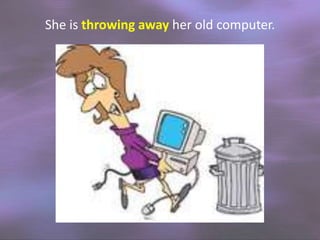
She is throwing away her old computer.
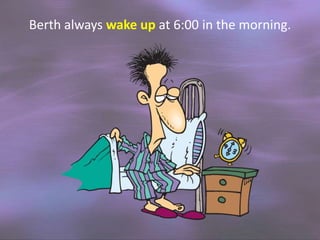
Berth always wake up at 6:00 in the morning.
Rita takes out her dog every morning.
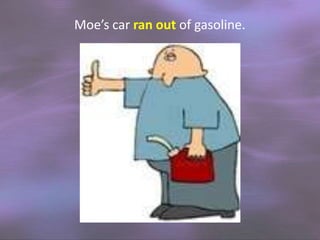
Moe’s car ran out of gasoline.
Wally is going to give away his toys.
When there is a direct object in a sentence, the
phrasal verb can be separated in its two
components.
For example, in the sentence
Turn off the TV please.
where TV is the object, we can simply switch
places:
Turn the TV off please.
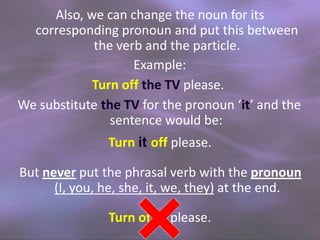
Also, we can change the noun for its
corresponding pronoun and put this between
the verb and the particle.
Example:
Turn off the TV please.
We substitute the TV for the pronoun ‘it’ and the
sentence would be:
Turn it off please.
But never put the phrasal verb with the pronoun
(I, you, he, she, it, we, they) at the end.

Turn off it please.
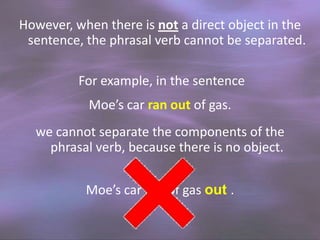
However, when there is not a direct object in the
sentence, the phrasal verb cannot be separated.
For example, in the sentence

Moe’s car ran out of gas.
we cannot separate the components of the
phrasal verb, because there is no object.
Moe’s car ran of gas out .
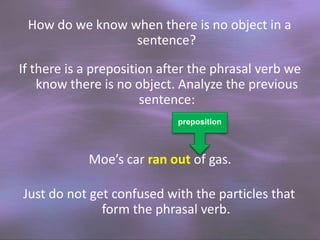
How do we know when there is no object in a
sentence?
If there is a preposition after the phrasal verb we
know there is no object. Analyze the previous
sentence:
preposition

Moe’s car ran out of gas.
Just do not get confused with the particles that
form the phrasal verb.
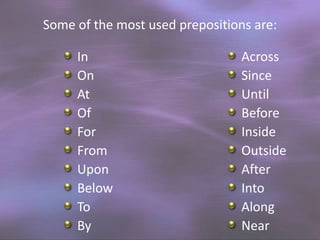
Some of the most used prepositions are:
In
On
At
Of
For
From
Upon
Below
To
By

Across
Since
Until
Before
Inside
Outside
After
Into
Along
Near
Write sentences with the phrasal verbs included
in this presentation.
For each sentence with an object write the
form with the object between the verb and the
particle.
Also, write a sentence with the pronoun for the
object between the two parts of the phrasal
verb.
If the sentence does not have an object,
underline the preposition.
Examples:
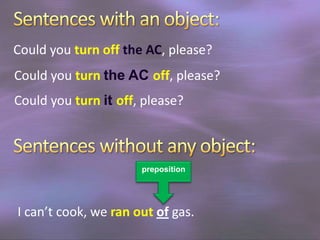
Could you turn off the AC, please?
Could you turn the AC off, please?
Could you turn it off, please?

preposition

I can’t cook, we ran out of gas.

Phrasal verbs

  • 1.
  • 2.
    When we addcertain particles to verbs, we can change the meaning of these. For example, the verb TURN. If we add ON, ‘turn on’, the meaning is: “To make equipment start working”. If we add OFF, „turn off‟, the meaning is the opposite: “To make equipment stop working” We call these PHRASAL VERBS.
  • 3.
    So, we cansay that phrasal verbs are formed by: VERB + PARTICLE Turn off the TV now!
  • 4.
    I have topick out a nice dress for the party.
  • 5.
    You must cleanup your room, it is a mess!
  • 6.
    Take off thosetennis, they are too big for you.
  • 7.
    He figured outthe word for the crossword.
  • 8.
    The girls dressedup for tea time.
  • 9.
    He is pickingup the pen. The bus will pick up my daughter.
  • 10.
    I have tohang up my blue suit.
  • 11.
    She is throwingaway her old computer.
  • 12.
    Berth always wakeup at 6:00 in the morning.
  • 13.
    Rita takes outher dog every morning.
  • 14.
    Moe’s car ranout of gasoline.
  • 15.
    Wally is goingto give away his toys.
  • 16.
    When there isa direct object in a sentence, the phrasal verb can be separated in its two components. For example, in the sentence Turn off the TV please. where TV is the object, we can simply switch places: Turn the TV off please.
  • 17.
    Also, we canchange the noun for its corresponding pronoun and put this between the verb and the particle. Example: Turn off the TV please. We substitute the TV for the pronoun ‘it’ and the sentence would be: Turn it off please. But never put the phrasal verb with the pronoun (I, you, he, she, it, we, they) at the end. Turn off it please.
  • 18.
    However, when thereis not a direct object in the sentence, the phrasal verb cannot be separated. For example, in the sentence Moe’s car ran out of gas. we cannot separate the components of the phrasal verb, because there is no object. Moe’s car ran of gas out .
  • 19.
    How do weknow when there is no object in a sentence? If there is a preposition after the phrasal verb we know there is no object. Analyze the previous sentence: preposition Moe’s car ran out of gas. Just do not get confused with the particles that form the phrasal verb.
  • 20.
    Some of themost used prepositions are: In On At Of For From Upon Below To By Across Since Until Before Inside Outside After Into Along Near
  • 21.
    Write sentences withthe phrasal verbs included in this presentation. For each sentence with an object write the form with the object between the verb and the particle. Also, write a sentence with the pronoun for the object between the two parts of the phrasal verb. If the sentence does not have an object, underline the preposition. Examples:
  • 22.
    Could you turnoff the AC, please? Could you turn the AC off, please? Could you turn it off, please? preposition I can’t cook, we ran out of gas.