The Rules of Photography
Unit 57: Photography and Photographic Practice Terminology
P1, P2, M1, M2
ADD YOUR NAME HERE
Rule of thirds
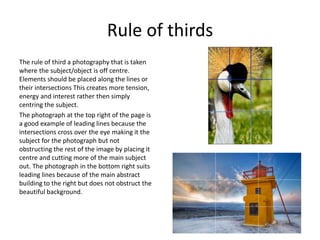
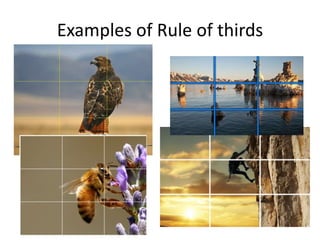
The rule of third a photography that is taken
where the subject/object is off centre.
Elements should be placed along the lines or
their intersections This creates more tension,
energy and interest rather then simply
centring the subject.
The photograph at the top right of the page is
a good example of leading lines because the
intersections cross over the eye making it the
subject for the photograph but not
obstructing the rest of the image by placing it
centre and cutting more of the main subject
out. The photograph in the bottom right suits
leading lines because of the main abstract
building to the right but does not obstruct the
beautiful background.
Examples of Rule of thirds
Framing
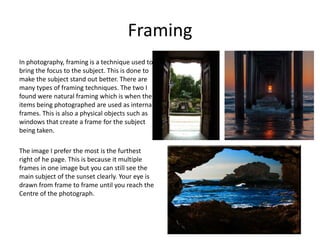
In photography, framing is a technique used to
bring the focus to the subject. This is done to
make the subject stand out better. There are
many types of framing techniques. The two I
found were natural framing which is when the
items being photographed are used as internal
frames. This is also a physical objects such as
windows that create a frame for the subject
being taken.
The image I prefer the most is the furthest
right of he page. This is because it multiple
frames in one image but you can still see the
main subject of the sunset clearly. Your eye is
drawn from frame to frame until you reach the
Centre of the photograph.
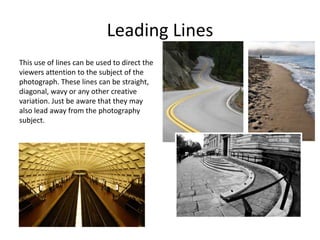
Leading Lines
This use of lines can be used to direct the
viewers attention to the subject of the
photograph. These lines can be straight,
diagonal, wavy or any other creative
variation. Just be aware that they may
also lead away from the photography
subject.
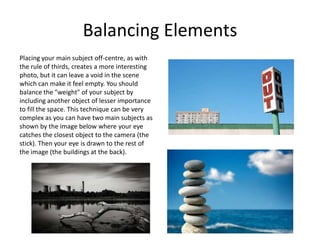
Balancing Elements
Placing your main subject off-centre, as with
the rule of thirds, creates a more interesting
photo, but it can leave a void in the scene
which can make it feel empty. You should
balance the "weight" of your subject by
including another object of lesser importance
to fill the space. This technique can be very
complex as you can have two main subjects as
shown by the image below where your eye
catches the closest object to the camera (the
stick). Then your eye is drawn to the rest of
the image (the buildings at the back).
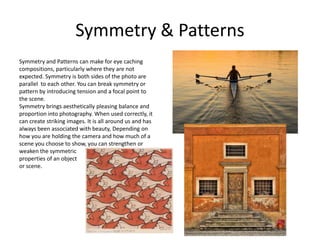
Symmetry & Patterns
Symmetry and Patterns can make for eye caching
compositions, particularly where they are not
expected. Symmetry is both sides of the photo are
parallel to each other. You can break symmetry or
pattern by introducing tension and a focal point to
the scene.
Symmetry brings aesthetically pleasing balance and
proportion into photography. When used correctly, it
can create striking images. It is all around us and has
always been associated with beauty, Depending on
how you are holding the camera and how much of a
scene you choose to show, you can strengthen or
weaken the symmetric
properties of an object
or scene.
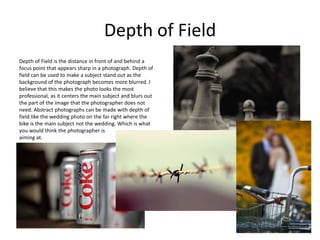
Depth of Field
Depth of Field is the distance in front of and behind a
focus point that appears sharp in a photograph. Depth of
field can be used to make a subject stand out as the
background of the photograph becomes more blurred. I
believe that this makes the photo looks the most
professional, as it centers the main subject and blurs out
the part of the image that the photographer does not
need. Abstract photographs can be made with depth of
field like the wedding photo on the far right where the
bike is the main subject not the wedding. Which is what
you would think the photographer is
aiming at.

Photography rules powerpoint

  • 1.
    The Rules ofPhotography Unit 57: Photography and Photographic Practice Terminology P1, P2, M1, M2 ADD YOUR NAME HERE
  • 2.
    Rule of thirds Therule of third a photography that is taken where the subject/object is off centre. Elements should be placed along the lines or their intersections This creates more tension, energy and interest rather then simply centring the subject. The photograph at the top right of the page is a good example of leading lines because the intersections cross over the eye making it the subject for the photograph but not obstructing the rest of the image by placing it centre and cutting more of the main subject out. The photograph in the bottom right suits leading lines because of the main abstract building to the right but does not obstruct the beautiful background.
  • 3.
  • 4.
    Framing In photography, framingis a technique used to bring the focus to the subject. This is done to make the subject stand out better. There are many types of framing techniques. The two I found were natural framing which is when the items being photographed are used as internal frames. This is also a physical objects such as windows that create a frame for the subject being taken. The image I prefer the most is the furthest right of he page. This is because it multiple frames in one image but you can still see the main subject of the sunset clearly. Your eye is drawn from frame to frame until you reach the Centre of the photograph.
  • 5.
    Leading Lines This useof lines can be used to direct the viewers attention to the subject of the photograph. These lines can be straight, diagonal, wavy or any other creative variation. Just be aware that they may also lead away from the photography subject.
  • 6.
    Balancing Elements Placing yourmain subject off-centre, as with the rule of thirds, creates a more interesting photo, but it can leave a void in the scene which can make it feel empty. You should balance the "weight" of your subject by including another object of lesser importance to fill the space. This technique can be very complex as you can have two main subjects as shown by the image below where your eye catches the closest object to the camera (the stick). Then your eye is drawn to the rest of the image (the buildings at the back).
  • 7.
    Symmetry & Patterns Symmetryand Patterns can make for eye caching compositions, particularly where they are not expected. Symmetry is both sides of the photo are parallel to each other. You can break symmetry or pattern by introducing tension and a focal point to the scene. Symmetry brings aesthetically pleasing balance and proportion into photography. When used correctly, it can create striking images. It is all around us and has always been associated with beauty, Depending on how you are holding the camera and how much of a scene you choose to show, you can strengthen or weaken the symmetric properties of an object or scene.
  • 8.
    Depth of Field Depthof Field is the distance in front of and behind a focus point that appears sharp in a photograph. Depth of field can be used to make a subject stand out as the background of the photograph becomes more blurred. I believe that this makes the photo looks the most professional, as it centers the main subject and blurs out the part of the image that the photographer does not need. Abstract photographs can be made with depth of field like the wedding photo on the far right where the bike is the main subject not the wedding. Which is what you would think the photographer is aiming at.