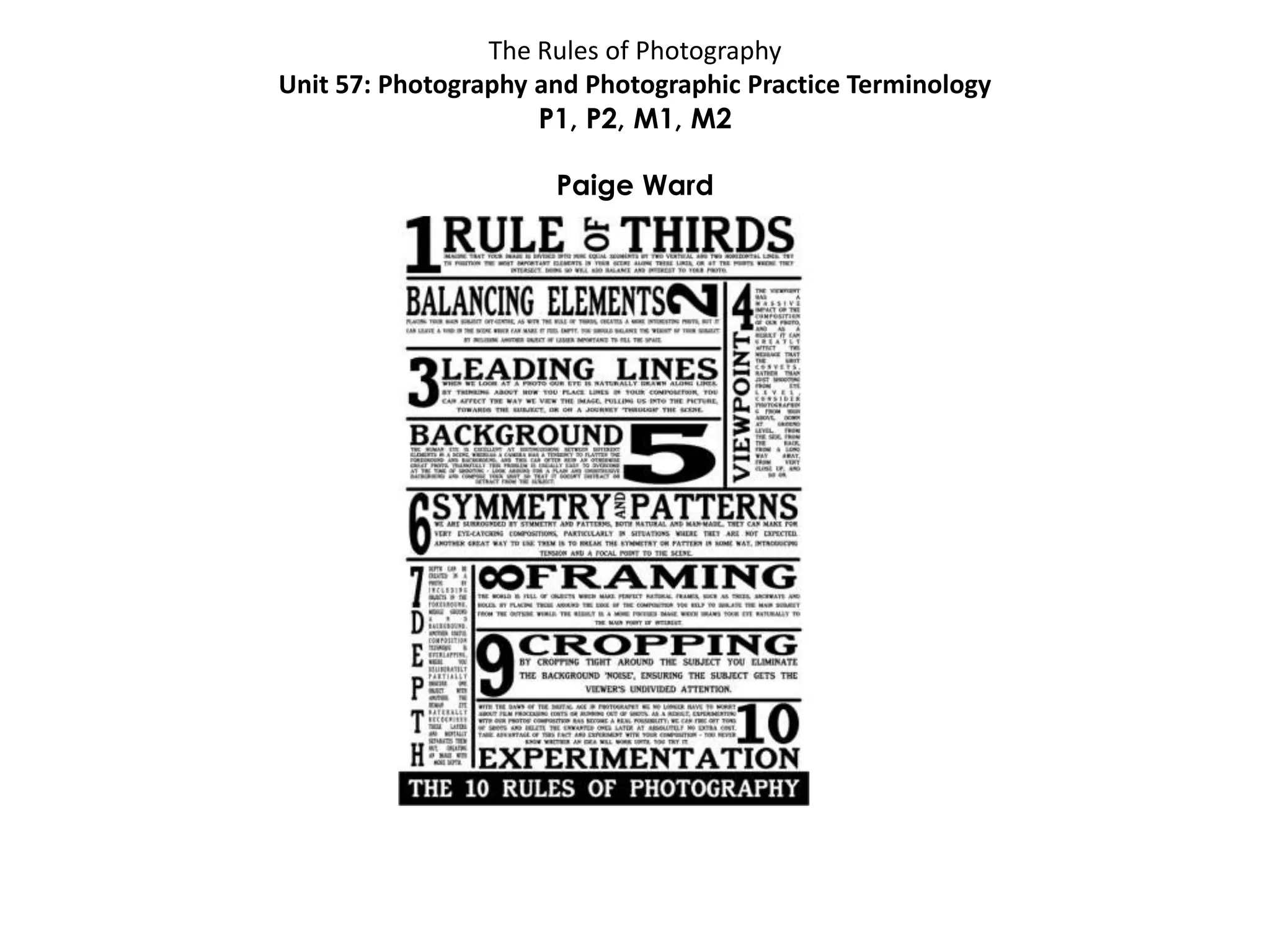
The Rules of Photography
Unit 57: Photography and Photographic Practice Terminology
P1, P2, M1, M2
Paige Ward
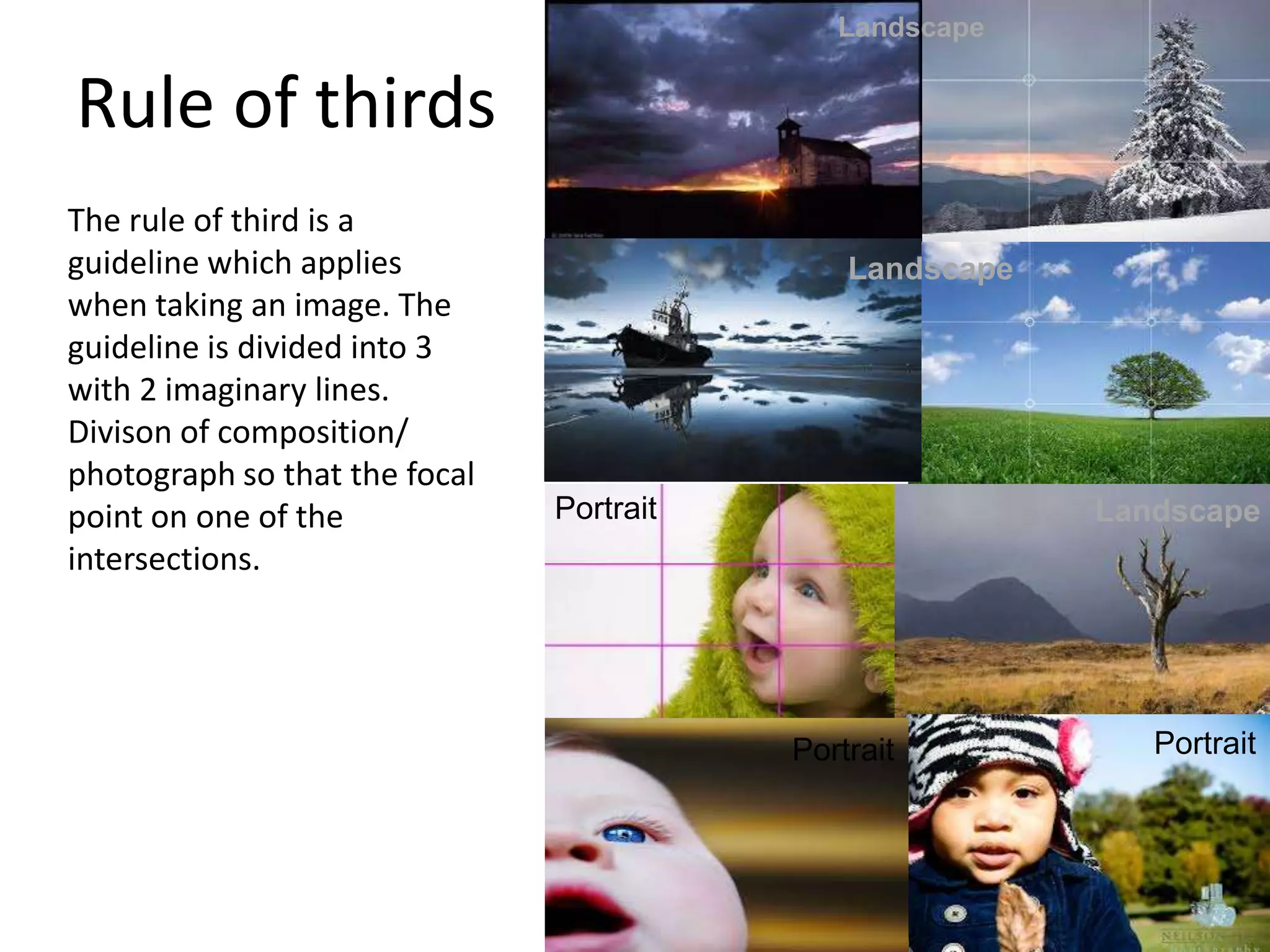
Rule of thirds
The rule of third is a
guideline which applies
when taking an image. The
guideline is divided into 3
with 2 imaginary lines.
Divison of composition/
photograph so that the focal
point on one of the
intersections.
Landscape
Landscape
LandscapePortrait
Portrait Portrait
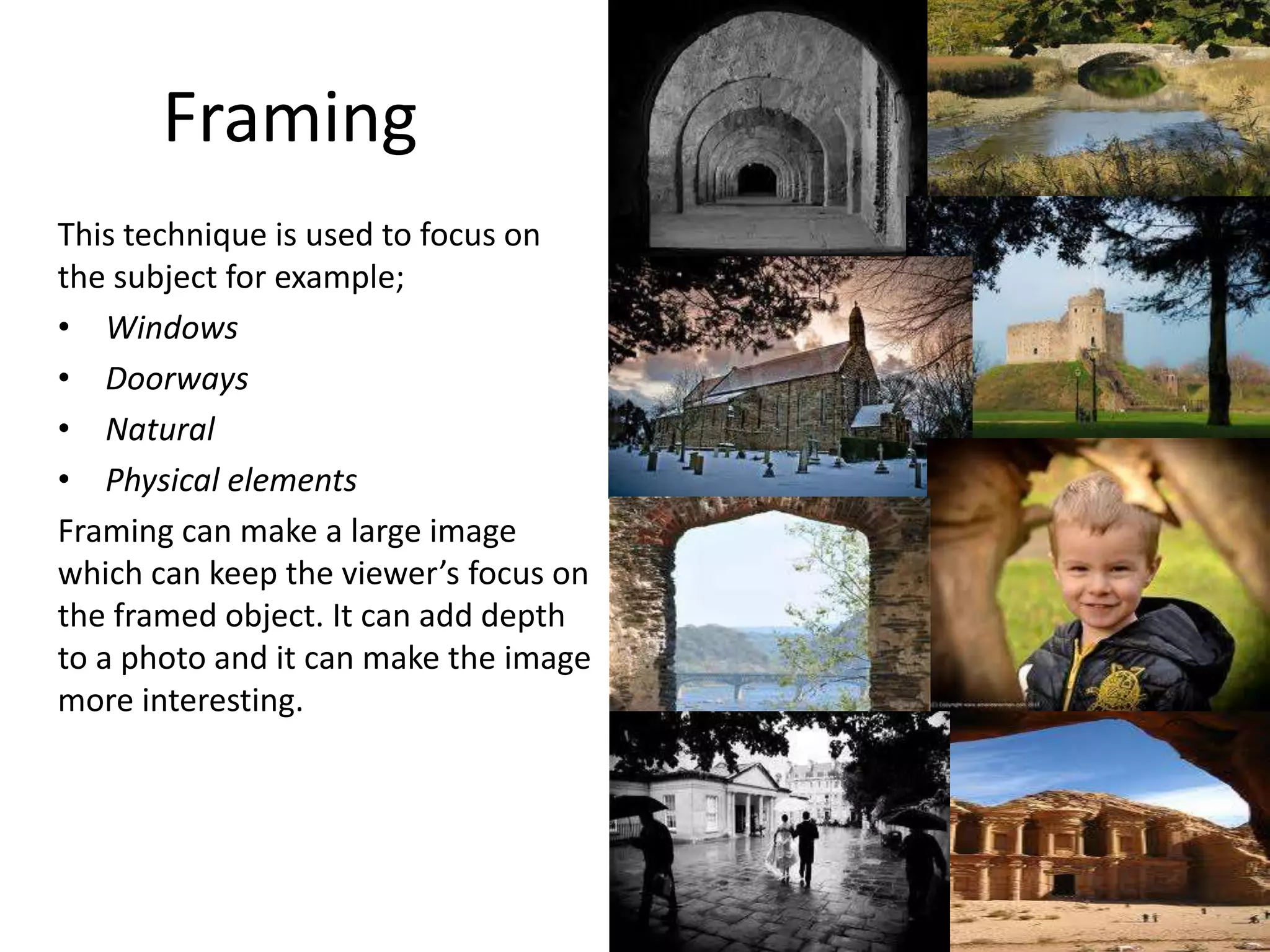
Framing
This technique is used to focus on
the subject for example;
• Windows
• Doorways
• Natural
• Physical elements
Framing can make a large image
which can keep the viewer’s focus on
the framed object. It can add depth
to a photo and it can make the image
more interesting.
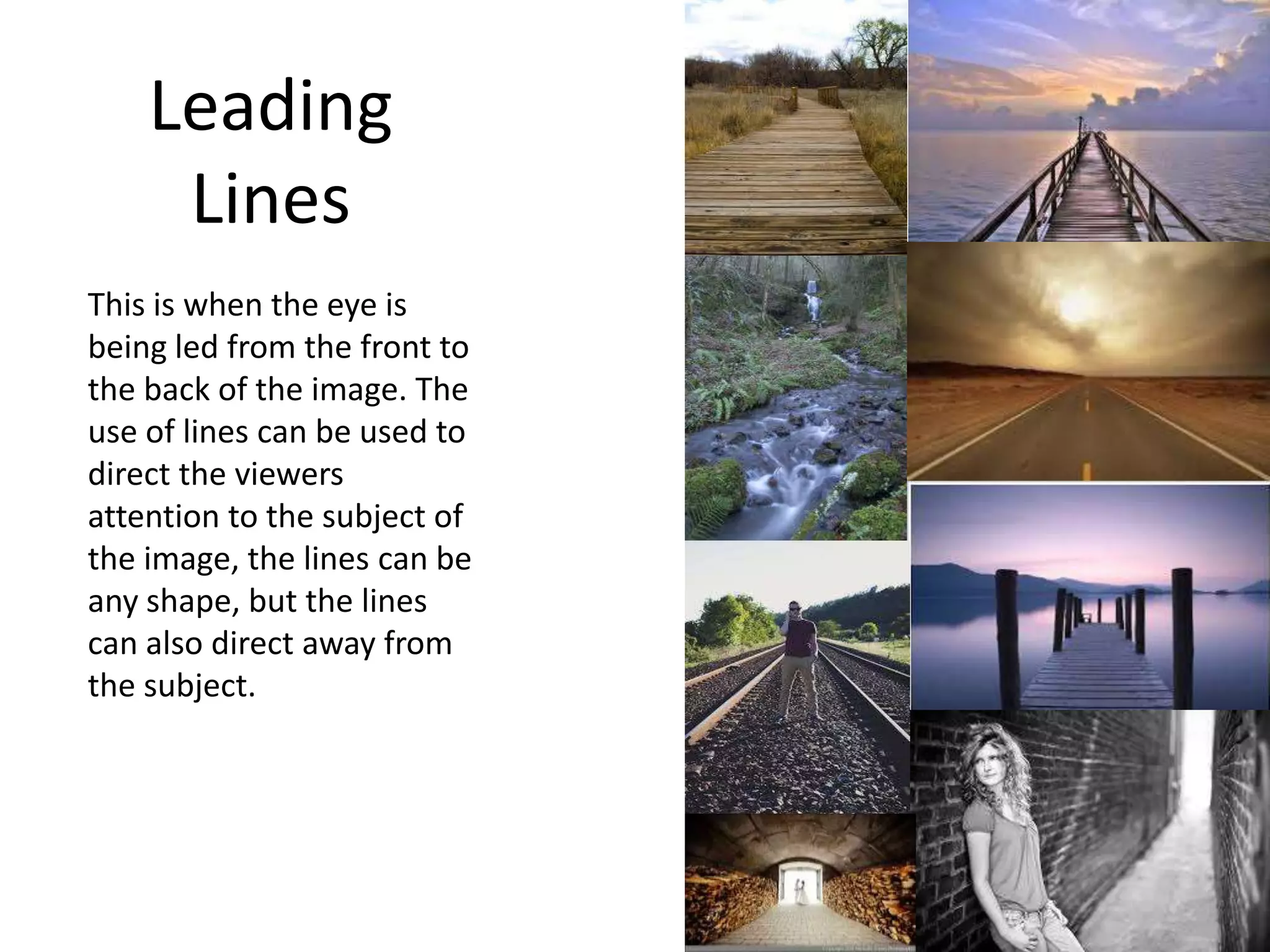
Leading
Lines
This is when the eye is
being led from the front to
the back of the image. The
use of lines can be used to
direct the viewers
attention to the subject of
the image, the lines can be
any shape, but the lines
can also direct away from
the subject.
Balancing
Elements
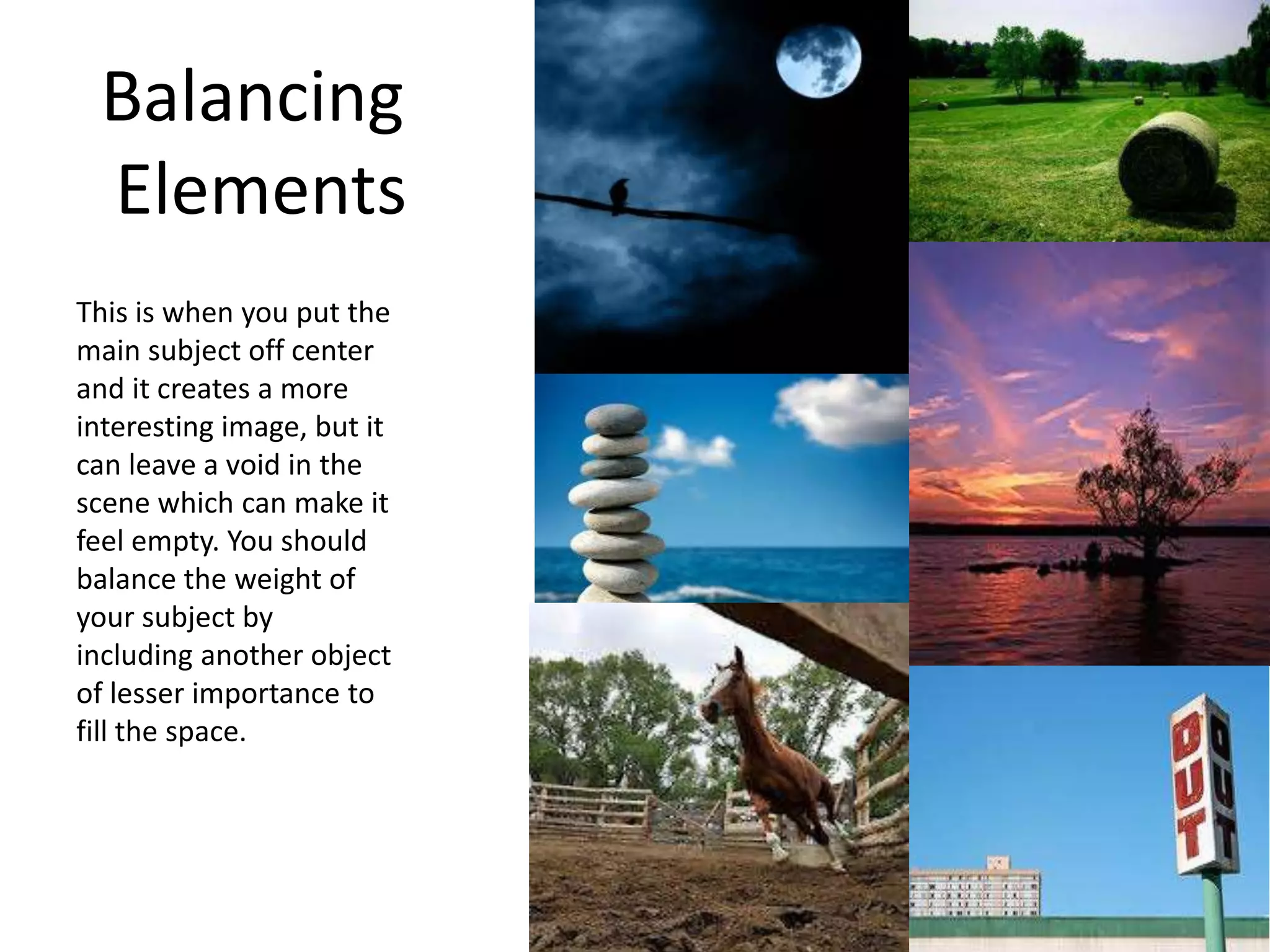
This is when you put the
main subject off center
and it creates a more
interesting image, but it
can leave a void in the
scene which can make it
feel empty. You should
balance the weight of
your subject by
including another object
of lesser importance to
fill the space.
Symmetry &
Patterns
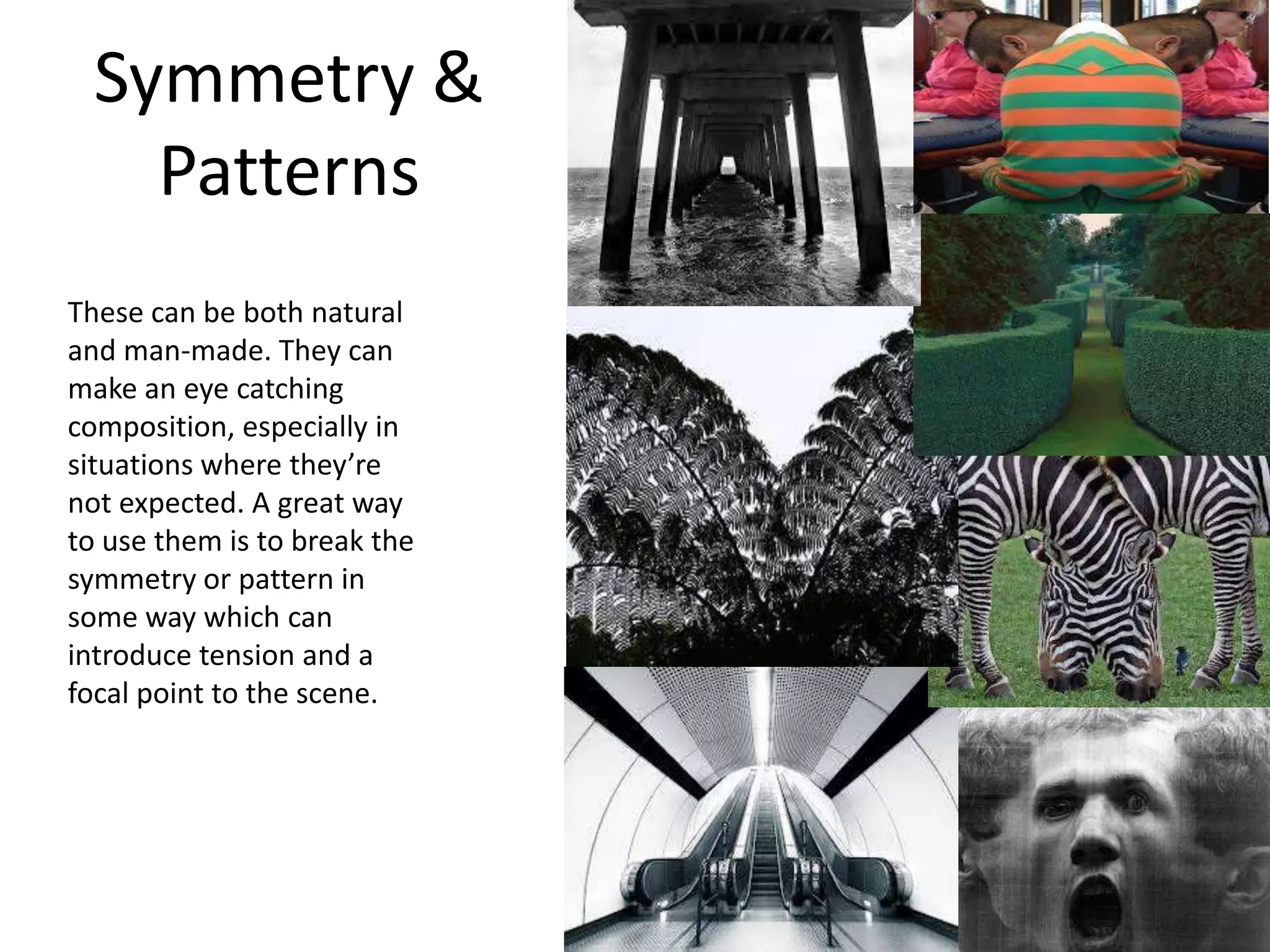
These can be both natural
and man-made. They can
make an eye catching
composition, especially in
situations where they’re
not expected. A great way
to use them is to break the
symmetry or pattern in
some way which can
introduce tension and a
focal point to the scene.
Depth of
Field
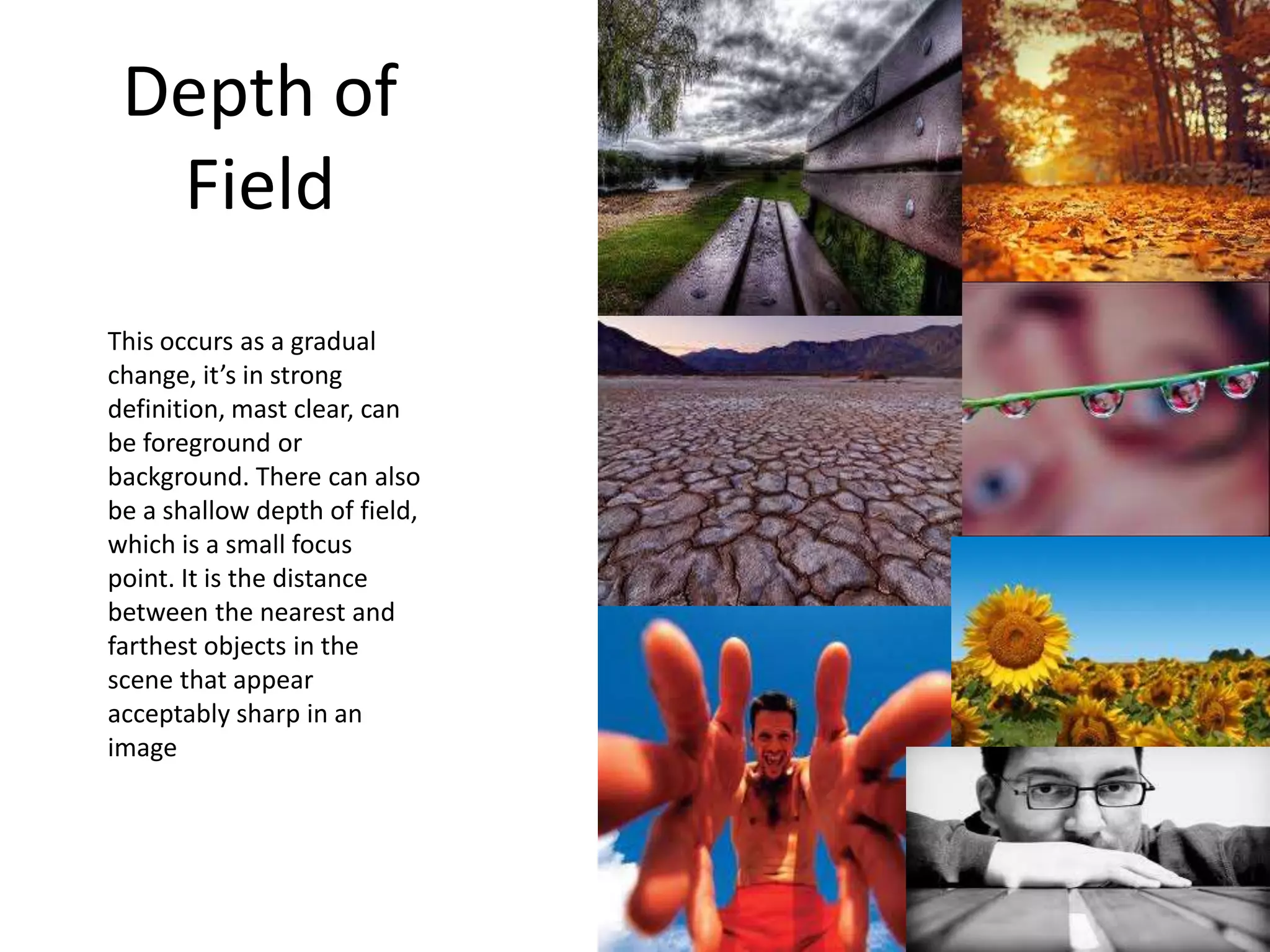
This occurs as a gradual
change, it’s in strong
definition, mast clear, can
be foreground or
background. There can also
be a shallow depth of field,
which is a small focus
point. It is the distance
between the nearest and
farthest objects in the
scene that appear
acceptably sharp in an
image

Task2 photography rules.

  • 1.
    The Rules ofPhotography Unit 57: Photography and Photographic Practice Terminology P1, P2, M1, M2 Paige Ward
  • 2.
    Rule of thirds Therule of third is a guideline which applies when taking an image. The guideline is divided into 3 with 2 imaginary lines. Divison of composition/ photograph so that the focal point on one of the intersections. Landscape Landscape LandscapePortrait Portrait Portrait
  • 3.
    Framing This technique isused to focus on the subject for example; • Windows • Doorways • Natural • Physical elements Framing can make a large image which can keep the viewer’s focus on the framed object. It can add depth to a photo and it can make the image more interesting.
  • 4.
    Leading Lines This is whenthe eye is being led from the front to the back of the image. The use of lines can be used to direct the viewers attention to the subject of the image, the lines can be any shape, but the lines can also direct away from the subject.
  • 5.
    Balancing Elements This is whenyou put the main subject off center and it creates a more interesting image, but it can leave a void in the scene which can make it feel empty. You should balance the weight of your subject by including another object of lesser importance to fill the space.
  • 6.
    Symmetry & Patterns These canbe both natural and man-made. They can make an eye catching composition, especially in situations where they’re not expected. A great way to use them is to break the symmetry or pattern in some way which can introduce tension and a focal point to the scene.
  • 7.
    Depth of Field This occursas a gradual change, it’s in strong definition, mast clear, can be foreground or background. There can also be a shallow depth of field, which is a small focus point. It is the distance between the nearest and farthest objects in the scene that appear acceptably sharp in an image