Presented By:-
Ayush kumar Yadav
Roll No:- 22/1052
Course:- Ba(Hons)
Economics
Introduction
Brief explanation of what the Constitution is and its purpose.
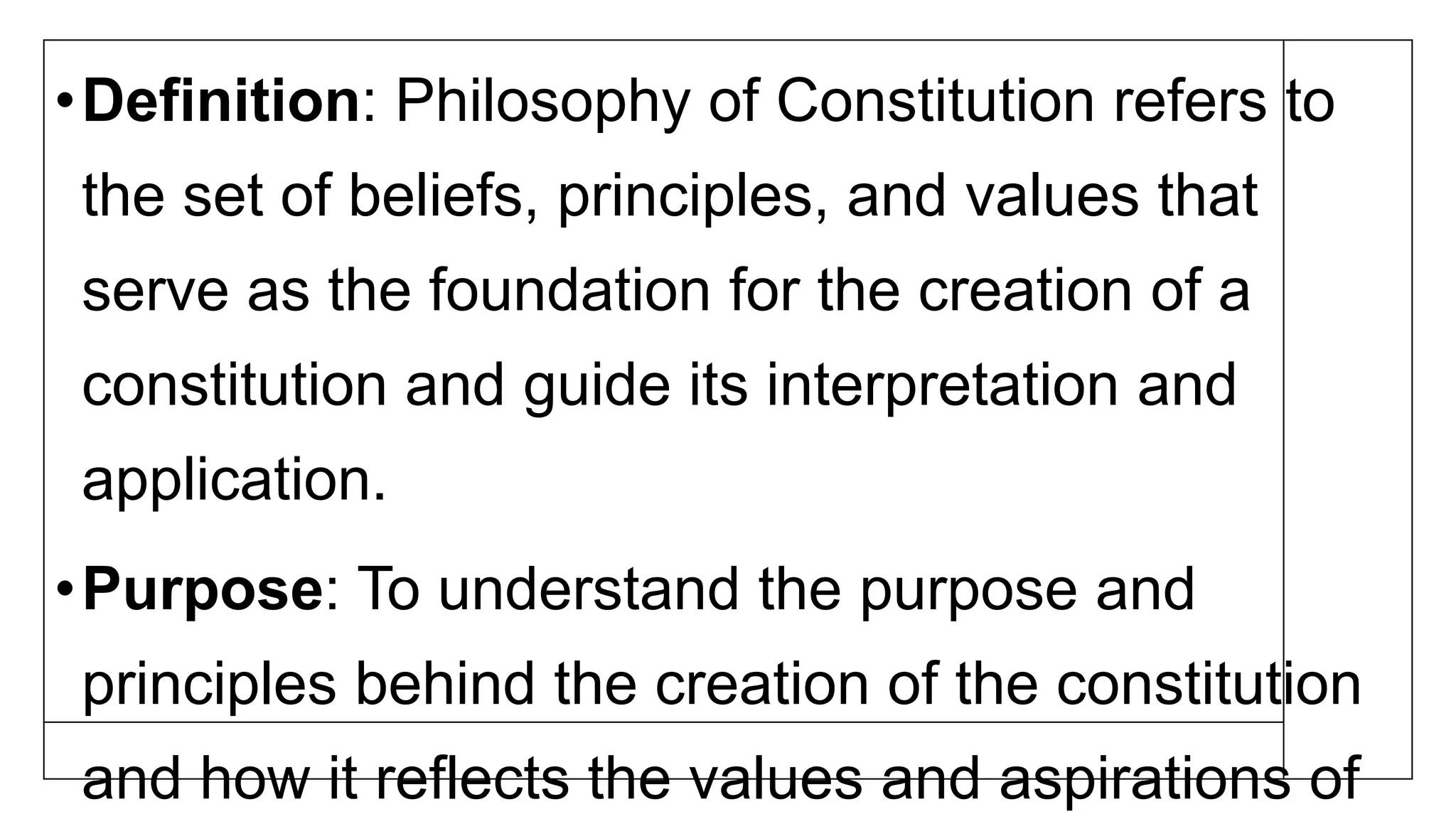
•Definition: Philosophy of Constitution refers to
the set of beliefs, principles, and values that
serve as the foundation for the creation of a
constitution and guide its interpretation and
application.
•Purpose: To understand the purpose and
principles behind the creation of the constitution
and how it reflects the values and aspirations of
Popular sovereignty
• Definition of the principle of popular sovereignty.
• Explanation of how the American Revolution led to the adoption of
this principle.
• Explanation of the role of popular sovereignty in the creation of the
Constitution.
• Explanation of how the principle of popular sovereignty continues to
play a role in American political life today.
Separation of power
• Definition of the principle of separation of powers.
• Explanation of how the principle of separation of powers originated
from the works of political philosophers like Montesquieu.
• Explanation of how the principle of separation of powers is
implemented in the Constitution through the creation of three
branches of government (legislative, executive, and judicial).
• Explanation of how the principle of separation of powers works in
practice, including examples of checks and balances between the
branches.
Federalism
• Definition of the principle of federalism.
• Explanation of how the principle of federalism originated from the works of
political philosophers like John Locke.
• Explanation of how the principle of federalism is implemented in the
Constitution through the distribution of power between the national
government and state governments.
• Explanation of how the principle of federalism works in practice, including
examples of conflicts between the national government and state
governments over the distribution of power.
Limited government
• Definition of the principle of limited government.
• Explanation of how the principle of limited government originated from the
works of political philosophers like John Locke.
• Explanation of how the principle of limited government is implemented in
the Constitution through the enumeration of specific powers for the federal
government and the reservation of all other powers to the states or the
people.
• Explanation of how the principle of limited government works in practice,
including examples of judicial interpretations of the Constitution to limit the
power of the federal government.
Individual rights
• Definition of the principle of individual rights.
• Explanation of how the principle of individual rights originated from the
works of political philosophers like John Locke.
• Explanation of how the principle of individual rights is implemented in
the Constitution through the recognition and protection of individual
rights, such as freedom of speech, religion, and press, through the Bill
of Rights.
• Explanation of how the principle of individual rights works in practice,
including examples of conflicts between individual rights and
Rule of law
• Definition of the principle of the rule of law.
• Explanation of how the principle of the rule of law originated from the
works of political philosophers like Aristotle.
• Explanation of how the principle of the rule of law is implemented in
the Constitution through the requirement that everyone, including
government officials, is subject to the law and equal protection under
it.
• Explanation of how the principle of the rule of law works in practice,
including examples of challenges to the rule of law and the role of the
Conclusion
Summary of the key philosophical
principles underlying the Constitution
and how they contribute to a
functioning democratic system.
Explanation of how these principles
continue to shape American political
life today.
Discussion of the ongoing relevance
of these principles for the future of
American democracy.

philosophy of Constitution. ppt.pptx

  • 2.
    Presented By:- Ayush kumarYadav Roll No:- 22/1052 Course:- Ba(Hons) Economics
  • 4.
    Introduction Brief explanation ofwhat the Constitution is and its purpose.
  • 5.
    •Definition: Philosophy ofConstitution refers to the set of beliefs, principles, and values that serve as the foundation for the creation of a constitution and guide its interpretation and application. •Purpose: To understand the purpose and principles behind the creation of the constitution and how it reflects the values and aspirations of
  • 6.
    Popular sovereignty • Definitionof the principle of popular sovereignty. • Explanation of how the American Revolution led to the adoption of this principle. • Explanation of the role of popular sovereignty in the creation of the Constitution. • Explanation of how the principle of popular sovereignty continues to play a role in American political life today.
  • 7.
    Separation of power •Definition of the principle of separation of powers. • Explanation of how the principle of separation of powers originated from the works of political philosophers like Montesquieu. • Explanation of how the principle of separation of powers is implemented in the Constitution through the creation of three branches of government (legislative, executive, and judicial). • Explanation of how the principle of separation of powers works in practice, including examples of checks and balances between the branches.
  • 8.
    Federalism • Definition ofthe principle of federalism. • Explanation of how the principle of federalism originated from the works of political philosophers like John Locke. • Explanation of how the principle of federalism is implemented in the Constitution through the distribution of power between the national government and state governments. • Explanation of how the principle of federalism works in practice, including examples of conflicts between the national government and state governments over the distribution of power.
  • 9.
    Limited government • Definitionof the principle of limited government. • Explanation of how the principle of limited government originated from the works of political philosophers like John Locke. • Explanation of how the principle of limited government is implemented in the Constitution through the enumeration of specific powers for the federal government and the reservation of all other powers to the states or the people. • Explanation of how the principle of limited government works in practice, including examples of judicial interpretations of the Constitution to limit the power of the federal government.
  • 10.
    Individual rights • Definitionof the principle of individual rights. • Explanation of how the principle of individual rights originated from the works of political philosophers like John Locke. • Explanation of how the principle of individual rights is implemented in the Constitution through the recognition and protection of individual rights, such as freedom of speech, religion, and press, through the Bill of Rights. • Explanation of how the principle of individual rights works in practice, including examples of conflicts between individual rights and
  • 11.
    Rule of law •Definition of the principle of the rule of law. • Explanation of how the principle of the rule of law originated from the works of political philosophers like Aristotle. • Explanation of how the principle of the rule of law is implemented in the Constitution through the requirement that everyone, including government officials, is subject to the law and equal protection under it. • Explanation of how the principle of the rule of law works in practice, including examples of challenges to the rule of law and the role of the
  • 13.
    Conclusion Summary of thekey philosophical principles underlying the Constitution and how they contribute to a functioning democratic system. Explanation of how these principles continue to shape American political life today. Discussion of the ongoing relevance of these principles for the future of American democracy.