PICK
AND
SPEA
Arrange the chairs in a
circle. The learners must pass
the box containing the pictures.
The learner who holds the box
when the music stops will pick a
picture. He/she will then
identify the objects, the states
of matter present and describe
the changes occurring in the
sample matter.
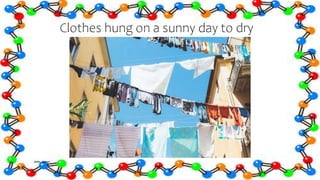
Clothes hung on a sunny day to dry
A cold glass of water
Butter in a frying pan
Water in plastic taken out of the freezer
OBJECTIVES
1.Differentiate the four types of
phase changes.
2.Illustrate the effect of changing
temperature to the arrangement
and motion of particles.
3.Cite ways on how to lessen the
impact of global warming that
to climate change.
PHASE CHANGES
OF
MATTER
CLASSROOM OBSERVATION 1
Guide Question:
From what you’ve seen in the video,
how did the rising temperature (more
heat) affect the motion and
arrangement of particles? How about
the falling temperature (less heat)?
LET’S PHASE IT!
The class will be divided into 4
groups. Each group will have an
indefinite number of learners
since they will accomplish the
task according to their
inclination. The learners must
Singing
The learners must choose a
melody of a certain song and they
must make their own lyrics to
describe what happens to the
particles during freezing.
Dancing
The learners must
interpret melting
through a dance.
Poetry
The learners must make a
poem about evaporation.
Drawing
The learners must draw
the particles of matter
during condensation.
GROUP PRESENTATION
(Each group will be given 2
minutes for the
presentation. Rubric for
scoring will be posted.)
Guide Questions:
 What form of energy is involved in
phase change?
 How does the addition and removal
of heat affect the movement of
particles?
 Does phase change involve changes
in the chemical structure of the
particles? Why do you say so?
EVALUATION
1. What is the change of state from
liquid to a solid?
a. Condensation c. Freezing
b. Evaporation d. Melting
2. Which of the following terms
identifies the change from a liquid to
gas?
a. Condensation c. Freezing
b. Evaporation d. Melting
3. When the temperature of matter increases
the particles _____________.
a. speed up and move closer
b. speed up and move farther apart
c. slow down and move farther apart
d. slow down and move closer together
4. When isopropyl alcohol was spilled over
the counter top and quickly disappeared,
what phase change occurred?
a. Boiling c. Evaporation
b. Condensation d. Sublimation
5. Global warming can be controlled by
_________________.
a. reducing deforestation and increasing use of fossil
fuel
b. reducing deforestation and cutting down use of
fossil fuel
c. increasing deforestation and reducing efficiency of
energy use
d. increasing deforestation and slowing down the
growth of human population
5. Global warming can be controlled by
_________________.
a. reducing deforestation and increasing use of fossil
fuel
b. reducing deforestation and cutting down use of
fossil fuel
c. increasing deforestation and reducing efficiency of
energy use
d. increasing deforestation and slowing down the
growth of human population
“MY PLEDGE TO HELP SLOW DOWN GLOBAL
WARMING”
The following are some of the most common environmental
problems caused by global warming. Choose one from the list.
Look for a picture of your chosen environmental problem and
create your own pledge on how you can help lessen the impact.
You may paste the picture in a long bond paper with your
written pledge.
Choose one:
1. Melting of ice glaciers
2. Increased evaporation/great loss of soil moisture (El Niño)
3. Increased condensation (La Niña)
THANK
YOU!

PHASE CHANGE.pptx

  • 2.
  • 3.
    Arrange the chairsin a circle. The learners must pass the box containing the pictures. The learner who holds the box when the music stops will pick a picture. He/she will then identify the objects, the states of matter present and describe the changes occurring in the sample matter.
  • 4.
    Clothes hung ona sunny day to dry
  • 5.
    A cold glassof water
  • 6.
    Butter in afrying pan
  • 7.
    Water in plastictaken out of the freezer
  • 8.
    OBJECTIVES 1.Differentiate the fourtypes of phase changes. 2.Illustrate the effect of changing temperature to the arrangement and motion of particles. 3.Cite ways on how to lessen the impact of global warming that to climate change.
  • 9.
  • 11.
    Guide Question: From whatyou’ve seen in the video, how did the rising temperature (more heat) affect the motion and arrangement of particles? How about the falling temperature (less heat)?
  • 12.
    LET’S PHASE IT! Theclass will be divided into 4 groups. Each group will have an indefinite number of learners since they will accomplish the task according to their inclination. The learners must
  • 13.
    Singing The learners mustchoose a melody of a certain song and they must make their own lyrics to describe what happens to the particles during freezing.
  • 14.
    Dancing The learners must interpretmelting through a dance.
  • 15.
    Poetry The learners mustmake a poem about evaporation.
  • 16.
    Drawing The learners mustdraw the particles of matter during condensation.
  • 17.
    GROUP PRESENTATION (Each groupwill be given 2 minutes for the presentation. Rubric for scoring will be posted.)
  • 18.
    Guide Questions:  Whatform of energy is involved in phase change?  How does the addition and removal of heat affect the movement of particles?  Does phase change involve changes in the chemical structure of the particles? Why do you say so?
  • 20.
  • 21.
    1. What isthe change of state from liquid to a solid? a. Condensation c. Freezing b. Evaporation d. Melting 2. Which of the following terms identifies the change from a liquid to gas? a. Condensation c. Freezing b. Evaporation d. Melting
  • 22.
    3. When thetemperature of matter increases the particles _____________. a. speed up and move closer b. speed up and move farther apart c. slow down and move farther apart d. slow down and move closer together 4. When isopropyl alcohol was spilled over the counter top and quickly disappeared, what phase change occurred? a. Boiling c. Evaporation b. Condensation d. Sublimation
  • 23.
    5. Global warmingcan be controlled by _________________. a. reducing deforestation and increasing use of fossil fuel b. reducing deforestation and cutting down use of fossil fuel c. increasing deforestation and reducing efficiency of energy use d. increasing deforestation and slowing down the growth of human population
  • 24.
    5. Global warmingcan be controlled by _________________. a. reducing deforestation and increasing use of fossil fuel b. reducing deforestation and cutting down use of fossil fuel c. increasing deforestation and reducing efficiency of energy use d. increasing deforestation and slowing down the growth of human population
  • 25.
    “MY PLEDGE TOHELP SLOW DOWN GLOBAL WARMING” The following are some of the most common environmental problems caused by global warming. Choose one from the list. Look for a picture of your chosen environmental problem and create your own pledge on how you can help lessen the impact. You may paste the picture in a long bond paper with your written pledge. Choose one: 1. Melting of ice glaciers 2. Increased evaporation/great loss of soil moisture (El Niño) 3. Increased condensation (La Niña)
  • 26.