Drug Distribution
System in a
Hospital
Dispensing of
Medications to
Inpatients: Ensuring
Patient Safety
Medication Order Entry
Physicians generate medication orders
based on treatment plans.
Orders are entered into the hospital's
electronic health record (EHR) system.
Pharmacist Review
- Pharmacists review orders for
accuracy, interactions, allergies, and
contraindications.
- Consultation with healthcare providers
may occur for clarification or
alternatives.
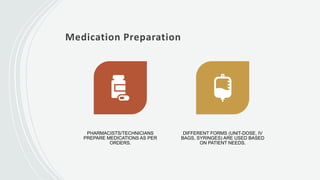
Medication Preparation
PHARMACISTS/TECHNICIANS
PREPARE MEDICATIONS AS PER
ORDERS.
DIFFERENT FORMS (UNIT-DOSE, IV
BAGS, SYRINGES) ARE USED BASED
ON PATIENT NEEDS.
Labeling and Packaging
Medications are labeled with patient details,
name, dosage, and administration instructions.
Barcodes enhance patient safety and electronic
documentation.
Medication Dispensing
Medications are organized for delivery to nursing
units.
Dispensing methods include unit-dose packaging
and automated dispensing cabinets.
Medication Delivery to Nursing Units
PHARMACY STAFF DELIVER
MEDICATIONS TO NURSING
UNITS.
NURSES CROSS-REFERENCE MEDICATIONS WITH
PATIENT IDENTIFICATION BEFORE ADMINISTERING.
Medication Administration
NURSES ADMINISTER MEDICATIONS BASED ON THE
PHYSICIAN'S ORDERS.
BARCODES ON PATIENT WRISTBANDS AND
MEDICATION PACKAGES ARE SCANNED
FOR VERIFICATION.
Electronic Medication Administration Record
(eMAR)
Nurses electronically document medication
administrations in the eMAR system.
Real-time tracking and reduced error risk are
benefits of electronic documentation.
Patient Education
Nurses and pharmacists educate patients about
medications, dosages, and side effects.
Patient understanding and compliance are crucial for
safe treatment.
Medication
Reconciliation
Medication lists are
reconciled during
admission, transfer,
and discharge.
Ensures accurate and
up-to-date medication
information.
Quality Assurance and Monitoring
Regular audits and quality checks maintain
adherence to medication dispensing processes.
Patient safety protocols are monitored and
improved.
Types of Drug
Distribution
Systems in
Hospitals
Unit Dose System
Medications are pre-packaged in
individual doses.
Enhances accuracy and reduces
the risk of errors.
Ideal for inpatient settings.
Automated Dispensing Cabinets (ADCs)
Secure storage units
on nursing floors.
Nurses access patient-
specific medications.
Convenient and
reduced wait time.
Floor Stock System
Commonly used medications stocked on nursing
units.
Immediate access for nurses.
Suitable for frequently administered drugs.
Decentralized Pharmacy System
Pharmacies on different units
provide medications.
Reduces transportation
time.
Efficient for large hospitals.
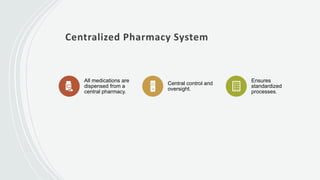
Centralized Pharmacy System
All medications are
dispensed from a
central pharmacy.
Central control and
oversight.
Ensures
standardized
processes.
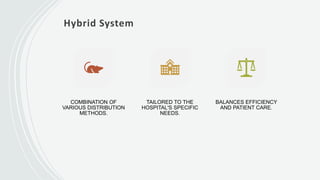
Hybrid System
COMBINATION OF
VARIOUS DISTRIBUTION
METHODS.
TAILORED TO THE
HOSPITAL'S SPECIFIC
NEEDS.
BALANCES EFFICIENCY
AND PATIENT CARE.
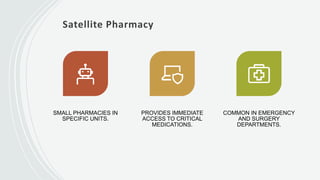
Satellite Pharmacy
SMALL PHARMACIES IN
SPECIFIC UNITS.
PROVIDES IMMEDIATE
ACCESS TO CRITICAL
MEDICATIONS.
COMMON IN EMERGENCY
AND SURGERY
DEPARTMENTS.
Unit Dose Cart System
Medications are organized in carts for
specific patients.
Efficient for medication rounds.
Reduces trips to the central pharmacy.
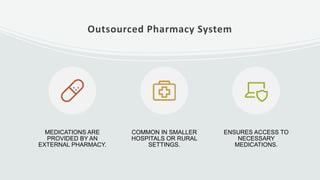
Outsourced Pharmacy System
MEDICATIONS ARE
PROVIDED BY AN
EXTERNAL PHARMACY.
COMMON IN SMALLER
HOSPITALS OR RURAL
SETTINGS.
ENSURES ACCESS TO
NECESSARY
MEDICATIONS.
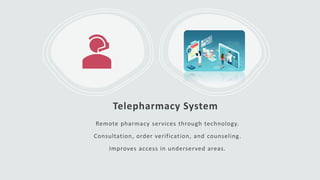
Telepharmacy System
Remote pharmacy services through technology.
Consultation, order verification, and counseling.
Improves access in underserved areas.
Take-Home Medication System
Patients receive discharge
medications.
Enhances transition to
home care.
Focuses on patient
education.
Charging
Policy
The charging policy in a hospital's drug distribution system involves
determining how patients are billed for medications and related services.
This may include:
1. Cost Calculation: Hospitals consider factors such as medication
acquisition costs, storage costs, and administration costs when
determining the price of medications.
2. Billing Method: Patients may be billed based on the actual cost of the
medication, a standardized fee, or a combination of both.
3. Insurance and Reimbursement: Hospitals work with insurance
companies to ensure proper reimbursement for medications provided to
insured patients.
4. Transparency: It’s essential to have a transparent charging policy that
patients can easily understand. Clear communication about costs can
help patients make informed decisions.
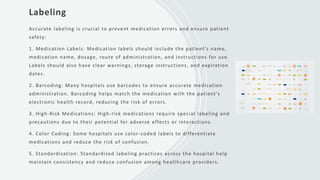
Labeling
Accurate labeling is crucial to prevent medication errors and ensure patient
safety:
1. Medication Labels: Medication labels should include the patient's name,
medication name, dosage, route of administration, and instructions for use.
Labels should also have clear warnings, storage instructions, and expiration
dates.
2. Barcoding: Many hospitals use barcodes to ensure accurate medication
administration. Barcoding helps match the medication with the patient's
electronic health record, reducing the risk of errors.
3. High-Risk Medications: High-risk medications require special labeling and
precautions due to their potential for adverse effects or interactions.
4. Color Coding: Some hospitals use color-coded labels to differentiate
medications and reduce the risk of confusion.
5. Standardization: Standardized labeling practices across the hospital help
maintain consistency and reduce confusion among healthcare providers.
Dispensing drugs to ambulatory
(outpatient) patients
Dispensing drugs to ambulatory (outpatient)
patients involves a different set of procedures
compared to inpatient settings. The goal is to
provide patients with the prescribed
medications safely, efficiently, and patient-
centered. Here's an overview of the dispensing
process for ambulatory patients:
Dispensing
of Drugs to
Ambulatory
Patients
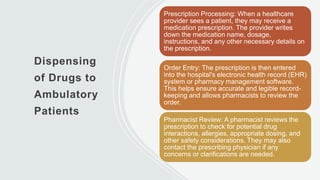
Prescription Processing: When a healthcare
provider sees a patient, they may receive a
medication prescription. The provider writes
down the medication name, dosage,
instructions, and any other necessary details on
the prescription.
Order Entry: The prescription is then entered
into the hospital's electronic health record (EHR)
system or pharmacy management software.
This helps ensure accurate and legible record-
keeping and allows pharmacists to review the
order.
Pharmacist Review: A pharmacist reviews the
prescription to check for potential drug
interactions, allergies, appropriate dosing, and
other safety considerations. They may also
contact the prescribing physician if any
concerns or clarifications are needed.
Dispensing of
Drugs to
Ambulatory
Patients
Medication Preparation: The
pharmacy prepares the medication
once the prescription is verified and
approved. This might involve
counting pills, measuring liquids, or
compounding specialized
formulations.
Labeling and Packaging: The
medication is labeled with the
patient's name, dosage instructions,
and other relevant information. It is
then packaged securely, often in a
labeled container or bag.
Dispensing of
Drugs to
Ambulatory
Patients
Dispensing: A pharmacist or
pharmacy technician dispenses the
medication to the patient. The patient
is provided counseling on taking the
medication, potential side effects, and
any necessary precautions.
Documentation: All interactions
related to medication dispensing,
including order entry, pharmacist
review, and patient counseling, are
documented in the patient's EHR or
pharmacy records.
Dispensing of
Controlled
Drugs
Dispensing controlled drugs requires additional
safeguards and regulatory compliance due to the potential
for misuse or abuse of these substances.
Dispensing of
Controlled
Drugs
Regulatory Compliance: Controlled substances are
regulated by federal and state laws. Hospitals must
adhere to strict protocols for storage, dispensing, record-
keeping, and reporting to regulatory agencies.
Specialized Storage: Controlled substances are often
stored in a separate, secure area with restricted access.
This area may have enhanced security measures such as
restricted keycard access and surveillance.
Auditing and Tracking: Hospitals must maintain detailed
records of controlled substances, including quantities
received, dispensed, and remaining. Regular audits are
conducted to ensure accuracy and detect any
discrepancies.
Dispensing of
Controlled
Drugs
Prescription Requirements:
Prescriptions for controlled
substances may have stricter
requirements, such as handwritten
prescriptions or electronic prescribing
with additional security measures.
Pharmacist Oversight: Pharmacists
play a crucial role in verifying the
legitimacy of controlled substance
prescriptions, checking patient
histories, and providing patient
education.
Dispensing of
Controlled
Drugs
Patient Monitoring: Patients
receiving controlled substances
may be subject to additional
monitoring to ensure proper
usage and detect any signs of
misuse or abuse.
Disposal: Proper disposal
procedures must be followed for
any unused or expired controlled
substances to prevent diversion
or environmental contamination.
Hospital
formulary
Definition
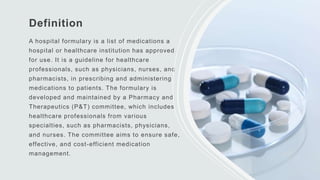
A hospital formulary is a list of medications a
hospital or healthcare institution has approved
for use. It is a guideline for healthcare
professionals, such as physicians, nurses, and
pharmacists, in prescribing and administering
medications to patients. The formulary is
developed and maintained by a Pharmacy and
Therapeutics (P&T) committee, which includes
healthcare professionals from various
specialties, such as pharmacists, physicians,
and nurses. The committee aims to ensure safe,
effective, and cost-efficient medication
management.
Contents of a
Hospital
Formulary
Drug List: A comprehensive list of
medications approved for use in the hospital.
This can include prescription drugs, over-the-
counter (OTC) medications, and medical
devices.
Dosage Guidelines: Recommended dosages
for each medication based on different
patient populations, conditions, and
indications.
Administration Instructions: Information on
how to properly administer each medication,
including routes of administration (e.g., oral,
intravenous), dilution, infusion rates, and
compatibility with other medications.
Contents of a
Hospital
Formulary
Indications and Contraindications:
Approved uses for each medication and
situations where the medication should
not be used due to safety concerns.
Drug Interactions: Information about
potential interactions between
medications that could lead to adverse
effects or reduced efficacy.
Adverse Effects: Common side effects
and adverse reactions associated with
each medication.
Contents of a
Hospital
Formulary
Monitoring Parameters:
Recommendations for monitoring
patients who are receiving specific
medications, including laboratory
tests and clinical assessments.
Cost Considerations: Information
about the cost of medications to
guide healthcare professionals in
making cost-effective decisions.
Therapeutic Alternatives: Other
medications that can be used as
alternatives if a particular medication
is unavailable or contraindicated.
Differentiatio
n of Hospital
Formulary
and Drug
List
While both a hospital formulary and a drug
list contain information about medications,
the main difference lies in the level of
detail and purpose. A hospital formulary
provides comprehensive information about
each medication, including guidelines for
use, dosing, interactions, and more. On
the other hand, a drug list is a simpler
compilation of medications available in the
hospital without the detailed guidelines
found in a formulary.
Preparation
and Revision
of a Hospital
Formulary
The P&T committee reviews available
medications and determines which
ones to include based on safety,
efficacy, and cost considerations.
The formulary is regularly reviewed
and updated to reflect new
medications, emerging evidence, and
changes in clinical practice.
Periodic assessments of specific drug
classes to ensure the most effective
and safe options are included in the
formulary.
Preparation and Revision
of a Hospital Formulary
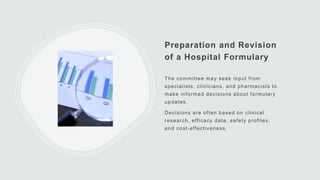
The committee may seek input from
specialists, clinicians, and pharmacists to
make informed decisions about formulary
updates.
Decisions are often based on clinical
research, efficacy data, safety profiles,
and cost-effectiveness.
Addition and Deletion of Drugs from the
Hospital Formulary
New medications may be added to the formulary after a thorough evaluation
by the P&T committee, considering factors such as clinical need, safety,
efficacy, and cost.
Medications may be removed from the formulary if they are no longer
considered safe, effective or if better alternatives are available.
Changes to the formulary, including additions or deletions, are
communicated to healthcare professionals to ensure they are aware of the
updates.
Therapeutic
Drug
Monitoring
Definition
Therapeutic Drug Monitoring (TDM) measures
drug concentrations in a patient's blood or other
body fluids to ensure that medication is
maintained within a therapeutic range. This
process allows healthcare professionals to
optimize drug dosages, minimize the risk of
toxicity, and enhance therapeutic outcomes.
TDM is especially important for drugs with a
narrow therapeutic window, where small
changes in dose can lead to either
ineffectiveness or toxicity.
Need for
Therapeutic
Drug
Monitoring
Patients can vary significantly in their
metabolism and response to medications
due to factors such as genetics, age, liver
and kidney function, and concurrent
medications.
Some drugs have a small difference
between a therapeutic dose and a toxic
dose. TDM helps ensure the drug remains
within the safe and effective range.
Patient-specific factors can influence how a
drug is absorbed, distributed, metabolized,
and eliminated. TDM helps adjust dosages
based on these factors.
Need for
Therapeutic
Drug
Monitoring
Concurrent use of multiple medications can
alter the pharmacokinetics of a drug, making
TDM essential to ensure proper dosing.
TDM can help detect early signs of drug-
related adverse effects, allowing adjustments
to be made before serious complications
arise.
TDM helps identify cases where a patient's
response to a medication is suboptimal,
allowing for timely dosage adjustments.
TDM contributes to achieving desired
therapeutic effects while minimizing the risk
of toxicity.
Factors to
Consider
During
Therapeutic
Drug
Monitoring
Each drug has a target
therapeutic range within
which its concentration is
considered effective and
safe.
Some drugs require
blood samples to be
collected at specific
times after dosing to
accurately reflect their
concentration.
The patient's clinical
condition, disease
severity, and coexisting
medical conditions can
influence TDM
interpretations.
Other drugs being taken
by the patient can impact
the pharmacokinetics
and pharmacodynamics
of the monitored drug.
Factors to
Consider
During
Therapeutic
Drug
Monitoring
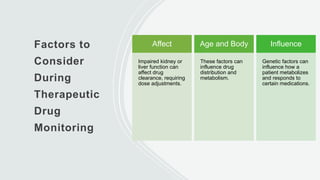
Affect
Impaired kidney or
liver function can
affect drug
clearance, requiring
dose adjustments.
Age and Body
These factors can
influence drug
distribution and
metabolism.
Influence
Genetic factors can
influence how a
patient metabolizes
and responds to
certain medications.
Indian Scenario for
Therapeutic Drug Monitoring
In India, therapeutic drug monitoring is
gaining recognition and importance as
healthcare practices evolve
Indian Scenario for Therapeutic
Drug Monitoring
TDM services are increasingly being offered in major hospitals
and medical institutions, particularly in urban areas.
The genetic and ethnic diversity of the Indian population can
contribute to variability in drug response, making TDM valuable.
Given the prevalence of tuberculosis (TB) in India, TDM is
commonly used for anti-TB medications to ensure efficacy and
minimize drug resistance.
Indian Scenario for Therapeutic
Drug Monitoring
TDM is important for optimizing dosages of
antiepileptic drugs, which are commonly prescribed in
India.
While TDM is growing, access to these services can be
limited in rural and underserved areas.
The regulatory framework for TDM in India is evolving,
with efforts to standardize guidelines and practices.
Medication
Adherence
Medication Adherence
Medication adherence, also known as medication
compliance, refers to the extent to which
patients take their medications as prescribed by
their healthcare providers. Adherence is crucial
for achieving optimal therapeutic outcomes and
preventing medication-related problems. Poor
medication adherence can lead to treatment
failure, disease progression, increased
healthcare costs, and decreased quality of life.
Causes of
Medication
Non-
Adherence
Complicated dosing schedules or
multiple medications can be
confusing and difficult to follow.
Patients may not fully comprehend
the importance of their
medications, their benefits, or
potential side effects.
Unpleasant or disruptive side
effects can discourage patients
from taking their medications.
Causes of
Medication
Non-
Adherence
High medication costs, especially
for those without insurance, can
lead to non-adherence.
Patients may simply forget to take
their medications.
Misunderstandings or
misinformation about the
prescribed treatment can deter
adherence.
Causes of
Medication
Non-
Adherence
Cultural beliefs or
personal attitudes toward
medications can
influence adherence.
Conditions such as
depression or cognitive
impairment can affect a
patient's ability to
adhere.
Causes of
Medication
Non-
Adherence
Limited access to
transportation or difficulty
obtaining prescriptions
can hinder adherence.
Medications for certain
conditions, such as
mental health disorders,
may carry social stigma.
Pharmacist
Role in
Medication
Adherence
Pharmacists educate
patients about the
importance of their
medications, potential
benefits, and side
effects, fostering
understanding and
commitment to
treatment.
Pharmacists work
with healthcare
providers to simplify
medication regimens
when possible.
Pharmacists provide
clear instructions on
how to take
medications,
including timing,
administration, and
potential interactions.
Pharmacists address
patient concerns and
misconceptions about
medications.
Pharmacist
Role in
Medication
Adherence
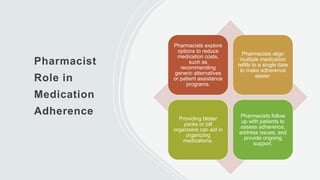
Pharmacists explore
options to reduce
medication costs,
such as
recommending
generic alternatives
or patient assistance
programs.
Pharmacists align
multiple medication
refills to a single date
to make adherence
easier.
Providing blister
packs or pill
organizers can aid in
organizing
medications.
Pharmacists follow
up with patients to
assess adherence,
address issues, and
provide ongoing
support.
Monitoring
of Patient
Medication
Adherence
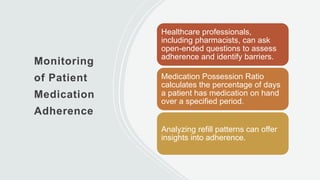
Healthcare professionals,
including pharmacists, can ask
open-ended questions to assess
adherence and identify barriers.
Medication Possession Ratio
calculates the percentage of days
a patient has medication on hand
over a specified period.
Analyzing refill patterns can offer
insights into adherence.
Monitoring
of Patient
Medication
Adherence
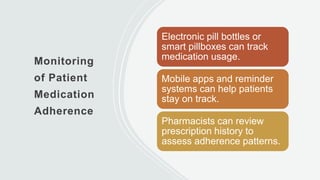
Electronic pill bottles or
smart pillboxes can track
medication usage.
Mobile apps and reminder
systems can help patients
stay on track.
Pharmacists can review
prescription history to
assess adherence patterns.
Effective medication adherence strategies
involve a collaborative effort between
healthcare professionals, patients, and
caregivers. By addressing the underlying
causes of non-adherence and providing
education and support, pharmacists contribute
significantly to improving patient outcomes and
overall healthcare quality.
Patient Medication
History Interview
Definition
The patient medication history interview is critical
to healthcare assessment and medication
management. It involves engaging with the patient
to gather detailed information about their current
and past medication use. This information is
essential for healthcare professionals to make
informed treatment decisions, prevent potential
drug interactions, and ensure safe and effective
care. The interview provides insights into the
patient's medication-taking behavior, adherence,
and potential issues that may impact their health.
Need for the
Patient
Medication
History
Interview
Understanding a patient's complete medication
history helps identify potential drug interactions,
contraindications, and adverse effects when
prescribed new medications.
Accurate medication information enables
healthcare providers to select appropriate
treatment options based on the patient's medical
history and condition.
The interview helps evaluate the patient's
adherence to prescribed medications, allowing
healthcare professionals to address adherence
challenges.
Reconciling a patient's medication history can
prevent errors and discrepancies during care
transitions, such as hospital admission or
discharge.
Need for the
Patient
Medication
History
Interview
A thorough medication history interview for
patients with chronic conditions supports
effective disease management.
Identifying known allergies or sensitivities
helps prevent adverse reactions.
The interview provides an opportunity to
educate patients about their medications,
potential side effects, and proper
administration.
Accurate medication information facilitates
shared decision-making between patients
and healthcare providers.
Medication Interview
Forms
Medication interview forms are structured
documents or templates healthcare
professionals use to gather information
about a patient's medication history
systematically. These forms ensure no
essential details are missed and help
streamline the interview process. The
form may include the sections
Medication
Interview
Forms
Patient Information: Basic patient demographic details and
contact information.
Current Medications: A list of all current medications, including
prescription drugs, over-the-counter medications, supplements,
and herbal remedies. Information may include medication
names, dosages, routes of administration, and frequency.
Medication Allergies: Any known allergies or adverse reactions
to medications.
Medication
Interview
Forms
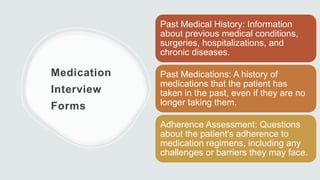
Past Medical History: Information
about previous medical conditions,
surgeries, hospitalizations, and
chronic diseases.
Past Medications: A history of
medications that the patient has
taken in the past, even if they are no
longer taking them.
Adherence Assessment: Questions
about the patient's adherence to
medication regimens, including any
challenges or barriers they may face.
Medication
Interview
Forms
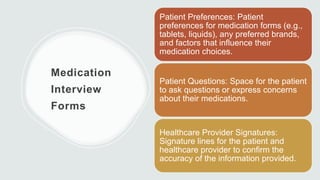
Patient Preferences: Patient
preferences for medication forms (e.g.,
tablets, liquids), any preferred brands,
and factors that influence their
medication choices.
Patient Questions: Space for the patient
to ask questions or express concerns
about their medications.
Healthcare Provider Signatures:
Signature lines for the patient and
healthcare provider to confirm the
accuracy of the information provided.
Community
pharmacy
management
Definition
Managing a community pharmacy involves
various aspects, including financial
management, materials and inventory
control, staffing, and infrastructure. A
well-organized and efficient community
pharmacy ensures optimal patient care,
medication safety, and customer
satisfaction
Financial
Management
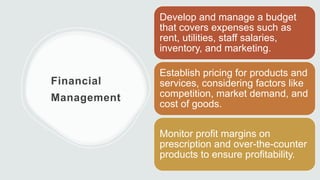
Develop and manage a budget
that covers expenses such as
rent, utilities, staff salaries,
inventory, and marketing.
Establish pricing for products and
services, considering factors like
competition, market demand, and
cost of goods.
Monitor profit margins on
prescription and over-the-counter
products to ensure profitability.
Financial Management
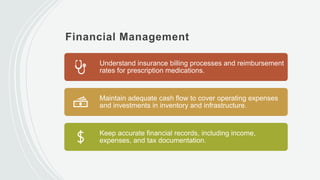
Understand insurance billing processes and reimbursement
rates for prescription medications.
Maintain adequate cash flow to cover operating expenses
and investments in inventory and infrastructure.
Keep accurate financial records, including income,
expenses, and tax documentation.
Materials and
Inventory
Control
Establish relationships with
reliable suppliers and
negotiate favorable terms
for product purchases.
Implement inventory
management systems to
track stock levels, monitor
expiration dates, and
reduce wastage.
Materials and
Inventory
Control
Set up reorder points and
restocking procedures to
maintain optimal inventory
levels.
Choose diverse products to
meet customer needs, including
prescription medications, OTC
products, health and wellness
items, and more.
Staff
Management
Determine the appropriate number of staff
members based on the pharmacy's daily
operations and customer traffic.
Recruit qualified pharmacists, pharmacy
technicians, and support staff. Provide
ongoing training and professional
development.
Clearly define roles and responsibilities for
each staff member to ensure efficient
workflow and accountability.
Staff
Management
Develop effective shift schedules to cover
operating hours while maintaining staff
availability and work-life balance.
Foster effective communication among staff
members to enhance collaboration and
patient care.
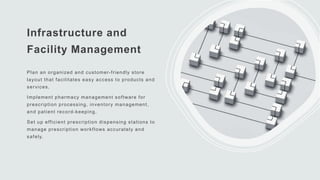
Infrastructure and
Facility Management
Plan an organized and customer-friendly store
layout that facilitates easy access to products and
services.
Implement pharmacy management software for
prescription processing, inventory management,
and patient record-keeping.
Set up efficient prescription dispensing stations to
manage prescription workflows accurately and
safely.
Infrastructure and Facility Management
Design a private space for patient consultations and
medication counseling.
Install security systems, including surveillance cameras and
alarm systems, to protect staff, customers, and inventory.
Marketing and Customer Engagement
Develop marketing plans to promote the pharmacy's products and services through
various channels, including social media, local advertising, and community events.
Implement customer loyalty programs to reward repeat customers and encourage
retention.
Offer health-related workshops, screenings, and information sessions to engage with
the local community and promote wellness.
Successful community pharmacy management requires a
balance of these factors, along with a customer-centric
approach and a commitment to providing high-quality
pharmaceutical care. Regularly assess and adapt your
strategies to meet the evolving needs of your patients and the
community.

Pharmacy Practice (BP703T) Unit-2.pptx

  • 1.
  • 2.
  • 3.
    Medication Order Entry Physiciansgenerate medication orders based on treatment plans. Orders are entered into the hospital's electronic health record (EHR) system.
  • 4.
    Pharmacist Review - Pharmacistsreview orders for accuracy, interactions, allergies, and contraindications. - Consultation with healthcare providers may occur for clarification or alternatives.
  • 5.
    Medication Preparation PHARMACISTS/TECHNICIANS PREPARE MEDICATIONSAS PER ORDERS. DIFFERENT FORMS (UNIT-DOSE, IV BAGS, SYRINGES) ARE USED BASED ON PATIENT NEEDS.
  • 6.
    Labeling and Packaging Medicationsare labeled with patient details, name, dosage, and administration instructions. Barcodes enhance patient safety and electronic documentation.
  • 7.
    Medication Dispensing Medications areorganized for delivery to nursing units. Dispensing methods include unit-dose packaging and automated dispensing cabinets.
  • 8.
    Medication Delivery toNursing Units PHARMACY STAFF DELIVER MEDICATIONS TO NURSING UNITS. NURSES CROSS-REFERENCE MEDICATIONS WITH PATIENT IDENTIFICATION BEFORE ADMINISTERING.
  • 9.
    Medication Administration NURSES ADMINISTERMEDICATIONS BASED ON THE PHYSICIAN'S ORDERS. BARCODES ON PATIENT WRISTBANDS AND MEDICATION PACKAGES ARE SCANNED FOR VERIFICATION.
  • 10.
    Electronic Medication AdministrationRecord (eMAR) Nurses electronically document medication administrations in the eMAR system. Real-time tracking and reduced error risk are benefits of electronic documentation.
  • 11.
    Patient Education Nurses andpharmacists educate patients about medications, dosages, and side effects. Patient understanding and compliance are crucial for safe treatment.
  • 12.
    Medication Reconciliation Medication lists are reconciledduring admission, transfer, and discharge. Ensures accurate and up-to-date medication information.
  • 13.
    Quality Assurance andMonitoring Regular audits and quality checks maintain adherence to medication dispensing processes. Patient safety protocols are monitored and improved.
  • 14.
  • 15.
    Unit Dose System Medicationsare pre-packaged in individual doses. Enhances accuracy and reduces the risk of errors. Ideal for inpatient settings.
  • 16.
    Automated Dispensing Cabinets(ADCs) Secure storage units on nursing floors. Nurses access patient- specific medications. Convenient and reduced wait time.
  • 17.
    Floor Stock System Commonlyused medications stocked on nursing units. Immediate access for nurses. Suitable for frequently administered drugs.
  • 18.
    Decentralized Pharmacy System Pharmacieson different units provide medications. Reduces transportation time. Efficient for large hospitals.
  • 19.
    Centralized Pharmacy System Allmedications are dispensed from a central pharmacy. Central control and oversight. Ensures standardized processes.
  • 20.
    Hybrid System COMBINATION OF VARIOUSDISTRIBUTION METHODS. TAILORED TO THE HOSPITAL'S SPECIFIC NEEDS. BALANCES EFFICIENCY AND PATIENT CARE.
  • 21.
    Satellite Pharmacy SMALL PHARMACIESIN SPECIFIC UNITS. PROVIDES IMMEDIATE ACCESS TO CRITICAL MEDICATIONS. COMMON IN EMERGENCY AND SURGERY DEPARTMENTS.
  • 22.
    Unit Dose CartSystem Medications are organized in carts for specific patients. Efficient for medication rounds. Reduces trips to the central pharmacy.
  • 23.
    Outsourced Pharmacy System MEDICATIONSARE PROVIDED BY AN EXTERNAL PHARMACY. COMMON IN SMALLER HOSPITALS OR RURAL SETTINGS. ENSURES ACCESS TO NECESSARY MEDICATIONS.
  • 24.
    Telepharmacy System Remote pharmacyservices through technology. Consultation, order verification, and counseling. Improves access in underserved areas.
  • 25.
    Take-Home Medication System Patientsreceive discharge medications. Enhances transition to home care. Focuses on patient education.
  • 26.
    Charging Policy The charging policyin a hospital's drug distribution system involves determining how patients are billed for medications and related services. This may include: 1. Cost Calculation: Hospitals consider factors such as medication acquisition costs, storage costs, and administration costs when determining the price of medications. 2. Billing Method: Patients may be billed based on the actual cost of the medication, a standardized fee, or a combination of both. 3. Insurance and Reimbursement: Hospitals work with insurance companies to ensure proper reimbursement for medications provided to insured patients. 4. Transparency: It’s essential to have a transparent charging policy that patients can easily understand. Clear communication about costs can help patients make informed decisions.
  • 27.
    Labeling Accurate labeling iscrucial to prevent medication errors and ensure patient safety: 1. Medication Labels: Medication labels should include the patient's name, medication name, dosage, route of administration, and instructions for use. Labels should also have clear warnings, storage instructions, and expiration dates. 2. Barcoding: Many hospitals use barcodes to ensure accurate medication administration. Barcoding helps match the medication with the patient's electronic health record, reducing the risk of errors. 3. High-Risk Medications: High-risk medications require special labeling and precautions due to their potential for adverse effects or interactions. 4. Color Coding: Some hospitals use color-coded labels to differentiate medications and reduce the risk of confusion. 5. Standardization: Standardized labeling practices across the hospital help maintain consistency and reduce confusion among healthcare providers.
  • 28.
    Dispensing drugs toambulatory (outpatient) patients Dispensing drugs to ambulatory (outpatient) patients involves a different set of procedures compared to inpatient settings. The goal is to provide patients with the prescribed medications safely, efficiently, and patient- centered. Here's an overview of the dispensing process for ambulatory patients:
  • 29.
    Dispensing of Drugs to Ambulatory Patients PrescriptionProcessing: When a healthcare provider sees a patient, they may receive a medication prescription. The provider writes down the medication name, dosage, instructions, and any other necessary details on the prescription. Order Entry: The prescription is then entered into the hospital's electronic health record (EHR) system or pharmacy management software. This helps ensure accurate and legible record- keeping and allows pharmacists to review the order. Pharmacist Review: A pharmacist reviews the prescription to check for potential drug interactions, allergies, appropriate dosing, and other safety considerations. They may also contact the prescribing physician if any concerns or clarifications are needed.
  • 30.
    Dispensing of Drugs to Ambulatory Patients MedicationPreparation: The pharmacy prepares the medication once the prescription is verified and approved. This might involve counting pills, measuring liquids, or compounding specialized formulations. Labeling and Packaging: The medication is labeled with the patient's name, dosage instructions, and other relevant information. It is then packaged securely, often in a labeled container or bag.
  • 31.
    Dispensing of Drugs to Ambulatory Patients Dispensing:A pharmacist or pharmacy technician dispenses the medication to the patient. The patient is provided counseling on taking the medication, potential side effects, and any necessary precautions. Documentation: All interactions related to medication dispensing, including order entry, pharmacist review, and patient counseling, are documented in the patient's EHR or pharmacy records.
  • 32.
    Dispensing of Controlled Drugs Dispensing controlleddrugs requires additional safeguards and regulatory compliance due to the potential for misuse or abuse of these substances.
  • 33.
    Dispensing of Controlled Drugs Regulatory Compliance:Controlled substances are regulated by federal and state laws. Hospitals must adhere to strict protocols for storage, dispensing, record- keeping, and reporting to regulatory agencies. Specialized Storage: Controlled substances are often stored in a separate, secure area with restricted access. This area may have enhanced security measures such as restricted keycard access and surveillance. Auditing and Tracking: Hospitals must maintain detailed records of controlled substances, including quantities received, dispensed, and remaining. Regular audits are conducted to ensure accuracy and detect any discrepancies.
  • 34.
    Dispensing of Controlled Drugs Prescription Requirements: Prescriptionsfor controlled substances may have stricter requirements, such as handwritten prescriptions or electronic prescribing with additional security measures. Pharmacist Oversight: Pharmacists play a crucial role in verifying the legitimacy of controlled substance prescriptions, checking patient histories, and providing patient education.
  • 35.
    Dispensing of Controlled Drugs Patient Monitoring:Patients receiving controlled substances may be subject to additional monitoring to ensure proper usage and detect any signs of misuse or abuse. Disposal: Proper disposal procedures must be followed for any unused or expired controlled substances to prevent diversion or environmental contamination.
  • 36.
  • 37.
    Definition A hospital formularyis a list of medications a hospital or healthcare institution has approved for use. It is a guideline for healthcare professionals, such as physicians, nurses, and pharmacists, in prescribing and administering medications to patients. The formulary is developed and maintained by a Pharmacy and Therapeutics (P&T) committee, which includes healthcare professionals from various specialties, such as pharmacists, physicians, and nurses. The committee aims to ensure safe, effective, and cost-efficient medication management.
  • 38.
    Contents of a Hospital Formulary DrugList: A comprehensive list of medications approved for use in the hospital. This can include prescription drugs, over-the- counter (OTC) medications, and medical devices. Dosage Guidelines: Recommended dosages for each medication based on different patient populations, conditions, and indications. Administration Instructions: Information on how to properly administer each medication, including routes of administration (e.g., oral, intravenous), dilution, infusion rates, and compatibility with other medications.
  • 39.
    Contents of a Hospital Formulary Indicationsand Contraindications: Approved uses for each medication and situations where the medication should not be used due to safety concerns. Drug Interactions: Information about potential interactions between medications that could lead to adverse effects or reduced efficacy. Adverse Effects: Common side effects and adverse reactions associated with each medication.
  • 40.
    Contents of a Hospital Formulary MonitoringParameters: Recommendations for monitoring patients who are receiving specific medications, including laboratory tests and clinical assessments. Cost Considerations: Information about the cost of medications to guide healthcare professionals in making cost-effective decisions. Therapeutic Alternatives: Other medications that can be used as alternatives if a particular medication is unavailable or contraindicated.
  • 41.
    Differentiatio n of Hospital Formulary andDrug List While both a hospital formulary and a drug list contain information about medications, the main difference lies in the level of detail and purpose. A hospital formulary provides comprehensive information about each medication, including guidelines for use, dosing, interactions, and more. On the other hand, a drug list is a simpler compilation of medications available in the hospital without the detailed guidelines found in a formulary.
  • 42.
    Preparation and Revision of aHospital Formulary The P&T committee reviews available medications and determines which ones to include based on safety, efficacy, and cost considerations. The formulary is regularly reviewed and updated to reflect new medications, emerging evidence, and changes in clinical practice. Periodic assessments of specific drug classes to ensure the most effective and safe options are included in the formulary.
  • 43.
    Preparation and Revision ofa Hospital Formulary The committee may seek input from specialists, clinicians, and pharmacists to make informed decisions about formulary updates. Decisions are often based on clinical research, efficacy data, safety profiles, and cost-effectiveness.
  • 44.
    Addition and Deletionof Drugs from the Hospital Formulary New medications may be added to the formulary after a thorough evaluation by the P&T committee, considering factors such as clinical need, safety, efficacy, and cost. Medications may be removed from the formulary if they are no longer considered safe, effective or if better alternatives are available. Changes to the formulary, including additions or deletions, are communicated to healthcare professionals to ensure they are aware of the updates.
  • 45.
  • 46.
    Definition Therapeutic Drug Monitoring(TDM) measures drug concentrations in a patient's blood or other body fluids to ensure that medication is maintained within a therapeutic range. This process allows healthcare professionals to optimize drug dosages, minimize the risk of toxicity, and enhance therapeutic outcomes. TDM is especially important for drugs with a narrow therapeutic window, where small changes in dose can lead to either ineffectiveness or toxicity.
  • 47.
    Need for Therapeutic Drug Monitoring Patients canvary significantly in their metabolism and response to medications due to factors such as genetics, age, liver and kidney function, and concurrent medications. Some drugs have a small difference between a therapeutic dose and a toxic dose. TDM helps ensure the drug remains within the safe and effective range. Patient-specific factors can influence how a drug is absorbed, distributed, metabolized, and eliminated. TDM helps adjust dosages based on these factors.
  • 48.
    Need for Therapeutic Drug Monitoring Concurrent useof multiple medications can alter the pharmacokinetics of a drug, making TDM essential to ensure proper dosing. TDM can help detect early signs of drug- related adverse effects, allowing adjustments to be made before serious complications arise. TDM helps identify cases where a patient's response to a medication is suboptimal, allowing for timely dosage adjustments. TDM contributes to achieving desired therapeutic effects while minimizing the risk of toxicity.
  • 49.
    Factors to Consider During Therapeutic Drug Monitoring Each drughas a target therapeutic range within which its concentration is considered effective and safe. Some drugs require blood samples to be collected at specific times after dosing to accurately reflect their concentration. The patient's clinical condition, disease severity, and coexisting medical conditions can influence TDM interpretations. Other drugs being taken by the patient can impact the pharmacokinetics and pharmacodynamics of the monitored drug.
  • 50.
    Factors to Consider During Therapeutic Drug Monitoring Affect Impaired kidneyor liver function can affect drug clearance, requiring dose adjustments. Age and Body These factors can influence drug distribution and metabolism. Influence Genetic factors can influence how a patient metabolizes and responds to certain medications.
  • 51.
    Indian Scenario for TherapeuticDrug Monitoring In India, therapeutic drug monitoring is gaining recognition and importance as healthcare practices evolve
  • 52.
    Indian Scenario forTherapeutic Drug Monitoring TDM services are increasingly being offered in major hospitals and medical institutions, particularly in urban areas. The genetic and ethnic diversity of the Indian population can contribute to variability in drug response, making TDM valuable. Given the prevalence of tuberculosis (TB) in India, TDM is commonly used for anti-TB medications to ensure efficacy and minimize drug resistance.
  • 53.
    Indian Scenario forTherapeutic Drug Monitoring TDM is important for optimizing dosages of antiepileptic drugs, which are commonly prescribed in India. While TDM is growing, access to these services can be limited in rural and underserved areas. The regulatory framework for TDM in India is evolving, with efforts to standardize guidelines and practices.
  • 54.
  • 55.
    Medication Adherence Medication adherence,also known as medication compliance, refers to the extent to which patients take their medications as prescribed by their healthcare providers. Adherence is crucial for achieving optimal therapeutic outcomes and preventing medication-related problems. Poor medication adherence can lead to treatment failure, disease progression, increased healthcare costs, and decreased quality of life.
  • 56.
    Causes of Medication Non- Adherence Complicated dosingschedules or multiple medications can be confusing and difficult to follow. Patients may not fully comprehend the importance of their medications, their benefits, or potential side effects. Unpleasant or disruptive side effects can discourage patients from taking their medications.
  • 57.
    Causes of Medication Non- Adherence High medicationcosts, especially for those without insurance, can lead to non-adherence. Patients may simply forget to take their medications. Misunderstandings or misinformation about the prescribed treatment can deter adherence.
  • 58.
    Causes of Medication Non- Adherence Cultural beliefsor personal attitudes toward medications can influence adherence. Conditions such as depression or cognitive impairment can affect a patient's ability to adhere.
  • 59.
    Causes of Medication Non- Adherence Limited accessto transportation or difficulty obtaining prescriptions can hinder adherence. Medications for certain conditions, such as mental health disorders, may carry social stigma.
  • 60.
    Pharmacist Role in Medication Adherence Pharmacists educate patientsabout the importance of their medications, potential benefits, and side effects, fostering understanding and commitment to treatment. Pharmacists work with healthcare providers to simplify medication regimens when possible. Pharmacists provide clear instructions on how to take medications, including timing, administration, and potential interactions. Pharmacists address patient concerns and misconceptions about medications.
  • 61.
    Pharmacist Role in Medication Adherence Pharmacists explore optionsto reduce medication costs, such as recommending generic alternatives or patient assistance programs. Pharmacists align multiple medication refills to a single date to make adherence easier. Providing blister packs or pill organizers can aid in organizing medications. Pharmacists follow up with patients to assess adherence, address issues, and provide ongoing support.
  • 62.
    Monitoring of Patient Medication Adherence Healthcare professionals, includingpharmacists, can ask open-ended questions to assess adherence and identify barriers. Medication Possession Ratio calculates the percentage of days a patient has medication on hand over a specified period. Analyzing refill patterns can offer insights into adherence.
  • 63.
    Monitoring of Patient Medication Adherence Electronic pillbottles or smart pillboxes can track medication usage. Mobile apps and reminder systems can help patients stay on track. Pharmacists can review prescription history to assess adherence patterns.
  • 64.
    Effective medication adherencestrategies involve a collaborative effort between healthcare professionals, patients, and caregivers. By addressing the underlying causes of non-adherence and providing education and support, pharmacists contribute significantly to improving patient outcomes and overall healthcare quality.
  • 65.
  • 66.
    Definition The patient medicationhistory interview is critical to healthcare assessment and medication management. It involves engaging with the patient to gather detailed information about their current and past medication use. This information is essential for healthcare professionals to make informed treatment decisions, prevent potential drug interactions, and ensure safe and effective care. The interview provides insights into the patient's medication-taking behavior, adherence, and potential issues that may impact their health.
  • 67.
    Need for the Patient Medication History Interview Understandinga patient's complete medication history helps identify potential drug interactions, contraindications, and adverse effects when prescribed new medications. Accurate medication information enables healthcare providers to select appropriate treatment options based on the patient's medical history and condition. The interview helps evaluate the patient's adherence to prescribed medications, allowing healthcare professionals to address adherence challenges. Reconciling a patient's medication history can prevent errors and discrepancies during care transitions, such as hospital admission or discharge.
  • 68.
    Need for the Patient Medication History Interview Athorough medication history interview for patients with chronic conditions supports effective disease management. Identifying known allergies or sensitivities helps prevent adverse reactions. The interview provides an opportunity to educate patients about their medications, potential side effects, and proper administration. Accurate medication information facilitates shared decision-making between patients and healthcare providers.
  • 69.
    Medication Interview Forms Medication interviewforms are structured documents or templates healthcare professionals use to gather information about a patient's medication history systematically. These forms ensure no essential details are missed and help streamline the interview process. The form may include the sections
  • 70.
    Medication Interview Forms Patient Information: Basicpatient demographic details and contact information. Current Medications: A list of all current medications, including prescription drugs, over-the-counter medications, supplements, and herbal remedies. Information may include medication names, dosages, routes of administration, and frequency. Medication Allergies: Any known allergies or adverse reactions to medications.
  • 71.
    Medication Interview Forms Past Medical History:Information about previous medical conditions, surgeries, hospitalizations, and chronic diseases. Past Medications: A history of medications that the patient has taken in the past, even if they are no longer taking them. Adherence Assessment: Questions about the patient's adherence to medication regimens, including any challenges or barriers they may face.
  • 72.
    Medication Interview Forms Patient Preferences: Patient preferencesfor medication forms (e.g., tablets, liquids), any preferred brands, and factors that influence their medication choices. Patient Questions: Space for the patient to ask questions or express concerns about their medications. Healthcare Provider Signatures: Signature lines for the patient and healthcare provider to confirm the accuracy of the information provided.
  • 73.
  • 74.
    Definition Managing a communitypharmacy involves various aspects, including financial management, materials and inventory control, staffing, and infrastructure. A well-organized and efficient community pharmacy ensures optimal patient care, medication safety, and customer satisfaction
  • 75.
    Financial Management Develop and managea budget that covers expenses such as rent, utilities, staff salaries, inventory, and marketing. Establish pricing for products and services, considering factors like competition, market demand, and cost of goods. Monitor profit margins on prescription and over-the-counter products to ensure profitability.
  • 76.
    Financial Management Understand insurancebilling processes and reimbursement rates for prescription medications. Maintain adequate cash flow to cover operating expenses and investments in inventory and infrastructure. Keep accurate financial records, including income, expenses, and tax documentation.
  • 77.
    Materials and Inventory Control Establish relationshipswith reliable suppliers and negotiate favorable terms for product purchases. Implement inventory management systems to track stock levels, monitor expiration dates, and reduce wastage.
  • 78.
    Materials and Inventory Control Set upreorder points and restocking procedures to maintain optimal inventory levels. Choose diverse products to meet customer needs, including prescription medications, OTC products, health and wellness items, and more.
  • 79.
    Staff Management Determine the appropriatenumber of staff members based on the pharmacy's daily operations and customer traffic. Recruit qualified pharmacists, pharmacy technicians, and support staff. Provide ongoing training and professional development. Clearly define roles and responsibilities for each staff member to ensure efficient workflow and accountability.
  • 80.
    Staff Management Develop effective shiftschedules to cover operating hours while maintaining staff availability and work-life balance. Foster effective communication among staff members to enhance collaboration and patient care.
  • 81.
    Infrastructure and Facility Management Planan organized and customer-friendly store layout that facilitates easy access to products and services. Implement pharmacy management software for prescription processing, inventory management, and patient record-keeping. Set up efficient prescription dispensing stations to manage prescription workflows accurately and safely.
  • 82.
    Infrastructure and FacilityManagement Design a private space for patient consultations and medication counseling. Install security systems, including surveillance cameras and alarm systems, to protect staff, customers, and inventory.
  • 83.
    Marketing and CustomerEngagement Develop marketing plans to promote the pharmacy's products and services through various channels, including social media, local advertising, and community events. Implement customer loyalty programs to reward repeat customers and encourage retention. Offer health-related workshops, screenings, and information sessions to engage with the local community and promote wellness.
  • 84.
    Successful community pharmacymanagement requires a balance of these factors, along with a customer-centric approach and a commitment to providing high-quality pharmaceutical care. Regularly assess and adapt your strategies to meet the evolving needs of your patients and the community.